2024 VOL. 11, No. 3
Abstract: While traditional teaching methods such as face-to-face lectures, training, and mentoring have been utilised in the educational process, the importance of web-supported materials was better underscored with the advent of the pandemic. Documentary videos, prepared with scientific data, serve as significant web-supported materials. The aim of this research was to find out the effectiveness of web-supported videos on associate degree school students' academic achievement, critical thinking skills, and three-dimensional learning in science. The study employed a pre-post-test design, a type of quasi-experimental research, involving 42 associate degree school students enrolled in a child development programme. Data were collected using academic achievement tests, critical thinking skill tests, and three-dimensional learning scales, and analysed using non-parametric techniques. The two-month training revealed that web-supported videos contributed to the academic achievement and three-dimensional learning skills of students in understanding the concepts of the moon, sun, earth, and planets, though they did not have a significant effect on students' critical thinking skills.
Keywords: academic achievement, critical thinking skills, documentary analysis, web-supported videos, three-dimensional learning
The aim of science education is to prepare students to be individuals who understand the impact of science and technology on life and society, are sensitive to social problems, and think critically and creatively (Zidny et al., 2020). The nature and extent of students’ understanding of scientific concepts and phenomena are key components of any science curriculum (Treagust & Chandrasegaran, 2007). Hong and Diamond (2012) argue that to help persons increase their knowledge of the natural world, science concepts should be taught correctly and appropriately. Understanding the concepts is “essential in teaching and learning activities because without concepts, the learning process will be hampered” (Nugroho et al., 2017, p. 1). Considering studies where students' opinions and experiences were used in concept teaching, it was observed that students had incorrect or incomplete information about the related concepts. They especially could not understand abstract concepts sufficiently, and they had many misconceptions (Soylu & Memişoğlu, 2020). Therefore, as many techniques (learning environments or learning areas) as possible are utilised in the teaching of concepts. Museums, zoos, field trips, educational media, television programmes, smartphones, computer applications, and web-supported materials are some of these techniques (Burgin, 2020). Learning areas such as museums, planetariums, zoos, and field trips are less preferred due to reasons such as obtaining permission, paying trip fees, and transportation (Bencze & Bowen, 2009). However, with the unprecedented outbreak of the pandemic, the effectiveness of web-supported materials became much more pronounced. This research examined the impact of web-supported materials in the concept learning process in science on academic achievement, critical thinking skills, and three-dimensional learning of associate degree school students.
One of the primary aims of information technology-enabled classrooms is to make students more active in the learning process (Akyüz & Samsa, 2009). Web-supported materials are learning materials for course communication and course content in an electronic environment, supported by technology and the web (Shee & Wang, 2008). Web-supported materials provide students with dynamic, interactive, nonlinear access to a wide range of information represented as text, graphics, animation, audio, and video (Jacobson & Archodidou, 2000). According to Bouhnik and Marcus (2005), web-based e-learning environments offer advantages for students, such as deciding on the learning time of the subject, learning without time limitation, freedom to express opinions and ask unlimited questions, and choosing topics or concepts. Accordingly, web-supported environments are spaces where students can easily express their thoughts on the subject and ask questions until they understand the concept and can decide when to access it (Liaw & Huang, 2013). In addition, these environments provide convenience for them in terms of learning and use (Mahdizadeh et al., 2008). Furthermore, student acquisition is also facilitated in web-based environments due to the concretisation of invisible or inaccessible concepts. Videos play a significant role in web-supported environments, especially in concept teaching with web-supported videos obtained from scientific documentary films.
Critical thinking skills constitute a major area of interest in the field of education (Kavenuke et al., 2020). Halpern (1993), asserting that critical thinking and higher-order skills are used interchangeably, assesses it as a talent to synthesise and analyse information, extracting the main ideas and drawing conclusions, as well as utilising possibilities. Critical thinking can be defined as a combination of both cognitive and affective skills that logically and rationally set, understand, and evaluate relevant statements in problem-solving and decision-making processes in various fields (Shaw et al., 2020). Many studies show that critical thinking skills are predictors of academic achievement (Wan & Cheng, 2019; Akpur, 2020). Additionally, some researchers state that web-based applications improve critical thinking skills (Beckett-Camarata, 2007), while others argue that these applications are not sufficient (Macknight, 2001). Learners need to possess critical thinking skills to adapt to a rapidly changing and technology-based world (Terblanche & Clercq, 2020). Tseng (2018) stated that when attention is paid to the content knowledge of scientific arguments in web-supported videos, it has been determined that students can present a critical perspective.
Three-dimensional learning can be defined as the mental recognition of the shapes or positions of objects, including rotating, translating, lifting, commenting on possessing these properties, making predictions, and placing them in space (Williams et al., 2011). Activities that enhance the development of auditory and visual perception in educational environments impact the mental structure. For individuals born in 1980 and afterward, referred to as the "net- generation", substantial investments are made today to meet technological needs in both private and public spaces (Terblanche & Clercq, 2020). Web-supported teaching can be described as a teaching method that aligns with individual learning and uses visual and auditory elements such as shape, sound, and graphics, by utilising the computer as a tool in the teaching process (Kaplan et al., 2013). It supports the effects, the hypothesising, and reasoning process involved in exploring a problem of three-dimensional learning skills and allows learners to integrate all that they have learned into a single image, identify problems, and access the information they have learned on the subject (key concepts and their relationships) (Chen et al., 2018).
The Cognitive Theory of Multimedia Learning (CTML) supports the idea that learning is more effective when information is presented through a combination of visual and auditory channels (Mayer, 2002). According to CTML, web-supported videos facilitate learning by integrating words and images that help students process and organise scientific information more effectively. This theory emphasises the importance of presenting instructional content in a way that is compatible with how the human brain processes information — through dual channels (visual and auditory), limited capacity and active learning. The use of web-enhanced videos in the present study aims to engage students' interest through multisensory inputs and promote better recall of scientific concepts.
Previous research has shown that web-supported materials and multimedia tools can improve students' understanding of abstract scientific concepts, especially in astronomy (Burgin, 2020; Plummer et al., 2010). However, research on the specific impact of web-supported videos on academic achievement, critical thinking skills, and three-dimensional learning is limited. The findings from this study will contribute to the growing body of knowledge on the effectiveness of multimedia tools in science education, with a particular focus on three-dimensional learning. While some studies have suggested that web-supported environments can improve critical thinking (Saadé et al., 2012), others have shown mixed results (Beckett-Camarata, 2007). This study aims to clarify the role that web-supported videos play in the development of critical thinking skills in the context of science education. The impact of multimedia tools on students' spatial reasoning and three-dimensional learning is not fully understood. This study aimed to determine whether web-enhanced videos could improve students' ability to visualise and understand complex spatial relationships between celestial bodies.
Although web-enhanced materials have been widely adopted in the wake of the pandemic, research on their effectiveness in higher education, especially in vocational schools, remains scant. This study contributes to the understanding of how these tools can be integrated into vocational education to improve learning outcomes in science.
While traditional teaching methods such as face-to-face lectures, training, and mentoring have been utilised in the education sector, the importance of web-supported videos has surged anew with the pandemic. In this context, our research aimed to provide a more informative and precise understanding of the impact of web-supported videos on academic achievement, critical thinking skills, and three-dimensional learning among school students. The following research questions were formulated:
RQ1 Can web-supported videos improve academic achievement?
RQ2 Can web-supported videos improve critical thinking skills?
RQ3 Can web-supported videos improve three-dimensional learning skills?
RQ4 What kind of relationship exists between academic achievement, critical thinking and three-dimensional learning skills?
This research, which aimed to examine the impact of academic achievement, critical thinking, and three-dimensional learning in the web-supported process of higher education students, was designed according to the experimental method, one of the quantitative research methods. The primary purpose of experimental studies is to test the cause-effect relationship between variables (Büyüköztürk, 2009). In this research, the pre-post-test, a type of quasi-experimental research, was utilised.
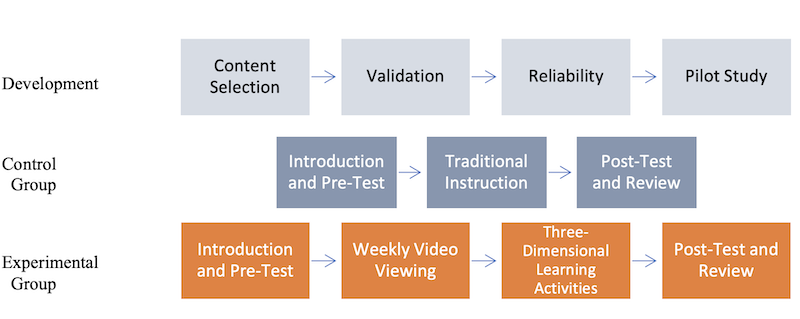
Web-supported video training, incorporating scientific video integration, was conducted over a two-month period. Each week, videos were watched and discussed within the framework of a different topic, including the earth, moon, sun, stars, celestial bodies, and planets. To enhance the students' critical approaches in the training supported by web-based videos, discussions on the videos were facilitated. Student questions were evaluated and responded to. Analyses on videos and images were carried out to develop students' 3D thinking skills. Discussions were also held on ideas concerning the interplanetary position-size and distance ratios. In this experimental group, the aim was to create discussion environments in the virtual space through web-supported videos, facilitating the students' ability to structure information. The control group in this study consisted of those exposed to traditional teaching methods without the use of web-enhanced videos. This group provided a baseline against which the effects of the experimental group interventions (web-enhanced videos) could be measured.
The use of documentary films has become widespread in the concept of education. Documentary films have been utilised to concretise concepts and facilitate access to them. Documentary films provide a visual and auditory embodiment of inaccessible or hard-to-reach concepts such as place names, astronomy, and wild animals. The concepts of space and astronomy, which have intrigued mankind for a long time, attract significant attention. It is known that the concepts of the sun, earth, and moon have become more widely known today thanks to web-supported videos. Telescope photos, drawings, animations, and especially video-documentary films have emerged as the most used web-supported videos in learning these concepts.
It was observed that the academic achievements, critical thinking, and three-dimensional learning skills of individuals were developed in learning the concepts of the sun, earth, and moon through computer-aided video-documentary films. The application lasted about two months, totalling 14 hours, with two hours each week. The first week involved pre-tests and introduction, and the last week included evaluation and post-tests, with the application being made each week (in total, eight weeks). The web-enhanced videos used in this study were developed based on constructivist learning principles and Mayer's Cognitive Multimedia Theory of Learning (CTML), which emphasises the integration of visual and auditory information to enhance comprehension. The videos were sourced from well-established educational platforms, including the National Geographic, the Discovery Channel and other scientific documentaries. Each video was carefully selected to align with specific learning objectives related to the sun, moon, earth and planets. The content was designed to provide clear, scientifically accurate visual representations of abstract astronomy concepts, focusing on size ratios, spatial relationships, and the motions of celestial bodies.
The videos were selected based on their scientific accuracy, relevance to the lesson topics, and ability to represent abstract concepts visually and aurally. Two science education experts and a multimedia learning expert reviewed the videos for accuracy, teaching quality and alignment with learning objectives. The experts also assessed the videos' potential to enhance three-dimensional learning by helping students visualise spatial relationships. The videos were trialled with a small group of students from a different subject and feedback was collected to ensure clarity, engagement and understanding. Any technical or instructional issues identified in the pilot phase were addressed before the main study (Figure 1).
The experimental group consisted of 20 students, who participated in eight weeks of instruction using web-enhanced videos. Each week, students watched videos on specific topics (e.g., the sun, planets, moon, etc.), followed by group discussions and guided questioning to deepen their understanding. The teaching process included several steps. In the first week, students were introduced to the web-supported learning environment and pre-tests were administered to assess their initial knowledge and skills. Each week, students watched one or more videos related to that week's topic. The videos were followed by instructor-led discussions where students were encouraged to ask questions and share their interpretations of the visual information. After watching the videos, students participated in activities designed to develop their three-dimensional thinking skills, such as drawing celestial bodies in relation to each other and analysing spatial relationships. In the last week, post-tests were administered to assess changes in academic achievement, critical thinking skills and three-dimensional learning.
The control group, consisting of a total of 22 students, followed a traditional teaching approach without the use of web-enhanced videos. Learning materials included textbooks, lecture notes and class discussions. The process for the control group was structured as follows: similar to the experimental group, the control group was introduced to the course material and pre-tested. Each week, the control group received instruction through lectures and readings from textbooks, with in-class discussions led by the instructor. However, they did not have access to any web-supported video or multimedia materials. At the end of the two-month period, the control group completed the same post-tests as the experimental group.
The research was conducted at Malazgirt Vocational School (Türkiye) within the child development programme with students during the 2019-2020 academic years. The Vocational School provides an associate degree in higher education that covers four semesters based on secondary education and aims to train in intermediate human resources, that is, it forms the first level of undergraduate education. An associate degree or associate's degree is an undergraduate degree awarded after a course of post-secondary study lasting two to three years. It is a level of academic qualification above a high school diploma and below a bachelor's degree. The study was based on convenience sampling. This method was chosen because of the accessibility and availability of participants and the alignment of the content of the programme with the objectives of the study. The child development programme included science and technology courses for higher education students, making it suitable for examining the effect of web-enabled videos on scientific concept learning. The study included only one school due to logistical constraints and the aim of conducting an in-depth analysis of the effects of the intervention in a controlled environment. Participants were divided into two groups using a random sampling method, i.e., systematic assignment method based on registration numbers (odd/even), Specifically, students with odd-numbered registration IDs were placed in the experimental group (N = 20) and those with even-numbered IDs were placed in the control group (N = 22). The research included four male and 38 female participants in total (N = 42). Students living in the same region shared similar cultural and economic characteristics. This research was completed on March 7, 2020, as part of the "Science and Technology in Children" course in the child development associate degree programme. After the completion of the research, the schools were closed due to the pandemic.
The data collection tools and analysis methods used in the research are detailed below. Non-parametric techniques were employed due to the small sample size of participant groups and the experimental group comprising fewer than 30 participants.
Academic Achievement Test: The academic achievement test used in this study was developed based on questions sourced from the "Science and Technology for Children" textbook, which is part of the standard curriculum for the child development associate degree programme. Initially, an answer key was developed. To ensure the questions were legible and understandable, assistance was sought from a language expert, thereby guaranteeing the structural validity of the questions. The test questions were reviewed by two science education experts and one evaluation expert to ensure content validity. They confirmed that the questions accurately reflected the learning objectives stated in the textbook and were suitable for assessing students' understanding of the concepts. A pilot test was conducted with a group of 77 second-grade students from a different group to assess the clarity, difficulty, and distinctiveness of the questions. This group was comprised of second-grade child development students in the same school. In other words, they were students who have seen and learned this subject before. The pilot application of the questions prepared was done with them by researchers. The questions underwent a pilot test to confirm their validity, followed by an item analysis. This analysis examined item difficulty and the alpha reliability index, ensuring the reliability and validity of the academic achievement test. As a result, three questions with item discrimination indexes below 0.19 and two questions with an item difficulty index greater than 0.75 were excluded from the test. Ultimately, the test comprised 15 questions. It was also found that the item strength index of the test was 0.57 and the item discrimination index was 0.38. Moreover, the Cronbach's Alpha value of the test was determined to be 0.71, indicating a high degree of consistency among the questions. Given the participant count was under 30 and a normal distribution was not achieved (Shapiro-Wilk, p = 0.02, indicating rejection of the hypothesis of normality), the Mann Whitney U test, a non-parametric test, was utilised (Büyüköztürk, 2009).
Critical Thinking Skill Test: The test for measuring critical thinking skills, developed by Eğmir and Ocak (2016), was used with permission. The difficulty index of the entire test was set at 0.37 and the discrimination index at 0.32. Additionally, within the scope of this study, the Cronbach's Alpha value was found to be 0.73.
Three-Dimensional Learning Scale: This scale was created and used as a result of the consensus among two experts within science education and one expert within assessment and evaluation. The consensus formula of Miles and Huberman (1994) was applied in scoring the test. Indeed, it was determined that the test was reliable at the 0.92 level, as agreed upon by the three field experts. To assess the students' three-dimensional learning skills, they were instructed to draw in response to the following two questions:
The responses from the students were analysed based on size, distance, and rotation dimensions using the criteria in Table 1.
Table 1: Three-Dimensional Learning Skill Evaluation Criteria
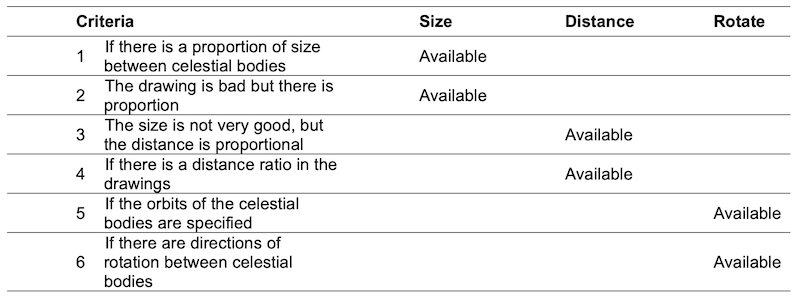
Table 1 included the evaluation criteria for the data from the three-dimensional learning skill form. It was assumed that data meeting these criteria would correspond to the relevant dimension. A single piece of data could encompass more than one dimension or none at all. Each criterion was evaluated with one point, allowing each student to be assessed out of a total of three points, with one point allocated for each dimension. The data in Table 2 was utilised to interpret the scores.
Table 2: Interpretation Value Range of the Scores
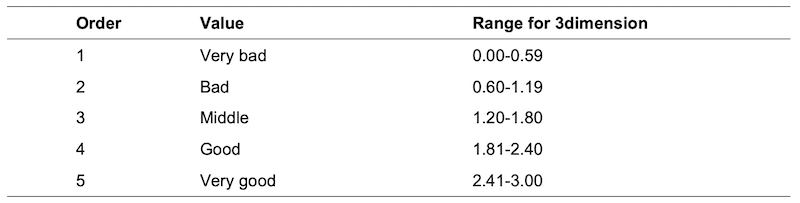
As detailed in Table 2, five equal intervals were established for a more precise interpretation of the results. Based on this classification, the scores from the three-dimensional learning test and three-dimension assessment were categorised as very bad, bad, middle, good, and very good.
The findings, presented in the order of the research questions, are detailed below.
The academic achievement of the students before and after the research is given in Table 3 statistically.
Table 3: Mann-Whitney U Test Results Regarding the Pre- and Post-Test

Table 3 shows that there was no significant difference between the experimental and the control group according to the pre-test results of the Mann-Whitney U test (U = 189, p > .05). This indicated that there was no difference between the levels of preparation of the experimental and control group students for the concepts of sun, earth, and moon before the application commenced. However, a significant difference was observed between the experimental and the control group according to the post-test results of the Mann-Whitney U test (U = 107, p < .05, n2 = 0.23), with a determined large effect size. This revealed that the learning levels of the experimental and control group students regarding the concepts of moon, sun, and stars differed significantly after the application. These findings demonstrated that web-supported videos significantly contributed to students' academic achievement.
Table 4: Mann-Whitney U Test Results Regarding the Pre and Post Test
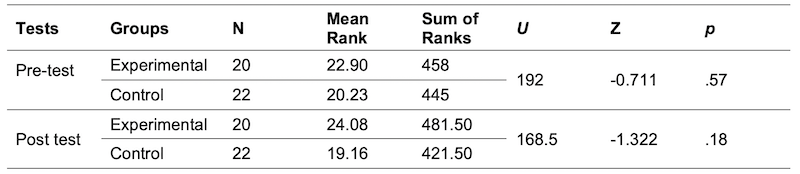
Upon examining Table 4, it was found that there was no significant difference between the experimental and the control group according to the pre-post test results of the Mann-Whitney U test (U = 192; 168.5, p > .05). This indicated that there was no significant difference between the experimental and control group students in terms of critical thinking skills before and after the application.
Table 5: Three-Dimensional Learning Skills Standings and Interpretation of the Groups

Upon examining the average scores on the three-dimensional learning skill in Table 5, it was observed that the average of the total scores of the students in the experimental group was 2.70, which was interpreted as "very good." It was also noted that the average score of the control group students was 2.29, and this was interpreted as "good." In Table 6, an analysis was conducted to determine if there was a significant relationship between the three-dimensional learning skill scores of the experimental and control group students.
Table 6: Three-Dimensional Learning Skills of the Groups, Mann Whitney U Test Results

Upon examining Table 6, it was found that there was a significant difference between the experimental group and the control group according to the post-test results of the Mann-Whitney U test (U = 145.5, p < .05, n2 = 0.31), the experimental group being higher than the control group. Additionally, a large effect size was determined. This indicated that the learning levels of the experimental and control group students regarding three-dimensional learning skills differed significantly after the application.
Table 7: The Relationship between the Experimental Group Post-test Scale Results
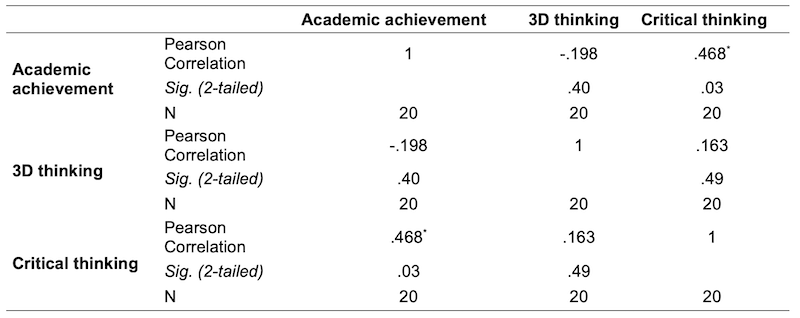
Upon examining the data in Table 7, it was found that there was a positive and significant relationship between academic achievement scores and critical thinking skills. Additionally, a negative and low relationship was determined between academic achievement scores and three-dimensional thinking skills. Furthermore, a low and non-significant positive relationship was observed between three-dimensional thinking and critical thinking.
This study contributes to the existing literature on the use of web-enabled videos in education, especially in the field of science. The findings show that although web-enabled videos have a significant effect on academic achievement and immersive learning, their effects on critical thinking skills remain limited.
Previous studies have shown that multimedia tools, including web-enabled videos, can improve students' academic performance, especially when teaching abstract scientific concepts (Plummer et al., 2011; Tombul, 2019). The current study supports these findings by showing that web-enabled videos significantly improve students' academic achievement in understanding astronomy concepts such as the sun, moon, and planets. The large effect size suggests that the combination of visual and auditory elements in the videos helps make difficult concepts more accessible and is consistent with Mayer's Cognitive Theory of Multimedia Learning. This finding reaffirms that web-enabled videos are an effective tool for content presentation in science education, especially when explaining abstract or complex ideas.
The positive impact of web-enabled videos on students’ three-dimensional learning skills, as evidenced by significant improvements in spatial reasoning, is consistent with studies by Díaz et al. (2020) and Chen et al. (2018). These studies have highlighted how multimedia and visual aids can assist in understanding spatial relationships and concepts that require mental manipulation of three-dimensional objects. In the current study, students in the experimental group demonstrated improved spatial understanding of celestial bodies, such as their sizes, distances, and motions, with a large effect size. This finding supports the idea that web-enabled videos provide a valuable alternative to hands-on learning experiences, such as field trips and planetarium visits, which are often difficult to organise. The results suggest that web-enabled videos can serve as a practical substitute for experiential learning environments, especially in teaching spatially complex topics.
The limited impact of web-enabled videos on critical thinking skills contradicts some studies that have found that web-based learning environments can improve these skills (Beckett-Camarata, 2007; Saadé et al., 2012). However, it is consistent with Macknight’s (2001) finding that web tools alone are generally insufficient to develop higher-order thinking skills without interactive, discussion-based elements. The lack of significant improvement in critical thinking skills in the current study suggests that simply watching videos without engaging in discussion, thinking, or problem-solving activities is unlikely to improve critical thinking. This highlights a limitation of the use of web-enabled videos. While effective for content presentation and visualisation, they do not inherently encourage the deep-thinking processes required for critical analysis, unless they are supported by interactive components such as forums, discussions, or collaborative tasks.
The findings of this study have several implications for the integration of web-enhanced videos into science education, both in Türkiye and other educational contexts. Web-enhanced videos have proven to be an effective tool for improving students’ academic achievement in science, especially in areas involving abstract and complex concepts. This suggests that educational institutions in Türkiye, especially where logistical constraints often limit access to hands-on experiences, should consider incorporating web-enhanced videos into their science curricula. By using scientifically accurate and visually rich videos, educators can enhance students’ understanding of difficult topics such as astronomy, while compensating for the limitations of physical learning environments. While web-enhanced videos are useful for delivering content, this study suggests that their impact on critical thinking skills is limited. Therefore, educators should not rely solely on videos to develop these skills. Instead, they should integrate discussion-based activities such as online forums, discussions, or reflective writing tasks with video content. This will create a more comprehensive learning environment that enhances both content understanding and higher-order thinking skills.
The positive impact of web-enabled videos on immersive learning highlights their potential to support students with diverse learning styles, particularly those who benefit from visual and spatial representations. In Türkiye and other countries where traditional, text-heavy approaches to science education dominate, the inclusion of web-enabled videos may make learning more inclusive by addressing a broader range of cognitive abilities and learning preferences. This aligns with broader trends in personalised and differentiated instruction aimed at meeting the diverse needs of students in the classroom.
Based on the findings of this study, several strategies can be suggested to increase the use of web-enabled videos in science education. To foster critical thinking, educators should pair web-enabled videos with structured discussions that encourage students to analyse, critique, and apply the information they learn. This may include group discussions, online discussion boards, or written reflections that require students to engage deeply with the content. While web-enabled videos are effective for content delivery, they should be used to complement, not replace, interactive and hands-on learning experiences. Whenever possible, educators should combine videos with experiments, simulations, and physical models to create a rich, multifaceted learning experience. Given the significant impact of web-enabled videos on spatial learning, science curricula should place greater emphasis on spatial reasoning skills, particularly in areas such as astronomy, physics, and geology. Web-enabled videos can serve as an important resource to help students visualise and understand complex spatial relationships in these subjects.
Future studies should investigate the effects of combining web-enabled videos with interactive learning strategies such as peer discussion, collaborative problem solving, or the use of educational games to better understand their potential to enhance critical thinking skills. To assess the long-term impact of web-enabled videos on academic achievement and spatial learning, future studies could conduct studies to track students’ progress over an extended period of time. This would help determine whether the benefits observed in this study persist over time.
Further research is needed to investigate the effectiveness of web-enabled videos across different educational contexts, such as different age groups, subjects, and cultural settings. This would help determine whether the findings of this study are generalisable to a broader range of students.
Akpur, U. (2020). Critical, reflective, creative thinking and their reflections on academic achievement. Thinking Skills and Creativity, 37. https://doi.org/10.1016/j.tsc.2020.100683
Akyüz, H.İ., & Samsa, S. (2009). The effects of blended learning environment on the critical thinking skills of students. Procedia-Social and Behavioral Sciences, 1(1), 1744-1748.
Beckett-Camarata, J. (2007). Using critical thinking in a web-based public budgeting course. International Journal of Public Administration, 30(5), 499-518, https://doi.org/10.1080/01900690701206093
Bencze, J.L., & Bowen, G.M. (2009). A national science fair: Exhibiting support for the knowledge economy. International Journal of Science Education, 31(18), 2459–2483. https://doi.org/10.1080/09500690802398127
Bouhnik, D., & Marcus, T. (2005). Interaction in distance-learning courses. Journal of the American Society Information Science and Technology, 57(3), 299–305. https://doi.org/10.1002/asi.20277
Burgin, S.R. (2020). A three-dimensional conceptualization of authentic inquiry-based practices: A reflective tool for science educators. International Journal of Science Education, 42(9). https://doi.org/10.1080/09500693.2020.1766152
Büyüköztürk, Ş. (2009). Manual of data analysis for social sciences (9th ed). Pegem.
Chen, J., Wang, M., Grotzer, T.A., & Dede, C. (2018). Using a three‐dimensional thinking graph to support inquiry learning. Journal of Research in Science Teaching, 55(9), 1239-1263. https://doi.org/10.1002/tea.21450
Díaz, D.M., Saorín, J.L., Carbonell-Carrera, C., & Cantero, J.T. (2020). Minecraft: Three-dimensional construction workshop for improvement of creativity. Technology, Pedagogy and Education, 29(5). https://doi.org/10.1080/1475939X.2020.1814854
Eğmir, E., & Ocak, G. (2016). Developing an achievement test towards evaluating critical thinking skill. Turkish Studies, 11(19), 337-360. http://dx.doi.org/10.7827/TurkishStudies.9961
Halpern, D.F. (1993). Assessing the effectiveness of critical thinking instruction. The Journal of General Education, 42(4), 238–254. https://www.jstor.org/stable/27797197
Hong, S.Y., & Diamond, K.E. (2012). Two approaches to teaching young children science concepts, vocabulary, and scientific problem-solving skills. Early Childhood Research Quarterly, 27(2), 295-305. https://doi.org/10.1016/j.ecresq.2011.09.006
Jacobson, M., & Archodidou A. (2000). The design of hypermedia tools for learning: Fostering conceptual change and transfer of complex scientific knowledge. Journal of the Learning Sciences 9, 149–199. https://doi.org/10.1207/s15327809jls0902_2
Kaplan, A., Öztürk, M., Altaylı, D., & Ertör, E. (2013). Comparison of classroom teachers' attitudes towards computer aided instruction according to some variables. Turkish Journal of Computer and Mathematics Education, 4(2), 89-103. https://turcomat.org/index.php/turkbilmat/article/view/52
Kavenuke, P.S., Kinyota, M., & Kayombo, J.J. (2020). The critical thinking skills of prospective teachers: Investigating their systematicity, self-confidence and scepticism. Thinking Skills and Creativity, 37, https://doi.org/10.1016/j.tsc.2020.100677
Liaw, S., & Huang, H. (2013). Perceived satisfaction, perceived usefulness and interactive learning environments as predictors to self-regulation in e-learning environments. Computer and Education, 60(1), 14-24. https://doi.org/10.1016/j.compedu.2012.07.015
Macknight, C.B. (2001). Supporting critical thinking in interactive learning environments. Computers in the Schools, 17(3-4), 17-32. https://doi.org/10.1300/J025v17n03_02
Mahdizadeh, H., Biemans, H., & Mulder, M. (2008). Determining factors of the use of e-learning environments by university teachers. Computers & Education, 51(1), 142-154. https://doi.org/10.1016/j.compedu.2007.04.004
Mayer, R.E. (2002). Multimedia Learning. In D.L. Medin (Ed.), The psychology of learning and motivation (pp. 85–139). Academic Press. https://doi.org/10.1016/S0079-7421(02)80005-6
Miles, M.B. & Huberman, A.M. (1994). Qualitative data analysis: An expanded sourcebook (2nd ed.). Thousand Oaks.
Nugroho, O.F., Chandra, D.T., & Sanjaya, Y. (2017). The use of concept map as a consolidation phase based STAD to enhance student’s comprehension about environmental pollution. Journal of Physics: Conference Series, 812, 1-5. https://doi.org/10.1088/1742-6596/812/1/012071
Plummer, J.D., Wasko, K.D., & Slagle, C. (2011). Children learning to explain daily celestial motion: Understanding astronomy across moving frames of reference. International Journal of Science Education, 33(14), 1963-1992. https://doi.org/10.1080/09500693.2010.537707
Plummer, J.D., Zahm, V.M., & Rice, R. (2010). Inquiry and astronomy: Preservice teachers’ investigations of celestial motion. Journal of Science Teacher Education, 21(4), 471-493. https://doi.org/10.1007/s10972-010-9189-9
Saadé, R.G., Morin, D., & Thomas, J.D. (2012). Critical thinking in e-learning environments. Computers in Human Behavior, 28(5), 1608-1617. https://doi.org/10.1016/j.chb.2012.03.025
Shaw, A., Ou Liu, L.O., Gu, L., Kardonova, E., Chirikov, I., Li, G., Hu, S., Yu, N., Ma, L., Guo, F., Su, Q., Shi, J., Shi, H., & Loyalka, P. (2020). Thinking critically about critical thinking: validating the Russian HEIghten® critical thinking assessment. Studies in Higher Education, 45(9), 1933-1948. https://doi.org/10.1080/03075079.2019.1672640
Shee, D., & Wang, Y.H. (2008). Multi-criteria evaluation of the web-based e-learning system: A methodology based on learner satisfaction and its applications. Computers & Education, 50, 894–905. https://doi.org/10.1016/j.compedu.2006.09.005
Soylu, T., & Memişoğlu, H. (2020). Determining middle school students' views on teaching concepts. Turkish Studies, 15(2), 1307-1323. https://dx.doi.org/10.29228/TurkishStudies.40142
Terblanche, E.A.J., & de Clercq, B. (2020). Factors to consider for effective critical thinking development in auditing students. South African Journal of Accounting Research, 34(2), 96-114. https://doi.org/10.1080/10291954.2019.1669293
Tombul, S. (2019). The effect of computer supported instruction and modeling of subject of astronomy on 7th grade students on some learning products [Master's Thesis. Ordu University].
Treagust, D.F., & Chandrasegaran, A.L. (2007). The Taiwan national science concept learning study in an international perspective. International Journal of Science Education, 29(4), 391-403. https://doi.org/10.1080/09500690601072790
Tseng, A.S., (2018). Students and evaluation of web-based misinformation about vaccination: critical reading or passive acceptance of claims? International Journal of Science Education, Part B, 8(3), 250-265. https://doi.org/10.1080/21548455.2018.1479800
Wan, Z.H., & Cheng, M.H.M. (2019). Classroom learning environment, critical thinking and achievement in an interdisciplinary subject: A study of Hong Kong secondary school graduates. Educational Studies, 45(3), 285-304. https://doi.org/10.1080/03055698.2018.1446331
Williams, M., Williams, P., & Boyle, A. (2011). Using internet-based problem-solving activities to enhance students' understanding of 3-dimensional spatial relationships. Planet, 24(1), 68-75. https://doi.org/10.11120/plan.2011.00240068
Zidny, R., Sjöström, J., & Eilks, I. (2020). A Multi-perspective reflection on how indigenous knowledge and related ideas can improve science education for sustainability. Science & Education, 29(1), 145-185. https://doi.org/10.1007/s11191-019-00100-x
Author Notes
Salih Gülen is an Associate Professor at Muş Alparslan University. Email: sgnova@windowslive.com (https://orcid.org/0000-0001-5092-0495)
İsmail Dönmez is an Associate Professor at Muş Alparslan University. Email: ismaildonmezfen@gmail.com (https://orcid.org/0000-0003-2094-26208)
Cite as: Gülen, S., & Dönmez, İ. (2024). Effectiveness of web-supported videos on students’ academic achievement, critical thinking skills and three-dimensional learning. Journal of Learning for Development, 11(3), 478-491.