
Yousra Rajabalee, Ravhee Bholah, Mohammad Issack Santally and Wolfgang Greller
2026 VOL. 13, No. 1
Abstract: The Covid-19 pandemic significantly disrupted education systems worldwide, with developing and poor countries experiencing severe impacts. In Mauritius, the government responded swiftly by implementing emergency remote and online teaching through audio-visual and internet-based methods. Educators, however, had to abruptly transition to these new modes of instruction, relying heavily on their prior knowledge of ICTs. While emergency remote and online teaching allowed for continued student engagement, these efforts were often characterised by ad hoc measures rather than well-prepared plans akin to those in sectors like IT, which have established business continuity and disaster recovery strategies. This study explores the experiences of secondary school educators in Mauritius during the pandemic, focusing on their willingness to adopt remote and online teaching, their involvement from a techno-pedagogical perspective, and their perceptions of its effectiveness. The findings indicate that while educators recognised the potential of remote and online teaching, inadequate digital infrastructure emerged as a significant barrier to effective implementation, and ICT literacy was the strongest predictor of educators’ willingness to adopt remote and online teaching. Based on these insights, key policy recommendations include the need for a comprehensive national technology-enabled learning policy, continuous professional development for educators, the integration of remote and online teaching into regular curricula, the promotion of asynchronous learning rather than virtual classrooms during school closures and a review of major initiatives with mitigated results. These measures are essential to ensure learning continuity and improve the resilience of the education system in future crises.
Keywords: emergency remote teaching, national technology-enabled learning policy, education technology adoption, technology-enhanced learning, online learning
The outbreak of Covid-19 led to unprecedented disruptions across various sectors, with the education system being one of the most significantly affected (Zhang et al., 2020). In response to the national lockdowns implemented to curb the spread of the virus, educational institutions worldwide, including those in Mauritius, were compelled to suspend in-person instruction. This sudden shift left learners at all levels—primary, secondary, vocational, and tertiary—unable to access traditional classroom environments.
To ensure learning continuity, education authorities and policymakers rapidly explored alternative modes of instruction. In Mauritius, the Ministry of Education, Tertiary Education, Science and Technology implemented emergency remote and online teaching strategies to maintain educational services during this crisis (MoEHR, 2020). However, secondary school educators were largely unprepared for this abrupt transition. Adapting to this new mode of instruction presented significant challenges, as educators had to quickly modify their teaching methods to align with the technological demands of remote and online education (Aboagye, 2021; Wong & Moorhouse, 2021).
Several studies have documented educators’ challenges, perceptions, and experiences with emergency remote and online teaching during the Covid-19 pandemic, most of them, focused on higher education or large national contexts. However, little empirical attention has been given to secondary school educators’ perceptions in small island developing states, such as Mauritius, particularly regarding the technological, organisational, and environmental factors influencing the adoption of remote and online teaching. Thus, this study examines how secondary school educators in Mauritius managed the transition to remote and online teaching during the Covid-19 pandemic. The research focuses on capturing educators’ perceptions of remote and online teaching, the challenges they encountered, and their overall experiences during this period.
This study was also guided by the Technology-Organisation-Environment (TOE) framework (Tornatzky & Fleischer, 1990) which provides a structured lens for examining the adoption of technological innovations. In the context of emergency remote and online teaching, educators’ perceptions are shaped by technological, organisational and environmental constraints. Therefore, the TOE framework informs the overall design of this study, and within this framework, constructs from the Unified Theory of Acceptance and Use of Technology (UTAUT) are used to examine educators’ acceptance and use of remote and online teaching. This integrated conceptual framing supports a systematic examination of the educators’ experiences during the Covid-19 school closure. Moreover, the study represents one of the first quantitative investigations of emergency remote teaching at the secondary school level in Mauritius, using an integrated TOE-UTAUT framework to examine the technological, organisational, and environmental factors influencing educators’ adoption and perceptions.
Online teaching is not a new concept—it has existed for many years, as a field of research and practice. However, one of the realities that research has also indicated is that teachers struggle in adopting innovative practices, limiting the implementation of educational innovations (Zheng et al., 2019). The disruption caused by Covid-19 accelerated the process of technology adoption, making it a key component in the pedagogical equation. Teachers were left with no choice and had to shift to remote and online teaching models. Although online and emergency remote teaching seem similar, there is a distinguishing difference between them (Barbour et al., 2020; Ferri et al., 2020; Hodges et al., 2020).
Online teaching is a planned, technology-driven activity designed for structured online instruction (Schwirzke et al., 2018). In contrast, emergency remote teaching is unplanned and used as a rapid response to a crisis such as the Covid-19 pandemic. It is the temporary shift of face-to-face instructional delivery to remote teaching, aiming to ensure learning continuity (DeCoito & Estaiteyeh, 2022; Hodges et al., 2020).
Ferri et al. (2020) explained that the use of online learning has significantly increased due to the rapid shift to emergency remote teaching. Educational institutions had to quickly transition to remote teaching, where the use of online platforms and digital tools was necessary to facilitate learning. Studies reported using various applications, such as WhatsApp for communication (Nyamupangedengu et al., 2023), Virtual Learning Environments (Hsieh et al., 2023), and Microsoft Teams for language teaching (AlAdwani & AlFadley, 2022). Other platforms, Moodle, Google Classroom, and Zoom, for example, were also widely adopted (Kenny, 2020). Consequently, educators who were reluctant to adopt online teaching methods had to quickly adapt to emergency remote teaching.
Educators had to adjust their pedagogical approaches, content, lesson pacing, and assessments to suit emergency remote teaching (DeCoito & Estaiteyeh, 2022). Digital literacy and pedagogical knowledge were the primary concerns for educators with limited experience using online technologies (Priyadarshini & Bhaumik, 2020). Talidong (2020) related the experiences of teachers using emergency remote teaching. She highlighted the difficulties encountered with internet connections, technical problems, overloading of conference tools, and passive learners causing disruptions to the teaching and learning process. Similarly, Seabra et al. (2021) argued that the availability and stability of internet connections was a technical challenge associated with emergency remote teaching. They further explained that the limited digital competencies of teachers were a pedagogical challenge since they struggled to manage online resources, interact with learners, and maintain a learning environment. Consequently, this resulted in teachers’ inability to ensure their social and cognitive presence in the online learning environment, thus, causing communication and interaction gaps with the students. Fostering student-teacher interaction is important for building supportive learning communities (Klusmann et al., 2022). Baysal and Ocak (2021) highlight that student misbehaviour such as absenteeism, noisemaking, and causing distraction, were also found to be disrupting and impacted the effectiveness of online classes, making it difficult for teachers to manage their classes. Similarly, Sativa et al. (2022) expressed their concerns about students’ misbehaviour in online classes, arguing that it affects the positive dynamics of the class.
Teachers in the USA sought assistance for strategies to engage students and requested clearer institutional support and guidelines for emergency remote teaching (Hamilton et al., 2020; Klusmann et al., 2022). Mercier et al. (2021) indicated a lack of clear policies and support for implementing effective remote and online teaching methods. This led to inconsistent teaching practices and a lack of engagement from many students. Another challenge, as identified by Seabra et al. (2021), is an increase in teachers’ workload. The abrupt shift of instruction results in an excess of work-related responsibilities for the teachers, especially when they must dedicate additional time to rethink and adapt content materials to teach them fully online (Aperribai et al., 2020). The lack of a dedicated workspace at home was not only an environmental concern but a teaching challenge for many teachers, as they did not have a separate room for professional work (Kellen & Kumar, 2021; Ünal & Dulay, 2022). Arora and Chauhan (2021) highlighted that internet instability and household disturbances further hinder the teaching efficacy of teachers working from home. In recent years, numerous frameworks, standards and guidelines have been developed to help teachers strengthen technology integration and digital pedagogy (Falloon, 2020; Lohtia et al., 2024).
The International Society for Technology in Education (ISTE) has developed a set of standards to guide teachers in their effective use of technology in education (Gomez et al., 2022). These ISTE standards are considered as best practices, providing a comprehensive framework for teachers in the digital age of teaching and learning (Morgan, 2020).
They promote integration of technology into pedagogy while fostering 21st-century skills and literacy skills (ISTE, 2018; ISTE, 2017; Trust, 2018). Research shows how the standards support assessment strategies suited to digital learning (Aslam et al., 2020) and provide an efficient framework for instructional technology adoption (Shemshack, 2021).
The UNESCO ICT Competency Framework for Teachers (ICT CFT) helps educators build the skills needed to integrate technology into teaching (UNESCO, 2018). Marcial and Rama (2015) highly recommended using the ICT CFT, given that it addresses all aspects of teachers’ tasks such as technology literacy, pedagogy, assessment, and evaluation.
Secondary education in Mauritius has been free and compulsory up to age 16 since 1977. The government aims to make ICT a key economic pillar, aligning with the UN Sustainable Development Goals by integrating technology into education. Initiatives like the Early Digital Learning Programme (EDLP) (2017) introduce primary students to technology, while the Student Support Programme (SSP) (2018) provides digital learning resources for self-paced study. While these programmes show commitment to technology integration, the effectiveness of EDLP and SSP remains debated, with audit reports frequently criticising EDLP’s implementation. Addressing these concerns is crucial to ensuring a robust and impactful digital education strategy for Mauritius.
The Defimedia (2021) article highlights issues from the national Audit Report regarding the Early Digital Learning Programme (EDLP). Funded by India and Mauritius, Rs 232.2 million was allocated for its third phase, distributing 12,800 tablets, 840 charging racks, 475 notebooks, and 474 projectors to Grade 4 students. However, procurement concerns arose, and by December 2020, the necessary electrical installations had not been started in 30 schools, while 78 schools had incomplete setups. Additionally, EDLP resources were limited to school tablets, restricting broader access. These issues underscore implementation gaps that hinder the programme’s effectiveness.
The study addresses the following research questions:
RQ1: How did educators adapt their teaching activities during the Covid-19 school closure period?
RQ2: What challenges did educators encounter in the areas of: (i) technology, (ii) pedagogical methods, (iii) teaching modalities, (iv) student engagement, (v) technological proficiency and prior training, and (vi) institutional support during the Covid-19 school closure?
RQ3: How did educators perceive the effectiveness of their teaching and student learning during emergency remote teaching?
The study applied the Technology-Organisation-Environment (TOE) framework, which explains the process to adopt and implement technological innovations through technological, organisational, and environmental contexts (Tornatzky & Fleischer 1990) (see Fig. 1). The T-O-E model has been widely applied to look at technology adoption in businesses and education from both qualitative and quantitative perspectives (Chau & Tam 1997; Lippert & Govindarajulu 2006; Oliveira et al., 2019).
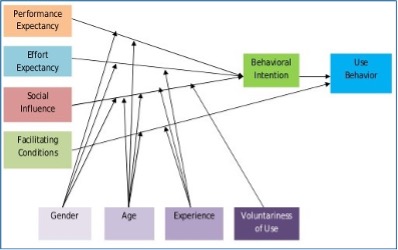
Within this framework, the Unified Theory of Acceptance and Use of Technology (UTAUT) (see Fig. 2) was used to examine the acceptance (and adoption) of technology by educators during Covid-19 (for remote and online teaching). Such acceptance was determined by the effects of performance expectancy, effort expectancy, social influence and facilitating conditions.
This study adopted a quantitative research methodology using a cross-sectional survey design. This study investigates how secondary school educators in Mauritius, carried out remote and online teaching during the Covid-19 pandemic, focusing on their perceptions and challenges.
According to a 2020 education statistics report, Mauritius had 9,624 secondary educators at that time. Targeting a 95% Confidence Interval with a 5% margin of error, the recommended sample size was 369 educators as calculated by the Raosoft online sample size calculator. For this study, a total of 300 educators completed the survey questionnaire. The study employed a non-probability, voluntary response sampling approach. The survey instrument was disseminated electronically to all schools, and educators who were willing to participate completed the questionnaire.
A quantitative survey was administered online in 2022 via SurveyMonkey to private and public schools across educational zones (school districts). The instrument consisted of 25 closed-ended questions. These questions were developed and aligned with the conceptual framework, drawing on the T-O-E dimensions and UTAUT constructs to help understand educators’ perceptions of emergency remote and online teaching and the use of technology during the pandemic. The questions were organised around key thematic areas (Technological, Organisational and Environmental) aligned with the study’s conceptual framework. The researchers used a self-administered questionnaire to assess the reliability and validity of the items while aiming for a clearer understanding of their effectiveness. The items developed from the instrument were directly aligned with the T-O-E framework.
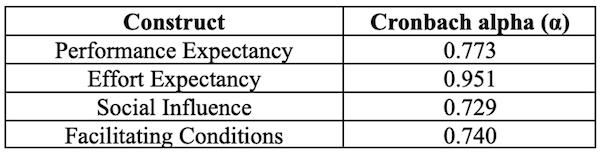
The UTAUT model was used to assess the validity of the instrument developed, and the research team was also consulted during the review process to ensure its validity further. Moreover, Cronbach’s alpha was calculated for each construct of the UTAUT model to ensure the reliability and internal consistency of the instrument. Cronbach’s alpha values for all constructs exceeded the acceptable threshold of 0.70, indicating satisfactory internal consistency as indicated in Table 1. The tests confirmed the internal consistency of the survey items. However, a key limitation of the survey was that the responses were collected in 2022, after the pandemic and sometime after the school closures, thus introducing potential recall bias, which may have had an impact when interpreting results.
Table 1: Reliability Test
All the participants in the survey voluntarily gave their consent and they were informed beforehand that their responses would be anonymised, kept confidential and used only for scientific purposes. No identifying data was collected and the study complied with national and institutional ethical requirements.
The survey items were categorised under the UTAUT components. This allowed us to have a structured analysis of the responses based on the theoretical framework with items developed to measure the four key constructs: Performance Expectancy, Effort Expectancy, Social Influence, and Facilitating Conditions. Each question was mapped with the UTAUT constructs and can be accessed in the Appendix section.
The survey results revealed that 73% of the participants were female and 27% male as shown in Figure 3. Their age groups are shown in Figure 4, indicating a concentration in the middle age groups, which could be an important element influencing factors such as technology adoption, teaching methods, and experience with remote and teaching.
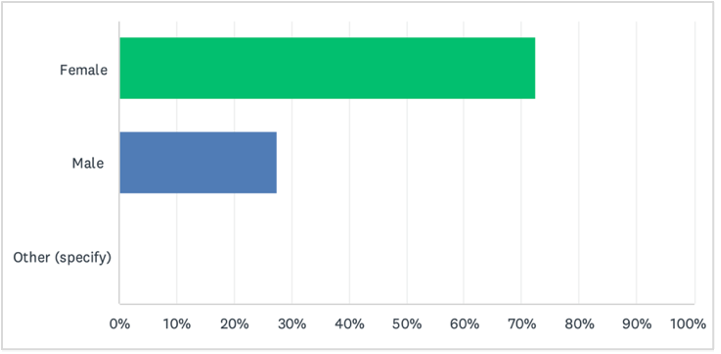
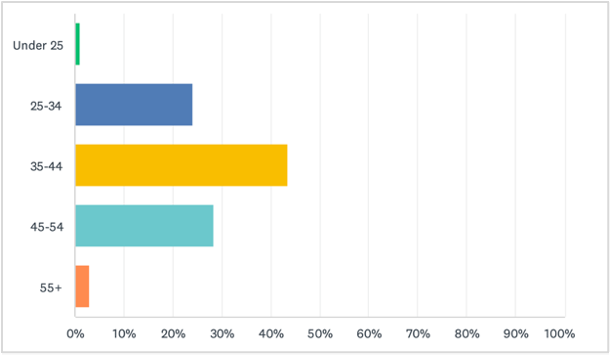
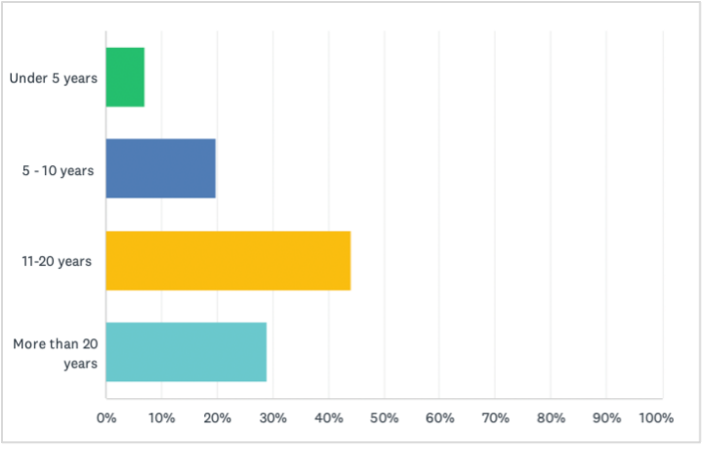
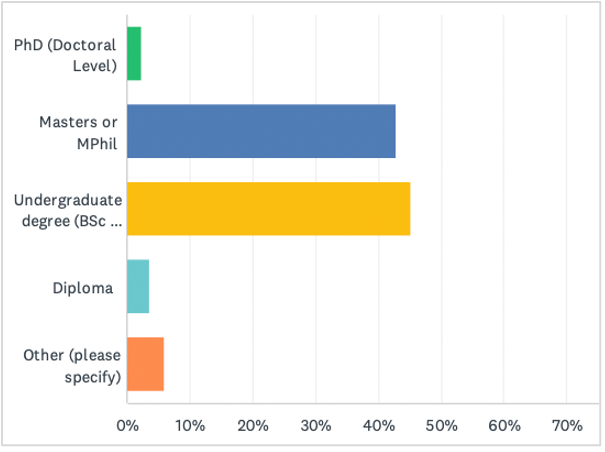
Figure 5 shows the teaching experience of the sample population. It can be observed that most of the participants have 11-20 years of teaching experience (44.15%), followed by those with more than 20 years (29.10%). This suggests that a good majority of them were generally experienced educators. Similarly, Figure 6 indicates the qualification level of the participants with 45.15% holding an undergraduate degree and 42.81% having a master’s degree.
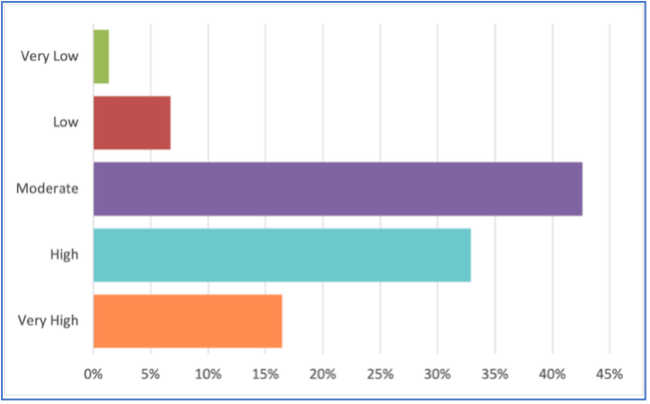
In terms of the willingness and motivation level of the participants, Figure 7 reveals that 16% had a 'very high' willingness to use remote and online teaching during the pandemic, while 33% and 43% had a ‘high’ and 'moderate' willingness, respectively. This indicates either a belief in the educational alternative that remote and online teaching represents and/or their previous experiences with digital tools in their teaching. It might also be simply linked to an unplanned and temporary emergency such as the pandemic.
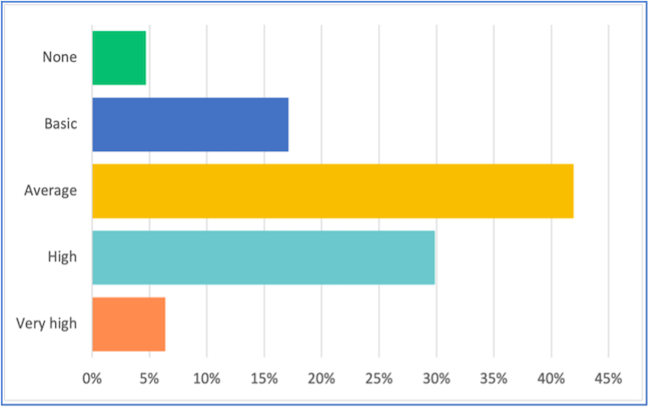
From Figure 8, it can be observed that the preparedness level might be strongly correlated with teachers’ willingness to adopt remote and online teaching. This could be linked to their actual digital literacy and competencies acquired through training and capacity-building activities in education technologies.
Most educators (54.92%) considered remote and online teaching an emergency measure, while 40.68% supported its integration into the curriculum. A small minority (4.41%) opposed it entirely, highlighting a divide in acceptance; many saw its value in emergencies but hesitated to adopt it as a matter of routine.
The Chi-square test found no significant association between perceptions and factors like age, gender, experience, or subject area (p = 0.306). However, willingness to engage in remote teaching (p = 0.000) and preparedness level (p = 0.000) were significant predictors. Educators with higher preparedness levels were more likely to support full integration, while those with minimal readiness preferred its use only during emergencies or opposed it altogether.
Figure 9a shows that most educators had average to proficient ICT skills, with 12% reporting advanced skills. A significant association (p = 0.005) indicates that ICT literacy influenced perceptions of remote teaching. Educators with higher proficiency favour embedding remote teaching in the curriculum, while those less skilled preferred its use only during emergencies, highlighting the role of digital competence.
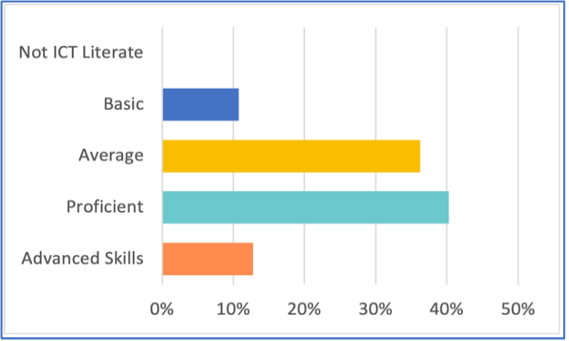
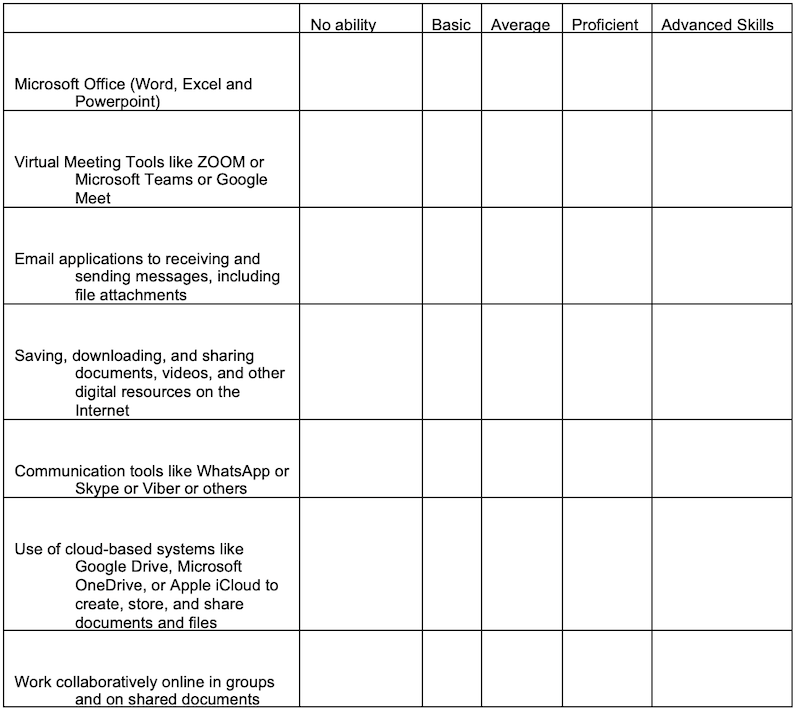
Figure 9b illustrates the reported competency levels of educators across a range of relevant digital tools. Most respondents reported average to very proficient skills in foundational tools such as Microsoft Office, virtual meeting tools, email applications, and general communication tools. However, there was a shift in the response distribution when considering more advanced skills such as working collaboratively online and using cloud-based systems. For these advanced competencies, there was a broader spread across all levels, from no ability to very proficient.
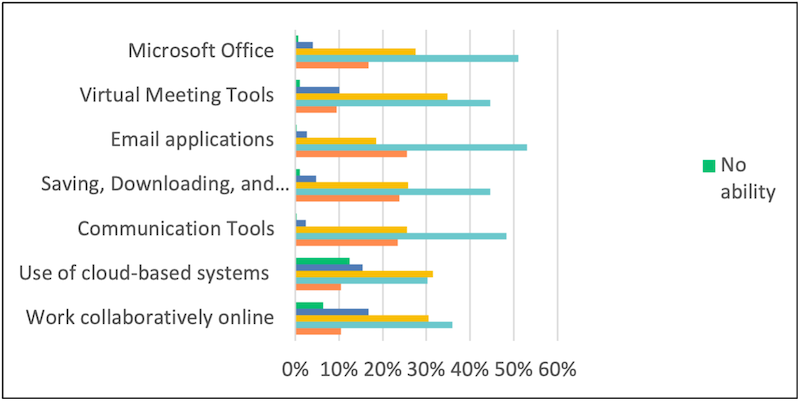
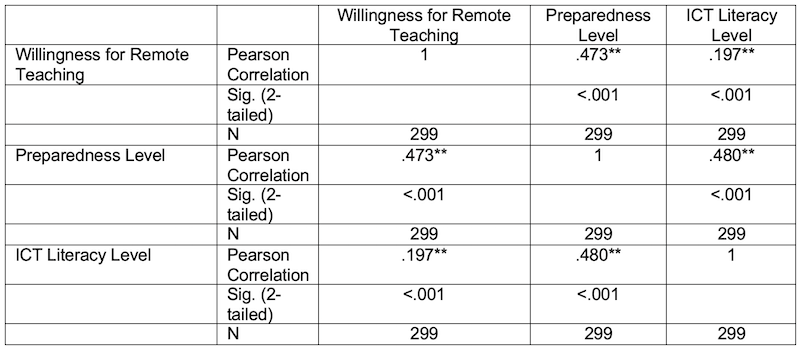
Table 2 shows a moderately positive correlation between the willingness to use remote and online teaching and the preparedness level. Furthermore, there is a moderate positive correlation between preparedness and ICT literacy levels.
Table 2: Correlations between Willingness, Preparedness, and Reported ICT Literacy Levels
Further analysis revealed that specific competencies, particularly in the use of virtual meeting tools, MS Office software (0.440), and cloud-based tools such as Google Drive/Document Share (0.466/0.495) significantly impacted educators' perceived preparedness (0.532). Therefore, ICT literacy levels significantly impacted educators' preparedness levels, improving their willingness to adopt remote and online teaching.
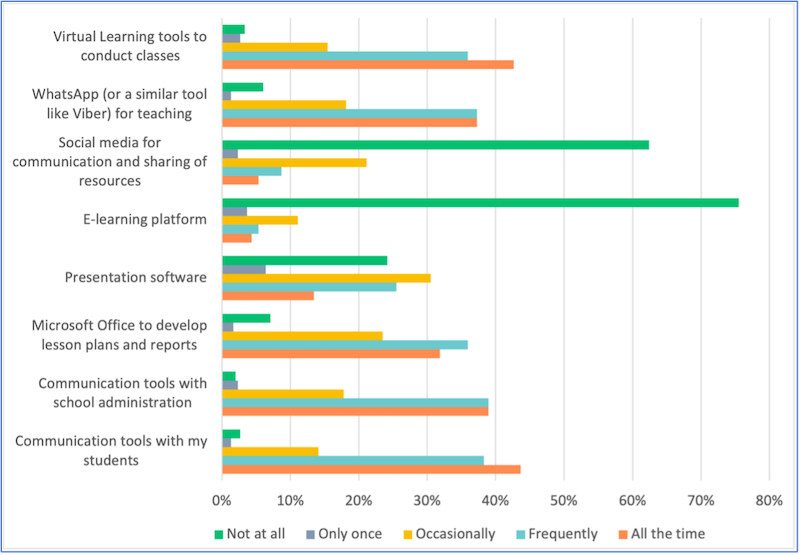
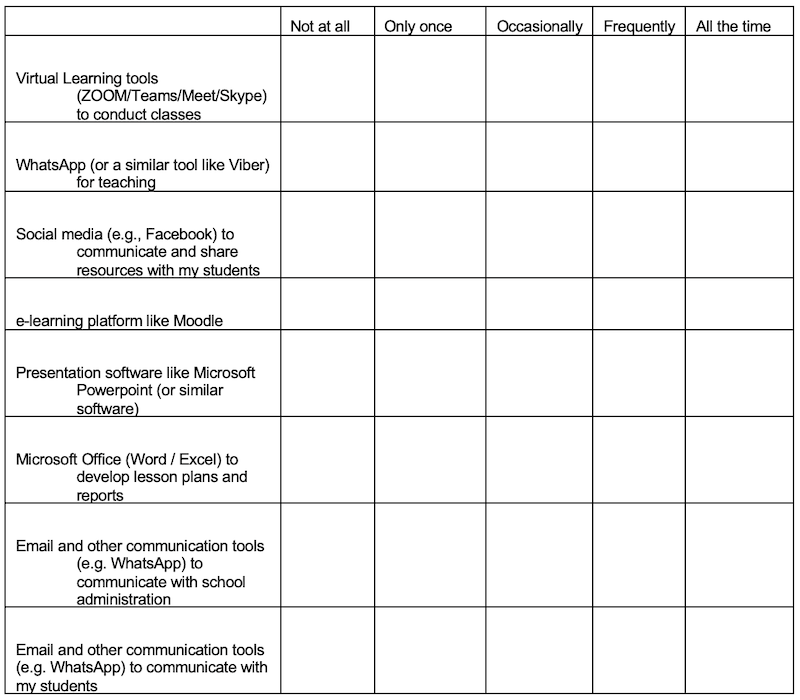
Educators primarily used virtual meeting tools (78.53%) and WhatsApp (74.50%), while social media and e-learning platforms were less utilised. Correlations between software usage and competencies (Figure 9b) show that educators proficient in one tool (e.g., MS Word, VM tools, Email, Shared Docs) were more likely to use virtual meeting tools. The significant positive correlations across all competencies support the interdependence of digital skills, reinforcing the relevance of frameworks like the UNESCO ICT Competency Framework for Teachers.
Only about 40% of educators regularly used presentation software, while nearly 70% frequently used Microsoft Word for lesson planning (Fig. 10). Since lesson plans were mandatory but online lesson delivery lacks a standardised approach, many educators turned to WhatsApp for convenience rather than pedagogy.
Moderate positive correlations between presentation tool use and both virtual meeting tools (r = 0.378, p < 0.001) and Microsoft Office (r = 0.293, p < 0.001) suggest that educators comfortable with presentations also used Zoom and Office tools, likely for screen-sharing lessons. Additionally, a strong correlation (r = 0.538, p < 0.001) indicates that educators using email for administrative tasks also relied on it for student communication.
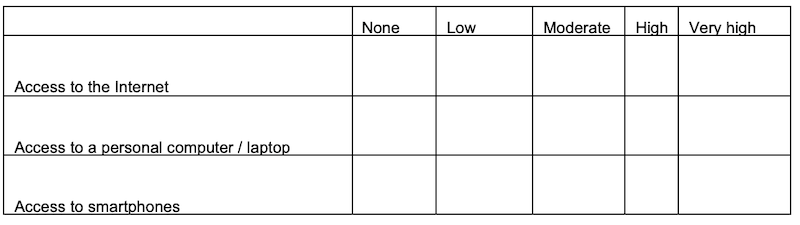
To further understand whether other factors influenced the decision about which tools to use for remote and online teaching, data on their perceptions of student access to technology and devices, and educators’ ownership of devices including their internet connectivity type, were collected. Figure 11 illustrates educators' responses about their knowledge of their students’ access to facilities.
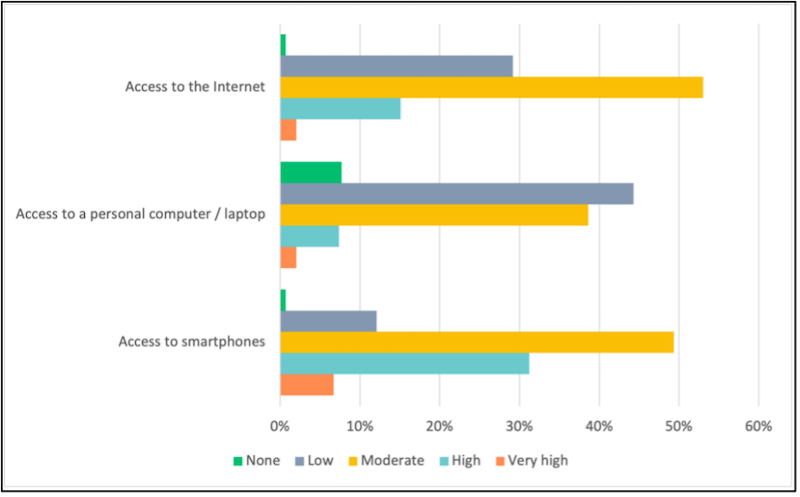
Educators further reported that many students had only moderate access to the Internet (53.02%) and smartphones (49.33%), with even fewer having personal computers (38.59%). While this is a form of secondary data, it indicated that the digital divide among students might impede remote and online learning.
The Chi-square tests revealed a statistically significant relationship (p < 0.001) between student access to technology (including PCs, laptops, and smartphones) and the use of various educational tools by educators. The findings underscore the adaptive nature of educators in responding to their students’ access to technology. Educators are more likely to employ advanced digital tools in environments where students are well-equipped with PCs, laptops, or smartphones, thereby enhancing the remote learning experience.
The chart in Figure 12 shows educators’ choice of tools for remote and online teaching and their perceived freedom from authorities to make those choices. Many educators opted for tools they were already comfortable with and used extensively. In contrast, while some educators were influenced by the tools their peers used, their responses varied widely, ranging from “not using those tools at all” to “using them extensively”. The chart also highlights mixed feelings about the flexibility given by authorities. Some educators felt they had some freedom, but others reported having either very little or a lot of flexibility, indicating different experiences with institutional support.
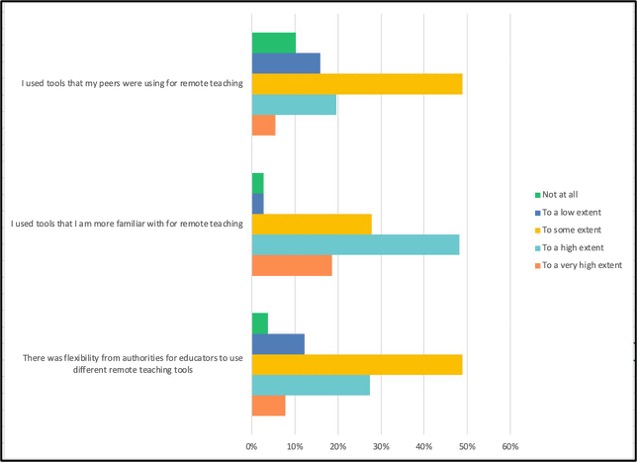
Chi-square tests, however, demonstrate that the flexibility to use tools, and their familiarity with them had significant influence over the tools educators used. While peer influence did play a role, it was not as strong as flexibility or familiarity. This suggests that personal comfort and institutional freedom were more decisive factors in their choices. One notable observation was the moderately strong positive correlation (0.35) between the flexibility to use tools and their familiarity with them, suggesting that when given the flexibility to choose, educators chose tools they were familiar with.
Figure 13 shows that educators faced different challenges that impacted the remote and online teaching process and students' learning experiences. The obvious and more significant one was the regularity and engagement of the students. The p-value (0.057) suggests a marginal association between the extent of challenges faced due to student attendance and educators' perceptions of remote and online teaching. Educators who experienced frequent challenges with student attendance were more likely to view remote teaching as suitable only during emergencies and not as part of their regular work.
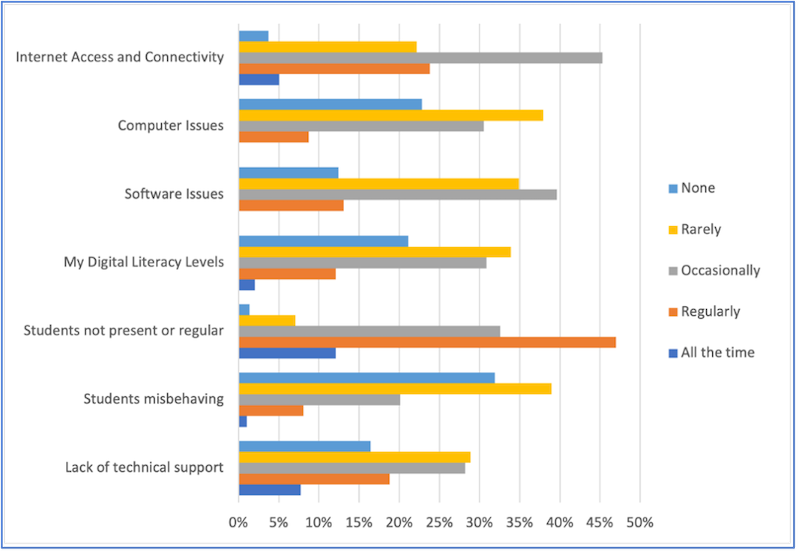
Internet access and connectivity were major challenges for educators, with a significant association (p = 0.030) between connectivity issues and their views on remote teaching. Computer and software problems were also highlighted, with many educators citing the lack of technical support as a key issue. While computer issues did not significantly impact perceptions, software issues did—those facing frequent problems preferred remote teaching only in emergencies, whereas those with fewer issues were more open to integrating it into the curriculum. Student misbehaviour, though noted by some, was not a widespread concern and did not significantly influence educators’ views. Similarly, factors like technical support availability and digital literacy levels did not have a notable impact on the acceptance of remote and online teaching as a standard practice.
Furthermore, when asked about constraints linked to remote and online teaching during school closures, approximately 48% reported that it was not convenient for them due to family commitments and having children at home. In comparison, 45% reported a negative impact on their health while spending long hours online to conduct classes. Forty percent reported sharing internet access and computers at home, while 35% of educators did not have a workspace conducive to remote and online teaching (see Fig. 14). Only about 15% of the respondents reported having none of these constraints.
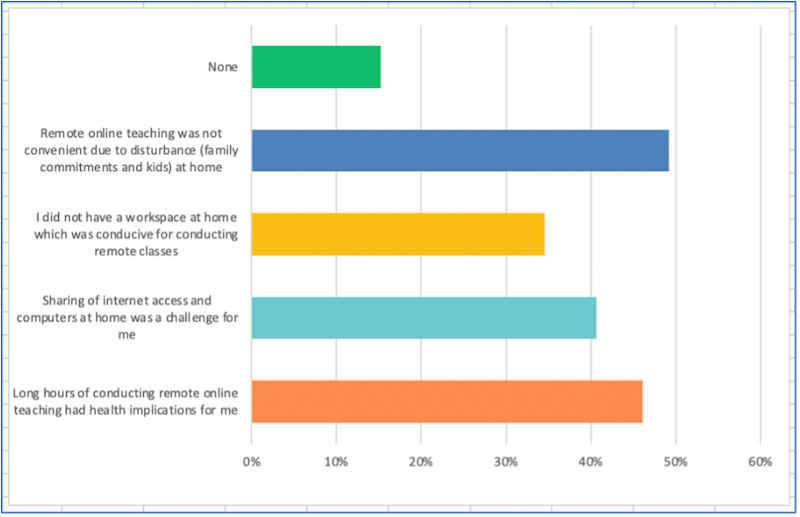
A significant association (p < 0.005) was found between family disturbances, lack of workspace, and educators’ perceptions of remote teaching. Those facing disturbances or lacking a workspace favoured remote teaching for emergencies only, while those with conducive environments supported its integration into the curriculum. Health concerns and shared resources, though valid, did not significantly influence perceptions. These findings highlight the need to address workspace challenges to improve the acceptance of remote and online teaching as a sustainable educational approach.
A significant proportion of educators were sceptical about the effectiveness of remote and online teaching in achieving intended learning outcomes. While 36.73% remained neutral, only 27.55% agreed or strongly agreed that it was effective. This reflected challenges in adapting pedagogical methods and engaging students remotely. A statistically significant association (p = 0.000) was found between educators’ perceptions of remote teaching as part of their scheme of work and its perceived effectiveness.
The digital divide was another major concern, with 80.62% agreeing that inequalities in access to learning were substantial. Limited access to reliable internet and digital devices significantly impacted equitable education delivery. A statistically significant association (p = 0.000) indicates that educators’ acceptance of remote teaching was influenced by their recognition of digital divide-related challenges.
Workload and lesson planning were also areas of concern. Remote teaching required more preparation than traditional methods, with 68.81% agreeing that it was more demanding. A significant association (p = 0.000) was found between educators’ perceptions of remote teaching and their views on workload intensity, underscoring the additional effort needed for material preparation and technology management.
Technological infrastructure posed another challenge. Only 18.71% found it sufficient, while 58.51% disagreed or strongly disagreed. A significant association (p = 0.000) suggests that educators’ acceptance of remote teaching was closely linked to infrastructure adequacy. Even those supporting integration into the curriculum expressed dissatisfaction.
Monitoring student progress was particularly difficult, with only 10.88% finding it manageable, while 71.43% struggled. The lack of face-to-face interaction and technical limitations contributed to this challenge. A significant association (p = 0.000) indicates that educators’ acceptance of remote teaching was strongly influenced by their ability to track student progress. Even among supporters, concerns about monitoring effectiveness remained prevalent.
This research explored how educators adapted their teaching during the Covid-19 pandemic, the challenges they faced, and their perceptions of remote and online teaching. Key findings highlighted educators’ willingness and digital literacy levels, preparedness in technology-related pedagogy, access to technology and infrastructure, student experiences, educator perceptions, and policy implications.
During school closures, educators used various tools to deliver instruction, but e-learning platforms were rarely utilised, exposing a gap in national digital learning policies. This suggests that educators and authorities had to improvise to ensure learning continuity. The findings indicate that digital literacy played a crucial role in this transition, yet there is no standard measure for assessing educators’ competencies. The UNESCO ICT Competency Framework for Teachers could serve as a benchmark to address this gap. Research (Aperribai et al., 2020; Falloon, 2020; Marcial & Rama, 2015) supports the view that improved digital preparedness enhances educators’ willingness to embrace technology, leading to a more positive perception of remote and online teaching.
While educators generally responded positively to remote teaching, they faced multiple challenges that influenced their views on its effectiveness. One major challenge was student absenteeism, which hindered learning outcomes. This absence was partly due to the digital divide, where many students lacked internet access or digital devices, and partly due to issues like indiscipline and lack of parental involvement. Research (Hamilton et al., 2020; Mercier et al., 2021) has identified student engagement as a key obstacle to online teaching, and educators struggling with these issues were more hesitant to adopt remote teaching.
Student misbehaviour in online classrooms is another topic of interest (Baysal & Ocak, 2021; Sativa et al., 2022). However, this study found that misbehaviour was not a widespread challenge. It is possible that students who attended online sessions were more disciplined or had better parental guidance. Further research is needed to assess the nature and severity of online discipline issues.
Technical challenges such as software issues, lack of technical support, and internet connectivity also influenced educators’ perceptions. While hardware issues were less prevalent, the ability to choose familiar tools helped mitigate some challenges. However, broad flexibility without a structured framework may not be ideal in the long term. As noted by Mercier et al. (2021), emergency remote teaching during the pandemic revealed the risks of leaving educators to navigate technology without clear guidance. A balance is needed between flexibility and structured support.
Educator well-being during remote teaching is another critical aspect. Many reported difficulties such as the lack of a dedicated workspace, family disruptions, the need to share ICT resources, and health concerns from prolonged screen time. While such challenges were tolerable in an emergency, integrating remote teaching into the curriculum requires addressing these logistical and environmental issues (Arora & Chauhan, 2021; Kellen & Kumar, 2021; Ünal & Dulay, 2022).
Additionally, increased workload without adequate support was a major factor in educators’ acceptance of online teaching (DeCoito & Estaiteyeh, 2022). Lesson planning and adapting to new learning designs required more preparation time. If remote teaching is to be sustainable, preparation time must be factored into educators’ workloads.
Another important finding of this study is the relatively weak influence of formal technical support on educators’ acceptance of remote and online teaching. While some studies generally identify institutional and technical support as key predictors for successful technology adoption, this was less pronounced in the Mauritian context. During the Covid-19 school closures, many educators relied primarily on personal coping strategies and digital tools they were already familiar with, rather than on structured institutional systems or formal support mechanisms. This finding aligns with studies conducted in emergency teaching contexts, where educators were required to improvise rapidly with limited guidance and support (Mercier et al., 2021; Seabra et al., 2021). However, it contrasts with research where strong institutional support has been shown to significantly enhance educators’ acceptance and effective use of online teaching technologies (Hamilton et al., 2020; Klusmann et al., 2022). These differences suggest that contextual and systemic constraints play an important role in mediating expected relationships within technology adoption frameworks, particularly in developing and small island education systems.
Lastly, equity in technology access remains a key issue. Despite improvements in internet connectivity and device affordability, the digital divide persists, especially in developing regions. Educators’ perceptions were significantly influenced by students’ access to technology and the ease of monitoring their progress. This study reinforces that educators adopt a learner-centred perspective, where concerns about student access and engagement shape their acceptance of remote teaching.
It follows from the findings and related discussion that there is a need to act at the policy level, either through amendment of existing policies, or the establishment of new policies, followed by an appropriate action plan. While educators were prepared at the individual level during the pandemic, there was a clear lack of preparedness regarding policy, strategy, infrastructure, and coordinated action at the systemic levels. The main policy recommendations for a more resilient education system are as follows:
A key limitation of this study is the potential recall bias, as the survey was conducted quite some time after the pandemic and the school closures. This means that educators’ responses rely on what they recall, which may not be entirely accurate. Therefore, future research should consider using real-time data collection methods to minimise this bias and provide more precise insights into the experiences of educators during emergency remote and online teaching. While this study provides broad quantitative insights into educators’ perceptions and experiences, future research could adopt qualitative or mixed-methods approaches to explore these findings in greater depth.
The findings highlight educators’ resilience during the emergency shift to remote teaching, especially at the secondary level. However, the authorities’ decision to have students repeat a year reflects concerns about its effectiveness. Most educators found remote teaching more demanding than traditional methods, with only a third viewing it as effective. Digital inequities emerged as a major barrier, exposing infrastructure and accessibility gaps. A strategic review of programmes like SSP and EDLP is needed. Policymakers must develop an integrated strategy for a resilient, technology-enabled education system to better prepare Mauritius for future disruptions and a more digital learning environment.
Data Availability Statement: The data supporting the findings of this study are available from the corresponding author upon reasonable request.
Declarations of Interest Statement
This is to certify that this research has neither been submitted for publication elsewhere, nor been published in another journal. I attest to the fact that all authors listed have contributed significantly to the work, have read the manuscript, attest to the validity and legitimacy of the data and its interpretation, and agree to its submission
Ethics Approval: Ethics approval was gained from the Research and Ethics Committee of the Ministry of Education, Tertiary Education, Science and Technology, Mauritius with approval number MTE/CR/213.
Aboagye, E. (2021). Transitioning from face-to-face to online instruction in the COVID-19 era: Challenges of tutors at colleges of education in Ghana. Social Education Research, 2(1) 9-19. https://doi.org/10.37256/ser.212021545
AlAdwani, A., & AlFadley, A. (2022). Online learning via Microsoft TEAMS during the COVID-19 pandemic as perceived by Kuwaiti EFL Learners. Journal of Education and Learning, 11(1), 132-146. https://doi.org/10.5539/jel.v11n1p132
Aperribai, L., Cortabarria, L., Aguirre, T., Verche, E., & Borges, Á. (2020). Teacher's physical activity and mental health during lockdown due to the COVID-2019 pandemic. Frontiers in Psychology, 11, 577886. https://doi.org/10.3389/fpsyg.2020.577886
Arora, R.G., & Chauhan, A. (2021). Faculty perspectives on work from home: Teaching efficacy, constraints and challenges during COVID’19 lockdown. Journal of Statistics and Management Systems, 24(1), 37-52. https://doi.org/10.1080/09720510.2021.1875567
Aslam, R., Khan, N., & Ahmed, U. (2020). Technology integration and teachers' professional knowledge with reference to International Society for Technology in Education (ISTE)-Standard: A causal study. Journal of Education and Educational Development, 7(2), 307-327. http://dx.doi.org/10.22555/joeed.v7i2.31
Barbour, M.K., LaBonte, R., Hodges, C.B., Moore, S., Lockee, B.B., Trust, T., ... & Kelly, K. (2020). Understanding pandemic pedagogy: Differences between emergency remote, remote, and online teaching. State of the Nation: K-12 e-Learning in Canada.
Baysal, E.A., & Ocak, G. (2021). Teachers’ views on student misbehaviors during online courses. Problems of Education in the 21st Century, 79(3), 343. https://doi.org/10.33225/pec/21.79.343
Chau, P.Y., & Tam, K.Y. (1997). Factors affecting the adoption of open systems: An exploratory study. MIS Quarterly, 21(1) 1-24. https://doi.org/10.2307/249740
DeCoito, I., & Estaiteyeh, M. (2022). Online teaching during the COVID-19 pandemic: Exploring science/STEM teachers’ curriculum and assessment practices in Canada. Disciplinary and Interdisciplinary Science Education Research, 4(1), 8. https://doi.org/10.1186/s43031-022-00048-z
Defimedia. (2021, March 23). Éducation: Le rapport de l'Audit pointe des irrégularités autour du Early Digital Learning Programme. Defimedia. https://defimedia.info/education-le-rapport-de-laudit-pointe-des-irregularites-autour-du-early-digital-learning-programme
Falloon, G. (2020). From digital literacy to digital competence: The teacher digital competency (TDC) framework. Educational Technology Research and Development, 68, 2449-2472. https://doi.org/10.1007/s11423-020-09767-4
Ferri, F., Grifoni, P., & Guzzo, T. (2020). Online learning and emergency remote teaching: Opportunities and challenges in emergency situations. Societies, 10(4), 86. https://doi.org/10.3390/soc10040086
Gomez, F.C., Trespalacios, J., Hsu, Y.C., & Yang, D. (2022). Exploring teachers’ technology integration self-efficacy through the 2017 ISTE standards. TechTrends, 66, 159-171. https://er.educause.edu/articles/2020/3/the-difference-between-emergency-remote-teaching-and-online-learning
Hamilton, L.S., Kaufman, J.H., & Diliberti, M. (2020). Teaching and leading through a pandemic: Key findings from the American Educator Panels Spring 2020 COVID-19 Surveys. Insights from the American Educator Panels, Research Report, RR-A168-2. RAND Corporation. https://doi.org/10.7249/RRA168-2
Hodges, C., Moore, S., Lockee, B., Trust, T., & Bond, A. (2020). The difference between emergency remote teaching and online learning. Educause Review. https://doi.org/10.1163/9789004702813_021
Hsieh, P.L., Yang, S.Y., Lin, W.Y., & Huang, T.C. (2023). Facilitated virtual learning for advanced geriatric education among nursing students during the COVID pandemic in Taiwan. Library Hi Tech, 41(1), 59-70. https://doi.org/10.1108/LHT-12-2021-0472
International Society for Technology in Education (ISTE). (2018). ISTE standards. https://www.iste.org/standards
International Society for Technology in Education (ISTE). (2017). ISTE standards for educators. https://www.iste.org/standards/for-educators
Kellen, K., & Kumar, S. (2021). Types of barriers experienced by online instructors in higher education. Online Journal of Distance Learning Administration, 23(4).
Kenny, M. (2020). Blended to online learning during the COVID-19 pandemic: A case study of practice. The Irish Journal of Adult and Community Education, 51(62).
Klusmann, B., Trippenzee, M., Fokkens-Bruinsma, M., Sanderman, R., & Schroevers, M.J. (2022). Providing emergency remote teaching: What are teachers’ needs and what could have helped them to deal with the impact of the COVID-19 pandemic? Teaching and Teacher Education, 118, 103815. https://doi.org/10.1016/j.tate.2022.103815
Lippert, S.K., & Govindarajulu, C. (2006). Technological, organizational, and environmental antecedents to web services adoption. Communications of the IIMA, 6(1), 14. https://doi.org/10.58729/1941-6687.1303
Lohtia, R., Giang Barrera, K.P., Fendler, R.J., & Crowther, K.E. (2024). Navigating pedagogical transitions: Perceptions of teaching effectiveness in the era of emergency remote teaching during COVID-19. Advances in Online Education: A Peer-Reviewed Journal, 3(2), 134-151. https://doi.org/10.69554/KOFS6705
Marcial, D.E., & Rama, P.A. (2015). ICT competency level of teacher education professionals in the Central Visayas Region, Philippines. Asia Pacific Journal of Multidisciplinary Research, 3(5), 28-38.
Mercier, K., Centeio, E., Garn, A., Erwin, H., Marttinen, R., & Foley, J. (2021). Physical education teachers’ experiences with remote instruction during the initial phase of the COVID-19 pandemic. Journal of Teaching in Physical education, 40(2), 337-342. https://doi.org/10.1123/jtpe.2020-0272
Minister of Education & Human Resources (MoEHR). (2020). Covid-19: Ensuring teaching and learning continuity through digital education is a must. http://www.govmu.org/English/News/Pages/Covid-19-Ensuring-teaching-and-learning-continuity-through-digital-education-is-a-must,-says-VPM.aspx
Morgan, H. (2020). Best practices for implementing remote learning during a pandemic. The Clearing House: A Journal of Educational Strategies, Issues and Ideas, 93(3), 135-141. https://doi.org/10.1080/00098655.2020.1751480
Nyamupangedengu, E., Kazeni, M., Mandikonza, C., Stephen, M., Tshesane, H., Ajayi, E., ... & Moloi, M. (2023). Mathematics and science teacher educators experiences of using the WhatsApp platform as a tool for supporting teaching during the Covid-19 pandemic. Journal of Education (University of KwaZulu-Natal), (92), 115-135. https://doi.org/10.17159/2520-9868/i92a07
Oliveira, T., Martins, R., Sarker, S., Thomas, M., & Popovič, A. (2019). Understanding SaaS adoption: The moderating impact of the environment context. International Journal of Information Management, 49, 1-12. https://doi.org/10.1016/j.ijinfomgt.2019.02.009
Priyadarshini, A., & Bhaumik, R. (2020). E-readiness of senior school learners to online learning transition amid COVID-19 lockdown. Asian Journal of Distance Education, 15(1), 244-256. https://asianjde.com/ojs/index.php/AsianJDE/article/view/456
Sativa, R.A., Sukyadi, D., & Purnawarman, P. (2022). Teachers’ perspectives of strategies on managing students’ misbehavior during synchronous online learning. In English Language and Literature International Conference (ELLiC) Proceedings (Vol. 5, pp. 390-401).
Schwirzke, K., Vashaw, L., & Watson, J. (2018). A history of K-12 online and blended instruction in the United States. In K. Kennedy, & R.E. Ferdig (Eds.), Handbook of research on K-12 online and blended learning (2nd ed). ETC Press.
Seabra, F., Teixeira, A., Abelha, M., & Aires, L. (2021). Emergency remote teaching and learning in Portugal: Preschool to secondary school teachers’ perceptions. Education Sciences, 11(7), 349. https://doi.org/10.3390/educsci11070349
Shemshack, A. (2021). What supports do teachers need on effective instructional technology integration. Journal of Literacy & Technology, 22(1), 22-51.
Talidong, K.J.B. (2020). Implementation of Emergency Remote Teaching (ERT) among Philippine teachers in Xi'an, China. Asian Journal of Distance Education, 15(1), 196-201. https://doi.org/10.5281/zenodo.3881825
Tornatzky, L., & Fleischer, M. (1990). The process of technology innovation. Lexington Books.
Trust, T. (2018). 2017 ISTE standards for educators: From teaching with technology to using technology to empower learners. Journal of Digital Learning in Teacher Education, 34(1), 1-3. https://doi.org/10.1080/21532974.2017.1398980
Ünal, I., & Dulay, S. (2022). Teachers’ work-life balance in emergency remote teaching during the COVID-19 pandemic. Asian Journal of Distance Education, 17(2). https://www.asianjde.com/ojs/index.php/AsianJDE/article/view/657
United Nations Educational, Scientific and Cultural Organization. (2018). ICT competency framework for teachers. UNESCO. https://unesdoc.unesco.org/ark:/48223/pf000026572
Wong, K.M., & Moorhouse, B.L. (2021). Digital competence and online language teaching: Hong Kong language teacher practices in primary and secondary classrooms. System, 103, 102653. https://doi.org/10.1016/j.system.2021.102653
Zhang, S.X., Wang, Y., Rauch, A., & Wei, F. (2020). Unprecedented disruption of lives and work: Health, distress and life satisfaction of working adults in China one month into the COVID-19 outbreak. Psychiatry Research, 288, 112958. https://doi.org/10.1016/j.psychres.2020.112958
Zheng, L., Gibson, D., & Gu, X. (2019). Understanding the process of teachers’ technology adoption with a dynamic analytical model. Interactive Learning Environments, 27(5-6), 726-739. https://doi.org/10.1080/10494820.2019.1610457
Author Notes
Yousra Rajabalee is a Senior Lecturer in Computer Science Education at the Mauritius Institute of Education. She has extensive experience in education technologies, immersive learning environments, and digital learning design. She has contributed to several national and international projects on digital and technology-enabled learning, micro-credentials, and the development of interactive learning resources. Her portfolio includes engagements with the Commonwealth of Learning, GESCI, University of Namibia, and AAUN network, amongst others. Email: y.rajabalee@mie.ac.mu (https://orcid.org/0000-0003-4885-610X)
Ravhee Bholah is an Associate Professor at the Mauritius Institute of Education. He is an active researcher in the fields of nutrition, environmental health, and building science. With a career spanning several years, he has been affiliated with prominent institutions in Mauritius, including the Mauritius Institute of Education and the University of Mauritius. His research primarily focuses on the intersection of environmental factors and public health, particularly in the context of Mauritius. Notable publications include investigations into the influence of home economics on the nutrition knowledge of adolescents, as well as studies addressing sick building syndrome and its correlation with indoor environmental quality. Email: r.bholah@mie.ac.mu (https://orcid.org/ 0000-0001-7725-8200)
Mohammad Issack Santally is a Professor in Education Technology at the University of Mauritius, and is also the Pro-Vice-Chancellor (Academia) at the University of Mauritius. He is an active researcher in the field of Education Technology and e-Learning, and has been involved in a number of regional consultancies for institutions like the Commonwealth of Learning, COMESA and SADC. He holds a Commonwealth of Learning Chair, and a UNESCO Chair in Inclusive Education Technologies. Email: m.santally@uom.ac.mu (https://orcid.org/ 0000-0003-3745-2150)
Wolfgang Greller is a Professor for Learning and Teaching Innovation at the University College of Teacher Education Vienna. He is a leading expert on learning analytics and has long-standing experience in EU projects, going back some 25 years. Piloting and implementing innovative forms of learning that reflect the pulse of the times is one of his interests. Email: Wolfgang.GRELLER@phwien.ac.at (https://orcid.org/ 0000-0002-3571-0593)
Cite as: Rajabalee, Y., Bholah, R., Santally, M.I., & Greller, W. (2026). Adoption and perceptions of remote and online teaching by secondary school educators in Mauritius during Covid-19: Implications for policy and practice. Journal of Learning for Development, 13(1), 1-33.
1. I hereby consent to filling this survey, and i am aware that the information I provide will be used strictly for this research and will be anonymous.
Yes.
Demographics
In this section we will gather some basic information with respect to your profile, your school and the environment in which you work. Everything is confidential and kept anonymous.
2. What is your gender?
Male
Female
What is your age group?
Under 25
25 – 34
35 – 44
45 – 54
+55
3. How many years of experience do you have as a teacher?
Under 5
5 – 10
11 – 20
More than 20 years
4. In which type of Secondary School do you work?
Public (Government) Secondary School
Private (aided) Secondary School
Private (non-aided) Secondary School
5. What is your highest qualification level?
PhD (Doctoral Level)
Masters or Mphil
Undergraduate degree (BSc or BEd)
Diploma
Other (please specify)
6. Choose any specific qualification related to Teaching that you have:
Teacher's Diploma
BEd (Secondary)
PGCE
MEd
Doctor of Education
Other (please specify)
7. What is your subject area?
Languages (English/French)
Asian Languages
Maths
Sciences (Physics, Chemistry, Biology)
Accounting and Economics
Computer Studies
Design and Technology
Physical Education
Pre-Vocational
Other (please specify)
8. Rate your willingness/motivation level to use remote online teaching during the pandemic
Very Low
Low
Moderate
High
Very High
9. In which school (or education zone) do you work? (optional)
Technology Dimension
In this section, we look at your facilities, access, and use of technology for teaching during the pandemic. You will rate your digital skills in terms of the ease of use of different tools.
10. What type(s) of Internet Connection do you have at home?
Broadband ADSL (e.g. MyT)
Emtel Airbox
4G Mobile Internet (using your smartphone or other 4G devices as access point)
I do not have access to Internet at home
If you do not have Internet at home, kindly specify the reason.
11. What type of equipment do you own?
Personal Desktop Computer (PC)
Laptop
Tablet
Smartphone
None of the above
12. Please rate your ability/confidence to use the following tools & software.
13. Rate your overall ICT Literacy Level (as per your self-assessment)
Not ICT Literate
Basic
Average
Proficient
Advanced Skills
14. How would rate your preparedness level for remote online teaching during the pandemic?
None
Basic
Average
High
Very high
15. Rate the affordability for normal use, in terms of the prices of the following
16. To the best of your ability, rate your students' access to technology during the pandemic.
17. To what extent did you use the following tools and software during the pandemic for teaching and learning
18. What were the types and extent of challenges and issues you experienced during remote online teaching?
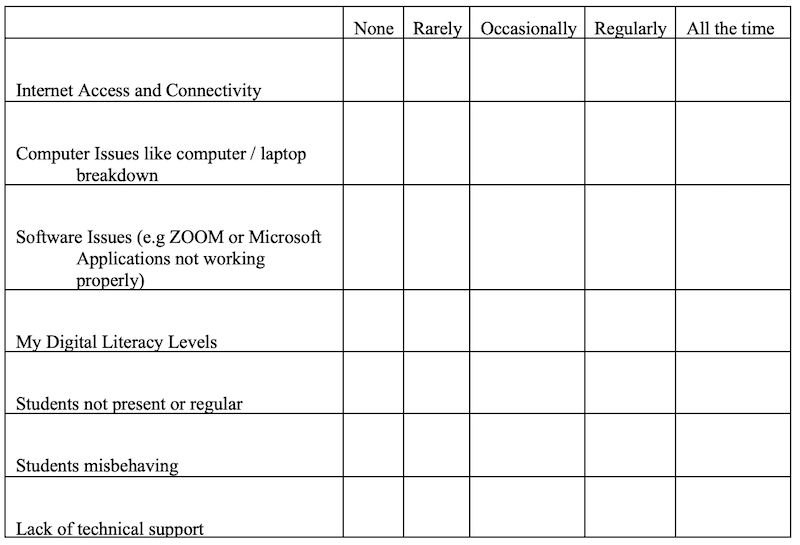
19. Rate the level of technical and logistical support you received from the School and/or Ministry and the ease of use of technology for remote teaching
Not at all
Basic
Moderate
Good
Excellent
Environment
20. The flexibility level that you had to select tools and methods for remote online teaching
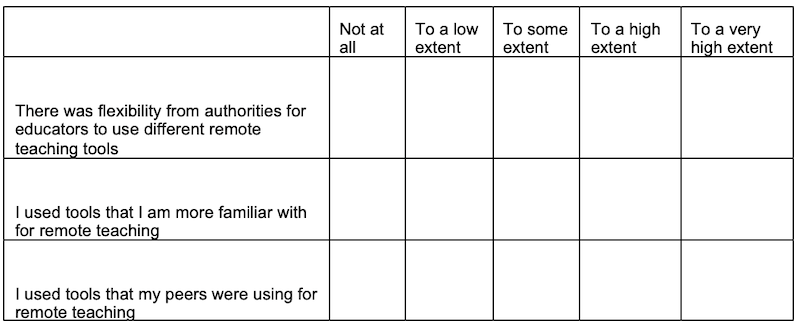
21. How do you view remote online teaching as part of the scheme of work?
Remote teaching is not part of my work and should have not taken place
Remote teaching using technology should be embedded in the actual curriculum framework
Remote teaching should be used only during emergencies
22. Which of the following applies to you in the context of remote online teaching:
Remote online teaching was not convenient due to disturbance (family commitments and kids) at home
I did not have a workspace at home which was conducive for conducting remote classes
Sharing of internet access and computers at home was a challenge for me
Long hours of conducting remote online teaching had health implications for me
None of the above
23. Rate the following in terms of your perceptions of the efficiency of remote online teaching to achieve learning outcomes
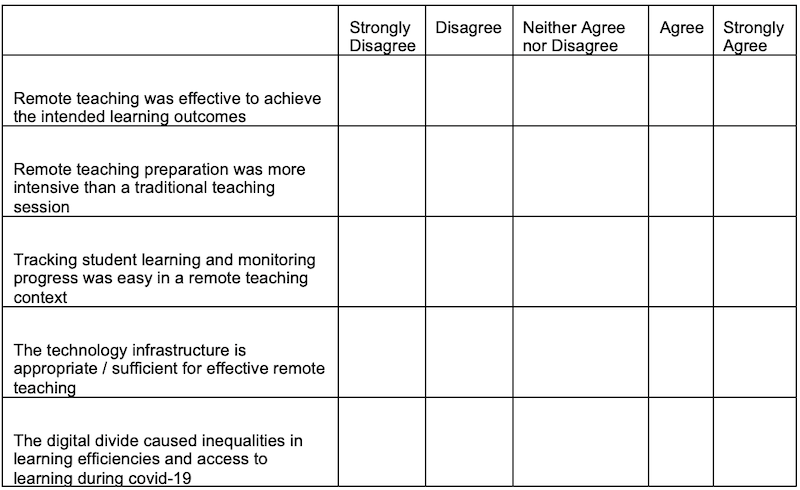
24. Moving forward how do you perceive remote online teaching?
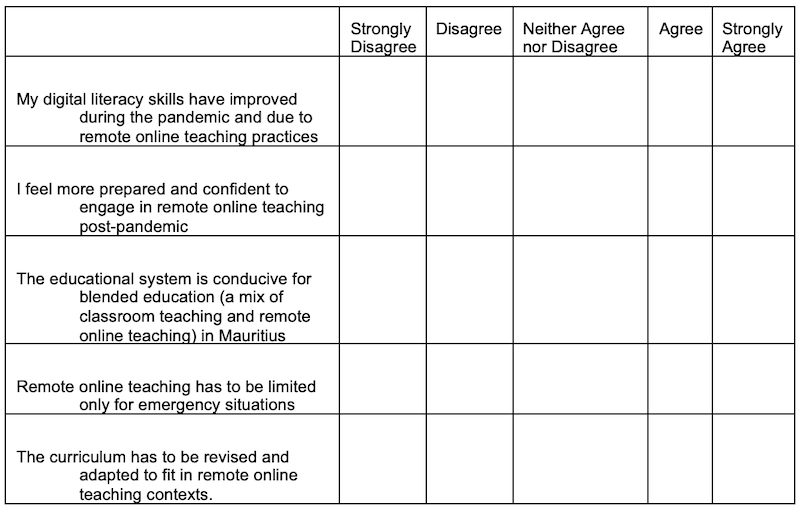
For data analysis, each question was mapped with the UTAUT constructs as follows:
Performance Expectancy – Questions (24 and 25) assessed educators' perceptions of the efficiency of remote and online teaching.
Effort Expectancy – Questions (13, 14, 15 and 23) evaluated educators' ability to use specific tools and software, their ICT literacy, preparedness for remote teaching, and the ease of using remote technologies
Social Influence – Question (21) determined the flexibility educators felt in choosing tools and methods for remote teaching.
Facilitating Conditions – Questions (19, 20 and 25) explored the challenges faced, the support received, and the ease of technology use during remote teaching
The survey questionnaire was administered to educators of different subject areas namely Languages (English/French/Asian), Mathematics, Sciences (Physics, Chemistry, Biology), Accounting and Economics, Computer Studies, Design and Technology, Physical Education and Pre-Vocational. The educators were working with lower secondary students who were from Grades 7 to 9.