Siti Suprihatiningsih, Gusti Uripno, Imam Sujads and Rizki Kurniawan Rangkuti
2026 VOL. 13, No. 2
Abstract: The Artificial Intelligence (AI) revolution has affected all of education, inluding mathematics education. Studies on AI have described how it can be integrated into mathematics learning. However, a challenge exists concerning the teacher's perspective on involving AI in mathematics teaching. Every mathematics teacher is expected to improve students’ 21st-century skills, which include problem-solving ability, critical thinking, and creativity. These conditions have driven studies to analyse AI usage in mathematics education. This systematic literature review (SLR) analysed 20 articles according to their research design, research paradigm, data collection methods, topics, participants, and AI tools. Furthermore, it applied an advanced literature search approach to identify relevant scientific sources on the application of AI in mathematics education. The framework utilised in this study is the PRISMA systematic review process. Ultimately, several selected articles that were analysed in this study were found to possess various characteristics. Lastly, the study concludes that AI integration in mathematics education has both benefits and weaknesses.
Keywords: Artificial Intelligence, AI integration, mathematics, education, mathematics teaching
Artificial Intelligence (AI) is among the most transformative technologies and affects virtually every domain of human life (Burlakov et al., 2020), including education. AI enhances human capacity for learning and teaching (Markauskaite et al., 2022), and its adoption accelerated significantly during and after the Covid-19 pandemic (Mele et al., 2022; Tupulu et al., 2024). Mathematics education has been particularly affected, since AI presents opportunities to improve teaching quality (Opesemowo & Ndlovu, 2024), support professional skill development, and advance the field broadly (Li & Zaki, 2024). At the same time, it challenges existing paradigms of mathematics research, teaching, and learning (Biehler et al., 2024; Ellis & Berry III, 2005; Zreik, 2024), and practitioners hold divided perceptions about its value (Zheng et al., 2023).
One key solution is to integrate AI in mathematics teaching and learning (Cirneanu & Moldoveanu, 2024). Such integration spans model design for education systems (Bhardwaj, 2024), assessment instrument development (Wang et al., 2022), and learning strategy implementation (Cunska, 2020). Studies demonstrate that AI-assisted teaching significantly impacts students' mathematical thinking (Van Doc et al., 2023), conceptual understanding (Canonigo, 2024), and problem-solving skills (Bayaga, 2024). Thus, mathematics education research should examine how AI develops 21st-century competencies, especially in problem-solving, critical thinking, and creativity (Adeoye & Jimoh, 2023; Thornhill-Miller et al., 2023).
The study aimed to systematically analyse the integration of AI in mathematics education by addressing key dimensions of existing research. Specifically, this systematic literature review examined AI use through eight research questions:
RQ1: What research designs are used in these studies?
RQ2: What paradigm approaches are employed?
RQ3: What data collection methods are applied?
RQ4: What mathematics topics are involved?
RQ5: Who are the participants?
RQ6: What AI tools are utilised?
RQ7: What are the challenges of AI implementation?
RQ8: How does AI improve mathematical learning outcomes?
These research questions guided the analysis of selected articles to uncover patterns, benefits, and limitations in AI adoption.
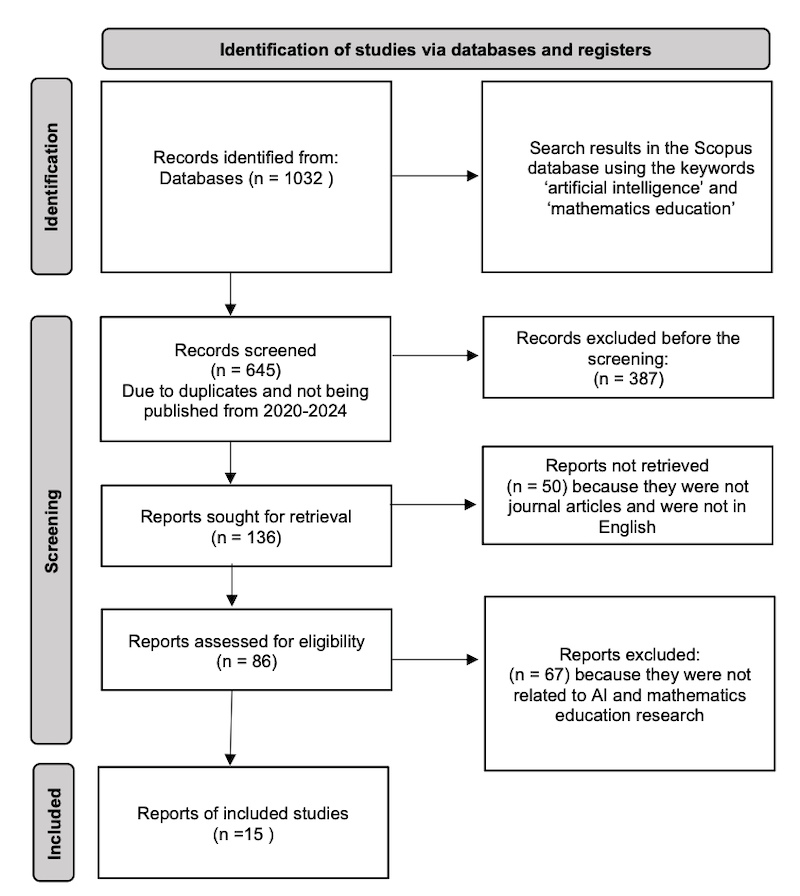
This study applied an advanced literature search using the keywords "Artificial Intelligence (AI)" and "Mathematics Education" through the Scopus database. Conducted on December 25, 2024, the initial search yielded 1,032 articles. After excluding conference proceedings, book chapters, and unpublished materials (N = 645), and subsequently applying updated inclusion criteria to capture studies through 2026, 136 peer-reviewed English-language journal articles published between 2020 and 2026 remained for further screening.
This study adopted the PRISMA (Preferred Reporting Items for Systematic Reviews and Meta-Analyses) framework (Figure 1). The inclusion criteria required articles to: (a) discuss AI integration in mathematics education, (b) describe specific AI technologies, (c) be published in reputable English-language journals, and (d) be published between 2020 and 2026. Non-English articles, pre-prints, and papers not focused on AI in mathematics were excluded.
The quality assessment process removed 36 duplicate articles and 50 articles that did not explicitly address AI in mathematics education. After a comprehensive review of titles, abstracts, methodology, results, and discussion sections of the remaining 86 articles, 66 were eliminated for insufficient focus on AI application. This yielded a final sample of 20 articles. Figure 1 illustrates the PRISMA systematic review process.
The review findings are organised according to the eight research questions. Table 1 presents a comprehensive summary of all 20 analysed articles.
Table 1: SLR Results Resume
|
No. |
Author |
Title |
Data Collection |
Research Design |
Topics |
Respondent |
AI Tool |
Paradigm Tendency |
|
1 |
Zhang (2024) |
An Innovative Model of Higher Mathematics Curriculum Artificial Intelligence Technology Education Incorporating |
Pretest -Posttest |
Quasi-eperimental |
Optimisation |
University Students (financial management major) |
Not specified |
Post-positivist |
|
2 |
Han, et al. (2024) |
Applying Artificial Intelligence-Based Adaptive Learning on Mathematical Attitudes and Self-Directed Learning |
Pretest -Posttest |
Quasi-eperimental |
Basic Mathematics |
University Students |
AI-based |
Positivist |
|
3 |
Wardat, et al. (2023) |
ChatGPT: A revolutionary tool for teaching and learning mathematics |
Interviews |
Instrumental case study |
Geometry |
Students; Teacher (High School) |
ChatGPT |
Critical |
|
4 |
Taani & Alabidi (2024) |
ChatGPT in education: benefits and challenges of ChatGPT for mathematics and science teaching practices |
Questionaire |
Mixed methods |
STEAM |
High School Teacher |
ChatGPT |
Pragmatic |
|
5 |
Huang & Qiao (2022) |
Enhancing Computational Thinking Skills Through Artifcial Intelligence Education at a STEAM High School |
Pretest -Posttest |
Experimental design |
STEAM |
High School Students |
Not specified |
Positivist |
|
6 |
Gouia-Zarrad & Gunn (2024) |
Enhancing students’ learning experience in mathematics class through ChatGPT |
Questionaire |
Descriptive quantitative |
Numerical Methods |
Undergraduate mathematics Students |
ChatGPT |
Post-positivist |
|
7 |
Egara & Mosimege (2024 |
Exploring the Integration of Artifcial Intelligence-Based ChatGPT into Mathematics Instruction: Perceptions, Challenges, and Implications for Educators |
Questionaire; |
Mix methods |
Not Specified (several mathematics topics) |
Secondary school mathematics Teacher |
ChatGPT |
Post-positivist |
|
8 |
Zhou (2023) |
Integration of Modern Technologies in Higher Education on The Example of Artifcial Intelligence Use |
Pretest -Posttest |
Quasi-eperimental |
Not specified (Conducted in several majority) |
University Students (mathematics, computer science, management, English, and sociology) |
Not specified |
Post-positivist |
|
9 |
Getenet (2024) |
Pre-service teachers and ChatGPT in multistrategy problem-solving: Implications for mathematics teaching in primary schools |
Single Test |
Comparative study |
Algebra |
Pre-Service teacher |
ChatGPT |
Critical |
|
10 |
Cunska (2022) |
Prototype of Project AI4Math: Interdisciplinary and Innovative Technology for Accelerated Learning of Mathematics |
Questionaire |
Development research |
Not Specified (several mathematics topics) |
Students (not specified in Latvian School) |
AI4Math prototype |
Pragmatic |
|
11 |
Norberg, et al. (2024) |
Rewriting Content with GPT‑4 to Support Emerging Readers in Adaptive Mathematics Software |
Pretest -Posttest |
Experimental design |
Algebra |
Students (not specified) |
MATHia and ChatGPT |
Positivist |
|
12 |
Schindler, et al. (2022) |
Small number enumeration processes of deaf or hard-of-hearing students: A study using eye tracking and artificial intelligence |
Single Test; |
Mixed Methods |
Small number enumeration |
Elementary students (3rd, 4th, and 5th grades) consisting of hearing group and hard-of-hearing group) |
Not specified |
Pragmatic |
|
13 |
Alomari & Jabr (2020) |
The effect of the use of an educational software based on the strategy of artificial intelligence on students’ achievement and their attitudes towards it |
Single Test |
Quasi-eperimental |
Plural form of substraction unit |
Second grade student |
Not specified |
Positivist |
|
14 |
Wahba, et al. (2024) |
The impact of ChatGPT-based learning statistics on undergraduates’ statistical reasoning and attitudes toward statistics |
Pretest -Posttest |
Quasi-eperimental |
Statistics |
Undergraduate elementary school teachers’ course |
ChatGPT |
Positivist |
|
15 |
Jančařík, et al. (2023) |
Using AI Chatbot for Math Tutoring |
Interviews |
Descriptive qualiatative |
Social Arithmetics |
Elementary student |
Custom AI Chatbot |
Interpretivist |
|
16 |
Brasken et al. (2025) |
Students’ Use of ChatGPT in an Algebra Class: A Case Study of Prompts and Attitudes |
Pre- and post-questionnaire |
Case study |
Algebra |
Upper-secondary students |
ChatGPT (GPT-4) |
Positivist |
|
17 |
Atirbek et al. (2026) |
Enhancing Pre-Service Mathematics Teachers’ Digital Pedagogy through a Two-Rotation AI-Integrated Blended Learning Model for Critical and Reflective AI Use |
Pre- and post-questionnaire |
Quasi-experimental |
Algebra |
Pre-service mathematics teachers |
ChatGPT, GeoGebra, Desmos, Copilot, Perplexity |
Positivist |
|
18 |
Xuan et al. (2025) |
Evaluating the Impact of Generative AI in Mathematics Education: A Comparative Study in Vietnamese High Schools |
Pre- and post-questionnaire |
Comparative Study |
Algebra |
High school students |
ChatGPT 3.5 |
Positivist |
|
19 |
Atuahene and Boateng (2026) |
Mathematics teachers’ awareness, perceptions, and challenges in using ChatGPT |
Structured questionnaire |
Survey research |
Not specified (General Mathematics Education) |
Senior High School mathematics teachers |
ChatGPT |
Positivist |
|
20 |
Kuzu (2025) |
Mathematics teachers’ AI literacy, anxiety, and perceptions of AI integration in mathematics education: a mixed-methods study |
Survey |
Mixed methods |
Not specified (General Mathematics Education) |
Mathematics teachers |
ChatGPT, Photomath, Mathletics, Mathspace, Mathway, Wolfram Alpha |
Post-positivist |
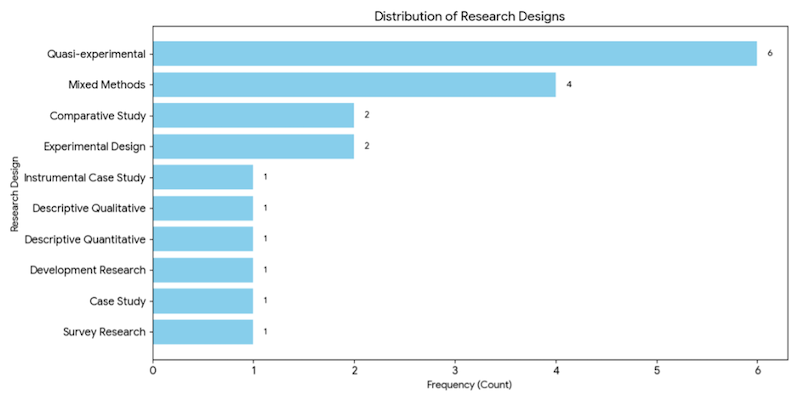
As seen in Figure 2, the 20 articles encompass diverse research designs: comparative, descriptive qualitative, descriptive quantitative, development, experimental, case study, mixed methods, and quasi-experimental. Quasi-experimental was most prevalent, reflecting a preference for evidence-based approaches (Atirbek et al., 2026; Xuan et al., 2025). Two experimental studies developed AI-based teaching designs (Huang & Qiao, 2024; Norberg et al., 2024).
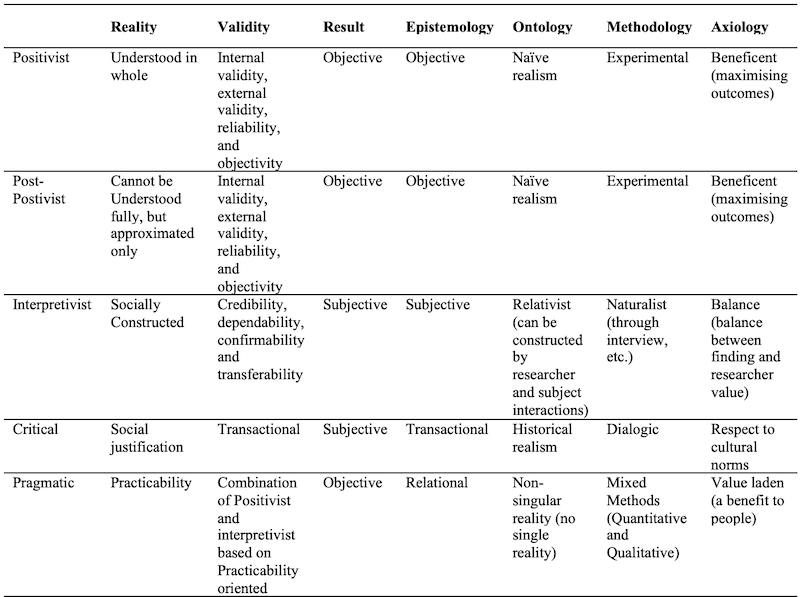
Research paradigms define the epistemological and ontological orientation of a study (Khatri, 2020; Kivunja & Kuyini, 2017). Five paradigms are discussed: positivist, post-positivist, interpretivist, critical, and pragmatic, with the characteristics summarised in Table 2.
Table 2: Characteristics of Each Paradigm
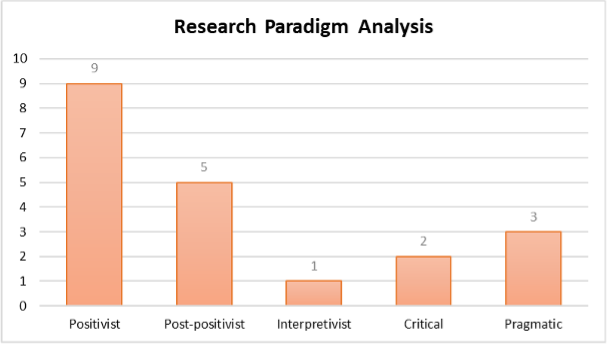
The diagram, which shows the analysis of the paradigms used in the selected articles (N=15), can be seen in Figure 3 below. The result was obtained by the criteria presented in Table 2.
Based on Figure 3, five paradigms were identified: positivist (nine articles), post-positivist (four articles), interpretivist (Jančařík et al., 2023), critical (Getenet, 2024; Wardat et al., 2023), and pragmatic (three articles). The positivist dominance reflects the field's orientation toward measurable impact evidence. Notably, Kuzu (2025) employed mixed methods to capture both quantitative outcomes and qualitative teacher perceptions of AI literacy and anxiety.
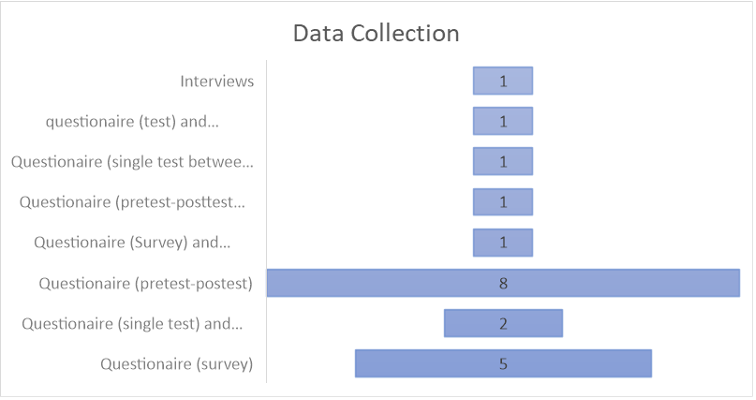
Based on Figure 4, pretest-posttest was the most common strategy (six articles), used to validate AI-based learning models (Han et al., 2024; Huang & Qiao, 2024; Norberg et al., 2024a; Wahba et al., 2024; Zhang, 2024; Zhou, 2023). Single tests were used for comparisons (Alomari & Jabr, 2020; Getenet, 2024; Schindler et al., 2022). Questionnaires captured AI perceptions (Cunska, 2022; Egara & Mosimege, 2024; Gouia-Zarrad & Gunn, 2024; Taani & Alabidi, 2024); interviews and observation complemented quantitative data (Schindler et al., 2022). Recent studies (Atirbek et al., 2026; Atuahene & Boateng, 2026; Brasken et al., 2025, Kuzu, 2025; Xuan et al., 2025) consistently employ pre- and post-questionnaires, indicating a shift toward holistic attitudinal measurement.
Algebra emerged as the most represented topic across the 20 articles, featured in five studies (Atirbek et al., 2026; Brasken et al., 2025; Getenet, 2024; Norberg et al., 2024a; Xuan et al., 2025). AI-assisted algebra learning benefits from logic-based prompting, as algebraic reasoning aligns naturally with AI's structured response capacity (Azaria et al., 2024). STEAM was another recurring topic (Huang & Qiao, 2024; Taani & Alabidi, 2024). Other topics included geometry, optimisation, statistics, numerical methods, and social arithmetic. Three articles focused on general AI perceptions without specifying a mathematics topic (Cunska, 2022; Egara & Mosimege, 2024; Zhou, 2023). The concentration on algebra and STEAM suggests promising avenues for AI integration, while calculus, number theory, and probability remain underexplored.
Participants ranged from elementary students to in-service teachers. University students were the most frequently studied, as they tend to provide more sophisticated AI prompts (Wu & Yu, 2024). Five articles focused on teachers or pre-service teachers (Egara & Mosimege, 2024; Getenet, 2024; Taani & Alabidi, 2024; Wahba et al., 2024; Wardat et al., 2023), while five involved high school or lower-level students, where academic integrity concerns were prominent (Grant & Üngör, 2024; Septiani et al., 2022). Studies on teacher AI literacy (Atirbek et al., 2026; Atuahene & Boateng, 2026; Kuzu, 2025) highlight teacher capacity as equally critical as student outcomes.
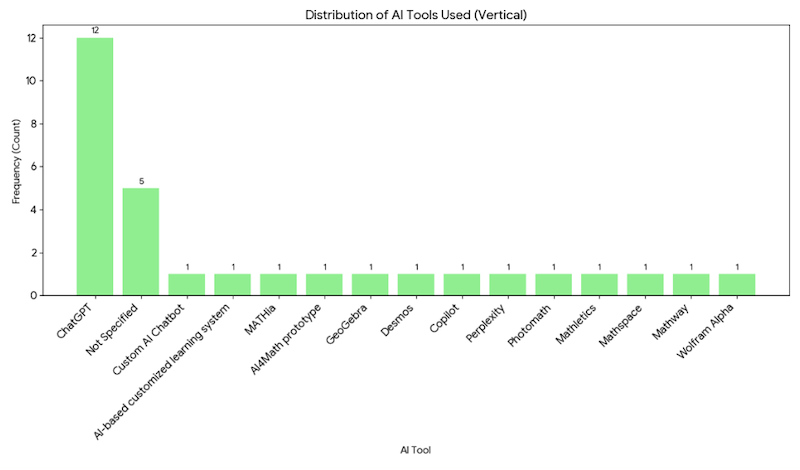
Figure 5 shows that ChatGPT was the dominant tool (12 of 20 articles), studied from perspectives of teacher experience (Wardat et al., 2023), student experience (Gouia-Zarrad & Gunn, 2024), statistical reasoning impact (Wahba et al., 2024), and integration challenges (Egara & Mosimege, 2024; Taani & Alabidi, 2024). Custom AI tools were developed in three studies (Cunska, 2022; Han et al., 2024; Jančařík et al., 2023). Recent studies signal a shift toward multi-tool ecosystems: Atirbek et al. (2026) examined ChatGPT, GeoGebra, Desmos, Copilot, and Perplexity; and Kuzu (2025) examined six tools including Photomath and Wolfram Alpha.
This PRISMA-compliant review of 20 peer-reviewed empirical studies offers a multifaceted analytical framework encompassing research design, paradigmatic orientation, data collection methods, mathematical topics, participant profiles, and AI tool applications (Jallali et al., 2026; Li, D. et al., 2025; Lindner et al., 2026; Tsakeni et al., 2025). The findings affirm that AI-driven educational interventions substantially enhance mathematics achievement and engagement (Hwang, 2022; Tlili et al., 2025; Zhu et al., 2026), and chart the field's progression from single-tool explorations to structured multi-tool pedagogical paradigms.
In the Introduction, we discussed several advanced research studies that mention teaching quality, a mathematics education paradigm, and professional development. Three claims from the Introduction received empirical corroboration. First, AI has become a core pedagogical instrument, with 20 studies documenting significant gains in achievement, attitudes, self-efficacy, and 21st-century skills (Cao et al., 2026; Recio et al., 2026). Second, paradigmatic diversity from positivist to interpretivist designs validates the claim that AI is reshaping mathematics education research (Burbage & Styron, 2026; Opesemowo & Ndlovu, 2024). Third, teacher readiness is empirically confirmed as a critical mediator of AI efficacy, with the challenges being fundamentally pedagogical and professional rather than technological (Dehen et al., 2026; Wang & Zhang, 2026).
The disproportionate concentration of studies on algebra and STEAM (while calculus, number theory, probability, and proof-based reasoning remain absent) constitutes a curricular asymmetry with direct policy implications. Educational authorities should mandate structured AI-integrated modules across the full spectrum of mathematics, and formalise prompt engineering and critical evaluation of AI outputs as mathematical competencies at all levels (Le et al., 2026; Murray, 2025; Mustafa et al., 2024). Curriculum standards should further articulate tool-specific competencies—for example, ChatGPT for algebraic reasoning versus GeoGebra for geometric visualisation—rather than generic AI (Hossein-Mohand et al., 2025; Velander et al., 2026)
From a pedagogical standpoint, the most efficacious AI integrations identified in this review were those that utilised AI as a scaffolding tool rather than as an omniscient repository of knowledge (Lindner et al., 2026). Jančařík et al. (2023) demonstrated that progressively provided AI-assisted hints fostered independent problem-solving, whereas Atirbek et al.'s (2026) two-rotation blended learning model promoted critical AI utilisation through the alternation of AI-mediated and human-facilitated instructional phases. Both models operationalise Vygotskian principles of mediated learning and the Zone of Proximal Development, underscoring the necessity of theoretical alignment between AI deployment and pedagogical objectives for optimal effectiveness (Al-Hamadi & Yousif, 2025). Teacher educators are therefore advised to develop pre-service and continuing professional development programmes that conceptualise AI not merely as a technical proficiency but as an integral pedagogical competency, incorporating the creation of AI-resistant tasks, the critical evaluation of AI-generated outputs, and the exemplification of reflective AI application for students (Jallali et al., 2026). Institutions should establish professional learning communities centred on AI to supplant the predominant informal discovery approaches (Chung et al., 2026).
AI's capacity for immediate formative feedback and personalised task generation constitutes a substantial pedagogical asset (Alsaiari et al., 2026; Tang, W.K-W., 2025). However, the academic integrity challenges documented in this review necessitate a decisive shift towards process-oriented, performance-based assessment formats inherently resistant to AI substitution—oral examinations, collaborative problem-solving, and portfolio documentation of mathematical reasoning (Evangelista, 2024; Xia et al., 2024). Institutional policies must explicitly distinguish productive AI assistance from academically dishonest substitution.
AI integration raises ethical imperatives including academic dishonesty, data privacy concerns with minors, algorithmic bias, and digital exclusion in under-resourced contexts (Alfiras et al., 2025). Researchers, policymakers, technology developers, and institutions should collaborate to establish guidelines guaranteeing equitable access, stringent data privacy protections, and the preservation of the developmental and relational dimensions of mathematics education that cannot be reduced to algorithmic optimisation.
This SLR examined six analytical dimensions across 20 articles. Results are generalisable only to the selected articles and should not be treated as universal conclusions about AI in mathematics education. The study was also limited to Scopus-indexed publications, potentially excluding important studies in non-indexed or regional journals. Future studies should expand the scope of articles analysed, diversify database sources, and extend the review to additional research dimensions.
Six research priorities emerged from this review: (1) longitudinal studies tracking sustained AI effects beyond single-semester interventions; (2) equity studies examining differential outcomes across socioeconomic, geographic, linguistic, and disability dimensions; (3) comparative studies evaluating the relative efficacy of specific AI tools within mathematical domains; (4) research expanding to underrepresented areas including calculus, combinatorics, and proof; (5) interpretivist and critical paradigm studies capturing lived classroom experiences; and (6) governance research developing institution-specific AI policy frameworks addressing accountability, equity, and privacy.
Adeoye, M.A., & Jimoh, H.A. (2023). Problem-solving skills among 21st-century learners toward creativity and innovation ideas. Thinking Skills and Creativity Journal, 6(1), 52-58. https://doi.org/10.23887/tscj.v6i1.62708
Alfiras, M., Emran, A.Q., & Mohamed, A.M. (2025). Ethics and governance of generative AI in education: A systematic review on responsible adoption. Discover Education, 5(1). https://doi.org/10.1007/s44217-025-01051-y
Al-Hamadi, D., & Yousif, J.H. (2025). Artificial intelligence revolution for enhancing modern education using zone of proximal development approach. Applied Computing Journal, 386-398. https://doi.org/10.52098/acj.20255239
Alomari, M.A., & Jabr, M.O. (2020). The effect of the use of an educational software based on the strategy of artificial intelligence on students’ achievement and their attitudes towards it. Management Science Letters, 10(13), 2951-2960. https://doi.org/10.5267/j.msl.2020.5.030
Alsaiari, O.A.S., Baghaei, N., Lodge, J.M., Noroozi, O., Gašević, D., Bodén, M., & Khosravi, H. (2026). Directive, metacognitive, or a blend of both? A comparison of AI-generated feedback types on student engagement, confidence, and outcomes. Computers and Education Artificial Intelligence, 10, 100553. https://doi.org/10.1016/j.caeai.2026.100553
Atirbek, K., Kadirbayeva, R., Dost, S., & Saduakassova, Z. (2026). Enhancing pre-service mathematics teachers’ digital pedagogy through a two-rotation AI-Integrated blended learning model for critical and reflective AI use. International Journal of Learning, Teaching and Educational Research, 25(3), 463-493. https://doi.org/10.26803/ijlter.25.3.20
Atuahene, E., & Boateng, F.O. (2026). Mathematics teachers’ awareness, perceptions, and challenges in using ChatGPT. Discover Education, 5(1), 88. https://doi.org/10.1007/s44217-025-01083-4
Azaria, A., Azoulay, R., & Reches, S. (2024). ChatGPT is a remarkable tool—For experts. Data Intelligence, 6(1), 240-296. https://doi.org/10.1162/dint_a_00235
Barnes, E., & Hutson, J. (2024). Navigating the ethical terrain of AI in higher education: Strategies for mitigating bias and promoting fairness. Forum for Education Studies, 2(2), 1229. https://doi.org/10.59400/fes.v2i2.1229
Bayaga, A. (2024). Enhancing M enhancing mathematics problem-solving skills in AI-driven environment: Integrated SEM-neural network approach. Computers in Human Behavior Reports, 16, 100491. https://doi.org/10.1016/j.chbr.2024.100491
Bhardwaj, R. (2024). AI integrated model design for education system for analytical computation (mathematics). 2024 4th International Conference on Advance Computing and Innovative Technologies in Engineering, ICACITE 2024, 1412-1417. https://doi.org/10.1109/ICACITE60783.2024.10616503
Biehler, R., Durand-Guerrier, V., & Trigueros, M. (2024). New trends in didactic research in university mathematics education. ZDM — Mathematics Education, 56, 1345-1360. https://doi.org/10.1007/s11858-024-01643-2
Brasken, M., Berts, K-E., Wallin, S., & Frilund, S. (2025). Students’ use of ChatGPT in an algebra class: A case study of prompts and attitudes. LUMAT: International Journal on Math, Science and Technology Education, 13(1), 16. https://doi.org/10.31129/LUMAT.13.1.2877
Burbage, A.K., & Styron, J.L. (2026). Crossing the theory threshold: The pedagogical potential of generative artificial intelligence in educational research. Korean Journal of Medical Education, 38(1), 5-9. https://doi.org/10.3946/kjme.2025.098
Burlakov, V.V., Dzyurdzya, O.A., Fedotova, G.V., Alieva, A.H., & Kravchenko, E.N. (2020). The modern trends of development of AI technologies. Advances in Intelligent Systems and Computing, 1100 AISC, 374-383. https://doi.org/10.1007/978-3-030-39319-9_43
Canonigo, A.M. (2024). Levering AI to enhance students’ conceptual understanding and confidence in mathematics. Journal of Computer Assisted Learning, 40(6), 3215-3229. https://doi.org/10.1111/jcal.13065
Cao, X., Xu, S., Chen, X., Song, Y., Luo, Q., & He, T. (2026). Leveraging generative AI agent to promote teaching reflection in a K-12 AI course: Effects on teachers’ reflection self-efficacy, instructional design, and reflective thinking. IEEE Transactions on Learning Technologies, 19, 127-140. https://doi.org/10.1109/tlt.2026.3668051
Chung, J., Henderson, M., Slade, C., Liang, Y., Pepperell, N., Corbin, T., Walton, J., Yu, S., Bearman, M., Shum, S.B., Fawns, T., McCluskey, T., McLean, J., Oberg, G., Seligmann, A., Shibani, A., Bakharia, A., Lim, L-A., & Matthews, K. (2026). The use and usefulness of GenAI in higher education: Student experience and perspectives. Computers and Education Open, 10, 100347. https://doi.org/10.1016/j.caeo.2026.100347
Cirneanu, A-L., & Moldoveanu, C-E. (2024). Use of digital technology in integrated mathematics education. Applied System Innovation, 7(4), 66. https://doi.org/10.3390/asi7040066
Cunska, A. (2022). Prototype of Project AI4Math: Interdisciplinary and innovative technology for accelerated learning of mathematics. WSEAS Transactions on Business and Economics, 19, 1839-1848. https://doi.org/10.37394/23207.2022.19.165
Cunska, A. (2020). Effective learning strategies and artificial intelligence (AI) support for accelerated math acquisition. Europeanproceedings.Com, 118-129. https://doi.org/10.15405/epiceepsy.20111.11
Dehen, M., Harari, R., & Aharony, N. (2026). Teachers’ artificial intelligence (AI) literacy: An exploratory study. Smart Learning Environments, 13(1). https://doi.org/10.1186/s40561-026-00433-5
Egara, F., & Mosimege, M. (2024). Exploring the integration of artificial intelligence-based ChatGPT into mathematics instruction: Perceptions, challenges, and implications for educators. Education Sciences, 14(7), 742. https://doi.org/10.3390/educsci14070742
Ellis, M.W., & Berry III, R.Q. (2005). The paradigm shift in mathematics education: Explanations and implications of reforming conceptions of teaching and learning. Mathematics Educator, 15(1), 7-17. https://eric.ed.gov/?id=EJ845843
Evangelista, E. (2024). Ensuring academic integrity in the age of ChatGPT: Rethinking exam design, assessment strategies, and ethical AI policies in higher education. Contemporary Educational Technology, 17(1). https://doi.org/10.30935/cedtech/15775
Getenet, S. (2024). Pre-service teachers and ChatGPT in multistrategy problem-solving: Implications for mathematics teaching in primary schools. International Electronic Journal of Mathematics Education, 19(1), 1-12. https://doi.org/10.29333/iejme/14141
Gouia-Zarrad, R., & Gunn, C. (2024). Enhancing students’ learning experience in mathematics class through ChatGPT. International Electronic Journal of Mathematics Education, 19(3). https://doi.org/10.29333/iejme/14614
Grant, R., & Üngör, M. (2024). The AI revolution with 21st century skills: Implications for the wage inequality and technical change. Scottish Journal of Political Economy, 71(5), 731-765. https://doi.org/10.1111/sjpe.12395
Han, J.Y., Burm, E., & Chun, Y.E. (2024). Applying Artificial Intelligence-based adaptive learning on mathematical attitudes and self-directed learning. Nanotechnology Perceptions, 20(S3), 408-424. https://doi.org/10.62441/nano-ntp.v20iS3.30
Hossein-Mohand, H., Hossein-Mohand, H., Albanese, V., & Olmos-Gómez, M. del C. (2025). AI in mathematics education: A bibliometric analysis of global trends and collaborations (2020-2024). Eurasia Journal of Mathematics Science and Technology Education, 21(2). https://doi.org/10.29333/ejmste/15915
Huang, X., & Qiao, C. (2024). Enhancing computational thinking skills through artificial intelligence education at a STEAM high school. Science and Education, 33(2), 383-403. https://doi.org/10.1007/s11191-022-00392-6
Hwang, S. (2022). Examining the effects of artificial intelligence on elementary students’ mathematics achievement: A meta-analysis. Sustainability, 14(20), 13185. https://doi.org/10.3390/su142013185
Jallali, B., Hafdhi, S., Aloufi, A.M.E., Masoudi, B.K., & Alshmrani, A.M. (2026). Toward sustainable learning: A multidimensional framework of AI integration, engagement, and digital resilience in Saudi higher education. Sustainability, 18(2), 944. https://doi.org/10.3390/su18020944
Jančařík, A., Michal, J., & Novotná, J. (2023). Using AI chatbot for math tutoring. Journal of Education Culture and Society, 14(2), 285-296. https://doi.org/10.15503/jecs2023.2.285.296
Khatri, K.K. (2020). Research paradigm: A philosophy of educational research. International Journal of English Literature and Social Sciences, 5(5), 1435-1440. https://doi.org/10.22161/ijels.55.15
Kivunja, C., & Kuyini, A.B. (2017). Understanding and applying research paradigms in educational contexts. International Journal of Higher Education, 6(5), 26. https://doi.org/10.5430/ijhe.v6n5p26
Kuzu, Ç.İ. (2025). Mathematics teachers’ AI literacy, anxiety, and perceptions of AI integration in mathematics education: A mixed-methods study. BMC Psychology, 14(1), 42. https://doi.org/10.1186/s40359-025-03836-0
Le, T.H., Huynh, L., Dang, B., Pham, H., Nguyen, N.T.V., & Nguyen, A. (2026). Development and evaluation of artificial intelligence literacy training for teacher education students. British Journal of Educational Technology. https://doi.org/10.1111/bjet.70047
Li, D., Osman, S., Alhassora, N.S.A., Amantha Kumar, J., & Kartini Said Husain, S. (2025). Empowering K-12 mathematics teachers with artificial intelligence: A systematic review of insights, applications, and challenges. IEEE Access, 13, 117198-117209. https://doi.org/10.1109/ACCESS.2025.3585784
Li, S., Zeng, C., Liu, H., Jia, J., Liang, M., Cha, Y., Lim, C.P., & Wu, X. (2025). A meta-analysis of AI-enabled personalized STEM education in schools. International Journal of STEM Education, 12(1). https://doi.org/10.1186/s40594-025-00566-y
Li, X., & Zaki, R. (2024). Harnessing the power of digital resources in mathematics education: The potential of augmented reality and artificial intelligence. In EAI/Springer innovations in communication and computing: Part F2195 (pp. 191-223). Springer Science and Business Media Deutschland GmbH. https://doi.org/10.1007/978-3-031-50139-5_10
Lindner, J.R., Clemons, C.A., & McKibben, J.D. (2026). Artificial intelligence in education: Perspectives of secondary teachers. Advancements in Agricultural Development, 7(2), 109-124. https://doi.org/10.37433/aad.v7i2.637
Markauskaite, L., Marrone, R., Poquet, O., Knight, S., Martinez-Maldonado, R., Howard, S., Tondeur, J., de Laat, M., Buckingham Shum, S., Gašević, D., & Siemens, G. (2022). Rethinking the entwinement between artificial intelligence and human learning: What capabilities do learners need for a world with AI? Computers and Education: Artificial Intelligence, 3. https://doi.org/10.1016/j.caeai.2022.100056
Mele, C., Marzullo, M., Morande, S., & Spena, T.R. (2022). How artificial intelligence enhances human learning abilities: Opportunities in the fight against COVID-19. Service Science, 14(2), 77-89. https://doi.org/10.1287/serv.2021.0289
Murray, M. (2025). Bridging the generative AI literacy gap: A guide to introducing prompt engineering in university courses. Issues in Informing Science and Information Technology, 22, 10. https://doi.org/10.28945/5516
Mustafa, M.Y., Tlili, A., Lampropoulos, G., Huang, R., Jandrić, P., Zhao, J., Salha, S., Xu, L., Panda, S., Kinshuk, López-Pernas, S., & Saqr, M. (2024). A systematic review of literature reviews on artificial intelligence in education (AIED): A roadmap to a future research agenda. Smart Learning Environments, 11(1), 59. https://doi.org/10.1186/s40561-024-00350-5
Norberg, K.A., Almoubayyed, H., de Ley, L., Murphy, A., Weldon, K., & Ritter, S. (2024). Rewriting content with GPT-4 to support emerging readers in adaptive mathematics software. International Journal of Artificial Intelligence in Education. https://doi.org/10.1007/s40593-024-00420-2
Opesemowo, O.A.G., & Ndlovu, M. (2024). Artificial intelligence in mathematics education: The good, the bad, and the ugly. Journal of Pedagogical Research, 8(3), 333-346. https://doi.org/10.33902/JPR.202426428
Recio, M.I.R., Molina‐Ayuso, Á., & Adamuz‐Povedano, N. (2026). Integrating computational thinking into secondary school mathematics teaching: A literature review. Review of Education, 14(1). https://doi.org/10.1002/rev3.70142
Schindler, M., Doderer, J.H., Simon, A.L., Schaffernicht, E., Lilienthal, A.J., & Schäfer, K. (2022). Small number enumeration processes of deaf or hard-of-hearing students: A study using eye tracking and artificial intelligence. Frontiers in Psychology, 13. https://doi.org/10.3389/fpsyg.2022.909775
Septiani, S., Retnawati, H., & Arliani, E. (2022). Designing closed-ended questions into open-ended questions to support student’s creative thinking skills and mathematical communication skills. JTAM (Jurnal Teori Dan Aplikasi Matematika), 6(3), 616. https://doi.org/10.31764/jtam.v6i3.8517
Taani, O., & Alabidi, S. (2024). ChatGPT in education: Benefits and challenges of ChatGPT for mathematics and science teaching practices. International Journal of Mathematical Education in Science and Technology, (May). https://doi.org/10.1080/0020739X.2024.2357341
Tang, W.K-W. (2025). Artificial intelligence in mathematics education: Trends, challenges, and opportunities. International Journal of Research in Mathematics Education, 3(1), 75–90. https://doi.org/10.24090/ijrme.v3i1.13496
Tang, W-C. (2025). Innovative mathematics pedagogy: Evidence-based strategies for enhancing student learning. Journal of Integrative Education Studies, 1(1), 30-35. https://doi.org/10.64229/2q2ck886
Thornhill-Miller, B., Camarda, A., Mercier, M., Burkhardt, J. M., Morisseau, T., Bourgeois-Bougrine, S., Vinchon, F., El Hayek, S., Augereau-Landais, M., Mourey, F., Feybesse, C., Sundquist, D., & Lubart, T. (2023). Creativity, critical thinking, communication, and collaboration: Assessment, certification, and promotion of 21st century skills for the future of work and education. Journal of Intelligence, 11(3), 54. https://doi.org/10.3390/jintelligence11030054
Tlili, A., Saqer, K., Salha, S., & Huang, R. (2025). Investigating the effect of artificial intelligence in education (AIEd) on learning achievement: A meta-analysis and research synthesis. Information Development, 41(3), 825-842. https://doi.org/10.1177/02666669241304407
Tsakeni, M., Nwafor, S.C., Mosia, M., & Egara, F. (2025). Mapping the scaffolding of metacognition and learning by AI tools in STEM classrooms: A bibliometric-systematic review approach (2005-2025). Journal of Intelligence, 13(11), 148. https://doi.org/10.3390/jintelligence13110148
Tupulu, N., Hermiati, K., Uripno, G., & Suprihatiningsih, S. (2024). Bibliometrics analysis of AI integration in mathematics teaching. Mosharafa: Jurnal Pendidikan Matematika, 13(2), 387-400. https://doi.org/https://doi.org/10.31980/mosharafa.v13i2.1699
Van Doc, N., Hoai Nam, N.T., Thanh, N.T., & Minh Giam, N. (2023). Teaching mathematics with the assistance of an AI chatbot to enhance mathematical thinking skills for high school students. International Journal of Current Science Research and Review, 06(12), 8574-8580. https://doi.org/10.47191/ijcsrr/v6-i12-102
Velander, J., Örtegren, A., & Sperling, K. (2026). Introducing AI education in school contexts: A 3D-literacy analysis of the Swedish AI subject. Technology Pedagogy and Education, 1-22. https://doi.org/10.1080/1475939x.2026.2619458
Wahba, F., Ajlouni, A.O., & Abumosa, M.A. (2024). The impact of ChatGPT-based learning statistics on undergraduates’ statistical reasoning and attitudes toward statistics. Eurasia Journal of Mathematics, Science and Technology Education, 20(7). https://doi.org/10.29333/ejmste/14726
Wang, G., Chen, X., Zhang, D., Kang, Y., Wang, F., & Su, M. (2022). Development and application of an intelligent assessment system for mathematics learning strategy among high school students—Take Jianzha County as an example. Sustainability, 14(19), 12265. https://doi.org/10.3390/su141912265
Wang, S., & Zhang, H. (2026). Pedagogical partnerships with generative AI in higher education: How dual cognitive pathways paradoxically enable transformative learning. International Journal of Educational Technology in Higher Education, 23(1). https://doi.org/10.1186/s41239-026-00585-x
Wardat, Y., Tashtoush, M.A., Al Ali, R., & Jarrah, A.M. (2023). ChatGPT: A revolutionary tool for teaching and learning mathematics. Eurasia Journal of Mathematics, Science and Technology Education, 19(7). https://doi.org/10.29333/ejmste/13272
Wu, R., & Yu, Z. (2024). Do AI chatbots improve students learning outcomes? Evidence from a meta-analysis. British Journal of Educational Technology, 55(1), 10-33. https://doi.org/10.1111/bjet.13334
Xia, Q., Weng, X., Ouyang, F., Lin, T., & Chiu, T.K.F. (2024). A scoping review on how generative artificial intelligence transforms assessment in higher education. International Journal of Educational Technology in Higher Education, 21(1). https://doi.org/10.1186/s41239-024-00468-z
Xuan, S.H., Nguyen, A. T., Nguyen, T., Nguyen, L., Nguyen, H., Pham, N., Phung, T., Ngo, B., Nguyen, V., Nguyen, M., Tran, T., Le, T., Nguyen, K., & FNU, P. (2025). Evaluating the impact of generative AI in mathematics education: A comparative study in Vietnamese high schools. Human Behavior and Emerging Technologies, 2025(1). https://doi.org/10.1155/hbe2/8886206
Zhang, X. (2024). An innovative model of higher mathematics curriculum education incorporating artificial intelligence technology. Applied Mathematics and Nonlinear Sciences, 9(1), 1-16. https://doi.org/10.2478/amns.2023.2.01524
Zheng, L., Niu, J., Zhong, L., & Gyasi, J.F. (2023). The effectiveness of artificial intelligence on learning achievement and learning perception: A meta-analysis. Interactive Learning Environments, 31(9), 5650–5664. https://doi.org/10.1080/10494820.2021.2015693
Zhou, C. (2023). Integration of modern technologies in higher education on the example of artificial intelligence use. Education and Information Technologies, 28(4), 3893-3910. https://doi.org/10.1007/s10639-022-11309-9
Zhu, Y., Jiang, H., & Zhong, L. (2026). Generative artificial intelligence‐assisted STEM education: A systematic review and future research agenda. European Journal of Education, 61(1). https://doi.org/10.1111/ejed.70462
Zreik, M. (2024). Redefining mathematics education in the age of artificial intelligence: Challenges and opportunities. In Impacts of globalization and innovation in mathematics education (pp. 19-40). https://doi.org/10.4018/979-8-3693-2873-6.ch002
Author Notes
Dr Siti Suprihatiningsih, MPd is a Lecturer in Mathematics Education at Universitas Katolik Santo Agustinus Hippo. With a strong foundation in mathematics teaching and learning, she specialises in Knowledge of Content and Teaching (KCT) and Technological Pedagogical Content Knowledge (TPACK) to improve instructional quality. She is actively involved in national initiatives to innovate mathematics education and has participated in projects funded by the Ministry of Education and Technology, including grant schemes for novice lecturers and regular fundamental research. Her work includes curriculum development, technology-enhanced learning design, and teacher training. Email: s.suprihatiningsih@sanagustin.ac.id (https://orcid.org/0000-0002-0131-0604)
Gusti Uripno, MPd is a Lecturer in Mathematics Education at Universitas PGRI Ronggolawe Tuban. His research focuses on combinatorial thinking and the integration of artificial intelligence in mathematics education to strengthen conceptual understanding and problem‑solving skills. He has participated in national initiatives to advance mathematics learning, including regular fundamental research projects funded by the Ministry of Education and Technology. Email: gustidash@gmail.com (https://orcid.org/0009-0000-3929-9132)
Dr Imam Sujadi is an Associate Professor in Mathematics Education at Universitas Sebelas Maret. His academic expertise includes mathematics education, numeracy and mathematical literacy, mathematical thinking, assessment in mathematics learning, metacognition, and technology integration in mathematics instruction. He has extensive experience in teaching, research, academic leadership, and curriculum development, with numerous publications in international journals, accredited national journals, and international conference proceedings. His recent scholarly works focus on reflective thinking, TPACK in mathematics education, numeracy assessment, and innovative mathematics learning approaches. He has also authored several books and educational resources related to numeracy, flipped classroom learning, and digital mathematics instruction. Email: imamsujadi@staff.uns.ac.id (https://orcid.org/0000-0002-8302-2234)
Dr Rizki Kurniawan Rangkuti, SPd, MPd, CRev is a Senior Lecturer in Mathematics Education at Al Washliyah University Labuhanbatu. He has extensive experience in the concepts of Cognitive Theory, Cognitive Psychology, and Realistic Mathematics Education. He has contributed to several national and international research articles on Mathematical Reasoning and Thinking, as well as writing Teaching Materials Books and Reference Books. His portfolio includes involvement with Relawan Jurnal Indonesia (RJI), the Indonesian Mathematics Educators Society (I-MES), Al Washliyah University of Labuhanbatu, and several journal managers as Editor and Reviewer. Email: rizkikurniawanrangkuti@gmail.com (https://orcid.org/0000-0002-7811-904X)
Cite as: Suprihatiningsih, S., Uripno, G., Sujadi, I., & Rangkuti, R.K. (2026). Emerging artificial intelligence in mathematics education: A systematic literature review. Journal of Learning for Development, 13(2), 298-313.