Sugata Mitra, Ritu Dangwal and Radhika Roy
2025 VOL. 12, No. 3
Abstract: Building on the “hole in the wall” experiments and TED Prize project (2014-2016), this study examined long-term sustainability and impact of the School in the Cloud (SC) initiative using Self-Organised Learning Environments (SOLEs) and minimally invasive and technology-mediated pedagogy in India, the UK, and the USA. Grounded in emergent learning and Minimally Invasive Education (MIE), it fills a gap in digital education literature on post-funding viability of innovative environments. Using qualitative methods—site visits and interviews in communities and schools—the study assessed outcomes (digital literacy, reading comprehension, self-confidence) and sustainability barriers (financial, infrastructural, policy). Linking global digital learning trends to local realities, it validates autonomous, collaborative inquiry and proposes sustainable models for technology-enabled education. The findings show how SOLE pedagogy and emergent learning democratise education, build key skills, and deliver lasting benefits across socio-economic contexts. The article ends with a framework for sustaining SC Labs via community engagement, institutional ownership, and monetisation to ensure viability. It adds knowledge on scaling digital models in diverse settings and guides efforts to democratise education through minimally invasive, technology-enabled methods.
Keywords: School in the Cloud, children’s education, SOLE, Self Organised Learning
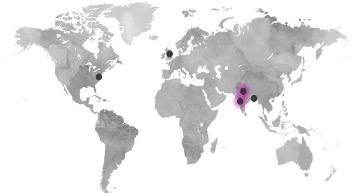
We justify the study and review the literature, showing how it addresses gaps in technology-enabled learning for children. We situate the work in global digital learning movements, then focus on local contexts in India, the UK, and the USA—highlighting general and localised significance.
Digital learning drives educational reform globally, yet many initiatives falter after funding ends. SC tackles this by examining SOLE sustainability post-funding. It fills a literature gap on post-funding SC Labs, unexplored in prior work like “hole in the wall” experiments and TED projects (2014-2016), which showed gains in computing, comprehension, and communication via minimally supervised, collaborative tech learning. This study’s sustainability focus is vital for educational development.
The literature ties educational sustainability to learning-for-development theories. Studies (Mitra et al., 2005; Dolan et al., 2013) demonstrate unsupervised child groups self-organise and acquire digital skills in low-resource settings, often outperforming supervised methods. This supports SOLE approaches and the study’s methods. We evaluate how SC Labs shift literacy from Reading/Writing/Arithmetic to Comprehension/Communication/Computing, aligning with 21st-century digital literacy demands.
Qualitative site visits, interviews, and analysis link sustainability to learning for development, showing how infrastructural, financial, and policy factors affect innovative initiatives locally. Stakeholder testimonies and outcomes (English proficiency, self-directed learning) confirm SOLE applicability across socio-economic settings.
We cover worldwide reform and digital transformation—sustainability matters globally. Examining SC Labs across continents contextualises issues locally: technology democratises access but success needs community engagement, supportive management, and locale-specific business models.
References include SOLE foundations (Dolan et al., 2013), “hole in the wall” (Mitra et al., 2005), SOLE pedagogy (Mitra, 2013, 2019), and projects (Lightbeam, 2017), synthesising theory and evidence on problem-solving and sustainable learning models.
In summary, the background and review justify the research and show how it advances the field by empirically tackling digital learning sustainability, and bridging global-local dynamics for urgent, context-sensitive development.
Since 1999, “hole in the wall” experiments have shown that children in unsupervised groups with safe, public internet access self-learn computer use—termed Minimally Invasive Education (MIE). Collaborative learning acts as a self-organising system with emergent outcomes (Mitra et al., 2005).
Classrooms simulate this via SOLEs: internet-connected computers (one per four children) (Dolan et al., 2013). Children answer “Big Questions” (requiring more than simple searches) without supervision, moving and talking freely to produce one group answer. SOLE effectiveness was reported by Mitra & Crawley (2014) and re-validated by Mitra et al. (2025).
SOLE sessions can be led by teachers in-person or remotely via video (mediators/“beamer”/“granny,” regardless of gender) (Lightbeam, 2017; Mitra, 2009).
Schools using MIE, SOLEs, and internet mediators are Schools in the Cloud (SC). The concept won the 2013 TED Prize (Mitra, 2013). Prize funds supported a 2014-2016 experiment on SC Lab effects in schools and communities across India, the UK, and the USA, documented in Mitra (2019).
This study reports on SC status several years after the 2016 funding ended, probing post-research sustainability.
The framework centres on SOLEs, rooted in MIE and emergent learning: children with safe internet access collaborate unsupervised to develop computation, comprehension, and communication. Learning emerges from self-organisation, drawing on systems theory and collective intelligence.
Mitra (2009) conceptualises learning as self-organising via “Big Questions” in groups with digital tools. SOLE pedagogy minimises teacher intervention, emphasising autonomy and emergent outcomes, aligning with constructivist/social learning but prioritising self-direction.
Granny Sessions and remote mediation use remote presence technology for distributed mentoring, fostering autonomy and language. Foundations (Dolan et al., 2013; Mitra et al., 2005) and projects show SOLE impact in low-resource contexts, demonstrating that learning can emerge from minimally designed, collaborative digital settings.
The study applies this SOLE/MIE lens to analyse SC viability for sustainable reform across socio-economic contexts.
Mitra (2019) summarises the learning gains over the experimental period as follows:
The objectives of this study were to:
A qualitative approach was followed, which included site visits, in-depth interviews (staff, students, parents, community) at eight SC sites in India, the UK, and the USA. Selected interviewees were present from installation to interview. Informed permissions were obtained from interviewees, guardians, and facility owners. Interviews and observations were based on three key research questions. Data was obtained through observations, interviews, documents and notes. Thematic analysis identified themes. Findings were clustered as follows:
The findings are presented in a cluster-wise format. Each cluster section begins with an overview of the locations included within it, followed by snippets of some interviews conducted with staff, students, parents, and the community members at each site. The analysis within each cluster is structured around the key research questions:
Note to the reader: Quotations within this section are presented as originally spoken in English or translated from Bengali by the field researcher, maintaining the original grammatical style to preserve authenticity.
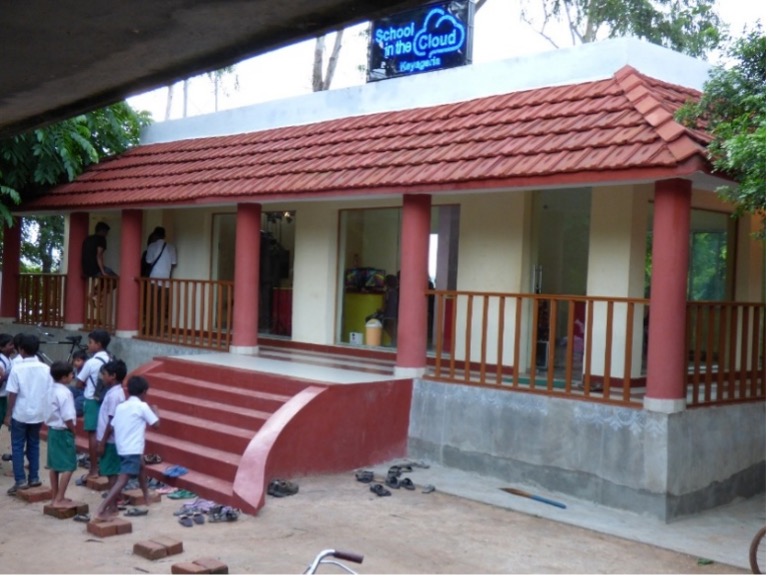
I. Korakati is situated in the Sandeshkhali region of the 24 Parganas district in West Bengal. It is the largest village within the Sundarbans area. This village housed the School in the Cloud (SC) lab, comprising a classroom and a guesthouse. The SC Lab ceased operations shortly before the Covid-19 pandemic in 2020, with varying accounts regarding the exact closure date emerging during interviews. While the classroom infrastructure remains, the computers are non-functional. Furthermore, electricity and water supply to the lab were reportedly disconnected at the time of the site visit.
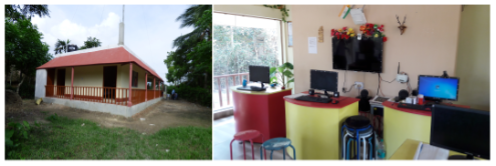
Several individuals were interviewed at this location.
NM is the owner of the space and person responsible for the infrastructure. He was not present at the location and was spoken to by phone, prior to the visit. He said: “The project went well till about 2016-17, and then, as the funds finished, the project came to a standstill. Since the running expense of the SC was about IRs 25,000-30,000 per month for internet, electricity, housekeeping… it was difficult to further the project…especially because it was free to the children.”
S, K, M, A and P are students who participated in the SC programme when it was operational, between 2014-16. They are either completing their higher education and/or are working in the village which is why they were available. K, who runs a stationery shop in the village said, “I loved to play games…I did not understand much when I was young.” S, currently in college, said, “50% of school in the cloud kids work outside... Bangalore, Coimbatore.” M, also in college, spoke about how his sisters and he were students at the SC Lab, a site was next door to their home. He felt they had all benefitted from the experience, and even contacted his oldest sister, married and settled in Mumbai, who mentioned she is working remotely for an international hospitality agency. A and P (females) spoke about how they enjoyed playing games and remembered the Granny Sessions.
II. Gocharan, a village west of Korakati with a population exceeding 1,000, is home to the SC Lab. Situated on the main road, the lab is a well-maintained, brightly lit structure with an adjoining guesthouse currently utilised by the local doctor. The lab itself lacks any equipment and has been inactive since the onset of the Covid-19 pandemic.

SM is the husband of the owner of the SC Lab, MM. While he did not want to be recorded, he shared that the SC Lab was operational till 2019 and closed during the Covid pandemic due to lack of funds.
KS was the Coordinator at the SC Lab when it was operational. He was nostalgic about the experience and stated, “I was there almost from the beginning and had seen all the activities ever since Dec 2015. I know the kids benefitted from the activities, especially their English improved…children used to learn by themselves, that was the education system. Grannies from other countries will speak in English and the kids will learn English on their own. My job was to write reports.” He was also of the view that the programme should charge money because “it is not taken seriously if it is free.”
TM, nephew of the lab owner, guided the field researcher through the premises. Notably, despite attending a school where the primary language of instruction was Bengali, Tridip demonstrated fluent English communication skills. According to him, “I was a regular to SC and I never missed a single session, as I was not only closer to the facility but had a desire to learn computers. I was in class 5 at that time. I played games and learned some of the basic computer applications like Paint/Word and Excel etc. To me, the highlight was the Granny Sessions, and I loved them the most and never missed. The best thing used to be when we would get our chance to type out our thoughts in a chat box…chatting would make our day. I give full credit for my fine spoken English skills to Granny Sessions.” However, he expressed a single complaint: the lack of certificates promised to students for completing the programme.
A and D (former students) attributed their current English language skills to the SC Lab. For D, he learned his coding skills at the SC Lab. A, who studies in a Bengali medium school said, “It was more than 3 years ago. I used to go there thrice a week. My school has nothing to do with my English. I have friends from the US and Japan.”
III. Chandrakona, a town situated in the Paschim Medinipur district of West Bengal, lies along a tributary of the Ganges River. The SC Lab, located within the town and managed by an NGO, is no longer operational and could only be viewed from the exterior. The computers and other equipment are currently in storage and are non-functional.
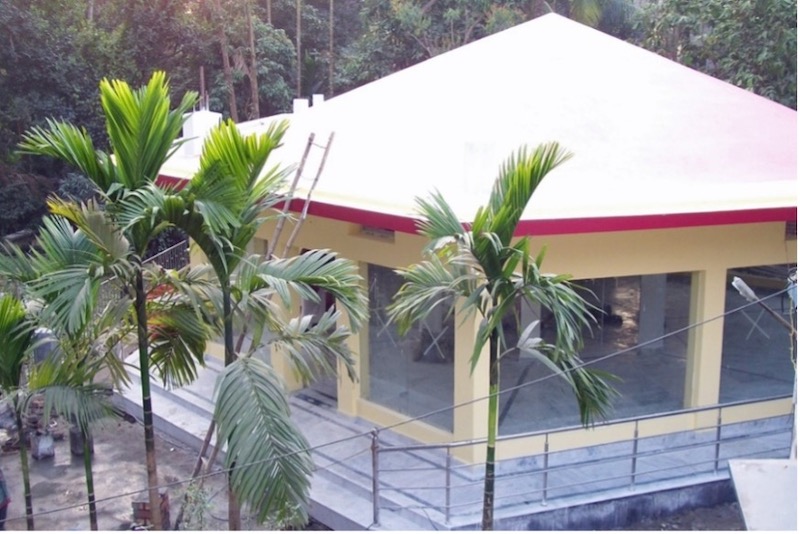
S is a student at the SC Lab. He has just completed his BSc in Biotechnology. He said that he learned how to use computers at the SC Lab and browsing on YouTube was his favourite activity.
C and K are brothers, both currently in college, who spoke very positively about the SC programme and its impact on them. C said, “I was here for years. I loved it very much. When I went for an interview, it helped. I used to work at a company where I could easily work on computer systems….” K stated, “That time computer was not available all the time in the village. Thanks go to SC. We had no money to learn computer. I learned a lot about English from SC. First time we came to know that if you need any information, you can find it from the Internet.”
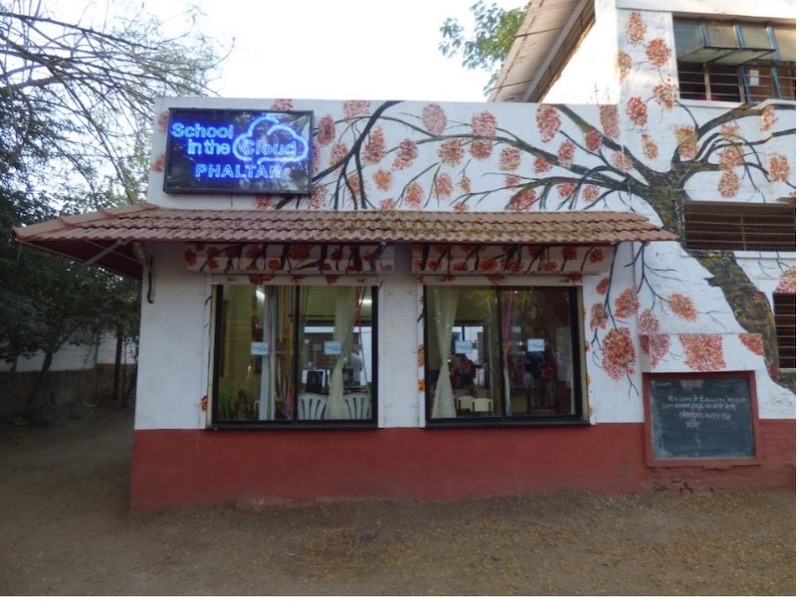
I. Phaltan is a small city located in the Satara district of Maharashtra, India, approximately 130 km from the city of Pune. The SC Lab is situated within the Kamala Nimbkar Balbhawan school in Phaltan. Established in 1986, the school offers education from pre-primary to senior secondary levels.
The SC Lab within the school provides the SC programme for students in Grades 4 and 5 (aged 9-10 years). It also serves as a computer lab for students in middle school. Initially located at the front of the school, the lab has since been relocated to the interior of the school building. Currently, the programme primarily focuses on "Granny Sessions," with plans to introduce "Big Question" activities soon.
P was the first coordinator of the SC programme at this school. As someone who completed his own education at this school, he had detailed knowledge about the school and the programme. He stated that while funding for the SC programme lasted only a year, the school was able to continue the programme independently. He mentioned that the programme attracted interest among other schools associated with the NGO running this school, and a similar programme was set up at another school in the Konkan area but did not last. He suggested that it might have been because of the lack of a properly trained coordinator, followed by the disruptions of the Covid pandemic.
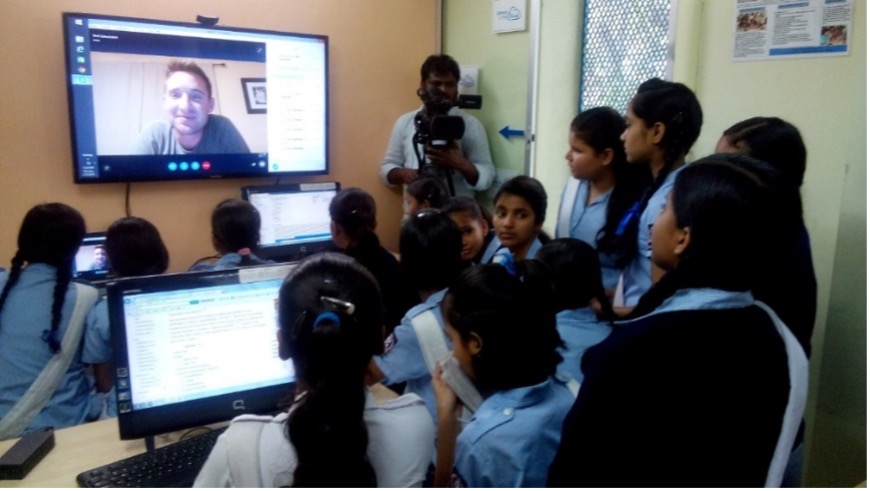
M took on the role of coordinator of the SC Lab in 2015. At present, she doubles up as the computer lab teacher. She shared that the SC sessions are part of the school timetable, and students of classes 4 and 5 are put into groups for the Granny Sessions to be conducted for 45 minutes at a time. There are currently four Grannies interacting with students: one from Germany, one from Japan, one from the UK, and one from India. M spoke about how one of the students who now attends college, helped with setting up and coordinating the Granny Sessions for the younger students when she was in class 8 or 9, which strengthened her English-speaking skills. She shared that while the Big Question sessions do not take place currently, she is planning to include these sessions soon.
II. Kalkaji, located in Southeast Delhi, is home to numerous government schools. This investigation focused on the Government Senior Secondary School for Girls, which previously housed a successful SC Lab. The lab's success was well-documented, with research studies and documentaries highlighting its positive impact on students. However, the school has since been converted into a co-educational institution, and the SOLE lab is no longer operational. The current principal was unfamiliar with the programme, and access to the school premises was denied to the field researcher. The initial establishment and successful implementation of the SOLE lab can be attributed to the efforts of G, a former principal who was a strong advocate of the ideas of MIE and SOLE. With special government approval, she implemented the programme across the school, dedicating a specific room for its operations. Under her leadership, the programme thrived for three years.
However, upon G's departure and the appointment of M, support for the programme diminished. This led to challenges with teachers and students, ultimately contributing to the programme's discontinuation. The subsequent restructuring of the school into a co-educational institution, finally ended the SC Lab.
It was difficult to access information regarding the programme, as the principal of the school refused to entertain any request for information without a government order.
J is an alumnus of the school, currently in college, who had attended the SC programme when it was operational. Jaya lives in a slum cluster near the school, and is currently completing a Bachelor’s degree in Sanskrit. She spoke in fluent English and stated that she learned English through the SC programme.
I. Harlem: The John B. Russwurm Elementary School is a public school located in the Manhattan borough of New York City. According to the NYC public school’s website, it serves students from pre-kindergarten onwards. The designated SC Lab space has been repurposed into a multi-activity centre, indicating that the SOLE programme is no longer operational at this location. The programme was active at the school between 2013 and 2015.
Two people were interviewed, both of whom had knowledge of the SOLE programme while it was in operation.
NS is the current principal of the school. NS stated that the SOLE programme started almost 10 years ago and continued for about two and a half years, catering to 250 students and involving approximately 13 staff. She said that the programme, while very well received, was discontinued a few years ago due to a space crunch with too many enrolments taking place. When asked if she was interested in re-instating the SOLE programme, she said, “Absolutely!”, going on to say, “We thought of transitioning it to each classroom initially… our goal was to have all of our classes look like the SOLE”, but “we haven't really sustained that practice yet… the goal is to maybe even by the next school year have the room back, because enrolment is down in New York State”. The room, by which she meant the SC Lab, initially had “a television monitor, connected to desktop computers” and “wall to wall carpeting.” Now it is a multi-activity room, which she is “…ready to turn into a dream room…” where “they’re gonna learn how to drive, as well as podcasting….”
About the students, she said, “…typically in their day they sit still for six hours. They listen to the teachers, occasionally they would do small groupwork, but now they have an opportunity to be in charge of their own. So, they had more voices. And plus, they had the autonomy to move from group to group....” She said that the children enjoyed coming up with questions, although later she and the teachers were formulating the questions.
About the parents, her view was, “They had an opportunity to come observe. They had an opportunity to come engage in, you know, in the learning itself, and again, like they were students, they enjoyed it. There were some parents who had some reservations with regards to the lack of structure, but once they had an opportunity to see that it was not replacing any of the instruction in the classroom, they were happy.”
About the teachers, she felt that “it took time for teachers to warm up, but after a while, they loved it.”
I. George Stepheson High School (GSHS) is a secondary school located in Killingworth, North Tyneside, serving approximately 1,200 students aged 11-18 years. As a pioneering participant in the "School in the Cloud" initiative, GSHS opened its doors on November 22, 2013. The SOLE programme remained active until 2022, when changes in school leadership and the need to repurpose space due to the Covid-19 pandemic necessitated a shift in focus. The school prioritised supporting students struggling with reintegration following the pandemic, establishing a partnership with the Newcastle United Foundation.

This partnership required dedicated space for teaching and learning, and the SOLE lab, being the only unused classroom, was repurposed to fulfil this need. As the demand for this support increased and the Newcastle Foundation programme expanded, the dedicated SOLE lab space was ultimately disbanded.
While the designated SOLE lab no longer exists, the core principles of the programme continue to influence teaching practices at GSHS. Teachers who participated in the original SOLE programme and experienced its benefits have integrated elements like "Big Questions" and group work into their existing curriculum. These approaches are now implemented within regular classrooms, utilising computers and iPads for research and collaboration.
There were no interviews conducted in this location. The findings regarding how the SOLE programme was perceived are based on the field report provided by ALD.
ALD was the lead teacher in charge of managing the SOLE lab while it was operational. Her report indicates that the SOLE lab, referred to as "the room," was situated within the design department of the school, a separate building from the main school block. Originally an art room used for storage and as a study area for sixth-form students, the space underwent a complete transformation to become a dedicated learning environment. The renovation included replacing the windows with floor-to-ceiling windows to maximise natural light and create a more engaging atmosphere. Six computers were installed, all strategically positioned to face the large window, facilitating independent learning and collaborative SOLE sessions. Beyond the computer workstations, the room incorporated breakout areas to encourage movement and collaborative activities, such as group presentations, video calls, and brainstorming sessions. Ample space was provided for students to record their findings on walls, windows, and flip charts.
II. Newton Aycliffe, UK: A dedicated SOLE lab was opened at the Greenfield Community High School (GCHS) in early 2014. At the time it was a specialist Arts and Science school for 11-16-year-olds. SOLE was supported by Greenfield Arts and was integrated into school teaching and learning, professional development, and wider community work (including work with primary schools). SOLE at Greenfield engaged 14,000 educators and young people, locally, nationally, and internationally.
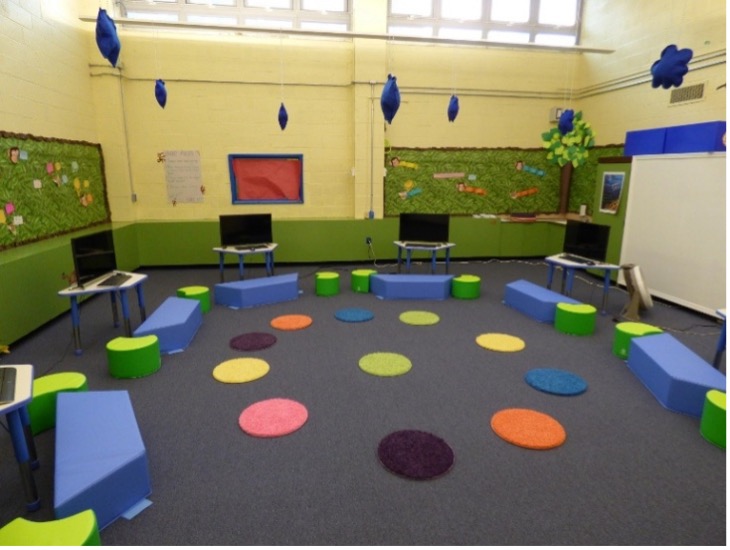
Prior to the Covid pandemic, in 2019, the school was part of Greenfield Community College and had approximately 928 students enrolled. In 2023, it was reopened as a part of an Academy Trust and has been renamed as Greenfield Academy, under new leadership and vision. The SOLE lab space assigned has been repurposed for other activities, and the programme has been discontinued. As in the earlier location, there were no interviews conducted here.
KM, a representative of Greenfield Arts, was responsible for the provisioning of the SOLE programme within the school. KM shared that SOLE was led by a dedicated role within the strategic senior leadership team (SLT) and developed alongside student leadership that helped lead and advocate for SOLE and self-led learning across the whole school’s teaching and learning.
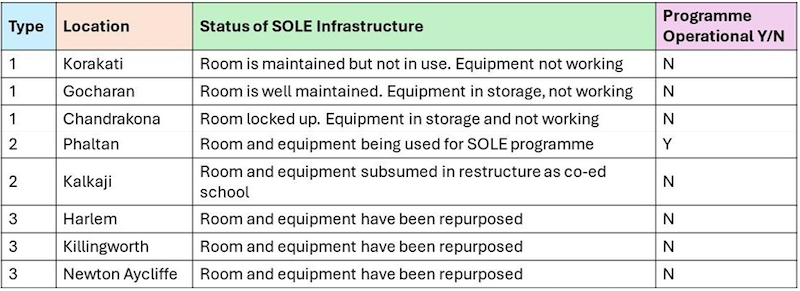
The SOLE programme was still operational after the experimental period in only one of the eight locations. In one of the locations, while the programme had been formally discontinued, it was still being used by some of the teachers in their classrooms (Table 1).
Table 1: A Summary View of Usage across all Locations (Type refers to the Cluster Mumber for the SC Labs)
There were many reasons why the SOLE programme was discontinued. The disruption of the Covid pandemic seems to have been at the core of many of the reasons across sites, either by preventing students from accessing the labs in the SOLE sites, or by causing a reprioritisation of learning goals and learning spaces. A summary of the reasons is shared in Table 2.
Table 2: A Summary View of Reasons the Programme was Discontinued at each Location
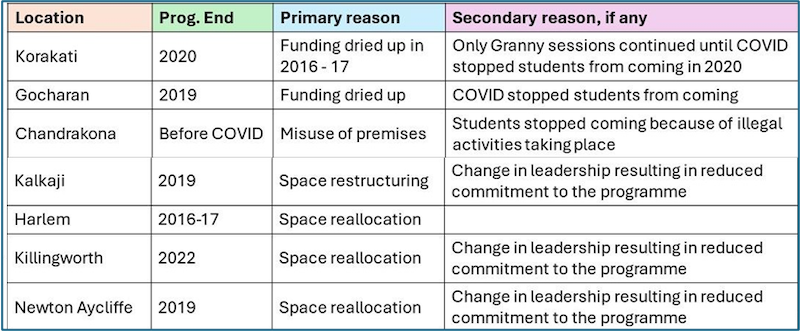
The reasons for the discontinuation of the SC Labs fall under three categories depending on the location of the labs:
Independent SC Labs (not attached to a school): The reasons for discontinuation were attributed primarily to the absence of a business model and a provision for the cost of maintenance, especially since the programme was meant to be free for students. There were also issues of ensuring the premises were safe and used appropriately, especially with free internet access, and maintaining motivation and understanding among parents about the programme. A single report of misuse stops parents from sending children, particularly girls, to the facility. SC Labs within NGO-run or private schools: In Phaltan, where the SC Lab that was in an NGO-run school, the cost of maintenance was covered and did not pose a problem. However, the challenge in this instance was that only one of the SOLE events was being run—the Granny Sessions. There was an opportunity to engage with the school to run the SOLE at its full potential.
SOLE labs within government schools (India) or public schools (UK, USA): The main reasons for discontinuation of the SC Labs in these sites were the reallocation of the SOLE space due to re-prioritisation within the school that could have come from government directives in the aftermath of the Covid pandemic (GSHS), or through more than average enrolments (JBRS), restructuring due to capacity enhancements (Kalkaji), or, most frequently, changes in leadership and lack of awareness or commitment regarding the programme (Kalkaji, GSHS, GCHS). It is interesting to note that, in Phaltan, while there was a change in leadership after the experimental period, the new leader was the erstwhile coordinator of the SC Lab and the facility continues to work. However, even she had to use the space for a double purpose—the SC Lab and the traditional computer lab of the school.
Dedicated SC Lab spaces might be unsustainable. Running SOLEs/mediated sessions in regular classrooms (design below) might be more sustainable. Independent labs need startup-like incubation for funding/maintenance; and a business model enables self-sustainability. Leadership change sites need advocacy for schools/communities/government on SOLE outcomes aligning with goals. Operational sites require governance, support, collaboration; and could consider franchising.
Self-organised learning via SC Labs is essential for children’s future. For sustainable implementation the following strategies could be considered:
Both contexts:
Schools:
Independent facilities:
This study reveals the fragile longevity of the School in the Cloud (SC) initiative after external funding ceased in 2016. Of eight SC Labs examined across India, the UK, and the USA, only one—in Phaltan, Maharashtra—remains fully operational, sustained by institutional integration within an NGO-run school. A second site (Killingworth, UK) has discontinued the dedicated lab but embeds SOLE principles into regular classroom practice. The remaining six sites are inactive, with physical infrastructure either repurposed, dismantled, or left non-functional. Closure drivers cluster into three predictable categories:
Despite widespread discontinuation, qualitative evidence uniformly affirms the original educational promise. Former participants—now in college or employment—credit SC exposure with durable gains in English proficiency, digital literacy, internet search competence, and self-confidence. These outcomes validate the shift from traditional “Reading, Writing, Arithmetic” to “Comprehension, Communication, Computing” as a relevant 21st-century literacy framework. The persistence of SOLE-inspired pedagogy in classrooms even after lab closure further signals the model’s pedagogical robustness.
Sustainability, however, demands structural redesign. Dedicated SC Labs are costly and vulnerable to institutional churn. A more resilient architecture integrates SOLE sessions into existing classrooms using mobile devices and large shared screens, trains teachers progressively, and certifies both educators and learners on measurable comprehension, communication, and computing skills. Independent community labs require incubation-style support to develop revenue streams—whether through modest user fees, corporate sponsorship, or franchise licensing—tied directly to certified employability outcomes. A managed “cloud” of remote mediators (Grannies) must be professionalised and monetised to ensure reliable session delivery.
Ultimately, self-organised, minimally invasive learning is not a luxury but a necessity for equipping children to thrive in a digital future. By aligning SOLE implementation with institutional routines, certifying tangible skill gains, and building context-specific business models, the School in the Cloud can transition from a funded experiment to a scalable, self-sustaining component of global education systems.
Acknowledgements: We are grateful to the “The Morimura Fund” (https://www.themorimurafund.org/) for funding this study. We are grateful to all the researchers who went to the research sites for data collection, namely, Ms. Neha Rana, Mr. Vivek Rana, Ms. Moumita Dey, Ms. Sheryl Williams, Ms. Amy Leigh Douglas, and Ms. Katy Milne. Without their support and inputs, it would have been impossible to collate and interpret data. We acknowledge the support provided by NIIT University, to enable us to carry out this study.
Dolan, P., Leat, D., Mazzoli Smith, L., Mitra, S., Todd, L., & Wall, K. (2013). Self-Organised Learning Environments (SOLEs) in an English school: An example of transformative pedagogy? Online Education Research Journal, 3(11).
Mitra, S. (2019). The school in the cloud: The emerging future of learning. Corwin.
Mitra, S. (2013, February). Build a school in the cloud [Video]. TED Conferences. https://www.ted.com/talks/sugata_mitra_build_a_school_in_the_cloud
Mitra, S. (2009). Remote presence: Technologies for beaming teachers where they cannot go. Journal of Emerging Technology and Web Intelligence, 1(1), 55-59. https://www.academia.edu/105630964/Remote_Presence_Technologies_for_Beaming_Teachers_Where_They_Cannot_Go
Mitra, S., & Crawley, E. (2014). Effectiveness of Self-Organised Learning by children: Gateshead experiments, Journal of Education and Human Development, 3(3), 79-88.https://docplayer.net/11477231-Effectiveness-of-self-organised-learning-by-children-gateshead-experiments.html#:~:text=2%2080%20Journal%20of%20Education%20and%20Human,experiments%20These%20hole%20in%20the%20wall%20computer
Mitra, S., Dangwal, R., Chatterjee, S., Jha, S., Bisht, R.S., & Kapur, P. (2005). Acquisition of computer literacy on shared public computers: Children and the hole in the wall. Australasian Journal of Educational Technology, 21(3), 407-426. https://ajet.org.au/index.php/AJET/article/view/1328
OR check the "Hard to find" section from the home screen of www.cevesm.com
Mitra, S., Dangwal, R., & Chopra, R. (2025). Effect of a “Hole In The Wall” playground computer on school test scores in the age of smartphones. Review of Educational Studies, 5(3). https://doi.org/10.71002/res.v5n3p1
The Lightbeam Project. (2017). The Lightbeam Project. https://www.thelightbeamproject.org/
Author Notes
Sugata Mitra, PhD is Professor Emeritus at NIIT University, Rajasthan, India, formerly Professor of Educational Technology at Newcastle University, UK, and visiting Professor at MIT Media Lab, USA. He is widely recognised for his “Hole in the Wall” experiments, which helped shape the concept of Minimally Invasive Education and Self-Organised Learning Environments (SOLE). Mitra’s research interests include children’s education, remote presence, self-organising systems, cognitive and complex dynamical systems, as well as physics and consciousness. Professor Mitra has received international honors such as the Dewang Mehta Award (2003), the Leonardo Award (2012), the million-dollar TED Prize (2013), and the Brock Prize (2022). His innovations have contributed to the development and training of millions of young people worldwide, including some of the most disadvantaged children. Email: sugata.mitra@gmail.com (https://orcid.org/0000-0002-8323-5731)
Ritu Dangwal is a Professor of Psychology specialising in educational research, cognitive science, and the application of AI in education. Her interests lie in exploring how cognitive science and technology intersect to influence learning, motivation, and development in children. She was involved in pioneering projects like School in the Cloud and Hole-in-the-Wall Education Ltd. A TEDx speaker and IVLP fellow. Professor Dangwal’s research focuses on integrating psychology, cognitive science, and AI to design inclusive and transformative learning environments. Email: Ritu.dangwal@niituniversity.in (https://orcid.org/0000-0002-6950-1108)
Radhika Roy is a PhD in the area of social design, with a focus on the design and development of innovative systems and practices in education for socio-economically disadvantaged youth in India. She is an independent researcher who draws upon her practice of three decades within the institutional frameworks of design, education and skill development in India, to collaborate with other stakeholders in these fields to support equitable futures for youth. Email: radhika.roy@outlook.com (https://orcid.org/0000-0003-1901-8043)
Cite as: Mitra, S., Dangwal, R., & Roy, R. (2025). The School in the Cloud Project—Results, status, and a sustainable model. Journal of Learning for Development, 12(3), 645-660.