Fahmi Ulum Al Mubarok, Annas Fajar Rohmani, Lutfi Zaki Al Manfaluthi and Muhammad Salman Al Farisi
2025 VOL. 12, No. 3
Abstract: This bibliometric analysis provides a comprehensive overview of the research trajectory on “Game-based Mobile Learning” based on Scopus-indexed publications from 2006 to 2024. The study revealed significant growth in scholarly output, peaking in 2023, reflecting the increasing academic and practical interest in integrating game elements with mobile learning technologies. Taiwan led in global contributions, with the United States excelling in cross-country collaborations, highlighting the international appeal and relevance of this research area. The analysis also identified emerging trends, including the rise of keywords such as “Higher Education” since 2020, and three thematic clusters: “Innovative Educational Technologies,” “Games and Technology in Education,” and “Human-Centred Learning.” Periodic fluctuations in publication trends suggested shifts in funding, research priorities, or technology adoption. Despite its notable achievements, the study was limited to Scopus-indexed, English-language journal articles, excluding other indexes, languages, and document types. Future research should focus on underexplored game elements, integration into higher education, and cross-cultural approaches to enhance the field’s effectiveness. These inquiries are critical for advancing global educational innovation and fostering sustainable development in learning technologies.
Keywords: game-based learning, mobile learning, bibliometric analysis, educational technology, research trend
In recent decades, the development of digital technology has opened significant new opportunities in the world of education (Putra & Ayyaisy, 2025). One of the most notable innovations is the integration of game-based learning (GBL) and mobile learning (m-learning), which have become highly interactive and flexible learning methods (Pinthong et al., 2024), particularly relevant in higher education. Game-based learning leverages game elements such as challenges, levels, rewards, and feedback to encourage student engagement and motivation (Derakhshan et al., 2024). This not only enhances students' interest but also helps them develop critical skills such as problem-solving and decision-making (Omarali, 2022). On the other hand, mobile learning provides high accessibility, allowing students to access learning materials anytime and anywhere through mobile devices, making education more reachable, flexible, and tailored to individual needs (Tlili et al., 2024). The combination of these approaches creates a dynamic and engaging learning experience, establishing a new paradigm that effectively merges entertainment with education (Swacha et al., 2023).
Existing literature shows that GBL can have a significant positive impact on student engagement and learning outcomes. For example, according to Furió et al. (2015), game elements such as challenges, rewards, and social interaction have been proven effective in increasing students' motivation to learn in a more active and involved manner. This makes learning more enjoyable and reduces the monotony often associated with traditional teaching methods (Chang & Hwang, 2019). Additionally, mobile learning offers convenience for independent learning at a pace and schedule suitable for students, as explained by Lin et al. (2024). This flexibility supports both distance learning and blended learning models, especially in university contexts. In particular, mobile learning aligns strongly with the principles of Open and Distance eLearning (ODeL), which emphasises learner autonomy, accessibility, and the decentralisation of educational resources (Sevnarayan, 2022). Another study highlights how mobile technology can assist students in highly personalised ways, allowing them to learn according to their own styles and preferences (Yu et al., 2024).
The integration of game-based learning (GBL) and mobile learning (m-learning) can produce deeper learning experiences where students not only acquire knowledge but also practical skills applicable to everyday life (Chen & Hou, 2024). This creates opportunities for more contextual and relevant learning, which is crucial in 21st-century education that emphasises competency-based learning (Hwang, G.H. et al., 2016). In higher education, particularly within distance or blended learning, this combination seems highly effective, offering customisable learning experiences and enriching interactions between students and learning materials (Mondal & Maity, 2023). As technology evolves, further research on the implementation of these approaches will be valuable for enhancing the quality of education and preparing students to face the increasingly complex challenges of the digital world (Marcial et al., 2021). However, research also notes challenges in implementing these approaches. For instance, one study emphasised the importance of game design balanced between entertainment elements and educational objectives (Żammit, 2022). Additionally, technology accessibility remains a barrier in some regions. In the context of m-learning, issues such as internet connectivity and inadequate devices can hinder the adoption of this method (Lees et al., 2020).
Despite these challenges, many studies highlight the great potential of this approach to support competency-based and personalised learning (Liang et al., 2021). For example, one study reveals that GBL integrated with m-learning can enhance students' critical thinking and collaboration skills (Efendi & Qodr, 2023). Furthermore, bibliometric analysis shows a growing number of publications on this theme in the international literature reflecting the increasing academic interest in these educational innovations.
To map and understand the evolution of the rapidly expanding field of mobile game-based learning, this study employs a bibliometric analysis, which serves as a fundamental method within the broader scientometric framework (Zheng et al., 2020). Scientometrics is the quantitative study of science, scientific communication, and knowledge production, focusing on publication trends, citation dynamics, and collaboration networks. Bibliometrics, a subfield of scientometrics, applies statistical techniques to examine scholarly literature, offering insights into research trajectories, thematic developments, influential authors, and intellectual structures (Darko et al., 2020). By adopting this approach, the present study aimed to uncover the progression, research hotspots, and collaborative patterns that define the landscape of game-based learning through mobile learning.
Bibliometric indicators are vital for assessing the outcomes of scientific research (Karakaya & Bozkurt, 2022; Mubarok et al., 2024; Piotrowski & Watt, 2022; Sirhan et al., 2022). They are used not only to evaluate the impact of scholarly publications but also to analyse the interplay between science and technology, chart different areas of knowledge, and monitor the emergence of new ideas within specific disciplines (Rusydiana et al., 2021). Additionally, these indicators provide a solid basis for strategic decision-making, helping research and academic institutions allocate resources effectively and develop evidence-based policies. Consequently, bibliometric indicators are indispensable tools in the research field, facilitating the understanding, evaluation, and planning of scientific advancements. In this context, the current study investigated the development and trends surrounding "Game-Based Mobile Learning" by analysing Scopus-indexed publications from 2006 to 2024, with 2006 marking the first appearance of this topic in the Scopus database.
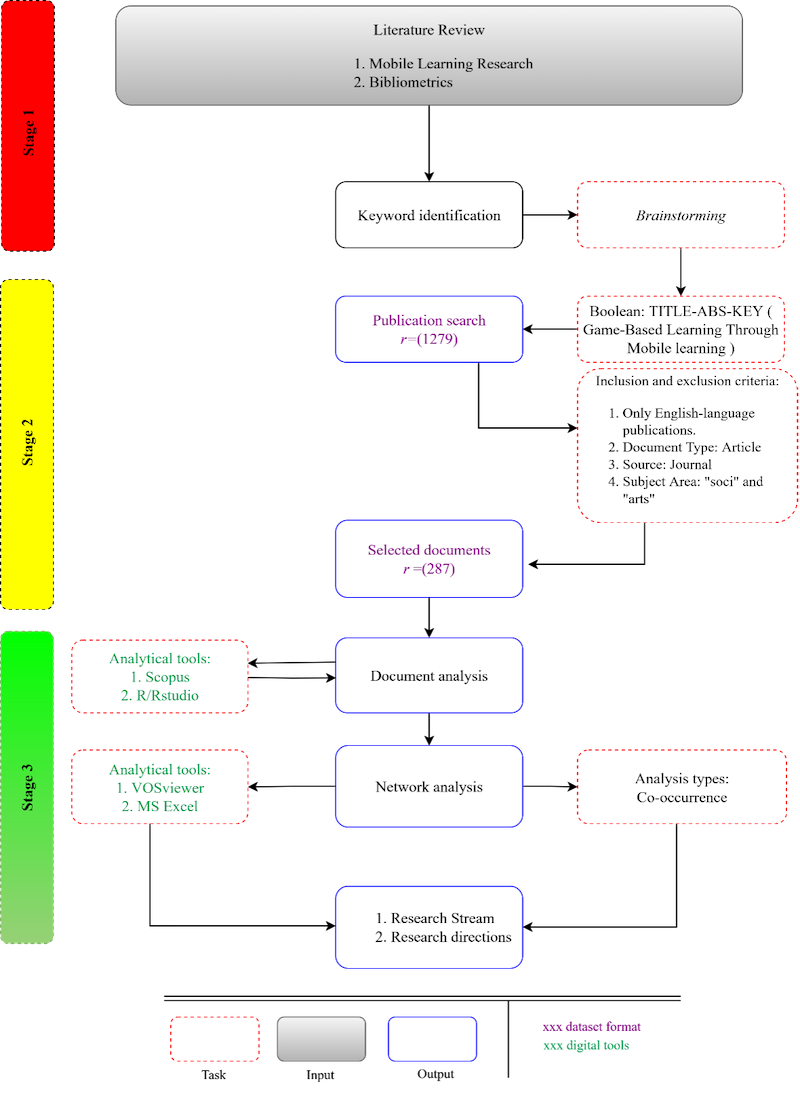
This study employs the bibliometric analysis method as its foundation (Apriantoro, Herviana, et al., 2023; Apriantoro, et al., 2023; Apriantoro & Wijayanti, 2022). The data, covering the period from 2006 to 2024, was obtained from the Scopus database on November 14, 2024, using a Boolean search strategy. Advanced tools such as R and RStudio, VOSviewer, and Microsoft Excel were used to analyse citations, and document content and interconnections within the dataset. The analysis followed a structured three-stage process to systematically examine the collected data.
In the first stage, a literature review was conducted to assess the relevance of the research topic within the scope of bibliometric studies. This step ensured alignment between the research and its theme while also assisting in identifying appropriate keywords that comprehensively represented the research area.
In the second stage, a detailed search of the Scopus database was performed using the Boolean operator TITLE-ABS-KEY (“game-based learning through mobile learning”), yielding 1,279 documents. The results were further refined using Boolean operators to filter only journal articles written in English within the subject areas of social sciences and arts and humanities. The filtering process applied the following criteria: TITLE-ABS-KEY ("Game-Based Learning through Mobile Learning") AND (LIMIT-TO (SUBJAREA, "SOCI") OR LIMIT-TO (SUBJAREA, "ARTS")) AND (LIMIT-TO (DOCTYPE, "ar")) AND (LIMIT-TO (LANGUAGE, "English")) AND (LIMIT-TO (SRCTYPE, "j")). After this refinement, 287 relevant documents were identified.
In the final stage, the selected documents were subjected to an in-depth analysis. Scopus Analyser, R, and RStudio were utilised to evaluate publication trends over time, analyse patterns in document distribution, and gather details about authors, institutional affiliations, and countries of origin. Additionally, inter-document relationships were examined and visualised through VOSviewer. The processed data was subsequently organised and further analysed using Microsoft Excel. However, one important methodological limitation lay in the reliance on keyword-based searches, which could introduce keyword bias. This occurs when relevant studies use alternative terminology not captured by the chosen keywords, potentially leading to the exclusion of significant works. Furthermore, the analysis was constrained to documents indexed in Scopus and published in English, which may have overlooked pertinent research in other databases, languages, or regional publications. These limitations should be considered when interpreting the findings, particularly regarding the completeness and generalisability of the identified research trends.
These steps are summarised visually in Figure 1.
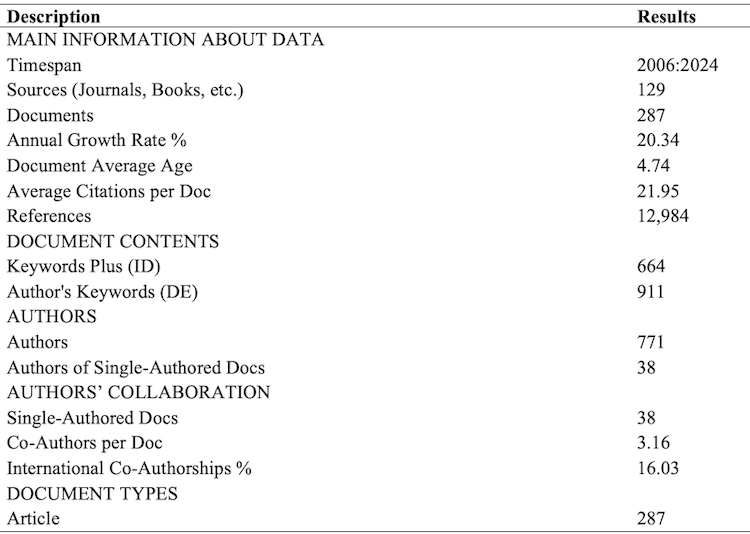
Table 1 provides an overview of the 287 records gathered over an 18-year period. The dataset includes 771 authors, with 38 being solo authors, and demonstrates an international authorship collaboration rate of 16.03%. The records also include a total of 12,984 references, with an average of 21.95 citations per document.
Table 1: Descriptive Summary and Overview of the Datasets
The graph in Figure 2 of the number of publications on the theme of “game-based mobile learning” shows a significant growth trend from 2006 to 2024. Initially, the number of publications was low, with the highest figure reaching only seven until 2015. However, starting in 2016, there was an increase from 7 to 12, reflecting the growing attention to this topic, particularly alongside the development of mobile technology in education. This trend continued, peaking in 2023 with 39 publications, the highest number recorded throughout the period. However, in 2024, there was a decline to 28 publications, possibly indicating a shift in research focus or saturation in this theme. The initial surge in 2016 and the peak in 2023 were notable findings, highlighting the dynamic evolution of this theme within the academic community.
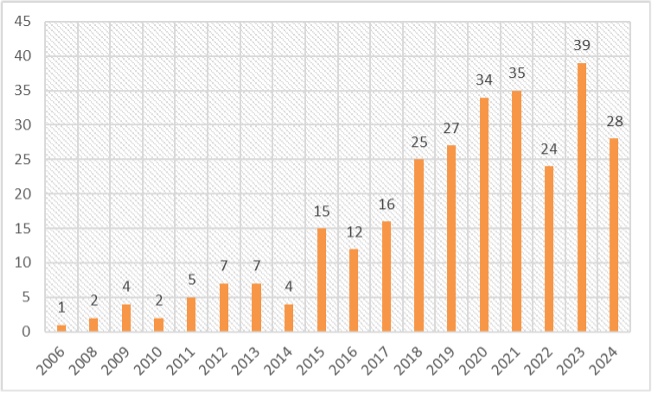
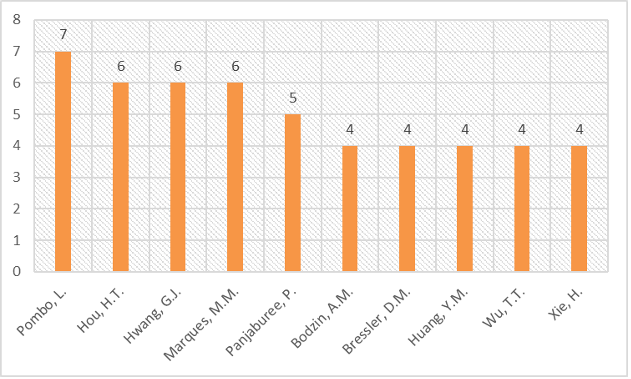
Figure 3 below shows the top 10 authors with the highest number of publications on "game-based mobile learning." The author with the largest contribution was Pombo, L., with a total of seven publications, followed by Hou, H.T., Hwang, G.J., and Marques, M.M., each with six publications. Panjaburee, P., contributed five publications, while Bodzin, A.M., Bressler, D.M., Huang, Y.M., Wu, T.T., and Xie, H. each had four publications. An interesting finding from this graph is the dominance of contributions by a few key authors, particularly Pombo, L., who emerged as a central figure in the development of this theme. Additionally, the diversity of author names indicated multidisciplinary collaboration encompassing various academic and geographical backgrounds. The differences in the number of publications also reflected a disparity in contributions, with most research concentrated among a few key individuals. This makes these authors significant figures for potential collaboration or deeper literature analysis.
Based on the data, Huang Y-M., Hwang G-J., and Panjaburee, P. hold the highest H-Index of five, indicating their significant contributions to the field of game-based mobile learning, with at least five articles that have been cited five or more times. Pombo, L. leads with the highest G-Index of seven, demonstrating a strong concentration of citations in their most influential works. Meanwhile, Chen, X. and Cheng, G. had the highest M-Index of 0.75, reflecting rapid citation growth since they started publishing in 2021, highlighting their growing influence in the field despite their recent entry.
In terms of total citations (TC), Admiraal, W. stands out with 603 citations (Table 2), showcasing his work's significant recognition and relevance among researchers. Regarding the number of publications (NP), Pombo, L. leads with seven articles (Table 2), indicating a high level of productivity compared to other authors in the same field.
Table 2 also highlights the potential of two newer authors, Chen, X. and Cheng, G., who began publishing in 2021. Their M-Index of 0.75 underscores the rapid impact of their work, positioning them as rising stars in the field. On the other hand, Admiraal, W., an established figure since 2009, demonstrates long-term relevance. Despite a lower M-Index (0.188), his high total citations (603) emphasise the sustained importance of his contributions over the years. This combination of steady contributions and influence made Admiraal, W. a key figure in this area of research.
Table 2: Author’s Impact
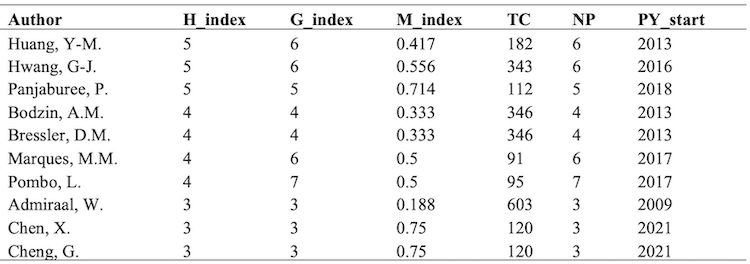
Note: H-index: Measures an author's impact by the number of papers with equivalent citations; G-index: Focuses on highly-cited papers to assess impact; M-index: Normalises the H-index for career length; T.C.: Total citations for all an author's papers; N.P.: Author's total number of publications; PY-Start: Year of the author's first publication.
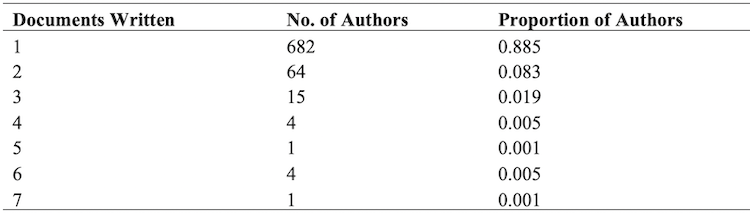
Table 3 shows that the majority of authors in this field had low productivity, with 682 authors (88.5%) producing only one document. This indicates that research contributions were dominated by authors who were involved in just a single publication. On the other hand, there were authors with moderate productivity, namely those who produced between two and four documents. This group included 64 authors (8.3%) with two documents, 15 authors (1.9%) with three documents, and four authors (0.5%) with four documents. They demonstrate a higher level of engagement compared to the majority but are still categorised as moderately productive. Meanwhile, only a few authors had high productivity, defined as writing more than five documents. This group was very small, consisting of one author (0.1%) with five documents, four authors (0.5%) with six documents, and one author (0.1%) with seven documents. Despite their small numbers, this group exhibited exceptional dedication to their research contributions.
According to Lotka's Law, the number of authors producing n documents decreases exponentially as the number of documents written increases. This pattern was evident in the data, where authors who wrote only one document far outnumbered those who wrote two or more. This trend highlighted that the higher the productivity, the fewer the number of authors involved.
Table 3: Author’s Documents Based on Lotka’s Law
The chart below (Fig. 4) highlights the top 10 affiliations with the highest number of publications on the topic of "game-based mobile learning." National Taiwan University of Science and Technology ranked first with 14 publications, followed by National Taiwan Normal University with 11 publications. Universidade de Aveiro was in third place with nine publications, while Mahidol University and National Cheng Kung University contributed eight and seven publications, respectively. Other institutions, such as the Centro de Investigação Didática e Tecnologia na Formação de Formadores and National Yunlin University of Science and Technology, also recorded seven and six publications, followed by The Education University of Hong Kong, and Beijing Normal University, each with five publications, and Lehigh University, with four.
An interesting finding in this chart is the dominance of universities in Taiwan, particularly National Taiwan University of Science and Technology and National Taiwan Normal University, which positioned Taiwan as a key research hub in this field. Additionally, contributions from European institutions, such as Universidade de Aveiro and the Centro de Investigação Didática e Tecnologia, suggest that this topic held global appeal, fostering cross-continental collaboration. The presence of universities, such as Mahidol University and Beijing Normal University, also highlighted Asia's significant role in advancing this research, while institutions like Lehigh University reflected participation from the United States. This indicated a broad distribution of interest in the topic, with notable concentrations in regions that exhibited a strong focus on educational technology innovation.
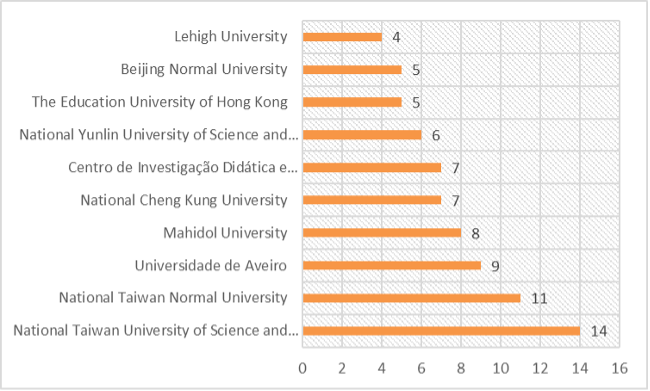
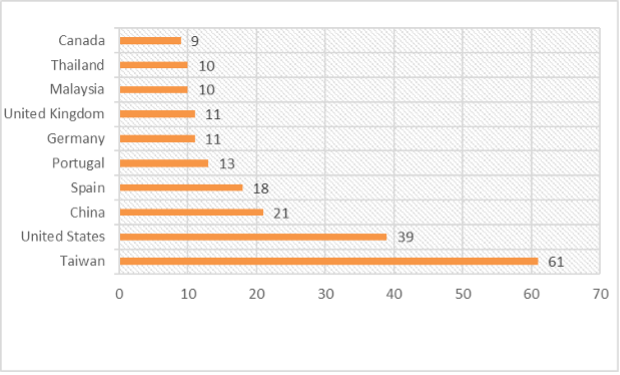
Figure 5 shows the distribution of publications on game-based learning through mobile learning based on the countries of origin. Taiwan dominated with the highest number of publications, totaling 61 articles, followed by the United States with 39. China ranked third with 21, while Spain and Portugal had 18 and 13, respectively. Other countries, such as Germany, the United Kingdom, Malaysia, Thailand, and Canada, contributed fewer articles, each recording between 9 and 11 publications.
These findings indicate that Taiwan and the United States served as primary research hubs in this field, reflecting significant attention to educational technology innovations in these countries. Additionally, the presence of various countries highlighted the global relevance of this topic, even though research distribution remained concentrated in a few key regions.
Meanwhile, Asian countries ranked second in terms of publication contributions, indicating substantial interest in this area. These findings suggest that research on game-based mobile learning received broad attention, particularly from European countries.
Based on Figure 6, China was the country with the highest publication contribution, dominated by Single Country Publications (SCP), indicating its strong focus on independent research. Additionally, countries such as the USA, Portugal, Spain, and Thailand also made significant contributions, albeit smaller compared to China, and reflecting their active involvement in this field. In terms of international collaboration, the USA emerged as the country with the highest contribution to Multiple Country Publications (MCP), underscoring its leading role in cross-country cooperation. Besides the USA, countries like Portugal, Germany, and Canada also showed a significant proportion of MCPs, highlighting the importance of international collaboration in enhancing the quality and impact of research globally.
Figure 6 clearly shows the dominance of Single Country Publications (SCP) in countries like China, where nearly all contributions came from publications conducted by researchers within the same country. This SCP dominance reflects China's strong domestic research capacity and independence in producing scientific publications.
Conversely, Multiple Country Publications (MCP) dominated in countries such as the USA, Portugal, Germany, and Canada, where a significant proportion of publications resulted from international collaboration. This MCP dominance indicated that these countries were more oriented toward global partnerships, leveraging cross-country research networks to enhance the impact of their studies. A high MCP ratio also reflected their openness and integration into the international scientific community.
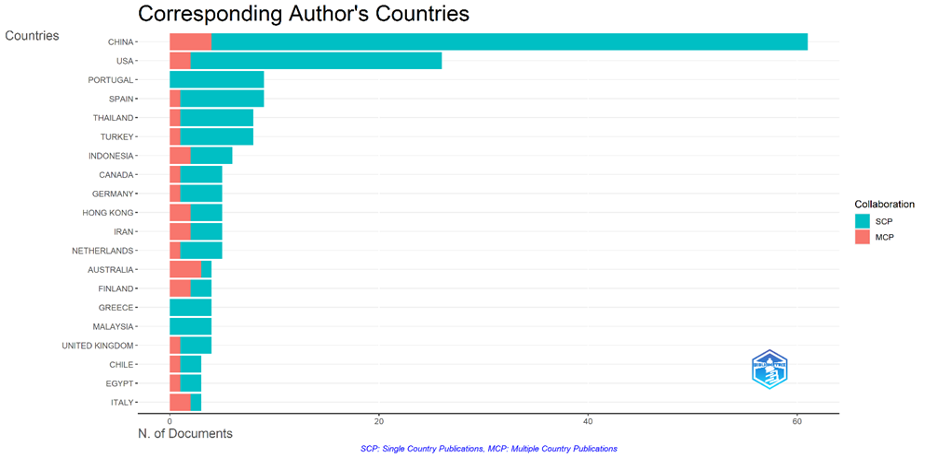
Figure 7 illustrates the distribution of articles on game-based mobile learning published across various journals. The journal with the highest number of publications was the International Journal of Mobile Learning, with 17 articles, followed by Educational Technology Research and Development with 13 and the International Journal of Game-Based Learning with 10. Other journals, such as the Journal of Computer-Assisted Learning and Interactive Learning Environments, each had 10 articles. These findings indicate that these journals served as primary platforms for research in this topic, with a significant focus on journals specialising in educational technology and mobile-based learning. This highlights the relevance of this topic in modern educational technology literature.
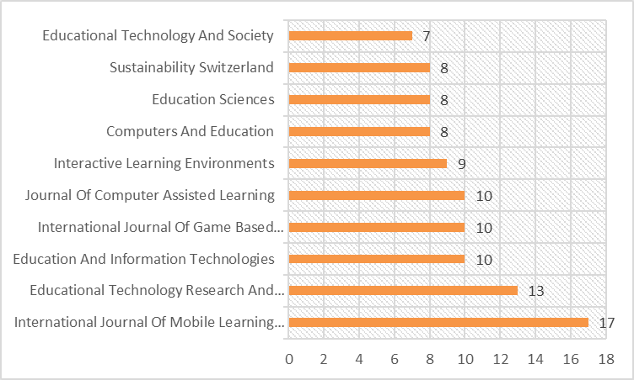
Table 4 shows that the paper with the highest total citations (TC) was Huizenga, J., 2009, Journal of Computer Assisted Learning, which amassed 417 citations. On the other hand, the paper with the highest average citations per year (TC per Year) was Troussas, C., 2020, Computers and Education, with an average of 37.40 citations annually.
This data indicated a general trend where papers with higher total citations often show a higher average citations per year (TC per Year). However, this relationship is not absolute, as having a higher total citation count does not always translate to a higher yearly average.
Additionally, the publication year of a paper does not consistently influence its total citations. While older papers may sometimes have fewer citations than recent ones, there are notable exceptions where older works have garnered substantial citation counts. Thus, the link between publication year and total citations lacks consistency.
Table 4: Most Globally Cited Documents
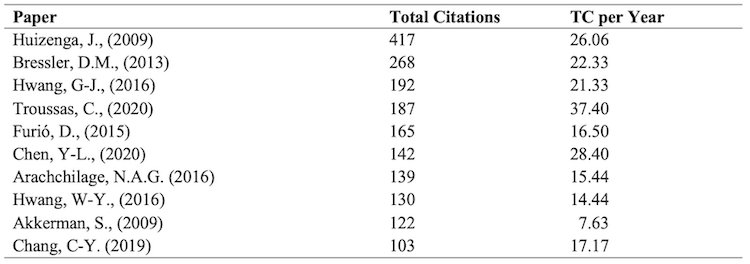
Figure 8 presents a keyword co-occurrence network generated using VOSviewer, and illustrating the thematic structure of research in the field of game-based mobile learning. A minimum cluster size of 10 was applied, resulting in the identification of three distinct clusters based on the co-occurrence of keywords. Cluster 1 (red) focuses on the integration of game-based learning and mobile learning, comprising 38 keywords such as "game-based learning," "mobile learning," "mobile game-based learning," and "engagement." This cluster reflects the convergence of mobile technology and game-based instructional strategies. Cluster 2 (green), which includes 23 items, represents the pedagogical and cognitive aspects of the field. It features keywords such as "serious games," "problem solving," "educational games," and "cultural learning," indicating research concerned with learning processes and educational outcomes. Cluster 3 (blue), consisting of 20 items, emphasises technology and application contexts, with terms like "mobile applications," "kindergarten," "learning," and "humans." This cluster suggests a focus on the practical implementation of mobile game-based learning across various educational environments. The most prominent keyword in the visualisation is "game-based learning," which appears 115 times and has a total link strength of 301, indicating its central role and strong connections with other keywords. The thickness of the lines connecting nodes represents the strength of co-occurrence, helping to visualise the relationships and thematic density across the clusters. Overall, the figure maps the intellectual landscape of the field, revealing dominant research themes and their interconnections.
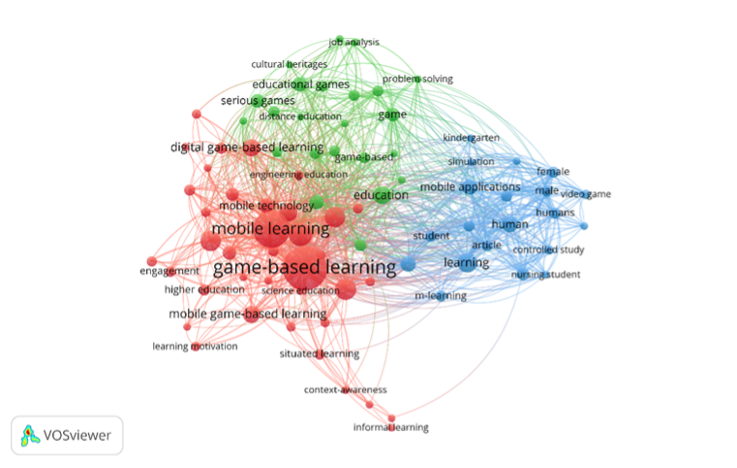
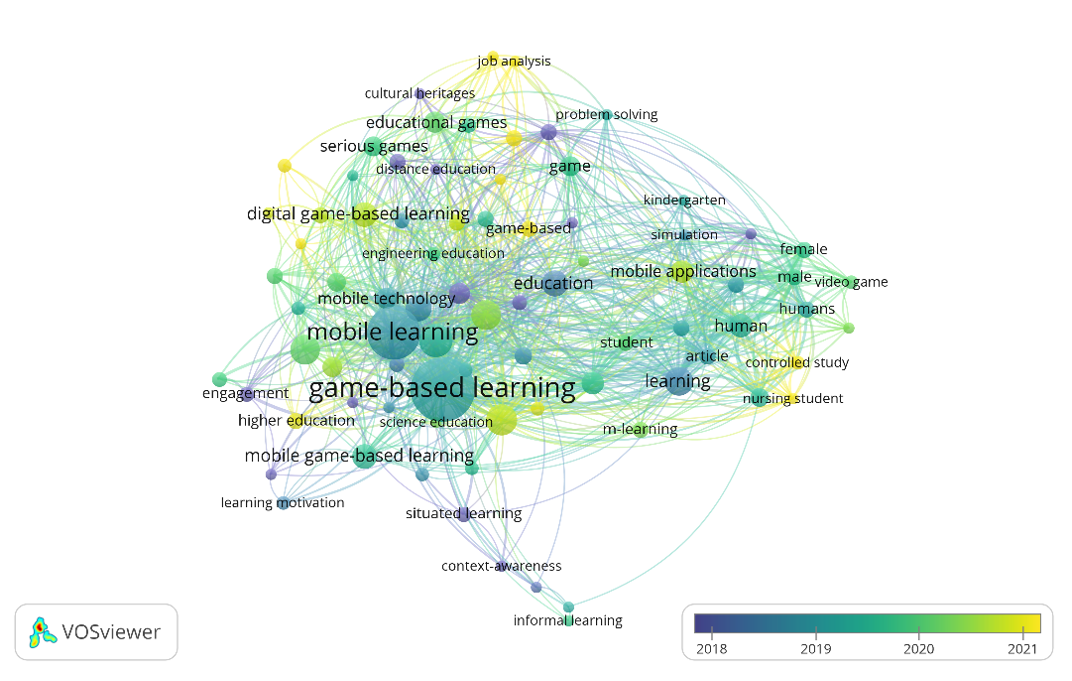
Figure 9 displays an overlay visualisation of the keyword co-occurrence network, generated using VOSviewer. This visualisation provides insights into the temporal evolution of research topics in the field of mobile game-based learning. The color gradient, ranging from purple to yellow, represents the average publication year of documents associated with each keyword. Keywords shaded in yellow indicate more recent attention in the literature, while those in blue or purple denote earlier research focus. For example, terms such as "higher education," "educational game," and "controlled study" are shown in yellow, suggesting that they have gained prominence in recent years, particularly from 2020 onwards. In contrast, keywords such as "education," "learning," and "human-computer interaction" appear in darker hues, indicating their foundational and long-standing role in this research area, dating back to around 2008. This overlay analysis not only highlights emerging themes but also provides a chronological perspective on how scholarly interest has shifted within the domain over time.
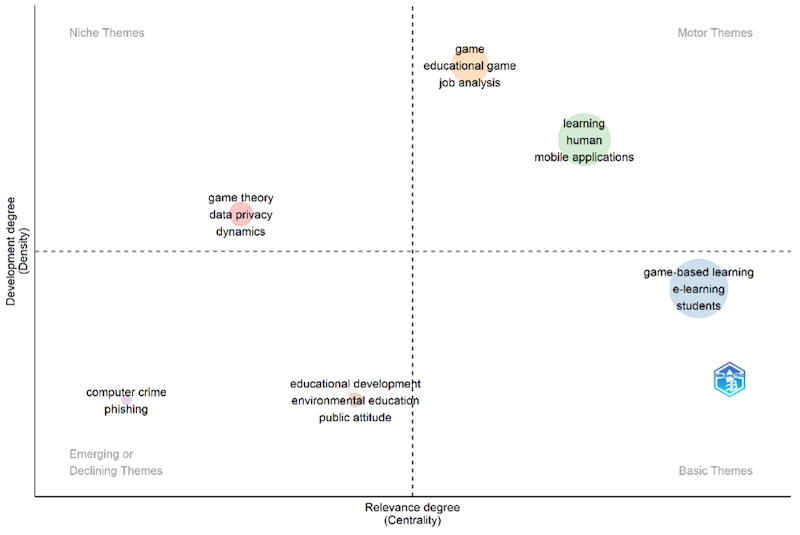
Based on the analysis of the thematic map, as illustrated in Figure 10, Motor Themes, located in the upper-right quadrant, include “game”, “educational game”, and “job analysis”. These themes have high levels of relevance and development, making them the core of the research. These themes are crucial as they can significantly impact research development, particularly in the advancement of educational games and job analysis in the context of education. Motor Themes are the most promising area because they are already well-structured and highly relevant. If one is starting a new study, focusing on these themes could make a substantial contribution to scientific progress and practical applications.
In the upper-left quadrant, Niche Themes include “game theory”, “data privacy”, and “dynamics”. These themes are well-structured but have limited relevance to the overall field. These themes are more suitable for in-depth exploration in specific subfields, such as the development of game theory, studies on data privacy, or dynamic analysis in the digital context. A focus on Niche Themes is ideal for researchers who wish to delve into technical details or specific aspects of existing topics, providing opportunities for detailed and technical research.
Meanwhile, Emerging or Declining Themes, located in the lower-left quadrant, include “computer crime” and “phishing”. These themes have low levels of development and relevance, indicating that they may be in a growth phase or declining in popularity. Emerging Themes represent a potential area for further exploration, where additional research could help develop better structures and increase the themes' relevance. Focusing on these themes allows researchers to address research gaps and create new innovations in the field of digital security and cybercrime.
Finally, Basic Themes, located in the lower-right quadrant, include “game-based learning”, “e-learning”, and “students”. These themes are highly relevant as the foundation of research, although their level of development remains low. These themes can serve as a strong starting point for researchers to develop more complex research frameworks, particularly in the innovation of technology-based education for students. As a foundation for research, these themes provide an initial basis for building deeper and more structured theories and approaches.
The results of the bibliometric analysis on "Game-Based Mobile Learning" revealed a robust upward trend in scholarly attention, particularly over the last decade. This increasing volume of research underscored a global recognition of the pedagogical potential of integrating game mechanics within mobile learning environments, especially in higher education. Technological advancements, the ubiquity of mobile devices, and the tertiary educational sector’s growing need for engaging, student-centred learning tools collectively fueled this momentum.
From a theoretical standpoint, the convergence of game-based learning (GBL) and mobile learning (m-learning) aligns with constructivist and experiential learning theories, which emphasise active participation, contextual learning, and feedback-rich environments. The frequent appearance of keywords such as “engagement,” “adaptive learning,” and “personalized learning” in the co-occurrence network affirms the field’s grounding in learner-centred pedagogical frameworks. Furthermore, the presence of themes such as “augmented reality,” “virtual reality,” and “serious games” indicated an emerging epistemological shift toward multimodal, immersive learning experiences that challenge traditional linear models of university-level instruction.
On a practical level, the study highlighted the growing applicability of mobile game-based learning (MGbL) across diverse educational settings, with notable adoption in higher education environments. The dominance of keywords like “higher education” and “controlled study” in more recent publications suggests a trend toward empirical validation and institutional adoption of MGbL strategies. These findings are particularly relevant for Open and Distance eLearning (ODeL), where flexibility, accessibility, and learner autonomy are critical. MGbL can enrich ODeL frameworks by increasing learner motivation and retention, especially in low-resource contexts where physical infrastructure may be limited but mobile technology is increasingly accessible.
The data also revealed regional disparities and collaborative gaps, with countries such as Taiwan and the United States leading publication outputs, while other regions showed limited engagement. This raises important considerations for inclusive policy formulation and international collaboration in higher education ODeL ecosystems. In particular, the contrast between high Single Country Publications (SCP) in China and high Multiple Country Publications (MCP) in the United States reflected differing research cultures and potential opportunities for cross-national integration.
Despite its promising trajectory, the field also exhibited contradictions and gaps in the literature. While many studies emphasised the motivational benefits of MGbL, fewer addressed its long-term cognitive outcomes or potential negative effects, such as distraction or over-reliance on extrinsic motivation. Additionally, while gamification and AR/VR tools were lauded for their innovation, their implementation in resource-constrained higher education ODeL settings remains underexplored. There is also limited consensus on best practices for instructional design within MGbL, revealing a tension between technological novelty and pedagogical efficacy.
This bibliometric study provides valuable insights into the intellectual structure and evolving trends in mobile game-based learning. It offers both theoretical enrichment and actionable guidance for educators, instructional designers, and policymakers—particularly those working in higher education and ODeL. Future research should continue to investigate how MGbL can be meaningfully adapted for diverse university learners and contexts, with a focus on equity, scalability, and pedagogical integrity. Research on game-based learning through mobile learning highlights a dynamic intersection of pedagogy and technology, offering promising avenues for enhancing learner engagement and accessibility. This field reflects a growing interest in integrating interactive, learner-centred approaches within digital education environments. The incorporation of game elements into mobile platforms aligns well with the principles of Open and Distance eLearning (ODeL), particularly in promoting flexibility, scalability, and self-directed learning.
While this study offers valuable insights, it is limited by its focus on English-language journal articles indexed in a single database. Future investigations should adopt more inclusive approaches by considering diverse databases, languages, and publication types to gain a more comprehensive understanding of the field.
The potential of mobile game-based learning within ODeL contexts is especially significant in reaching learners in remote or low-resource settings. Future research should explore how game-based strategies can be effectively implemented in open and distance education, particularly in higher education and cross-cultural contexts. Greater emphasis on global collaboration and technological innovation will be essential to realising the full potential of this approach in supporting inclusive and sustainable educational development.
Akkerman, S., Admiraal, W., & Huizenga, J. (2009). Storification in History education: A mobile game in and about medieval Amsterdam. Computers & Education, 52(2), 449-459. https://doi.org/10.1016/j.compedu.2008.09.014
Apriantoro, M.S., Herviana, J., Yayuli, Y., & Suratno, S. (2023). Sharia financial literacy: Research trends and directions for future inquiry. Journal of Islamic Economic Laws, 6(2). https://doi.org/10.23917/jisel.v6i2.22396
Apriantoro, M.S., Maheswari, S.G., Muthoifin, M., & Rosyadhi, R.I. (2023). The potential of Islamic mutual funds: Research stream and future direction. Iranian Economic Review. https://doi.org/10.22059/ier.2024.353061.1007606.
Apriantoro, M.S., & Wijayanti, N.R. (2022). Bibliometric analysis of research directions in Islamic Bank in the pandemic period. NISBAH: Jurnal Perbanka Syariah, 8(2), 127-137. https://doi.org/10.30997/jn.v8i2.6408.
Arachchilage, N.A.G., Love, S., & Beznosov, K. (2016). Phishing threat avoidance behaviour: An empirical investigation. Computers in Human Behavior, 60, 185-197. https://doi.org/10.1016/j.chb.2016.02.065
Bressler, D.M., & Bodzin, A.M. (2013). A mixed methods assessment of students’ flow experiences during a mobile augmented reality science game. Journal of Computer Assisted Learning, 29(6), 505-517. https://doi.org/10.1111/jcal.12008
Chang, C-Y., & Hwang, G-J. (2019). Trends in digital game-based learning in the mobile era: A systematic review of journal publications from 2007 to 2016. International Journal of Mobile Learning and Organisation, 13(1), 68. https://doi.org/10.1504/IJMLO.2019.096468
Chen, Y-C., & Hou, H-T. (2024). A mobile contextualized educational game framework with ChatGPT interactive scaffolding for employee ethics training. Journal of Educational Computing Research, 62(7), 1737-1762. https://doi.org/10.1177/07356331241268505
Chen, Y-L., & Hsu, C-C. (2020). Self-regulated mobile game-based English learning in a virtual reality environment. Computers & Education, 154. 103910. https://doi.org/10.1016/j.compedu.2020.103910
Darko, A., Chan, A.P.C., Adabre, M.A., Edwards, D.J., Hosseini, M.R., & Ameyaw, E.E. (2020). Artificial intelligence in the AEC industry: Scientometric analysis and visualization of research activities. Automation in Construction, 112. https://doi.org/10.1016/j.autcon.2020.103081
Derakhshan, A., Teo, T., & Khazaie, S. (2024). Is game-based language learning general or specific-oriented? Exploring the applicability of mobile virtual realities to medical English education in the Middle East. Computers and Education, 213. https://doi.org/10.1016/j.compedu.2024.105013
Efendi, A., & Qodr, T.S. (2023). Improving critical thinking skills of high school students through the implementation of mobile-based game applications. International Journal of Education and Practice, 11(3), 613-626. https://doi.org/10.18488/61.v11i3.3440
Furió, D., Juan, M‐C., Seguí, I., & Vivó, R. (2015). Mobile learning vs. traditional classroom lessons: A comparative study. Journal of Computer Assisted Learning, 31(3), 189-201. https://doi.org/10.1111/jcal.12071
Huizenga, J., Admiraal, W., Akkerman, S., & ten Dam, G. (2009). Mobile game‐based learning in secondary education: Engagement, motivation and learning in a mobile city game. Journal of Computer Assisted Learning, 25(4), 332-344. https://doi.org/10.1111/j.1365-2729.2009.00316.x
Hwang, G-J., Wu, P-H., Chen, C-C., & Tu, N-T. (2016). Effects of an augmented reality-based educational game on students’ learning achievements and attitudes in real-world observations. Interactive Learning Environments, 24(8), 1895-1906. https://doi.org/10.1080/10494820.2015.1057747
Hwang, W-Y., Shih, T. K., Ma, Z-H., Shadiev, R., & Chen, S-Y. (2016). Evaluating listening and speaking skills in a mobile game-based learning environment with situational contexts. Computer Assisted Language Learning, 29(4), 639-657. https://doi.org/10.1080/09588221.2015.1016438
Karakaya, K., & Bozkurt, A. (2022). Mobile-assisted language learning (MALL) research trends and patterns through bibliometric analysis: Empowering language learners through ubiquitous educational technologies. System, 110. https://doi.org/10.1016/j.system.2022.102925
Lees, M., Wentzel, M.T., Clark, J.H., & Hurst, G.A. (2020). Green Tycoon: A mobile application game to introduce biorefining principles in Green Chemistry. Journal of Chemical Education, 97(7), 2014-2019. https://doi.org/10.1021/acs.jchemed.0c00363
Liang, H-Y., Hsu, T-Y., & Hwang, G-J. (2021). Promoting children’s inquiry performances in alternate reality games: A mobile concept mapping-based questioning approach. British Journal of Educational Technology, 52(5), 2000-2019. https://doi.org/10.1111/bjet.13095
Lin, Y-C., & Hou, H-T. (2024). Designing a strategic analysis and planning skills training board game using mobile technology and a dual-scaffolding mechanism. Asia-Pacific Education Researcher, 33(2), 431-445. https://doi.org/10.1007/s40299-023-00740-2
Marcial, D.E., dela Peña, L., Montemayor, J., & Dy, J. (2021). The design of a gamified responsible use of social media. Frontiers in Education, 6. https://doi.org/10.3389/feduc.2021.635278
Mondal, A.H., & Maity, R. (2023). Exploring the effects of game-based learning. Journal of Engineering Education Transformations, 37(1), 98-105. https://doi.org/10.16920/jeet/2023/v37i1/23136
Mubarok, F.U. Al, Azani, M.Z., Salim, H., Maksum, M.N.R., & Apriantoro, M.S. (2024). Tracing the Progression of motivated learning strategies: An in-depth bibliometric analysis. Proceeding ISETH (International Summit on Science, Technology, and Humanity), 450-460. https://doi.org/10.23917/iseth.3895
Omarali, P.S.P. (2022). Considerations of game dynamics and mechanics in college students’ use of mobile games for learning. International Journal of Mobile and Blended Learning, 14(2). https://doi.org/10.4018/IJMBL.309739
Pinthong, C., Poungkaew, N., Ampaipis, T., Thanyaphongphat, J., Pimviriyakul, P., & Maenpuen, S. (2024). Metal Demon Conqueror game: A new digital game-based learning tool on factors affecting enzyme activity. Journal of Chemical Education, 101(4), 1718-1725. https://doi.org/10.1021/acs.jchemed.3c01212
Piotrowski, C., & Watt, J.D. (2022). Contemporary boredom research: A bibliometric analysis of investigatory domains. North American Journal of Psychology, 24(1), 127-134. https://www.scopus.com/inward/record.uri?eid=2-s2.0-85126978937&partnerID=40&md5=3d2e244885d8193de3ff57a0b7e662bf
Putra, D.H.A., & Ayyaisy, H.I. (2025). Optimizing digital technology in progressive Islamic education to enhance public literacy and combat hoaxes. Multicultural Islamic Education Review, 3(1), 63-74. https://doi.org/10.23917/mier.v3i1.9915
Rusydiana, A.S., As-Salafiyah, A., Sanrego, Y.D., & Marlina, L. (2021). Fiqh on finance: A scientometric analysis using bibliometrix. Library Philosophy and Practice, 2021. https://www.scopus.com/inward/record.uri?eid=2-s2.0-85107647108&partnerID=40&md5=ebbc7cd8094355b0569c8f9f0a76bb54
Sevnarayan, K. (2022). Reimaging elearning technologies to support students: On reducing transactional distance at an open and distance eLearning institution. E-Learning and Digital Media, 19(4), 421-439. https://doi.org/10.1177/20427530221096535
Sirhan, A.A.A., Mohsen, I.N., Tawalbeh, S.A.A., & Mahameed, M.A.A. (2022). A bibliometric study for articles of the Jordanian Journal of Libraries and Information (1965-2017). International Journal of Information Science and Management, 20(2), 247–258. https://www.scopus.com/inward/record.uri?eid=2-s2.0-85129270643&partnerID=40&md5=6229b03a75ff8345ef0dad4cfd76009c
Swacha, J., Muszyńska, K., Kowalska, M., Miluniec, A., Maskeliūnas, R., Damaševičius, R., Kulikajevas, A., & Blažauskas, T. (2023). A mobile game for learning programming: Students’ reactions in view of their attitudes, experiences and expectations. International Journal of Mobile Learning and Organisation, 17(3), 388-405. https://doi.org/10.1504/IJMLO.2023.131864
Tlili, A., Salha, S., Garzón, J., Denden, M., Affouneh, S., & Burgos, D. (2024). Which pedagogical approaches are more effective in mobile learning? A meta-analysis and research synthesis. Journal of Computer Assisted Learning, 40(3), 1321-1346. https://doi.org/10.1111/jcal.12950
Troussas, C., Krouska, A., & Sgouropoulou, C. (2020). Collaboration and fuzzy-modeled personalization for mobile game-based learning in higher education. Computers & Education, 144, 103698. https://doi.org/10.1016/j.compedu.2019.103698
Yu, Y-L., Wu, T.T., & Huang, Y-M. (2024). Learning behavior in augmented reality–mediated mobile game–based learning. Library Hi Tech, 42(2), 530-546. https://doi.org/10.1108/LHT-03-2022-0122
Żammit, J. (2022). Is mobile game-based learning effective for international adults learning Maltese? Asian-Pacific Journal of Second and Foreign Language Education, 7(1). https://doi.org/10.1186/s40862-022-00157-2
Zeng, C., & Fisher, L. (2024). Opening the “Black Box”: How out-of-class use of Duolingo impacts Chinese junior high school students’ intrinsic motivation for English. ECNU Review of Education, 7(2), 283-307. https://doi.org/10.1177/20965311231171606
Zheng, C., Yuan, J., Zhu, L., Zhang, Y., & Shao, Q. (2020). From digital to sustainable: A scientometric review of smart city literature between 1990 and 2019. Journal of Cleaner Production, 258. https://doi.org/10.1016/j.jclepro.2020.120689
Author Notes
Fahmi Ulum Al Mubarok is a doctoral student in Islamic Religious Education and a researcher at the Faculty of Islamic Studies, Universitas Muhammadiyah Surakarta (UMS), Indonesia. He also serves as an assistant lecturer, teaching Epistemology of Islam in the Qur’anic and Tafsir Studies Program. He earned his bachelor’s degree from the Department of Dirasah Islamiyah wal Arobiyah at Al-Azhar University, Cairo, and completed his master’s degree in Islamic Religious Education at UMS. His research interests include Islamic education, Islamic epistemology, bibliometric analysis, religious moderation, curriculum and pedagogical innovation, and the transformation of education in the digital era. His works have been published in nationally and internationally indexed journals and presented at academic conferences. Email: o300240006@student.ums.ac.id (https://orcid.org/0009-0008-0096-6012)
Annas Fajar Rohmani holds a Master’s degree in Islamic Education (MPAI) from Universitas Muhammadiyah Surakarta (UMS). His research focuses on Islamic education, religious values, and the study of religious moderation. His academic publications are available on Google Scholar (https://scholar.google.com/citations?user=NkZsZ1EAAAAJ&hl=id). Email: o100220038@student.ums.ac.id (https://orcid.org/ 0009-0006-0668-8389 )
Lutfi Zaki Al Manfaluthi is currently a Master’s student in Islamic Education at Kolej Universiti Perguruan Ugama Seri Begawan, Brunei Darussalam. His academic interests include Islamic education development, multicultural understanding, and approaches to religious moderation in teaching and learning. Email: 24mdi120005@kupusb.edu.bn
Muhammad Salman Al Farisi is an undergraduate student at the Faculty of Arts and Humanities, Queen Arwa University, Yemen. His areas of interest cover cultural studies, humanities, and the interrelation of arts and education within the context of contemporary Islamic society. Email: salman@qau.edu.ye
Cite as: Mubarok, F.U.A., Rohmani, A.F., Manfaluthi, L.Z.A., & Farisi, M.S.A. (2025). Bibliometric analysis of game-based mobile learning in higher education: Trends and gaps. Journal of Learning for Development, 12(3), 501-518.