Gema Rullyana, Eveline Siregar and Cecep Kustandi
2025 VOL. 12, No. 3
Abstract: Micro-credentials are short, skills-based certifications that recognise specific competencies in a flexible, modular, and industry-aligned format. Micro-credentials in higher education play a vital role in skills recognition, workforce readiness, and digital learning innovation. They offer a flexible, skills-based approach aligned with industry demands. Understanding research trends in this field is crucial for identifying future directions. This study examined the research landscape and emerging themes in micro-credential studies within higher education through a bibliometric analysis of 551 publications indexed in the Scopus and Web of Science databases from 2014 to 2024. Using the PRISMA model, relevant studies were selected based on keywords related to micro-credentials. The leading publication sources included TechTrends. The US was the most active country, with Purdue and Kumamoto universities leading the institutional contributions. This study highlights underexplored areas such as blockchain applications, gamification, information literacy, personalised learning, curriculum integration, educational technology, and blended learning. Further research could enhance their implementation and impact in higher education.
Keywords: bibliometric, research trends, micro-credentials, higher education
The higher education sector has undergone a transformation in response to the rapid advancement of digital technology. This shift has not only affected the way individuals access learning resources but has also reshaped teaching methodologies and the dynamics of interaction between educators and learners (Awidi & Paynter, 2024). One of the key innovations emerging from these changes is micro-credentials, which provide learners with opportunities to acquire specific skills and competencies in a flexible manner (Kayyali, 2025). Micro-credentials are increasingly recognised as an innovative and personalised modality for professional development (Hunt et al., 2020). Unlike conventional academic programmes, micro-credentials allow learners to complete educational pathways in a shorter time frame while obtaining recognised certification as proof of their mastery of specific skills (Moodie & Wheelahan, 2021).
Micro-credentials officially recognise specific skills obtained through various learning pathways, including online courses, industry-based training, and work experience validated with concrete evidence (Maina et al., 2022; Wheelahan & Moodie, 2024). Compared to traditional academic degrees that take longer, micro-credentials facilitate a more flexible and efficient learning process tailored to individual and industry needs. In the context of an increasingly dynamic job market, micro-credentials serve as a strategic solution for prospective workers who want to acquire relevant skills in less time and increase their competitiveness (Bloomberg, 2024; Tamoliune et al., 2023). The adoption of micro-credentials signals a paradigm shift from a conventional degree-based education model to a more modular (Alangari, 2024), decentralised (Kiiskilä & Pirkkalainen, 2024), and skills-specific framework (Bruguera et al., 2024). The increasing flexibility of digital learning further supports the micro-credential ecosystem by providing wider access to high-quality learning materials, thus enabling individuals to customise their educational paths. Although micro-credentials are gaining traction in the global education ecosystem, challenges related to credential standardisation, accreditation, and recognition are important issues that require further investigation (Iatrellis et al., 2024; Raj et al., 2024).
Market trend analysis shows that micro-credentials have become a rapidly growing sector in global education. One study reviewing 450 micro-credentials across MOOC platforms like Coursera projected a market value of $117 billion by 2025 (Pickard et al., 2018). Prior to Covid-19, growth was driven by the MOOC-as-OPM model in collaboration with universities. The pandemic accelerated this trend, with institutions and companies adopting micro-credentials to minimise disruption in formal education. By 2021, the market value reached $61 billion, exceeding pre-pandemic projections of $52 billion, and the Compounded Annual Growth Rate (CAGR) rose from 14% to 17% (HolonIQ, 2021). This phenomenon highlights the accelerated adoption of skills-based learning in response to evolving education and labour market demands.
Several other factors have contributed to this growth, including increased fragmentation of postgraduate credentials, which facilitates a more flexible integration between education and work (Selvaratnam & Sankey, 2021). In addition, many learning models now incorporate pathway-based education, which allows learners to use micro-credentials as alternative pathways to completing online degree programmes while maintaining employment (Davis et al., 2023; Perea, 2020). This shift signals a growing paradigm in higher education, where modular and skills-based learning is becoming increasingly dominant over traditional education models. The ongoing expansion of microcredits is driven by technological advances, evolving societal needs, and the transformation of learning (Pirkkalainen et al., 2023).
Academic research on micro-credentials in higher education has expanded notably over the past decade. Bibliometric analysis shows that terms like digital certification emerged in the literature as early as the late 1990s, while micro-credential began appearing in the Scopus database in 2014. This reflects the growing academic interest in micro-credentials as tools for skills-based learning and flexible competency recognition. Despite this growth, the volume of scholarly publications on micro-credentials in higher education remains modest compared to more established fields such as e-learning. This highlights an ongoing shift in educational models towards modular, competency-based learning aligned with lifelong education and evolving workforce needs. Bibliometric mapping serves as a valuable approach to trace the development of micro-credential research, offering insights into conceptual trends, institutional contributions, and emerging areas for future inquiry.
Although academic interest in micro-credentials is growing, bibliometric studies in this area remain limited. Prior analyses have explored their potential in post-pandemic educational reform and the application of blockchain technologies for credential validation (Srivastava et al., 2023; Tamoliune et al., 2023). This study aims to map research trends and thematic developments in micro-credential literature within higher education using a bibliometric analysis of Scopus and Web of Science data from 2014 to 2024. The findings are expected to highlight dominant themes, reveal underexplored areas, and inform future strategies for inclusive and scalable micro-credential implementation.
This bibliometric study was conducted to identify research opportunities and examine the relationship between keywords in micro-credential research in higher education. The data for this study was retrieved from the Scopus and Web of Science databases using a search based on relevant keywords. The analysis used scientific performance analysis and mapping science (Donthu et al., 2021). Performance analysis was conducted to evaluate publication volume, citation impact, research collaborations, and academic productivity. Meanwhile, mapping science was applied to explore relationships between publications, authors, keywords, and emerging research trends.
The sample for this study comprises 931 scientific publications retrieved from the Scopus and Web of Science databases for the period 2014-2024. The search was conducted using the following query: TITLE-ABS-KEY (“micro-credential*” OR “microcredential*” OR “open credential*” OR “digital badge*” OR “digital-certification” OR “open-certification” OR “micro-certification” AND “higher education” OR “university” OR “college”).
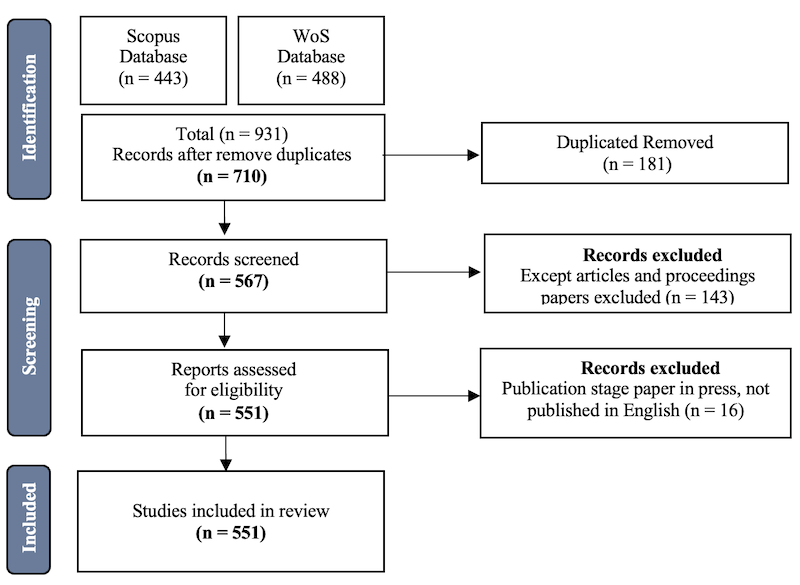
The article search was conducted using the keywords described in the sample section. The initial search yielded 931 scientific publications, comprising 443 from the Scopus and 488 from the Web of Science databases. To enhance the relevance and quality of the dataset, additional screening was conducted. One-hundred-and-eighty-one duplicate records were removed, resulting in 710 unique publications for further review. During the screening phase, 143 records were excluded as they were not peer-reviewed journal articles or conference proceedings. These publication types were selected for their credibility and academic rigour, as journal articles offer validated research findings, while conference proceedings often capture emerging trends and innovations within the field. Subsequently, 16 additional records were excluded because they were either in press or not published in English. Only final, English-language publications were retained to ensure consistency, validity, and accessibility for an international scholarly audience. As a result, 551 scientific publications were included in the final analysis. The search results were exported in CSV format and analysed using VOSviewer and Rstudio. The selection procedure in this study followed the PRISMA model designed by Moher et al. (2009), which is presented in Figure 1.
Document by Years
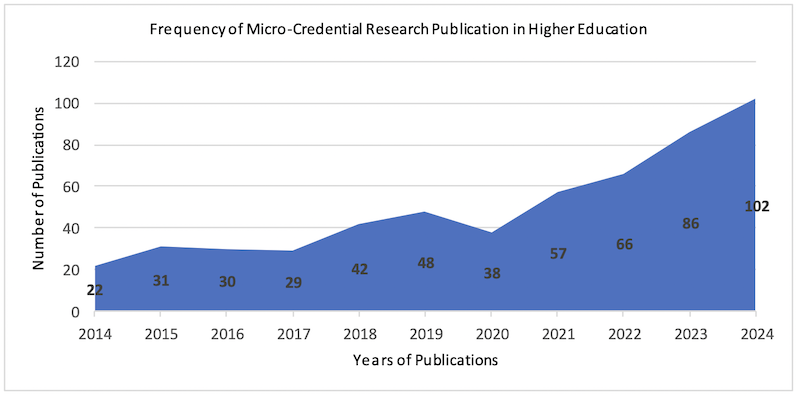
At the beginning of the period (2014-2017), the number of publications was relatively low and stable, ranging from 22 to 31 articles per year. Starting in 2018, the trend began to show an upward trajectory, with 38 articles published. This was followed by gradual growth, reaching 66 articles in 2022. A more significant increase occurred between 2022 and 2024, with the number of publications rising to 86 in 2023 and peaking at 102 in 2024, marking the highest figure recorded over the past decade. Data on the frequency of publication of this research is presented in Figure 2 to provide an overview of the development of research trends.
Author with the Most Citations
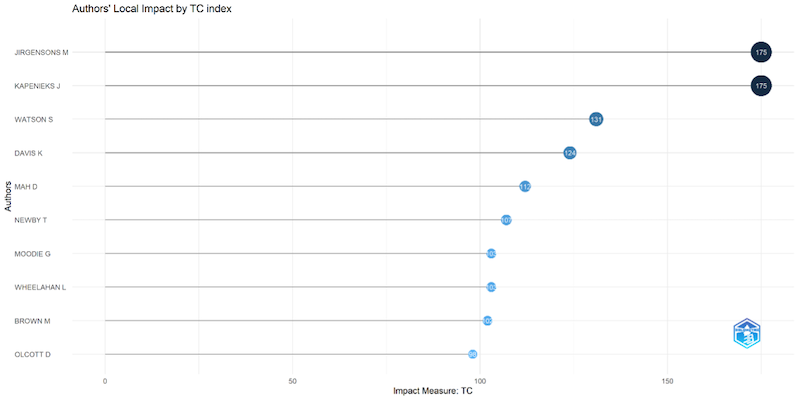
A number of authors have contributed to research on micro-credentials in higher education, with a total number of publications that have had a significant impact in the form of citations. To identify the authors with the highest number of citations, an Authors' Local Impact analysis was performed using RStudio. The results of the analysis show that the three authors with the highest number of citations were Jirgensons, M. and Kapenieks, J., each with 175 citations, followed by Watson, S. with 131 citations. In addition, other authors with high citation numbers were Davis, K., with 124, Mah, D., with 112, and Newby, T., with 107. Furthermore, Moodie, G., and Wheelahan, L. each had 103, while Brown, M. had 102 and Olcott, D. had 98. Complete data on the authors with the highest number of citations is presented in Figure 3.
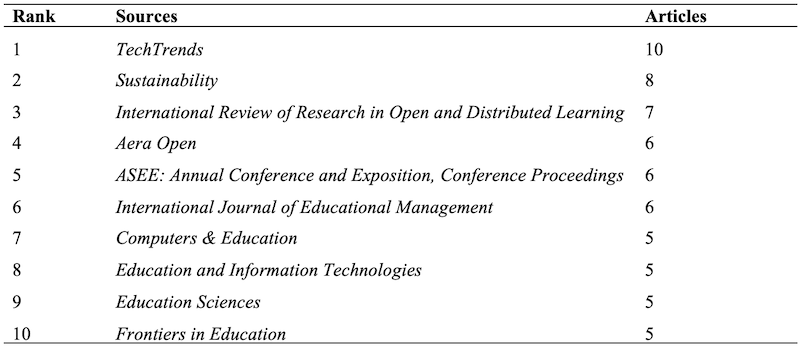
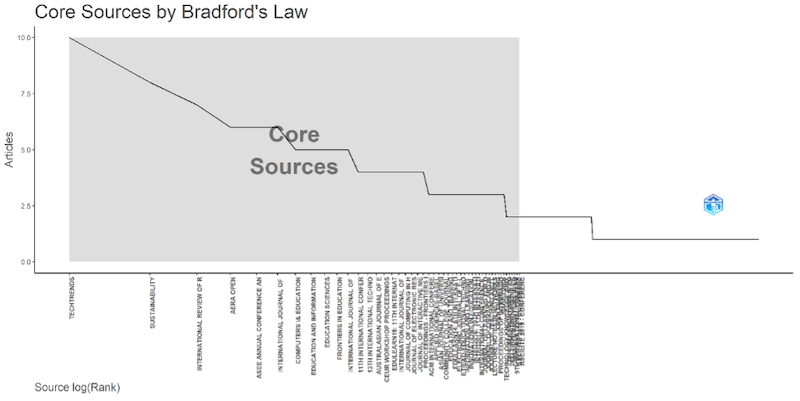
Based on the results of the analysis, a list of sources that published the most research articles on micro-credentials in higher education was obtained. The analysis was carried out using RStudio with the Bradford Law approach. TechTrends emerged as the most productive journal, accounting for 12 publications. This was followed by Sustainability and the ASEE Annual Conference and Exposition, each with seven publications. Other prominent sources included the International Journal of Educational Management and Education Sciences, both contributing six publications. Furthermore, the International Review of Research in Open and Distributed Learning, AERA Open, and Frontiers in Education were each represented by five publications. Complete data on these core publication sources are shown in Table 1, and visualised in Figure 4 based on the results of Bradford's Law analysis.
Table 1: The Most Productive Sources Based on the Number of Publications
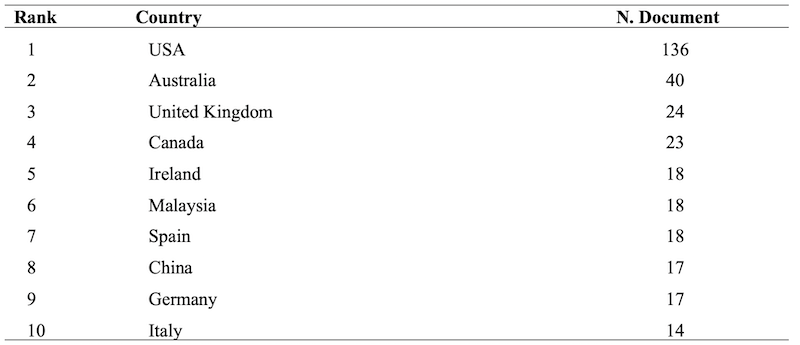
Based on data obtained from the Scopus and Web of Science databases, the United States was the most productive country in micro-credentials research. Australia ranked second, followed by several other countries with notable publication output. Complete data on the most productive countries in micro-credentials research is presented in Table 2.
Table 2: The Most Productive Countries
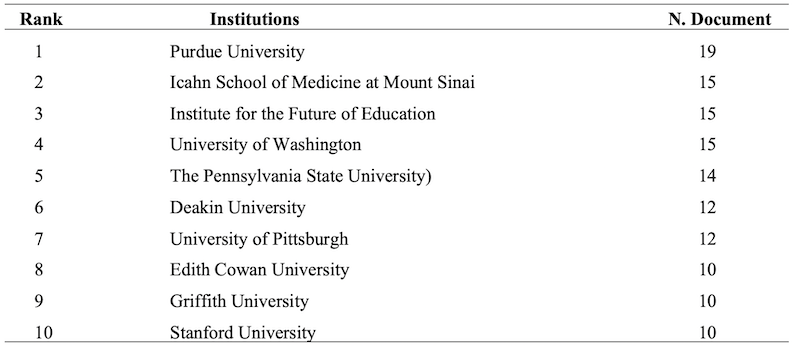
The results of the analysis show that Purdue University was the most productive organisation, with 19 publications related to micro-credentials. Icahn School of Medicine at Mount Sinai, the Institute for the Future of Education and the University of Washington were in second place with 15 publications, followed by Pennsylvania State University, with 14 publications. Other institutions showing high productivity in micro-credentials research included Deakin University and the University of Pittsburgh, with 12 publications each, as well as Edith Cowan University, Griffith University, and Stanford University, each with 10 publications. Full data on the most productive organisations in micro-credentials research are presented in Table 3.
Table 3: The Most Productive Institutions
Research Themes and Focuses in Micro-Credentials Studies
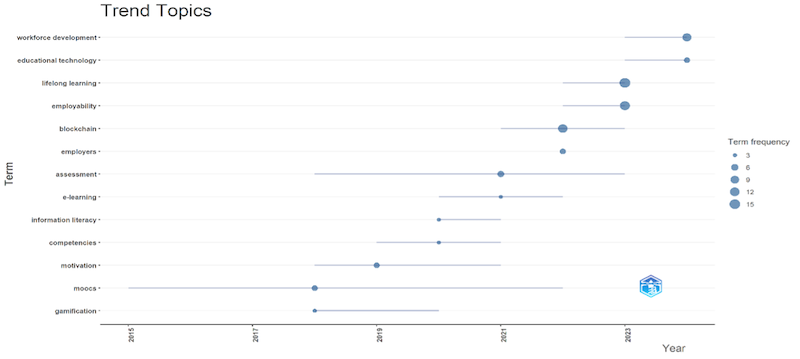
The topic trend mapping analysis was carried out with the help of Rstudio, with a minimum frequency of word occurrence set at five times and the number of words per year at three words. The results of the analysis showed that workforce development was one of the main trends. In addition, the terms digital education and the concept of lifelong learning also displayed an increasing trend. Other topics that developed in this study were employability, blockchain, assessment, and e-learning. Full data on topic trends can be seen in Figure 5.
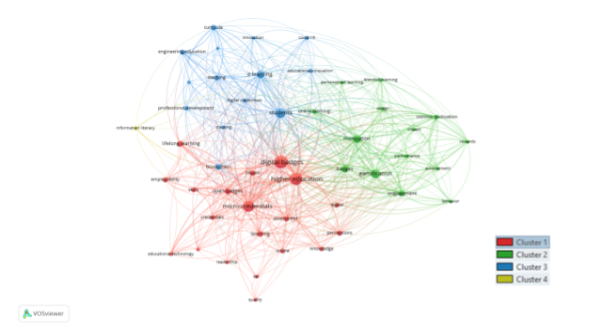
Based on the findings of the co-occurrence analysis using VOSviewer, this study was categorised into four clusters, which reflected the main direction and focus of the current research. The co-occurrence map was generated using a minimum threshold of eight keyword occurrences, resulting in 69 keywords out of a total of 2,407 being selected for analysis. The first cluster focuses on micro-credentials, digital badges, higher education, educational technology, and related topics such as credentials, employability, learning, and quality. The second cluster relates to learning motivation, gamification, engagement, and learner-centred approaches, including intrinsic motivation, performance, rewards, and personalised learning. The third cluster emphasises educational innovation, e-learning, digital credentials, engineering education, and professional development, with growing attention to students, teaching, and workforce development. The fourth cluster stands alone with information literacy, indicating an emerging but isolated focus in this domain. Complete data on co-occurrence analysis can be seen in Figure 6.
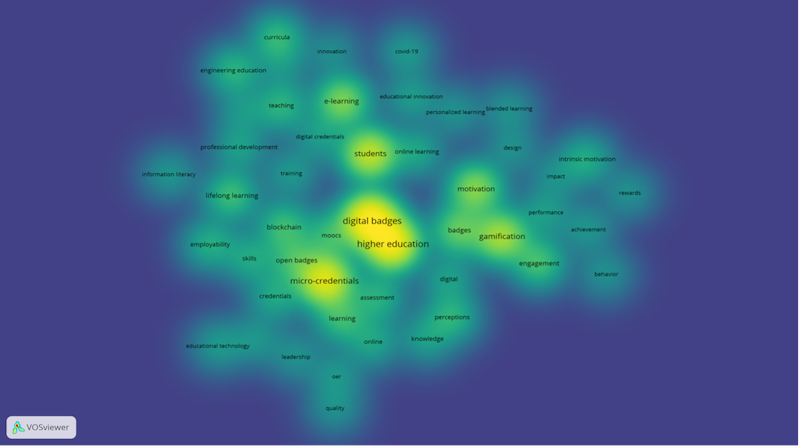
The opportunities for further research and the novelties identified in this study are based on visualising density using VosViewer. Based on the results of density visualisation mapping, there are several research areas that were still under-explored and have great potential for development. Some research topics that have great opportunities for further study include: blockchain, gamification, information literacy, personalised learning, curricula, educational technology, and blended learning. The results of this analysis are visualised in Figure 7.
Based on the results of the analysis, a list of sources that published the most research articles on micro-credentials in higher education was obtained. The analysis was carried out using RStudio with the Bradford Law approach. TechTrends emerged as the most productive journal, accounting for 10 publications. This was followed by Sustainability (8) and the ASEE Annual Conference and Exposition,(7). Other prominent sources included the International Journal of Educational Management and Education Sciences, contributing six and five publications, respectively. Furthermore, the International Review of Research in Open and Distributed Learning, AERA Open, and Frontiers in Education were represented by seven, six and five publications, respectively. Complete data on these core publication sources are shown in Table 1, and visualised in Figure 4 based on the results of Bradford's Law analysis.
Based on Scopus and Web of Science data, 1,680 authors contributed to 551 publications on micro-credentials, with 87 of these documents authored individually. As shown in Figure 3, the most cited authors have made key contributions to the field. Jirgensons and Kapenieks contributed to research related to the validation of blockchain-based credentials. They emphasised that the integration of blockchain in micro-credentials allows digital credentials to be more secure, unalterable, and globally recognised (Jirgensons & Kapenieks, 2018). Another explored the use of Open Digital Badges (ODBs), showing that their alignment with goal-setting strategies can improve learning outcomes beyond simple credentialing (Cheng et al., 2018). Additionally, existing evidence indicates that while digital badges have the potential to enhance learner credibility, their effectiveness is contingent upon recognition by key external stakeholders such as higher education institutions and employers (Davis & Singh, 2019).
In addition, several studies have highlighted the relationship between micro-credentials and competency-based learning systems, where this approach encourages learning flexibility and skills that are more in line with industry needs (Moodie & Wheelahan, 2020). They argue that micro-credentials have an important role in higher education reform, especially in improving the employability of graduates. In addition, those authors highlight the gap between higher education and industry needs and how micro-credentials can be a solution to bridge academic skills and practical work skills (Wheelahan & Moodie, 2024).
Regarding the sources that published the most research on micro-credentials in higher education, TechTrends led with 10 articles on micro-credentials in higher education, followed by Sustainability (8) and IRRODL (7). Also, the ASEE Annual Conference and Exposition had seven publications. Other prominent sources included the International Journal of Educational Management and Education Sciences, contributing six and five publications, respectively. Furthermore, the International Review of Research in Open and Distributed Learning, AERA Open, and Frontiers in Education were represented by seven, six and five publications, respectively. These findings indicate that micro-credential research was concentrated in journals and conferences focused on educational technology and innovation. As interest grows, more specialised publication venues dedicated to micro-credentials may emerge.
The results of the bibliometric analysis show that the United States was the most productive country, followed by Australia, the United Kingdom, and Canada. The high number of publications from the United States indicated the country's dominance in the development of micro-credentials as part of the higher education ecosystem. This confirmed that research contributions from the United States had a broad academic influence, both in policy development and in the adoption of digital credentialing systems in educational institutions (Olcott, 2022). Australia, the United Kingdom, and Canada also demonstrated high productivity and citation impact, indicating their strong academic relevance in this field (Desmarchelier & Cary, 2022; Schultz, 2024; Sharma et al., 2024b). Interestingly, Malaysia was among the top six countries with the highest number of publications, which indicated that countries in Asia, especially in Southeast Asia, were starting to increase their contributions in this field (Cheng et al., 2024; Kumar et al., 2022).
Microcredentials have grown rapidly in the higher education ecosystem as a means of digital recognition of the specific skills that students acquire. With their ability to provide more flexible and rapid skills-based training, microcredentials enable students and the workforce to obtain certifications that meet the demands of modern industry (Adnan Ali & Khan, 2023). The application of blockchain technology in micro-credentials also strengthens transparency, validity, and accessibility for students and employers (Alsobhi et al., 2023; Bigiotti et al., 2024). The application of micro-credentials in online learning has become a major trend in higher education, especially in supporting flexible learning methods that can be accessed anytime and anywhere. Research shows that micro-credentials are often integrated into e-learning and MOOC platforms (Griffiths et al., 2024; Pickard et al., 2018). In addition, other studies emphasise the importance of learning system design to ensure validity and effectiveness in recognising student competencies (Griffiths et al., 2024; Ward et al., 2023).
Furthermore, micro-credentials contribute significantly to the professional development of educators, enabling continuous skill enhancement in teaching, assessment, and curriculum adaptation (White, 2021). Career-focused micro-credential programmes have also gained traction in improving students’ employability (Gregg et al., 2022), and motivating skill development beyond traditional curricula (Pirkkalainen et al., 2023). Recent studies show that faculty with prior MOOC experience display greater confidence and readiness for digital teaching, emphasising the need for professional development that integrates both instructional design and learner experience (Al-Mamari & Kumar, 2025). Furthermore, micro-credentials offer inclusive, portable learning opportunities for marginalised groups such as refugees, promoting empowerment and access to professional pathways (Read et al., 2024).
Gamification in micro-credentials is growing as a strategy to increase student engagement in learning. By combining the principles of gamification and digital badges, educational institutions can create more engaging and interactive learning experiences (Gish-Lieberman et al., 2021; Gregg et al., 2022). In addition, research shows that micro-credentials are becoming a form of competency recognition that is increasingly accepted by employers as proof of student skills (Braxton, 2023; Miller & Jorre de St Jorre, 2022). With the adoption of digital technology, the use of micro-credentials in academic environments is growing as part of a competency certification system that is flexible and adaptable to industry needs. Educational computing has become an integral part of the development of micro-credentials, especially in supporting digital infrastructure for the issuance, validation, and storage of digital credentials. Recent research shows that the implementation of digital technology in micro-credentials requires a solid infrastructure and efficient metadata management (Chakravorty et al., 2023).
Areas that require further research and exploration include blockchain implementation, gamification, information literacy, personalised learning, curricula integration, educational technology, and blended learning. Blockchain has been recognised as a technology that can improve transparency and security in the verification of digital credentials but its implementation in micro-credentials systems is still in the early stages of exploration. Several studies show that a blockchain can be a decentralised solution for issuing and verifying academic credentials, reducing the risk of certificate forgery and increasing accessibility and trust in micro-credentials (Alsobhi et al., 2023; Bigiotti et al., 2024). The blockchain-based approach also enables the decentralisation of the university credential issuance and verification process through a distributed trust model (Karavidas et al., 2023).
However, despite its great potential, the adoption of blockchain in the verification of micro-credentials still faces challenges in terms of integration with the existing higher education system. Several studies have highlighted the need to develop technical standards for the issuance of blockchain-based digital credentials, as well as to strengthen the regulatory framework to ensure interoperability and widespread adoption at the global level (Reegu et al., 2023). Thus, future research could focus on how blockchain can be effectively applied in micro-credentials systems, including the development of smart contracts for the automation of credential verification and analysis of its impact on the recognition of skills in the world of work and higher education.
Gamification has been recognised as an innovative approach to enhance motivation and engagement in learning. Although its application in micro-credentials remains limited, some studies have shown positive impacts. For example, gamification has been found to increase student engagement in earning digital credentials (Copenhaver, 2017), and badge systems have been used to improve motivation and social recognition in digital learning environments (Sousa-Vieira et al., 2022). Despite these promising findings, more research is needed to explore the effective integration of gamification into the micro-credential ecosystem, including the influence of specific game elements on credentialing outcomes.
Personalised learning is an approach that allows individuals to learn according to their own pace, needs, and learning style (Shemshack & Spector, 2020). In the context of higher education, micro-credentials have great potential to support the personalisation of learning. Micro-credentials allow individuals to choose and complete learning modules that suit their needs without having to follow a rigid traditional curriculum (Mah, 2016). While studies linking personalised learning and micro-credentials remain limited, technological advancements offer great potential. AI-driven adaptive systems, for instance, could recommend tailored credential pathways based on learner data (Messaoud et al., 2022), and micro-credentials have been proposed as tools for personalised professional development (Hunt et al., 2020). Future research could further examine how AI and machine learning can improve micro-credential design, evaluation, and support for experiential and adaptive learning in higher education.
Other underexplored but important themes include curricula and educational technology. Recent studies have shown that micro-credentials can be integrated into both curricular and co-curricular structures to enhance student engagement and skill recognition. For example, co-curricular digital badging platforms have been found to motivate student learning outside of traditional coursework through a blend of extrinsic and intrinsic incentives (Coleman, 2018). In curricular contexts, micro-credentials have been successfully applied to incorporate specialised technical content, such as renewable energy concepts in engineering education, demonstrating their potential to align with industry needs and emerging academic fields (Shirvani et al., 2024). Further supporting these developments, a recent publication underscores the strategic importance of quality assurance in micro-credentialing systems. The guide emphasises rigorous standards, structured assessments, and practical implementation strategies, positioning micro-credentials as a forward-looking solution for aligning education with evolving workforce needs (Ferreira-Meyers, 2025).
Although widely studied in e-learning, blended learning has received limited attention in micro-credential research. Recent findings suggest that blended models enhance accessibility and employability when used to deliver micro-credentials in higher education (Sharma et al., 2024a). By combining online and offline instruction, this approach supports personalised learning while maintaining structure. Students have also reported positive experiences with digital badges in blended settings, particularly when leaderboards and feedback systems are employed (Zhou et al., 2019). These findings highlight the need for further research into how blended learning can optimise micro-credential delivery, improve engagement, and support workforce readiness.
The findings of this research show that since 2014, research on micro-credentials has continued to increase, with significant growth in recent years. These findings indicate that micro-credentials have become an important aspect of higher education, especially in supporting digital learning, skills recognition, and workforce readiness. Some international journals that were used as the main reference in this study include the TechTrends, Sustainability, International Review of Research in Open and Distributed Learning. Based on the results of the bibliometric analysis, several topics that are still rarely studied in micro-credentials research are the use of blockchain technology in digital credentials, the adoption of gamification to enhance engagement, and the role of information literacy in supporting micro-credential. These topics could be research opportunities in the future to deepen understanding of the impact of micro-credentials in higher education.
As a recommendation for further research, the use of various academic databases could provide a broader and deeper understanding of the development of this study. In addition, research that explores the influence of micro-credentials on the readiness of prospective workers, the impact on increasing employability, and more inclusive implementation strategies in various higher education institutions should contribute more significantly to the understanding and development of policies in this field. Thus, the results of this study could be a basis for academics, education practitioners, and policy makers in developing a more integrated and sustainable micro-credentials system in the higher education ecosystem.
Adnan Ali, S., & Khan, R. (2023). Harnessing the digital nature of micro-credentials in higher education. International Journal of Education and Teaching, 3(1), 58-66. https://doi.org/10.51483/ijedt.3.1.2023.58-66
Al-Mamari, H.S.M., & Kumar, J.A. (2025). Role of prior experience with online teaching and learning in the prediction of MOOC readiness. Journal of Learning for Development, 12(1), 220-231. https://doi.org/10.56059/jl4d.v12i1.1247
Alangari, H. (2024). Transforming learning: The rise of micro-credentials in higher education. In Digital transformation in higher education, Part A (pp. 83-100.). Emerald Publishing Limited. https://doi.org/10.1108/978-1-83549-480-620241005
Alsobhi, H.A., Alakhtar, R.A., Ubaid, A., Hussain, O.K., & Hussain, F.K. (2023). Blockchain-based micro-credentialing system in higher education institutions: Systematic literature review. Knowledge-Based Systems, 265, 110238. https://doi.org/10.1016/j.knosys.2022.110238
Awidi, I.T., & Paynter, M. (2024). An evaluation of the impact of digital technology innovations on students’ learning: Participatory research using a student-centred approach. Technology, Knowledge and Learning, 29(1), 65-89. https://doi.org/10.1007/s10758-022-09619-5
Bigiotti, A., Bottoni, M.P.F., & Nalli, G. (2024). Blockchain in e-learning platform to enhance trustworthy and sharing of micro-credentials. Lecture Notes in Business Information Processing, 521(D), 5-17. https://doi.org/10.1007/978-3-031-61003-5_1
Bloomberg, L.D. (2024). Re-aligning higher education and employability: Stackable skills are the new currency as online modalities pave the way. International Journal of Online Graduate Education, 7(1), 2-19.
Braxton, S.N. (2023). Competency frameworks, alternative credentials and the evolving relationship of higher education and employers in recognizing skills and achievements. International Journal of Information and Learning Technology, 40(5), 373-387. https://doi.org/10.1108/IJILT-10-2022-0206
Bruguera, C., Pagés, C., Peters, M., & Fitó, À. (2024). Micro-credentials and soft skills in online education: the employers’ perspective. Distance Education, 0(0), 1-21. https://doi.org/10.1080/01587919.2024.2435645
Chakravorty, D.K., Lawrence, R., He, Z., Brashear, W., Liu, H., Palughi, A.J., Perez, L.M., Yang, X., Pavelka, J., Mendjoge, R., Pennings, M., McDonald, R., Pedraza, G., & Palsole, S.V. (2023). Access to computing education using micro-credentials for cyberinfrastructure. The Journal of Computational Science Education, 14(2), 23-27. https://doi.org/10.22369/issn.2153-4136/14/2/5
Cheng, J.K., Yong, I.S. C., Ch’ng, C.K., & Lim, H.T. (2024). Micro-credentials in Malaysian higher education: A comprehensive case study approach. Education and Information Technologies, 1-25. https://doi.org/10.1007/s10639-024-13278-7
Cheng, Z., Watson, S. L., & Newby, T.J. (2018). Goal setting and open digital badges in higher education. TechTrends, 62(2), 190-196. https://doi.org/10.1007/s11528-018-0249-x
Coleman, J.D. (2018). Engaging undergraduate students in a co-curricular digital badging platform. Education and Information Technologies, 23(1), 211–224. https://doi.org/10.1007/s10639-017-9595-0
Copenhaver, K. (2017). Digital badges for staff training: Motivate employees to learn with micro-credentials. Journal of Electronic Resources Librarianship, 29(4), 245-254. https://doi.org/10.1080/1941126X.2017.1378543
Davis, K., & Singh, S. (2019). Digital badges in afterschool learning: Documenting the perspectives and experiences of students and educators. Computers & Education, 88, 72-83. https://doi.org/https://doi.org/10.1016/j.compedu.2015.04.011
Davis, M., De Bari, J., & Maschi, S. (2023). Credentialling: Educational pathways in design. She Ji, 9(2), 117-134. https://doi.org/10.1016/j.sheji.2023.03.001
Desmarchelier, R., & Cary, L.J. (2022). Toward just and equitable micro-credentials: An Australian perspective. International Journal of Educational Technology in Higher Education, 19(1), 1-12. https://doi.org/10.1186/s41239-022-00332-y
Donthu, N., Kumar, S., Mukherjee, D., Pandey, N., & Lim, W.M. (2021). How to conduct a bibliometric analysis: An overview and guidelines. Journal of Business Research, 133(May), 285-296. https://doi.org/10.1016/j.jbusres.2021.04.070
Ferreira-Meyers, K.A.F. (2025). BOOK REVIEW: Microcredentials for excellence: A practical guide. Journal of Learning for Development, 12(1), 231-234. https://doi.org/https://doi.org/10.56059/jl4d.v12i1.1749
Gish-Lieberman, J.J., Tawfik, A., & Gatewood, J. (2021). Micro-credentials and badges in education: A historical overview. TechTrends, 65(1), 5-7. https://doi.org/10.1007/s11528-020-00567-4
Gregg, A., Park, J., Fenton, C., Lang, D., & Handley, M. (2022). Exploring the “Why” of micro-credentials and digital badges: Engineering students’ motivations for and perceived utility of learning outside of class. IEEE Frontiers in Education Conference (FIE), 2022-October, 1-7. https://doi.org/10.1109/FIE56618.2022.9962376
Griffiths, D., Burgos, D., & Aceto, S. (2024). Open education and alternative digital credentials in Europe. International Review of Research in Open and Distributed Learning, 25(1), 89-108. https://doi.org/doi.org/10.19173/irrodl.v25i1.7412 Article
HolonIQ. (2021). Global online degree and micro-credential market to reach $117B by 2025. HolonIQ. https://www.holoniq.com/markets/higher-education/global-online-degree-and-micro-credential-market-to-reach-117b-by-2025/
Hunt, T., Carter, R., Zhang, L., & Yang, S. (2020). Micro-credentials: The potential of personalized professional development. Development and Learning in Organizations: An International Journal, 34(2), 33-35. https://doi.org/https://doi.org/10.1108/DLO-09-2019-0215
Iatrellis, O., Samaras, N., Kokkinos, K., & Panagiotakopoulos, T. (2024). Leveraging generative AI for sustainable academic advising: Enhancing educational practices through AI-driven recommendations. Sustainability, 16(17), 7829. https://doi.org/10.3390/su16177829
Jirgensons, M., & Kapenieks, J. (2018). Blockchain and the future of digital learning credential assessment and management. Journal of Teacher Education for Sustainability, 20(1), 145-156. https://doi.org/10.2478/jtes-2018-0009
Karavidas, L., Tsiatsos, T., Stamelos, I., Zourou, K., & Terzi, S. (2023). Acceptance of blockchain in education. Lecture Notes in Networks and Systems, 763 LNNS, 927-938. https://doi.org/10.1007/978-3-031-42467-0_87
Kayyali, M. (2025). Defining micro-credentials: Concepts, theories, and pedagogies. In Navigating quality assurance and accreditation in global higher education (pp. 219-246). IGI Global Scientific Publishing. https://doi.org/10.4018/979-8-3693-6915-9.ch009
Kiiskilä, P., & Pirkkalainen, H. (2024). Exploring centralized, decentralized, and hybrid approaches to micro-credential issuance in HEI alliances. International Joint Conference on Knowledge Discovery, Knowledge Engineering and Knowledge Management, IC3K, 3, 238-245. https://doi.org/10.5220/0012946700003838
Kumar, J.A., Richard, R.J., Osman, S., & Lowrence, K. (2022). Micro-credentials in leveraging emergency remote teaching: The relationship between novice users’ insights and identity in Malaysia. International Journal of Educational Technology in Higher Education, 19(/1), 1-23. https://doi.org/10.1186/s41239-022-00323-z
Mah, D.K. (2016). Learning analytics and digital badges: Potential impact on student retention in higher education. Technology, Knowledge and Learning, 21(3), 285-305. https://doi.org/10.1007/s10758-016-9286-8
Maina, M.F., Ortiz, L.G., Mancini, F., & Melo, M.M. (2022). A micro-credentialing methodology for improved recognition of HE employability skills. International Journal of Educational Technology in Higher Education, 19(1). https://doi.org/10.1186/s41239-021-00315-5
Messaoud, S. Ben, Ilahi, M., & Cheniti-Belcadhi, L. (2022). Towards a personalized micro-credentials approach based on learning analytics for reducing the gap university-industry. IEEE Global Engineering Education Conference, EDUCON, 2022-March, 1448-1454. https://doi.org/10.1109/EDUCON52537.2022.9766585
Miller, K.K., & Jorre de St Jorre, T. (2022). Digital micro-credentials in environmental science: An employer perspective on valued evidence of skills. Teaching in Higher Education, 1-17. https://doi.org/10.1080/13562517.2022.2053953
Moodie, G., & Wheelahan, L. (2021). Credentialing micro-credentials. The Journal of Teaching and Learning for Graduate Employability, 12(1), 58-71. https://doi.org/doi.org/10.21153/jtlge2021vol12no1art1564
Moodie, G., & Wheelahan, L. (2020). Micro credentials: Zombie skills sets resurrected as micro credentials. Australian TAFE Teacher, 52(2), 12-15. https://doi.org/doi/10.3316/informit.316909593785918
Olcott, D. (2022). Micro-credentials: A catalyst for strategic reset and change in U.S. Higher Education. American Journal of Distance Education, 35(1), 19-35. https://doi.org/10.1080/08923647.2021.1997537
Perea, B. (2020). Using smaller credentials to build flexible degree completion and Career Pathways. In New directions for community colleges (pp. 23-37). Wiley Online Library. https://doi.org/10.1002/cc.20395
Pickard, L., Shah, D., & Simone, J.J. De. (2018). Mapping microcredentials across MOOC platforms. Learning with MOOCS (LWMOOCS), 17-21. https://doi.org/10.1109/LWMOOCS.2018.8534617
Pirkkalainen, H., Sood, I., Padron Napoles, C., Kukkonen, A., & Camilleri, A. (2023). How might micro-credentials influence institutions and empower learners in Higher Education? Educational Research, 65(1), 40–63. https://doi.org/10.1080/00131881.2022.2157302
Raj, R., Singh, A., Kumar, V., & Verma, P. (2024). Achieving professional qualifications using micro-credentials: A case of small packages and big challenges in Higher Education. International Journal of Educational Management, 38(4), 916-947. https://doi.org/10.1108/IJEM-01-2023-0028
Read, T., Bruce, A., & Olcott, D. (2024). Development for empowerment: Mobilising online and digital micro-Credentials for refugees. Journal of Learning for Development, 11(2), 253-269. https://doi.org/10.56059/jl4d.v11i2.1357
Reegu, F.A., Abas, H., Gulzar, Y., Xin, Q., Alwan, A.A., Jabbari, A., Sonkamble, R.G., & Dziyauddin, R.A. (2023). Blockchain-based framework for interoperable electronic health records for an improved healthcare system. Sustainability (Switzerland), 15(8), 6337. https://doi.org/10.3390/su15086337
Schultz, C. (2024). Experiences of microcredentials in Canada: Perspectives, possibilities, and a case for national data collection. International Review of Applied Economics, 38(4), 410-421. https://doi.org/10.1080/02692171.2024.2368793
Selvaratnam, R.M., & Sankey, M.D. (2021). An integrative literature review of the implementation of microcredentials in higher education: Implications for practice in Australasia. Journal of Teaching and Learning for Graduate Employability, 12(1), 1-17. https://doi.org/10.21153/JTLGE2021VOL12NO1ART942
Sharma, H., Jain, V., Mogaji, E., & Babbilid, A.S. (2024a). Blended learning and augmented employability: A multi-stakeholder perspective of the micro-credentialing ecosystem in higher education. International Journal of Educational Management, 38(4), 1021-1044. https://doi.org/10.1108/IJEM-12-2022-0497
Sharma, H., Jain, V., Mogaji, E., & Babbilid, A.S. (2024b). Blended learning and augmented employability: A multi-stakeholder perspective of the micro-credentialing ecosystem in Higher Education. International Journal of Educational Management, 38(4), 1021-1044. https://doi.org/10.1108/IJEM-12-2022-0497
Shemshack, A., & Spector, J.M. (2020). A systematic literature review of personalized learning terms. Smart Learning Environments, 7(1), 1-20. https://doi.org/10.1186/s40561-020-00140-9
Shirvani, K., Issapour, M., & Licht, Z.R. (2024). Utilizing micro-credentials to infuse renewable energy concepts into engineering technology curriculum. ASEE Annual Conference and Exposition, Conference Proceedings. https://doi.org/10.18260/1-2--48248
Sousa-Vieira, M-E., Ferrero-Castro, D., & López-Ardao, J-C. (2022). Design, development and use of a digital badges system in higher education. Applied Sciences (Switzerland), 12(1), 1-16. https://doi.org/10.3390/app12010220
Srivastava, A.P., Yadav, M., Khurana, R., & Balodi, A. (2023). Blockchain in higher education: Key research themes and future directions. International Conference on Recent Advances in Science and Engineering Technology (ICRASET), 1-4. https://doi.org/10.1109/ICRASET59632.2023.10420236
Tamoliune, G., Greenspon, R., Tereseviciene, M., Volungeviciene, A., Trepule, E., & Dauksiene, E. (2023). Exploring the potential of micro-credentials: A systematic literature review. Higher Education, 7. https://doi.org/10.3389/feduc.2022.1006811
Ward, R., Crick, T., Hanna, P., Hayes, A., Irons, A., Miller, K., & Walters, J. (2023). Using skills profiling to enable badges and micro-credentials to be incorporated into higher education courses. Journal of Interactive Media in Education, 2023(1), 1-22. https://doi.org/10.5334/jime.807
Wheelahan, L., & Moodie, G. (2024). Analysing micro-credentials in higher education: A Bernsteinian analysis. In Towards powerful educational knowledge (pp. 70-86). Routledge. https://doi.org/10.1080/00220272.2021.1887358
White, S. (2021). Developing credit based micro-credentials for the teaching profession: An Australian descriptive case study. Teachers and Teaching: Theory and Practice, 27(7), 696-711. https://doi.org/10.1080/13540602.2021.2003324
Zhou, L., Chen, L., Fan, Q., & Ji, Y. (2019). Students’ perception of using digital badges in blended learning classrooms. Sustainability (Switzerland), 11(7), 1-18. https://doi.org/10.3390/SU11072151
Author Notes
Gema Rullyana Email: gema.rullyana@mhs.unj.ac.id/gemarullyana@upi.edu (https://orcid.org/0000-0003-0383-4062)
Eveline Siregar Email: esiregar@unj.ac.id id (https://orcid.org/0000-0003-3028-7762)
Cecep Kustandi Email: cecep_kustandi@unj.ac.id (https://orcid.org/0000-0002-6854-670X)
Cite as: Rullyana, G., Siregar, E., & Kustandi, C. (2025). Research trends on micro-credentials in higher education: A bibliometric analysis using Scopus and WoS databases. Journal of Learning for Development, 12(3), 484-500.