Genalyn Panganiban Lualhati
2026 VOL. 13, No. 1
Abstract: This qualitative study explored how adaptive curriculum leadership enhanced educational programme quality amid digital transformation in higher education. Data were collected through in-depth interviews with academic leaders, including deans, programme chairpersons, senior faculty, and faculty experts from diverse disciplines in a Philippine state university. The findings show that adaptive curriculum leadership was critical for integrating digital technologies, fostering collaboration, and addressing challenges such as technological advancement, curriculum misalignment, and equitable access. Key social and technological forces driving adaptation include digital literacy, personalised learning, and global collaboration. Leadership strategies to address these challenges include infrastructure upgrades, faculty development, and curriculum redesign aligned with technological and industry needs. The study highlights flexibility, inclusivity, and responsiveness as essential for sustaining high-quality programmes in the digital era.
Keywords: quality educational programmes, adaptive curriculum leadership, digital transformation, academic leadership, curriculum innovation
In the rapidly evolving, technology-driven landscape of higher education, institutions must adapt curricula and instructional practices to meet changing societal, technological, and workforce demands. Central to this shift is digital transformation, which integrates digital technologies into curriculum delivery, instructional design, assessment, and student engagement. The Organisation for Economic Co-operation and Development (OECD, 2021) notes that digital transformation requires rethinking educational models to leverage data, connectivity, automation, and emerging media for enhanced learning outcomes and institutional effectiveness.
The adoption of advanced digital tools disrupts traditional curriculum structures and leadership practices, highlighting the need for flexibility, responsiveness, and innovation. Adaptive curriculum leadership has emerged as a key approach for managing curriculum change in this context. Anchored in Adaptive Leadership Theory (Heifetz et al., 2009), it emphasises mobilising individuals and organisations to address complex challenges. Its relevance to digital and innovation-oriented leadership is supported by recent studies (Kane et al., 2021; Sheninger, 2019; Uhl-Bien & Arena, 2018).
Academic leaders play a central role in recognising social and technological drivers of change, shaping a shared vision, fostering collaboration, supporting faculty development, and monitoring curriculum implementation to maintain quality (DeMatthews, 2014). Despite growing recognition, empirical studies on adaptive curriculum leadership’s impact on educational quality in digital transformation remain limited, especially in developing higher education contexts (Gkrimpizi et al., 2022; Prasetyaningtyas et al., 2023). Addressing this gap, the present study examined how adaptive curriculum leadership enhances programme quality, identifies key drivers, evaluates leadership practices, explores challenges, and draws implications for curriculum design in the digital era.
Adaptive leadership is critical in navigating challenges in contemporary higher education, particularly amid digital transformation. Defined as the capacity to mobilise people to address complex challenges and thrive in changing environments, adaptive leadership supports innovation, resilience, and experimentation in educational settings (Boyce & Bowers, 2018; Heifetz et al., 2009; Manrique, 2024; Maulana et al., 2024). Through shifts in values, mindsets, and professional practices, adaptive leaders enable educators to respond effectively to technological change and emerging demands (Maulana et al., 2024).
Key elements of adaptive leadership include engaging stakeholders through shared meaning, maintaining integrity, demonstrating adaptive capacity, and navigating change through empathy, self-correction, and collaborative problem-solving (Mag-atas, 2023; Maulana et al., 2024). These elements are especially relevant in digitally mediated educational environments characterised by rapid innovation, uncertainty, and equity concerns.
Within this context, curriculum leadership plays a central role in shaping student achievement through curriculum development, professional learning, and assessment practices (Allen et al., 2015; Carter et al., 2020). Shared among administrators and teachers, curriculum leadership ensures responsiveness to contemporary educational demands and supports the integration of technology in blended, hybrid, and adaptive learning environments (Bitar & Davidovich, 2024; Dugan, 2017; Kumin et al., 2024; Laid & Adlaon, 2025). Recent studies highlight the role of curriculum leaders in guiding the use of artificial intelligence, learning management systems, and digital collaboration tools while fostering digital literacy and innovation-oriented mindsets among educators (AlAjmi, 2022; Sari & Variani, 2024; Shabira, 2025; Zeng & Cheah, 2025).
Adaptive curriculum leadership further emphasises flexibility and responsiveness in curriculum development to address evolving educational and workforce needs (Bendikson et al., 2023). It involves active participation of faculty, students, and administrators, continuous reflection, and the use of feedback mechanisms to refine curriculum strategies and maintain alignment with digital standards and labour market demands (Johnson & Wang, 2023; Kaufman, 2024; Smith & Lee, 2024). Through collaboration and iterative improvement, adaptive curriculum leadership sustains curriculum relevance and educational quality in the digital era.
Quality educational programmes are vital for higher education institutions to remain relevant in a digitalised world. They provide effective learning experiences aligned with labour market demands and equip students with competencies required for the digital economy (Martin & Xie, 2022). Such programmes feature clear learning outcomes, coherent curricula, and the integration of appropriate digital resources (OECD, 2022). Technology supports continuous programme improvement through data analytics, feedback mechanisms, and evidence-based instructional refinement (Wolfe, 2015). Experiential learning, including internships and collaborative projects, enables students to apply theoretical knowledge in real-world contexts (Bholane, 2024). Additionally, integrating technology in teaching and assessment enhances programme quality by simulating authentic professional environments and preparing students for digitally mediated workplaces (UNESCO, 2023).
Paul’s scholarship provided a valuable conceptual lens for understanding curriculum leadership during periods of change in higher education. He emphasised that academic leadership is centred on sustaining educational quality while responding to institutional, societal, and technological pressures, requiring leaders to balance managerial demands with academic values and student learning outcomes (Paul, 2015). Within the context of digital transformation, Paul highlighted that quality assurance depends not on rigid compliance but on reflective, values-driven, and adaptive decision-making grounded in professional judgment and continuous dialogue (Paul, 2015). This perspective aligns with adaptive curriculum leadership, which prioritises flexibility, stakeholder engagement, and iterative improvement in response to emerging challenges. Paul (2024) further underscored the role of curriculum leadership in sustaining academic integrity and institutional credibility during innovation and reform, reinforcing the importance of leadership that guides change while safeguarding programme quality in digitally evolving educational environments.
This study adopted Adaptive Leadership Theory (Heifetz et al., 2009), which emphasises the need for leaders to be flexible, innovative, and collaborative when addressing complex problems that demand novel solutions. In the context of higher education, adaptive curriculum leadership involves guiding institutions to respond effectively to evolving social, technological, and educational demands. The theory underscores the importance of continuous improvement and stakeholder engagement—faculty, students, and other actors—in curriculum design and implementation. By fostering collaboration and leveraging digital tools, academic leaders can enhance the relevance, quality, and effectiveness of educational programmes in a rapidly changing digital environment. This framework informs the study by providing insight into how leaders can navigate technological and societal pressures to sustain and advance curriculum quality.
Objective 1: To explore the social and technological factors influencing adaptive curriculum leadership in higher education in the digital era:
Objective 2: To examine how adaptive curriculum leadership supports the integration of digital technologies and enhances the quality of educational programmes:
Objective 3: To investigate the challenges faced in implementing digital technologies in the curriculum and the strategies used to address them:
This study employed a qualitative research design, which is well-suited for exploring complex social and educational issues in depth (Creswell, 2014). The qualitative approach was chosen to gain a rich, nuanced understanding of how adaptive curriculum leadership, within the context of digital transformation, impacted the quality of educational programmes. This design was selected to capture the perspectives and experiences of academic leaders, as it allows for a more holistic view of the challenges and opportunities they face in integrating digital technologies and leading curriculum innovation (Polikoff, 2020).
The study was conducted at a state university in Batangas, Philippines. A purposive sampling strategy was used to select participants based on administrative roles, teaching experience, and involvement in curriculum design, delivery, and evaluation. Qualified academic leaders were identified through the Office of the Dean, and formal invitations were sent to those who met the inclusion criteria. The final sample included 14 academic leaders: one Dean, three Programme Chairpersons, three Senior Faculty Members, and seven Faculty Experts. The Dean provided insights on institutional curriculum policies and strategic decisions; Programme Chairpersons on programme-level management; Senior Faculty Members on teaching and curriculum innovation; and Faculty Experts on programme-specific integration of digital tools. The sample size was appropriate for qualitative inquiry, allowing in-depth exploration of the research questions and achieving data saturation, where no new themes emerged (Guest et al., 2020). This approach ensured a comprehensive understanding of adaptive curriculum leadership practices in the digital era.
Semi-structured interviews were used to collect data, providing both flexibility and focus. This format enabled the researcher to ask open-ended questions and facilitate rich, in-depth discussions on participants’ experiences and perspectives regarding adaptive curriculum leadership and digital transformation. The interview guide was systematically developed based on the study’s research questions/objectives (noted in an earlier section), was informed by a review of relevant literature, and was further refined through expert validation to enhance clarity, relevance, and alignment with the research focus. All interviews were audio-recorded with participants’ consent to ensure accurate data capture. Transcripts were returned to participants for member checking, allowing them to verify the accuracy of their responses and provide additional input where necessary, thereby enhancing the credibility and trustworthiness of the data (Chali et al., 2022).
Before conducting the interviews, formal approval was obtained from the appropriate authorities, and written consent was secured from all participants. The interviews were conducted face-to-face to foster a more personal and interactive data collection process. The interview schedule was flexible, with follow-up questions designed to probe specific insights based on the responses provided.
Data were analysed using content and thematic analysis to identify patterns and key themes in the interview transcripts (Braun & Clarke, 2023). The process began with a thorough review of the transcripts to familiarise the researcher with the data, followed by the generation of initial codes from significant statements and experiences related to adaptive curriculum leadership and digital transformation. These codes were then organised into broader themes aligned with the study’s objectives, providing a structured framework for interpreting the data. To ensure validity and reliability, member checking was conducted, allowing participants to review and confirm the accuracy of their transcripts (Ravitch & Carl, 2016). Peer debriefing with colleagues experienced in qualitative methods further strengthened the credibility of the analysis and ensured that interpretations accurately reflected participants’ perspectives.
This study examined how adaptive curriculum leadership enhances educational programme quality amid digital transformation. The findings are organised and presented according to the study’s research objectives.
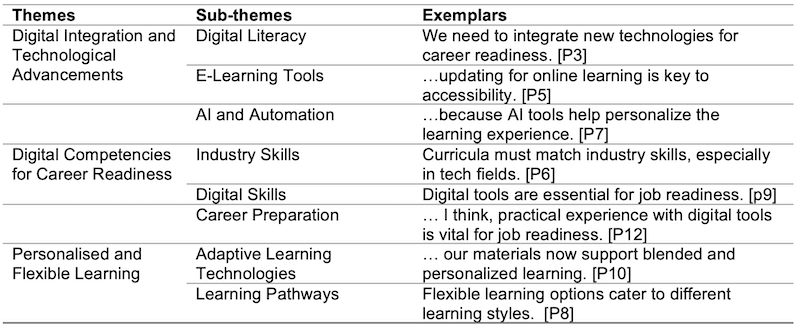
Table 1 summarises the social and technological forces driving the need for adaptive curriculum leadership. Digital integration and technological advancement emerged as the primary force influencing curriculum change. Participants emphasised digital literacy, e-learning tools, and AI as essential for preparing students for workforce demands. The increasing adoption of online and blended learning has become a standard feature of modern curricula, requiring leaders to rethink traditional teaching and learning approaches.
A second major force is the demand for digital competencies for career readiness. Participants stressed the need to align curricula with industry requirements, particularly in technology-driven fields, by strengthening students’ practical digital skills and employability.
Table 1: Identified Social and Technological Forces Driving Adaptive Changes in Curriculum Leadership
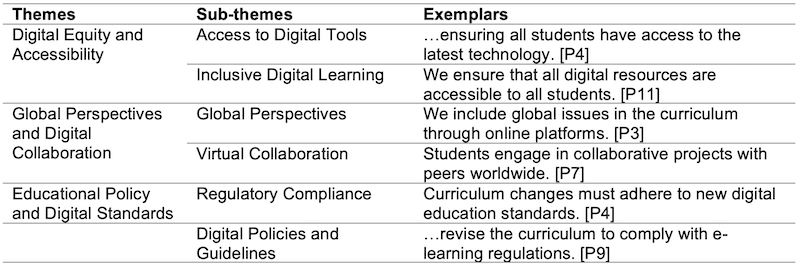
Personalised and flexible learning also drove curriculum adaptation. Advances in adaptive learning technologies enabled flexible learning pathways that address diverse learning needs and support inclusivity. Moreover, concerns regarding digital equity and accessibility further shaped curriculum leadership decisions. Participants highlighted institutional efforts to ensure equitable access to digital tools and inclusive learning resources for all students.
In addition, global perspectives and digital collaboration influenced curriculum development, with leaders integrating global issues and virtual collaboration through digital platforms to prepare students for a globalised workforce. Lastly, educational policy and digital standards required curriculum leaders to align programmes with emerging digital education regulations, balancing innovation with legal and ethical responsibilities. In summary, the findings indicate that curriculum adaptation is driven by interconnected social and technological forces (Hatlevik & Christophersen, 2013), including digital integration and literacy (Selwyn, 2016), industry alignment (Garmendia & Karrera, 2019), personalised learning (Cerna et al., 2021), digital equity (González-Betancor et al., 2021), global collaboration (van der Vlies, 2020), and compliance with digital education standards (Wang et al., 2024).
Table 2 outlines how adaptive curriculum leadership effectively integrated digital technologies to enhance educational programme quality.
Table 2: Effectiveness of Adaptive Curriculum Leadership in Integrating Digital Technologies to Improve Programme Quality
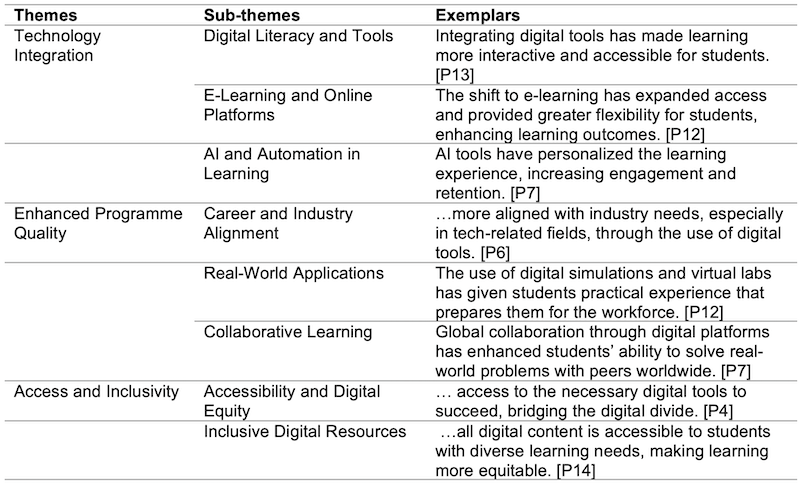
The findings indicate that technology integration improved student engagement, accessibility, and learning flexibility. Participants reported that digital tools and e-learning platforms enabled interactive learning and supported self-paced and personalised learning experiences. The strategic use of AI and automation further enhanced engagement and retention by tailoring content to individual learning progress.
Adaptive curriculum leadership also strengthened programme quality through industry alignment. Participants emphasised that digital tools, including simulations and virtual laboratories, supported the development of practical skills relevant to technology-driven fields. These tools enhanced students’ readiness for real-world challenges while fostering problem-solving, collaboration, and critical thinking through digital and global collaborative learning.
In terms of access and inclusivity, participants highlighted leadership efforts to ensure equitable access to digital tools and inclusive learning resources. The availability of accessible digital content supported learners with diverse needs and contributed to more equitable learning environments.
In general, the findings show that digital integration enhanced educational quality by making learning more interactive and flexible (Afzal et al., 2023), supporting personalised learning through AI and automation (Haseski et al., 2018), and aligning curricula with industry demands (Rathore & Sonawat, 2015). The use of digital simulations and global collaboration further supported skill development and cross-cultural learning (Staddon, 2020), while adaptive leadership promoted digital equity and inclusive access to learning resources (Higgins et al., 2020; Umugiraneza et al., 2018).
Table 3 presents the key challenges encountered in integrating digital technologies into educational programmes and the corresponding leadership-driven strategies.
Table 3: Challenges in Integrating Digital Technologies and Strategies through Adaptive Curriculum Leadership
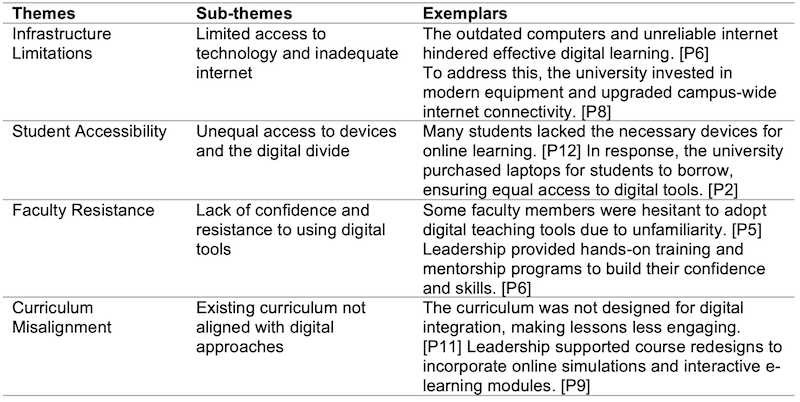
Participants identified infrastructure limitations as a major challenge, particularly outdated equipment and unreliable internet connectivity, which hindered effective digital learning. In response, the institution invested in modern equipment and upgraded campus-wide internet infrastructure to support digital teaching and learning. Also, unequal access to digital devices among students was another significant barrier. This could have contributed to the digital divide. To address this issue, the university might implement a laptop-lending programme, to ensure that students have access to essential digital tools for online learning.
Faculty resistance and their limited confidence in using digital technologies also emerged as challenges. Participants reported initial hesitation due to unfamiliarity with digital tools. Leadership addressed this through hands-on training and mentorship programmes, which helped build faculty competence and confidence in integrating technology into instruction. Furthermore, curriculum misalignment posed challenges, as existing curricula were not originally designed for digital integration. Leadership supported curriculum redesign initiatives that incorporated online simulations and interactive e-learning modules, resulting in more engaging and relevant learning experiences (Yusoff et al., 2023).
To sum up, the findings indicated that while digital integration presents persistent challenges—including infrastructure limitations (Farjon et al., 2019), unequal access to devices (Moore, 2018), faculty resistance (Firmin & Genesi, 2013; Yilmaz, 2021), and curriculum misalignment (Umugiraneza et al., 2018)—adaptive curriculum leadership mitigated these barriers through infrastructure investment (Ilomäki et al., 2018), capacity-building initiatives, and curriculum redesign aligned with digitally mediated learning environments (Alenezi, 2023; Dugan, 2017).
This study reveals the critical role of adaptive curriculum leadership in enhancing educational programme quality amid digital transformation. The findings show that academic leaders responded to social and technological pressures—such as digital integration, workforce demands, personalised learning, and equity concerns—through flexible, responsive, and collaborative leadership practices. The strategic use of AI, e-learning platforms, and digital literacy initiatives illustrated how curricula have been reshaped to address evolving student needs and labour market expectations. These findings confirmed that curriculum leadership in the digital era extends beyond administrative functions and requires continuous adaptation and strategic direction.
Paul’s framework of academic leadership serves as an interpretive lens for understanding how leaders balance innovation with the safeguarding of educational quality during digital transformation.
The results align with Paul’s view of academic leadership as a quality-centred, values-driven practice. Paul (2015) emphasised that leadership safeguards educational quality while responding to change through reflective judgment rather than rigid compliance. In this study, leaders demonstrated this balance through curriculum redesign, faculty development, and infrastructure investment, supporting Paul’s (2024) assertion that leadership should guide innovation while preserving institutional credibility.
Adaptive curriculum leadership also proved essential in addressing challenges such as infrastructure limitations, unequal access to technology, faculty resistance, and curriculum misalignment. Leadership-driven responses—including technology investments, device provision, and targeted faculty training—enabled institutions to mitigate barriers to digital integration. Consistent with Paul’s framework, these strategies reflect leadership grounded in dialogue, capacity-building, and shared responsibility, reinforcing adaptive curriculum leadership as a form of quality-driven academic stewardship.
The findings suggest that curriculum leaders might prioritise the strategic integration of emerging digital tools, including AI, e-learning platforms, and adaptive learning systems, to enhance engagement and interactivity. Faculty development through targeted training remains essential to support effective technology use. Flexible and modular curriculum models can enhance responsiveness to industry demands, while partnerships with external stakeholders strengthen real-world relevance. Personalised learning pathways and universal design principles might guide curriculum development to promote equity and accessibility. Lastly, institutions may implement regular review processes and use data analytics to support continuous improvement and blended or hybrid learning models that integrate digital and in-person instruction.
Afzal, A., Khan, S., Daud, S., Ahmad, Z., & Butt, A. (2023). Addressing the digital divide: Access and use of technology in education. Journal of Social Sciences Review, 3(2), 883-895. https://doi.org/10.54183/jssr.v3i2.326
AlAjmi, M.K. (2022). The impact of digital leadership on teachers’ technology integration during the COVID-19 pandemic in Kuwait. International Journal of Educational Research, 112, 101928. https://doi.org/10.1016/j.ijer.2022.101928
Alenezi, M. (2023). Digital learning and digital institutions in higher education. Education Sciences, 13(1), 88. https://doi.org/10.3390/educsci13010088
Allen, C.D., & Penuel, W.R. (2015). Studying teachers’ sensemaking to investigate teachers’ responses to professional development focused on new standards. Journal of Teacher Education, 66(2), 136-149. https://doi.org/10.1177/0022487114560646
Bendikson, L., & Hattie, J. (2023). The adaptive expertise of curriculum middle leaders in secondary schools. Research in Educational Administration & Leadership, 8(1), 45-67.
Bholane, K. P. (2024). Digital transformation in higher education. ResearchGate. https://www.researchgate.net/publication/379340741_Digital_Transformation_in_Higher_Education
Bitar, N., & Davidovich, N. (2024). Transforming pedagogy: The digital revolution in higher education. Education Sciences, 14(8), 811. https://doi.org/10.3390/educsci14080811
Boyce, J., & Bowers, A.J. (2018). Toward an evolving conceptualization of instructional leadership as leadership for learning. Journal of Educational Administration, 56(2), 160-182. https://doi.org/10.1108/JEA-06-2016-0064
Braun, V., & Clarke, V. (2023). Thematic analysis. In Encyclopedia of quality of life and well-being research (pp. 1-7). Springer. https://doi.org/10.1007/978-3-319-69909-7_3470-2
Carter, A., Maki, E., & Pandya, J. (2020). Assessing and improving the impact of K-12 curriculum implementation in Stockton Unified School District [Conference Session]. Carnegie Foundation Summit on Improvement in Education.
Cerna, L., Mezzanotte, C., Rutigliano, A., Brussino, O., Santiago, P., Borgonovi, F., & Guthrie, C. (2021). Promoting inclusive education for diverse societies. OECD Education Working Papers. https://doi.org/10.1787/94ab68c6-en
Chali, M.T., Eshete, S.K., & Debela, K.L. (2022). Learning how research design methods work: A review of Creswell’s Research Design: Qualitative, Quantitative and Mixed Methods Approaches. The Qualitative Report, 27(12), 2956-2960. https://doi.org/10.46743/2160-3715/2022.5901
Creswell, J.W. (2014). Research design: Qualitative, quantitative, and mixed methods approaches (4th ed.). SAGE Publications.
DeMatthews, D.E. (2014). How to improve curriculum leadership: Integrating leadership theory and management strategies. The Clearing House: A Journal of Educational Strategies, Issues and Ideas, 87(5), 192-196. https://doi.org/10.1080/00098655.2014.911141
Dugan, J.P. (2017). Leadership theory: Cultivating critical perspectives. John Wiley.
Farjon, D., Smits, A., & Voogt, J. (2019). Technology integration of pre-service teachers explained by attitudes and beliefs, competency, access, and experience. Computers & Education, 130, 81-93. https://doi.org/10.1016/j.compedu.2018.11.010
Firmin, M.W., & Genesi, D.J. (2013). History and implementation of classroom technology. Procedia—Social and Behavioral Sciences, 93, 1603-1617. https://doi.org/10.1016/j.sbspro.2013.10.089
Garmendia, M., & Karrera, I. (2019). ICT use and digital inclusion among Roma/Gitano adolescents. Media and Communication, 7(1), 22-31. https://doi.org/10.17645/mac.v7i1.1624
Gkrimpizi, A., Peristeras, V., & Magnisalis, I. (2022). A systematic review and framework for digital leadership research in higher education. Discover Education, 1(1), 6. https://doi.org/10.1016/j.disedu.2022.100042
González-Betancor, S.M., López-Puig, A.J., & Cardenal, M.E. (2021). Digital inequality at home. The school a compensatory agent. Computers & Education, 168, 104195. https://doi.org/10.1016/j.compedu.2021.104195
Guest, G., Bunce, A., & Johnson, L. (2020). A simple method to assess and report thematic saturation in qualitative research. PLOS ONE, 15(5), e0232076. https://doi.org/10.1371/journal.pone.0232076
Haseski, H.İ., Ilic, U., & Tugtekin, U. (2018). Defining a new 21st century skill—Computational thinking: Concepts and trends. International Education Studies, 11(4), 29-42. https://doi.org/10.5539/ies.v11n4p29
Hatlevik, O.E., & Christophersen, K. (2013). Digital competence at the beginning of upper secondary school: Identifying factors explaining digital inclusion.
Heifetz, R.A., Grashow, A., & Linsky, M. (2009). The practice of adaptive leadership: Tools and tactics for changing your organization and the world. Harvard Business Press.
Higgins, S., Xiao, Z., & Katsipataki, M. (2020). The impact of digital technology on learning: A summary for the Education Endowment Foundation. Education Endowment Foundation. https://durham-repository.worktribe.com/output/1636490/the-impact-of-digital-technology-on-learning-a-summary-for-the-education-endowment-foundation
Ilomäki, L., & Lakkala, M. (2018). Digital technology and practices for school improvement: Innovative digital school model. Research and Practice in Technology Enhanced Learning, 13(1), 25. https://doi.org/10.1186/s41039-018-0094-8
Johnson, E.L., & Wang, Y. (2023). Reshaping curriculum adaptation in the age of artificial intelligence: A case study. British Educational Research Journal, 49(3), 345-362.
Kane, G.C., Palmer, D., Phillips, A.N., & Kiron, D. (2021). The technology fallacy: How people are the real key to digital transformation. MIT Press.
Kaufman, L.M. (2024). Four principles of curriculum leadership. Educational Leadership Today, 12(4), 56-62. https://laurenmkaufman.com/2024/04/28/four-principles-of-curriculum-leadership
Kumin, S., Suradi, N.R.M., & Samsudin, M.A. (2024). The digitalisation of education management in Malaysia: The challenges of leadership and technology integration. Jurnal Pendidikan Malaysia (Malaysian Journal of Education), 49(1), 23-38. https://journalarticle.ukm.my/24228/
Laid, S.M., & Adlaon, M.S. (2025). A systematic review of innovative teaching strategies in science: Exploring hands-on learning, technology integration, and student-centered approaches. APGA Journal of Innovative Teaching & Learning, 4(2), 101-114.
Mag-atas, J.D. (2023). Teacher’s adaptive leadership in the digital age. International Journal of Multidisciplinary Research and Publications (IJMRAP), 6(7), 24-30. https://www.researchgate.net/publication/381665815_Teacher%27s_Adaptive_Leadership_in_the_Digital_Age
Manrique, R.A. (2024). Adaptive leadership and institutional culture in higher education: Lessons from a crisis. Excellencia: International Multidisciplinary Journal of Education, 4(1), 55-70. https://multijournals.org/index.php/excellencia-imje/article/view/847
Martin, F., & Xie, K. (2022). Digital transformation in higher education: 7 areas for enhancing digital learning. EDUCAUSE Review. https://er.educause.edu/articles/2022/9/digital-transformation-in-higher-education-7-areas-for-enhancing-digital-learning
Maulana, I., Sirajuddin, S., Susanti, R., Sari, E., & Karnati, N. (2024). Adaptive leadership in the digital era in educational institutions. Jurnal Edusci, 2(2), 115-124. https://doi.org/10.62885/edusci.v2i2.510
Moore, R. (2018).
Organisation for Economic Co-operation and Development (OECD). (2022). Digital higher education: Emerging quality standards, practices, and supports. OECD. https://one.oecd.org/document/EDU/WKP(2022)19/en/pdf
Paul, R.H. (2024). University leadership in the digital age: Challenges, opportunities, and critical actions. Journal of Open, Distance and Digital Education, 1(1). https://doi.org/10.25619/rp3rpr75
Paul, R.H. (2015). Leadership under fire: The challenging role of the Canadian university president (2nd ed.). McGill‑Queen’s University Press.
Polikoff, M.S. (2020). Common standards aren’t enough. Education Next, 20(2). https://www.educationnext.org/common-standards-arent-enough-forum-decade-on-has-commoncore-failed/
Prasetyaningtyas, S.D., Meliala, A., & Prasetya, A. (2023). Digital transformation in higher education for developing countries: A systematic literature approach. International Journal of Social Science and Human Research, 6(6), 2612-2618. https://www.researchgate.net/publication/371713679_Digital_Transformation_in_Higher_Education_for_Developing_Countries_Systematic_Literature_Approach
Rathore, M.K., & Sonawat, R. (2015). Integration of technology in education and its impact on learning of students. International Journal of Applied Home Science, 2(7-8), 233-239. https://www.researchgate.net/publication/330076047
Ravitch, S.M., & Carl, N.M. (2016). Qualitative research: Bridging the conceptual, theoretical, and methodological. Sage.
Sari, R.Y., Anisah, & Variani, H. (2024). Digital leadership strategies to improve teacher performance in the era of technology transformation: A literature study. Asian Journal of Social Humanities and Research, 2(6).
Selwyn, N. (2016). Digital inclusion: Can we transform education through technology? https://doi.org/10.31235/osf.io/m5fw7
Shabira, Q. (2025). Teachers' experience in implementing technology-based learning innovations in the classroom: A case study in a senior high school. Journal of Multidisciplinary Research and Innovation, 1(3).
Sheninger, E. (2019). Digital leadership: Changing paradigms for changing times (2nd ed.). Corwin Press.
Smith, J.A., & Lee, M.K. (2024). Leading program curriculum reform: Reflections on challenges and strategies. International Journal of Educational Management, 38(2), 123-138. https://www.tandfonline.com/doi/full/10.1080/09650792.2024.2385410
Staddon, R.V. (2020). Bringing technology to the mature classroom: Age differences in use and attitudes. International Journal of Educational Technology in Higher Education, 17(1), Article 11. https://doi.org/10.1186/s41239-020-00184-4
Uhl-Bien, M., & Arena, M. (2018). Leadership for organizational adaptability: A theoretical synthesis and integrative framework. The Leadership Quarterly, 29(1), 89-104. https://doi.org/10.1016/j.leaqua.2017.12.009
Umugiraneza, F., Mugiraneza, F., & Niyibizi, J.C. (2018). Factors constraining effective application of ICT in teaching and learning mathematics in secondary schools in Rwanda. Journal of Research in International Education and Education, 6(3), 1-15. https://jriiejournal.com/wp-content/uploads/2022/07/JRIIE-6-3-003.pdf
UNESCO. (2023). Technology in education—GEM report 2023. UNESCO. https://gem-report-2023.unesco.org/technology-in-education/
van der Vlies, R. (2020). Digital strategies in education across OECD countries. OECD Education Working Papers. https://doi.org/10.1787/33dd4c26-en
Wang, C., Chen, X., Yu, T., Liu, Y., & Jing, Y. (2024). Education reform and change driven by digital technology: A bibliometric study from a global perspective. Humanities & Social Sciences Communications, 11(1). https://doi.org/10.1057/s41599-024-02717-y
Wolfe, K.J. (2015). Curriculum reform as adaptive leadership challenge. Change: The Magazine of Higher Learning, 47(3), 62-65. https://doi.org/10.1080/00091383.2015.1040713
Yılmaz, A. (2021). The effect of technology integration in education on prospective teachers' critical and creative thinking, multidimensional 21st century skills, and academic achievements. Participatory Educational Research, 8(2), 163-199. https://doi.org/10.17275/per.21.35.8.2
Yusoff, W.M.W., Mohd Yusof, N., Ibrahim, H., & Ismail, Z. (2023). Adaptive leadership as a catalyst for educational digitization. International Journal of Academic Research in Economics and Governance, 10(2), 23-31. https://kwpublications.com/papers/detail/IJAREG/7754/Adaptive-Leadership-as-a-Catalyst-for-Educational-Digitization
Zeng, M., & Cheah, K.S.L. (2025). The influence of school principals’ digital leadership on teachers’ competency in integrating artificial intelligence: A systematic thematic review. Frontiers in Education, 10. https://doi.org/10.3389/feduc.2025.1655967.
Author Notes
Dr Genalyn Panganiban Lualhati is a professor in undergraduate teacher education at Batangas State University—The National Engineering University, Jose P. Laurel Polytechnic College, Malvar, Batangas, Philippines. She serves as the IZN Coordinator of the College of Teacher Education. Her research interests include environmental education, pedagogy and educational management, inclusive education, and gender sensitivity, with publications in national and international peer-reviewed journals. She is committed to developing future educators as ethical leaders equipped with 21st-century skills. Email: mrslualhati@gmail.com (https://orcid.org/ 0000-0002-9447-202X)
Cite as: Lualhati, G.P. (2026). Enhancing educational programme quality in higher education through adaptive curriculum leadership in the digital era. Journal of Learning for Development, 13(1), 162-174.