John Michael D. Aquino and Leah E. Perez
2025 VOL. 12, No. 3
Abstract: Opportunities and challenges in the integration of Artificial Intelligence (AI) in education require thorough exploration, particularly in the context of Open and Distance Learning (ODL). This study examines faculty members’ perceptions of AI’s role, opportunities, and the challenges faced in its implementation to develop policy recommendations. This study utilised a qualitative case study using semi-structured interviews with 12 purposively selected participants. Data were collected through validated interview guides and analysed thematically. The results revealed that faculty perceived AI as a transformative tool that has a positive impact and ethical and practical considerations. Additionally, opportunities for enhancing learning outcomes were reiterated as well as the challenges that should be addressed when incorporating AI. This study developed policies to address these challenges, including promoting more equitable access to AI, ethical guidelines, and support for continuous professional development to enhance AI literacy, and it concluded that AI offers immense potential to revolutionise Teacher Education Institutions (TEIs), particularly within the ODL context.
Keywords: teacher education, artificial intelligence, student learning, quality education
Artificial Intelligence (AI) integration in education is a rapidly evolving field with the potential to revolutionise teaching and learning processes (Pratama et al., 2023). AI, a branch of computer science, focuses on creating intelligent systems capable of replicating human cognitive functions, and offers unprecedented opportunities for educational innovation (Waymond, 2020). As AI-driven tools become increasingly prevalent in higher education, institutions must understand how faculty members perceive and integrate these technologies into instructional practices to improve student learning outcomes. Technological advancements continue to reshape educational strategies, making it vital to explore the role of AI in transforming traditional and nontraditional learning environments, including Open and Distance Learning (ODL), where personalised learning and adaptive systems are essential.
There is literature on AI in education along multiple dimensions, including personalised learning, ethical concerns, and the professional development of faculty. Although these studies are of significant value, they tend not to critically assess their methodologies, conclusions, or limitations. Additionally, inconsistency and contradiction across existing research on previous findings regarding the effectiveness of AI-based personalised learning or dissimilar perspectives on its ethical considerations have not been critically explored. This study seeks to fill these gaps by critically examining current research and correlating these findings with their purposes. To enhance clarity and focus on the research topic, the literature review was organised thematically with subheadings to cover important areas of AI applications for personalised learning, ethical issues, and faculty preparation. This strategy not only makes it easier to read but also yields a more insightful perspective of the intricacies that accompany AI implementation in education, laying a strong groundwork for the contributions of the study.
AI-driven tools, such as intelligent tutoring systems, provide adaptive curricula and customised feedback, improving learner performance (Chen et al., 2020; Wang & Lehman, 2021). In ODL settings with limited teacher-student interaction, these systems sustain engagement and motivation. Yet, findings on their effectiveness remain mixed: some warn of reduced critical thinking, while others see gains in learner autonomy (Zhai et al., 2024). This calls for more research on the long-term impacts, especially in ODL.
AI in education raises concerns over bias, transparency, and privacy. Automated grading reduces workload but may suffer from bias and opacity (Guan et al., 2020; Tripathi & De, 2019; van der Kleij & Lipnevich, 2021). Broader dilemmas include job displacement and dehumanisation of learning. While some propose ethical guidelines (Agbese et al., 2023), others see them as impractical (Hagendorff, 2020). Empirical research is needed on these issues, particularly from faculty perspectives.
Faculty preparedness is key for AI integration. Training grounded in the TPACK model builds needed competencies (Aquino & Chavez, 2022; Rosenberg & Koehler, 2015). Targeted programmes improve faculty attitudes and adoption (Steinert et al., 2016), yet little work addresses TEI faculty needs in ODL contexts (Gaboy et al., 2020). Challenges such as resistance, lack of expertise, and insufficient institutional support remain underexplored.
AI tools like chatbots streamline administration and improve support, enhancing communication and engagement (Mendez et al., 2020). These are especially useful in ODL but studies often overlook their limits. While effective for routine queries, chatbots could mishandle complex issues, risking frustration from users (Zhang et al., 2024). Thus, balanced use combining AI with human support is essential.
Much research lacks methodological rigour. Studies on personalised learning often rely on small samples or short interventions, limiting generalisability (Chen et al., 2020; Wang & Lehman, 2021). Faculty-attitude studies rarely probe underlying influences such as institutional culture or prior experience (Kim & Lee, 2024; Wang et al., 2021). These gaps highlight the need for longitudinal and context-sensitive investigations into AI’s role in education.
This study extends the current literature by filling the gaps and resolving inconsistencies. It explores faculty attitudes towards AI in teaching and learning activities, pinpoints opportunities and challenges, and suggests strategies for bridging the gaps in adoption. Through its concentration in TEIs and ODL environments, this study seeks to generate actionable findings that can be used to inform policy suggestions and facilitate the deployment of AI in education.
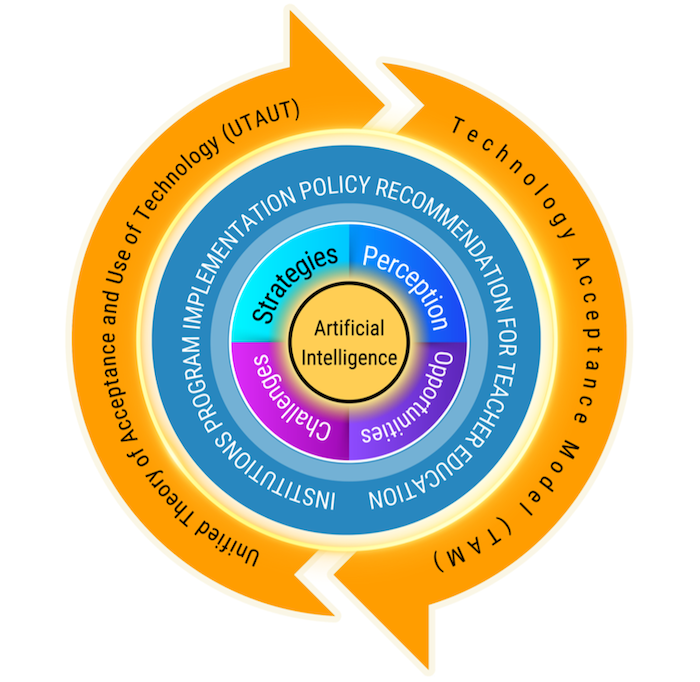
Figure 1 illustrates the interconnections among key attributes, centring on AI in the TEIs. This study examined faculty perceptions, explored opportunities and challenges in AI integration, and identified coping strategies. The goal was to provide policy recommendations for AI use and its limitations in education. Grounded in the Unified Theory of Acceptance and Use of Technology (UTAUT) and the Technology Acceptance Model (TAM), the study explains faculty acceptance of AI. UTAUT integrates multiple technology acceptance theories to predict user behaviour (Momani, 2020), whereas, TAM reiterates perceived usefulness and ease of use as key factors in technology adoption (Marangunić & Granić, 2015).
This study employed qualitative research using a case-study approach. A case study provides deep and contextual insights by enabling a thorough analysis of TEI faculty’s perceptions that circulate their unique circumstances. A comprehensive investigation of university-level faculty perspectives on the contribution of artificial intelligence (AI) to student learning outcomes was possible using semi-structured interviews in conjunction with survey tools. The comprehensive findings of a case study can directly influence policy recommendations by providing practical context-dependent methods.
The study purposively selected 12 teacher education faculty members who met specific criteria: at least five years of classroom experience, active involvement in ODL courses, demonstrated technology integration skills, and knowledge of multiple AI applications. Their participation was vital given their familiarity with instructional strategies and frequent engagement with emerging technologies. Purposive sampling ensured participants had direct experience with AI, providing enriched insights (Etikan, 2016). Although the sample size was small, it was appropriate for qualitative research, which prioritises depth over breadth. Diversity was addressed by including participants from different academic disciplines, varying levels of ODL exposure, subject expertise, and degrees of AI adoption, thus strengthening the credibility and transferability of the findings.
Semi-structured interviews were conducted using a validated guide co-developed with field experts. The guide included open-ended questions exploring faculty perspectives on AI’s potential, challenges, and implications for teaching and learning. This flexible format allowed for in-depth context-specific responses. Meanwhile, ethical protocols ensured confidentiality and voluntary participation, fostered trust, and encouraged honest insights. Participants were informed of their rights, including anonymity and the option to withdraw at any time.
Thematic analysis was employed to interpret the qualitative data following the six-step process of Naeem et al. (2023). Transcripts were reviewed multiple times for familiarisation, followed by systematic coding to identify key ideas. Codes were grouped into themes that captured recurring patterns in the faculty responses. Likewise, themes were reviewed for consistency with the data and then clearly defined and named. The final step involved synthesising the themes into a coherent narrative and highlighting perceptions, opportunities, challenges, strategies, and policy recommendations concerning AI in education.
This section presents the findings and offers a comprehensive analysis of the data collected and organises it thematically to address the research questions as supported by the relevant literature.
This subsection is structured around the two major themes that emerged from faculty perceptions: (1) the transformative role of AI in enhancing teaching and learning outcomes, and (2) the ethical and practical considerations of its integration into teacher education. In Table 1, each theme is further broken down into categories that reflect specific dimensions of faculty experiences.
Table 1: Faculty Perception in the Use of Artificial Intelligence in the Teaching and Learning Process in Teacher Education

Transformative Role of AI in Enhancing Teaching and Learning Outcomes
These findings affirm the existing literature that AI enhances teaching and learning through adaptive, personalised platforms (Rane et al., 2023). AI boosts performance and engagement, however, its benefits are unevenly distributed, especially among marginalised students who lack access, thus increasing educational inequality (Williamson & Eynon, 2020). This was supported by the statement:
AI increases data-driven decision-making, simplifies administrative tasks, and provides individualised support, all of which improve the effectiveness and impact of education. (Male, 52)
Moreover, faculty members view AI as a supportive tool that promotes critical thinking, problem-solving, and self-directed learning. It empowers students to explore complex topics and aligns with research highlighting AI’s role in enhancing higher-order thinking through personalised and inquiry-based learning (Aguelo & Aquino, 2023). Faculty reiterate that AI should supplement traditional teaching to preserve essential human interaction. This was pinpointed by one participant:
It has allowed me to adopt more efficient and innovative approaches, such as using AI tools for personalised feedback, creating dynamic learning materials, and automating routine tasks like grading. (Male, 45)
Ethical and Practical Considerations
Participants stressed the need for ethical frameworks to govern AI use in education, especially regarding data privacy, algorithmic bias, and transparency, which are echoed in the literature (Boppiniti et al., 2023). Although ethical awareness exists, its implementation remains inconsistent. Bridging this gap is vital to AI integration. One participant mentioned:
Information security and privacy. Both fairness and bias, lack of human interaction, accessibility and cost, training and resistance from teachers, ethical issues, technological dependence, and content relevance and quality. (Male, 52)
Professional development has emerged as a key to addressing AI-related challenges. The faculty requires targeted training through workshops, online courses, and collaborative platforms to build technical skills and pedagogical competence (Ramirez-Montoya et al., 2021). Continuous learning ensures that faculty can adapt to AI tools while maintaining critical instructional quality. This was reiterated by one participant:
Incorporating AI into the learning process presents several challenges. One major concern is the potential lack of technical skills or training for both faculty and students, which can hinder effective use of AI tools. There is also the risk of over-reliance on AI, which may reduce critical thinking and creativity. (Male, 45)
The results align with studies asserting AI’s transformative impact of AI on pedagogy and student learning (Avsheniuk et al., 2024), the ethical imperative for governance (Boppiniti et al., 2023), and the necessity for faculty development (Holmes, 2020). One participant remarked:
Managing biases in AI models, protecting data privacy, and preserving the human aspect in instruction are some of the issues that come with integrating AI into the learning process. Additionally, there is the risk of an over-reliance on AI, which could impair students' critical thinking and creativity, as well as the necessity for instructors to adjust to new technology, which can take time. (Female, 47)
AI demonstrates the transformative potential in ODL by enabling personalisation, real-time feedback, and efficient resource management. The faculty recognise their capacity to enhance engagement and tailor instruction to diverse learners. However, challenges such as ethical risks, accessibility gaps, and overreliance should be addressed. Effective AI integration requires ethical governance, inclusive policies, and sustained professional development to ensure equitable and meaningful learning, rather than undermining it.
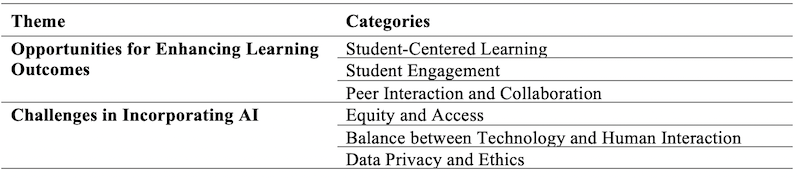
This subsection is organised into two overarching themes that emerged from the faculty perceptions: (1) opportunities for enhancing learning outcomes, and (2) challenges in incorporating AI. Each theme is unpacked into categories, as indicated in Table 2.
Table 2: Opportunities and Challenges Experienced in Incorporating AI into Students’ Learning Outcomes
Opportunities for Enhancing Learning Outcomes
AI offers considerable potential to enhance student learning outcomes, particularly through student-centred learning methodologies tailored to individual capabilities and needs. AI-powered platforms enable personalised instruction, allowing students to progress at their own pace, while receiving targeted support in areas where they encounter difficulties. Research supports the efficacy of adaptive learning technologies in improving academic performance by offering individualised feedback and content that places students at the centre of instructional delivery (Walkington, 2013). One participant mentioned:
The use of AI has brought several advantages to my teaching methods. It has allowed me to adopt more efficient and innovative approaches, such as using AI tools for personalized feedback, creating dynamic learning materials, and automating routine tasks like grading. These tools also help in identifying student needs and tailoring instruction to improve engagement and learning outcomes. (Male, 45)
AI also fosters greater student engagement through the use of interactive tools such as gamified learning applications and virtual simulations. These technologies have created immersive and dynamic educational environments that promote active participation. Complex concepts became more accessible and engaging, thereby enhancing student understanding and information retention (Cascella et al., 2023). One participant observed that:
The role of AI in teaching is that it is a great help for teachers to create interactive and engaging lessons, with less time to create those learning materials for everyday discussions. (Female, 29)
In addition to individualised learning, AI also encourages peer collaboration by facilitating virtual group activities, such as collaborative projects and discussion forums. These tools support cognitive development and enhance the social and communication skills that are crucial for 21st-century learners. Faculty members emphasised that AI tools can expand opportunities for cooperative learning beyond the boundaries of traditional classrooms.
Challenges in Incorporating AI
Despite these promising opportunities, several challenges accompany the integration of AI into education, particularly concerning equity and access to digital resources. Unequal access to technology among marginalised groups exacerbates existing educational disparities. Students from economically disadvantaged backgrounds often lack the devices or reliable internet connectivity necessary to benefit from AI-driven learning environments, thus widening the digital divide. One faculty member remarked:
We are definitely up against some major challenges. One big one is making sure teachers have enough training to keep up with the latest educational trends regardless of age. Another is ensuring that all students have access to the technology they need to succeed. (Male, 24)
Another pressing concern is the need to balance the use of AI with human interactions. While AI can support individualised learning, over-reliance on technology risks diminishes the critical role of teachers as facilitators and mentors. Participants underscored the significance of maintaining strong teacher-student relationships, which are essential for supporting students' emotional and social development. Holmes (2020) emphasised that AI should enhance traditional pedagogical practices. One participant noted:
With tools like adaptive learning platforms, I can tailor lessons to individual student needs, ensuring no one is left behind. AI-powered grading and assessment tools save time, allowing me to focus on mentoring and creative teaching strategies. (Female, 34)
Ethical considerations have also emerged in this regard. AI often involves the collection and analysis of extensive student data, raising serious concerns about privacy, consent, and data security. Moreover, issues such as algorithmic bias and data exploitation demand comprehensive institutional policies to ensure ethical AI deployment and to protect student rights (Chan, 2023). One participant stated:
Managing biases in AI models, protecting data privacy, and preserving the human aspect in instruction are some of the issues that come with integrating AI into the learning process. (Female, 47)
These findings are consistent with those in the existing literature. Kaswan et al. (2024) and Zavalevskyi et al. (2024) highlighted the advantages of AI in promoting personalised learning and student engagement. Williamson and Eynon (2020) called for deliberate actions to address technological inequities and ethical risks, and advocated for an approach that integrates AI within, rather than in place of, the humanistic aspects of education. As one educator succinctly put it:
AI is transforming education in various ways, including personalised learning, automating administrative tasks, virtual teaching, enhanced accessibility, and also in technical education. (Female, 34)
Furthermore, the integration of AI in ODL presents substantial opportunities to improve teaching and learning outcomes by enabling student-centred, adaptive, and collaborative learning environments. However, its implementation also demands careful attention to issues of equity, teacher-student interaction, data privacy, and ethical governance. Addressing these challenges through inclusive and well-regulated strategies is essential to realising the full transformative potential of AI in education.
This subsection is organised around three central strategies identified by faculty members for addressing the challenges of AI integration: (1) promoting inclusive and ethical AI integration in education, (2) encouraging the balanced use of AI, and (3) professional development and support (Table 3).
Table 3: Strategies in Overcoming Challenges Experienced by Faculty Members

Promoting Inclusive and Ethical AI integration in Education
Ensuring equitable access and addressing technological limitations are essential for promoting fair and inclusive AI augmented learning experiences in higher education. A critical strategy involves prioritising equity and accessibility by equipping students and faculty with the necessary tools and infrastructure. Universities should invest in affordable digital devices, reliable internet connectivity, and AI-driven solutions tailored to diverse educational needs. This inclusive approach ensures that students can benefit from AI-supported instruction, regardless of their socioeconomic background. The literature affirms the significance of equitable technological provision in narrowing the digital divide and enhancing access to quality education (Williamson & Eynon, 2020). One participant stated:
Establish ethical standards, when creating and using AI, firms should set ethical standards. Create strategies to mitigate prejudice: to prevent bias, organizations should employ a variety of date resources and conduct routine data audits. (Male, 52)
A pivotal measure for fostering ethical AI usage is the development of comprehensive guidelines and targeted training for faculty, staff, and students. Training programmes organised by university administrations should cover key areas such as data privacy, the ethical application of AI tools, and inclusive instructional practices. These initiatives not only prepare faculty to navigate AI responsibly but also address concerns about data security, transparency, and potential algorithmic bias. These claims were supported by this participant statement:
One big one is making sure teachers have enough training to keep up with the latest educational trends regardless of age. Another is ensuring that all students have access to the technology they need to succeed. (Male, 24)
Encouraging Balanced Use of AI
To prevent overreliance on AI tools, it is important to adopt a balanced pedagogical model that integrates technological efficiency with the irreplaceable value of human interaction. Faculty members incorporate AI strategically to support conventional teaching methods. This includes utilising AI for tasks such as assessment, feedback generation, and adaptive learning, while continuing to facilitate experiential learning, collaborative dialogue, and critical thinking exercises in the students’ instruction. This approach aligns with Yang et al. (2024), who advocated preserving the relational aspects of education while optimising AI's advantages.
Moreover, faculty development should include skills training focused on both the pedagogical applications and limitations of AI. This dual focus empowers faculty to design meaningful learning experiences that blend AI capabilities with educational expertise. One participant shared:
To address these challenges, I emphasise blended teaching methods that combine AI tools with conventional teaching approaches. I also ensure that my students in particular, acquire digital literacy skills to use AI based platforms responsibly. (Male, 24)
Professional Development and Support
Sustained professional development is fundamental to successful AI integration. Faculty were engaged in ongoing training through workshops, webinars, collaborative platforms, and online certification courses that kept them abreast of emerging AI tools and best practices. There was growing concern among faculty members that a lack of AI training might result in professional marginalisation or job insecurity, highlighting the necessity for institutional support in building digital competencies.
University-led professional development not only equips faculty with technical skills but also fosters a supportive learning community in which faculty can exchange ideas, share resources, and co-develop innovative instructional strategies. This aligns with current scholarship that underscores the role of professional development in enabling faculty to confidently adopt AI technologies while navigating ethical and instructional challenges (Mouta et al., 2024). One participant pinpointed:
AI can provide interactive, personalised and data driven tool which can help in development and delivery of instructions and others. (Female, 47)
Promoting inclusive and ethical AI integration in ODL requires a comprehensive approach that addresses technological constraints, promotes equitable access, and fosters continuous professional development. The success of AI in ODL environments hinges on ensuring that all students, especially those in remote or underserved areas, have access to digital tools and infrastructure that supports AI-enhanced learning. Moreover, implementing ethical safeguards for data privacy, algorithmic fairness, and responsible use are essential for maintaining trust and transparency in AI systems.
Meanwhile, professional development tailored to the needs of ODL educators enhances their capacity to design engaging, student-centred experiences, while preserving the human dimensions of teaching that are critical for motivation and relationship building. Recent studies have confirmed that intentional planning, ethical foresight, and institutional support are crucial for leveraging AI in a manner that upholds inclusivity, enhances pedagogy, and ensures sustainable educational transformation.
This policy framework addresses three core areas: AI integration and access; ethical and governance structures; and support structures and collaboration and their application to the ODL context.
AI Integration and Access
AI integration in teacher education requires embedding AI literacy, critical thinking, and ethical awareness into curricula while ensuring equitable technological access. It highlights the need to view AI as a pedagogical literacy, not just a technical skill (Holmes, 2020). However, it warns of digital divides that risk excluding marginalised learners (Williamson & Eynon, 2020). Findings from other studies reinforce this, noting that high costs, limited infrastructure, and skill gaps restrict adoption, particularly in SMEs and developing economies (Rasdi & Baki, 2025). Policies must therefore prioritise resource allocation for affordable devices, mobile-first solutions, and reliable connectivity, particularly in ODL contexts where access challenges are most acute (Ngoveni, 2025).
Ethical and Governance Structures
AI adoption in education must be anchored in fairness, transparency, and accountability. Scholars emphasise the importance of ethical safeguards against bias and privacy violations (Nguyen et al., 2023). AI confirms this by highlighting the EU AI Act as a leading risk-based model for operationalising ethics through governance, though implementation gaps remain (Larsson, 2020; Nikolinakos, 2023). Moreover, stakeholder inclusion in governance is limited, with only a minority of frameworks engaging diverse actors (Zhang & Pan, 2024). For teacher education institutions, this means implementing algorithmic audits, informed consent policies, and faculty-led ethics committees to safeguard trust in AI systems (Oyetade & Zuva, 2025).
Support Structures and Collaboration
Effective AI integration depends on organisational culture, leadership, and skill development. It stresses that professional development must extend beyond technical training to encompass pedagogy (Aquino et al., 2022). The findings also show that adaptability, resilience, and collaborative frameworks were essential for sustaining human-AI synergy (Bukar & Sneesl, 2025). Partnerships between universities, developers, and policymakers could ensure tools are contextually relevant while avoiding overdependence on external providers that exacerbate global inequalities (Kim et al., 2022). Policies should support micro-credential programs, mentorship, and collaborative platforms to strengthen faculty agency and foster innovation in AI-enhanced learning environments (Chourasia et al., 2024).
Application to ODL Context
In ODL, AI holds promise for personalising learning, supporting at-risk learners, and enhancing collaboration (Ngoveni, 2025). However, inequities in infrastructure and device access remain pressing challenges, particularly in rural and under-resourced contexts (Alpha & Kelebogile, 2024). Results from other research suggests that leveraging mobile technologies, community-driven training, and regional collaboration are effective strategies for bridging these divides (Olugbade, 2024). Equally important are ethical safeguards: explainable AI, bias mitigation, and data privacy frameworks must underpin ODL applications to protect student trust and ensure fairness. By aligning access, ethics, and support structures, ODL institutions can foster inclusive, student-centred AI-enhanced education.
This study offers critical insights into faculty perceptions of AI integration into ODL, highlighting both its transformative potential and inherent challenges. AI is widely seen as a tool to enhance instructional delivery, personalise learning, and foster engagement aligning well with the flexible and student-centred nature of ODL. However, concerns persist around equitable access, data privacy, algorithmic bias, and the erosion of human connections in virtual spaces, all of which are intensified by technological disparities.
Addressing these issues requires inclusive policy frameworks that reiterate ethical AI use, infrastructure development and continuous professional support. Faculty development, balanced pedagogy, and strategic investment are vital for leveraging AI effectively, without compromising educational equity or quality. Although the findings reflect faculty perspectives and might not represent the full spectrum of stakeholders, they provide practical recommendations for responsible AI adoption. Ultimately, this research contributes to shaping a future-ready ODL landscape by advocating ethical, inclusive, and collaborative AI integration. Continued dialogue among educators, institutions, and policymakers is essential in ensuring that AI serves as a force for equitable and meaningful learning.
Institutions need to adopt clear AI policies in ODL to ensure data privacy, transparency, and ethical use. These must address secure data handling and reduce the algorithmic bias. To promote equity, a targeted funding plan is necessary to provide AI tools and improve the digital infrastructure, especially in underserved areas. Public-private partnerships can support access and resource distribution.
Additionally, ongoing faculty training should focus on the AI literacy, ethical practices, and student-centred teaching that preserve human interaction. AI literacy should also be integrated into teacher-education programmes. Policies may reiterate the value of teacher-student connections alongside AI use. Likewise, feedback systems should be in place to monitor AI’s impact and to guide continuous improvement. Ultimately, further research might explore AI’s impact on learning outcomes, its effectiveness across different ODL contexts, and strategies to reduce digital inequality.
Based on the study’s findings and the review of related literature, further research on AI in teacher education should focus on its long-term and context-specific effects, particularly within ODL. Longitudinal studies can track how AI adoption evolves over time and influences pedagogy, student learning, and equity. Implementation research could examine conditions that enable or hinder effective integration, with special attention to bridging digital divides and ensuring inclusive access. Ethical governance also requires investigation through policy evaluation, data privacy assessments, and algorithmic audits. Future studies might explore balanced pedagogical models that combine AI with meaningful human interaction, alongside rigorous evaluations of professional development programmes that build faculty AI literacy and competence. Cost-effectiveness analyses, co-design approaches with faculty and students, and culturally responsive applications in Philippine TEIs are likewise recommended to ensure sustainable and equitable AI integration.
Agbese, M., Mohanani, R., Khan, A., & Abrahamsson, P. (2023, June). Implementing AI ethics: Making sense of the ethical requirements. In Proceedings of the 27th International Conference on Evaluation and Assessment in Software Engineering (pp. 62-71). https://doi.org/10.1145/3593434.3593453
Aguelo, M.J., & Aquino, J.M. (2023). Students’ dance performances and the utilization of e-materials in physical education. Edu Sportivo: Indonesian Journal of Physical Education, 4(1), 46-56. https://doi.org/10.25299/es:ijope.2023.vol4(1).11262
Alpha, Z.S., & Kelebogile, M.P. (2024). South African rural university students’ experiences of open distance e-learning support. International Journal of Learning, Teaching and Educational Research, 23(2), 46-67. Scopus. https://doi.org/10.26803/ijlter.23.2.3
Aquino, J.M.D.R., & Chavez, M.A. (2022). Teaching effectiveness: Basis for the development of assessment tool. Journal of Research, Policy & Practice of Teachers and Teacher Education, 12(2), 41-65. https://doi.org/10.37134/jrpptte.vol12.2.4.2022
Aquino, J.M.D.R, Palad, I.P., & Simbre, A.P. (2022). Filipino teachers’ aspiration on their personal and professional development. AHEAD Journal, 1(1).
Avsheniuk, N., Lutsenko, O., Svyrydiuk, T., & Seminikhyna, N. (2024). Empowering language learners’ critical thinking: Evaluating ChatGPT’s role in English course implementation. Arab World English Journal (AWEJ). Special Issue on ChatGPT.
Boppiniti, S.T. (2023). Data ethics in AI: Addressing challenges in machine learning and data governance for responsible data science. International Scientific Journal for Research, 5(5). https://isjr.co.in/index.php/ISJR/article/view/257
Bukar, U.A., & Sneesl, R. (2025). Resilience thinking Artificial Intelligence integration framework. In The smart life revolution: Embracing AI and IoT in society (pp. 1-20). CRC Press; Scopus. https://doi.org/10.1201/9781003509196-1
Cascella, M., Cascella, A., Monaco, F., & Shariff, M.N. (2023). Envisioning gamification in anesthesia, pain management, and critical care: basic principles, integration of artificial intelligence, and simulation strategies. Journal of Anesthesia, Analgesia and Critical Care, 3(1), 33. https://doi.org/10.1186/s44158-023-00118-2
Chan, C.K.Y. (2023). A comprehensive AI policy education framework for university teaching and learning. International journal of Educational Technology in Higher Education, 20(1), 38. https://doi.org/10.1186/s41239-023-00408-3
Chen, L., Chen, P., & Lin, Z. (2020). Artificial Intelligence in education: A review. IEEE Access, 8, 75264-75278. https://doi.org/10.1109/ACCESS.2020.2988510
Chourasia, S., Dhama, A., & Bhardwaj, G. (2024). AI-driven organizational culture evolution: A critical review. Proceedings International Conference on Communication, Computer Sciences and Engineering, IC3SE, 1839-1844. Scopus. https://doi.org/10.1109/IC3SE62002.2024.10592949
Etikan, I. (2016). Comparison of convenience sampling and purposive sampling. American Journal of Theoretical and Applied Statistics, 5(1), 1. https://doi.org/10.11648/j.ajtas.20160501.11
Gaboy, R.G., Mabalay, M.C., Mananghaya, M.E., Mercado, M.G.M., & Romblon, B.M. (2020). Coping with the new norm: ICT-pedagogy integration awareness and competencies of TEI faculty. Journal of Research, Policy & Practice of Teachers and Teacher Education, 10(2), 49-62. https://doi.org/10.37134/jrpptte.vol10.2.4.2020
Guan, C., Mou, J., & Jiang, Z. (2020). Artificial Intelligence innovation in education: A twenty-year data-driven historical analysis. International Journal of Innovation Studies, 4(4), 134-147. https://doi.org/10.1016/j.ijis.2020.09.001
Hagendorff, T. (2020). The ethics of AI ethics: An evaluation of guidelines. Minds and machines, 30(1), 99-120. https://doi.org/10.1007/s11023-020-09517-8
Holmes, W. (2020). Artificial intelligence in education. In Encyclopedia of education and information technologies (pp. 88-103). Cham: Springer International Publishing. https://doi.org/10.1007/978-3-030-10576-1_107
Kaswan, K.S., Dhatterwal, J.S., & Ojha, R.P. (2024). AI in personalized learning. In Advances in technological innovations in higher education (pp. 103-117). CRC Press.
Kim, J., Lee, H., & Cho, Y.H. (2022). Learning design to support student-AI collaboration: Perspectives of leading teachers for AI in education. Education and Information Technologies, 27(5), 6069-6104. https://doi.org/10.1007/s10639-021-10831-6
Kim, S.W., & Lee, Y. (2024). Investigation into the influence of socio-cultural factors on attitudes toward artificial intelligence. Education and Information Technologies, 29(8), 9907-9935. https://doi.org/10.1007/s10639-023-12172-y
Larsson, S. (2020). On the governance of Artificial Intelligence through ethics guidelines. Asian Journal of Law and Society, 7(3), 437-451. Scopus. https://doi.org/10.1017/als.2020.19
Marangunić, N., & Granić, A. (2015). Technology acceptance model: A literature review from 1986 to 2013. Universal Access in the Information Society, 14(1), 81-95. https://doi.org/10.1007/s10209-014-0348-1
Mendez, S., Johanson, K., Martin Conley, V.M., Gosha, K., Mack, N.A., Haynes, C., & Gerhardt, R.A. (2020). Chatbots: A tool to supplement the future faculty mentoring of doctoral engineering students. International Journal of Doctoral Studies, 15, 373-392. https://doi.org/10.28945/4579
Momani, A.M. (2020). The Unified Theory of Acceptance and Use of Technology: A new approach in technology acceptance. International Journal of Sociotechnology and Knowledge Development, 12(3), 79-98. https://doi.org/10.4018/IJSKD.2020070105
Mouta, A., Torrecilla-Sánchez, E.M., & Pinto-Llorente, A.M. (2024). Design of a future scenarios toolkit for an ethical implementation of Artificial Intelligence in education. Education and Information Technologies, 29(9), 10473-10498.
Naeem, M., Ozuem, W., Howell, K., & Ranfagni, S. (2023). A step-by-step process of thematic analysis to develop a conceptual model in qualitative research. International Journal of Qualitative Methods, 22. https://doi.org/10.1177/16094069231205789
Ngoveni, M.A. (2025). Revolutionizing mathematics education: Artificial Intelligence integration, ethics, and access in Open Distance e-learning. Eurasian Journal of Educational Research, 2025(115), 38-52. Scopus. https://doi.org/10.14689/ejer.2025.115.003
Nguyen, A., Ngo, H.N., Hong, Y., Dang, B., & Nguyen, B.P.T. (2023). Ethical principles for artificial intelligence in education. Education and Information Technologies, 28(4), 4221-4241. https://doi.org/10.1007/s10639-022-11316-w
Nikolinakos, N. T. (2023). The European Parliament’s 2020 resolution: Proposal for a regulation on ethical principles for the development, deployment and use of Artificial Intelligence, robotics and related technologies. In Law, Governance and Technology Series, 53, 281-306. Springer Nature; Scopus. https://doi.org/10.1007/978-3-031-27953-9_6
Olugbade, D. (2024). Democratizing education in rural Nigeria through AI and mobile technologies as a transformative pathway to inclusive learning. In Fostering inclusive education with AI and emerging technologies (pp. 233-250). IGI Global; Scopus. https://doi.org/10.4018/979-8-3693-7255-5.ch010
Oyetade, K., & Zuva, T. (2025). Advancing equitable education with inclusive AI to mitigate bias and enhance teacher literacy. Educational Process: International Journal, 14. Scopus. https://doi.org/10.22521/edupij.2025.14.87
Pratama, Muh. P., Sampelolo, R., & Lura, H. (2023). Revolutionizing education: Harnessing the power of artificial intelligence for personalized learning. Klasikal: Journal of Education, Language Teaching and Science, 5(2), 350-357. https://doi.org/10.52208/klasikal.v5i2.877
Ramírez-Montoya, M.S., Andrade-Vargas, L., Rivera-Rogel, D., & Portuguez-Castro, M. (2021). Trends for the future of education programs for professional development. Sustainability, 13(13), 7244. https://doi.org/10.3390/su13137244
Rane, N.L., Choudhary, S.P., Tawde, A., & Rane, J. (2023). ChatGPT is not capable of serving as an author: Ethical concerns and challenges of large language models in education. International Research Journal of Modernization in Engineering Technology and Science, 5(10), 851-874. https://www.doi.org/10.56726/IRJMETS45212
Rasdi, R.M., & Baki, N.U. (2025). Navigating the AI landscape in SMEs: Overcoming internal challenges and external obstacles for effective integration. PLOS ONE, 20(5 May). Scopus. https://doi.org/10.1371/journal.pone.0323249
Rosenberg, J.M., & Koehler, M.J. (2015). Context and Technological Pedagogical Content Knowledge (TPACK): A systematic review. Journal of Research on Technology in Education, 47(3), 186-210. https://doi.org/10.1080/15391523.2015.1052663
Steinert, Y., Mann, K., Anderson, B., Barnett, B.M., Centeno, A., Naismith, L., Prideaux, D., Spencer, J., Tullo, E., Viggiano, T., Ward, H., & Dolmans, D. (2016). A systematic review of faculty development initiatives designed to enhance teaching effectiveness: A 10-year update: BEME Guide No. 40. Medical Teacher, 38(8), 769-786. https://doi.org/10.1080/0142159X.2016.1181851
Tripathi, S., & De, S. (2019). Data-driven optimizations in IoT: A new frontier of challenges and opportunities. CSI Transactions on ICT, 7(1), 35-43. https://doi.org/10.1007/s40012-019-00217-y
van der Kleij, F.M., & Lipnevich, A.A. (2021). Student perceptions of assessment feedback: A critical scoping review and call for research. Educational Assessment, Evaluation and Accountability, 33(2), 345-373. https://doi.org/10.1007/s11092-020-09331-x
Walkington, C.A. (2013). Using adaptive learning technologies to personalize instruction to student interests: The impact of relevant contexts on performance and learning outcomes. Journal of Educational Psychology, 105(4), 932. https://doi.org/10.1037/a0031882
Wang, H., & Lehman, J.D. (2021). Using achievement goal-based personalized motivational feedback to enhance online learning. Educational Technology Research and Development, 69(2), 553-581. https://doi.org/10.1007/s11423-021-09940-3
Wang, Y., Liu, C., & Tu, Y.F. (2021). Factors affecting the adoption of AI-based applications in higher education. Educational Technology & Society, 24(3), 116-129. https://www.jstor.org/stable/27032860
Waymond, R. (2020). Artificial Intelligence in a Throughput Model: Some major algorithms (1st ed.). CRC Press. https://doi.org/10.1201/9780429266065
Williamson, B., & Eynon, R. (2020). Historical threads, missing links, and future directions in AI in education. Learning, Media and Technology, 45(3), 223-235. https://doi.org/10.1080/17439884.2020.1798995
Yang, J., Amrollahi, A., & Marrone, M. (2024). Harnessing the potential of artificial intelligence: affordances, constraints, and strategic implications for professional services. The Journal of Strategic Information Systems, 33(4), 101864. https://doi.org/10.1016/j.jsis.2024.101864
Zavalevskyi, Y., Kyrilenko, S., Kijan, O., Bessarab, N., & Mosyakova, I. (2024). The role of AI in individualizing learning and creating personalized programs. Amazonia Investiga, 13(73), 200-208. https://doi.org/10.1016/j.jsis.2024.101864
Zhai, C., Wibowo, S., & Li, L.D. (2024). The effects of over-reliance on AI dialogue systems on students' cognitive abilities: A systematic review. Smart Learning Environments, 11(1), 28. https://doi.org/10.1186/s40561-024-00316-7
Zhang, C., & Pan, L. (2024). Participatory ethical regulations: Risk challenges of artificial intelligence era and construction of governance logic. Bulletin of Chinese Academy of Sciences, 39(11), 1860-1870. Scopus. https://doi.org/10.16418/j.issn.1000-3045.20240417002
Zhang, R.W., Liang, X., & Wu, S.H. (2024). When chatbots fail: Exploring user coping following a chatbots-induced service failure. Information Technology & People, 37(8), 175-195. https://doi.org/10.1108/ITP-08-2023-0745
Author Notes
John Michael D. Aquino graduated doctor of Philosophy in Educational Leadership and Management at the Philippine Normal University in Manila. He has published and presented articles in international and local journals in the disciplines of physical education, leadership and management, and social sciences, and is a regular member of the National Research Council of the Philippines. He is a full-time faculty member at Laguna State Polytechnic University. Email: johnmichael.aquino@lspu.edu.ph (https://orcid.org/0000-0001-5852-397X)
Leah Perez, LPT, MAEd is an experienced educator with nine years of teaching experience. She earned her Bachelor of Secondary Education, major in Biological Science, from Laguna University in 2015. In 2022, she completed her Master of Arts in Education, major in Administration and Supervision, at Union College of Laguna. Currently, she serves as a college instructor at Laguna University and is the Program Chair of the Bachelor of Secondary Education program under the College of Education. Her expertise and leadership contribute significantly to the development of future educators. Email: pc.bsed@lu.edu.ph (https://orcid.org/0000-0002-5860-6027)
Cite as: Aquino, J.M.D., & Perez, L.E. (2025). Teacher educators’ attitude towards and challenges faced in integrating Artificial Intelligence in teaching-learning. Journal of Learning for Development, 12(3), 469-483.