
Ruth Aluko, Mary Atieno Ooko, Zaheera Cassim and Marien Alet Graham
2026 VOL. 13, No. 2
Abstract: The aim of this study was three-fold: to report the findings from contextualised data collection instruments; to determine how these findings assisted with the preparation of a virtual orientation programme; and to identify the emerging trends from the support that was provided. The adopted exploratory mixed-methods research design was guided by the Substitution, Augmentation, Modification and Redefinition (SAMR) Model. The total sample comprised all 224 school principals from the rural and semi-rural areas in Limpopo Province, South Africa, who were the first cohort in a programme. Data analysis involved descriptive statistics, document reviews and a thematic analysis of the interview data. Findings from the survey showed digital inequality among participants and their diverse technological skills levels, among other things. These findings guided the process of determining the type and extent of support needed by the participants. Lastly, emerging trends indicated an improvement in student pass rates. Further research areas, applicable to web-dependent programmes in the developing context, as well as a suggestion for improving the SAMR Model, were identified.
Keywords: distance education, e-readiness, SAMR Model, technology, web-dependent
Technology-enhanced learning refers to the use of digital devices and technologies to enhance learning experiences by alleviating educational constraints to access, parity and quality (Eltaiba et al., 2025). Educational technology (EdTech) includes “hardware (feature phones, smartphones, radios, televisions, tablets, and laptops); software (for student/teacher use, as well as for management, monitoring, and evaluation); infrastructure (electricity, local connectivity, internet); and other digital approaches (open licensing, open innovation, crowdsourcing)” (Haßler et al., 2020, p. 5). The literature affirms the value of integrating technology into education, which contributes to acquiring the needed 21st-century skills (Adarkwah, 2022; Zulfiani et al., 2025). Although limited literature previously existed on the integration of EdTech into education in the developing context (Jhurree, 2005), much has been done since then, especially due to the recent worldwide Covid-19 pandemic, with millions of students benefitting from the development (Rodriguez-Segura, 2021). Nonetheless, there have been concerns around the waning interest, with UNICEF (2022) reporting “1 in 3 digital learning platforms developed during COVID-19 is no longer functional”, while Salimi (2025) expressed the same concern, coupled with the issue of equitable distribution in Sub-Saharan Africa.
This could be due to diverse contextual factors. For instance, in their study of ten Sub-Saharan African countries, Adeniran et al. (2023) identified the challenges of inadequate budgetary allocation and teacher training, a lack of supportive infrastructure (e.g., electricity), a huge disparity between urban and rural households, and political shifts and transitions that undermine the sustainability of relevant policies. Therefore, providers need to know upfront that teaching with technology is more complex than it seems; hence, the need to pay adequate attention to it from the beginning (Scanlon, 2021).
Relevant to this study is the non-alignment between teachers’ preparedness and the required 21st-century skills (La Fleur & Dlamini, 2022). With the use of LMS in the 21st century (Annamalai et al., 2021), the distance education (DE) mode, long used to train and update teachers’ skills, can serve as leverage in this regard. However, success with an LMS can only be achieved if both the instructor and students are e-ready. E-readiness refers “not only to the availability of ICT platforms, but also the willingness of individuals and the organisational environment to integrate technology in their business and work processes” (Chipembele & Bwalya, 2016, p. 317). Factors that affect e-readiness are sociological, organisational, financial, environmental, human resources, and content, and could range from access to digital technologies and the internet, the internet capabilities of students’ digital devices and their skill readiness (Miglani & Awadhiya; 2017; Wibawa et al., 2021; Yaraş & Gündüzalp, 2021).
South Africa’s population (the context of this study), as in other developing contexts, comprises individuals from technologically rich areas as well as those with minimal access to technology, resulting in a significant Information and Communication (ICT) skills gap. One way to alleviate these challenges was to provide adequate student support and training at the right time (Johnson et al., 2016). Student support refers to “(all) activities beyond the production and delivery of course materials that assist in the progress of students to succeed in their studies” (Simpson, 2012, p. 13). It is key to surmounting challenges that threaten student learning, engagement, motivation and success (Rotar, 2021).
Guided by the popular Substitution, Augmentation, Modification and Redefinition (SAMR) Model to reflect diverse levels of technology integration in teaching practices (Blundell et al., 2022; Cáceres-Nakiche et al., 2024), the aim of this study was therefore three-fold: to report on the findings from contextualised data collection instruments developed from the review of our university’s Unit for Distance Education’s relevant documents and literature; to determine how the findings assisted the unit in preparing a virtual orientation programme attended by students; and to identify emerging trends from the support the Unit had provided.
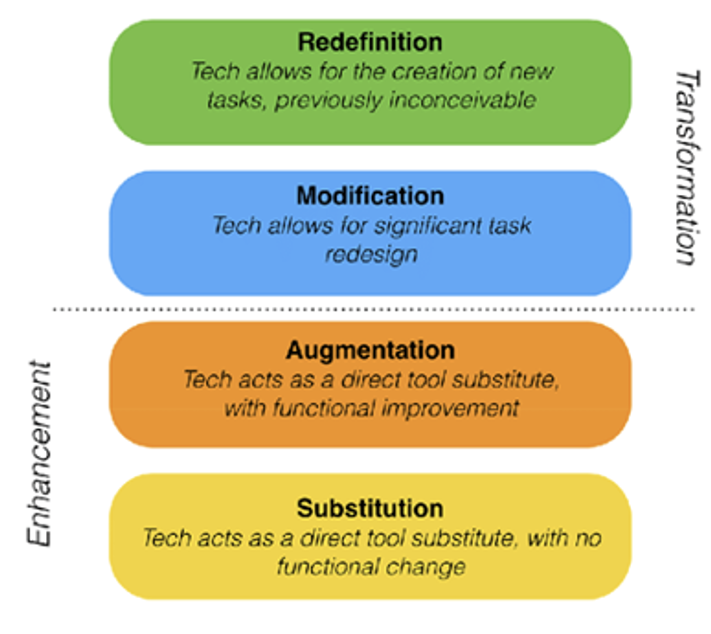
The Substitution: Augmentation, Modification and Redefinition (SAMR) Model, a four-level taxonomy framework utilised by educators and instructional designers to create a unique teaching experience for students using technology, guided this study. Puentedura (2009, p. 2) propounded the SAMR Model and described technology usage at its four levels as follows:
Substitution: acts as a direct tool substitute, with no functional change.
Augmentation: acts as a direct tool substitute, with functional improvement.
Modification: allows for significant task redesign.
Redefinition: allows for the creation of new tasks previously inconceivable.
According to Heatherton and Trespalacios (2021, p. 2), the first two levels relate to “model learning enhancement” because technology replaces what is already available, while the last two relate to “transformative learning” as the tools allow activities that were previously impossible. Researchers and teachers have used the model to explain their educational experiences with technology, in which they have designed, created and integrated technology-imbued lessons in their teaching space with positive impact on learning outcomes for the 21st-century skills (Aprinaldi et al., 2018). However, in their review of the trends in SAMR research in teaching and learning from 2019 to 2024, Zulfiani et al. (2025) reported teachers mostly used the first two levels (substitution and augmentation). This was due to limited resources, time, experience, digital confidence, and limited professional development, while efficacious integration depends on the social, cultural, and institutional milieu.
Although the model is becoming more popular, some scholars (Blundell et al., 2022; Hamilton et al., 2016; Nair & Chuan, 2021) have criticised it for failing to consider the context in which teaching and learning are situated, its unclear hierarchy, and its inadequate research base.
While not losing sight of these shortcomings, this article focuses on the first three levels of the model, which certain scholars (Baz et al., 2018; Heatherton & Trespalacios, 2021) describe as enhancing and transforming learning using technology. This is true for this study as former DE programmes at our institution were paper-based, punctuated by three contact sessions. Therefore, teaching and learning design in this context fit into the first three levels of the model.
The research questions guided by the three-fold aim of the study were:
The researchers adopted the exploratory sequential mixed-methods research design, characterised by qualitative data collection and analysis followed by quantitative data collection and analysis. The design enabled the researchers to explore the phenomenon first and then develop a survey instrument containing the identified variables to be tested later (Creswell & Plano Clark, 2017).
The study’s population was the first cohort (224) of school principals in the Limpopo Province, South Africa who took up the web-dependent programme – the Advanced Diploma in School Leadership and Management (ADSLM). The researchers adopted a purposive and nonprobability sampling technique. However, they adopted the total population sampling technique (TPST) purposively due to the low enrolment. While the TPST does not lend itself to statistical generalisation, the literature (Laerd Dissertation, 2012; Lammers & Badia, 2004) avers it helps researchers to avoid sample error, provides deep insight into the population, and makes possible analytic generalisations.
Although the university’s teaching and learning was technologically advanced, the first cohort of the new web-dependent programme that participated in the study was not technically proficient; they were all school principals from rural/semi-rural areas. Rural areas describe the countryside, while semi-rural areas are not totally urban. A management decision in 2015 to make all programmes web-dependent, meant that all DE assignments were to be submitted and assessed online using the LMS called clickUP.
Programmes comprised Blocks (1-4), each encompassing a six-month cycle, totalling two years. Therefore, in the semi-open programmes, students have the option to take their first assessment in Block 2 rather than Block 1. However, the institution expected them to finish the programme within the stipulated period, with a further extension of two Blocks to finalise their assessment. This translated into a maximum of ten assessment opportunities in five years.
Qualitative
To partly address RQ1 and fully address RQ2, in addition to the relevant institutional documents and literature, a virtual focus group discussion, comprising five participants, was initially planned for the study. This was changed to individual interviews because the participants were unavailable at the same time. Of the five guide questions, four relevant ones were reported in this study, which focused on participants’ views on the most effective way of learning, government’s policy on the use of ICT for teaching and learning, the challenges confronting the use of ICT in their studies and on their individual environments—how they overcame them—and the support structures the university had provided for them and the value that added to their study.
Quantitative
The quantitative data collection and process addressed RQ3. The survey contained 10 question items that covered six subdivisions: biographical information, participants’ previous experience with technology tools and applications, computer skills, internet connectivity and access, emails, and mobile phones. These were guided by the key findings and the core themes that emerged from the qualitative data. The e-readiness survey was contextualised to make it relevant to the participants. Lastly, we also gathered past examination data.
Trustworthiness and Validity of Instruments
To ensure the trustworthiness of the instruments, the process of the research was clearly documented so others in similar contexts could replicate it. The face validity of the survey instrument items was assessed by three student administration staff members to ensure clarity, absence of confusion, and appropriateness, while a DE expert evaluated the content's suitability, and identified misunderstandings or missing information (Tanner, 2018). Furthermore, the survey was pilot-tested on 25 DE students (11.16% of the total number of DE students available for testing) from similar contexts to those of the target group.
The one-on-one interviews were virtual and lasted approximately one hour. Participants were coded as P1, P2, P3, P4, and P5, respectively. Relevant institutional documents were also accessed from the Unit’s repository. For the quantitative data collection process, printed copies of the survey were distributed at the first contact session, held at a central location. One hundred and thirty-five (135) school principals responded to the survey.
Qualitative
The qualitative analysis involved thematic analysis of relevant policy and institutional documents that were repeatedly reviewed, re-examined and interpreted to gain meaning and empirical knowledge of the constructs being studied, and the transcribed interview data, from which themes and codes were developed (Frey, 2018). The five major themes that emerged from the data were validated through member checking and direct quotations from the participants.
Quantitative
Quantitative data analysis involved descriptive and inferential statistics. The Statistical Package for the Social Sciences (SPSS) Version 31 was used to compute the inferential statistics, and a 5% level of significance was used for all tests.
The researchers obtained ethical clearance from the Faculty Ethics Committee. During data collection, the researchers adhered to all ethical guidelines regarding anonymity, voluntariness, non-harm, and confidentiality, as approved by the university.
The findings reported in this section were guided by the research questions and the adopted research methodology.
Findings from the Interviews
Theme 1: The Most Effective Way of Learning
All participants agreed that the blended mode (i.e., some face-to-face) was the most effective way to learn, compared to online learning, due to the inherent contextual challenges. According to them the government supported this with its ICT policy.
Theme 2: Internet Access Challenges
Findings from the qualitative data buttress the challenges the participants faced in their context regarding internet access. For instance, P2 highlighted the challenges of “insufficient infrastructure and resources, limited access in certain places (like the rural areas) to technology and internet connectivity, and high costs associated with technology implementation”.
Theme 3: Overcoming the Challenges
To overcome some of the challenges, certain participants indicated the sacrifices required to do their homework on a school computer (where available) after school hours or in going to public places to access the internet. As indicated by P4 this was possible “Because the structure of the program is in a way that allows someone who has a full-time job to manage the tasks provided”.
Theme 4: Computer and Cell Phone Usage
Overall, the findings indicated that many students still lacked the necessary skills to use computers. Other findings indicated digital inequality (P2) and “a lack of teacher training and development” (P2). Lastly, though all participants indicated they had smartphones, these were mostly used for non-academic purposes, as expressed by P5: “Yes, I have a very good smartphone like other students, but our phones are tied to prestige and our status, not to academic.”
Theme 5: Support Structures and Value
Regarding support, four of the five participants attested to receiving support services (technical assistance, academic advice, and counselling), access to computer labs, online learning platforms and digital libraries from the university. This was buttressed by P3 in this extract:
I have found very helpful the welcome session (a two-hour orientation programme) on all aspects of the programme; the recording of online sessions (which I am able to listen to during my free time, email addresses of those to contact (who often respond), and the interactive sessions on the discussion board.
Findings from the E-readiness Survey Brackets
The findings show that most of the respondents fell into the 41-50 (51.11%) and 51-60 (47.4%) age brackets. Although recent data from the Unit shows that there is a shift towards the younger generation applying for the university’s DE programmes, this particular set was peculiar because a provincial sector education and training authority (SETA) had approached the faculty to train the principals, who were generally mid- to late-career professionals, in one of its regions.
Computer Skills and Access to Internet Connectivity
Regarding the personal rating of computer skills, the data presented in Table 1 show that not all respondents had the same level of skill.
Table 1: Personal Rating of Computer Skills by the Respondents
Regarding internet connectivity, the findings showed that four of the 135 respondents (2.96%) did not have access, while 131 (97.03%) had access at diverse locations (e.g., at home, at work, via their phone, in public places and at an internet café).
Respondents’ Type of Phone and the Functions They Employed
Although all the students had smartphones, the findings showed the majority (131 respondents) (97%) used their phones for basic short message service (SMS), followed by “Google search” (116 respondents) (85.9%). The least-used function was to “Watch a YouTube” (47 respondents) (34.8%). These findings buttressed those from the qualitative data.
Respondents’ Basic Computer Usage, MS Word Courses Taken and the Computer Functions They Employed
Respondents were asked whether they had completed a basic computer-use course and a basic MS Word course, and what computer functions they employed. Their responses are depicted in Figure 1.
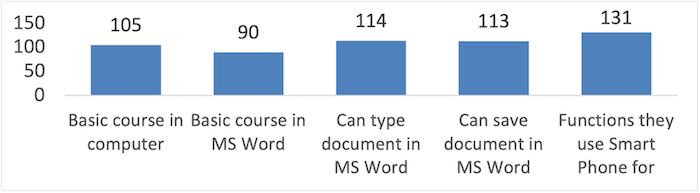
The findings showed that 105 respondents (77.7%) had attended a basic computer-use course, while only 90 (69.7%) had attended a basic MS Word course. Coupled with this were the basic functions for which they used their computer. Generally, apart from being able to type documents in MS Word (114 respondents) (84.4%) and save documents to a file (113 respondents) (83.7%), which can be regarded as simple tasks to those from a more advanced context, only slightly more than an average number of participants (50%) could perform other basic functions with a computer (such as web-browsing, troubleshooting and installing or downloading programmes).
This RQ was concerned with how the findings assisted the Unit to prepare for the virtual orientation programme. The findings from the survey (for instance, the students’ age profile, as reflected in Table 1 revealed the type and extent of support (e.g., getting more familiar with basic computer components, how their computer skills could be improved and introducing them to the LMS) needed by the respondents, especially given their age profile. Therefore, the findings from this study guided the content of the first support session. For instance, the ICT training content was modularised and changed to pre-downloaded material. Although the Unit had planned to organise decentralised contact session centres for the first support session, all the centres were moved online due to the Covid-19 pandemic. Despite some of the challenges encountered, especially with internet connectivity and students’ initial inability to log into the LMS, which support staff assisted them with, the participants indicated that they found the training very supportive in terms of getting more familiar with basic computer technology, improving their computer skills and introducing them to the LMS. In addition, the Unit organised clickUP catchup sessions to assist students with any questions they had regarding the university’s LMS.
The researchers also developed “How-2-guides” and uploaded them on the LMS for student use. Other forms of support were a helpline, virtual support, and email support. In addition, an arrangement was made with a local non-governmental organisation (NGO), Siyafunda, to assist students with basic digital literacy (as part of its Digital Literacy Campaign) in their environment. The Unit developed the material for this.
Lastly, a Provincial Quality Assurance Committee (PQAC), comprising key Unit staff members and stakeholders (e.g., the sponsors), was put together in the province. Its purpose was to enable the Unit to be proactive with the challenges that could arise in the programme.
From the background provided in the Context of the Study section above, interpreting the results in this section was guided by the following:
Table 2 presents emerging trends in the impact of the support structure.
Table 2: Emerging Trends in Student Performance
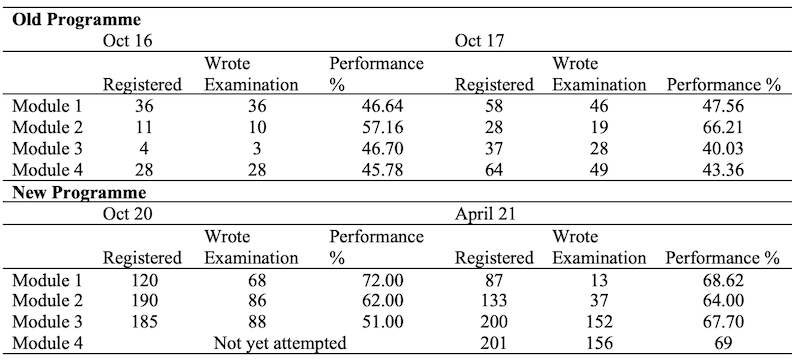
In Table 2, although the year-to-year differences in pass rates appear substantial at face value (between the old and new programme), it is important to recognise that statistical significance is not determined by the absolute percentage difference alone. The sample size in each year plays a crucial role in how much confidence we can place in an observed difference. The more reliable Fisher’s exact test was used for small samples while the two proportion z tests were applied whenever all cells had sufficiently large, expected counts (≥ 5). These tests together provide a robust evaluation of whether the differences in pass rates between years represent genuine changes in student performance rather than products of differing cohort sizes or random variation.
It should be noted that Module 2 showed no statistically significant differences across any pair of years, as all p values exceeded 0.05, indicating that fluctuations in pass rates were within the range expected by chance rather than reflecting meaningful changes over time. The statistically significant changes in pass rates across years were as follows:
For Module 1, two comparisons showed statistically significant improvements. The comparison between 2016 and 2020 yielded a test statistic of -2.502 with a corresponding p-value of 0.012, indicating a statistically significant increase in pass rates (from 44.64% to 72.00%). Similarly, the comparison between 2017 and 2020 produced a test statistic of -2.619 and a p-value of 0.009, again demonstrating a significant upward shift in performance (from 47.56% to 72.00%).
For Module 3, only one comparison was statistically significant between the old and the new programme: the difference between 2017 and 2021 resulted in a test statistic of -2.874 and a p-value of 0.004 (an increase from 40.03% to 67.70%).
In Module 4, the shift from 2016 to 2021 was significant, supported by a test statistic of -2.341 and a p-value of 0.019 (an increase from 45.78% to 69.00%). An even stronger effect was observed between 2017 and 2021, with a test statistic of -3.334 and a highly significant p-value < 0.001 (an increase from 43.36% to 69.00%). The Unit is currently monitoring this trend to support the assertion with additional data.
As this study focused on the first three levels of the SAMR Model (substitution, augmentation, and modification), the discussion of the findings in this section was guided by these levels.
Substitution Level
Although technology at the substitution level serves as a direct tool alternative, it represents no functional change (Puentedura, 2014). In relation to the researchers’ study, all learning material and other supporting documents (such as the Student Admin Booklet), which had previously been sent to students, were moved to the LMS. The advantages of this change were that the university could avoid the previous postal delivery bottlenecks experienced by students, while both parties saved money. In addition, communication that took place via clickUP, email or SMS (although the latter was previously used extensively) now fell within the substitution level of the SAMR Model. Nonetheless, as earlier asserted by scholars (Puentedura, 2014; Bicalho et al., 2023; Zulfiani, 2025), the use of technology at this level does not essentially influence pedagogy but, rather, could reflect traditional pedagogy with minimal impact on learning.
Augmentation Level
The augmentation level suggests that technology acted as a direct tool substitute, with functional improvement (Puentedura, 2009, 2014). In the researchers’ findings, this level impacted assessments, orientation, short contact, and support sessions, which were moved online. Assessment fell under the category of augmentation because the LMS served as a direct tool substitute for what was once paper-based and posted to students. What was a physical, face-to-face session, transitioned entirely online, utilising a feature on the LMS and Blackboard Collaborate. How-2-guides were shared with students in the form of a web link, which was not the case in the old programmes. The link was sent to students via SMS.
Also, the short contact sessions, which were replaced with virtual sessions on Blackboard Collaborate fell under the augmentation level of the SAMR Model. A functional improvement allowed students to interact with the presenter on the LMS during the session. Examples included the commonly used discussion forum, chat box and polls. In addition, these sessions were recorded, posted on the LMS, and accessible to students anywhere, at any time. At this level, technology enhanced pedagogy by strengthening content and encouraging student engagement but indicated only minuscule advancements (Bicalho et al., 2023; Radhi & Sabri, 2021).
Modification Level
At the modification level, technology allows for significant task redesign (Puentedura, 2009; 2014). At the institution level, assignments were redesigned, bringing about meaningful changes in student learning, resulting in the elimination of physical barriers, increased engagement, and greater student creativity (Ayu et al., 2023; Zulfiani et al., 2025). This means that the functionality and appearance of interacting with, training, and supporting students have been revised, reflecting a higher level of technology.
Kihoza et al. (2016, p. 108) describe the SAMR Model as an instrument for “assessing and evaluating technology practices and impacts in the classroom setting”, which can be examined at both the students’ and teachers’ levels. In this article, the researchers, in adopting the SAMR Model, moved beyond the model’s application to pedagogical content alone to support students’ overall experience. As indicated earlier, some scholars’ concerns include its failure to consider the context in which teaching and learning are situated, its unclear hierarchy and its inadequate research base (Blundell et al., 2022; Green, 2014; Hamilton et al., 2016; Nair & Chuan, 2021).
Regarding its failure to consider context, the researchers agree with the literature on the importance of context to learning. Context encompasses both physical-geographical and institutional location, knowledge field, occurrences order, action, historical time, social affiliation and a set of personal encounters (Dohn et al., 2018). Other aspects include technology infrastructure and resources, community buy-in and support, individual and collective student needs, and teacher knowledge and support (Hamilton et al., 2016). As reflected in this study, the participants’ context went a long way toward helping the researchers chart the way forward if the programme were to succeed.
Although accused of rigid hierarchical levels and emphasising product over process, the literature avers that the levels are not prescriptive (Drugova et al., 2021). Each one can be used based on the goal the user wants to achieve (Hilton, 2016).
Because attention should not be based solely on technology adoption but also on learning outcomes, the literature indicates much research has been done on the impact of the SAMR Model on student learning outcomes with positive evidence of more student engagement among their peers and facilitators, as well as critical thinking, creativity, collaboration and communication (Radhi & Sabri, 2021; Zulfiani, et al. 2025).
Lastly, although accused of lacking a research base (Green, 2014; Linderoth, 2013), the researchers of this study would like to contend that the SAMR Model is still in its infancy and has potential (Bicalho et al., 2023). As more research emerges, further systematic evidence should shed more light on its relevance.
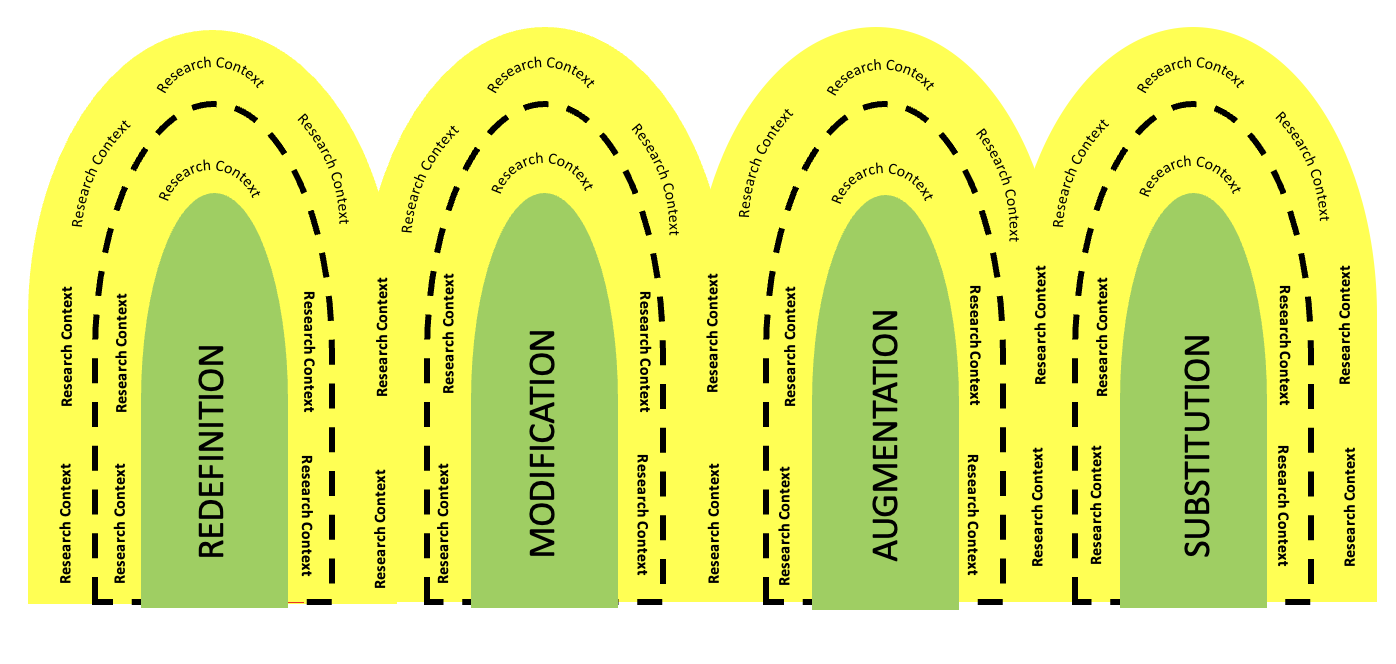
Based on all the above, the authors, in Figure 2, propose an adaptation of Puentedura’s model to users and researchers. In this figure, they attempt to provide answers to the earlier shortcomings that were identified by scholars: lack of context, a rigid hierarchical ladder, and a lack of research. The authors propose that context, research and processes should be regarded as formal aspects of the SAMR Model. They have also redesigned the model’s levels to remove the hierarchical structure and give its users more freedom to adapt what works for them. The broken lines in Figure 2 imply the freedom of users to move between levels, given the importance of the context in which teaching and learning are taking place, and of research to inform practice. However, this adaptation needs to be further explored and improved upon, and should not be regarded as another differing representation, as referred to by Hamilton et al. (2016).
The conclusion that can be drawn from this study is that it is not enough for DE providers to adopt technologies. Context is key and, therefore, there is a need to assess the readiness of students to use them; also, with proper support, DE providers would benefit immensely from monitoring the impact of the student support structures they put in place, while building the feedback from these into practice. In addition, an emerging trend from this study shows some level of improvement in student pass rates in comparison to an earlier paper-based programme at the same level; albeit there might have been other factors for these.
Although not new, recommendations from this study include the modularisation of the ICT training for enrolled students to simplify its content, the linking of Module 0 to the ICT training and the provision of pre-downloaded material to ease the burden of a poor internet connection, where these have not already taken place. These are all further research areas for web-dependent programmes in the developing context.
In addition, the researchers suggest an adapted SAMR Model that is still in its embryonic stage. Although mostly applied to the adoption of technology for pedagogical content, this study looks beyond this to apply it to the overall experience of student support with serious consideration for the context. This is very important for technology-enhanced learning in under-resourced contexts. The researchers are looking forward to collaborating with scholars from similar contexts to test the suggested adapted model, leading to further research and refinement.
Lastly, the limitations of this study are that further empirical research is needed to probe the relationship between student pass rates and the support strategies in place and their long-term impact. In addition, this study excluded the redefinition level of the SAMR Model, which the researchers hope to include at a later stage once students’ usage of technology matures to this level.
Adarkwah, M.A. (2022, December 10). By harnessing digital technologies, we safeguard education. University World News. https://www.universityworldnews.com/post.php?story=20221206070120932
Adeniran, A., Adedeji, A., Nwosu, E., Nwugo, E., & Nnamani, G. (2023). Ed-tech landscape and challenges in sub-Saharan Africa. (Occasional Paper No. 88). Southern Voice. https://southernvoice.org/wp-content/uploads/2023/12/SV_Ops-N88-Pre.pdf
Aluko, F.R. (2021). Evaluating student support provision in a hybrid teacher education programme using Tait’s framework of practice. Open Praxis, 13(1), 21-35. https://dx.doi.org/10.5944/openpraxis.13.1.1171
Annamalai, N., Ramayah, T., Kumar, J.A., & Osman, S. (2021). Investigating the use of Learning Management System (LMS) for distance education in Malaysia: A mixed-method approach. Contemporary Educational Technology, 13(3), ep313. https://doi.org/10.30935/cedtech/10987
Aprinaldi, A., Widiaty, I., & Abdullah, A.G. (2018). Integrating SAMR learning model in vocational education. IOP Conference Series: Materials Science and Engineering, 434(1), 012309. https://doi.org/10.1088/1757-899X/434/1/012309
Ayu, H.D., Saputro, S., & Mulyani, S. (2023). Reshaping technology-based projects and their exploration of creativity. Eurasia Journal of Mathematics, Science and Technology Education, 19(1), em2217. https://doi.org/10.29333/ejmste/12814
Baz, E.H., Balçıkanlı, C., & Cephe, P.T. (2018). Introducing an innovative technology integration model: Echoes from EFL pre-service teachers. Education and Information Technologies, 23(5), 2179-2200. https://doi.org/10.1007/s11423-022-10169-x
Bicalho, R.N.D.M., Coll, C., Engel, A., & Lopes de Oliveira, M.C.S. (2023). Integration of ICTs in teaching practices: Propositions to the SAMR model. Educational Technology Research and Development, 71(2), 563-578. https://doi.org/10.1007/s11423-022-10169-x
Blundell, C.N., Mukherjee, M., & Nykvist, S. (2022). A scoping review of the application of the SAMR model in research. Computers and Education Open, 3. https://doi.org/10.1016/j.caeo.2022.100093
Cáceres-Nakiche, K., Carcausto-Calla, W., Arrieta, S.R.Y., & Tupiño, R.M.L. (2024). The SAMR model in education classrooms: Effects on teaching practice, facilities, and challenges. Journal of Higher Education Theory and Practice, 24(2), 160-172. https://doi.org/10.33423/jhetp.v24i2.6816
Chipembele, M., & Bwalya, K.K. (2016). Assessing e-readiness of the Copperbelt University, Zambia: Case study. The International Journal of Information and Learning Technology, 33(5), 315-332. https://doi.org/10.1108/IJILT-12-2015-0036
Creswell, J.W., & Plano Clark, V.L. (2017). Designing and conducting mixed methods research (3rd ed.). Sage.
Dohn, N.B., Hansen, S.B., & Klausen, S.H. (2018). On the concept of context. Education Sciences, 8(3), 111. https://doi.org/10.3390/educsci8030111
Drugova, E., Zhuravleva, I., Aiusheeva, M., & Grits, D. (2021). Toward a model of learning innovation integration: TPACK-SAMR based analysis of the introduction of a digital learning environment in three Russian universities. Education and Information Technologies, 26, 4925-4942. https://doi.org/10.1007/s10639-021-10514-2
Eltaiba, N., Hosseini, S., & Okoye, K. (2025). Benefits and impact of technology-enhanced learning applications in higher education in Middle East and North Africa: A systematic review. Global Transitions, 7, 350-374. https://doi.org/10.1016/j.glt.2025.06.004
Frey, B.B. (2018). The SAGE encyclopedia of educational research, measurement and evaluation. https://dx.doi.org/10.4135/9781506326139.n209
Green, L.S. (2014). Through the looking glass: Examining technology integration in school librarianship. Knowledge Quest, 43(1), 36-43. http://link.galegroup.com.uproxy.library.dc-uoit.ca/apps/doc/A
Haßler, B., Nicolai, S., McBurnie, C., Jordan, K., Wilson, S., & Kreimela, A. (2020). EdTech and COVID-19 response. EdTechHub. https://docs.edtechhub.org/lib/QWFICPBX/download/P5TLUIML/Ha%C3%9Fler%20et%20al_2020_EdTech%20and%20COVID-19%20response.pdf
Hamilton, E.R., Rosenberg, J.M., & Akcaoglu, M. (2016). The substitution augmentation modification redefinition (SAMR) model: A critical review and suggestions for its use. TechTrends, 60, 433-441. https://doi.org/10.1007/s11528-016-0091-y
Heatherton, A., & Trespalacios, J.H. (2021). Examination of the SAMR model for effective technology integration through an adaptive leadership approach. i-Manager's Journal of Educational Technology, 18(3), 1. https://doi.org/10.26634/jet.18.3.18314
Hilton, J.T. (2016). A case study of the application of SAMR and TPACK for reflection on technology integration into two social studies classrooms. The Social Studies, 107, 68-73. https://doi.org/10. 1080/00377996.2015.1124376
Jhurree, V. (2005). Technology integration in education in developing countries: Guidelines to policy makers. International Education Journal, 6(4), 467-483. http://iej.cjb.net
Johnson, A.M., Jacovina, M.E., Russell, D.E., & Soto, C.M. (2016). Challenges and solutions when using technologies in the classroom. In S.A. Crossley, & D.S. McNamara (Eds.), Adaptive educational technologies for literacy instruction (pp. 13-29). Taylor & Francis.
Kihoza, P., Zlotnikova, I., Bada, J., & Kalegele, K. (2016). Classroom ICT integration in Tanzania: Opportunities and challenges from the perspectives of TPACK and SAMR models. International Journal of Education and Development Using Information and Communication Technology, 12(1), 107-128. https://docs.edtechhub.org/lib/L4PFXE4I
Laerd Dissertation. (2012). Total population sampling. https://dissertation.laerd.com/total-population-sampling.php
Lammers, W.J., & Badia, P. (2004). Fundamentals of behavioural research. Wadsworth.
La Fleur, J., & Dlamini. (2022). Towards learner-centric pedagogies: Technology-enhanced teaching and learning in the 21st century classroom. Journal of Education, 88(4). http://dx.doi.org/10.17159/2520-9868/i88a01
Linderoth, J. (2013, October 17). Open letter to Dr Ruben Puentedura. http://spelvetenskap.blogspot.com/2013/10/open-letter-to-dr-ruben-puentedura.html
Miglani, A., & Awadhiya, A.K. (2017). Mobile learning: Readiness and perceptions of teachers of open universities of Commonwealth Asia. Journal of Learning and Development, 4(1), 58-71. https://doi.org/10.56059/jl4d.v4i1.163
Nair, R.S., & Chuan, T.C. (2021). Integrating technology that uses modified SAMR model as a pedagogical framework in evaluating learning performance of undergraduates. The Educational Review, 5(10), 373-384. http://dx.doi.org/10.26855/er.2021.10.001
Puentedura, R. (2014). Building transformation: An introduction to the SAMR Model. http://www.hippasus.com/rrpweblog/archives/2014/08/22/BuildingTransformation_AnIntroductionToSAMR.pdf
Puentedura, R. (2009). As we may teach: Educational technology, from theory into practice. http://www.hippasus.com/rrpweblog/archives/000025.html
Radhi, R.I., & Sabri, D.A. (2021). The effect of the SAMR model on acquiring teaching skills for students of colleges of education in the subject of teaching applications. International Journal of Early Childhood Special Education, 13(2), 1289-1296. https://doi.org/10.9756/INT-JECSE/V13I2.211176
Rodriguez-Segura, D. (2021). Edtech in developing countries: A review of the evidence. The World Bank Research Observer, 37(2), 171-203. https://doi.org/10.1093/wbro/lkab011
Rotar, O. (2021). Online student support: A framework for embedding support interventions into the online learning cycle. Research and Practice Enhanced Learning, 17(2). https://doi.org/10.1186/s41039-021-00178-4
Salimi, F. (2025). Aligning policy and practice: The World Bank’s approach to edtech in Sub-Saharan Africa. Policy Futures in Education, 23(6), 1134-1156. https://doi.org/10.1177/14782103251324275
Scanlon, E. (2021). Educational technology research: Contexts, complexity and challenges. Journal of Interactive Media in Education, 1(2), 1-12. https://doi.10.5334/jime.580
Simpson, O. (2012). Supporting students for success in online and distance education. Routledge.
Tanner, K. (2018). Research methods: Information, systems and contexts (2nd ed.). https://doi.org/10.1016/B978-0-08-102220-7.00006-6
UNICEF. (2022). 1 in 3 digital learning platforms developed during COVID-19 no longer functional. https://www.unicef.org/press-releases/1-3-digital-learning-platforms-developed-during-covid-19-no-longer-functional
Wibawa, R.P., Wibawa, S.C., Susanti, M.D.E., & Sulistiyo, E. (2021). E-readiness measurement in the virtual application learning. Institute of Physics (IOP) Conference Series: Materials Science and Engineering, 1125, 012059. https://doi.org/10.1088/1757-899X/1125/1/012059
Yaraş, G., & Gündüzalp, S. (2021). E-readiness in the effectiveness of distance education: Importance, impact factors, and suggestions. The Quarterly Review of Distance Education, 22(3), 47-63. https://www.proquest.com/scholarly-journals/e-readiness-effectiveness-distance-education/docview/2640098346/se-2
Zulfiani, Z., Suwarna, I.P., El Islaml, R.A.Z., & Sari, I.J. (2025). Trends in SAMR research in teaching and learning from 2019 to 2024: A systematic review. International Journal of Advanced and Applied Sciences, 12(4), 99-106. https://doi.org/10.21833/ijaas.2025.04.012
Author Notes
Folake Ruth Aluko is a researcher with the Unit for Distance Education at the University of Pretoria. Tasked with ensuring the quality of distance education programmes, her current research focuses on student access and success, student support, quality management and enhancement, and teacher professional development. Email: ruth.aluko@up.ac.za (Corresponding Author) (https://orcid.org/ 0000-0003-0499-042X)
Mary Atieno Ooko is the Manager of the Unit for Distance Education at the University of Pretoria. She has experience spanning over thirty years in the teaching/teacher training field, and e-learning implementation. Her passion lies in ensuring technology enhanced teaching and learning fit into staff and student context. Email: mary.ooko@up.ac.za (https://orcid.org/ 0000-0001-7499-3103)
Zaheera Cassim was an E-learning Developer and Supporter with the Unit for Distance Education at the University of Pretoria. She designs and supports technology enhanced teaching and learning to inform decision-making. Email: zaheera.cassim@up.ac.za (https://orcid.org/0000-0002-3795-0427)
Marien Alet Graham is a full Professor (PhD Mathematical Statistics, Teacher Education) at the University of South Africa. Email: grahama@unisa.ac.za (http://orcid.org/0000-0003-4071-9864)
Cite as: Aluko, F.R., Ooko, M.A., Cassim, Z., & Graham, M.A. (2026). Evaluating the multifarious and complex nature of technology-enhanced learning in the developing context through the SAMR model. Journal of Learning for Development, 13(2), 215-229.