Farid Noor Romadlon, Slamet Setiawan and Syafi’ul Anam
2025 VOL. 12, No. 3
Abstract: This study examines the role of speaking e-portfolios in enhancing the well-being of non-English-major university students in Indonesia. The research was motivated by the growing need to integrate digital learning tools that not only support language proficiency but also promote students’ overall well-being in higher education. A mixed-method design was employed with 66 undergraduate students from Central Java. Quantitative data were collected using the Student Well-Being Model (SWBM) questionnaire, while qualitative insights were obtained through semi-structured interviews with nine participants. The statistical results indicated a high level of student well-being, with an overall mean score of 74.48. Across the SWBM dimensions, students reported strong Assets (76.5), positive Appraisals (78.8), and supportive Actions (68.15). The interview data reinforced these findings, revealing that students perceived e-portfolios as beneficial for sustained engagement with speaking activities, increased digital connectivity with classroom tasks, and opportunities for creative self-expression. The participants highlighted that regular e-portfolio use provided them with greater exposure to authentic speaking practice and encouraged consistent reflection on their progress. The study concludes that speaking e-portfolios can be an effective pedagogical strategy not only for improving speaking competence but also for fostering non-EFL students’ well-being in higher education. Practical implications are offered for educators seeking to integrate digital portfolios into language learning to promote both skill development and psychological well-being.
Keywords: student well-being, speaking e-portfolios, higher education, non-EFL learners
Student well-being has become a central concern in higher education, as it strongly influences engagement, retention, and achievement (Salami, 2010; Kioupi & Voulvoulis, 2019; OECD, 2017; van der Riet et al., 2015). Beyond physical and mental health, well-being in education also includes motivation, resilience, and a sense of belonging (Diener et al., 2018; Govorova, & Muñiz, 2020; Seligman, 2009; Soutter et al., 2012)). In language learning contexts, especially for students who are not English majors, these dimensions are often challenged by limited classroom exposure and fewer opportunities to practice authentic communication (Febriyanti, 2017; Johnson & Johnson, 2002; Kern, 2006; Saragih, 2018). Public speaking, in particular, is widely recognised as one of the most anxiety-inducing activities in second language acquisition (Dewaele & MacIntyre, 2016; Horwitz, 2010).
For many Indonesian undergraduates outside English departments, English learning often results in heightened performance anxiety, reduced confidence, and negative emotional experiences (Marwan, 2016). Post-pandemic changes in higher education have further emphasised digital and hybrid learning, which can either support or strain students’ well-being depending on how technologies are integrated (Bond et al., 2021; Silamut & Petsangsri, 2020; UNESCO, 2020)..
Digital tools such as e-portfolios offer a promising response to these challenges. They provide flexible spaces for students to record, review, and reflect on speaking practices (Barrett, 2007; Bergdahl et al., 2020; Georgi & Crowe, 1998; Hung, 2012). Such features may reduce performance anxiety, support self-regulated learning, and strengthen motivation. Yet, while e-portfolio use in English language education has been widely studied, little is known about its potential for promoting well-being among non-EFL students. Addressing this gap, the present study employs the Student Well-Being Model (SWBM) to examine how speaking e-portfolios shape non-EFL learners’ resources, perceptions, and actions in English acquisition.
This study is guided by two research questions:
Student well-being has become a central concern in higher education, as it relates to both psychological health and students’ ability to participate meaningfully in academic life (Dodge et al., 2012; La Guardia, 2009; Soutter et al., 2012). For non-EFL majors, learning English can be particularly challenging due to limited exposure, often reducing confidence and motivation (Lamia, 2019). Examining how English learning influences well-being thus provides insight into both emotional and academic development.
This study draws on the Students’ Well-Being Model (SWBM) by Soutter et al. (2012), which frames well-being through three interrelated dimensions: Assets (resources and supports such as tools, systems, and personal strengths), Appraisals (students’ evaluations of experiences, including confidence and comprehension), and Actions (behaviours that demonstrate the application of skills). Together, these elements provide a comprehensive framework for analysing student experiences. Applying SWBM enables this study to situate e-portfolio use within both affective and behavioural domains.
E-portfolios have been recognised as effective for promoting autonomy, reflection, and performance (Barrett, 2010; Chang et al., 2019). Unlike traditional assessments, they allow students to document progress, collect evidence of achievement, and engage in multimedia-based, student-centred learning (Ali, 2018; Efe, 2016; Kwak & Yin 2018). In speaking, e-portfolios encourage reflection, practice, and feedback, offering authentic opportunities beyond the classroom (Yastibas & Yastibas, 2015; beyond the classroom (Ayaz & Gök, 2023; Bensalem & Alenazi, 2023; Yastibas & Yastibas, 2015). Research studies highlight their motivational benefits, as students gain more control over learning, develop creativity, and enhance digital literacy—skills increasingly valued in higher education (Alexiou & Paraskeva, 2010; 2010; Dougherty & Coelho, 2017; Tosh et al., 2006).
Technology-rich environments such as e-portfolios can enhance well-being by reducing anxiety, increasing task interest, and broadening engagement opportunities (Abrami, 2005; Fava & Ruini, 2014; Hung, 2012). In the context of SWBM, e-portfolios might (1) strengthen Assets by providing digital tools and resources, (2) enhance Appraisals through self-assessment and progress tracking, and (3) stimulate Actions by encouraging active speaking practice. While previous research has shown that e-portfolios support language learning outcomes (Cepik & Yastibas, 2013; Hsu, 2016; Kusuma et al., 2021), little is known about their role in promoting well-being among non-EFL students. Moreover, explicit connections between speaking e-portfolios and SWBM dimensions remain underexplored.
The present study addresses this gap by investigating how speaking e-portfolios influence the well-being of non-EFL university students in Indonesia.
This study used an explanatory sequential mixed-method design (Creswell, 2012). Quantitative data were first collected via a structured questionnaire based on the Students’ Well-Being Model (SWBM) to measure overall and dimension-level well-being (Assets, Appraisals, Actions). Qualitative data were subsequently gathered through semi-structured interviews to illuminate the survey results and explain patterns observed in the quantitative data.
Participants were undergraduates enrolled in a required English course at a private university in Central Java (Faculty of Economics-Management). Two intact classes were invited to participate; 66 students volunteered and completed the study (mean age = 19.2 years; 60% female). All participants were familiar with digital devices but none had prior experience using e-portfolios for English learning. From the survey respondents, nine students were selected for interviews using a purposive approach intended to represent a range of self-reported speaking ability and gender, ensuring a broad spectrum of perspectives for the qualitative phase.
The speaking e-portfolio intervention took place across one semester (16 weeks). Students completed a series of speaking tasks (e.g., self-introductions, role-plays, short presentations) and uploaded recordings via Google Classroom with supporting YouTube links for archived audio/video. Both teacher and peers provided asynchronous feedback through the learning management system. The SWBM questionnaire was administered at the end of the semester; interviews were carried out after survey collection to follow up on emergent quantitative patterns.
In quantitative analysis, survey data were entered into SPSS (version 25). Analysis focused on descriptive statistics: item and scale means, percentages, and standard deviations to profile overall well-being and the three SWBM dimensions. Cronbach’s alpha was computed to assess internal consistency of the overall scale and each subscale. Results from these analyses guided the selection of interview topics and cases for the qualitative phase. Meanwhile in qualitative analysis, interview transcripts were analysed using an iterative thematic coding procedure adapted from Creswell’s six-step approach: (1) organising transcripts, (2) open coding, (3) constructing categories, (4) developing themes, (5) presenting findings with illustrative excerpts, and (6) validating accuracy. Coding was conducted manually and iteratively refined to align with the SWBM constructs and emergent pedagogical themes (e.g., autonomy, scaffolding). Selected interview excerpts appearing in the manuscript were translated into English by the researchers; translations were cross-checked during peer debriefing to ensure fidelity.
This section presents the results of both the quantitative questionnaire data (Students' Well-Being Model / SWBM) and the qualitative interview data. The objective was to furnish a thorough comprehension of the well-being of non-EFL students concerning their utilisation of speaking e-portfolios.
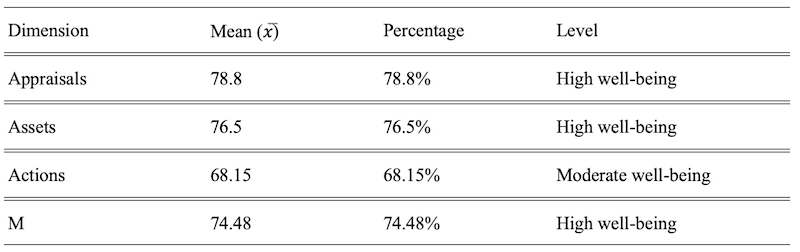
The Students' Well-Being Model (SWBM) questionnaire gave us the numbers we needed. It measured three primary things: Assets, Appraisals, and Actions. The average score for all 66 individuals was 74.48, which shows that they were in good health (Table 1).
These results suggest that students felt well-supported (Assets) and happy (Appraisals) about learning through e-portfolios. However, they needed more encouragement to keep practicing speaking on their own (Actions).
Table 1: Students’ Well-Being Scores
The data indicate that students reported a high level of well-being overall (74.48%) associated with their use of speaking e-portfolios. The most significant dimension was Appraisals (78.8%), suggesting that students positively perceived their competence, self-worth, and learning experience. Assets (76.5%) demonstrated significant levels, indicating that students utilised the resources, tools, and support provided to them. The Actions dimension (68.15%) was comparatively lower, indicating a moderate level of performance. This indicates that although students appreciated the speaking e-portfolio and acknowledged its advantages, they encountered difficulties in consistently implementing these practices outside the formal classroom setting. Figure 1 illustrates the distribution of students' well-being across three dimensions by visualising the mean scores of Appraisals, Assets, and Actions. This visual representation elucidates the relative strengths and weaknesses within the SWBM framework.
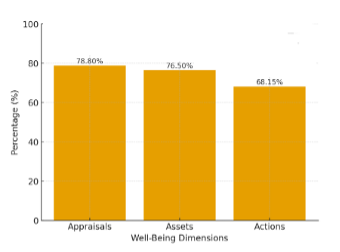
Figure 1 illustrates that Appraisals emerged as the most significant dimension, followed closely by Assets, whereas Actions exhibited comparatively lower outcomes. This pattern indicates that while students upheld positive self-perceptions and acknowledged available resources, their capacity to convert these into consistent learning actions was constrained. These findings reveal the importance of instructional methods that strengthen confidence and encourage sustained and engaged students’ participation in speaking activities. The internal consistency of each dimension in the Students’ Well-Being Model (SWBM) questionnaire was assessed using Cronbach’s Alpha to ensure its reliability. Table 2 indicates that the Cronbach’s Alpha coefficients for Appraisals (α = 0.84) and Assets (α = 0.81) were considered “good,” whereas the coefficient for Actions (α = 0.77) was regarded as “acceptable.” The values indicate that the instrument exhibited satisfactory reliability for the current study, making it appropriate for further analysis.
Table 2: Reliability of SWBM Dimensions (Cronbach’s Alpha)
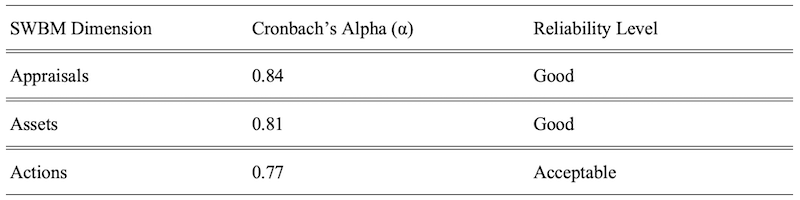
According to George and Mallery (2003), α ≥ 0.70 is considered acceptable, α ≥ 0.80 good, and α ≥ 0.90 excellent.
The reliability results enhance the validity of the findings, affirming that the students' reported perceptions of their well-being concerning speaking e-portfolio use were reliable.
Qualitative data obtained from semi-structured interviews with nine participants supplemented the findings from the questionnaire. Thematic analysis identified four primary themes that illustrate students' perceptions regarding the impact of the e-portfolio on their well-being and learning.
1. Improved Speaking Engagement
Students consistently indicated that e-portfolios offered increased opportunities for practicing speaking in relevant contexts. Recording and uploading their speaking tasks resulted in greater engagement compared to traditional classroom-only speaking practice:
I can practice my speaking skills at any time, not solely during class sessions. Recording facilitates repetition until I achieve a satisfactory outcome. (Participant 4)This demonstrates that e-portfolios enhance practice beyond classroom limits, leading to increased self-confidence and decreased anxiety.
2. Technology Integration in Education
The integration of e-portfolios with students' daily use of mobile phones and digital tools established a cohesive link between learning and technology. Students reported that they could readily access instructions, document tasks, and evaluate feedback through their personal devices:
My frequent use of my phone makes it a natural tool for learning. I do not experience pressure, and I appreciate the ability to review tasks at any time. (Participant 7)This finding indicates that e-portfolios improved accessibility and enhanced students’ sense of relevance in the learning process.
3. The Role of Creativity and Autonomy in Learning
Several students found that the e-portfolio format facilitated their creative exploration by enabling them to create visual presentations that complemented their speaking tasks. This opportunity for autonomy helped students to take greater responsibility for their own learning process.
I am capable of demonstrating creativity through both verbal communication and the incorporation of my own slides or videos. It seems that I am engaged in a project rather than merely completing an assignment. (Participant 2)These experiences correspond with well-being principles, emphasising that autonomy and creativity encourage intrinsic motivation.
4. Challenges in Maintaining Consistency and Self-Discipline
Students acknowledged that maintaining regular practice was challenging, despite the favourable elements. Some individuals experienced distractions from other online activities, whereas others exhibited a lack of self-discipline in the absence of direct teacher supervision.
At times, I lack motivation to record due to the absence of direct supervision from a teacher. Reminders are necessary. (Participant 9)This underscores the significance of scaffolding strategies in achieving a balance between independence and structured guidance.
This study examined the contribution of speaking e-portfolios to non-EFL students’ well-being and their perceptions of this tool in English courses. The findings suggest that e-portfolios function as psycho-technical scaffolds: they effectively enhanced affective and resource-related well-being (Appraisals and Assets) but had weaker influence on sustained practice behaviours (Actions). Speaking practice, reflection, and motivation emerged as major strengths.
The survey results using Soutter’s Students’ Well-Being Model (SWBM) showed the highest scores for Appraisals, followed by Assets, with Actions scoring lowest. This indicates that speaking e-portfolios primarily improved affective engagement and cognitive appraisals. Students reported reduced anxiety, more enjoyment, and a sense of progress. The ability to record and review performances fostered reflection and strategy awareness, consistent with studies highlighting that e-portfolios lower performance anxiety and support autonomy (Cepik & Yastibas, 2013; Huang & Hung, 2010). Unlike traditional classroom speaking activities, recordings made errors visible and useful for learning. Assets were also enhanced. Mobile LMS access, smartphones, and asynchronous peer and teacher feedback offered accessible resources and supportive interactions. This improved confidence and reduced fear, echoing Waters and Loton (2019). Technology extended learning beyond synchronous classes into asynchronous interactions, strengthening relational support essential for well-being.
Actions, however, were weakest. Students practiced more outside class than before, yet engagement remained inconsistent. Competing coursework, reliance on peers, and limited extrinsic motivation hindered routine practice. This aligns with broader findings in educational technology: resources and motivation must be paired with behavioural supports to sustain practice. Without prompts, progress tracking, or gamification, motivation may remain episodic rather than continuous. Thus, while e-portfolios supported emotional and resource well-being, their long-term behavioural impact was limited.
Interviews confirmed these findings. Students viewed e-portfolios as motivating, reflective, and supportive tools. They appreciated seeing tangible evidence of progress, which boosted self-efficacy. Autonomy in recording and practicing anytime enhanced ownership and motivation, aligning with self-determination theory (Niemiec & Ryan, 2009). The tool also facilitated meaningful peer and teacher interaction, reducing anxiety and building confidence. Such experiences resonate with SWBM’s emphasis on relational dimensions under Assets. Nonetheless, challenges emerged. Students cited time pressures, workload, and lack of structured guidelines as barriers to consistent use. While they valued e-portfolios, sustained action required stronger scaffolding. Positive perceptions alone did not guarantee regular practice.
Theoretically, this study extends the SWBM by showing that technology impacts well-being unevenly. E-portfolios strongly supported Appraisals and Assets but weakly influenced Actions, underlining the need for design strategies that convert resources and motivation into behaviours. Methodologically, the explanatory sequential mixed-method design enriched interpretation. Quantitative data highlighted which well-being dimensions were affected, while qualitative insights provided depth. Future studies should adopt stronger reliability testing, inferential statistics, and longitudinal approaches to examine the sustainability of well-being gains. Practically, the findings suggest design priorities. To strengthen Appraisals, guided reflection prompts and visible progress indicators should be included. To enhance Assets, mobile-first integration and timely feedback loops are essential. To address Actions, scaffolds such as reminders, micro-tasks, gamification, and peer accountability should be integrated to encourage sustained practice. These adjustments would enable e-portfolios to evolve from assessment repositories into dynamic platforms that enhance well-being and language skills.
This study relied on self-reports and descriptive statistics, which may not capture long-term engagement. Future research should combine LMS log data with self-reports and explore effects across different institutions. Longitudinal designs could clarify whether initial emotional benefits persist over time. Overall, speaking e-portfolios enhanced emotional engagement and access to resources, contributing positively to students’ well-being. Yet their behavioural impact was limited without additional scaffolding. The findings reposition e-portfolios as learning technologies that, with purposeful design, could support both language development and psychological well-being in non-EFL contexts.
This research investigated the impact of speaking e-portfolios on the well-being of non-EFL students and their perceptions of English language acquisition. Utilising the Student Well-Being Model (SWBM), the findings indicated that e-portfolios significantly improved students' emotional engagement and reflective capacity (Appraisals) while facilitating access to resources and social interaction (Assets). Nonetheless, their impact on sustained behavioural engagement (Action) was less significant, highlighting the necessity for further scaffolding to convert motivation into consistent practice. Interviews indicated that students found e-portfolios to be motivating, reflective, and socially supportive tools that facilitated progress monitoring and confidence building. The findings broaden the applications of the SWBM to technology-enhanced learning and emphasise the significance of design-level features in influencing well-being outcomes.
In conclusion, speaking e-portfolios serve as well-being-focused learning technologies that extend beyond assessment to enhance learner motivation, reflection, and connectedness. In ODL institutions, intentional design and behavioural supports are crucial for maximising language development and enhancing student well-being.
Funding: This work was supported by the Ministry of Education, Culture, Research, and Technology of Republic of Indonesia under Grant B/5120/UN38.III.1/LK.04.00/2023
Abrami, C.P., & Barrett, H. (2005). Directions for research and development on electronic portfolios. Canadian Journal of Learning and Technology, 31(3). https://cjlt.ca/index.php/cjlt/article/view/26487/19669
Alexiou, A., & Paraskeva, F. (2010). Enhancing self-regulated learning skills through the implementation of an e-portfolio tool. Procedia-Social and Behavioral Sciences, 2(2), 3048-3054. 10.1016/j.sbspro.2010.03.463
Ali, N.M. (2018). The potential of e-portfolio as an alternative assessment tool in an EFL context. International Journal of English Language and Literature Studies, 7(1), 1-11. https://doi.org/10.18488/journal.73.2018.71.1.11
Ayaz, M., & Gök, B. (2023). The effect of e-portfolio application on reflective thinking and learning motivation of primary school teacher candidates. Current Psychology, 42(35), 31646-31662.
Barrett, H.C. (2010). Balancing the two faces of eportfolios. Electronic Portfolios, 6-14. http://electronicportfolios.org/balance/balancingarticle2.pdf
Barrett, H. C. (2007). Researching electronic portfolios and learner engagement: The REFLECT initiative. Journal of Adolescent & Adult Literacy, 50(6), 436-449.
Bensalem, E., & Alenazi, F.H. (2023). Using speaking eportfolios to enhance oral English language skills among English as a foreign language students. Revista de Comunicación 'Vivat Academia', (156).
Bergdahl, N., Nouri, J., & Fors, U. (2020). Disengagement, engagement and digital skills in technology-enhanced learning. Education and Information Technologies, 25, 957-983.
Bond, M., Bedenlier, S., Marín, V.I., & Händel, M. (2021). Emergency remote teaching in higher education: Mapping the first global online semester. International Journal of Educational Technology in Higher Education, 18(1), 50. https://doi.org/10.1186/s41239-021-00282-x
Chang, C.P., Lee, T.T., Mills, M.E., & Hsieh, Y.P. (2019). E-portfolio functional requirements for the final semester baccalaureate practicum course: A qualitative research study. Journal of Professional Nursing, 35(5), 405-411. https://doi.org/10.1016/j.profnurs.2019.04.004
Cepik, S., & Yastibas, A.E. (2013). The use of e-portfolio to improve English speaking skill of Turkish EFL learners. The Anthropologist, 16(1-2), 307-317. https://doi.org/https://doi.org/10.1080/09720073.2013.11891358
Creswell, J.W. (2012). Educational research: Planning, conducting, and evaluating quantitative and qualitative research (4th ed.). Pearson Education, Inc.
Dewaele, J-M., & MacIntyre, P.D. (2016). Foreign language enjoyment and foreign language classroom anxiety: The right and left feet of the language learner. In Positive Psychology in SLA. Channel View Publications.
Diener, E. (2006). Guidelines for national indicators of subjective well-being and ill-being. Journal of Happiness Studies, 7(4), 397-404. https://doi.org/10.1007/s10902-006-9000-y
Dodge, R., Daly, A.P., Huyton, J., & Sanders, L.D. (2012). The challenge of defining wellbeing. International Journal of Wellbeing, 2, 222-235. https://doi.org/10.5502/ijw.v2i3.4
Dougherty, E., & Coelho, D. (2017). ePortfolios in English language learning: Perceptions of Arabic-speaking higher education students. Tesl-Ej, 21(3), n3.
Efe, H. (2016). Reflective portfolio assessment in an EFL context. The Anthropologist, 24(1), 157-163. https://doi.org/10.1080/09720073.2016.11892001
Fava, G.A., & Ruini, C. (2014). Increasing psychological well-being in clinical and educational settings: Interventions and cultural contexts. Cross-Cultural Advancements in Positive Psychology, 8. https://doi.org/https:// doi.org/10.1007/978-94-017-8669-0
Febriyanti, E.R. (2017). Identify analysis of the needs of English language learners (non-English study program) in ESP English courses in FKIP Universitas Lambung Mangkurat, Banjarmasin. Jurnal Vidya Karya, 32(2), 123-138.
George, D., & Mallery, P. (2003). SPSS for Windows step by step: A simple guide and reference, 11.0 update (4th ed.). Allyn & Bacon.
Georgi, D., & Crowe, J. (1998). Assessment and technology. Teacher Education Quarterly. http://www.jstor.org/stable/23478109
Govorova, E., Benítez, I., & Muñiz, J. (2020). How schools affect student well-being: A cross-cultural approach in 35 OECD Countries. Frontiers in Psychology, 11. https://doi.org/10.3389/fpsyg.2020.00431
Horwitz, E.K. (2010). Foreign and second language anxiety. Language Teaching, 43(2), 154-167. doi:10.1017/S026144480999036X
Hsu, H-C. (2016). Voice blogging and L2 speaking performance. Computer Assisted Language Learning, 29(5), 968-983. https://doi.org/https://doi.org/10.1080/09588221.2015.1113185
Huang, H-T.D., & Hung, S-T.A. (2010). Implementing electronic speaking portfolios: Perceptions of EFL students. British Journal of Educational Technology, 41(5), E84-E88. https://doi.org/10.1111/j.1467-8535.2009.00996.x
Hung, S.T.A. (2012). A washback study on e-portfolio assessment in an English as a Foreign Language teacher preparation program. Computer Assisted Language Learning, 25(1), 21-36. http://dx.doi.org/10.1080/09588221.2010.551756
Johnson, D.W., & Johnson, R.T. (2002). Learning together and alone: Overview and meta‐analysis. Asia Pacific Journal of Education, 22(1), 95-105. https://doi.org/https://doi.org/10.1080/0218879020220110
Kern, R. (2006). Perspectives on technology in learning and teaching languages. TESOL Quarterly, 40(1), 183. https://doi.org/10.2307/40264516
Kioupi, V., & Voulvoulis, N. (2019). Education for sustainable development: A systemic framework for connecting the SDGs to educational outcomes. Sustainability, 11(21), 6104. https://doi.org/10.3390/su11216104
Kusuma, I., Mahayanti, N.W.S., Adnyani, L.D.S., & Budiarta, L.G.R. (2021). Incorporating e-portfolio with flipped classrooms: An in-depth analysis of students’ speaking performance and learning engagement. JALT CALL Journal, 17(2), 93-111.
Kwak, Y., & Yin, J. (2018). Using electronic speaking portfolios for assessment in the EFL classroom: Students’ perspectives. 영어학, 18(4), 442-469. https://doi.org/10.15738/kjell.18.4.201812.442
La Guardia, J.G. (2009). Developing who I am: A self-determination theory approach to the establishment of healthy identities. Educational Psychologist, 44(2), 90-104. https://doi.org/https://doi.org/10.1080/00461520902832350
Lamia, D. (2019). The role of oral presentations in reducing EFL learner’s speech anxiety: The case study of second year EFL students at Mohamed Kheider University of Biskra. http://archives.univ-biskra.dz/bitstream/123456789/14845/1/The%20Role%20of%20Oral%20Presentations%20in%20Reducing%20EFL%20Learner%E2%80%99s%20Speech.pdf
Marwan, A. (2016). Students' language anxiety in learning English: Examining non-English major students in rural area. International Journal of Educational Dynamics, 1(1), 22-30. https://doi.org/10.33086/ijed.v1i1.21
Niemiec, C.P., & Ryan, R.M. (2009). Autonomy, competence, and relatedness in the classroom: Applying self-determination theory to educational practice. Theory and Research in Education, 7(2), 133-144. https://doi.org/https://doi.org/10.1177/1477878509104318
OECD (2017). Education at a glance 2017: OECD Indicators. OECD Publishing. http://dx.doi.org/
Salami, S.O. (2010). Emotional intelligence, self-efficacy, psychological well-being and students’ attitudes: Implications for quality education. European Journal of Educational Studies, 2(3), 247-257.
Saragih, T.Y., & Subekti, A.S. (2023). Integrative motivation and speaking achievement: A study of Indonesian L2 learners of English. LITERA, 22(3), 266-277. https://doi.org/10.21831/ltr.v22i3.65786
Seligman, M.E.P., Ernst, R.M., Gillham, J., Reivich, K., & Linkins, M. (2009). Positive education: Positive psychology and classroom interventions. Oxford Review of Education, 35(3), 293-311. https://doi.org/10.1080/03054980902934563
Silamut, A., & Petsangsri, S. (2020). Self-directed learning with knowledge management model to enhance digital literacy abilities. Education and Information Technologies, 25(6), 4797-4815.
Soutter, A.K., O’Steen, B., & Gilmore, A. (2012). Wellbeing in the New Zealand curriculum. Journal of Curriculum Studies, 44(1), 111-142. https://doi.org/https://doi.org/10.1080/00220272.2011.620175
Tosh, D., Light, T.P., Fleming, K., & Haywood, J. (2006). The learning landscape: A conceptual framework for e-portfolios. The Joint Information Systems Committee (JISC). https://doi.org/10.13140/RG.2.2.29854.74567
UNESCO (2020). Education in a post-COVID world: Nine ideas for public action. United Nations Educational, Scientific and Cultural Organization. https://www.unesco.org/es/open-access
van der Riet, P., Rossiter, R., Kirby, D., Dluzewska, T., & Harmon, C. (2015). Piloting a stress management and mindfulness program for undergraduate nursing students: Student feedback and lessons learned. Nurse Education Today, 35(1), 44-49. https://doi.org/10.1016/j.nedt.2014.05.003
Waters, L., & Loton, D. (2019). SEARCH: A meta-framework and review of the field of positive education. International Journal of Applied Positive Psychology, 4, 1-46. https://doi.org/https://doi.org/10.1007/s41042-019-00017-4
Yastibas, A.E., & Yastibas, G.C. (2015). The use of e-portfolio-based assessment to develop students’ self-regulated learning in English language teaching. Procedia-Social and Behavioral Sciences, 176, 3-13. https://doi.org/https://doi.org/10.1016/j.sbspro.2015.01.437
Author Notes
Farid Noor Romadlon is a PhD candidate in the Department of Language and Literature, Surabaya State University, Indonesia. He is interested in Applied Linguistics (in ELT), especially with regard to Speaking and some of his research has been conducted in that area, specifically for EFL students. Email: farid.22016@mhs.unesa.ac.id (https://orcid.org/0000-0001-9541-8757)
Slamet Setiawan is a Professor in the English Department, Faculty of Languages and Arts, Surabaya State University, Indonesia. His research interest is in Linguistics and Applied Linguistics (English Language Teaching). His works have appeared in Heliyon, Asian EFL Journal, Asian ESP Journal, GJAT: Global Journal of Al-Thafaqah, 3L: Language, Linguistics, Literature, LLR: Language Related Research, TESOL International Journal, XLinguae, and CALL-EJ. Email: slametsetiawan@unesa.ac.id ((https://orcid.org/0000-0003-4143-8757)
Syafi’ul Anam is an associate professor in the English Department of Surabaya State University, Indonesia. He has been teaching courses in academic writing, language assessment, and materials development. His primary research interests are self-regulated learning, self-efficacy beliefs, and assessment in EFL contexts. Email: syafiul.anam@unesa.ac.id (https://orcid.org/0000-0002-4687-856X)
Cite as: Romadlon, F.N., Setiawan, S., Anam, S. (2025). Speaking e-portfolios and non-EFL students’ well-being: Evidence from Indonesian higher education. Journal of Learning for Development, 12(3), 624-635.