Harikrishnan Ranganathan, Saravana Kumar, Shobha Sharma, Chua Siew Kuan, Nabilah Binti Ahmad, Kamalambal Harikrishnan and Devinder Kaur Ajit Singh
2025 VOL. 12, No. 3
Abstract: Online learning has become an integral part of higher education, but many online courses fail to meet undergraduates' expectations, leading to high attrition rates. In this study, we explored physiotherapy undergraduates’ (PTUGs) expectations of online courses. A qualitative study was conducted using purposive sampling among PTUGs from four universities. Five focus group discussions were conducted, involving 34 PTUGs. Thematic content analysis identified main themes, including motivation to complete the course, pre-course training, content delivery methods, the role of course facilitators, course communication, and evaluation strategies. PTUGs' expectations for practical topics, varied in terms of course content and delivery. They preferred online courses with multiple components tailored to their needs. The use of videos for content delivery and conventional methods for skill evaluation were the most preferred approaches. The findings of this study could inform the design and development of future online courses in physiotherapy.
Keywords: online course, physiotherapy undergraduates, expectations, focus group discussions
Online learning has surged in popularity in recent times, driven by the Covid-19 pandemic. An online course refers to a course where all content is delivered online. Effective online courses present an innovative solution to address challenges in physiotherapy education by enabling creative and efficient content delivery (Bojić et al., 2022). They help mitigate the shortage of qualified faculty (Yahya et al., 2019) and equip undergraduates with the necessary skills to navigate complex clinical environments (Major et al., 2020).
A survey among physiotherapy undergraduates (PTUGs) highlighted dissatisfaction and lack of engagement with online learning (Chesterton et al., 2022). Similarly, other challenges reported in the literature include high dropout rates (Christensen & Spackman, 2017), technical difficulties (Mahyoob, 2020), poor student engagement (Khan et al., 2017), and lack of motivation (Muflih et al., 2021). The precise reasons for the above challenges in online courses were unclear but it might be that the courses do not meet the learners’ needs (Ranganathan et al., 2021).
Therefore, considering students’ expectations before developing an online course could be part of the solution (Bourdeaux & Schoenack, 2016; Wieser et al., 2017). This may improve students’ satisfaction (Bourdeaux & Schoenack, 2016; Li et al., 2018), help achieve desired learning outcomes (Fadzil et al., 2015; Pei & Wu, 2019; Zheng et al., 2015) and reduce dropouts (Wieser et al., 2017). Understanding user expectations may also aid in developing courses tailored to the preferences and learning styles of Generation Z and digital natives (Mohd Ishak et al., 2022). A comprehensive review of online courses, including curriculum structure and design, and considering students’ psychological well-being during online learning, has been recommended for effective delivery (Ghazali et al., 2022). Moreover, it has been recommended that educators consider all optimal methods of content delivery when utilising online platforms for physiotherapy students, ensuring the approach aligns with their learning needs (Chesterton et al., 2022).
Such information is crucial for developing evidence-based teaching and learning methods that could contribute to the success of online learning (Romli et al., 2022). Furthermore, the expectations of PTUGs regarding online courses have not been explored to date.
The objective of this study was to explore the expectations of PTUGs about online courses, focusing on motivational factors, content delivery, and evaluation methods. The research questions for this study were:
Students have complex, multidimensional (Henry, 2020), and high-level expectations towards online courses/learning. A study among Malaysian undergraduates of education programmes also inferred a high degree of expectations towards online learning. It was postulated that a high level of expectations would have a detrimental effect on students' satisfaction (Umbit & Taat, 2016).
With regard to students’ expectations about online courses, studies have explored various aspects such as online management systems (Chaw & Tang, 2017), curriculum (Henry, 2020), course content (Bourdeaux & Schoenack, 2016), interactions with peers and facilitators (Ragusa, 2017), and motivational factors (Bovermann et al., 2018; Henry, 2020). However, information on expected motivators, pre-course training, delivery methods, course duration, mode of content delivery, and course evaluation is limited. For instance, research within Malaysian contexts has mainly relied on surveys (Mat et al., 2021), lacking the first-hand experiences of undergraduates.
There was no difference in these expectations based on gender. The students' expectations towards online learning were noted to be different during the commencement of the course and during the progression of the course. It must be noted that most of these studies involved university students, and their level and programme was not specified, except in a few studies (Mat et al., 2021).
Most of the available studies inferred expectations via surveys or other quantitative methods, except for a few studies that used qualitative methods, such as in-depth interviews (Bourdeaux & Schoenack, 2016; Henry, 2020) and focus group discussions (Lin, 2022). Available studies among Malaysian students (Mat et al., 2021) are quantitative in nature. A literature search related to PTUGs’ expectations towards online courses was conducted in MEDLINE (thru PubMed), Scopus, EBSCOhost, ScienceDirect and Google Scholar. The included studies were articles published in English and during the previous five years (2019-2024). The Population Interest and Context (PICo) model for qualitative studies (Murdoch University Library, 2022) was used to formulate the strategies. However, we were unable to identify any studies that specifically explored the expectations of PTUGs regarding online courses.
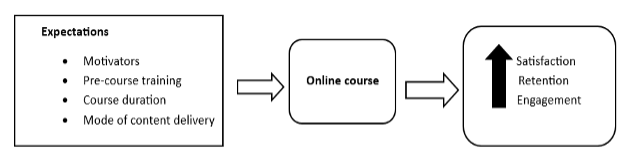
Addressing and incorporating expectations during the development of online courses for undergraduates could significantly improve satisfaction and engagement, ultimately leading to higher retention rates. This concept forms the basis of the study's framework, as illustrated in Figure 1.
A qualitative research approach utilising focus group discussions (FGDs) was employed for this study. FGDs were chosen for their ability to capture participants' views empathetically (Hammarberg et al., 2016) and provide a comprehensive understanding (Ismiyani et al., 2024). FGDs facilitate the exploration of issues, revealing the social and interconnected nature of knowledge rather than individual narratives (Nyumba et al., 2018). The reporting of this research adhered to the consolidated criteria for reporting qualitative research (COREQ) checklist (Tong et al., 2007). The ontological stance adopted was constructionism, presupposing the existence of expectations among undergraduates regarding online course design. Similarly, the epistemological stance was interpretivism, aiming to understand undergraduates' expectations as voiced in the group discussions (Al-Saadi, 2014). It was anticipated that undergraduates' expectations would be influenced by their learning characteristics and prior exposure to various digital teaching and learning initiatives.
The sample population was comprised of PTUGs from four universities in Malaysia (two private and two public), selected through purposive sampling. The selection criteria included all PTUGs from years 2-4 who volunteered to participate in the FGDs.
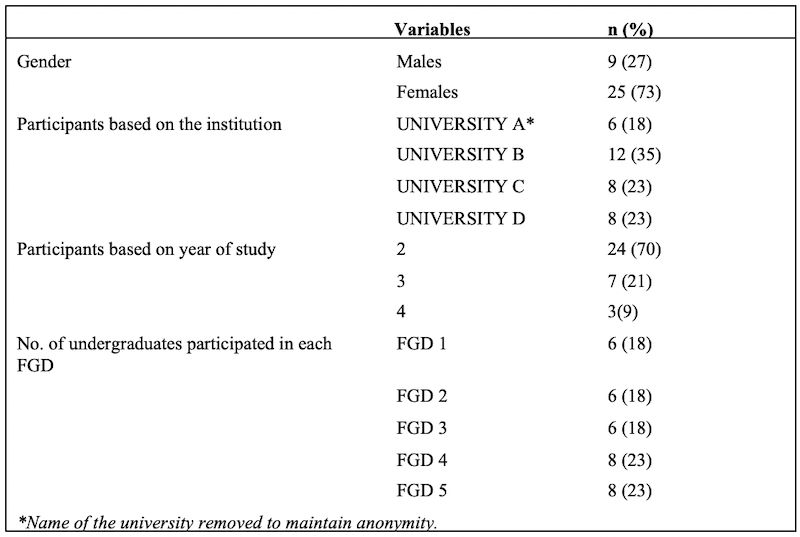
Thirty-four (34) PTUGs participated in this study. The first four FGDs were conducted in each institution, and consistent findings were reported by the fourth FGD. To confirm data saturation, a fifth FGD was conducted in one of the four institutions. Participants' demographic information was descriptively analysed (Table 1).
Table 1: Undergraduates’ Demographic Information Summary
A structured open-ended proforma question was developed by the first author (see Appendix 1) and reviewed by the corresponding author. Additionally, an external reviewer evaluated the proforma for further validation. To ensure that the PTUGs could comprehend the questions effectively, a pilot FGD session was conducted.
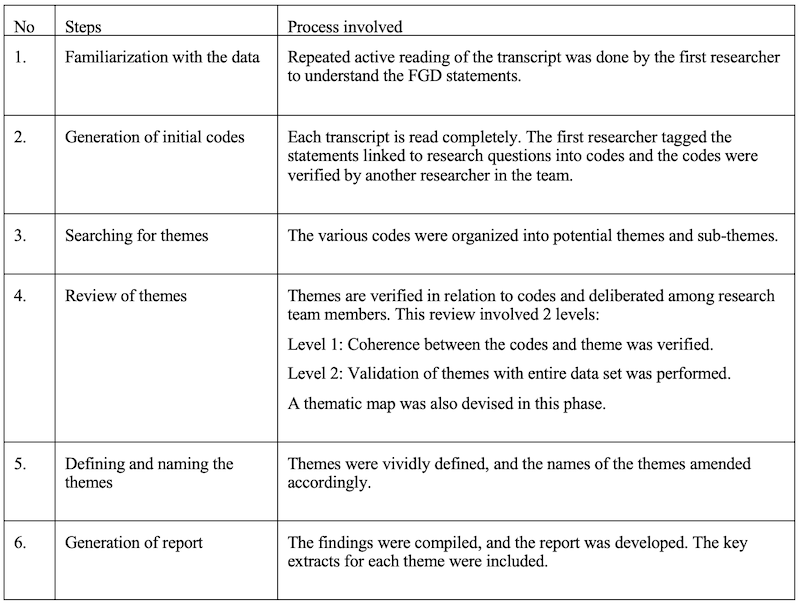
FGDs were conducted in private spaces within the respective institutions, moderated by the first author, with two co-moderators present. The FGDs were audio-recorded, transcribed verbatim, and analysed using thematic content analysis (TCA) in NVivo software version 2020 (Braun & Clarke, 2006). Rigour and trustworthiness were ensured through member checking, collecting field notes, verification of transcripts, and multiple coding (see Appendix 3). Participants verified their transcripts, field notes were reviewed by participants and another co-moderator, and transcription accuracy was verified against audio recordings. Coding was deliberated among co-authors, enhancing the study's rigour (Birt et al., 2016; Kamsan et al., 2020).
Ethical approval was obtained from the Research Ethics Committee, Universiti Kebangsaan Malaysia (UKMPPI/III/8/JEP-2019-810). Permission to conduct the study among undergraduates was obtained from the respective faculty deans. Individual consent was obtained from all participants, and participation was voluntary with confidentiality assured.
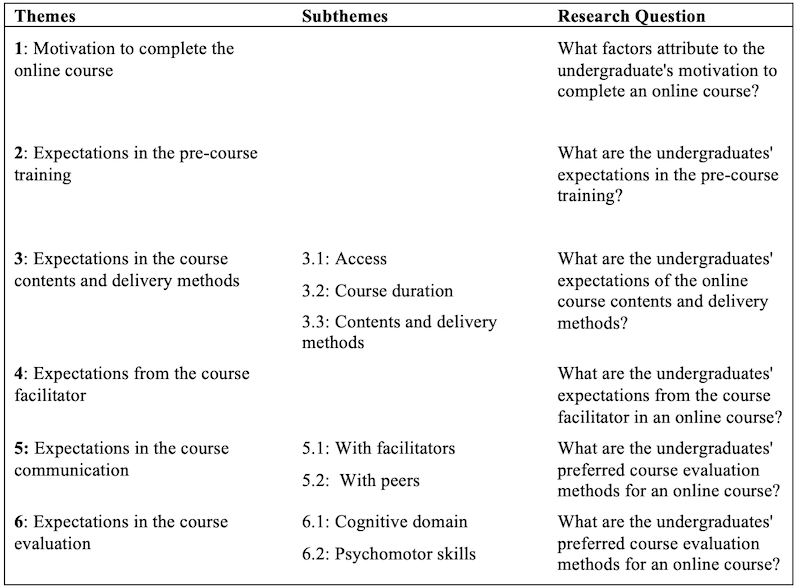
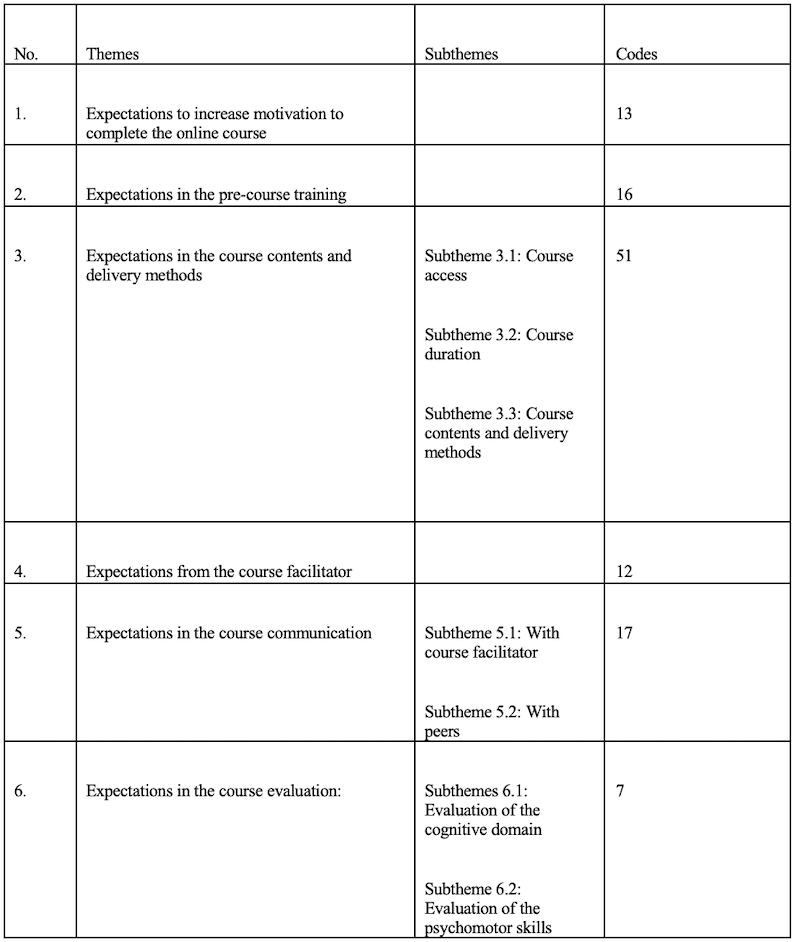
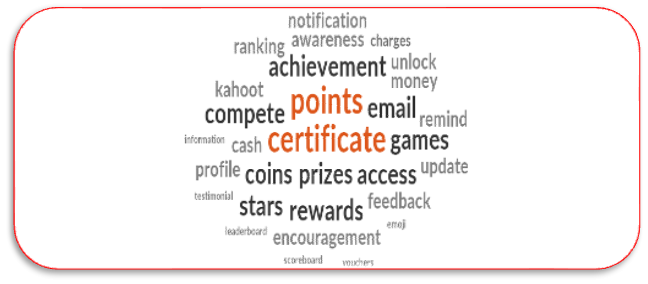
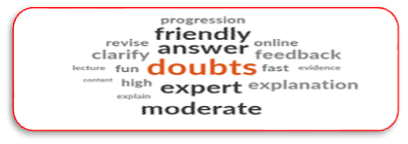
Word clouds were generated for each theme and subtheme to illustrate the findings (see Appendix 4). Main themes and subthemes inferred in the FGDs, are summarised in Table 2. The themes and subthemes were linked to the corresponding research question to which they provided relevant answers. The findings have been presented along with the subsequent research question.
Table 2: Themes, Subthemes from the FGDs and Corresponding Research Question
This theme highlights the preferred motivators aimed at enhancing undergraduates' motivation to complete an online course. The majority of undergraduates expressed a preference for extrinsic motivators, and most commonly reported was displaying each student's progression to foster healthy competition among peers, followed by rewards and the provision of course completion certificates. Other favoured extrinsic motivators included promoting student achievements on social media, enhancing profile characteristics through accumulated rewards, sending reminders, and collecting fees from students to enrol in the online course.
In terms of intrinsic motivators, undergraduates preferred the presentation of testimonials from course alumni, adequate technical support, settings to unlock new content upon completion of provided materials, and offering online courses during the break periods of regular classes:
F3P5: If the achievements done by the students posted in the social media, then their group members will know the achievement, so they feel motivated.
F3P2: May be a profile character, maybe some people want to be anonymous in the online course.
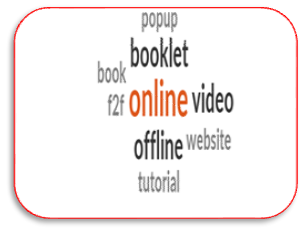
This theme revealed the expectations of undergraduates regarding pre-course training before enrolling in an online course. Many undergraduates expressed a lack of preference for any pre-course training, suggesting their readiness and confidence to engage in online courses without additional preparation. Among those who favoured pre-course training, there was nearly equal preference for either online or face-to-face modes. Interestingly, some undergraduates indicated a preference for an active or exploratory learning approach to understand the course. Suggestions for active exploration of online courses included the provision of a pop-up box on the course website to guide users, a trial session to explore the course, and a compilation of frequently asked questions with answers about the online course:
F1P2: May be just like a pop-up box when you open the website.
F2P3: Maybe we can have a trial class or session.
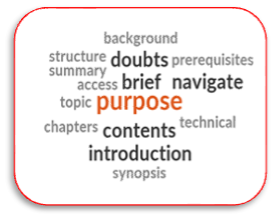
Most undergraduates preferred to have a course synopsis or summary followed by methods of access or course navigation in the pre-course training. One undergraduate favoured obtaining information about the educator, whereas another undergraduate preferred details such as the time frame and course prerequisites:
F3P5: … In the pre-course training, purpose of the course should be included.
F3P6: Prerequisites or basic sciences about the topic like anatomy which we have to know to pursue the online course, can be included in the pre-course training.
This theme addressed undergraduates' expectations regarding the duration of course access, contents, and delivery methods. Undergraduates had many expectations regarding course content and delivery mode.
Subtheme 3.1: Course Access
The majority of students preferred to access online courses via mobile phones. At the same time, many favoured its delivery through mobile phones and desktop versions so that they could access it in both ways. Very few undergraduates favoured accessing the online course on their tablets. One undergraduate highlighted that online courses should be user-friendly in technical and content aspects:
F2P4: Mobile is with us every time. So easier to use.
F2P5: I prefer both (desktop and mobile version).
Subtheme 3.2: Course Duration
Although many undergraduates preferred a flexible duration to complete online courses, most were willing to spend a maximum of 4-6 hours per week on an online course in addition to their regular schedule.
Subtheme 3.3: Expectations in Course Contents and Delivery Methods
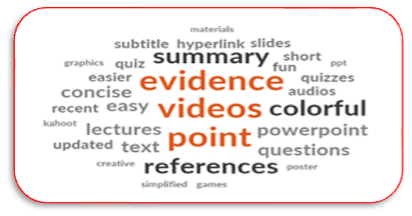
There were diverse expectations regarding course contents. Many preferred to have recent evidence-based information and sources provided in an online course, along with simple, easy, and concise content. However, a few preferred the inclusion of games, tutorials, quizzes, and shortcut tips to help memorise crucial points in the course contents:
F3P2: What I expect from the online course is the up-to-date evidence-based between 3 to 5 years and unbiased, because some time it may be biased thru personal preference.
F4P6: For me I think the format of the content should be simplified and it should lead us to the ‘Read more’ for detailed information.
Videos were the most preferred mode of content delivery, followed by multimodal presentations and pictures:
F5P5: I want both video and words, but it cannot be lengthy sentences like essay. It should be in points.
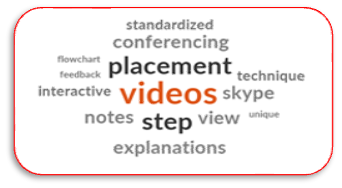
Videos have been identified as the preferred mode of content delivery for skill-based (practical) topics. However, additional requirements for videos include interactivity and clear views for therapist hand placements. Other preferences for content delivery for skill-based topics include online video demonstrations and step-by-step flow charts. One undergraduate favoured case studies, while another preferred periodic face-to-face demonstrations for content delivery. Simultaneously, some undergraduates emphasised the inclusion of standardised techniques and unique exercises for practical topics.
F2P1: I prefer two-way interactive video, that is after video we have video conferencing sessions to correct their mistakes and clarify the doubt.
F4P4: I think it is better to give in the flow charts because if I am looking into the video, I may miss some certain step. if I read the step-by-step flow chart can get confident.
This theme elucidated the diverse expectations of the undergraduates towards the CF in an online course. This ranged from major to minor roles. Most of the undergraduates expected the CF to clarify their doubts in the online course. Other expectations included checking their progress, providing feedback, demonstrating practical skills, and revising completed topics. Being a friendly person and a subject expert was also highlighted. Some of the undergraduates stressed that the CF should be available at all times and provide fast responses. However, one undergraduate preferred the CF to be available during dedicated times:
F5P6: The facilitator can available 24 hours.
F4P5: … He should be the subject expert to answer our skill-based questions.
This theme summarises undergraduates' expectations regarding the mode of communication with peers and their CF in the online course. They prefered to contact the CF through a multiple chat system. Additionally, some undergraduates also preferred live online interaction and email communication with the CF. Conversely, most of the undergraduates voiced their preferences towards online chat boxes/forums to communicate with peer members. Very few undergraduates preferred WhatsApp group chat, Facebook, and video chat to communicate with peers:
F4P4: I prefer chat room with facility to message, voice and video call with classmates and facilitator.
F2P1: For me a two-way conference but the conference via Facebook or any social media like any forum or platform to communicate in two ways.
This theme uncovered the undergraduates' expectations for course evaluation in the online course for the cognitive and psychomotor domains.
Subtheme 6.1: Expectations in the Evaluation of the Cognitive Domain
Most of the undergraduates preferred online-based tests for knowledge (cognitive domain) evaluation. Very few undergraduates preferred face-to-face exams for the same. There was more inclination towards multiple-choice questions (MCQ). Some of the undergraduates suggested having an MCQ quiz after each topic and a major MCQ quiz at the end of the course:
F3P3: I prefer MCQ quiz because if we write our own answer, the moderator cannot understand our answer.
F3P2: I prefer a quiz after every lesson.
Subtheme 6.2: Expectations in the Evaluation of Psychomotor Skills
More than three-fourths of the undergraduates preferred a conventional objective structured practical examination (OSPE) or objective structured clinical examination (OSCE) for psychomotor skills evaluation. They claimed that a conventional OSPE/OSCE provides instant feedback and that online skills evaluation might lack real experience. Conversely, approximately one-fourth of them preferred the online mode of skills evaluation.
F3P4: May be with more technology (like Virtual Reality mode) we can conduct practical exam online. But with this technology we have now, it is better to do traditionally.
F2P1: I prefer online mode as it is less stressful.
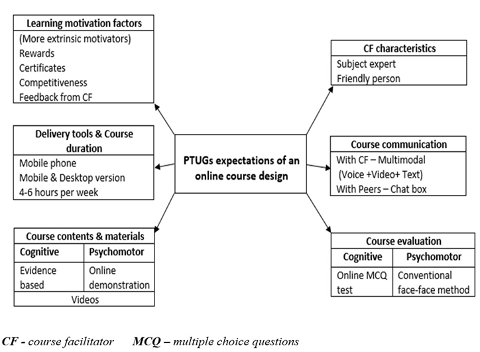
The summary of the PTUGs’ expectations of online courses in our study is outlined in Figure 2.
The results of this study could be valuable for physiotherapy education stakeholders as they navigate course design and development. In this research, we aimed to explore PTUGs’ expectations about online courses. Undergraduates in our study were noted to be prone towards extrinsic motivators. These findings are consistent with a recent study that identified extrinsic motivation as a predominant type of academic motivation among PTUGs (Selvakumar et al., 2022). Similar results were demonstrated among postgraduates in Turkey (Selvi, 2010) and the United States (Lee & Martin, 2017). The above finding clearly indicates the need for more inclusion of extrinsic motivators for undergraduates involved in online courses (Gonța & Tripon, 2021).
However, a survey among public university physiotherapy and rehabilitation students in Turkey notably reported that 21.5% of students lacked intrinsic motivation towards online learning (Dogru et al., 2022). This clearly implicates that there is a need for intrinsic motivators as well. Offering a combination of intrinsic and extrinsic motivators in online courses is recommended. This recommendation is based on the understanding that individuals may struggle to sustain motivation with only one type, as various factors such as time and situation can influence an individual's motivation (Ramalingam & Kee Jiar, 2022). Pre-course training prior to an online course was not a necessity, as echoed by the undergraduates in our study. This is probably due to their moderate to higher levels of readiness towards online learning (Ranganathan et al., 2021). In addition, these undergraduates were categorised as Gen Z, who are digital natives (Prensky, 2001) and, hence, may perceive that they are confident in easily navigating online platforms (Mosca et al., 2019).
The preferred tools to access the online course among our participants were mobile phones. Similar results were reported in a previous study in India (Muthuprasad et al., 2021). This is supported by the fact that most of the undergraduates used smart phones to complete their learning tasks (Tang & Lim, 2013). Interestingly, there was also a preference for both desktop and mobile versions of online courses among undergraduates This would be for sequential or simultaneous use of multiple devices (Shaw, 2017). Regarding the duration of the online course, the majority of the undergraduates supported a maximum of 4-6 hours per week. This is likely because students might have had other courses that they needed to complete as part of their programme of study. Moreover, a longer duration of an online course has been reported to be one of the reasons for non-success in terms of academic grades (Fetzner, 2013). Moreover, avoiding longer duration online classes could enhance learners’ productivity (Muthuprasad et al., 2021).
Other findings from our study included higher expectations for course content delivery, which, in line with previous reports (Casanova & Paguia, 2021; Li et al., 2018), indicated a preference for videos, multimodal methods, and various other methods. A correlation between students’ expectations, and course structure (Gray & DiLoreto, 2016) has been highlighted previously. Thus, catering to undergraduates’ expectations could lead to overall satisfaction with the course content. Undergraduates in our study preferred information that was supported by current research evidence. This is important, as evidence-based health care learning can assist in consolidating and applying skills and knowledge (Schoonees et al., 2017) as well as evidence-based practice (Mwololo et al., 2021).
There was a higher preference for videos in the delivery of online course content for both general content and skill-based topics. Videos are superior for psychomotor skills, as their speed can be slowed for detailed and repeated viewing, in addition to having the option to pause for individual needs (Brecht, 2012).
Regarding the role of the CF, the majority of the undergraduates agreed that the CF should only have a minor to moderate role but should be a subject expert. This suggests undergraduates are confident in online self-learning and might only need support for subject-related queries. Encouraging self-directed learning among students is vital to travel on the wave of Education 4.0 (Wai Yee & Cheng Ean, 2020). Conversely, a survey among undergraduates in Malaysia relayed higher expectations from the CF in addition to providing motivation for online courses (Harun et al., 2012). The shift for support pertaining to the subject matter rather than technical guidance can be supported by previous studies showing online learning readiness and internet self-efficacy among students (Asfar & Zainuddin, 2015; Chung et al., 2020). Similarly, a survey among college students in China also reported their preference for the CF to be knowledgeable in the subject matter (Lin, 2022). A survey among physiotherapy students in Jordan inferred CF support as one of the influencing factors for their satisfaction in distance learning mode (Etoom et al., 2023), hence the above expectations towards CF have to be diligently considered when designing an online course.
It is noteworthy that different modes of communication requests were shown with CF and peers. Undergraduates preferred multimodal chat systems to communicate with the CF. Although peer interaction was reported to be lacking during online learning (Harithasan et al., 2022), an online chat box to communicate with peers was considered sufficient in our study. Similar findings were reported in the literature (Martin et al., 2020). In addition, the undergraduates expected the CF to be easily reachable online, which is similar to the findings of a previous study among Malaysian undergraduates, who expected quick responses to their queries (Nafrees, 2021). This may suggest that undergraduates perceive that good communication with the CF is crucial in the online learning environment, which is similar to the findings of a study among Malaysian students (Mokhtar et al., 2020).
The findings also indicate that undergraduates preferred conventional OSPE or OSCE in a face-to-face mode for practical skills evaluation. This might be due to opportunities for instant feedback and lack of experience in an online environment for practical exams. However, the online mode was favoured and perceived to be less stressful for the evaluation of knowledge. This contradicts the findings from a recent study among first-year medical students, where the traditional mode of assessment was preferred for knowledge assessment. However, the participants in that study reported that the online mode of examination lessened examination-related anxiety (Ghosh & Sarkar, 2022). Similarly, in another study among undergraduates in Malaysia, it was reported that the online mode enhanced confidence during the presentation, especially among students with low self-esteem (Nasiha et al., 2021). Further studies are required to explore the psychological benefits of online compared to face-to-face modes of evaluation in the future.
It is believed that if the expectations expressed by the PTUGs have been addressed appropriately, it could enhance their satisfaction and completion rate of online courses. Consequently, it would reduce the differences in physiotherapy practice and improve the quality of physiotherapy practice. Some of the expectations inferred in this qualitative study can also be used in the courses designed for continuous professional development activities involving physiotherapists. All the participants in this study belonged to Generation Z, hence, knowing their expectations in the online learning mode could aid physiotherapists in adopting specific strategies to educate their clients who belong to Generation Z, especially when incorporating telerehabilitation
This study was limited to undergraduates from four Malaysian institutions, although both public and private universities were represented. Data were collected through 35 PTUGs and five FGDs, which enabled in-depth exploration of expectations. While FGDs are a common qualitative method, they may constrain open expression due to potential disagreement among peers (Kamsan et al., 2020). To address this, ground rules emphasising equal participation were established, and sessions were facilitated by external moderators to enhance objectivity. Another limitation is that the study was conducted prior to the Covid-19 pandemic; the subsequent transition to online learning may have influenced students’ perspectives. Nonetheless, as online learning is now embedded in higher education, the findings remain relevant.
Future studies comparing pre- and post-pandemic expectations could provide valuable additional insights (Ødegaard et al., 2024) on how the shifts in online learning have reshaped students’ expectations and engagement. This would strengthen the evidence base and provide timely insights for curriculum development and educational policy.
The findings of our study highlight the varied expectations of PTUGs regarding online courses. The key preferences identified include extrinsic motivators, accessibility via mobile phones and laptops, a weekly duration of 4-6 hours, evidence-based content, video-based delivery, subject experts as course facilitators (CFs), multimodal communication with CFs, online MCQ assessments for cognitive evaluation, and traditional methods for psychomotor skills assessment. It is recommended that online courses incorporate these diverse components to meet the needs of undergraduates and enhance their satisfaction, as aligned with previous research on improving online learning experiences.
Acknowledgements: We extend our gratitude to the management and physiotherapy undergraduates of the higher education institutions for their support and participation in this study.
Al-Saadi, H. (2014). Demystifying ontology and epistemology in research methods.
Asfar, N., & Zainuddin, Z. (2015). Secondary students' perceptions of information, communication and technology (ICT) use in promoting self-directed learning in Malaysia. The Online Journal of Distance and Online Learning, 3, 67-82. https://www.tojdel.net/journals/tojdel/articles/v03i04/v03i04-08.pdf
Birt, L., Scott, S., Cavers, D., Campbell, C., & Walter, F. (2016). Member checking: A tool to enhance trustworthiness or merely a nod to validation? Qualitative Health Research, 26(13), 1802-1811. https://doi.org/10.1177/1049732316654870
Bojić, K., Brdar, I., & Nešić, M. (2022). Do we talk to a wall or pass on knowledge to students:The advantages and disadvantages of online learning. Marketing, 53(4), 284-94.
Bourdeaux, R., & Schoenack, L. (2016). Adult student expectations and experiences in an online learning environment. The Journal of Continuing Higher Education, 64(3), 152-161. https://doi.org/10.1080/07377363.2016.1229072
Bovermann, K., Weidlich, J., & Bastiaens, T. (2018). Online learning readiness and attitudes towards gaming in gamified online learning – A mixed methods case study. International Journal of Educational Technology in Higher Education, 15(1), 27. https://doi.org/10.1186/s41239-018-0107-0
Braun, V., & Clarke, V. (2006). Using thematic analysis in psychology. Qualitative Research in Psychology, 3(2), 77-101. https://doi.org/10.1191/1478088706qp063oa
Brecht, H. (2012). Learning from online video lectures. Journal of Information Technology Education: Innovations in Practice, 11, 230-249. https://doi.org/10.28945/1712
Casanova, V.S., & Paguia, W.M. (2021). Expectations, experiences, and satisfaction of the graduate students with distance online learning environment in OMSC graduate school during the Covid-19 pandemic. Journal of Practical Studies in Education. https://doi.org/10.46809/jpse.v3i1.39
Chaw, L.Y., & Tang, C.M. (2017). The voice of the students: Needs and expectations from learning management systems. Proceedings of the European Conference on Games Based Learning. European Conference on e-learning, Kidmore End.
Chesterton, P., Richardson, M., & Tears, C. (2022). Student physiotherapists perceptions of online curriculum delivery during the COVID-19 pandemic. BMC Medical Education, 22(1), 440. https://doi.org/10.1186/s12909-022-03486-5
Christensen, S., & Spackman, J. (2017). Dropout rates, student momentum, and course walls: A new tool for distance education designers. Journal of Educators Online, 14(2), 1-16. https://doi.org/10.9743/jeo.2017.14.2.7
Chung, E., Norlina Mohamed Noor, & Mathew, V.N. (2020). Are you ready? an assessment of online learning readiness among university students. International Journal of Academic Research in Progressive Education and Development, 9(1), 301-317. https://doi.org/10.6007/IJARPED/v9-i1/7128
Dogru, E., Cam, Y., Gokcek, O., Kavvasoglu, I., Filiz, M., Pazarbaşi, B., Çift, F., Baytak, S., Lekesiz, E., & Bezgin, S. (2022). What do physiotherapy and rehabilitation students think about online learning during the pandemic? Türk Fizyoterapi ve Rehabilitasyon Dergisi, 33(2), 71-80. https://doi.org/10.21653/tjpr.961249
Etoom, M., Aldaher, K.N., Abdelhaq, A.A., Alawneh, A., & Alghwiri, A.A. (2023). Distance learning in physiotherapy education during the COVID-19 pandemic: Students' satisfaction, perceived quality, and potential predictors of satisfaction. Physiotherapy Theory and Practice, 39(7), 1513-1518. https://doi.org/10.1080/09593985.2022.2042438
Fadzil, M., Abdol Latif, L., & Munira, T. (2015, 10-11 March). MOOCs in Malaysia: A preliminary case study. E-ASEM forum: Renewing the lifelong learning agenda for the future, Bali, Indonesia.
Fetzner, M. (2013). What do unsuccessful online students want us to know. Journal of Asynchronous Learning Networks, 17(1), 13-27. https://files.eric.ed.gov/fulltext/EJ1011376.pdf
Ghazali, A.R., Zainodin, E.L., Madhavan, I., Gnanasundram, L.S., Nisar, N., Abd Rashid, R., Muniandy, S., & Tang, W.W. (2022). Perception of online Teaching and Learning (T&L) activities among postgraduate students in Faculty of Health Sciences, Universiti Kebangsaan Malaysia (UKM). Frontiers in Education, 7, 1-5. https://doi.org/10.3389/feduc.2022.868368
Ghosh, A., & Sarkar, S. (2022). Face to face versus virtual assessment—A survey on Indian medical students' perception during COVID-19 pandemic: A cross sectional study. National Journal of Clinical Anatomy, 11(1), 54-59. https://doi.org/10.4103/NJCA.NJCA_102_21
Gonța, I., & Tripon, C. (2021). Students' perspectives on online learning—Are their expectations met by current teaching practices? Journal of Pedagogy—Revista de Pedagogie, LXIX, 73-91. https://doi.org/10.26755/RevPed/2021.1/73
Gray, J.A., & DiLoreto, M. (2016). The effects of student engagement, student satisfaction, and perceived learning in online learning environments. International Journal of Educational Leadership Preparation, 11(1), 98-119. https://files.eric.ed.gov/fulltext/EJ1103654.pdf
Hammarberg, K., Kirkman, M., & de Lacey, S. (2016). Qualitative research methods: When to use them and how to judge them. Human Reproduction, 31(3), 498-501. https://doi.org/10.1093/humrep/dev334
Harithasan, D., Singh, D.K.A., Abd Razak, N.A.B., & Baharom, N.B. (2022). Personal, academic stressors and environmental factors contributing to musculoskeletal pain among undergraduates due to online learning: A mixed method study with data integration. International Journal of Environmental Research and Public Health, 19(21), 1-21. https://doi.org/10.3390/ijerph192114513
Harun, J., Tasir, Z., Shukor, N.A., Zakaria, M.A.Z.M., & Jumaat, N.F.B. (2012, 11-13 July). Students’ expectations towards online collaborative learning environment. International Educational Technology Conference, Taoyuan, Taiwan.
Henry, M. (2020). Online student expectations: A multifaceted, student-centred understanding of online education. Student Success, 11(2), 91-98. https://doi.org/10.5204/ssj.1678
Ismiyani, N., Suparjan, & Timmis, I. (2024). Students’ voices on online learning: Constraints, dissatisfactions, and expectations. International Journal of Interactive Mobile Technologies, 18(03), 117-128. https://doi.org/10.3991/ijim.v18i03.42221
Kamsan, S.S., Singh, D.K.A., Tan, M.P., & Kumar, S. (2020). The knowledge and self-management educational needs of older adults with knee osteoarthritis: A qualitative study. PLoS One, 15(3), 1-15. https://doi.org/10.1371/journal.pone.0230318
Khan, A., Egbue, O., Palkie, B., & Madden, J. (2017). Active learning: Engaging students to maximize learning in an online course. Electronic Journal of e-Learning, 15, 107-115. https://eric.ed.gov/?id=EJ1141876
Lee, J., & Martin, L. (2017). Investigating students’ perceptions of motivating factors of online class discussions. The International Review of Research in Open and Distributed Learning, 18(5), 148-172. https://doi.org/10.19173/irrodl.v18i5.2883
Lin, X. (2022). First-time Chinese online students’ expectations of their instructors in fully online learning environments. Online Learning, 26(4). https://doi.org/10.24059/olj.v26i4.3117
Mahyoob, M. (2020). Challenges of e-Learning during the COVID-19 pandemic experienced by EFL Learners. Arab World English Journal, 11(4), 351-362. https://doi.org/10.24093/awej/vol11no4.23
Major, M.E., Ramaekers, S.P.J., Engelbert, R.H.H., & Van der Schaaf, M. (2020). Preparing undergraduate students for clinical work in a complex environment: Evaluation of an e-learning module on physiotherapy in the intensive care unit. BMC Medical Education, 20(1), 1-10. https://doi.org/10.1186/s12909-020-02035-2
Martin, F., Wang, C., & Sadaf, A. (2020). Facilitation matters: Instructor perception of helpfulness of facilitation strategies in online courses. Online Learning, 24(1), 28-49. https://doi.org/10.24059/olj.v24i1.1980
Mat, S., Rantai, V.S., Jieh, I.L.S., Zulkiply, A.N.B., Amaluddin, A.N.B., Yusof, N.A.B.M., Sheng, H.W., Mahdzir, A.N.K.B., Nordin, N.A.M., Mesbah, N., Harithasan, D., Azmi, N.A., Zanudin, A., Ishak, I., & Singh, D.K.A. (2021a). Depression, anxiety, and stress related to online distance learning does not influence academic performance: Findings from an online survey among undergraduates in Malaysia. ASEAN Journal of Teaching and Learning in Higher Education, 13(2), 99-112.
Mohd Ishak, N., Ranganathan, H., & Harikrishnan, K. (2022). Learning preferences of Generation Z undergraduates at the University of Cyberjaya. Journal of Learning for Development, 9(2), 331-339. https://doi.org/https://doi.org/10.56059/jl4d.v9i2.584
Mokhtar, S., Aishatul, N., Adnan, A., Mohd Shazali, N., & Ahmad, N. (2020). Why are students involved in e-learning? A reasoning study at Universiti Kebangsaan Malaysia. International Journal of Education and Pedagogy, 2(1), 152-159. https://myjms.mohe.gov.my/index.php/ijeap/article/view/8494
Mosca, J., Curtis, K., & Savoth, P.G. (2019). New approaches to learning for Generation Z. Journal of Business Diversity, 19(3), 66-74. https://doi.org/10.33423/jbd.v19i3.2214
Muflih, S., Abuhammad, S., Al-Azzam, S., Alzoubi, K.H., Muflih, M., & Karasneh, R. (2021). Online learning for undergraduate health professional education during COVID-19: Jordanian medical students' attitudes and perceptions. Heliyon, 7(9), e08031. https://doi.org/10.1016/j.heliyon.2021.e08031
Murdoch University Library. (2022). Systematic reviews—Research guide. https://libguides.murdoch.edu.au/systematic/PICO
Muthuprasad, T., Aiswarya, S., Aditya, K.S., & Jha, G.K. (2021). Students' perception and preference for online education in India during COVID-19 pandemic. Social Sciences Humanities Open, 3(1), 100101. https://doi.org/10.1016/j.ssaho.2020.100101
Mwololo, T.K., Olivier, B., Karuguti, W.M., & Matheri, J.M. (2021). Attitudes, perceptions and barriers around evidence-based practice in sports physiotherapy in Kenya. South African Journal of Physiotherapy, 77(1), 1-8. https://doi.org/10.4102/sajp.v77i1.1561
Nafrees, A.C.M. (2021). E-Learning among the undergraduates in Malaysia during COVID-19. KALAM – International Journal, 14(1), 88-95.
Nasiha, I., Wan Zainodin, W.H., & Din, F. (2021). No campus life for us: Personal reflections of first-year students at a Malaysian university. IAFOR Journal of Education, 9, 144-158. https://doi.org/10.22492/ije.9.6.08
Nyumba, T., Wilson, K., Derrick, C.J., Mukherjee, N., & Geneletti, D. (2018). The use of focus group discussion methodology: Insights from two decades of application in conservation. Methods in Ecology and Evolution, 9(1), 20-32. https://doi.org/10.1111/2041-210x.12860
Pei, L., & Wu, H. (2019). Does online learning work better than offline learning in undergraduate medical education? A systematic review and meta-analysis. Medical Education Online, 24(1), 1-13. https://doi.org/10.1080/10872981.2019.1666538
Prensky, M. (2001). Digital natives, digital Immigrants. On the Horizon, 9(5), 1-6. https://doi.org/10.1108/10748120110424816
Ragusa, A.T. (2017). Technologically-mediated communication: student expectations and experiences in a FOMO society. International Journal of Educational Technology in Higher Education, 14(1), 39. https://doi.org/10.1186/s41239-017-0077-7
Ramalingam, K., & Kee Jiar, Y. (2022). Influence of intrinsic and extrinsic motivation in learning among primary school students. Central Asia and The Caucasus, 23(1), 1884-1893. https://doi.org/10.37178/ca-c.23.1.186
Ranganathan, H., Singh, D.K.A., Kumar, S., Sharma, S., Chua, S.K., Ahmad, N.B., & Harikrishnan, K. (2021). Readiness towards online learning among physiotherapy undergraduates. BMC Medical Education, 21(1), 1-8. https://doi.org/10.1186/s12909-021-02803-8
Romli, M.H., Foong, C.C., Hong, W.H., Subramaniam, P., & Wan Yunus, F. (2022). Restructuring education activities for full online learning: Findings from a qualitative study with Malaysian nursing students during Covid-19 pandemic. BMC Medical Education, 22(1), 535. https://doi.org/10.1186/s12909-022-03587-1
Schoonees, A., Rohwer, A., & Young, T. (2017). Evaluating evidence-based health care teaching and learning in the undergraduate human nutrition; occupational therapy; physiotherapy; and speech, language and hearing therapy programs at a sub-Saharan African academic institution. PLoS One, 12(2), 1-18. https://doi.org/10.1371/journal.pone.0172199
Selvakumar, K., Hui Xian, F., & Ilayaraja, A. (2022). A correlation analysis on academic motivation developed, and its relationship with gender and year of study among undergraduate physiotherapy students in Malaysia. International Journal of Health Sciences and Research, 12(4), 44-54. https://doi.org/10.52403/ijhsr.20220405
Selvi, K. (2010). Motivating factors in online courses. Procedia—Social and Behavioral Sciences, 2(2), 819-824. https://doi.org/10.1016/j.sbspro.2010.03.110
Shaw, A. (2017). Designing online courses for mobile optimization. Wiley University Services. https://ctl.wiley.com/designing-online-courses-for-mobile-optimization/
Tang, S.F., & Lim, C.L. (2013). Undergraduate students’ readiness in e-learning: A study at the business school in a Malaysian private university. International Journal of Management and Information Technology, 4(2), 198-204. https://doi.org/https://doi.org/10.24297/IJMIT.V4I2.1900
Tong, A., Sainsbury, P., & Craig, J. (2007). Consolidated criteria for reporting qualitative research (COREQ): A 32-item checklist for interviews and focus groups. International Journal for Quality Health Care, 19(6), 349-357. https://doi.org/10.1093/intqhc/mzm042
Umbit, A.A.F., & Taat, M.S. (2016). The effects of expectations and satisfaction towards e-learning among students. Journal of Modern Education Review, 6(9), 603-611.
Wai Yee, S.L., & Cheng Ean, C.L. (2020). Malaysian private university students’ perception of online discussion forums: A qualitative enquiry. Sains Humanika, 12(2). https://doi.org/10.11113/sh.v12n2.1610
Wieser, D., Seeler, J.M., Sixl-Daniell, K., & Zehrer, A. (2017, 21-23 June 2017). Online students’ expectations differ: The advantage of assessing students’ expectations in online education. Proceedings of the 3rd International Conference on Higher Education Advances, Valencia.
Yahya, N., Rani, H., Liew, A.K.C., & Ho, T. (2019). The development of a massive open online course in mastering smoking cessation intervention dentistry. ASEAN Journal of Teaching & Learning in Higher Education, 11(1), 59-72.
Zheng, S., Rosson, M.B., Shih, P.C., & Carroll, J.M. (2015). Understanding student motivation, behaviors and perceptions in MOOCs. Proceedings of the 18th ACM Conference on Computer Supported Cooperative Work & Social Computing. https://doi.org/10.1145/2675133.2675217
Author Notes
Harikrishnan Ranganathan is an Associate professor at SRM college of Physiotherapy, Kattankulathur, India. He completed his PhD in physiotherapy at the National University of Malaysia in 2024. He has been an academician for more than 16 years. His research team received copyrights from Intellectual Property of Malaysia for the videos developed for the online course on Non Specific Low Back Pain. Dr. Harikrishnan’s research interests include the spine, physiotherapy education, Gen Z teaching and learning, physical activity and qualitative research. Email: hari4physio@gmail.com (https://orcid.org/0000-0002-7743-4590)
Saravana Kumar is the Professor of Allied Health and Health Services Research at Allied Health and Human Performance, University of South Australia. Professor Kumar is an internationally recognised leader in the areas of allied health, health services research and evidence translation/implementation. Professor Kumar’s research, in partnership with health care stakeholders, has made important contributions to improving the quality and safety of health care and in that process has changed the way in which the health system operates. Email: saravana.kumar@unisa.edu.au (https://orcid.org/0000-0002-4003-4411)
Assoc. Prof. Dr Shobha Sharma is a speech-language therapist by training. She is an associate professor at the speech sciences program and a research fellow at H-Care, under the Faculty of Health Sciences of Universiti Kebangsaan Malaysia. She received her first Master`s degree from the University of Malaya in voice disorders and her second in adult swallowing disorders from the University of Canterbury, New Zealand. She then completed her PhD at The University of Queensland in telerehabilitation in swallowing disorders in 2012. Her areas of research include swallowing disorders in adults and geriatric populations, voice disorders, dementia care and telepractice. Email: shobha.sharma@ukm.edu.my (https://orcid.org/0000-0002-3396-7053)
Chua Siew Kuan is a physiotherapist by training. She received her Master of Manipulative Physiotherapy at The Hong Kong Polytehnic University, and completed her PhD at Universiti Kebangsaan Malaysia. She is experienced in teaching postgraduate musculoskeletal courses and supervises postgraduate research. Her research includes osteoporotic risk fracture, and musculoskeletal spine pain. Email: chuasiewkuan@segi.edu.my (https://orcid.org/0000-0002-5414-470X)
Nabilah Binti Ahmad has a strong background as a Disability Management Specialist and currently serves as the Team Lead of Research and Development at the Social Security Organisation (PERKESO). Nabilah brings extensive expertise that bridges both the practical and academic dimensions of her field. Having previously served as a Physiotherapy Lecturer, she has a deep understanding of rehabilitation and education. Holding a Bachelor’s degree in Physiotherapy and a Master’s in Education specialising in Sport Science, Nabilah effectively integrates clinical knowledge with educational innovation. Her passion, commitment, and multidisciplinary expertise drive her to shape future professionals and contribute meaningfully to the advancement of disability management and rehabilitation research. Email: nabiellah87@gmail.com (https://orcid.org/0000-0003-3377-9711)
Kamalambal Harikrishnan is an educator in St. Francis International School, Chennai, India. She completed her Master’s in the field of Mathematics and education. She is interested in research related to various methods of teaching and learning among students and online education. Email: kamalihari2312@gmail.com (https://orcid.org/0000-0003-0152-4378)
Professor Dr. Devinder Kaur Ajit Singh is a professor in the Physiotherapy Programme, Faculty of Health Sciences, Universiti Kebangsaan Malaysia. She brings extensive clinical and educational experience and is a recognised leader in geriatric physiotherapy and physiotherapy education research in Malaysia. Her primary research interests include geriatric physiotherapy, spine and ageing, functional analysis, and physiotherapy teaching and learning. Email: devinder@ukm.edu.my (https://orcid.org/0000-0002-6551-0437)
Cite as: Ranganathan, H., Kumar, S., Sharma, S., Kuan, C.S., Ahmad, N.B., Harikrishnan, K., & Singh, D.K.A. (2025). Physiotherapy undergraduates’ expectations of online courses: A qualitative study. Journal of Learning for Development, 12(3), 573-598.
FOCUS GROUP DISCUSSION PROFORMA
PROJECT TITLE
Development and Evaluation of an Online course for Non-Specific Low Back Pain Among Physiotherapy Undergraduates.
WELCOME NOTE
We would like to thank all of you for dedicating your time to share your expectations towards online course. Before proceeding, we would like you to read and sign the informed consent document that you have received. This is a voluntary process, so please feel free to leave at any time if you are not comfortable in participating and pass on any question that you would prefer not to answer. Please be assured that your views will be kept confidential.
INTRODUCTION
My name is Harikrishnan, PhD student under the physiotherapy program, Faculty of Health Sciences, University Kebangsaan Malaysia. I am doing my PhD under the guidance of Assoc. Prof. Dr. Devinder Kaur Ajit Singh. I am the moderator for this focus group discussion today, and Ms. Kamali will be the co-moderator for this session.
PURPOSE OF THE GROUP DISCUSSION
We are developing an online course for physiotherapy undergraduates. Hence, the reason that we gathered here today is to have a focus group discussion to understand the expectations of physiotherapy undergraduates towards online course. We will report the significant comments and suggestions, but we will not refer it to any individual. The outcome of the focus group discussion will be utilized in developing the online course. Once the online course is developed, we will provide this course to the undergraduates without any additional cost. This is to enable us to compare the effectiveness of the online and traditional course. This course is also not going to replace your current teaching and learning methodology at your university. Kindly permit us to record this session. Please highlight if anyone has any concerns with recording this session?
PARTICIPANT INTRODUCTION:
Could we begin with everyone introducing yourselves?
GROUND RULES
OK, let’s begin
BACKGROUND INFORMATION
Q1. Understanding about the online course
What is your understanding about online course?
Follow up: Can you explain further. Please elaborate.
(Let us sum up what is online course in this study perspective. “A course in which all contents are delivered in an online mode is referred to as an online course”)
CONTENTS
Q2. General expectations for a new online course:
Could you please share your general expectations of an online course?
Q3. Enhancement of psychological factors in online learning:
Could you please suggest some methods to increase your motivation to complete an online course?
What would be the challenges or barriers for you to pursue an online course?
Please suggest some measures to overcome these challenges or barriers.
Q4. Preferences for pre-course training:
Is there any prior preparation that you think will be helpful to you to do the online course more effectively?
Please suggest any specific contents to be included in the pre-training/workshop.
Q5. Preferences in content delivery:
Please share your preferred gadget to access an online course.
Follow up: Please give reasons for your preferences.
We understand all of you have your regular classes and other schedules. Based on your schedule, please suggest what would be the maximum duration you can spend in a week for an online course apart from your regular classes?
Could you please share the preferred method or types of content delivery for the online course you would want? Follow up: Tell me the reasons please.
What are your expectations in regard to the course materials in an online course?
Could you please suggest to us the preferred methods to deliver contents in an online course for practical or skill-based topics?
Q6. Expectations from course facilitator:
Course facilitator is the one who moderates and supports the students in an online course.
What would be your expectations from the course facilitator in an online course?
Please suggest what kind of role would you like your course facilitator to undertake in the online course.
How much involvement would you expect from the course facilitator?
Please suggest some preferred modes of communication with the facilitator with reasons for this preference.
For example, chat, mail, voice call or video call?
Q7. Communication with course mates:
In an online course there will be online communication or interaction between your course mates. What is your preferred mode of communication or interaction with your course mates?
Q8. Online course evaluation:
What methods do you prefer to evaluate your knowledge and skills after an online learning course involvement? Why, please provide reasons.
Follow up: Thank you once again.
COMPLETION OF DISCUSSION
I request the co-moderator to summarize the key points from our discussion.
Please share, is there anything else that you think is important for us to know about student expectation towards an online course?
Have we missed anything?
We will send you the soft copy of the transcript and we will request you to kindly check it out and provide your feedback.
Thank you for taking the time to participate in this discussion!!
STEPS INVOLVED IN DATA ANALYSIS (Braun & Clarke 2006)
CODES, THEMES AND SUBTHEMES
WORD CLOUDS
THEME 1: Expectations to increase motivation to complete the online course
THEME 2: Expectations in the pre-course training.
THEME 3: Expectations in the course contents and delivery methods
Subtheme 3.1: Course access

Subtheme 3.2: Course contents for theory topics
Subtheme 3.3: Course contents for practical topics
Theme 4: Expectations from the course facilitator
Theme 5: Expectations in the course communication
Subtheme 5.1: With course facilitators

Subtheme 5.2: With peers

Theme 6: Expectations in the course evaluation
Subtheme 6.1: Evaluation of the cognitive domain Subtheme 6.2: Evaluation of the skills