Heri Mudra
2025 VOL. 12, No. 3
Abstract: This study investigated English-as-a-Foreign-Language (EFL) learners’ preferences, activities, rationales, and barriers in utilising mobile technologies within pre-class sessions in a flipped learning context. A total of 279 university EFL learners participated in a closed and open-ended survey study. The findings revealed that learners preferred to utilise four types of mobile technologies (i.e., ChatGPT, TikTok, YouTube, and English Club) in flipped English learning, and they also engaged with many online learning activities (e.g., generating automatic content, improving oral skills, sharing English skills, revising written texts, translating sentences, or organising texts). Furthermore, learners’ mobile technology utilisation was due to several rationales, including flexibility, self-paced learning, interactive content, multifaceted materials, and collaboration. Lastly, technical, pedagogical, financial, and psychological issues remained the most influential barriers encountered by learners, while other issues, such as, social and cultural, infrastructure, and privacy or security concerns, were found to be less impactful impediments. For university stakeholders and teachers, the findings help to identify strategies for flipped learning design, leading to syllabus writing, material development, and assessment method. The findings are also useful for learners to improve the flipped learning process and manage barriers properly.
Keywords: mobile technologies, flipped learning, English learners, higher education
Mobile technologies (MT) are becoming more popular in industries, educational processes, and development. Technology integration is seen as an innovation for rapid change in teaching and learning, such as English lessons based on flipped learning (FL) (Wang & Kabilan, 2024; Rintaningrum, 2023; Ren, 2021). FL emerges as one approach to teaching and learning English in the higher education context, while MT are an effective supporting tool to achieve a lesson objective. Although both are recognised regarding their different basic development, they share and collaborate to function collaboratively.
The importance of MT in English pedagogy is unquestionable as it helps both English as a foreign language (EFL) teachers and learners to enhance access and interaction during flipped learning. The internet, for instance, provides a wireless connection through which various online applications, such as Kahoot!, Edmondo, or Whatsapp, can be used to share English tasks or submit responses to teachers. As FL divides English classes into two parts, ubiquitous and face-to-face learning, technology is required to lead teachers and learners to succeed in their learning approach. If not, flipped learning might not have the capability to provide the time, efficiency, methodological effectiveness, or informative lessons. Although it is not compulsory to enact MT in flipped English learning, its function of offering automatic learning applications appears sophisticated (Pikhart, 2021; Yuen & Schlote, 2024).
Several rationales triggered the current study. First, the need for mobile devices (e.g., smartphones, tablets, and laptops) remains highly favourable for most university learners. Some learners used MT as an active communication tools for gaming activities, social networking, or internet surfing. In contrast, others utilised it to learn and increase new knowledge, such as English skills (Bui, 2022). The fact that mobile devices can transform into basic needs or primary necessities for learners is a reasonable assumption. This can be seen from the overreliance on smartphones and other devices without certain time or space limitations.
The author’s self-reflection on teaching English to learners in one public university in Indonesia demonstrated that they depended more on MT than manual instructions from their teacher. A similar phenomenon prevailed locally and globally throughout the international education level. For example, has been reported that up to 81% of learners in higher education utilise MT as their main sources to search for and share information among themselves and others (Denoyelles et al., 2023). These rationales require learners in flipped English classrooms to be engaged with MT and to enable the use of technology as a learning priority. As a consequence, MT should be enacted in flipped English learning, since there are fewer other options, which can be determined when teachers find the potential to teach English through mobile learning.
This study adapted the Technology Acceptance Model (TAM) as a conceptual framework. TAM relies on both perceived use and usefulness as the main foundations for choosing a particular technology, such as online apps (Sun et al., 2024; Zou et al., 2023; Liu & Ma., 2023). By referring to TAM, the researcher can better explain why EFL learners prefer to use particular apps, demonstrate particular learning styles, and indicate basic reasons for using the technology, and the problems that emerge for them during the learning mode (Teng & Yang, 2022). This theory helps us to understand why learners accept a given learning technology and how that acceptance impacts their learning development or achievement (Gan et al., 2025; Belda-Medina & Kokošková, 2024; Lah et al., 2020).
Due to its effectiveness in facilitating learners’ English learning creativity, many recent studies are replete with discussions on the importance of MT in EFL classrooms. For example, a study by Zhang and Pérez-Paredes (2024) found that the use of mobile dictionaries was effective in introducing first-word entry and content for Chinese learners. Klimova (2021) also reviewed the efficacy of MT on university EFL learners’ vocabulary mastery when using online apps. The study showed that mobile learning is appropriate, interactive, and motivating for learning vocabulary online, which offers an instruction process similar to the conventional method: input-interaction feedback. Its effectiveness in vocabulary learning only emerges if learners use intensive learning control and systematic procedures. Another study, by Hwang et al. (2024), revealed that Mobile-Assisted Language Learning (MALL) developed EFL learners’ motivation to speak English through interactive learning, even though the learners were challenged with negative impacts during the activities. Similarly, Dai and Wu (2022) revealed that mobile-assisted feedback tasks improved learners’ pronunciation competence as they acted as feedback receivers or givers. The online peer feedback recognised thirteen interactional patterns, such as influential, collaborative, skilful, and integrated.
Meanwhile, the use of MT in English learning has been extended to other aspects, such as intercultural impacts. It was revealed through a study by Chen et al. (2024) that mobile learning increased intercultural sensitivity as the learners progressed from sixth to eighth-grade level through cultural distinction, engaging interaction, enjoyment, and intercultural consideration. In terms of learning psychology, the study by Jiang and Zhang (2020) indicated that anonymity during collaboration in mobile learning activities encouraged language learning development and reduced learning burdens, such as stress, anxiety, or burnout. However, although recent studies concerned themselves with the use of MT in both EFL classrooms and its impacts based on intercultural and psychological issues, little is known regarding its comprehensive focus, including the types of synchronous or asynchronous apps available, the dominant or less dominant learning activities, reasons for utilising apps, and problems encountered during the mobile learning experience. This study aimed to examine the preferences, activities, rationales, and barriers of MT experienced by EFL learners during flipped learning activities. Specifically, it investigated why the EFL learners used particular learning apps, had certain experiences and how their reasons or problems influenced their flipped learning achievement.
By investigating EFL learners’ preferences, activities, rationales, and the barriers to MT in the context of flipped learning, it was possible for this study to make the following contributions. First, understanding EFL learners’ preferences led teachers to design FL sources and assignments that were in line with how they utilised MT. Consequently, the teachers could integrate MT critically rather than banning or ignoring it in EFL classrooms. Second, investigating the specific experiences in which EFL learners applied MT uncovered how the technology supported or challenged self-regulated learning in a flipped English class. Third, examining the reason why EFL learners relied on MT (e.g., for efficiency, confidence, or due to lack of linguistic resources) disclosed specific learning needs during FL classes, since it underlined some gaps regarding learners’ expectation and teachers’ conventional methods. Fourth, EFL teachers who identified learning barriers could set a plan and seek for strategies to overcome possible impacts of MT in an FL class. Fifth, due to its digital and autonomy involvement in FL class, the use of MT led EFL learners to engage with the importance of digital literacy or critical thinking skills.
The present study was undertaken to address the following research questions:
RQ1:
What are EFL learners’ preferences and activities in MT applied in a flipped English learning context?
RQ2:
How do EFL learners describe their rationales for utilising MT in flipped English learning?
RQ3:
What kinds of barriers are perceived by EFL learners regarding technological integration?
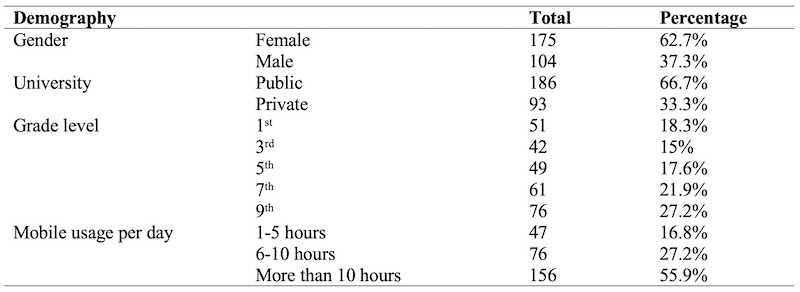
The participants of this study comprised 279 EFL learners enrolled in English education majors throughout 13 universities in Indonesia. They were selected through the convenience sampling method, indicating that the learners were considered to have particular requirements as study participants. For instance, their universities had begun to implement the use of MT in flipped English learning, stating their limited experience in utilising MT for learning English when compared to other universities with a long-term experience in technology integration. The participants consisted of 37.3% male and 62.7% female learners from public and private universities. Learners’ grades varied from 1st to 9th semester (i.e., odd semester) (see Table 1). Their participation candidature was initialised by offering informed consent to 300 learners through online platforms (e.g., email and social media). However, 21 learners did not submit signed forms, stating they were not ready to participate in the study. The remaining consents (N = 279) were signed and submitted to confirm those students’ readiness for voluntary participation.
Table 1: Participants’ Demographic Information (n = 279)
A self-developed questionnaire was used to attain perceptions of the practices and insights of how learners in higher education use MT for English learning purposes. This study defined MT as platforms, programmes, applications, and websites accessed using mobile devices, including smartphones, tablets, or laptops, which could promote English learning through FL. Through deep analysis of various resources or theories and the researcher's experiences in applying flipped English classrooms, the questionnaire items were carefully arranged, developed, and organised based on the study focus.
The final form of the instrument consisted of three parts. The first part of the questionnaire asked for participants' demographic information, such as name, grade, gender, age, type of university attended, preferred device, and time allocated for mobile usage per day. The second part of the self-developed questionnaire invited each participant to share data on types of preferred MT and rationales for utilising such selected technology. Each participant was provided with 19 types of technologies and 15 activities that they could select based on their beliefs and past or current experiences related to MT usage. The last part of the questionnaire comprised a set of questions asking participants about the problems they encountered when using MT during FL.
The questionnaire was assessed by one professor majoring in English education, one in linguistics, and one in information technology. Its goal was to determine the consistency and appropriateness of the questionnaire's objectives, items, and language features (i.e., grammar, diction, or structure). Although the instrument was initially designed in English, an Indonesian translation was prepared to prevent the participants from experiencing any language-related misunderstanding leading to incorrect responses. One expert in Indonesian and one in English linguistics accomplished the English-Indonesian translation of the questionnaire. In addition, 43 non-participants with characteristics identical to those of the study participants were involved in a pilot study before data collection. The results indicated that the instrument had a high suitability and objectivity to facilitate the study focus.
This subsection describes how the flipped English classroom was organised. As FL reversed conventional mode into a practical method, it worked through three sessions. First, in pre-class or individual learning, EFL learners were asked to access materials (e.g., videos, papers, tasks, or audios) through online apps or websites, such as YouTube, TikTok, Kahoot!, and others several days before a school meeting. They had to listen, watch, summarise, read, or complete assignments. Second, based on an in-class session (i.e., collaborative application), EFL learners were instructed to attend high-order activities, such as a peer or classroom discussion, debate, or focused group discussion. The teacher-mentor needed to facilitate the activities by sharing experiences, giving feedback, or correcting mistakes. This session was important as it allowed teachers or learners to enhance communicative skills, such as reading materials, sharing ideas orally, or writing notes. The last session referred to post-class activities, consisting of either reflection or consolidation. In this case, EFL learners were asked to reflect on their flipped English learning by writing notes in journals or short essays, creating a podcast, or recording a video. As for assessment, the teachers might include some tests, such as quizzes, question-and-answer strategies, or mobile-based evaluations to determine learners’ achievement or understanding. Moreover, the description was used to introduce the data collection process as each participant relied on what they experienced based on their flipped classroom experiences.
The initial data collection step invited the EFL learners to participate in a survey. The questionnaire was organised in Google Forms, allowing participants to determine their responses during a three-week period. Such time allocation was believed to help learners with extended time before their responses were resubmitted online. Email and WhatsApp were two different platforms used to communicate online data collection. Having received the responses after the due date, 279 completed questionnaires were collected and returned.
After the completed questionnaires were collected, the data were statistically estimated to determine both frequency and percentage as the main indicators of data analysis and presentation. As for participants’ perceptions resulting from the open-ended questions, the data were analysed qualitatively based on Gibson and Brown’s (2009) thematic analysis concept by determining similarity, variety of features, and interconnection between data.
Preferences
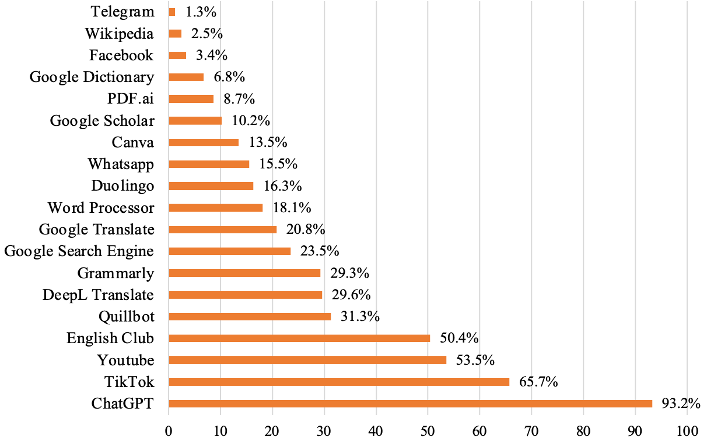
A total of 94.3% of the 279 participants who shared their responses to the questionnaire indicated that they relied on mobile technologies during a pre-class session of flipped English learning. In comparison, those who did not approve of any technological support for FL reached a response rate of 5.7%. The findings align with the universal trend of MT usage in learning English, as recognised in recent studies and literature. Noticeably, it can be seen that all participants confirmed an extensive use of MT in flipped English learning, as indicated in Figure 1.
Interestingly, ChatGPT, TikTok, YouTube, and English Club were four MT where more than 50% of the participants were employed in flipped English learning. ChatGPT is a generative AI chatbot that provides automatic, extensive content and ideas based on a user's proposed prompt. ChatGPT allows EFL learners to generate concepts when writing or reading English texts. This chatbot emerged as the most popular tool, and participants expected multifaceted benefits from it. ChatGPT displayed a higher tendency as the preferred technology for learners at higher education levels, with 93.2% of participants depicting that it was used to assist with their ubiquitous English learning. However, less than 50% of the learners also utilised text analysis applications. Learners utilised the paraphrasing tool Quillbot and the grammar checking tool Grammarly to facilitate the English writing process. Quillbot, an online writing platform, was ranked the fifth most utilised AI tool by 31.3% of the learners, while Grammarly, an automatic proofreader and grammar checker, received a lower preference of 29.3%.
Activities
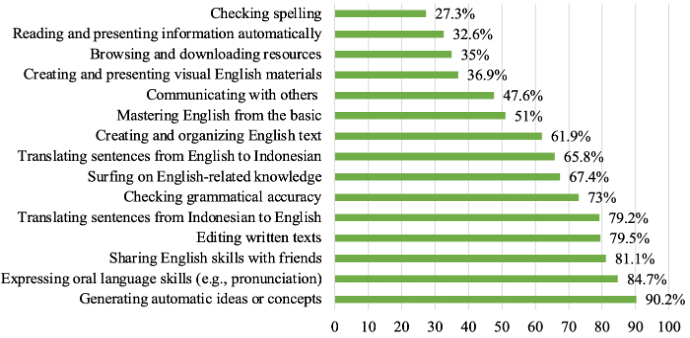
Learners’ responses indicated that ChatGPT was the predominant selection of all types of technologies in FL. Learners preferred to copy ideas and concepts automatically through ChatGPT to facilitate their English skills during FL. ChatGPT offered many options for learners to write or read English text, enhance vocabulary, or determine general ideas for oral skills, and 90.2% of the participants relied on ChatGPT when learning English. This number was the highest among all preferred technologies for mobile devices. Another preferred activity in FL, as depicted by learners, was to practise oral language skills, such as pronunciation or intonation, through TikTok. It received 84.7% of the participants, demonstrating that learners can improve their oral skills enjoyably but academically recognisably using TikTok. Although individual learning can be applied through various technologies, collaborative English learning remains paramount for many learners. Up to 81.1% of the participants preferred sharing English knowledge with others from local or international contexts. Once learners participate in the English Club online, they may be able to improve their English skills as the online forum requires learners to speak, listen, read, and write in English.
As recounted by EFL learners, text editing and translation were among the dominant activities through MT (see Fig. 2). Editing written text was preferred as learners expected to have their sentences automatically paraphrased (79.5%) and grammatically corrected (73%) by MT prior to classroom presentation or assignment. Many learners (79.2%) translated from Indonesian to English or vice versa. The preferred translation allowed participants to create a text without difficulty comprehensively determining its English version, and 79.2% of the participants showed that translation was paramount in improving English learning outside the classroom. Moreover, browsing educational websites was believed to influence learners’ knowledge development. MT led learners to surf ubiquitously on Google, for example (67.4%).
While it is logical to utilise a particular kind of technology in flipped English learning, it is necessary to determine the rationales behind learners’ preferences for MT usage. Figure 3 depicts a systematic description of the rationales.
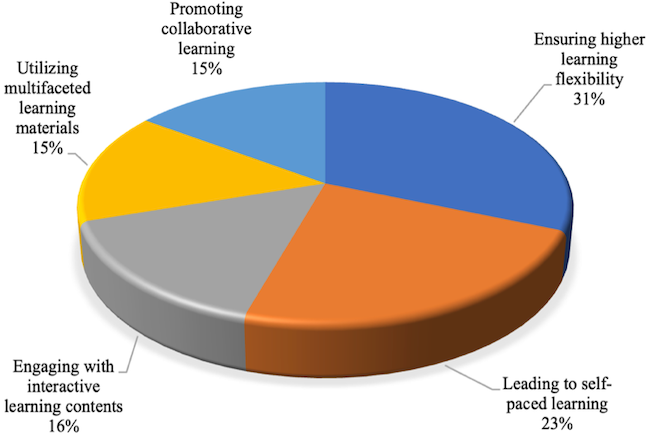
As depicted by 31% of the participants, technologies through mobile learning “empower flexibility of FL as its device is portable.” Mobile devices, such as smartphones, laptops, or tablets, can be easily carried with their users. Learners could access “both synchronous and asynchronous learning resources or platforms without any time or space limitation.” Learners did not have to attend online discussion forums and submit online responses when teachers utilised TikTok as a pre-class learning tool. The flexibility of MT impacted on participants’ self-directed learning, and 23% of participants admitted that MT usage “motivated them to learn English outside the classrooms as expected.” MT provided learners with various applications, software, or platforms, so they “benefitted from one of the mobile technologies with or without teachers’ instructions before pre-class activity.”
Up to 16% of the participants responded that MT engaged them with interactive learning. Its various contents and resources allowed each learner to “interact with teachers and other learners extensively.” It was then followed by active collaboration among learners who struggled to comprehend materials shared by teachers before the in-class meetings, and 15% of the participants believed in the potential of collaboration during flipped English learning. In addition, the rest of the learners experienced “reading, organising, or summarising multifaceted materials from teachers as an in-class preparation stage.”
To begin with, 95.6% of the participants admitted that technical barriers impeded them from holistically “engaging in the pre-class procedure, such as operating an application or submitting a summary to teachers,” as different learners used different types of mobile devices. One learner wrote that some learners used “a smartphone with lower bandwidth, and it caused a slow internet connection even when the task needed to be submitted.” Other learners mentioned the term “the injustice of ubiquitous learning” to state that MT in flipped English learning was not concerned with “technological equality for each learner.” The data showed that technical issues were a serious problem for many learners (95.6%) in FL (see Fig. 4). Another predominant threat of MT were pedagogical issues. Since the response rate for this reached 93.2%, it can be seen that pedagogical issues caused a threat during flipped English learning.
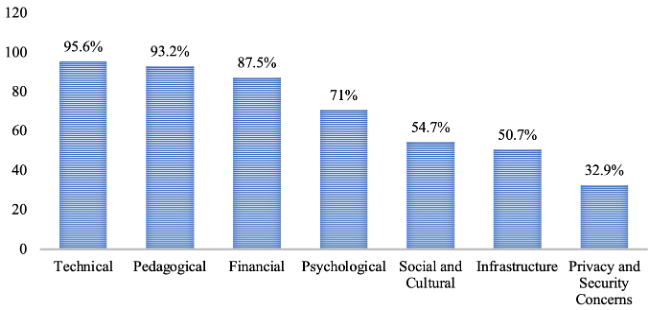
Most learners (87.5%) suffered from financial issues during flipped English learning using mobile devices. Learners faced “higher costs in purchasing smartphones or laptops,” for instance, since these were compulsory tools during pre-class learning. For learners in rural areas with low economic levels, affording a learning device remained challenging due to its cost. One learner wrote that financial issues “threatened their homework,” stating that they could not engage themselves in online discussions or forums due to the unavailability of mobile devices. Moreover, psychological issues emerged to threaten learners in FL, with 71% of the participants acknowledging psychological barriers. Some learners confirmed they experienced “stress and even burnout while using mobile technologies” in flipped English learning. One learner wrote that mobile devices comprised “complex operation procedures and unknown features,” which, for learners with technological difficulties, caused learning stress. Each learner had a different technological competency and such barriers greatly affected learners’ consistency in reading, writing, or communicating English tasks.
It was noted that the study findings could be impactful for either the current research context or global issues of MT utilisation in FL classes. For instance, learner preferences towards various technologies using mobile devices have been mostly revealed in recent studies (Zhang & Pérez-Paredes, 2024; Hwang et al., 2024; Klimova, 2021). This study sheds light on learners’ strategies when experiencing particular socio-cultural and institutional settings, particularly those in a rural academic context, to become familiar with the use of MT tools during a flipped English class. Identifying EFL learner preferences can be helpful in understanding learning barriers, including limited internet connectivity or access to advanced learning technology, or difficulties in engaging with digital literacy. Pedagogically, recent studies have shown that teachers have broader opportunities to develop learner autonomy, intensive learning experiences, or technology engagement. The final impact of this issue refers to how related stakeholders (i.e., the government, curriculum designers, university leaders, teachers) integrate the use of technology into policy recommendations. In the global context, the study findings connect to comprehensive discussions regarding transformative digitalisation in learning environments, practical technology engagement, or the sustainability of FL concepts with a variety of pedagogical issues. As MT are central to 21st century skills, it is noted that such a study leads educators to transform FL concepts into technology-based approaches to learning English globally (Ren, 2021). The study also contributes to a comparative discussion regarding the global transformation to, or distinction in, MALL, which could lead to the development of intercultural frameworks of learner self-efficacy, technology acceptance, or flipped education.
Flipped English learning has become an alternative for learners to develop English-related skills inside and outside of classrooms. MT usage was mostly concerned with pre-class sessions, which learners can ubiquitously manage (Denoyelles et al., 2023). Daily life integration refers to practical activities based on a real-life context. For example, learners translate complex utterances during online conversations or watch videos on YouTube while planning to write on a specific topic. A study by An et al. (2023) indicated that technology usage promotes internal or external motivation to learn English without teachers’ direct instruction. This is in line with Hwang et al. (2024) who believe that MT can empower learner enthusiasm if they manage learning systematically through MT. As an impact, the expectation to create continuous learning for every learner is achievable. Learners can deal with learning self-regulation, which leads to self-discipline even though they are not under the teachers’ control.
While MT contribute to learners’ enthusiasm and positive insights on flipped English learning, another barrier remains challenging. Academic dishonesty is the predominant threat resulting from overreliance on technologies like AI-driven chatbots (Bin-Nashwan et al., 2023). Other technologies may also be a threat when content generated by ChatGPT is modified through Quillbot and analysed in Grammarly to organise grammatical structure. It is noted that academic integrity issues have been neglected with regard to MT usage when learners have little or no opportunity to create their own English content, such as essay writing or scripting for debate contests. Plagiarism, as one type of academic dishonesty, might be committed with or without any purpose. Recording videos on TikTok could be a threat when learners copy video content from posted material. Janke et al. (2021) showed that technologies have a greater tendency to be a source of dishonest practices. Learners are expected to work with some online assignments outside the classroom. Dependency on mobile learning might encourage them to engage in academic dishonesty.
While there have been many reasons why EFL learners choose technology for learning, its acceptance was mostly based on how the technology offers comprehensive resources for learner achievement (Gan et al., 2025; Belda-Medina & Kokošková, 2024). In line with that, Klimova (2021) and Teng and Yang (2022) believed that learning achievement through technology integration can be regarded as sustainable development for those who rely on both conceptual and practical dissemination of digitalisation. The consideration to utilise technology, such as mobile tools, can be an effective solution for teachers and learners who have struggled to transform conventional learning into technology-based instruction. However, many learners encountered the negative impacts of intercultural sensitivity when they engaged with new technological tools, such as the internet or mobile learning tools. Chen et al. (2024) confirmed that learners could indulge themselves in new culture that may direct them to utilise both technology and flipped classrooms, respectively. Such a challenge requires tangible attention from the teachers as each learner has a different attitude, motivation, or feeling about the mobile application (Hwang et al., 2024).
Learners are challenged with ethical consideration issues and technical, financial, and psychological issues. Technical barriers indicate that different learners may have different types of mobile devices. This leads to learning injustice when one device fits into a particular application while others are not able to use that application (Sophonhiranrak, 2021). This barrier can be a psychological threat for learners as MT does not work properly due to the different capabilities of mobile devices. The need for financial support influences learners’ anxiety or burnout during flipped English learning. Economic concerns lead learners to acquire a device needed for task accomplishment in pre-class sessions. Overall, teachers have to be prepared and competent to teach using technology in online settings (Senapati & Malakar, 2024).
Some practices and educational policies should be enhanced based on the study findings. Access and infrastructure have to be provided for EFL students, including wi-fi and learning management systems (LMS). The governments and university stakeholders should be responsible for free or easy internet access on campus. This may promote both digital equity and inclusion for learners who live in an area with limited technology utilisation, such as rural schools. As for urban school learners, it is important for the stakeholders to develop their mobile learning practice by providing the latest version of the available apps or tools. Since technology remains new for most teachers or learners in rural schools, an educational policy regarding technology integration into curriculum and professional development activities (i.e., workshops or seminars on technology) is needed to help them undertake flipped classrooms.
For further studies, some suggestions are offered. First, issues of MT in flipped classrooms can be investigated through a comprehensive qualitative or quantitative approach. For instance, further researchers may use phenomenology or grounded theory to explore the in-depth experiences or insights of technology utilisation in flipped EFL classrooms. Conducting an experiment or correlation can be helpful to statistically examine how MT in an FL class are influenced by or correlated with other variables, such as social status, academic background, availability of technology tools, school management, or curriculum development. Since this study involved only Indonesian universities, further studies may develop study settings by involving learners or teachers from different countries to yield a broader understanding of the topic.
It is noted that EFL learners’ MT preferences did not resemble the number of activities they engaged in when utilising such portable tools or apps, which indicates that their reasons for their preferences were unpredictable and contextual. Although Quillbot and Grammarly were not preferred as considerable MT in English learning, most learners choose to experience some academic activities with both apps. Learners’ perceptions of features, completeness, layouts, access, or price could be a more substantial reason to utilise a particular platform. Conversely, the chosen activities of MT rely on learners’ needs regarding task completion, the fast response of a platform, and app usability and effectiveness, even though the platform might not have an interesting layout. On the other hand, several problems that hinder learners from engaging with MT successfully have comprehensively affected both internal and external aspects of student life, indicating that, for some learners, MT remains practically complex and financially unaffordable.
An, Z., Lai, C., & Gan, Z. (2023). Motivation in self-directed use of technology for English learning among high, average, and low achievers. System, 115, 103051. https://doi.org/https://doi.org/10.1016/j.system.2023.103051
Belda-Medina, J., & Kokošková, V. (2024). ChatGPT for language learning: Assessing teacher candidates’ skills and perceptions using the Technology Acceptance Model (TAM). Innovation in Language Learning and Teaching, 1-16. https://doi.org/10.1080/17501229.2024.2435900
Bin-Nashwan, S.A., Sadallah, M., & Bouteraa, M. (2023). Use of ChatGPT in academia: Academic integrity hangs in the balance. Technology in Society, 75, 102370. https://doi.org/https://doi.org/10.1016/j.techsoc.2023.102370
Bui, T.H. (2022). English teachers’ integration of digital technologies in the classroom. International Journal of Educational Research Open, 3, 100204. https://doi.org/https://doi.org/10.1016/j.ijedro.2022.100204
Chen, Y., Hartley, K., Schrader, P.G., & Zhang, C. (2024). Effects of mobile-assisted funds-of-knowledge writing practice in developing Latinx English learners’ intercultural sensitivity. Journal for Multicultural Education, 18(12), 98-113. https://doi.org/https://doi.org/10.1108/JME-10-2023-0105
Dai, Y., & Wu, Z. (2022). Mobile-assisted peer feedback on EFL pronunciation: Outcome effects, interactional processes, and shaping factors. System, 111, 102953. https://doi.org/https://doi.org/10.1016/j.system.2022.102953
Denoyelles, A., Brown, T., Seilhamer, R., & Chen, B. (2023). The evolving landscape of students' mobile learning practices in higher education. https://er.educause.edu/articles/2023/1/the-evolving-landscape-of-students-mobile-learning-practices-in-higher-education
Gan, H., Zhou, S., Thomas, N., & Zhang, D. (2025). Vocabulary learning through online learning communities: University students’ acceptance of technology and their self-regulated strategy use. Innovation in Language Learning and Teaching, 1-18. https://doi.org/10.1080/17501229.2025.2501611
Gibson, W., & Brown, A. (2009). Working with qualitative data. https://doi.org/10.4135/9780857029041
Hwang, G-J., Rahimi, M., & Fathi, J. (2024). Enhancing EFL learners’ speaking skills, foreign language enjoyment, and language-specific grit utilising the affordances of a MALL app: A microgenetic perspective. Computers & Education, 214, 105015. https://doi.org/https://doi.org/10.1016/j.compedu.2024.105015
Janke, S., Rudert, S.C., Petersen, Ä., Fritz, T.M., & Daumiller, M. (2021). Cheating in the wake of COVID-19: How dangerous is ad-hoc online testing for academic integrity? Computers and Education Open, 2, 100055. https://doi.org/https://doi.org/10.1016/j.caeo.2021.100055
Jiang, D., & Zhang, L.J. (2020). Collaborating with ‘familiar’ strangers in mobile-assisted environments: The effect of socializing activities on learning EFL writing. Computers & Education, 150, 103841. https://doi.org/https://doi.org/10.1016/j.compedu.2020.103841
Klimova, B. (2021). Evaluating Impact of Mobile Applications on EFL university learners’ vocabulary learning – A review study. Procedia Computer Science, 184, 859-864. https://doi.org/https://doi.org/10.1016/j.procs.2021.03.108
Lah, U., Lewis, J.R., & Šumak, B. (2020). Perceived usability and the modified Technology Acceptance Model. International Journal of Human–Computer Interaction, 36(13), 1216-1230. https://doi.org/10.1080/10447318.2020.1727262
Liu, G., & Ma, C. (2023). Measuring EFL learners’ use of ChatGPT in informal digital learning of English based on the technology acceptance model. Innovation in Language Learning and Teaching, 18(2), 125-138. https://doi.org/10.1080/17501229.2023.2240316
Pikhart, M. (2021). Human-computer interaction in foreign language learning applications: Applied linguistics viewpoint of mobile learning. Procedia Computer Science, 184, 92-98. https://doi.org/https://doi.org/10.1016/j.procs.2021.03.123
Ren, R. (2021). The integration of English words in online communication in China. Asian Englishes, 25(3), 360-375. https://doi.org/10.1080/13488678.2021.1925812
Rintaningrum, R. (2023). Technology integration in English language teaching and learning: Benefits and challenges. Cogent Education, 10(1). https://doi.org/10.1080/2331186X.2022.2164690
Senapati, C., & Malakar, D. (2024). Preparedness and competencies of higher education teachers to teach online: A sudy in North-East India. Journal of Learning for Development, 11(2), 270-288. https://jl4d.org/index.php/ejl4d/article/view/1128
Sophonhiranrak, S. (2021). Features, barriers, and influencing factors of mobile learning in higher education: A systematic review. Heliyon, 7(4), e06696. https://doi.org/https://doi.org/10.1016/j.heliyon.2021.e06696
Sun, J., Wang, Y., & Qian, Z. (2024). Examining the influence of individual-level cultural values on CFL learners’ acceptance of ChatGPT for Chinese learning. Interactive Learning Environments, 33(5), 3393-3407. https://doi.org/10.1080/10494820.2024.2443785
Teng, M.F., & Yang, Z. (2022). Metacognition, motivation, self-efficacy belief, and English learning achievement in online learning: Longitudinal mediation modeling approach. Innovation in Language Learning and Teaching, 17(4), 778-794. https://doi.org/10.1080/17501229.2022.2144327
Wang, Y., & Kabilan, M.K. (2024). Integrating technology into English learning in higher education: A bibliometric analysis. Cogent Education, 11(1). https://doi.org/10.1080/2331186X.2024.2404201
Yuen, C.L., & Schlote, N. (2024). Learner experiences of mobile apps and artificial intelligence to support additional language learning in education. Journal of Educational Technology Systems, 00472395241238693. https://doi.org/10.1177/00472395241238693
Zhang, D., & Pérez-Paredes, P. (2024). Chinese EFL learners’ use of mobile dictionaries in reading comprehension tasks. System, 121, 103221. https://doi.org/https://doi.org/10.1016/j.system.2024.103221
Zou, B., Lyu, Q., Han, Y., Li, Z., & Zhang, W. (2023). Exploring students’ acceptance of an artificial intelligence speech evaluation program for EFL speaking practice: An application of the Integrated Model of Technology Acceptance. Computer Assisted Language Learning, 38(5-6), 1366-1391. https://doi.org/10.1080/09588221.2023.2278608
Author Notes
Heri Mudra is a full professor in the English Department at Institut Agama Islam Negeri Kerinci, Indonesia. His research interests include educational technology, applied linguistics, and teacher psychology. He has authored papers in reputable international journals such as Studies in Linguistics Culture and FLT, Qualitative Report, Teaching English with Technology, Training Language and Culture, Education 3-13, LLT Journal, Journal of Language and Education, Journal of Language Teaching and Research, and Journal of Higher Education Theory and Practice. Email: mudraheri@gmail.com (https://orcid.org/0000-0002-3712-2701)
Cite as: Mudra, H. (2025). EFL learners’ preferences, activities, rationales, and barriers in utilising mobile learning in the context of flipped learning. Journal of Learning for Development, 12(3), 560-572.