Zouleikha Betaitia, Aida Chefrour and Samia Drissi
2025 VOL. 12, No. 1
Abstract: The rise of Massive Open Online Courses (MOOCs) has democratised education, yet student dropout remains a persistent challenge. This research tackles this issue by analysing 1,273 publications on MOOC dropout rates (2020-2023) from the Scopus database using VOSviewer, a bibliometric analysis tool. By mapping the intellectual landscape, the study identifies key research questions (e.g., concerning MOOC dropout, learning motivation) and emerging themes (e.g., classification performance, engagement). This comprehensive analysis provides a roadmap for future research, pinpointing areas for further investigation and knowledge advancement.
Keywords: Massive Open Online Courses, dropout, VOSviewer
Massive Open Online Courses (MOOCs) have emerged as innovative digital learning platforms, offering open and accessible educational resources to a vast and diverse global audience (Talebi et al., 2024). Their popularity has exploded recently, with a dramatic increase in both MOOC platforms and course offerings (Liang et al., 2016, Meneses & Marlon, 2020). Currently, MOOC prevalence is at an all-time high (Meneses & Marlon, 2020).
While MOOCs offer flexible learning options, their dropout rates are often higher than traditional courses (Pant et al., 2023). Such a trend presented a challenge in leveraging them as a complete solution for the increased demand for online education during the pandemic. Many countries, including Algeria, regard MOOCs as valuable tools for students who face limitations in accessing traditional physical campuses, particularly in regions where educational infrastructure or geographic challenges may restrict in-person learning (Maphosa et al., 2023). However, understanding the factors that influence student retention is crucial for maximising the effectiveness of MOOCs. One of the key factors is student feedback, which becomes even more important as online learning continues to grow in popularity (Dalipi et al., 2021). By thoroughly analysing this feedback, instructors can gain valuable insights into student needs and preferences, allowing them to refine their teaching methods and course design, ultimately leading to an enhanced learning experience.
High dropout rates in MOOCs pose a complex challenge for instructors and analysts. Understanding the factors behind these dropouts is crucial for improving student retention. Numerous approaches have been explored to study MOOC dropout rates, ranging from qualitative analyses of student experiences to quantitative assessments of course design and engagement metrics. Among these methods, machine learning has emerged as a powerful tool for analysing student behaviour and identifying potential risk factors. By leveraging machine learning techniques, researchers can conduct in-depth analyses that facilitate targeted interventions and improve course design (Dalipi et al., 2021).
This study is grounded in the larger framework of learning for development, focusing on education as a key driver of economic, social, and personal growth. MOOCs, in particular, play a crucial role in delivering education to underserved communities (Maphosa et al., 2023). However, high dropout rates limit their effectiveness. By incorporating theories related to learner engagement and motivation, this research promotes more comprehensive strategies for MOOC design, addressing the specific challenges that learners face in diverse educational contexts. The findings offer a basis for future studies to help close the gap between MOOC accessibility and learner success in the development sector.
To address dropout, researchers explored using machine learning to create predictive models that identify students at risk. However, this approach faced hurdles. Educational data, especially in MOOCs, is vast and diverse, posing challenges for analysis (Mrhar et al., 2020). Additionally, machine learning algorithms require careful selection of the most informative features to ensure accurate predictions.
Given the increasing popularity of MOOCs and the pressing issue of high dropout rates, understanding the landscape of MOOC dropout research has become increasingly important. This study focuses on analysing the landscape of MOOC dropout research conducted between 2020 and 2023. To achieve this, we employed a bibliometric analysis of 1,273 publications retrieved from the Scopus database. This research specifically investigated the issue of dropout rates in MOOCs, aiming to provide insights into the factors contributing to student disengagement. By focusing on dropout rates, we aimed to identify patterns and potential strategies to improve retention, thus addressing one of the key challenges in MOOC effectiveness. Our exclusive goal was to address the following research questions:
This research analyses the landscape of MOOC dropout research between 2020 and 2023 using a bibliometric analysis of 1,273 publications retrieved from the Scopus database (Song et al., 2019; Qureshi et al., 2021).
Billsberry and Alony (2023), conducted a thorough bibliometric analysis of 1,078 peer-reviewed papers focused on MOOCs that were published between 2008 and 2019. The research papers were collected from three notable databases: Web of Science (WOS), Scopus, and the Education Resources Information Center (ERIC). The analysis provided significant insights into various dimensions of the MOOC literature relevant to our research inquiries. By exploring research trends, prominent journals, and the geographical spread of research efforts, we gained a clearer understanding of the contexts surrounding MOOC dropout rates. Moreover, identifying institutions with a high H-index and mapping scientific collaborations highlighted the major contributors in this field, which is essential for addressing our research questions about effective strategies for enhancing student retention. Additionally, examining the evolution of research topics over time allowed us to identify emerging interests and gaps in the existing literature, thereby informing future research focused on addressing MOOC dropout rates. The article examines the implications of representative research and underscores the importance of this analysis in offering academics a thorough comprehension of the present state of MOOC research. Moreover, it serves as a valuable resource for identifying potential research subjects and collaboration opportunities for future studies in MOOCs.
To understand the potential of MOOCs, the current study builds upon the work of Liu et al. (2021) which employed both bibliometric and systematic reviews of MOOC research. Liu et al. (2021) outlined three main objectives for their evaluations: (1) to bibliometrically map the research on MOOCs and identify key milestones; (2) to uncover themes and significant insights from the literature on MOOCs; and (3) to emphasise specific lessons related to management education. The expanding body of research on MOOCs, as discussed by Liu et al. (2021), underscores ongoing efforts to tackle dropout rates, yet effective solutions are still challenging to achieve. Furthermore, the findings suggest that enhancing opportunities for participation and fostering communication among learners are vital.
The study conducted by Tahiru et al. (2023) employed bibliometric analysis and systematic review methods to explore the integration of MOOCs in engineering education. It analysed a total of 257 studies for bibliometric analysis and 68 relevant studies from the Web of Science database for the systematic review. The findings of this systematic review indicated that the implementation of MOOCs in engineering education has positively influenced student perceptions and satisfaction. However, a significant concern highlighted in the study was the insufficient interaction between students and instructors, as well as among students themselves. Additionally, the bibliometric analysis uncovered a strong focus on aspects such as learner engagement, interactions, and feedback processes in the reviewed literature. Recent academic investigations have also concentrated on advanced topics, including text mining, machine learning, deep learning, sentiment analysis, and instructional technology.
A bibliometric analysis of research on machine learning-based prediction systems in higher education was conducted by Turan and Yilmaz (2024). The analysis examined 72 publications retrieved from Scopus, with 3,408 cited references. Data on authors, affiliations, countries, research topics, and trends in these systems were collected. Science mapping and performance analysis techniques were employed to depict the intellectual landscape of this field, including its development and emerging directions.
Massive Open Online Courses (MOOCs) hold immense potential for democratising education, but high dropout rates significantly hinder their effectiveness. Previous studies have shown that learners often disengage with and abandon MOOCs, leading to wasted resources and unfulfilled educational goals. Understanding the factors that contribute to this phenomenon is crucial for improving MOOC design and pedagogy.
This paper presents a bibliometric analysis of MOOC dropout research using the Scopus database. By examining publication trends, identifying key research themes, and pinpointing knowledge gaps, this analysis aims to shed light on the complex issue of MOOC dropout. Ultimately, the insights gained could be used to develop evidence-based strategies to enhance MOOC engagement and completion rates.
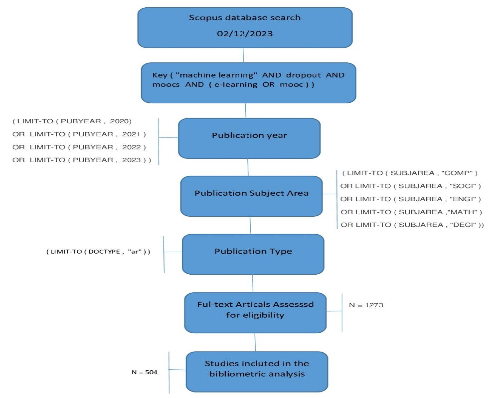
An overview of the most recent research on MOOC dropout rates is what this review aims to provide. The study combined bibliometric and graphical techniques to accomplish this aim. Furthermore, the foundation of bibliometric analysis is tracking research on a certain topic and presenting the results through a variety of characteristic analyses of these studies. In order to gather high-quality articles, and pertinent publications from the Scopus database (https://www.scopus.com) were included in the study, with conferences and proceedings being excluded. The PRISMA template provides clear guidelines for the overall research process, specifically in determining which articles to include and exclude in the review. By using the “topic” option, keywords were searched throughout all areas of the study carried out on December 2, 2023. Keywords and idioms connected to them in English included dropout, MOOC, MOOCs, “Massive Open Online Course,” and machine learning. Scopus was used in this work to gather MOOC abandonment literature because it has sophisticated features for tracking, analysing, and displaying study data across multiple domains. Additionally, we manually screened articles to weed out irrelevant ones using the criteria listed in Table 1 in order to ensure the relative significance of the examined publications to online learning preparation, and 504 publications were left for further examination in this way. The inclusion and exclusion criteria are presented in Table 1 (in the Research Question 2 section below). Moreover, Figure 1 depicts the analytical research structure.
The study also utilised the bibliometric analysis method to examine various aspects of the research landscape. This analysis explored popular keywords and their interrelationships, highly cited authors and their connections, journals with shared citations, dominant research areas, countries making significant contributions, collaborative efforts between countries in publications, and the most frequently cited journals. To visualise the bibliometric networks, we employed the widely used VOSviewer software (https://www.vosviewer.com ). This review was driven by the expanding body of research in the dynamic field of online learning. As the volume of studies continues to grow, it becomes essential to investigate how these topics are organised and to identify emerging trends. The application of advanced machine learning techniques enabled us to efficiently analyse a substantial amount of literature, illuminating key themes and current directions in online education.
This study highlights the profile of MOOC dropouts observed over the past few years, with the findings shaped by the guiding research questions. The discussion delves into the implications of these findings and their relevance to understanding dropout dynamics in MOOCs.
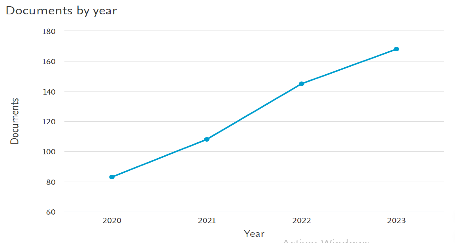
How have MOOC dropout rates changed by year over the past four years? An analysis of the publication years from prior years was done in order to address the initial question. In the final years of the study period (2020-2023), we found that 2023 exhibited the highest productivity, with 168 publications published about the MOOC dropout issue. Regarding the discontinuation of MOOCs, a total of 145 publications were published in 2022, with 108 publications published in 2021. As seen in Figure 2, the remaining articles were dispersed for the remaining years. Multiple factors influenced this result. Key among these were the significant advancements in technology and the widespread availability of internet-connected devices. Additionally, the rise of various crises, including the Covid-19 pandemic and the resurgence of civil and international conflicts, drove educational institutions to adopt distance learning methods, such as Massive Open Online Courses (MOOCs). This shift ensured the continuous delivery of education, even in difficult circumstances.
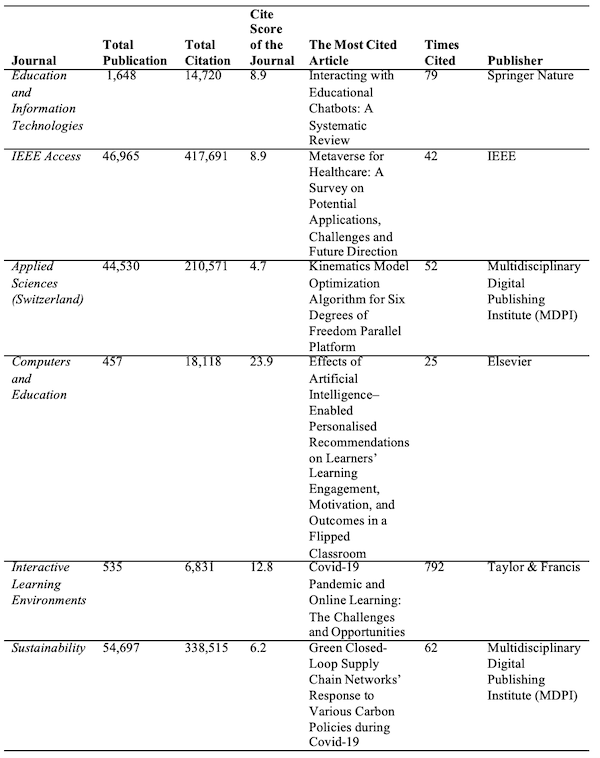
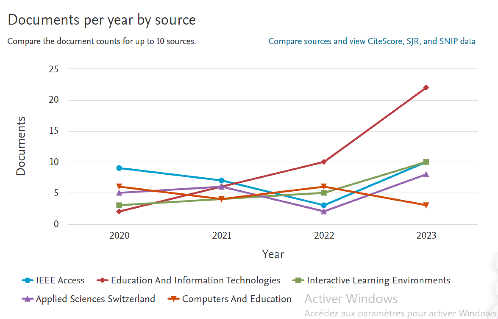
Which authors and journals were best suited to researching the issue of MOOC dropouts? Table 1 presents a bibliometric analysis of the most prolific journals (which contains chapters, articles, Conference papers, Research articles, as well as Review articles) in the field of MOOC dropout research over the past four years. It aims to highlight the journals that contributed significantly to this area of study, providing insight into the key platforms for disseminating research findings. By identifying these journals, we can better understand the scholarly landscape and direct future research efforts toward reputable sources. The content analysis focused on the journals with the highest citations, using characteristics such as “Total Publication,” “Total Citation,” “Cite Score of the Journal,” “Most Cited Article,” “Times Cited,” and “Publisher,” as indicated in Table 1.
According to Table 1 and Figure 3, “Education and Information Technologies” was the most productive journal when it came to the MOOC dropout issue, with a total publication count of 1,648 and a total citation count of 14,720. “Applied Sciences (Switzerland),” with a total publication count of 44,530 and a total citation count of 21,0571, and “IEEE Access,” with a total publication count of 46,965 and a total citation count of 41,7691, followed.
Additionally, Table 1 displays the distribution of the most prolific publications with regard to the MOOC dropout problem. However, RQ2 also looked at the most active writers in the field of MOOC dropouts. As indicated in Table 2, the following criteria were selected for the content analysis of the prolific writers in the MOOCs dropout problem area: “Author,” “Total Publications,” “h-index,” “Total citations,” “current affiliation,” and “country.”
Table 1: The Ten Most Prolific Journals Publishing Research on MOOC Dropout Rates from 2020 to 2023
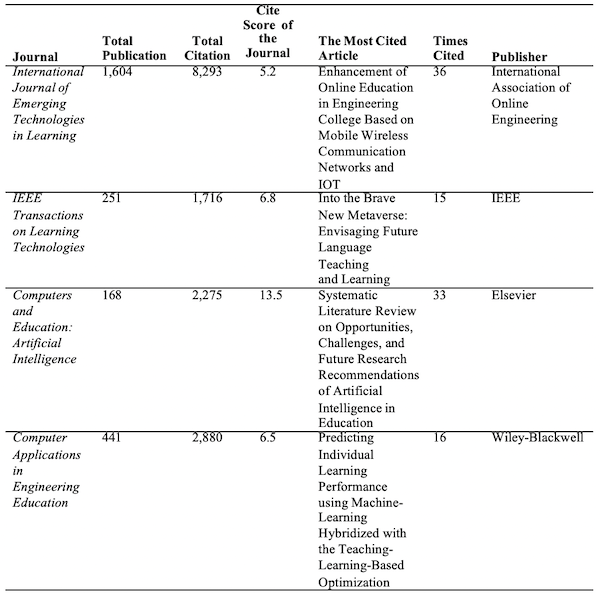
Note: TP = Total Publications, TC = Total Citation.
This table lists the ten most prolific authors, whose research has focused on the MOOC dropout problem, highlighting their contributions through total publications and citations.
Table 2: Prolific Authors in MOOC Dropout Research
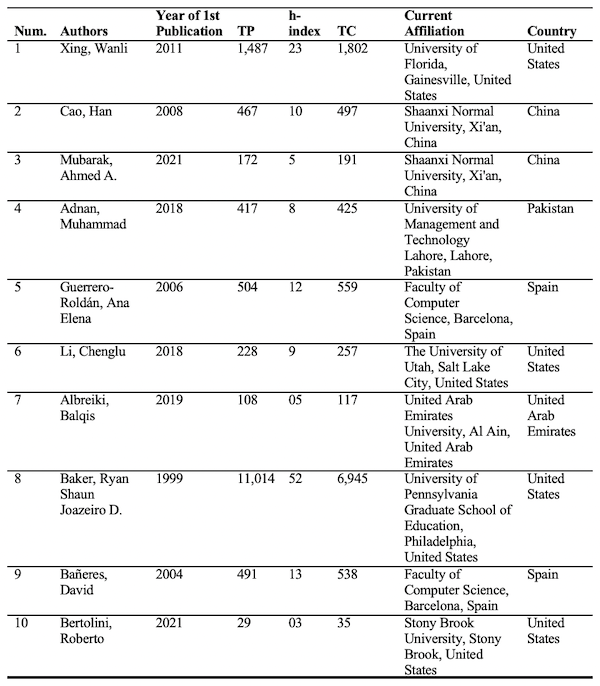
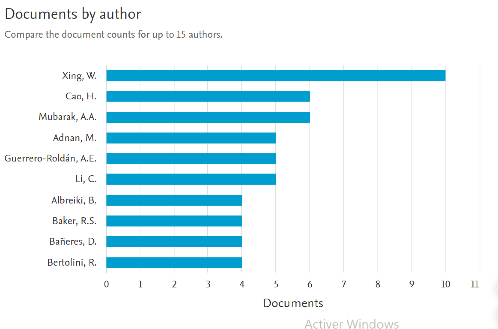
The analysis of the most prolific authors (ten well-known writers in the field of MOOC dropout studies are displayed in Table 2 and Figure 4) emphasises significant contributions from researchers across diverse regions, particularly in China, the United States, and Europe. Xing Wanli from the University of Florida is noted for leading research in MOOC dropout with 1,487 publications. Contributions from other scholars, such as Cao Han from China and David Bañeres from Spain — who had 467 total publications, an h-index of 10, and 497 total citations — further demonstrate the global nature of MOOC dropout research. Ahmed A. Mumbaker from China published 172 articles, with an h-index of 5 and a total of 191 citations. Additionally, the majority of these prolific authors were affiliated with institutions in the United States. Furthermore, Table 2 provides data on the research focus of other prominent authors in the field of dropout studies. Broadening this focus to include authors from multiple countries enriches the understanding of how dropout rates were addressed in various educational and cultural contexts.
Which countries generated the most research on MOOC dropout? Table 3 and Figure 5 display the criteria that were applied to the content analysis of the most common countries in the MOOC dropout research topic. Three criteria were used for the analysis: “country,” “total publications,” and “most productive academic institution.”
Table 3 and Figure 5 present the topic distributions of the most prolific nations/regions and institutions, as well as the ten most productive countries in the MOOC dropout research domain. In terms of country representation, the majority of the listed nations and regions continuously expressed interest in different facets of the dropout rate of MOOC study. For example, the most productive country was “China,” with 120 publications. “India” and “the United States” followed, with a combined total of 47 publications and 67 publications, respectively. Furthermore, Table 3 displays the dropout area statistics of MOOCs from other productive, prolific countries.
Note: TP = Total Publications.
Table 3: List of the Ten most Productive Countries MOOC Dropout Research Areas
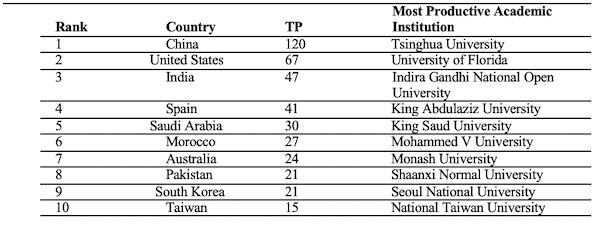
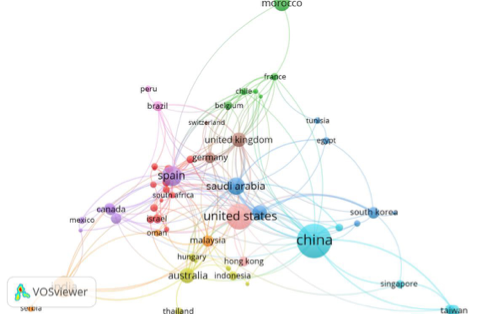
The analytical findings of the producing nations on the dropout problem in MOOCs are shown in Figure 5. China was the most productive country, then the United States and India, and, in contrast to other countries or regions, the institutes in Table 3 demonstrated a greater interest in particular subjects. Furthermore, the top 10 countries in the study field were China, United States, India, South Korea, Taiwan, Australia, Pakistan, Saudi Arabia, Spain, and Morocco. When the analysis was started, it was found that most regions and nations with similar institutions, as well as those within the same regions and countries with similar research interests, had a greater tendency to collaborate in the field of online learning research.
Which research keywords have been most popular in the past few years regarding MOOC dropout? For the bibliometric analysis of the most common keywords, “Authors’ keywords” was selected as the unit and “co-occurrence” as the analysis type. As seen in Figure 6, 130 keywords related to this context were found in the dataset.
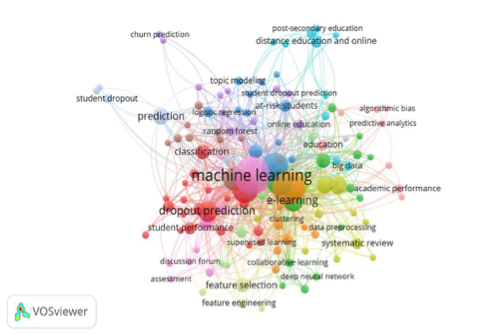
Examining Figure 6, the terms utilised in the research include “online learning” (Oc = 42), “learning analytics” (Oc = 74), “Moocs” (Oc = 51), “machine learning” (Oc = 49),”MOOC” (Oc = 48), and “educational data mining” (Oc = 49). “Deep learning,” “dropout prediction,” “e-learning,” and “artificial intelligence “came next. Examining the publication’s keywords revealed that almost 61% (n = 135) of them contained terms like machine learning and learning analytics. Furthermore, in bibliometrics analysis, keywords like online education, artificial intelligence in education, clustering, classification, and satisfaction were chosen less often.
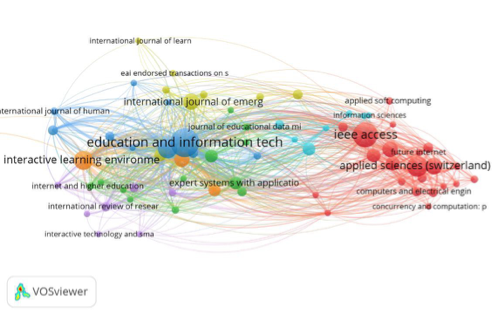
Looking at Figure 7, the top five journals are shown in terms of citation count: first, an article titled “Interacting with Educational Chatbots: A Systematic Study” (citations = 79) in Education and Information Technologies; second, an essay published in IEEE Access titled “Metaverse for Healthcare: A Survey on Potential Applications, Challenges, and Future Direction” (citations = 42); third, “Kinematics Model Optimization Algorithm for Six Degrees of Freedom Parallel Platform,” in Applied Sciences (Switzerland) (citations = 52); fourth, the article titled “Impact of AI-Powered Customised Suggestions on Students’ Motivation, Learning Engagement, and Results in a Flipped Classroom” (citations = 25) in Switzerland’s Computers and Education; and fifth, the essay titled “The Opportunities and Challenges of Covid-19 Pandemic and Online Learning” (citations = 792) from Interactive Learning Environments. The Most Cited Journals (Co-Citation) analysis results are shown in Figure 7 (Items = 70, Cluster = 7, Links = 830, and TLS = 3865).
Numerous elements lead to elevated dropout rates in MOOCs, with learner motivation, course difficulty, and time management challenges being the most significant. Studies also indicate that insufficient engagement is a key issue, especially in courses that do not offer interactivity or prompt feedback. Furthermore, external factors like personal obligations and internet access frequently worsen the dropout problem. Using content analysis and bibliometrics, this review provides an overview of MOOCs’ dropout review, based on the 504 research publications that were collected from the Scopus database. There is growing interest in MOOC research as a potential area of study, based on this study review’s trend analysis. According to this examination of the publishing sources, interdisciplinary subjects that study the relationship between technology and education are the primary beneficiaries of MOOCs (see Figure 8).
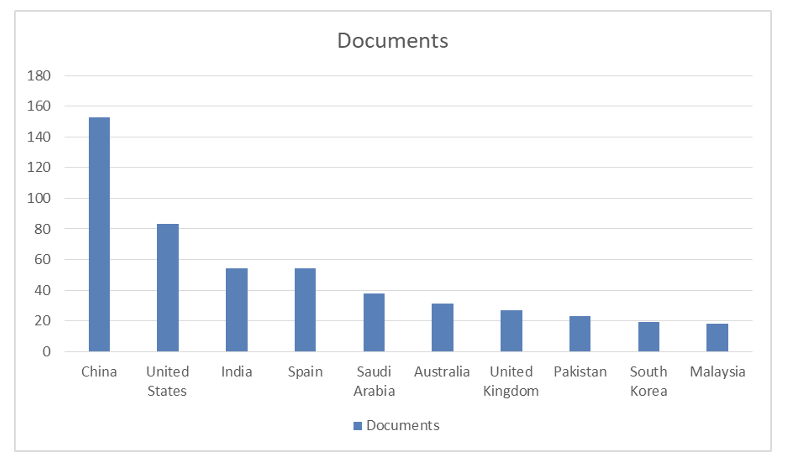
The bibliometric analysis results indicated that the largest volume of publications concerning MOOC dropout was observed in 2023. This increase corresponded with the growing use of online education platforms, largely driven by external factors such as the Covid-19 pandemic. The research keywords that were most frequently linked to MOOC dropout included 'machine learning,' 'student engagement,' and 'learner motivation.' These keywords underscore the key areas of focus for researchers aiming to address the dropout issue. Additionally, the geographical analysis shows that China, the United States, and India have been the most active contributors to research on MOOC dropout, underscoring the global importance of this topic.
Furthermore, beyond MOOCs, the findings of this study could inform the design of online learning environments in various educational settings. High dropout rates reflect challenges that extend to online education in general, particularly in developing regions where access and engagement are often more difficult. Institutions can apply these findings to develop online learning systems that are adaptable to local contexts, making online education a viable option for lifelong learning and skills development globally. Future work could investigate how these strategies apply to other forms of online learning, such as blended learning models and virtual classrooms, contributing to learning for development efforts worldwide.
Moreover, further research is essential to deepen the understanding of dropout rates in MOOCs. Investigating the specific demographics of learners, the contextual factors influencing dropout decisions, and the long-term impacts of these dropouts on educational outcomes are crucial areas for future studies. Understanding the nuances of learner engagement and retention strategies could also aid in designing courses that not only attract participants but also keep them enrolled until completion. By focusing on these aspects, researchers can provide insights that should enable educators and institutions to create more effective, inclusive, and engaging MOOC experiences.
To address the need for specific strategies for practitioners, several actionable recommendations are proposed based on the analysis of MOOC dropout research. Firstly, implementing adaptive learning systems can facilitate personalised learning paths that align with individual learners' pace and preferences, thereby enhancing engagement. Additionally, fostering community engagement through learner-to-learner and learner-to-instructor interactions — such as discussion forums, live Q&A sessions, and peer feedback mechanisms — can create a supportive learning environment. The use of predictive analytics is also recommended; by utilising machine learning algorithms to identify potential dropout risks early, practitioners can offer targeted interventions, including supplementary resources or personalised feedback. Moreover, it is essential to tailor MOOCs to the cultural and educational needs of various regions, particularly in developing countries, where contextual factors significantly influence learning outcomes. Lastly, providing ongoing support through mentoring, regular feedback, and timely interventions should help maintain learner engagement and motivation throughout the course.
This study illuminates significant trends associated with MOOC dropout, underscoring the increasing demand for focused strategies aimed at enhancing learner motivation and engagement. As online learning progressively supplants conventional educational models, the examination of 504 e-learning articles provided an extensive perspective on the challenges and opportunities present in MOOC settings. The results stress the necessity of a multidisciplinary approach that combines course quality with a thorough comprehension of learner behaviour.
For educators, the research leads us to advocate the implementation of personalised interventions, including adaptive learning paths, customised feedback, and community-building features, all aimed at reducing dropout rates. These interventions should be reinforced by data-driven approaches such as machine learning to proactively identify at-risk students and provide timely support. Notably, China has emerged as a leading country in MOOC dropout research, with "Xing Wanli" as a key contributor, pointing to the importance of international collaboration. Key research terms like "dropout prediction," "collaborative learning," and "at-risk students" underline the pressing need for innovative solutions that enhance MOOC effectiveness.
In the future, additional research should concentrate on evaluating these strategies in various educational settings, particularly in underrepresented areas, to guarantee that MOOCs can more effectively cater to diverse learner groups and realise their full potential in promoting inclusive, high-quality education.
Billsberry, J., & Alony, I. (2023). The MOOC post-mortem: Bibliometric and systematic analyses of research on massive open online courses (MOOCs), 2009 to 2022. Journal of Management Education. https://doi.org/10.1177/10525629231190840
Dalipi, F., Zdravkova, K., & Ahlgren, F. (2021). Sentiment analysis of students’ feedback in MOOCs: A systematic literature review. Frontiers in Artificial Intelligence, 4. https://doi.org/10.3389/frai.2021.728708
Liang, J., Li, C., & Zheng, L. (2016). Machine learning application in MOOCs: Dropout prediction. 2016 11th International Conference on Computer Science & Education (ICCSE). https://doi.org/10.1109/iccse.2016.7581554
Liu, C., Zou, D., Chen, X., Xie, H., & Chan, W.H. (2021). A bibliometric review on latent topics and trends of the empirical MOOC literature (2008-2019). Asia Pacific Education Review, 22(3), 515-534. https://doi.org/10.1007/s12564-021-09692-y
Maphosa, V., & Maphosa, M. (2023). Opportunities and challenges of adopting MOOCs in Africa: A systematic literature review. In S. Goundar (Ed.), Massive Open Online Courses—Current Practice and Future Trends. Intech Open. https://doi.org/10.5772/intechopen.1001298
Meneses, J., & Marlon, X. (2020). Dropout in online higher education: A scoping review from 2014 to 2018. Universitat Oberta de Catalunya (UOC). https://doi.org/10.7238/uoc.dropout.factors_4.2020
Mrhar, K., Douimi, O., & Abik, M. (2021). A dropout predictor system in MOOCs based on neural networks. Journal of Automation, Mobile Robotics and Intelligent Systems, 72-80. https://doi.org/10.14313/jamris/4-2020/48
Pant, H.V., Manoj, M.C., & Jeetendra, J.P. (2023). Thematic and sentiment analysis of learners’ feedback in MOOCs. Journal of Learning for Development, 10(1), 38-54. https://doi.org/10.56059/jl4d.v10i1.740
Qureshi, M.I., Khan, N., Raza, H., Imran, A., & Ismail, F. (2021). Digital technologies in education 4.0. Does it enhance the effectiveness of learning? A systematic literature review. International Journal of Interactive Mobile Technologies (iJIM), 15(04), 31. https://doi.org/10.3991/ijim.v15i04.20291
Song, Y., Chen, X., Hao, T., Liu, Z., & Lan, Z. (2019). Exploring two decades of research on classroom dialogue by using bibliometric analysis. Computers & Education, 137, 12-31. https://doi.org/10.1016/j.compedu.2019.04.002
Tahiru, F., Parbanath, S., & Agbesi, S. (2023). Machine learning-based predictive systems in higher education: A bibliometric analysis. Journal of Scientometric Research, 12(2), 436-447. https://doi.org/10.5530/jscires.12.2.040
Talebi, K., Torabi, Z., & Daneshpour, N. (2024). Ensemble models based on CNN and LSTM for dropout prediction in MOOC. Expert Systems with Applications, 235, 121187. https://doi.org/10.1016/j.eswa.2023.121187
Turan, Z., & Yilmaz, R.M. (2024). Are MOOCs a new way of learning in engineering education in light of the literature? A systematic review and bibliometric analysis. Journal of Engineering Education. https://doi.org/10.1002/jee.205807
Author Notes
Zouleikha Betaitia works at the Computer Science Department, Mohamed Cherif Messaadia University, Souk Ahras, Algeria. Email: z.betaitia@univ-soukahras.dz (https://orcid.org/0000-0002-2667-3196)
Aida Chefrour works at the LISCO Laboratory, Computer Science Department, Badji Mokhtar University, Algeria. Email: aida.chefrour@univ-soukahras.dz (https://orcid.org/0000-0002-2667-3196)
Samia Drissi works at the LISCO Laboratory, Computer Science Department, Badji Mokhtar University, Algeria. Email: s.drici@univ-soukahras.dz (https://orcid.org/0000-0002-1668-8618)
Cite as: Betaitia, Z., Chefrour, A., & Drissi, S. (2025). Exploring dropout rates in MOOC research: A bibliometric analysis. Journal of Learning for Development, 12(1), 76-91.