Sheilla Indiaka, Waweru Mwangi and Jael Sanyanda
2025 VOL. 12, No. 3
Abstract: Digital technology has increasingly transformed the landscape of science education, positioning gamification as a powerful pedagogical tool to enhance learner engagement and comprehension. This study investigated the application of digital gamification using Kahoot! to enhance comprehension of biology subject content among secondary school students. The study seeks to determine the effectiveness of digital gamification in reinforcing students’ understanding of cell organelles; examine learners’ motivation during the gamified learning process; and evaluate the effect of a digital gamification intervention through pre- and post-intervention assessments. A quasi-experimental design was employed involving two groups: an experimental group using Kahoot!-based digital quizzes and learning content, and a control group exposed to traditional teaching methods. The study targeted Form Two biology students, with gamified content aligned to the cell organelles topic in the Kenyan secondary school curriculum. Data was collected using comprehension biology tests. Quantitative analysis through t-test revealed statistically significant improvements in comprehension, motivation, and engagement levels among students in the experimental group compared to the control group. The findings demonstrate that digital gamification fosters deeper understanding, enhances motivation, and promotes active participation in biology lessons. The study recommends the integration of digital gamification tools like Kahoot! into science instruction to foster a more interactive and learner-centred environment.
Keywords: achievement, biology, comprehension, Kahoot! and motivation
The Kenyan education system has progressively transitioned towards learner-centred pedagogies, emphasising student engagement and enhanced performance in science subjects (Owuondo, 2023; Kerkhoff et al., 2025). Traditional classroom instruction has been transformed through the implementation of competency-based learning and the increasing availability of digital technology (Kučera & Haffner, 2025; Nsyengula et al., 2024). Challenges persist, as some secondary school students continue to struggle with fully engaging in and comprehending complex scientific concepts (Dantic & Fularon, 2022; Kaneza et al., 2024; Ateş, 2025). This is especially true in the sciences where abstract concepts like cell organelles present considerable challenges to comprehension among the learners (Cooper & Adams 2022; Kalogiannakis et al., 2021; Rapanta et al. 2020).
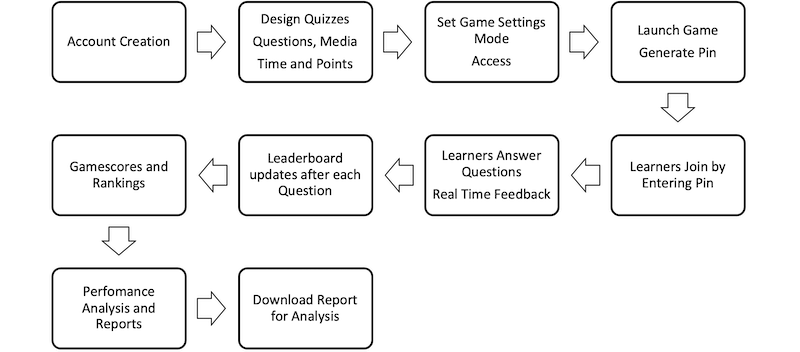
Secondary educators and policymakers have effectively utilised creativity and technology to enhance meaningful learning and engage students in challenging learning areas (Henriksen et al., 2018; Shubina & Kulakli 2019; Christensen et al., 2018). Kahoot!, a digital platform that integrates gamification with live quizzes and instant reporting, exemplifies one of these strategies (Sikora et al., 2024; Ali et al., 2022). Kahoot! contrasts with traditional direct lecturing methods by incorporating dynamic visual content, fostering a participatory and student-centred environment that enhances conceptual clarity and promotes active engagement in the learning process (Pascu, 2024; Ou, 2024). Figure 1 represents the input and output of the gamification intervention.
According to Smiderle et al. (2020), gamified digital tools can enhance student engagement, motivation, and retention of concepts and knowledge across various educational learning areas. Findings by Wang and Tahir (2020) assert that digital learning tools like Kahoot! are effective in addressing learning gaps and enhancing learning instruction in the classroom. Empirical research examining the impact of Kahoot! on secondary biology education in Kenya is limited. This research investigates the effectiveness of Kahoot!, a digital gamification application, in enhancing Kenyan secondary school students' comprehension of cell organelles. The study evaluates the influence of Kahoot! on student engagement with biology content, grounded in the theoretical framework of engagement including behavioural, emotional, and cognitive responses to learning materials
The research objectives for the present study consisted of the following:
The findings are expected to contribute to both the practice of biology teaching and the broader integration of gamification in facilitating STEM education in resource-constrained settings. The study involved learners in an experimental group engaging with the gamified learning platform Kahoot! to read the designed biology learning content on cell organelles, and then attempt a biology test that was designed as a game. The learning and teaching process was learner centred. Learners were allowed to engage with the learning content on their own.
Point-award systems, badges, leaderboards, and challenges were introduced into educational environments to make the process of studying and learning more attractive and engaging for students, while also helping them to achieve their goals. The growing preference for e-learning domains is, for the most part, due to the shortcomings of classroom methods, which do not always succeed in keeping learners engaged and motivated. Game-based learning tools and services focus on engagement and motivation (Palaniappan & Noor, 2022; Smiderle et al., 2020). It is proposed that game-generated platforms contribute to student motivation and satisfaction, ultimately promoting better learning results. The contributions of Ratinho and Martins (2023) reveal that the use of progress bars, along with any kind of reward, might inspire students a great deal. Research by Smiderle et al. (2020), shows that gamification stimulates the self-directed learning of students. Gamified systems are thought to support learners to be responsible for their own learning, leading to independence, self-motivation, and perseverance (Slamet et al., 2024). The study by Capatina et al. (2024) maintains that achievements, as well as tracking and immediate feedback, encourage students studying online to feel more focused and responsible.
A meta-analysis conducted by Sailer & Homner (2020) also revealed the beneficial effects of gamification on cognitive, motivational, and behavioural measures. Research indicates that legitimate gamification that integrates game mechanics into learning content results in better learning performance than superficial game add-ons. Furthermore, well-designed gamification contributes to educational development as opposed to mere entertainment. A study by Dichev et al. (2020) cautions the reader not to overgeneralise. Their research suggests that gamified learning may be more effective for younger students in specific domains of knowledge and depend on the learners' level of digital proficiency. Palaniappan & Noor (2022) also advocate for user-centred design and continuous assessment to make certain that gamification meets learners' needs.
Technology has its part to play in a transforming educational scene by determining the delivery systems which are now possible for the dissemination of knowledge and the retrieval of information. Kahoot!, in a nutshell, is a game-based learning platform, which uses elements of fun, competition and interactivity in the context of educational spaces (Videnovik et al., 2023). The utility of Kahoot! is its ability to revitalise science education, particularly in terms of captivating and hooking students into their content (Husin & Azmuddin, 2022).
In the classroom, gamification partly plays to the advantage of Kahoot! through the logic of framing motivating environments with award points, limited times, and the display of the player’s performance on leaderboards (Cortés-Pérez et al., 2023). This is a relaxed, yet enticing entry point for content often seen as abstract or mostly difficult in science education (Kersting et al., 2021. Anane (2024) found that science learning is characterised by memorisation of terms, comprehension of concepts, and application of principles, all of which can be game-based in platforms like Kahoot!. An example of this is the immediate feedback aspect of Kahoot!; the feedback allows learners to realise what their misconception might be and fix it while the activity is still being carried out, meaning it is more formative than punitive (Kalleny, 2020). Even from an elevated academic perspective, Kahoot! enables the learning experience to be at a very human level of play and fun in the otherwise sanitised world of science education. This is very useful for students who feel that the learning content is difficult. When students are laughing, cheering, and connecting with each other through a shared digital experience, science is no longer a lonesome chore; it becomes a shared adventure.
Another interesting point is the popularity of Kahoot! as a teaching tool in design. Just using Kahoot! does not necessarily translate into better learning results. The questions, how they align with the learning targets, and how the activity connects to other teaching and learning strategies all play a part in overall effectiveness. In applying these technologies, teachers should be thoughtful in how and when such tools are used, to support instead of substitute for authentic inquiry and discussion (Mhlongo et al., 2023).
Kahoot! has exciting potential for making science learning more engaging for students and providing opportunities for collaborative reinforcement of scientific knowledge in a playful, human-centred way (Licorish et al., 2018). As we examine how to better communicate complex scientific ideas, Kahoot! makes clear learning can, and, perhaps, ought to be, fun as well as providing a serious classroom environment. Additional studies reveal how these platforms can be most effectively utilised in various fields of science and for various students.
The study used a Kahoot! learning platform as a method of delivering biology learning content to Form Two learners in the Kenya Education Curriculum for students aged 13-14 years. The Kahoot! game was named as ‘cell organelles and their functions’. The study was about the biology topic on cell organelles and their functions, which was the independent variable. Learners’ motivational questionnaires, and the pre-test and post-test biology assessment test, was administered to learners in the Kahoot! gamified learning content, which was the dependent variable, to measure the level of comprehension and motivation. The pre-test and post-test were designed on the Kahoot! platform. The learning content was designed to assist learners to improve their understanding about the cell organelles sub-topic. The design of Kahoot! learning content was done based on the Kenyan biology syllabus and also followed the curriculum designed by the Kenya Institute of Curriculum Development.
A quasi-experimental study was conducted for three weeks in two secondary schools during this phase. The location of the schools was in Kiambu County, Kenya. The learners in Form Two were involved in the study. Both the schools, displaying similar characteristics, were identified at the beginning of the study, which was essential for reducing bias in the quasi-experimental approach. This study mitigated selection bias by selecting two groups with comparable characteristics in terms of age, subjects, class size, pre-test outcomes, and learning environment. After identifying similar features between the schools, random assignment was utilised to select one school as the experimental group and the other as the control group. In a quasi-experimental research framework, pre-existing groups should be employed according to specific criteria, such as participant availability, research aims, and established methods (Miller et al., 2020). Students in the experimental group (45) were instructed via Kahoot! gamified learning content, while those in the control group (44) were taught through traditional teaching techniques. Figure 2 illustrates the design of the current research. The study received a permit from National Commission for Science, Technology and Innovation from the government of Kenya, informed consent was obtained from all participants and their confidentiality and anonymity were protected throughout the study.
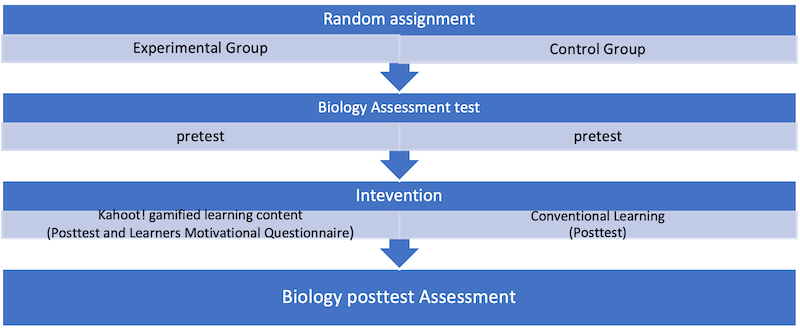
The learners in this study were exposed to two different methods of delivering instruction as presented in the Table 1. Students of Form Two West used the Kahoot! gamified platform while those in Form Two East used the conventional method of teaching.
Table 1: Intervention in Each Group

Kahoot! (https://kahoot.com/) is a web-site forum offering free interactive games designed for educational purposes, where educators can also create customised MCQ (Multiple Choice Questions) that transform into engaging activities for learners. Learners can participate using computers. Users have the flexibility to craft their own quizzes or utilise quizzes shared by others within the Kahoot! community, tailoring content to suit their classroom requirements. When creating assessments, users can personalise the duration allotted for answering each question and the number of response options provided. Kahoot! games, which were designed by the researcher, were provided to the experimental group.
The study started by administering the pre-test biology assessment to learners. The pre-test was important because it enabled the learners to remember the content about cell organelles and their functions (Janelli & Lipnevich, 2021). In this research study, teachers were involved in the delivery of the learning content both in the experimental and control group. The five teachers who were engaged in administering the learning content to learners in the experimental group were also tested on the level of their knowledge about the use of Kahoot! platform during the teaching and the learning process. Figure 3 shows the steps followed by learners on the Kahoot! platform to be awarded scores.
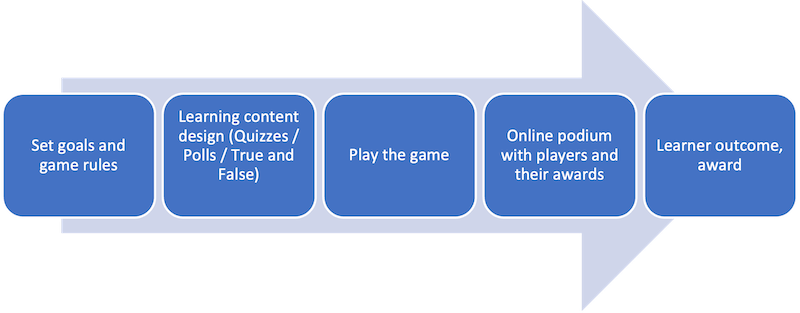
During the research study, students in the experimental group were taught to use computers to play Kahoot! games focused on cell organelles and their functions through an engaging gamification approach, different from traditional lectures. They accessed three Kahoot! games via the platform, maintaining anonymity by choosing unique informal names, with gameplay involving timed questions and real-time leaderboards. Afterward, students completed a motivational questionnaire on the Kahoot! platform to assess their interest, followed by a pre-test assessment consisting of 11 timed questions. Students then played three additional Kahoot! games at their own pace before taking a similar post-test, completing another motivational questionnaire to evaluate their understanding and motivation.
In contrast, the control group learned the same content through conventional teaching methods with a photocopied pre-test and post-test but did not complete motivational questionnaires. Teachers found conventional content delivery easier due to their prior experience. The Kahoot! gamification approach enhanced interaction and student engagement in the experimental group.
The verification of the validity of the relevance of the Kahoot! gamified learning content and the pre-test was obtained after carrying out a pilot study in a secondary school with learners of the same characteristics as those in the main study. Experts consisting of experienced teachers in biology and lecturers in the local university and the Kenya Institute of Curriculum Development were involved in the assessment of the biology learning content before it was used in the research study. Similarly, based on the feedback from experts, improvements were made to both the gamified learning content and the pre-testing. As a result, the Kahoot! gamified learning content indicated an achievement level of 87.98%; 76% is considered to be a high level of achievement that determines content has good validity. The assessment tests in pre- and post-tests were different but similar in terms of cognitive level. The pre and post-test assessment question items used were obtained from the biology textbook of the Kenya Literature Bureau.
The results of the pre-test process scores for the control and experimental groups are presented in the following tables (Tables 2-5).
In Table 2, no significant differences are observed in the pre-test scores of the control group (M = 1.64, SD = 3.183) and the experimental group (M = 1.68, SD = 3.309), with a t-value exceeding 0.05. Consequently, there was no significant difference in learner achievement following the pre-test biology assessment. The random selection of the groups indicated that the initial performance levels of the learners regarding cell organelles and their functions was similar.
Table 2: Pre-test Mean Scores for Control Group and Experimental Group

Table 3 indicates the pre-test and post-test performance for the subgroup of 45 learners that were being studied. The pre-test mean score was 9.68, with a standard deviation of 3.309; the post-test mean score improved to 11.84, with a standard deviation of 3.102. This represents enhanced performance subsequent to the intervention. A paired sample t-test was performed to ascertain the statistical significance of the observed difference. The generated t-value was 3.041, with an associated p-value of 0.000. The p-value is below the conventional significance threshold of 0.05, indicating statistical significance. This indicates that the improvement in scores from the pre-test to the post-test was not attributable to random chance but signifies that the intervention had a significant and beneficial effect on the participants' performance. The students possessed prior knowledge of the structure and functions of cellular organelles.
Table 3: Experimental Group Pre-Test and Post-Test Scores

Table 4 illustrates the pre-test and post-test scores for the control group, including 44 learners. The mean result on the pre-test was 9.69, with a standard deviation of 3.183 but the post-test mean score improved to 9.97, with a standard deviation of 2.463. A paired sample t-test was performed to find out whether the minor difference in scores was statistically significant. The calculated t-value was 2.573, having a corresponding p-value of 0.0017. The p-value, being less than 0.05, indicates a statistically significant difference, implying a small yet notable improvement in performance despite the absence of the experimental intervention. The degree of enhancement was minimal, suggesting that the transformation might result from existing learning effects, familiarity with testing, or other uncontrolled factors rather than a targeted intervention.
Table 4: Control Group Pre-Test and Post-Test Scores

Table 5 establishes a comparison of post-test results between the control group, which utilised ordinary learning materials, and the experimental group, which employed Kahoot! gamified learning content. The control group (N = 44) revealed a mean score of 9.97 and a standard deviation of 3.183, whereas the experimental group (N = 45) earned a mean score of 11.84 with a standard deviation of 3.102. An independent sample t-test was performed to see if the mean score difference between the two groups was statistically significant. The computed t-value was -2.18, with a corresponding p-value of 0.016. The p-value, situated inside the standard threshold of 0.05, indicates that the difference is statistically significant. The study indicates that students utilising Kahoot's gamified learning materials had markedly superior results on the post-test compared to those subjected to conventional learning techniques. Consequently, the implementation of gamification via Kahoot! seems to have positively influenced students' academic achievement.
Table 5: Post-Test Scores Comparison of Kahoot! Gamified and Traditional Learning Content

Figure 4 presents the results of the learners’ motivation questionnaire.
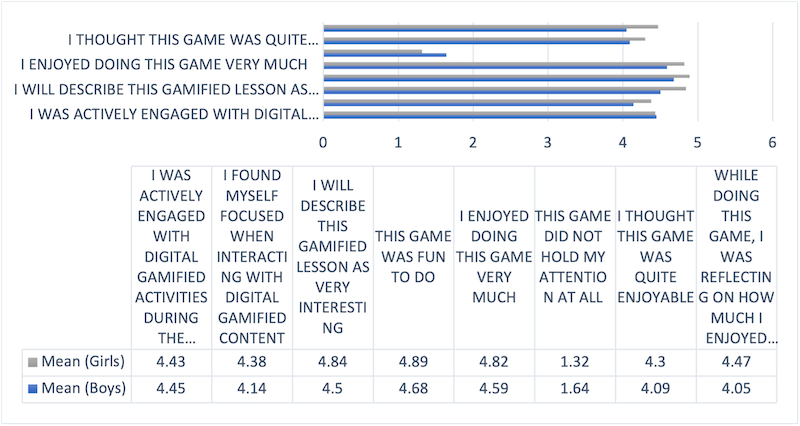
The study on the motivation of using digital gamification during the learning process highlights significant gender differences in student engagement and attentiveness. Both males and females reported high levels of engagement with the gamified activities, with males rating their engagement slightly higher than females (mean = 4.45 vs. 4.43), which indicates that gamification is generally effective at capturing the attention of both genders. However, females reported being slightly more focused when interacting with the content, with a mean score of 4.38, compared to 4.14 for males, suggesting that females may be more attuned to the material in gamified environments. Additionally, females described the gamified lessons as more interesting than males did (mean = 4.84 vs. 4.50), which aligns with the idea that females may develop a stronger emotional connection to the interactive and dynamic nature of gamified content. Both genders found the game enjoyable but females rated it slightly higher in terms of fun and overall enjoyment (mean = 4.89 vs. 4.68 for fun, mean = 4.82 vs. 4.59 for overall enjoyment), supporting the notion that gamification enhances the learning experience by making it more engaging and enjoyable for students. Furthermore, females were more attentive during the gamified activities, as reflected in the reversed scores for lack of attention (mean = 1.32 for females, 1.64 for males), indicating a greater level of focus among female participants in digital gamified settings. Finally, females reported reflecting on how much they enjoyed the game more frequently than males (mean = 4.47 vs. 4.05), which suggests that females may be more intrinsically motivated when interacting with gamified learning materials.
The findings reaffirm the growing consensus that digital gamification constitutes a substantive pedagogical innovation in science education. Tools such as Kahoot! restructure classroom dynamics by fostering active participation, sustaining attention, and enhancing conceptual comprehension. This study situates itself within international research (Smiderle et al., 2020; Licorish et al., 2018; Aibar-Almazán et al., 2024), extending the argument that gamification is not an ancillary aid but a central mechanism for strengthening learning outcomes in digitally mediated classrooms.
In relation to the prior literature, the results corroborate evidence that gamification improves motivation and participation, while reinforcing comprehension of complex subject matter. By demonstrating similar effects in secondary school biology, this study broadens the disciplinary and contextual scope of existing work. The convergence with earlier findings also underscores the robustness of gamification theory, particularly in highlighting the motivational interplay between feedback, competition, and learner engagement.
The study carries notable implications for education systems, especially in learning content grappling with persistent disengagement from science subjects. Policymakers might consider embedding gamification into curricula and teacher professional development as a means of modernising instruction and aligning classroom practice with digital competencies. At the institutional level, schools could deploy gamified platforms to foster inclusive and participatory environments, thereby mitigating motivational deficits and raising performance standards.
Further inquiry should move beyond short-term outcomes to examine the durability of gamification’s impact on knowledge retention, problem-solving, and transferable skills. Comparative studies of diverse platforms are needed to clarify their pedagogical affordances and learning content adaptability. Additionally, research addressing equity and infrastructural disparities remains crucial, particularly for scaling gamification in resource-constrained educational settings. Such work would refine theoretical models of gamified learning while offering practical guidance for large-scale implementation.
Aibar-Almazán, A., Agustín, A-A., Castellote-Caballero, Y., del Carmen Carcelén-Fraile, M., Rivas-Campo, Y., & González-Martín, A.M. (2024). Gamification in the classroom: Kahoot! as a tool for university teaching innovation. Frontiers in Psychology, 15 (March). https://doi.org/10.3389/fpsyg.2024.1370084
Ali, H.F.M., Abd-El-Gawad Mousa, M., & Rushdan, E.E. (2022). Effect of using Kahoot! as a digital game-based formative assessment tool in enhancing nursing students’ knowledge and learning motivation. Egyptian Journal of Health Care, 13(4), 1907-21. https://doi.org/10.21608/ejhc.2022.338035
Anane, C. (2024). Impact of a game-based tool on student engagement in a foreign language course: A three-term analysis.Frontiers in Education, 9 (September). https://doi.org/10.3389/feduc.2024.1430729
Ateş, H. (2025). Integrating augmented reality into intelligent tutoring systems to enhance science education outcomes. Education and Information Technologies, 30(4), 4435-70. https://doi.org/10.1007/s10639-024-12970-y
Capatina, A., Juarez-Varon, D., Micu, A., & Micu, A.E. (2024). Leveling up in corporate training: Unveiling the power of gamification to enhance knowledge retention, knowledge sharing, and job performance. Journal of Innovation & Knowledge, 9(3).
Christensen, R., Eichhorn, K., Prestridge, S., Petko, D., Sligte, H., Baker, R., Alayyar, G., & Knezek, G. (2018). Supporting learning leaders for the effective integration of technology into schools. Technology, Knowledge and Learning, 23(3), 457-72. https://doi.org/10.1007/s10758-018-9385-9
Cooper, G.M., & Adams, K.W. (2022). Physical principles underlying cell structure and function. In The cell. Oxford University Press. https://doi.org/10.1093/hesc/9780197583746.003.0003
Cortés-Pérez, I., Zagalaz-Anula, N., del Carmen López-Ruiz, M., Díaz-Fernández, A., Obrero-Gaitán, E., & Osuna-Pérez, M.C. (2023). Study based on gamification of tests through Kahoot!™ and reward game cards as an innovative tool in physiotherapy students: A preliminary study. Healthcare, 11(4), 578. https://doi.org/10.3390/healthcare11040578
Dantic, M.J.P., & Fularon, A.R. (2022). PhET interactive simulation approach in teaching electricity and magnetism among science teacher education students. Journal of Science and Education (JSE), 2(2), 88-98. https://doi.org/10.56003/jse.v2i2.101
Dichev, C., Dicheva, D., & Irwin, K. (2020). Gamifying learning for learners. International Journal of Educational Technology in Higher Education, 17(1), 54. https://doi.org/10.1186/s41239-020-00231-0
Heba, F.M.A., Abd-El-Gawad Mousa, M., & Rushdan, E.E. (2022). Effect of using Kahoot! as a digital game-based formative assessment tool in enhancing nursing students’ knowledge and learning motivation. Egyptian Journal of Health Care, 13(4), 1907-21. https://doi.org/10.21608/ejhc.2022.338035
Henriksen, D., Henderson, M., Creely, E., Ceretkova, S., Černochová, M., Sendova, E., Sointu, E.T., & Tienken, C.H. (2018). Creativity and technology in education: An international perspective. Technology, Knowledge and Learning 23(3), 409-24. https://doi.org/10.1007/s10758-018-9380-1
Husin, M.Z.M., & Azmuddin, R.A. (2022). Learner engagement in using Kahoot! within a university English proficiency course. Educational Process International Journal, 11(2). https://doi.org/10.22521/edupij.2022.112.9
Janelli., M., & Lipnevich, A.A. 2021. Effects of pre-tests and feedback on performance outcomes and persistence in Massive Open Online Courses. Computers & Education, 161 (February), 104076. https://doi.org/10.1016/j.compedu.2020.104076
Kalogiannakis, M., Papadakis, S., & Zourmpakis, A-I. (2021). Gamification in science education. A systematic review of the literature. Education Sciences, 11(1), 22. https://doi.org/10.3390/educsci11010022
Kaneza, P., Nkurunziza, J.B., Twagilimana, I., Mapulanga, T., & Bwalya, A. (2024). Analysis of conceptual understanding of solutions and titration among Rwandan secondary school students. Cogent Education, 11(1). https://doi.org/10.1080/2331186X.2024.2315834
Kerkhoff, S.N., Makubuya, T., Napitupulu, A., Falter, M.M., Webb, J.M., Wanyonyi, P., & Misra, N.R. (2025). Learner-centered teaching in rural Kenya: A case study. Teacher Development, March, 1-27. https://doi.org/10.1080/13664530.2025.2476471
Kučera, E., & Haffner, O. (2025). Competency-based hybrid learning: A modern approach to teaching programming and digital technologies subjects. IEEE Access 13, 54892-919. https://doi.org/10.1109/ACCESS.2025.3555333
Licorish, S.A., Owen, H.E., Daniel, B., & George, J.L. (2018). Students’ perception of Kahoot!’s influence on teaching and learning. Research and Practice in Technology Enhanced Learning, 13(1), 9. https://doi.org/10.1186/s41039-018-0078-8
Mhlongo, S., Mbatha, K., Ramatsetse, B., & Dlamini, R. (2023). Challenges, opportunities, and prospects of adopting and using smart digital technologies in learning environments: An iterative review. Heliyon 9(6), e16348. https://doi.org/10.1016/j.heliyon.2023.e16348
Miller, C.J., Smith, S.N., & Pugatch, M. (2020). Experimental and quasi-experimental designs in implementation research. Psychiatry Research, 283 (January), 112452. https://doi.org/10.1016/j.psychres.2019.06.027
Nsyengula, S., Haule, E., Mhagama, W., & Okello, J.W. (2024). Enhancing competency-based learning through flipped classroom approach. Journal of Classroom Action Research, 3(2), 36-48. https://doi.org/10.52622/jcar.v3i2.248
Ou, C. (2024). Designing socially dynamic digital learning. Routledge. https://doi.org/10.4324/9781003368076
Owuondo, J. (2023). Disrupting Kenya’s education system: Advancing towards a learner-centered paradigm from traditional time-based structures. International Journal of Research and Scientific Innovation, X(XI), 188-95. https://doi.org/10.51244/IJRSI.2023.1011016
Palaniappan, K., & Noor, N.M. (2022). Gamification strategy to support self-directed learning in an online learning environment. International Journal of Emerging Technologies in Learning (IJET), 17(03): 104-16. https://doi.org/10.3991/ijet.v17i03.27489
Pascu, M. (2024). The contribution of students’ learning styles to competences development through the use of Kahoot learning platform. Cogent Education, 11(1). https://doi.org/10.1080/2331186X.2024.2352320
Rapanta, C., Botturi, L., Goodyear, P., Guàrdia, L., & Koole, M. (2020). Online university teaching during and after the Covid-19 crisis: Refocusing teacher presence and learning activity. Postdigital Science and Education, 2(3), 923-45. https://doi.org/10.1007/s42438-020-00155-y
Ratinho, E., & Martins, C. (2023). The role of gamified learning strategies in student’s motivation in high school and higher education: A systematic review. Heliyon, 9(8), e19033 https://doi.org/10.1016/j.heliyon.2023.e19033
Sailer, M., & Homner, L. (2020). The gamification of learning: A meta-analysis. Educational Psychology Review, 32(1), 77-112. https://doi.org/10.1007/s10648-019-09498-w
Shubina, I., & Kulakli, A. (2019). Pervasive learning and technology usage for creativity development in education. International Journal of Emerging Technologies in Learning (IJET), 14(01), 95. https://doi.org/10.3991/ijet.v14i01.9067
Sikora, Y., Chernykh, V., Shaforost, Y., Danylyuk, S., & Chemerys, I. (2024). Leveraging gamification and game-based technologies for educational purposes. Multidisciplinary Reviews, 7 (June), 2024spe008. https://doi.org/10.31893/multirev.2024spe008
Slamet, J., Basthomi, Y., Ivone, F.M., & Eliyanah, E. (2024). Unlocking the potential in a gamification-based MOOC: Assessing autonomous learning and self-directed learning behaviors. Teaching and Learning Inquiry, 12 (July). https://doi.org/10.20343/teachlearninqu.12.19
Smiderle, R., Rigo, S.J., Marques, L.B., de Miranda Coelho, J.A.P., & Jacques, P.A. (2020). The impact of gamification on students’ learning, engagement and behavior based on their personality traits. Smart Learning Environments.
Videnovik, M., Vold, T., Kiønig, L., Bogdanova, A.M., & Trajkovik, V. (2023). Game-based learning in computer science education: A scoping literature review. International Journal of STEM Education, 10(1): 54. https://doi.org/10.1186/s40594-023-00447-2
Wang, A.I., & Tahir, R. (2020). The effect of using Kahoot! for learning – A literature review. Computers & Education, 149 (May), 103818. https://doi.org/10.1016/j.compedu.2020.103818
White, R.L., Bennie, A., Vasconcellos, D., Cinelli, R., Hilland, T., Owen, K.B., & Lonsdale, C. (2021). Self-determination theory in physical education: A systematic review of qualitative studies. Teaching and Teacher Education, 99 (March), 103247. https://doi.org/10.1016/j.tate.2020.103247
Zulkosky, K., Minchhoff, D., Dommel, L., Price, A., & Handzlik, B.M. (2021). Effect of repeating simulation scenarios on student knowledge, performance, satisfaction and self-confidence. Clinical Simulation in Nursing, 55 (June), 27-36. https://doi.org/10.1016/j.ecns.2021.03.004
Author Notes
Sheilla Indiaka is a Master’s Student at the School of Computing and Information Technology, Jomo Kenyatta University of Agriculture and Technology, Nairobi, Kenya. Email: sheilamutiva@gmail.com (https://orcid.org/ 0009-0004-6319-0160)
Professor Waweru Mwangi, School of Computing and Information Technology, Jomo Kenyatta University of Agriculture and Technology, Kenya. Email: waweru_mwangi@icsit.jkuat.ac.ke (https://orcid.org/0009-0003-6352-5525)
Doctor Jael Sanyanda, School of Computing and Information Technology, Jomo Kenyatta University of Agriculture and Technology, Nairobi, Kenya. Email: jael.wekesa@jkuat.ac.ke (https://orcid.org/0009-0009-4088-0755)
Cite as: Indiaka, S. (2025). Effectiveness of digital gamification in biology concept comprehension and learner motivation in secondary schools. Journal of Learning for Development, 12(3), 519-530.