Tanuja Khan, Amit Kumar Nag, Shibani Basu and Vinita Saluja
2025 VOL. 12, No. 2
Abstract: The present study examined the relationships between Artificial Intelligence for Development (AI4D) usage, instructor attitude towards technology, learners' characteristics/wellbeing, and learning outcomes in Open and Distance Learning (ODL) environments in India. A quantitative research design was employed using purposive sampling (a non-probability sampling method) to ensure that participants had relevant experience with ODL platforms. Data were collected from 410 students at Bhopal School of Social Sciences (BSSS), Bhopal, who had completed at least one certificate or diploma course offered through SWAYAM, a government-supported Massive Open Online Course (MOOC) platform widely recognised as India’s flagship ODL initiative. A self-reporting questionnaire was employed to gather data digitally, ensuring convenience and reach. In this study, AI4D usage refers to interaction with AI-enabled features on the SWAYAM platform, such as personalised recommendations, adaptive content delivery, automated feedback, and progress tracking tools. The findings of the study provided insights into the extent to which AI4D usage influences learning outcomes, the role of instructor attitude in shaping the effectiveness of AI4D, and the moderating effects of learner characteristics on this relationship. This study contributes to a deeper understanding of the role of AI4D in facilitating effective teaching and learning in ODL environments and offers implications for educational practice, policy formulation, and future research in the Indian context.
Keywords: Artificial Intelligence for Development (AI4D), Open and Distance Learning (ODL), learner autonomy, well-being, digital literacy
The integration of Artificial Intelligence (AI) in education is gaining significant attention as educators seek innovative methods to enhance teaching and learning. AI shows significant promise in Open and Distance Learning (ODL), a mode of education that provides flexible and accessible learning opportunities regardless of learners’ geographical location or time constraints. AI for Development (AI4D) refers to the application of AI technologies to improve educational outcomes, and it has the potential to revolutionise ODL by supporting learner autonomy, enhancing digital literacy, and promoting well-being (Kostopoulos et al., 2021). Distance education plays a vital role in expanding access to quality education and fostering lifelong learning (de Melo-Minardi et al., 2022; Tan et al., 2022). Kurubacak et al. (2022) showed that the effective integration of AI4D into ODL environments requires an understanding of how AI technologies interact with contextual variables such as learner characteristics and instructor attitude towards technology, which influence learning experience. PLE enabled by AI can offer tailored educational pathways, provide instant feedback, and address individual needs. Despite the increasing integration of AI in education, limited empirical evidence exists on how AI4D enhances learner autonomy, digital literacy, and well-being in the context of India’s ODL platforms. This study addresses that gap by examining the relationship between AI4D usage, instructor attitude towards technology, learner characteristics, and PLE, and how these variables collectively influence learning outcomes in the ODL environment. AI4D refers to interaction with AI-enabled features embedded within the SWAYAM platform — the national Massive Open Online Course (MOOC) initiative in India. These features include personalised learning recommendations, adaptive content delivery, automated feedback, and progress tracking dashboards that support self-paced personalised learning. AI4D usage, as studied here, captures how these AI-supported components influenced experiences and outcomes in ODL environments.
The integration of AI4D into ODL has led to a significant advancement in educational practices (Kasinidou et al., 2023), harnessing advanced technologies to enhance teaching and learning experiences (Göksel, 2021; Ndhlovu & Goosen, 2022).
AI4D includes a diverse range of AI and techniques, including machine learning, natural language processing, and data analytics, tailored to address the unique challenges and opportunities within ODL environments (Göksel, 2021). At its core, AI4D in ODL aims to personalise learning experiences, provide real-time feedback, and facilitate adaptive learning pathways for learners regardless of geographical location or time constraints (Ngoepe et al., 2022). AI4D enables the creation of intelligent tutoring systems and virtual learning assistants that offer personalised support and guidance to learners, empowering them to take control of their learning process and pursue their educational goals autonomously. AI4D facilitates the development of adaptive learning environments that dynamically adjust to learners’ pace and abilities, promoting active engagement and critical thinking (Dua, 2021). In the present study, AI4D was operationalised through learners' reported interaction with AI-enabled features integrated into the SWAYAM platform, such as personalised recommendations that support individualised learning in an ODL setting
Learner autonomy is the ability of learners to take control of their learning process and make informed decisions about their educational journey, which is a central concept in ODL (Naidu & Sevnarayan, 2023). Studies have shown that it has gained prominence in the digital learning context (Alhumaid et al., 2023; Aljarrah et al., 2021). AI systems, by offering PLE, have the potential to empower students to take charge of their learning process (Al-Tkhayneh et al., 2023; Vasiliev & Eremeeva, 2023). It was also evident that these systems must be designed to support, rather than control, the learning journey and self-assessment of students (Vasiliev & Eremeeva, 2023). The pedagogical approaches to learner autonomy vary, with some focusing on the inherent ability of learners to manage their learning, which emphasises training toward autonomy (du Boulay, 2023; Mallik & Gangopadhyay, 2023). Learner autonomy was examined as a key learning outcome influenced by AI4D usage in the ODL environment, and was measured through a structured scale reflecting learners’ self-directed goal setting, learning management, and progress monitoring.
Recent studies have increasingly focused on understanding how AI affects the mental health and emotional well-being of students in educational institutions. Al has shown promising impacts, such as reducing study-related stress through PLE and enhancing motivation among learners (Amreen & Malik, 2021). Adaptive learning technologies have been found to reduce stress and anxiety by providing tailored feedback and adapting content delivery to individual learning needs (Denovan & Macaskill, 2017). The well-being of learners is a crucial consideration in educational settings, and AI4D in ODL has the potential to positively impact learners’ mental, emotional, and social well-being (Shrivastava, 2023). AI reduces study-related stress, enhances motivation through PLE, and promotes a sense of satisfaction among learners (Shrivastava, 2023). The intersection of emotional well-being and digital education is increasingly acknowledged as critical for holistic development (Khan & Thomas, 2022). Educational systems are encouraged to adopt an integrative approach to both the opportunities and challenges posed by digital technologies, which includes social-emotional skills and resilience (Khan & Thomas, 2022). Research has highlighted issues such as over-reliance on AI, which diminishes students' critical thinking and creativity (Hernández-Torrano et al., 2020). The collection and analysis of large amounts of student data by AI systems raises significant privacy and ethical concerns, necessitating careful management to safeguard student privacy rights (Karapetyan, 2021). Wellbeing was the key learner outcome impacted by AI4D usage in ODL and was assessed through items reflecting learners' emotional balance, motivation and perceived stress during online learning experiences.
Digital literacy, incorporating the ability to access, evaluate, and utilise digital technologies effectively, is essential in the digital age. Studies show that the rapid evolution of digital technologies necessitates a strong foundation in digital literacy for learners to thrive (Flores-Vivar & García-Peñalvo, 2023). The review reveals an increasing focus on digital literacy, categorised into literacies, competencies, skills, and thinking, indicating a broad interpretation that includes creative and critical use of digital resources (Bacalja et al., 2022). AI, by providing access to personalised learning resources and interactive environments, can facilitate the development of digital competencies (Tinmaz et al., 2023). Wang et al. (2023) showed that by integrating digital literacy education with AI-driven instructional strategies, ODL providers can prepare learners to adapt to evolving technological landscapes, engage with digital content responsibly, and participate actively in the digital economy. ODL holds promise for promoting learner autonomy, well-being, and digital literacy in educational settings (Ocaña-Fernández et al., 2020; Yang, 2022). AI evolved to create inclusive and empowering educational experiences for learners (Su et al., 2023). Learners are not just consumers but creators in digital spaces, which is vital for fostering a deep understanding of digital literacy (Celik, 2023).
PLE act as mediating constructs for AI’s transformative role in ODL and represent a significant shift towards more individualised education (Flores-Vivar & García-Peñalvo, 2023). The review suggested that the shift is made possible through AI systems that tailor the learning process to meet the unique needs and skills of each learner (Bacalja et al., 2022). Tinmaz shows that adaptive learning platforms like Squirrel AI provide personalised pathways through the curriculum (Tinmaz et al., 2023). It enhances learners’ autonomy by empowering students to take control of their learning journey through the concept of self-directing one’s own learning process (Wang et al., 2023). Personalised learning not only supports academic success but also contributes to the well-being of learners (Apoki et al., 2022). PLE enhance learner engagement, satisfaction, and achievement, making them a valuable component of modern educational environments. Instructor attitudes toward technology in education also play a crucial role in shaping the integration and effectiveness of technology-enhanced learning environments (Selim & Chiravuri, 2015). These attitudes involve educators’ beliefs, perceptions, and comfort levels regarding the use of technology in teaching and learning (Hassad, 2013). The review indicated that instructors who exhibit positive attitudes toward technology are more likely to embrace innovative teaching methods with new educational technologies and adapt their instructional practices to accommodate diverse learner needs (Harris et al., 2016). Harris showed that the role evolves significantly, requiring a reevaluation of teaching methods and an adaptation to technological advancement (Harris et al., 2016; Li et al., 2015). Learners' characteristics significantly influence the effectiveness of AI-supported learning (Ha & Jho, 2022). Learners with high levels of digital literacy are more adept at using technology-based resources. At the same time, Jho suggested that those with diverse cultural backgrounds bring unique perspectives to collaborative learning activities (Ha & Jho, 2022).
Existing studies have highlighted the broad potential of AI in education, particularly in enhancing personalised learning and impacting learner autonomy, well-being, and digital literacy. There is a research gap regarding how AI4D specifically fosters these constructs within India’s ODL settings. Previous research primarily examined the isolated effects of AI on learning outcomes but there has been a lack of comprehensive studies exploring the interconnected dynamics of learner autonomy, well-being, and digital literacy within India’s unique socio-cultural context. India’s educational landscape presents differing linguistic and socio-economic demographics, infrastructural disparities, and varying levels of digital access (Akgun & Greenhow, 2022). Understanding how AI4D usage, instructor attitude, and learners’ characteristics collectively influence learning outcomes in this context is essential for informing evidence-based practices and policy decisions aimed at enhancing ODL experiences and outcomes across India. The present study aims to contribute to a deeper understanding of how to address these gaps by developing effective support for teaching and learning in ODL environments (Crompton & Burke, 2023).
RQ1: To what extent does AI4D usage in ODL influence the learning autonomy of the learners?
RQ2: What effect does AI4D usage in ODL have on enhancing well-being?
RQ3: What effect does AI4D usage in ODL have on improving digital literacy?
RQ4: How do learner characteristics and instructor attitudes towards technology moderate the relationships between AI, for development usage in ODL, and the dependent variables affecting the strength and direction of these effects?
RQ5: What is the mediating role of PLE in the relationship between AI for development usage in ODL and the dependent variables (learner autonomy, well-being, and digital literacy), and how does AI4D enhance learner autonomy, well-being, and digital literacy?
The study employed a quantitative cross sectional research design to collect data at a single point in time and showed relationships between AI4D usage in ODL, instructor attitude towards technology, learner characteristics, and their impact on learner outcomes in digital literacy, learner autonomy and learner well-being, including the mediating role of PLE. cPopulation and Sample
Purposive sampling, a non-probability technique, was used to ensure participants had relevant experience with ODL platforms. The sample consisted of 410 students from The BSSS College, Bhopal, India, who had completed a SWAYAM course as part of their undergraduate continuous comprehensive evaluation (CCE) process. Students who had completed at least one certificate or diploma course from the SWAYAM MOOC platform during the academic years 2022 and 2023 were included. Participants were identified through institutional records then contacted, and data were collected via a structured Google Form survey. The Taro Yamane formula (Yamane, 1967) was used to assess the adequacy of the sample size.
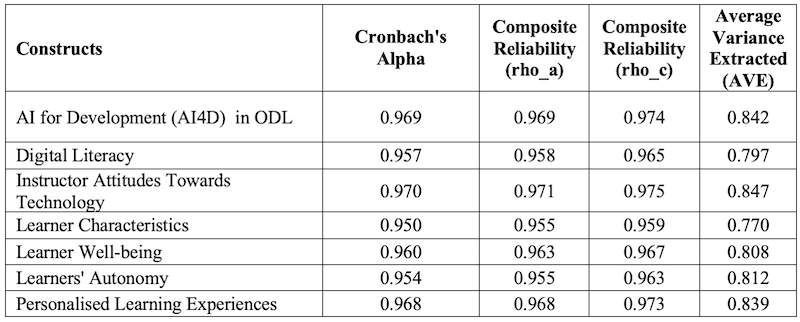
A structured, self-reporting questionnaire was developed to assess the key variables of the study. The tool consisted of 35 items across seven subscales, with each subscale representing one construct: AI4D usage in ODL, Learners' Autonomy, Learners' Well-being, Digital Literacy, PLE, Learners Characteristics, and Instructor Attitudes towards Technology. Each subscale initially included seven items, rated on a 5-point Likert scale (1 = Strongly Disagree to 5 = Strongly Agree). Based on the outer loading values obtained from Smart-PLS, one item (the third item under Learners’ Autonomy) was removed due to low reliability. Measurement Model analysis was conducted using PLS-SEM in Smart PLS 4.0 for construct validity and internal consistency. Cronbach’s alpha, composite reliability, and average variance extracted (AVE) were calculated and are presented in Table 1.
Table 1: Construct Reliability and Validity of Instrument
Data were collected digitally using Google Forms. The links were shared with eligible students through institutional communication channels. Prior to participation, students were informed about the purpose of the study and informed consent was obtained. Anonymity and confidentiality were assured. The survey was administered in English and took approximately 10-15 minutes to complete.
In the context of ODL, the present study conceptualised AI4D as the independent variable. The primary learner outcomes (learner autonomy, digital literacy, and learner well-being) were dependent variables. Two key moderating variables were proposed: learner characteristics and instructor attitude towards technology. PLE was modeled as a mediating variable, reflecting how AI4D contributed indirectly to the enhancement of learner outcomes. The conceptual framework is presented in Figure 1.
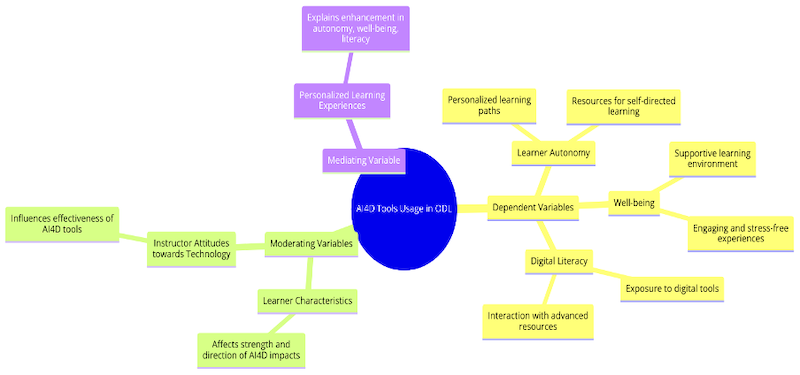
This framework not only informed the design of the research instrument but also structured the hypothesis formulation and statistical analysis approach. Each relationship in the framework was tested using Partial Least Squares Structural Equation Modeling (PLS-SEM) by SmartPLS 4.0 with bootstrapping to assess significance. Based on this, the following five hypotheses were formulated:
H1: AI4D usage in ODL positively affects learner autonomy by providing personalised learning paths and resources that allow learners to control their learning process.
H2: AI4D usage in ODL enhances well-being by offering supportive, engaging, and less stressful learning environments.
H3: AI4D usage in ODL improves digital literacy through exposure to and interaction with advanced digital resources.
H4: Learner characteristics and Instructor Attitudes toward technology moderate the relationships between AI4D usage in ODL and the dependent variables, affecting the strength and direction of these effects.
H5: PLE mediate the relationship between AI4D usage in ODL and the dependent variables, explaining how AI4D enhances learner autonomy, well-being, and digital literacy.
This integrated framework allowed the study to examine both the direct and indirect effects of AI4D usage within ODL settings, addressing each of the five research questions through hypothesis-based analysis.
Direct path analysis was used for RQ1, RQ2, and RQ3 to assess the impact of AI4D usage on learners' autonomy, well-being, and digital literacy. Moderation analysis using Interaction was applied for RQ4 to analyse the role of learner characteristics and instructor attitudes. Mediation analysis was conducted for RQ5 to evaluate the mediating effect of PLE. Bootstrapping was used to test the significance of all the paths. Construct reliability and validity were established through outer loadings, Composite Reliability (CR), Average Variance Extracted (AVE), and T-statistics.
Table 2 presents the path coefficient from AI4D usage to learner autonomy as 0.848, indicating a strong positive relationship (supporting H1). The mean value for this path was 0.837, with a relatively low standard deviation of 0.078. The T statistic of 10.856 was highly significant (p < 0.001), suggesting that AI4D usage significantly impacted and enhanced Learner Autonomy in ODL. This supports the hypothesis that personalised learning paths and resources provided by AI4D empower learners to control their learning process, aligning with theories of self-directed learning.
Table 2: Path Coefficients, T-Statistics, and Significance Levels for AI4D Usage on Learner Outcomes
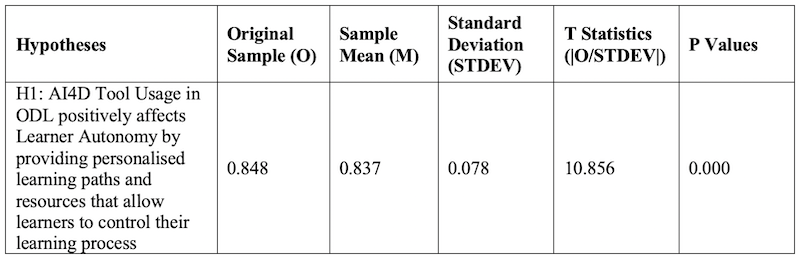
Table 3 shows that the path coefficient from AI4D usage to Well-being was 0.673, indicating a moderately positive relationship. The mean value for this path was 0.660, with a slightly higher standard deviation of 0.126 compared to learner autonomy. The T statistics of 5.353 were also highly significant (p < 0.001), suggesting that AI4D usage significantly contributed to enhancing Well-being in ODL. This supports the hypothesis that AI4D creates supportive, engaging, and less stressful learning environments, thereby positively impacting learners’ well-being. These results support Hypothesis 2, confirming that AI4D usage contributes to enhancing well-being in ODL settings by fostering engaging, supportive, and less stressful learning environments.
Table 3: Path Coefficients, T-Statistics, and Significance Levels for AI4D Usage on Wellbeing
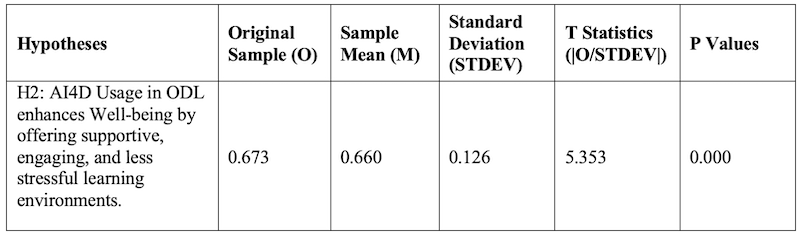
Table 4 shows that the path coefficient from AI4D usage to digital literacy was 0.810, indicating a strong positive relationship. The mean value for this path was 0.790, with a relatively low standard deviation of 0.099. The T statistic of 8.154 was highly significant (p < 0.001), indicating that AI4D usage significantly improved digital literacy in ODL. This aligns with the hypothesis that exposure to and interaction with advanced digital resources facilitated by AI4D contribute to enhancing learners’ digital literacy skills.
Table 4: Path Coefficients, T-Statistics, and Significance Levels for AI4D Usage on Digital Literacy
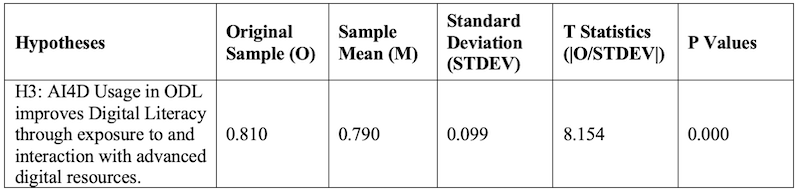
Figure 2 illustrates the moderating effects of Learner Characteristics (LC) and Instructor Attitudes (IA) on the relationship between AI4D usage and learner outcomes, supporting Hypothesis 5. Significant interaction effects are visible for IA on Digital Literacy (β = 0.404, T = 2.010), confirming moderation. While some paths show weaker or non-significant effects, the model highlights how these moderators influence the strength and direction of AI4D's impact. Table 5 below presents all the corresponding values.
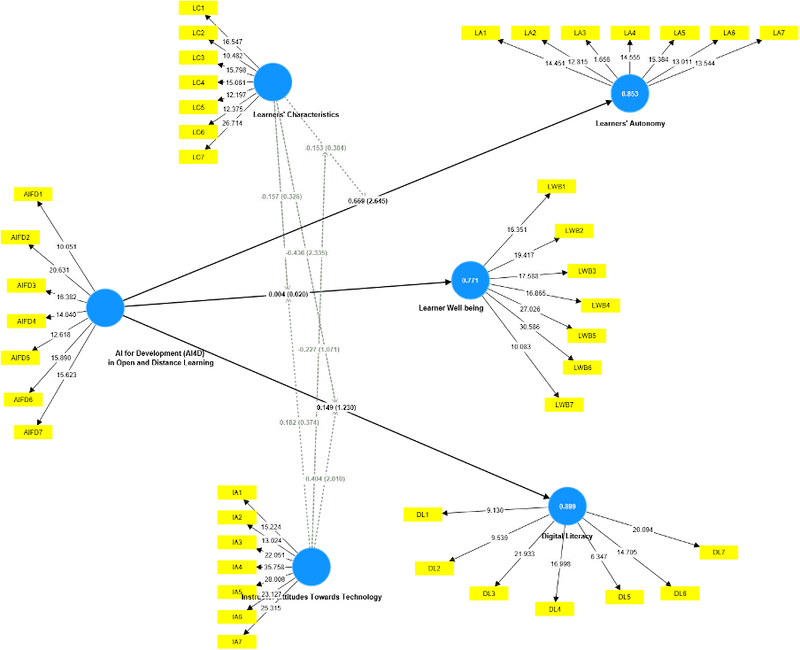
Table 5 suggests that learner characteristics and instructor attitudes towards technology serve as moderators in the relationships between AI4D Usage in ODL and the dependent variables, potentially influencing the strength and direction of these effects. Learner characteristics demonstrate a significant impact on digital literacy (path coefficient = 0.419, t statistic = 2.386, p = 0.017) and learner well-being (path coefficient = 0.832, T statistic = 3.655, p = 0.000), indicating their influential role in shaping these outcomes. Learner characteristics significantly affect learners’ autonomy (path coefficient = 0.522, T statistic = 2.152, p = 0.031). Instructor Attitudes towards technology exhibit varying impacts on relationships. While they significantly influence digital literacy (path coefficient = 0.204, T statistic = 1.117, p = 0.264), their direct effects on learner well-being and autonomy are non-significant. However, their interactions with AI4D usage in ODL significantly affect digital literacy (path coefficient = 0.404, T statistic = 2.010, p = 0.044), suggesting a potential moderating effect.
Table 5: Path Coefficients: Mean, STDEV, T Values, p Values
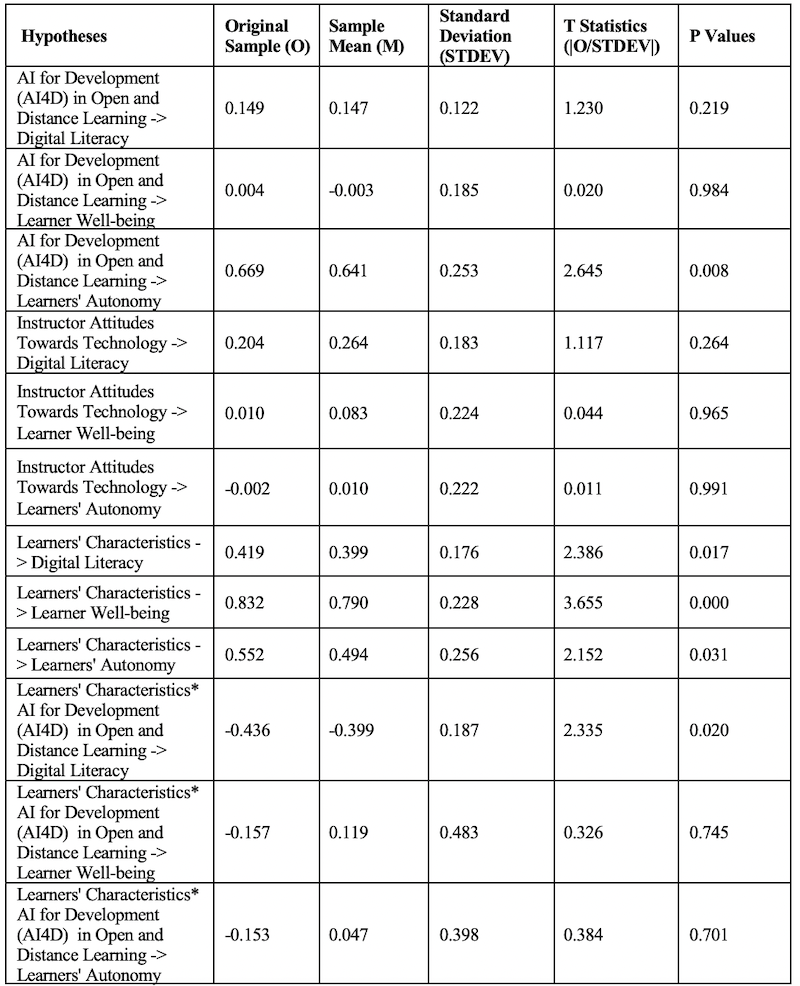
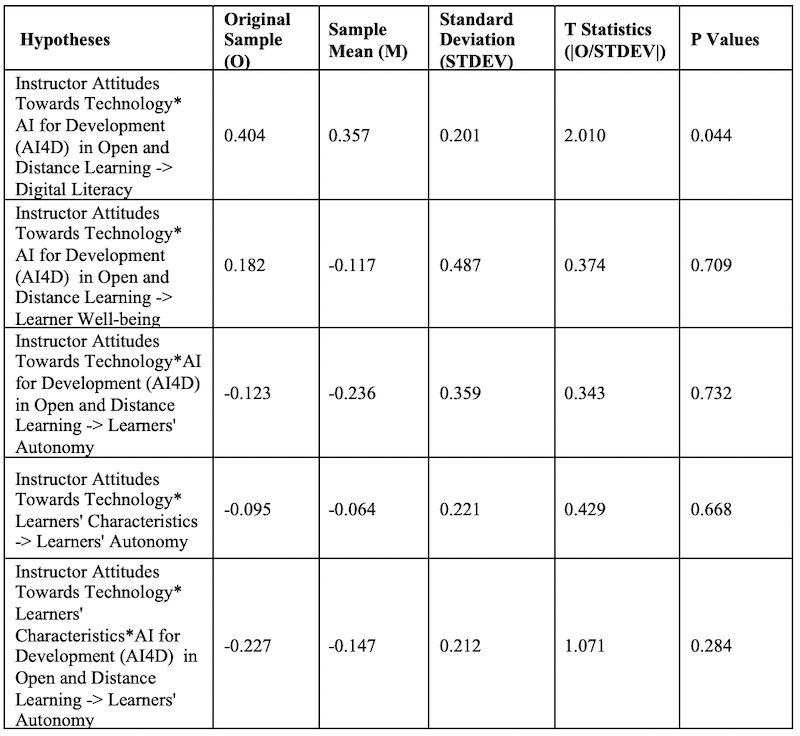
Figure 3 supports H4 by illustrating the mediating role of PLE between AI4D usage and learners' outcomes. Significant path coefficients from AI4D to PLE and from PLE to each variable confirm the mediation effect. This indicates that AI4D enhances learners' outcomes indirectly through personalised learning. Table 6 presents all the corresponding values.
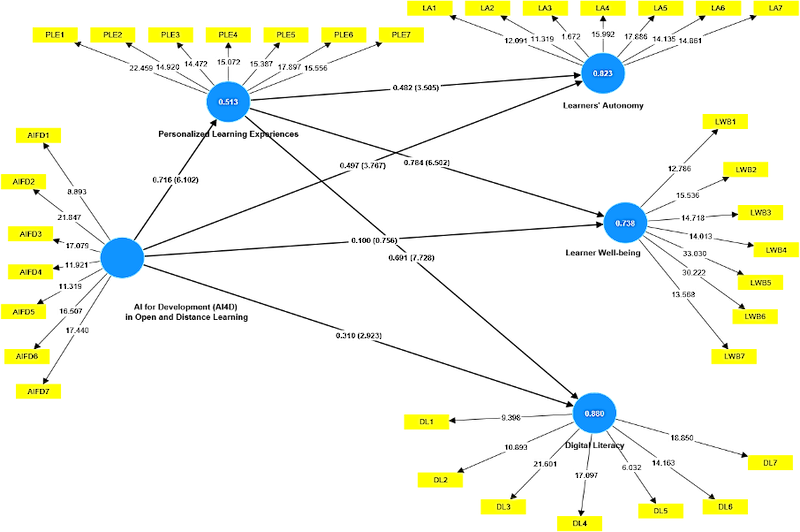
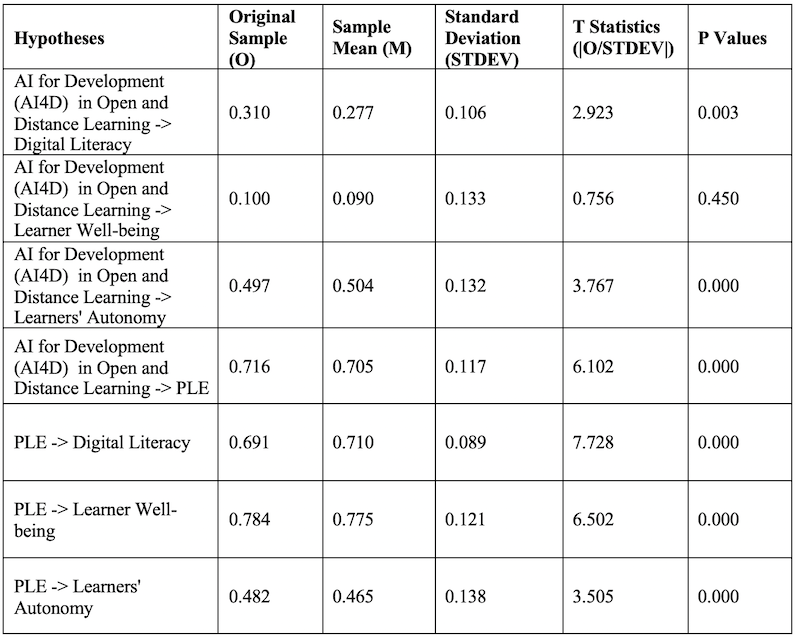
Table 6 presents a thorough examination of the proposed associations among AI4D usage in ODL, PLE, and key dependent variables: Digital Literacy, Learner Well-being, and Learners’ Autonomy. The findings reveal a significant positive link between AI4D usage and Digital Literacy (path coefficient = 0.310, T statistic = 2.923, p = 0.003), affirming the role of AI4D in enhancing digital literacy skills. A significant positive relationship was identified between AI4D usage and Learners’ Autonomy (path coefficient = 0.497, T statistic = 3.767, p < 0.001), indicating that these empower learners to assume greater control over their learning process. However, the direct impact of AI4D usage on Learner Well-being is non-significant (path coefficient = 0.100, T statistic = 0.756, p = 0.450), suggesting that AI4D alone may not directly influence learners’ well-being. Nonetheless, AI4D usage was significantly associated with PLE (path coefficient = 0.716, T statistic = 6.102, p > 0.001), underscoring its role in creating tailored learning environments. The analysis reveals the mediating effect of PLE in the relationship between AI4D usage and the dependent variables, with significant positive paths observed to Digital Literacy, Learner Well-being, and Learner’s Autonomy. These findings shed light on how AI4D enhances learning outcomes and experiences in ODL by fostering personalised learning environments.
Table 6: Path Coefficients: Mean, STDEV, T Values, p Values
The findings of this study provide valuable insights into the role of AI4D in ODL environments, particularly in the Indian context, where its effect on digital literacy was modest, and its direct effect on learner wellbeing was limited. These results underscore the importance of learner characteristics and instructor attitude in influencing outcomes (Kasinidou et al., 2023). Consistent with prior studies, AI4D was found to foster self-directed learning and autonomy (Lin & Wu, 2022). Unlike some previous research, the relationship between AI4D and digital literacy was weaker (Tinmaz et al., 2023), suggesting that factors like prior experience and motivation (Bacalja et al., 2022) are crucial. Learner traits, such as background knowledge and experience (Hsu et al., 2023), strongly influenced all three outcomes, while instructor attitude affected digital literacy but not well-being or autonomy (Al Enezi et al., 2022; Motshegwe & Batane, 2015). The findings imply that effective AI integration in ODL must consider both learner readiness and faculty engagement. Institutions should invest in targeted training and support systems to maximise AI’s benefits. Policies should address equity, access, and ethical AI use while fostering inclusive digital learning environments. Future research should explore the longitudinal effects of AI4D and focus on in-depth qualitative studies to understand learner experiences across diverse educational and cultural contexts.
Akgun, S., & Greenhow, C. (2022). Artificial intelligence in education: Addressing ethical challenges in K-12 settings. AI and Ethics, 2(3), 431-440
Al Enezi, D.F., Al Fadley, A.A., & Al Enezi, E. G. (2022). Exploring the attitudes of instructors toward Microsoft Teams using the Technology Acceptance Model. International Education Studies, 15(1). https://doi.org/10.5539/ies.v15n1p123
Alhumaid, K., Al Naqbi, S., Elsori, D., & Al Mansoori, M. (2023). The adoption of artificial intelligence applications in education. International Journal of Data and Network Science, 7(1). https://doi.org/10.5267/j.ijdns.2022.8.013
Aljarrah, A., Ababneh, M., Karagozlu, D., & Ozdamli, F. (2021). Artificial intelligence techniques for distance education: A systematic literature review. TEM Journal, 10(4). https://doi.org/10.18421/TEM104-18
Al-Tkhayneh, K.M., Alghazo, E.M., & Tahat, D. (2023). The advantages and disadvantages of using Artificial Intelligence in education. Journal of Educational and Social Research, 13(4). https://doi.org/10.36941/jesr-2023-0094
Amreen, & Malik, A.A. (2021). Psychological well-being as a predictor of resilience among university students. Pakistan Journal of Psychological Research, 36(4). https://doi.org/10.33824/PJPR.2021.36.4.31
Apoki, U.C., Ali Hussein, A.M., Al-Chalabi, H.K.M., Badica, C., & Mocanu, M.L. (2022). The role of pedagogical agents in personalised adaptive learning: A review. Sustainability (Switzerland), 14, (11). https://doi.org/10.3390/su14116442
Bacalja, A., Beavis, C., & O’Brien, A. (2022). Shifting landscapes of digital literacy. Australian Journal of Language and Literacy, 45(2). https://doi.org/10.1007/s44020-022-00019-x
Celik, I. (2023). Exploring the determinants of Artificial Intelligence (AI) literacy: Digital divide, computational thinking, cognitive absorption. Telematics and Informatics, 83. https://doi.org/10.1016/j.tele.2023.102026
Crompton, H., & Burke, D. (2023). Artificial intelligence in higher education: The state of the field. International Journal of Educational Technology in Higher Education, 20(22). https://doi.org/10.1186/s41239-023-00392-8
de Melo-Minardi, R.C., de Melo, E.C., & Bastos, L.L. (2022). OnlineBioinfo: Leveraging the teaching of programming skills to life science students through learning analytics. Frontiers in Education, 7. https://doi.org/10.3389/feduc.2022.727019
Denovan, A., & Macaskill, A. (2017). Stress and subjective well-being among first year UK undergraduate students. Journal of Happiness Studies, 18(2). https://doi.org/10.1007/s10902-016-9736-y
du Boulay, B. (2023). Artificial Intelligence in education and ethics. In Handbook of open, distance and digital education. https://doi.org/10.1007/978-981-19-2080-6_6
Dua, A. (2021). Applications of Artificial Intelligence in open and distance learning. TechnoLEARN: An International Journal of Educational Technology, 11(2). https://doi.org/10.30954/2231-4105.02.2021.1
Flores-Vivar, J.M., & García-Peñalvo, F.J. (2023). Reflections on the ethics, potential, and challenges of artificial intelligence in the framework of quality education (SDG4). Comunicar, 30(74). https://doi.org/10.3916/C74-2023-03
Göksel, N. (2021). Anadolu University Open Education Faculty students’ opinions on the use of Artificial Intelligence based systems and applications. OPUS Uluslararası Toplum Araştırmaları Dergisi. https://doi.org/10.26466/opus.937331
Ha, S., & Jho, H. (2022). Physics education in the era of the Fourth Industrial Revolution through the concepts of hyper-convergence, hyper-connection, and super-intelligence. New Physics: Sae Mulli, 72(4). https://doi.org/10.3938/NPSM.72.319
Harris, K.M., Phelan, L., McBain, B., Archer, J., Drew, A.J., & James, C. (2016). Attitudes toward learning oral communication skills online: The importance of intrinsic interest and student-instructor differences. Educational Technology Research and Development, 64(4). https://doi.org/10.1007/s11423-016-9435-8
Hassad, R.A. (2013). Faculty attitude towards technology-assisted instruction for introductory statistics in the context of educational reform. Technology Innovations in Statistics Education, 7(2). https://doi.org/10.5070/t572013892
Hernández-Torrano, D., Ibrayeva, L., Sparks, J., Lim, N., Clementi, A., Almukhambetova, A., Nurtayev, Y., & Muratkyzy, A. (2020). Mental health and well-being of university students: A bibliometric mapping of the literature. Frontiers in Psychology, 11. https://doi.org/10.3389/fpsyg.2020.01226
Hsu, T.C., Chang, C., & Jen, T.H. (2023). Artificial Intelligence image recognition using self-regulation learning strategies: Effects on vocabulary acquisition, learning anxiety, and learning behaviours of English language learners. Interactive Learning Environments, 32(6). https://doi.org/10.1080/10494820.2023.2165508
Karapetyan, L.V. (2021). Research on the relationship of students’ emotional and personal well-being with intelligence indicators. Perspektivy Nauki i Obrazovania, 49(1). https://doi.org/10.32744/PSE.2021.1.28
Kasinidou, M., Kleanthous, S., & Otterbacher, J. (2023). Artificial Intelligence in everyday life: educating the public through an open, distance-learning course. Annual Conference on Innovation and Technology in Computer Science Education, ITiCSE, 1. https://doi.org/10.1145/3587102.3588784
Khan, T., & Thomas, S. (2022). Promoting positive education through constructivist digital learning heutagogy: An intervention outcome. Journal of Learning for Development, 9(2), 305-316. https://doi.org/10.56059/jl4d.v9i2.646
Kostopoulos, G., Panagiotakopoulos, T., Kotsiantis, S., Pierrakeas, C., & Kameas, A. (2021). Interpretable models for early prediction of certification in MOOCs: A case study on a MOOC for smart city professionals. IEEE Access, 9. https://doi.org/10.1109/ACCESS.2021.3134787
Kurubacak, G., Sharma, R.C., & Uğur, S. (2022). Living in the meta immersive smart 21st century and beyond: A digital transformation in Open and Distance Learning (ODL). TAM Akademi Dergisi. https://doi.org/10.58239/tamde.2022.02.001.x
Li, Y., Zhang, M., Bonk, C.J., & Guo, Y. (2015). Integrating MOOC and flipped classroom practice in a traditional undergraduate course: Students’ experience and perceptions. International Journal of Emerging Technologies in Learning, 10(6). https://doi.org/10.3991/ijet.v10i6.4708
Lin, B., & Wu, S. (2022). Digital transformation in personalized medicine with Artificial Intelligence and the internet of medical things. OMICS: A Journal of Integrative Biology, 26(2). https://doi.org/10.1089/omi.2021.0037
Mallik, S., & Gangopadhyay, A. (2023). Proactive and reactive engagement of Artificial Intelligence methods for education: A review. Frontiers in Artificial Intelligence, 6. https://doi.org/10.3389/frai.2023.1151391
Motshegwe, M.M., & Batane, T. (2015). Factors influencing instructors’ attitudes toward technology integration. Journal of Educational Technology Development and Exchange, 8(1). https://doi.org/10.18785/jetde.0801.01
Naidu, K., & Sevnarayan, K. (2023). ChatGPT: An ever-increasing encroachment of Artificial Intelligence in online assessment in distance education. Online Journal of Communication and Media Technologies, 13(3). https://doi.org/10.30935/ojcmt/13291
Ndhlovu, N.J., & Goosen, L. (2022). To what extent can multidisciplinary artificial intelligence applications enhance higher education? Open and distance e-learning in South Africa. Multidisciplinary Applications of Deep Learning-Based Artificial Emotional Intelligence. https://doi.org/10.4018/978-1-6684-5673-6.ch011
Ngoepe, M., Jacobs, L., & Mojapelo, M. (2022). Inclusion of digital records in the archives and records management curricula in a comprehensive open distance e-learning environment. Information Development, 40(2). https://doi.org/10.1177/02666669221081812
Ocaña-Fernández, Y., Fernández, L.A.V., Chiparra, W.E.M., & Gallarday-Morales, S. (2020). Digital skills and digital literacy: New trends in vocational training. International Journal of Early Childhood Special Education, 12(1). https://doi.org/10.9756/INT-JECSE/V12I1.201016
Selim, H.M., & Chiravuri, A. (2015). Identification of factors affecting university instructors’ adoption of hybrid e-learning. International Journal of Innovation and Learning, 17(4). https://doi.org/10.1504/IJIL.2015.069633
Shrivastava, R. (2023). Role of artificial intelligence in future of education. International Journal of Professional Business Review, 8(1). https://doi.org/10.26668/businessreview/2023.v8i1.840
Su, J., Ng, D.T.K., & Chu, S.K.W. (2023). Artificial Intelligence (AI) literacy in early childhood education: The challenges and opportunities. Computers and Education: Artificial Intelligence, 4. https://doi.org/10.1016/j.caeai.2023.100124
Tan, C.J., Lim, T.Y., Liew, T.K., & Lim, C.P. (2022). An intelligent tool for early drop-out prediction of distance learning students. Soft Computing, 26(12). https://doi.org/10.1007/s00500-021-06604-5
Tinmaz, H., Fanea-Ivanovici, M., & Baber, H. (2023). A snapshot of digital literacy. Library Hi Tech News, 40(1). https://doi.org/10.1108/LHTN-12-2021-0095
Vasiliev, A.D., & Eremeeva, G.R. (2023). The use of Artificial Intelligence in education. ТЕНДЕНЦИИ РАЗВИТИЯ НАУКИ И ОБРАЗОВАНИЯ, 100(1). https://doi.org/10.18411/trnio-08-2023-39
Wang, B., Rau, P.L.P., & Yuan, T. (2023). Measuring user competence in using artificial intelligence: Validity and reliability of artificial intelligence literacy scale. Behaviour and Information Technology, 42(9). https://doi.org/10.1080/0144929X.2022.2072768
Yamane, T. (1967). Statistics: An introductory analysis (2nd ed.), Harper and Row.
Yang, W. (2022). Artificial Intelligence education for young children: Why, what, and how in curriculum design and implementation. Computers and Education: Artificial Intelligence, 3. https://doi.org/10.1016/j.caeai.2022.100061
Author Notes
Ms Tanuja Khan is an Assistant Professor in the Department of Psychology at The Bhopal School of Social Sciences, Bhopal, Madhya Pradesh, an autonomous, NAAC ‘A+’ graded institution in its fourth consecutive cycle. Email: tanu.r0304@gmail.com (https://orcid.org/ 0000-0002-0013-4717)
Dr Amit Kumar Nag is a Professor at BSSS Institute of Advanced Studies with over 22 years of experience in higher education. He holds a doctorate in Finance and currently serves as Chairperson of International Collaborations, Research, and Consultancy. Email: tanu.k0304@gmail.com (https://orcid.org/0000-0001-6062-8340)
Dr Shibani Basu is a Professor, Department of English, The Bhopal School of Social Sciences, Bhopal. She has 26 years of teaching experience and a doctorate on the plays of Girish Karnad. She has authored and edited multiple books and research papers, and completed major research projects funded by UGC, ICSSR, and IITE. Email: tanujakhan@bsssbhopal.edu.in (https://orcid.org/0000-0003-0746-8848)
Prof (Dr) Vineeta Kaur Saluja is the Pro Vice Chancellor of Mangalayatan University, Jabalpur. With over 30 years in academia, she is an Honorary DLitt awardee and a distinguished scholar in English Literature. Email: tanu.r0304@gmail.com (https://orcid.org/0000-0003-0746-8848)
Cite as: Khan, T., Nag, A.K., Basu, S., & Saluja, V. (2025). Artificial Intelligence for Development (AI4D) usage, learner autonomy, wellbeing and digital literacy in ODL. Journal of Learning for Development, 12(2), 330-346.