Bernadictus Plaatjies, Micheal van Wyk and Aloysius Claudian Seherrie
2026 VOL. 13, No. 1
Abstract: Learning in Practice (LiP) as a dimension of Work-Integrated Learning (WIL) encourages student teachers to transform their teaching approaches by implementing innovative and evidence-based strategies that respond to the ever-changing (in this context) South African educational landscape. This research is grounded in the theory of transformative learning and the practice of mentoring. Additionally, it uses the social constructivist-interpretive lens to explore student teachers' lived learning in practice experiences during teaching practice placements. This exploratory study, conducted within an open and distance learning (OdeL) context, employed a qualitative approach, utilising a single-case study design and an online virtual videoconferencing platform for data collection. To generate themes, a manual thematic analysis process was employed, guided by the established thematic analysis framework. The findings revealed that participants echoed sentiments that mentoring in practice helped them grow and become professionals. Mentors also demonstrated effective teaching skills and encouraged them to present lessons that were well-received. Furthermore, mentors were accessible and approachable, providing guidance and constructive feedback on lesson presentations. Participants were exposed to authentic learning in practice contexts. Further research could explore school mentors' views of online assessments for learning in practice.
Keywords: learning in practice, work-integrated learning, mentoring, reflection, online teaching practice assessment
Higher education institutions in South Africa use the Minimum Requirements for Teacher Education Qualifications (MRTEQ) framework as a guide to assess and improve the quality of teaching practice as part of Work-Integrated Learning (WIL). Within this framework, lecturers (supervisors) evaluate teaching practices to assess their effectiveness. Supervisors encourage student teachers to reflect on their teaching practices in authentic and simulated classroom environments (Department of Higher Education and Training [DHET], 2015). This process, known as Learning in Practice (LiP), encourages students to transform their teaching approaches by implementing innovative and evidence-based strategies that respond to the ever-changing educational landscape. Conversely, Gravett and Kroon (2023) claimed that the standard of teacher education practices currently is ineffective in preparing student teachers for the complexities associated with their work. LiP forms a vital strategy for improving teaching methods and developing best practices for student teachers. Through observations and reflections, student teachers can learn from others (Svaricek, 2024).
Gains in LiP primarily relate to developing general pedagogical knowledge, including knowledge of adolescent development and learning. Understanding the importance and value of reflective practice is another positive. Moreover, Resch and Schrittesser (2023) opined that professional development can only be attained through deliberate practice on the part of the reflecting practitioner. Likewise, Li and Coper-Gencturk (2024) used the term "learning through teaching" to refer to how teachers should plan, implement, and reflect on their teaching, which enables them to construct new knowledge about the subject matter, teaching strategies, and learners.
Several studies have evaluated online teaching practice (TP) as part of WIL in teacher education (Abetang et al., 2020; Almodaires et al., 2021; Martin et al., 2019; Mokoena, 2017; Wang et al., 2023). Most of these studies were conducted in contact and blended learning contexts but at the point of writing this study, little research on WIL in an OdeL-learning context had been reported. This gap prompted the authors to explore the status of LiP as part of WIL at the School of Education of an open-distance e-learning (ODeL) university on the African continent. This college educates undergraduate and postgraduate students in teacher education. Since 2023, the headcount has shown that only 16,872 (37.5%) of the 44,986 final-year student teachers were visited in 2023. As 62.5% of the students were unsupervised, the task at hand was to assess all final-year student teachers. To pass the TP module (minimum of 50%), a student teacher had to complete a portfolio of evidence (with specific activities) that accounted for 80% and a TP placement evaluation that accounted for 20% towards the final mark of 50%. For this study, we focused on the LiP experiences of final-year student teachers in 2024 (44,986) during TP placements for the Bachelor of Education (BEd) and the Postgraduate Certificate of Education (PGCE). A blended approach, combining face-to-face classroom visits and online videoconferencing (Microsoft Teams), was used during this exercise.
The primary research question the study aimed to answer was as follows: How do final-year teaching practice students experience learning in practice at an ODeL College of Education? The sub-research questions (SRQs) were:
The study is based on transformative learning and mentoring in practice theories (Hoggan & Kloubert, 2020; Mezirow, 1996; Sammut, 2014). Hoggan and Kloubert (2020, p. 300) postulated that the transformative learning into practice is:
seemingly most the obvious way of thinking about transformative learning in practice is for the educator to purposefully try to foster an epochal transformation... rather, ... fostering the skills and habits whereby learners assess arguments, negotiate their own purposes, values, and meanings, become more aware and critically reflective of assumptions, and become more able to fully and freely participate in discourse.
In aligning our theoretical framework (transformative and mentoring theories) with the research problem and the research questions, we argue that the selected theories provide a suitable lens for studying mentoring as a critical dimension of LiP, reflection as a dimension of LiP, and the management of class in practice. These themes form the central focus of the literature discussion, mainly because there is a paucity of research on them within the South African higher educational context.
LiP is always accompanied by numerous challenges for student teachers. Tasks and interactions with students are novel for teaching practice, lesson planning and providing clear instructions for students (Attard Tonna, 2021; Chizhik & Chizhik, 2018; Clarke et al., 2014). When inexperienced preservice student teachers fail to understand instructions, they might feel uncertain about their teaching skills, which can stem from their limited pedagogical content knowledge (Becker et al., 2019; Butler & Cuenca, 2012). Student teachers often enter school programmes with rigid views about what and how minority students learn; they are less confident in their ability to influence the learning of students from diverse backgrounds and to develop culturally responsive instruction (DeCastro-Ambrosetti & Cho, 2011). Moreover, Arnsby et al. (2024) pointed out that mentor teachers are sometimes not well-trained, inexperienced and struggle to successfully guide student teachers. This is especially true in the complex and challenging educational contexts of South Africa. With the evolution of mentoring models over time (Glover et al., 2024), we argue that current research is limited, hence, this research aims to address these gaps.
Mentoring can be used as a teaching strategy to support student teachers’ skills in learning to teach and contribute to their professional and personal growth (Mena et al., 2017; Attard Tonna, 2021). Arnsby et al. (2024) regard mentor education for practice teachers and mentors’ professional learning as an underdeveloped area in research. Professional development of in-service teachers is often necessary, considering mentoring has been considered as an effective means for in-service teachers to gain the skills needed for effective teaching and learning (Hairon et al., 2020; Attard Tonna, 2021). Mentoring helps preservice teachers develop proficiency in the pedagogical and management skills essential for effective lesson coordination. Mukeredzi (2017) concluded that mentoring is an effective learning catalyst through reflection as students learn about the ‘self’ in context.
According to Mbhiza et al. (2024), mentors play a crucial role in providing specialised content, general pedagogical knowledge, and knowledge of assessment, thereby facilitating opportunities for mentees to develop skills in various areas. During the supervised situation, mentors provide feedback and help the student teachers reflect on their actions in a positive, supportive, and question-based manner through observation and inquiry (Attard Tonna, 2021). Consequently, meaningful learning to teach should occur when pre-service teachers can develop their ideas about teaching, have the autonomy to practise these ideas, and take the initiative to improve their teaching skills (Kemmis et al., 2014). Mentors play a crucial role in psychosocial and career development, providing role modelling and social and emotional support that enable mentees to develop a sense of professional self, acceptance, and confirmation in a new environment (Hudson, 2017; Maphosa & Ndamba, 2012; Mitchell et al., 2017; Shumba, 2016). Reflection and feedback are crucial as they identify both strengths and weaknesses, aiming to attain the desired goals (Mubuuke et al., 2021). Mentor functions involve encouragement and friendship, which take the form of role modelling of trainee teachers as well as showing continued support, encouragement, and appreciation to the student teacher (Elmahdi et al., 2019).
Reflection in practice is another underresearched theme, despite its various advantages for student-teachers. Wang et al. (2023, p. 1), for instance, reported that “building preservice teachers' capacities with in-depth reflections on their acquired knowledge, and practicum practice has become indispensable as part of the field experience requirements of teacher education programs.” Gravett and Kroon (2023) claimed that reflective practice facilitates the development of new knowledge, skills, and behaviours in student teachers by promoting critical contemplation of actions in real teaching environments. After gaining practical experience, students need to reflect deeply on what they have learned. Sullivan et al. (2016) noted that they should be thoughtful about their experiences, consider their practice from diverse perspectives, and be open to repositioning their beliefs and philosophies based on what they learn. This will lead to a far better understanding of one's capabilities, forcing each student to take a deeper look at their actions (Myers, 2022). Aiming to address the needs of all learners, Slade et al. (2019) affirmed that the purpose of reflective practice in pre-service education is to empower teacher candidates to apply the necessary coursework in the classroom in a way that impacts the success of their diverse students. Grieshaber and Philp-Clark (2024) explained that reflections can spark continuous learning, thereby enhancing the quality of professional practice. In contrast, Slade et al. (2019) noted that reflective practice becomes crucial when teaching at-risk students who are confronted by adverse conditions.
Sullivan et al. (2016) emphasised that there are variations and similarities in the advice, tools, sequences, cycles, and guides that teachers may choose to draw from when engaging in the process of critical reflection. For instance, the pragmatic approach of active reflection involves identifying challenges, ongoing examination, analysis, and verification of beliefs related to those challenges. Slade and her colleagues (2019) believed this higher level of reflection would enable the student teacher to reach a deeper level of transformative learning, and instil a sense of teacher autonomy that challenges conventional assumptions and beliefs. This approach may lead to context-responsive pedagogies that cater to the unique and diverse needs of learners (Slade et al., 2019). The documentation of important experiences is crucial; hence, Myers (2022) argued that thinking should be made visible by combining the reflective elements of description and critical reflection as a sequential framework to develop metacognition skills, self-awareness, and consideration of multiple viewpoints through writing. Student teachers can pin down thoughts, feelings, and reflections on daily, real-life experiences in the classroom, using reflective journals and engaging in discussions with peers and mentors. These reflections should be made in conjunction with external guidelines established by educational authorities (Arslan, 2024). In the case of our students, reflections should include a discussion of lesson plans, instructional and assessment activities, learning materials, and communication skills, which are discussed with the mentor teacher and supervisor.
According to Trpin (2023, p. 42) classroom management includes “keeping track of attendance, accepting excuses, and recording absences, recognising and praising students for their achievements and in maintaining a positive and encouraging atmosphere in the classroom”. Mbunyuza-De Beer Menlah (in Taole, 2015, p. 139) opined that “for classroom practitioners, management involves table arrangements, materials, time and content to be learned. The mentor, as the experienced teacher, helps the student teacher to break down content into daily packages, and organises the learners' activities into manageable units”. Managing sound discipline is considered one of the greatest challenges for 21st-century teachers, and inexperienced student teachers may find this task daunting due to a lack of classroom management skills and self-confidence (Aldabbus, 2020; McGarr, 2021). Maintaining control in classrooms and responding to disruptive behaviour, while creating conducive learning spaces, can be demanding. McGarr (2021) added that reflective practice enhances student teachers' understanding of their actions and assumptions when dealing with disruptive behaviour.
This research is rooted in the social constructivist-interpretivist paradigm. According to Denzin and Lincoln (2018), this paradigm aims to understand and interpret the perspectives of individuals within their social context. This exploratory study employed a qualitative approach, aiming to provide a descriptive interpretation of students' experiences during teaching practice (Creswell & Poth, 2018). According to Creswell and Plano Clarke (2023), case study design aims to gain a deeper understanding of a specific phenomenon, which is why we adopted this design. Our motivation was to understand students’ experiences during LiP.
Ethical clearance was obtained from an existing project (Ref #2018/03/14/90060059/ MC). We planned to evaluate student-teachers’ online during teaching practice sessions using Microsoft Teams as a virtual conferencing platform. Before interviewing them, we explained the purpose of the study to them. Participants were informed about the confidentiality and anonymity of their participation, as well as the voluntary nature of their involvement. The validity and reliability of the interview questions were ensured through expert assessment and probing during the interviews (Naz et al., 2022). Four PGCE and six BEd students were coded for easy reference, specifically in the Senior/FET, Intermediate, and Foundation phases (coded as PGCEA1-2 and PGCEA3-4). Of the six BEd students, two registered for the Senior/FET Phase (coded as Intermediate, and Senior/FET 4th year BEd-B1-2) and four registered for the BEd Foundation Phase (coded as Foundation-B3-6). A manual thematic analysis process was adopted, utilising Braun and Clarke’s (2013) framework to code the data. This process included familiarisation with the data, the generation of initial codes, the identification of themes, the review of these themes, and naming, followed by the production of the report. The trustworthiness of the study was ensured through the process of member checking (Nowell et al., 2017).
The themes reported by the student teachers revealed their learning in practice from school placements.
The first question explored how students experience mentoring in practice. Most of the participants echoed the sentiment that mentoring in practice helps them grow and become professionals, how mentors demonstrated teaching skills and encouraged them to present effective lessons. One participant mentioned:
She gave me a lot of advice and helped me with resources for integration in my Foundation lessons. My mentor teacher showed me teaching skills in particular for large classes. She just encouraged me to do my best, good teacher and do my lessons with a positive attitude. (Foundation Phase, 4th Year BEd-B5)
Additionally, this participant noted that the mentor was a resourceful person who provided constructive feedback. A female participant expressed her gratitude to her mentor:
She (mentor) was very supportive throughout my supervision. She organised the resources and also provided other resources that were not at school. It makes you feel that supervision is not something that we have to be afraid of, but a constructive way of assisting one another. (Foundation Phase, 4th Year BEd-B3)
In support of the latter view, some participants described their mentors as supportive and as a guide in lesson planning. For example:
My mentor teacher provided me with amazing support and guidance throughout the lesson, she gave me constructive feedback on my lesson plan, and her support gave me the strength to carry on and finish my lesson. (Senior & FET Phase, 4th Year BEd-B1)
The latter sentiment is expressed by the participant as a very important virtue, namely, confidence. Due to the mentor's guidance, this participant stated that she grew in confidence as she learned more through practice:
Yes, a lot. I was lacking confidence, and the mentor supported me to gain Confidence. She shared the Science content. I have gathered knowledge, taught me to believe in myself, and keep practising all the time. (Foundation Phase, 4th Year BEd-B4)
Mentors are experienced in teaching and disciplining large classes. This is evident in controlling, instilling discipline and managing the class. Another participant said:
Yes, I did benefit a lot because he taught me how to plan for a lesson and the method that I can use to keep the class disciplined since he knows these learners better than me. (Senior & FET Phase, 4th Year BEd-B2
Another participant said:
She helped build my confidence when teaching and how to manage difficult learners. (Senior & FET Phase, PGCE-A4)
Finally, this participant summarised how the mentor was accessible and approachable, providing guidance and giving constructive feedback on lesson presentations. This was a huge learning experience, as is evident in the following excerpt:
The principal and my mentor teacher were accessible and approachable, always willing to answer questions and provide guidance. My mentor teacher assisted me to plan and prepare lesson plans, classwork, homework, and enrichment exercises for the students. She provided me with resources such as textbooks and handouts to enhance my lessons during my supervision. After conducting my lessons, she provided feedback which helped me understand my strengths and areas for improvement. The principal permitted me to use the school Wi-Fi for my online supervision, he also allowed me to use the school library to do research for online supervision. (Senior & FET Phase, PGCE-A1)
In the second question, teaching practice students’ experiences of reflection in practice during school placements were captured.
It was evident that the participants constantly thought critically and reflected on their LiP in terms of advice, support, and guidance from their school mentors. They reflected on what they had learned from theory about becoming a professional in what, how, and why they teach. This female participant explained:
After I had presented my grade 3 Mathematics lesson, I gave the learners an activity based on the maths problem. I realised...reflects... decided to change the graph activity because the learners got very confused with the numbering of items starting at 0 and did not colour the blocks in the graph in the right order. (Foundation Phase, 4th BEd-B6)
Furthermore, it was evident from the sentiments expressed by several participants that mentors guided them to incorporate reflection as a valuable skill in becoming a good teacher. It was also stressed that participants reflected on possible strategies for lesson improvement, as can be seen from the reflection of this participant on her Grade 10 lesson:
Some of the learners were not actively involved, and the evidence of improvisation for more clarity and use of technology was poor, but in future, I will make use of forms of LTSM for better understanding. (Senior & FET Phase, PGCE-A4)
The final question examined how teaching practice benefited students by enabling them to manage classes in practice.
The participants alluded to how mentors guide and support them in classroom management practice, especially in setting a trend for learning behaviour and rules for effective teaching. At some schools, participants mentioned that they were also exposed to a school disciplinary committee that dealt with school rules, general discipline, and a learner code of conduct. One of the participants mentioned:
Lesson planning for Grade 11, Setswana: Helped me with effective classroom management, setting clear rules of what is expected in class, which improved lesson quality, allowed for consistent learning, and fostered classroom confidence and preparedness. (Senior & FET, 4th year BEd, B2)
One of the other student teachers was impressed by how his mentor and learners collectively set class rules. In the Grade 6 class, for example, he reminded his learners about their code of conduct, and the need to adhere to rules:
I learned many useful ways from school rules, learner code of conduct and the disciplinary committee, which is part of managing the classroom. (Intermediate Phase, 4th year BEd, B1)
Another participant also gained confidence, which enabled her to communicate well and control herself while simultaneously noting:
My confidence has increased, I am able to talk to a congregation and I can also manage my temper with the learners and in general, especially learners who misbehave. (Senior & FET, PGCE-A3)
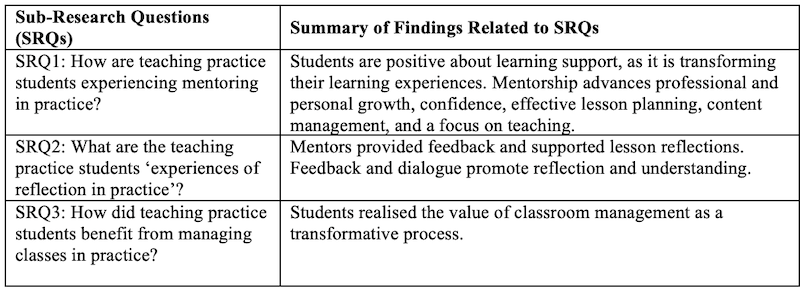
Table 1 below presents a summary of the main findings.
Table 1: Summary of the Main Findings
This study emphasised transformative learning and mentoring in practice theories, focusing on the learning experiences of distance education student teachers in practice. We assert that selecting this theoretical framework was justified because the different learning spaces exposed students to real classroom dynamics and practices. This equipped student teachers to be critical of their lessons, taught in order to become competent and manage classroom spaces effectively.
First (SRQ1), student teachers were positive about the quality of mentor support and how it transformed their LiP experiences. Scholars emphasise that a good mentor will utilise this as a powerful teaching strategy to assist student teachers in their professional growth (Mena et al., 2017; Schatz-Oppenheimer, 2017). Participants expressed their belief that mentorship is about transferring the knowledge and skills of a seasoned teacher. Researchers agree that mentoring is an effective means of preparing student teachers to acquire the skills necessary for conducting effective lessons and is the most effective way to enhance teachers' professional knowledge, competence, and well-being during student placements (Depaepe & König, 2018; Hairon et al., 2020). The findings revealed that mentorship supports the participants' self-belief and confidence in lesson planning, content management, and an improved focus on teaching. This finding corroborates the ideas of Mitchell et al. (2017), who suggested that student teachers should receive assistance in these areas.
Second (SRQ2), the student teachers were requested to reflect on their LiP experiences. The findings indicate that the mentors provided feedback and supported students with lesson reflections. Nel and Marais (2021) suggested that feedback is crucial for student teachers, as they should be allowed to reflect on their lessons, incorporate the guiding feedback of their mentors, ask questions, and participate in conversations with them (Kemmis et al., 2014). Dialogue promotes reflection and exploration of understanding, involving encouragement, friendship, and appreciation for the student-teacher (Elmahdi et al., 2019). Thus, feedback should be an ongoing dialogue between mentors and student teachers should be observed repeatedly to ensure changes to teaching practice approaches. Importantly, Brooks et al. (2019) confirmed that feedback facilitates student self-assessment, leading to improved professional practice. It emerged from the extracts that participants had to reflect constantly on how to improve their experiences with advice and support from school mentors. Slade et al. (2019) concurred that the best way to learn in practice was to expose students to field-based learning experiences. This approach can enhance and instil a sense of reflective practice, connecting course content (theory) to real-world applications (authentic learning). It is argued that reflection in practice as a means of LiP enhances student teachers' ability to reflect and connect classroom experiences during TP placements. In doing so, student teachers utilise the theoretical knowledge and pedagogical skills they have gained during their studies and apply them effectively in practice (Gravett & Kroon, 2023; Nielsen, 2024).
Finally (SRQ3), participants noted that they had benefited from mentor support in managing their classes. Classroom management, a transformative process, refers to teachers' actions to create, facilitate, and maintain an effective learning environment (van Wyk et al., 2015). Teaching practice provides an authentic context within which student teachers are exposed to the reality of being a teacher. Since student teachers are exposed to this new learning environment, their ability to process such events depends significantly on their experiences in perceiving and interpreting classroom events. This finding aligns with Çakmak (2019) that experience is critical for student teachers encountering challenges in unfamiliar circumstances. The role of knowledgeable mentors is invaluable in assisting student teachers during critical decision-making and while managing students with behavioural issues (Abetang et al., 2020). The teaching practice programmes aim to prepare student teachers to become quality teachers equipped with the teaching skills and capabilities necessary to meet the demands of the teaching profession (Pramesti, 2021). This study was unable to demonstrate that student teachers struggled with learner behaviour. This finding mirrors that of McGarr (2021, p. 275), who explained that there is “the need for opportunities for pre-service teachers to experience aspects of challenging pupil behaviour in less ‘pressurised’ environments”.
The generalisation of these findings is subject to certain limitations. This study explores only one dimension of WIL, namely LiP and not LfP (Learning for Practice). By not addressing LfP, the study might not fully depict how students reflect on their practical experiences. Second, the current exploratory qualitative design study was limited to a small sample of final-year students registered at an ODeL university. While the study may provide profound insights into the experiences of the specific group studied, it could lack the breadth to make broader claims about the student population. Therefore, the results should not be generalised. Furthermore, this study utilised only the online Microsoft Teams videoconferencing platform, rather than other online platforms, which might yield different outcomes compared to face-to-face TP assessments. Finally, a major challenge emerged: the unscheduled power outages (load shedding) by the South African power utility Eskom (the sole electricity supplier) created anxiety for both student teachers and supervisors during the online assessments.
However, the present study makes several noteworthy contributions to the epistemology of learning in practice as a dimension of WIL stipulated in the MRTEQ policy. The primary objective should therefore be to design guidelines for all undergraduate TP modules, with a focus on the blended supervision of LiP and LfP. Further research could explore the views of school mentors about online assessments for LiP and LfP. A comparative study of Microsoft Teams as an online tool and face-to-face teaching practice assessments is needed to examine their potential impact on the TP policy and assessment practices at the ODeL college.
The positive feedback from student teachers regarding the quality of mentor support highlights its crucial role in enhancing their learning, skills, and confidence during practice experiences. These findings showed the importance of quality mentor support in schools. Additionally, it provides valuable information to researchers whose scholarship is centred around this topic.
The findings highlighted the critical role of mentors in supporting student teachers through feedback and lesson reflections. For practitioners, this study underscored the crucial role of mentorship programmes in reflective practices to improve teaching skills. It suggests a valuable area for further research on the impact of mentor feedback on student-teacher development.
The study exposed the importance of encouraging regular reflection sessions where student teachers can analyse their classroom experiences within authentic contexts for improvement. Therefore, research is needed to investigate the specific effects of experiences and reflective practices on the development of such analysis skills. Additionally, this study highlighted the need to research how student teachers encounter difficult learner behaviour, as this can provide valuable information to improve teacher training.
Attard Tonna, M. (2021). An understanding of the way mentors and school leaders can support the effective transition of beginning teachers into the teaching profession. Teacher induction and mentoring: Supporting beginning teachers, 173-195. https://doi.org/10.1007/978-3-030-79833-8
Abetang, M.A., Oguma, R.N., & Abetang, A.P. (2020). Mentoring and the difference it makes in teachers’work: A literature review. European Journal of Education Studies, 7(6). http://dx.doi.org/10.46827/ejes.v7i6.3146
Aldabbus, S. (2020). Challenges encountered by student teachers in practicing teaching. British Journal of Education, 8(7), 1-8.
Almodaires, A.A., Almutairi, F.M., & Almsaud, T.E. (2021). Pre-service teachers' perceptions of the effectiveness of Microsoft Teams for remote learning. International Education Studies, 14(9), 108-121. https://doi.org/10.5539/ies.v14n9p108
Arnsby, E.S., Aspfors, J., & Jacobsson, K. (2025). Teachers’ professional learning through mentor education: A longitudinal mixed-methods study. Education Inquiry, 16(4), 572-591. https://doi.org/10.1080/20004508.2023.2273019
Becker, E.S., Waldis, M., & Staub, F.C. (2019). Advancing student teachers' learning in the teaching practicum through content-focused coaching: A field experiment. Teaching and Teacher Education, 83, 12e26. https://doi.org/10.1016/j.tate.2019.03.007
Braun, V., & Clarke, V. (2013). Successful qualitative research. A Practical guide for beginners. Sage Publishers.
Brooks, C., Carroll, A., Gillies, R.M. & Hattie, J. (2019). A matrix of feedback for learning. Australian Journal of Teacher Education, 44(4), 14-32. https://doi.org/10.14221/ajte.2018v44n4.2
Butler, B.M., & Cuenca, A. (2012). Conceptualizing the roles of mentor teachers during student teaching. Action in Teacher Education, 34(4), 296e308. https://doi.org/10.1080/01626620.2012.717012
Çakmak, F. (2019). The relationship between teaching experience level and the classroom management orientations of English language teachers. Balikesir University Journal of Social Sciences Institute, 22(41). http://doi:10.31795/baunsobed.581904
Chizhik, E.W., & Chizhik, A.W. (2018). Using activity theory to examine how teachers' lesson plans meet students' learning needs. The Teacher Educator, 53(1), 67-85. https://doi.org/10.1080/08878730.2017.1296913
Clarke, A., Triggs, V., & Nielsen, W. (2014). Cooperating teacher participation in teacher education: A review of the literature. Review of Educational Research, 84(2), 163e202. https://doi.org/10.3102/0034654313499618
Creswell, J.W., & Plano Clark, V.L. (2023). Revisiting mixed methods research designs twenty years later. Handbook of mixed methods research designs, 21-36.
Creswell, J.W. & Poth, C.N. (2018). Qualitative inquiry and research design: Choosing among five approaches (4th ed.). SAGE.
Denzin, N.K., & Lincoln, Y.S. (2018). The Sage handbook of qualitative research. Sage.
DeCastro-Ambrosetti, D., & Cho, G. (2011). A look at “lookism”: A critical analysis of teachers’ expectations based on students’ appearance. Multicultural Education, 18(2), 51-54. https://eric.ed.gov/?redir=http%3a%2f%2fwww.caddogap.com%2fperiodicals.shtml
Depaepe, F., & König, J. (2018). General pedagogical knowledge, self-efficacy and instructional practice: Disentangling their relationship in pre-service teacher education. Teaching and Teacher Education, 69, 177e190. https://doi.org/10.1016/j.tate.2017.10.003
Department of Higher Education and Training. (2015). Revised policy on the minimum requirements for teacher education qualifications. 596(38487). Pretoria: Government Printer.
Elmahdi, I., Al-Haddad, S.S., & Al-Hariri, R. (2019). The effectiveness of continuing professional development programs in enhancing teachers 'competencies to achieve teachers 'standards. International Journal of Recent Scientific Research, 10(2), 30946-30951. http://doi.org/10.24327/Ijrsr. 2019.1002.3159
Glover, A., Jones, M., Thomas, A., & Worrall, L. (2024). Finding the joy: Effective mentoring in teacher education. Mentoring & Tutoring: Partnership in Learning, 32(4), 1-18. https://doi.org/10.1080/13611267.2024.2360605
Gravett, S., & Kroon, R. (2023). Learning to become a teacher: Student teachers’ experiences and perceptions of a one-year initial teacher education programme. Educational Studies, 49(6), 861-876. https://doi.org/10.1080/03055698.2021.1935216
Grieshaber, S. & Philp-Clark, C. (2024). Teacher critical reflection: What can be learned from quality research? Australian Educational Research, 51, 697-717. https://doi.org/10.1007/s13384-023-00619-7
Hairon, S., Loh, S.H., Lim, S.P., Govindani, S.N., Tan, J.K.T., & Tay, E.C.J. (2020). Structured mentoring: Principles for effective mentoring. Educational Research for Policy and Practice, 19(2), 105-123. https://doi.org/10.1007/s10671-019-09251-8
Hoggan, C., & Kloubert, T. (2020). Transformative learning in theory and practice. Adult Education Quarterly, 70(3), 295-307. https://doi.org/10.1177/0741713620918510
Hudson, P. (2017). Mentoring as professional development: ‘Growth for both’ mentor and mentee. Professional Development in Education, 39(5), 771-783. https://doi.org/10.1080/19415257.2012.749415
Kemmis, S., Heikkinen, H.L.T., Fransson, G., Aspfors, J., & Edwards-Groves, C. (2014). Mentoring of new teachers as a contested practice: Supervision, support and collaborative self-development. Teaching and Teacher Education, 43, 154-164. https://doi.org/10.1016/j.tate.2014.07.001
Li, J., & Copur-Gencturk, Y. (2024). Learning through teaching: The development of pedagogical content knowledge among novice mathematics teachers. Journal of Education for Teaching, 50(4), 582-597. https://doi:10.1080/02607476.2024.2358041
Maphosa R., & Ndamba, G.T. (2012). Supervision and assessment of student teachers: A journey of discovery for mentors in Bulawayo, Zimbabwe. Journal of Emerging Trends in Educational Research and Policy Studies, 3(1), 76-82. https://hdl.handle.net/10520/EJC135410
Martin, F., Ritzhaupt, A., Kumar, S., & Budhrani, K. (2019). Award-winning faculty online teaching practices: Course design, assessment and evaluation, and facilitation. The Internet and Higher Education, 42, 34-43. https://doi.org/10.1016/j.iheduc.2019.04.001
Mbhiza, H.W., Nkambule, T., & Masinire, A. (2024). Student teachers’ mentorship experiences during teaching practice: A comparison of mentor-student dynamics in rural and urban schools. Interdisciplinary Journal of Education Research, 6, 1-14. https://doi.org/10.38140/ijer-2024.vol6.05
McGarr, O. (2021). The use of virtual simulations in teacher education to develop pre-service teachers’ behaviour and classroom management skills: Implications for reflective practice. Journal of Education for Teaching, 47(2), 274-286. https://doi.org/10.1080/02607476.2020.1733398
Mena, J., Hennissen, P., & Loughran, J. (2017). Developing pre-service teachers’ professional knowledge of teaching: The influence of mentoring. Teaching & Teacher Education, 66, 47-59. https://doi.org/10.1016/j.tate.2017.03.024
Mezirow, J. (1996). Contemporary paradigms of learning. Adult Education Quarterly, 46(3), 158-172. https://doi.org/10.1177/074171369604600303
Mitchell, D.E., Howard, B., Meetze-Hall, M., Hendrick, L.S., & Sandlin, R. (2017). The new teacher induction experience: Tension between curricular and programmatic demands and the need for immediate help. Teacher Education Quarterly, 44(2), 79-104. https://www.jstor.org/stable/10.2307/90010519
Mokoena, S. (2017). Student teachers’ experiences of teaching practice at open and distance learning institutions in South Africa. Turkish Online Journal of Distance Education, 18(2), 122-133. https://doi.org/10.17718/tojde.306564
Mukeredzi, T.G. (2017). Mentoring in a cohort model of practicum: Mentors and preservice teachers’ experiences in a rural South African school. Sage Open, 7(2). https://doi.org/10.1177/2158244017709863
Myers, A. (2022). Reflective practice through practice. Training & Development, 49(2), 21-25. https://search.informit.org/doi/abs/10.3316/informit.578622621888460
Naz, N., Gulab, F., & Aslam, M. (2022). Development of qualitative semi-structured interview guide for case study research. Competitive Social Science Research Journal, 3(2), 42-52. http://www.cssrjournal.com/
Nel, C., & Marais, E. (2021). Addressing the wicked problem of feedback during the teaching practicum. Perspectives in Education, 39(1), 410-426. http://dx.doi.org/10.18820/2519593X/pie.v39.i1.25
Nielsen, T. (2024). Student teachers’ opportunities to learn through observation, own practice and feedback on the practice while in field practice placements: A graphical model approach. Frontline Learning Research, 12(1), 34-48. https://doi.org/10.14786/flr.v12i1.1347
Nowell, L.S., Norris, J.M., White, D.E., & Moules, N.J. (2017). Thematic analysis: Striving to meet the trustworthiness criteria. International Journal of Qualitative Methods, 16(1), 1609406917733847 https://doi.org/10.1177/1609406917733847
Pramesti, N. (2021). The benefit of teaching practice subject on the English student teachers’ professional identity at the University of Jambi. English Department.
Resch, K., & Schrittesser, I. (2023). Using the service-learning approach to bridge the gap between theory and practice in teacher education. International Journal of Inclusive Education, 27(10), 1118-1132. https://doi.org/10.1080/13603116.2021.1882053
Sammut, K. (2014). Transformative learning theory and coaching: Application in practice. International Journal of Evidence Based Coaching and Mentoring, Special Issue 8, 39-53.
Schatz-Oppenheimer, O. (2017). Being a mentor: Novice teachers’ mentors’ conceptions of mentoring prior to training. Professional Development in Education, 43(2), 274-292. https://doi:10.1080/19415257.2016.1152591
Shumba, J., Rembe, S., Chacko, T., & Luggya, S. (2016). Mentoring: Reflections of student teachers in one South African university. Social Sciences, 48(1-2), 71-78. https://doi.org/10.1080/09718923.2016.11893572
Slade, M.L., Burnham, T.J., Catalana, S.M., & Waters, T. (2019). The impact of reflective practice on teacher candidates' learning. International Journal for the Scholarship of Teaching and Learning, 13(2), 1-8. https://doi.org/10.20429/ijsotl.2019.130215
Sullivan, B., Glenn, M., Roche, M., & McDonagh, C. (2016). Introduction to critical reflection and action for teacher researchers: A step-by-step guide. Routledge.
Svaricek, R. (2024). Sceptical teacher and silent students: A case study of teacher changes during a teacher professional development programme. Journal of Education for Teaching, 1-19. https://doi.org/10.1080/02607476.2023.2296459
Taole, M.J. (Ed.). (2015). Teaching practice, perspectives and frameworks. Van Schaik.
Trpin, A. (2023). Classroom management and the vital role of the classroom teacher: Insights from distance teaching experiences. Journal of e-learning Research, 2(2), 39-51. https://doi.org/10.33422/jelr.v2i2.486
van Wyk, M.M. & Taole, M.J. (2015). Research designs. In C.I.O. Okeke, & M.M van Wyk (Eds.), Educational research: An African approach, 164-185. Oxford University Press.
Wang, Y., Ko, J., & Lam, E. (2023). Online practicum preparation for enhancing preservice teachers' reflection depths: A quasi-experimental approach. Frontiers in Education 8, 1-13. https://doi.org/10.3389/feduc.2023.1212246
Author Notes
Bernadictus Plaatjies has been an Associate Professor in the Department of Curriculum Studies at the College of Education, University of South Africa (Unisa), since 1 December 2023. He is a qualified professional teacher with over 23 years of experience in the classroom and as a Head of Department. Prof. Plaatjies is interested in literacy instruction and approaches this topic from two angles at the school level: teaching and learning in instruction and instructional leadership practices. At the university level, his research focuses on academic writing practices. He has published several manuscripts in this field and has read scientific papers at educational conferences on the topic. Currently, he is working on academic writing in higher education settings, focusing on the challenges and opportunities related to this vital issue, including the application of AI tools to improve academic writing practices. Due to his involvement in Teaching Practice evaluations of final-year Education students, he is also investigating online student-teacher educational practices in open-distance education (ODEL) Environments. He has supervised several BEdHons, Master's, and Doctoral students to the completion of their studies and is currently supervising nine Master’s and five Doctoral students at Unisa. Email: eplaatb@unisa.ac.za (https://orcid.org/0009-0008-3080-1753)
Micheal van Wyk is a Professor in Economics Education, and an NRF-rated researcher at the College of Education, University of South Africa (UNISA). He is a qualified professional teacher, has published articles in high-impact journals, supervised doctoral and master’s students, reviewed conference papers, published conference proceedings, edited academic books, and has been awarded external grants. He is a flipped instructional designer researcher in ODeL research. In 2013, he was awarded the Chancellor Award for Excellence in Research (UNISA) for his novel educational contributions to Economics Education in teacher education. In 2018, he was awarded the Scholarship of Teaching and Learning for his groundbreaking research on the e-portfolio as an alternative assessment approach in teacher education at both the College of Education and the University of South Africa. One of his recent articles entitled, “Students’ Perceptions of the Flipped Classroom Pedagogy in an Open Distance e-Learning University” (2020), was published in Ubiquitous Learning: An International Journal (SCOPUS) and voted as the best scholarly publication by the journal vetting panel and was consequently awarded the International Award for Excellence for Research (2020), Common Ground Research Network, University of Chicago, USA. In 2023, he was the awardee of the Chancellor’s Award for Excellence in Research (UNISA). Micheal serves on international journal editorial boards and vetting panels and was recently awarded the Medal of Honor Education (2023) from the Education Association of South Africa. He is the Associate Editor for Heliyon: Education (Scopus). His research interests are digital technologies, generative artificial intelligence, digital game-based learning, flipped pedagogy, e-Portfolios, authentic assessment and economics education. Email: vwykmm@unisa.ac.za (https://orcid.org/0000-0001-5536-1362)
Dr Aloysius Claudian Seherrie is a Senior Lecturer in the Department of Curriculum and Instructional Studies, College of Education, at the University of South Africa (UNISA). He has published extensively in high-impact journals, contributed to conference proceedings, and conducted research on online and face-to-face educational practices. Before entering higher education, Dr Seherrie served as a Senior Education Specialist in the Northern Cape Department of Education, South Africa. His research in Curriculum Studies focuses on cooperative learning, self-directed learning (SDL), e-portfolios, teacher education, and the promotion of social justice in teaching and learning environments. Email: seherac@unisa.ac.za (https://orcid.org/0000-0002-0029-9925)
Cite as: Plaatjies, B., van Wyk, M., & Seherrie, A.C. (2026). Online teaching practice assessments at an ODeL college: ‘Learning in Practice’ perspectives. Journal of Learning for Development, 13(1), 34-47.