Ulfia Rahmi, Bayu Ramadhani Fajri, Dedi Supendra, Sari Fitria and Azrul Azrul
2026 VOL. 13, No. 2
Abstract: Effective online learning design requires instructional designers to possess strong needs analysis skills to identify student characteristics, contextual constraints, and instructional requirements. However, students in instructional design programmes often struggle to apply needs analysis frameworks in practice. This study developed and evaluated an arcade-based educational game, the Pali-Pali Game, to strengthen students’ needs analysis skills in online learning design. Using developmental research, the study followed three phases: exploration, design and development, and testing and evaluation. The game underwent expert validation, assessed for practicality by lecturers and students, and tested for effectiveness using a pretest-posttest design with undergraduate students. Results showed high validity and practicality ratings. Statistical analysis indicated a significant improvement in students’ needs analysis skills after using the game. These findings suggest that arcade-based educational games can serve as effective technology-enabled learning tools for strengthening instructional design competencies in teacher education.
Keywords: arcade-based educational game, serious game, instructional design competencies, needs analysis skills, online learning design
The rapid expansion of technology-enabled learning (TEL), accelerated during the Covid-19 pandemic, has fundamentally reshaped higher education delivery worldwide (Carrillo & Flores, 2020; Gonzalez et al., 2020; Kabilan & Annamalai, 2022; Pereira et al., 2021). Although institutions have resumed face-to-face instruction, online and blended learning remain integral components of educational delivery. In developing contexts, TEL is increasingly positioned as a strategic approach to expand access, enhance instructional flexibility, and strengthen educational resilience.
Effective implementation of online learning requires more than technological infrastructure. Research shows that students’ engagement, interaction, and communication significantly influence learning performance in digital environments (Abid et al., 2021; Dunn & Kennedy, 2019). Furthermore, meaningful online learning depends on the integration of cognitive presence, social presence, and pedagogical design (Carrillo & Flores, 2020). When these elements are misaligned with learners’ characteristics and contextual realities, online learning environments may fail to achieve intended outcomes (Andrew et al., 2021; Nandi et al., 2009).
Within teacher education programmes, this shift has intensified the need to prepare students with competencies in designing, implementing, and evaluating online learning environments (Galanti et al., 2021; Luo et al., 2017). A central competency is needs analysis, which forms the foundation of systematic design models such as those described in Instructional design: The ADDIE approach (Branch, 2009), The systematic design of instruction, (Dick et al., 2013) and Designing effective instruction (Morrison et al., 2019). Needs analysis involves identifying student characteristics, contextual constraints, technological readiness, and performance gaps prior to instructional development (Simonson et al., 2019).
Despite its importance, observations within the Education Technology programme at Universitas Negeri Padang indicate that students enrolled in the E-learning Development course demonstrated limited ability to operationalise needs analysis in practice. Although they are familiar with instructional design models, their online learning products often lack systematic learner profiling, contextual mapping, and alignment between objectives and instructional strategies. This gap between theoretical knowledge and applied analytical competence may compromise the quality of technology-enabled learning designs.
At the same time, gamification and educational games have gained attention as strategies to enhance engagement and learning outcomes in higher education (Lorenzo‐Alvarez et al., 2020; Othman et al., 2023; Urh et al., 2015). While existing research predominantly examines motivation, engagement, and academic performance, there has been only limited research to examine the use of educational games as structured tools for strengthening instructional design competencies, particularly needs analysis skills required for designing online learning. Addressing this gap is essential for preparing future educators to develop context-responsive, technology-enabled learning environments.
Therefore, this study aims to develop and evaluate an arcade-based educational game, the Pali-Pali Game, to enhance students’ needs analysis skills in online learning design. This study examines the validity, practicality, and effectiveness of the developed game as a technology-enabled learning intervention within teacher education.
Online learning, first emerging in the mid-1990s, has evolved into a central mode of instructional delivery (Bower, 2019). It serves as a substitution, complementary support, and supplementary enhancement for face-to-face instruction. Contemporary online learning relies on web-based platforms and digital tools that enable flexible learning experiences (Gonzalez et al., 2020; Rahmi et al., 2022).
Students’ interaction, involvement and communication strongly influence performance in online environments (Abid et al., 2021; Dunn & Kennedy, 2019). Effectiveness also depends on technological access, pedagogical design, and learner readiness (Andrew et al., 2021). Furthermore, meaningful online learning integrates cognitive presence, social presence and instructional presence (Carrillo & Flores, 2020; Kabilan & Annamalai, 2022; Pereira et al., 2021).
In developing contexts, sustainability of TEL depends on designs aligned with diverse student characteristics and ICT readiness (Rahmi et al., 2022). Without systematic needs analysis, online learning designs risk misalignment with learner contexts and reduced effectiveness.
Needs analysis is a foundational stage in systematic instructional design models, such as those described by Branch (2009), Dick et al. (2013) and Morrison et al. (2019). It is structured using data on student characteristics, instructional problems, and contextual constraints (Dick et al., 2013). It examines demographics, prior knowledge, learning styles, technological skills, motivation, and environment (Simonson et al., 2019), and identifies performance gaps, and determines learner readiness (Morrison et al., 2019). Effective needs analysis ensures alignment among goals, learners, and resources (Branch, 2009).
In online learning contexts, needs analysis identifies factors affecting student success and engagement (Rahmi et al., 2022). Without it, designs might not address learner variability or context. Although emphasised in curricula, students often struggle to apply needs analysis frameworks in practice. Developing this competence requires repeated practice in analysing multiple learner variables in authentic contexts.
Gamification applies game elements (e.g., goals, rules, feedback, progression) to non-game learning contexts (McGonigal, 2011; Terras & Boyle, 2019). In higher education, it increases motivation, engagement, satisfaction, and performance (Oliveira et al., 2021; Othman et al., 2023; Yu et al., 2021).
Educational games include augmented reality applications (Nordin et al., 2022), mobile learning (Syarifuddin et al., 2023), and simulations (Lorenzo‐Alvarez et al., 2020), which demonstrate potential to enrich digital learning experiences.
Arcade games, characterised by structural challenges, escalating difficulty, immediate feedback, and performance-based progression (Gao et al., 2022), support repeated analytical engagement. Classic arcade games such as Flappy Bird, Pong, and Tetris illustrate how structured repetition and clear feedback loops sustain user engagement. Research suggests that games can foster cognitive flexibility and decision-making (Bavelier et al., 2012; Bediou et al., 2023; Fortes et al., 2020; Granic et al., 2014). Arcade-style mechanics encourage analysis and iterative decisions (Chittaro & Buttussi, 2019; Shute et al., 2016). When aligned with instructional objectives, such mechanics may scaffold analytical reasoning processes relevant to needs analysis.
While previous studies highlighted the motivational benefits of gamification, there has been limited research to investigate arcade-based educational games as structured tools for strengthening instructional design competencies. Addressing this gap in this study was essential to advance technology-enabled learning capacity in teacher education contexts.
This study aimed to develop and evaluate an arcade-based educational game designed to strengthen students’ needs analysis competencies in online learning design. The study sought to:
This study employed developmental research to design, develop, and evaluate an educational product (Branch, 2009; Dick et al., 2013; Morrison et al., 2019). The product, the Pali-Pali Game, is an arcade-based application supporting needs-analysis practice. The development process followed three sequential phases: 1) exploration, 2) design and development, and 3) testing and evaluation. This structure reflects principles of systematic instructional design models, which emphasise needs analysis, iterative product refinement, expert validation, and effectiveness testing (Branch, 2009; Dick et al., 2013). During exploration, student characteristics, perceptions of educational games, and course/task needs were identified to establish the conceptual framework and game goals. In the design and development phase, assessment instruments, game flowcharts, and storyboards were created, followed by expert validation and practicality testing. In the testing and evaluation phase, the revised game was implemented in a pilot class using a pretest-posttest design to determine effectiveness and finalise the product.
Participants in this study were involved in three stages of the development process: expert validation, practicality testing, and pilot class implementation.
Expert Validators. Three experts participated in the validation process: 1) an instructional media expert from the educational technology programme, 2) a game design expert from the animation programme, and 3) a content expert specialising in e-learning development. These experts were selected based on their academic qualifications, professional experience, and track records in educational technology development. Their role was to evaluate the Pali-Pali Game in terms of instructional content accuracy, media and interface design, game mechanics, and alignment with needs analysis learning objectives.
Practicality Test Participants. The practicality test involved six lecturers and six students who had experience in e-learning development courses. Participants were selected using purposive sampling to ensure familiarity with instructional design concepts and relevance to the intended users of the Pali-Pali Game. They evaluated usability, clarity, interaction, and instructional relevance of the game during the design and development phase.
Pilot Class Participants. The effectiveness test was conducted in a pilot class of 29 undergraduate students enrolled in the Educational Technology programme at Universitas Negeri Padang. Participants were selected purposively based on their enrollment in the E-Learning Development course. These students completed the pre-test and post-test to measure improvement in needs analysis skills after using the Pali-Pali Game.
Four types of instruments were used to support the development and evaluation of the Pali-Pali Game, consisting of: 1) the needs analysis instrument, 2) the assessment instrument, 3) the practicality test instrument, and 4) the effectiveness test. The use of multiple instruments is consistent with development research, which requires comprehensive evaluation of product quality and effectiveness (Branch, 2009; Dick et al., 2013).
The needs analysis instrument was administered during the exploration phase to identify student characteristics, student perceptions of educational games, and course and task needs related to needs analysis learning. Needs analysis instruments are commonly used in instructional design research to collect systematic data regarding student characteristics, learning conditions, and instructional challenges (Dick et al., 2013; Morrison et al., 2019). The instrument measured three aspects: 1) student perceptions of educational games, 2) student needs for educational games, and 3) lecturers’ needs for educational games. The results informed the conceptual framework, game goals, and design specifications of the Pali-Pali Game.
The assessment instrument for expert validation was used by expert reviewers to assess the quality of the developed product. Expert validation is a standard procedure in development research to ensure that instructional products meet content, media, and design standards before implementation (Branch, 2009; Plomp, 2013). The instrument evaluated instructional content relevance, media and interface design, and game mechanics and interactivity. Each item was rated using a five-point Likert scale (1 = not valid to 5 = highly valid), which is commonly recommended for expert validation to avoid neutral responses and improve rating precision (Polit & Beck, 2006).
The practicality test instrument was administered to lecturers and students to evaluate usability and operational feasibility of the Pali-Pali Game. Practicality assessment is essential in development research to determine whether a product can be implemented effectively in real learning environments (Nieveen, 1999; Plomp, 2013). The instrument assessed clarity of instructions, navigation and interaction, engagement and motivation, and relevance to learning objectives.
Lastly, effectiveness was measured using a structured needs analysis skills test administered in the pilot class. The test required students to identify learner characteristics, analyse contextual factors, and make instructional decisions. Performance-based assessments are recommended in instructional design research to evaluate higher-order cognitive skills (Dick et al., 2013; Shute et al., 2016).
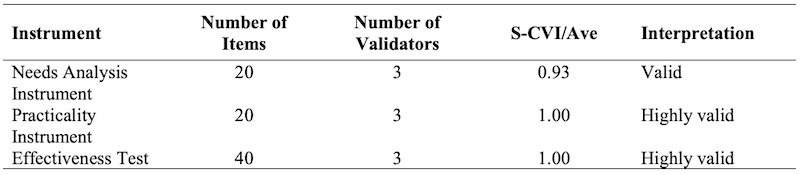
Content Validity. Content validity was assessed using the Content Validity Index (CVI), a widely accepted method for evaluating the relevance of instrument items through expert judgement (Polit & Beck, 2006). Three experts rated each item using a four-point relevance scale ranging from 1 (not relevant) to 5 (highly relevant). The use of a four-point scale is recommended to minimise neutral responses and enhance rating precision.
The scale-level Content Validity Index (S-CVI/Ave) was calculated by averaging the proportion of items rated as relevant (ratings of 3 or 4) across all validators. According to Polit and Beck (2006), S-CVI/Ave values equal to or greater than 0.80 indicate strong content validity (Table 1).
Table 1: Content Validity Results of Research Instruments
These results indicate that all instruments demonstrated strong content validity and were appropriate for use in the study.
Reliability Testing. Instrument reliability was examined using inter-rater reliability analysis to determine the level of agreement among expert evaluators. Three experts independently assessed the instruments using a dichotomous scale (Yes/No), and agreement was calculated using Cohen’s Kappa coefficient, which measures consistency beyond chance agreement (Landis & Koch, 1977). The analysis yielded a Kappa value of 0.64, which indicates acceptable agreement among raters. The average proportion of agreement (Po) across items was 0.91, which reflects high consistency in expert judgements. According to established interpretation guidelines, Kappa values between 0.61 and 0.80 indicate substantial agreement (Landis & Koch, 1977). Therefore, the instruments were considered sufficiently reliable for use in subsequent phases of the research.
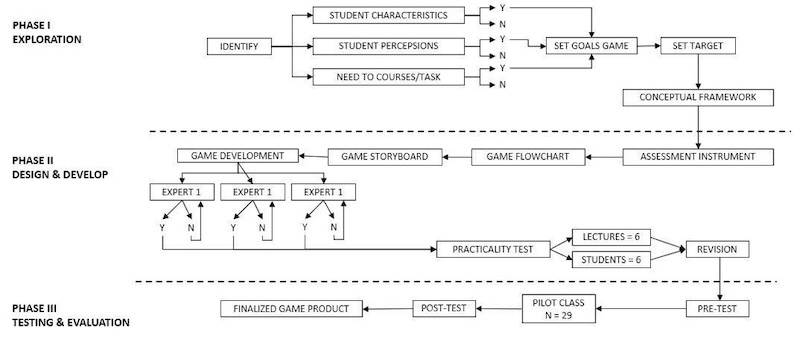
The development phases consisted of three sequential phases: exploration, design and development, and testing and evaluation.
Phase 1: Exploration. The exploration phase aimed to identify student characteristics, student perceptions of educational games, and course and task needs relevant to needs analysis learning. Data were collected through surveys administered to students and lecturers. The findings informed the game goals, target competencies, and conceptual framework of the Pali-Pali Game.
Phase 2: Design and Development. In this phase, the assessment instrument for evaluating the game was first developed. Based on the conceptual framework, the game flowchart and game storyboard were designed to structure gameplay sequences and learning tasks related to needs analysis. Using these design specifications, the Pali-Pali Game was developed.
The developed game then underwent expert validation involving instructional media, game design, and instructional content experts. Revisions were conducted based on expert feedback. The revised game was then subjected to a practicality test involving lecturers (n = 6) and students (n = 6) to assess usability, clarity, interaction, and instructional relevance. Further revisions were made before field implementation.
Phase 3: Testing and Evaluation. The revised game was implemented in a pilot class (n = 29). Students completed a pre-test measuring needs analysis skills prior to using the Pali-Pali Game and a post-test after gameplay. The results were used to evaluate effectiveness. Based on these findings, the finalised Pali-Pali Game product was established.
A visual representation of the development framework is presented in Figure 1.
Needs analysis data were analysed using descriptive statistics to summarise user expectations and design requirements. Validity and practicality data were analysed using mean scores and percentage techniques to determine product feasibility. Such descriptive analysis methods are widely applied in development research to interpret expert and user evaluations (Plomp, 2013). To examine effectiveness, a paired sample t-test was conducted to compare pre-test and post-test scores. Prior to hypothesis testing, data normality was assessed using the Shapiro-Wilk test to ensure statistical assumptions were satisfied. Paired t-tests are appropriate for evaluating learning improvements in single-group intervention studies (Field, 2018).
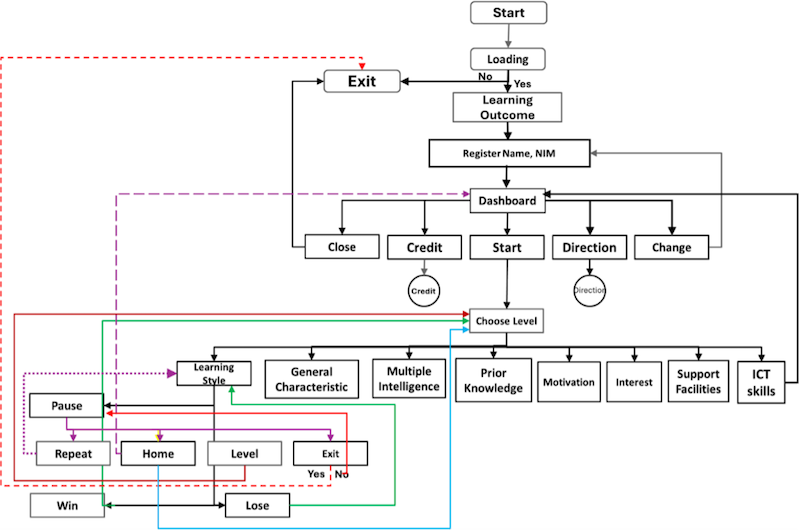
The Pali-Pali Game is an arcade-based learning application derived from the exploration-phase framework and refined through design, validation, and practicality testing. It embeds instructional design variables in gameplay requiring players to identify student characteristics, interpret context, and make instructional decisions. Gameplay follows progressive difficulty, immediate feedback, and performance-based progression (Figure 2). Each level presents learner and instructional scenarios requiring selection of appropriate needs-analysis components. Repeated interaction supports iterative analytical reasoning.
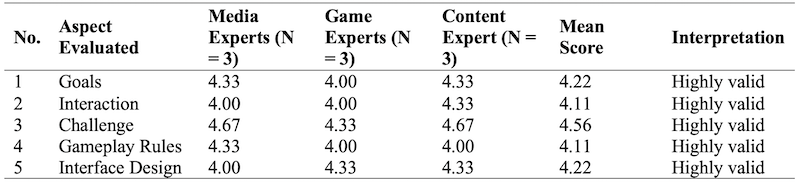
The validity of the Pali-Pali Game was evaluated by three expert validators representing instructional media, game design, and instructional content. Experts assessed the game using a five-point Likert scale ranging from 1 (not valid) to 5 (highly valid). The results of expert validation are presented in Table 2.
Overall, the mean scores for all evaluated aspects ranged from 4.00 to 4.67, indicating that the game met high validity standards. The highest ratings were observed for the challenge component (M = 4.56), suggesting that the game effectively incorporated engaging and appropriately structured difficulty levels. Other aspects, including goals, interaction, gameplay rules, and interface design, also received high ratings. Based on these results, the arcade-based educational game was considered valid and appropriate for instructional use.
Table 2: Expert Validation Results of the Educational Game
Scale: 1 = Not valid, 2 = Less valid, 3 = Moderately valid, 4 = Valid, 5 = Highly valid
The practicality of the Pali-Pali Game was evaluated through a practicality test involving six lecturers and six students. Participants assessed the game using a five-point Likert scale measuring clarity, navigation, interaction, motivation, and instructional relevance. As shown in Table 3, mean scores ranged from 4.00 to 4.50, indicating high practicality. The highest scores were obtained for motivation and challenge (M = 4.50), demonstrating that the game effectively engaged users and sustained interest during learning activities. Both lecturers and students reported that the game was easy to operate, clearly structured, and suitable for supporting needs analysis learning activities. These findings indicate that the developed educational game was practical and feasible for implementation in instructional settings.
Table 3: Practicality Test Results from Lecturers and Students
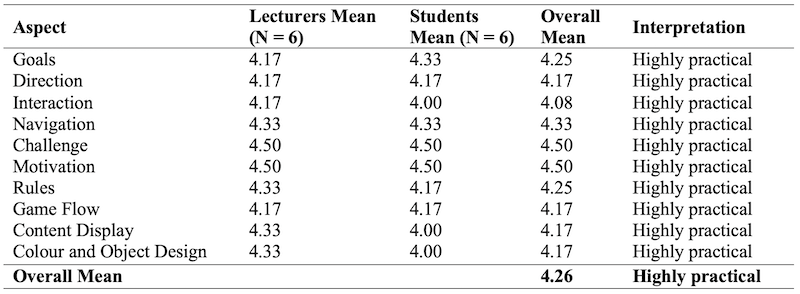
Scale: 1 = Not practical, 2 = Less practical, 3 = Moderately Practical, 4 = Practical, 5 = Highly practical
The effectiveness of the Pali-Pali Game was examined using a one-group pre-test/post-test design involving 29 students. Students completed a needs analysis skills test before and after using the game.
Normality Test. The Shapiro-Wilk test indicated that both pre-test (p = 0.082) and post-test (p = 0.180) scores were normally distributed (p > 0.05), satisfying assumptions for parametric analysis (Table 4).
Table 4: Normality Test Results (Shapiro-Wilk)

Paired Sample t-Test. The effectiveness of the intervention was determined using a paired-samples t-test (two-tailed) (Table 5). Results indicated a statistically significant difference between pre-test and post-test scores, t (28) = -6.49, p < .001. The negative sign reflects the direction of subtraction (pre-test minus post-test) and does not affect statistical significance (Field, 2018). The magnitude of improvement was large (Cohen’s d = 1.21), indicating a substantial increase in students’ needs analysis skills following use of the Pali-Pali Game. These findings demonstrate that the arcade-based educational game was effective in improving students’ needs analysis skills.
Table 5: T-test Results for Needs Analysis Skills

This study aimed to develop and evaluate the Pali-Pali Game, an arcade-based educational game to enhance students’ needs analysis skills in online learning design. The findings show that the developed game demonstrated validity, practicality, and effectiveness, indicating its potential as a technology-enabled learning tool for strengthening instructional design competencies in higher education.
In terms of validity, the expert validation results indicated that the developed game met high standards of instructional content, media quality, and game mechanics. The highest ratings were observed for the challenge and gameplay components, suggesting that the game successfully integrated engaging learning tasks with instructional objectives. These findings are consistent with gamification research emphasising the importance of clear goals, structured challenges, and feedback systems in educational game design (McGonigal, 2011; Rahmi et al., 2026; Shute et al., 2016). The incorporation of progressive difficulty levels and immediate feedback in the game aligns with established principles of effective digital learning environments (Kaufmann, 2018). By embedding needs-analysis variables into game challenges, the design provided structured opportunities for students to practise analytical decision-making related to instructional planning.
The practicality test showed that both lecturers and students perceived the game as highly usable, engaging, and relevant to instructional learning objectives. High ratings for motivation and interaction indicate that the game effectively sustained learner engagement during the learning process. These results support previous studies showing that educational games can enhance learner motivation, participation, and satisfaction in online learning contexts (Oliveira et al., 2021; Othman et al., 2023; Yu et al., 2021). The positive usability results also suggest that the game design was accessible and adaptable for integration into existing instructional settings, which is essential for technology-enabled learning implementation in higher education.
Furthermore, the effectiveness test revealed a statistically significant improvement in students’ needs analysis skills after using the game. This finding suggests that the arcade-based mechanics supported the development of higher-order analytical competencies rather than merely enhancing engagement. The effectiveness of the intervention can be explained by the iterative and feedback-driven nature of arcade game mechanics. Such mechanics require players to repeatedly analyse information, make decisions, and adjust strategies based on performance outcomes (Chittaro & Buttussi, 2019; Gao et al., 2022). These cognitive processes align closely with the analytical demands of needs analysis, which involves identifying student characteristics, interpreting contextual variables, and making instructional decisions.
Moreover, previous research indicates that game-based learning environments can foster cognitive flexibility, problem-solving skills, and adaptive decision-making (Bavelier et al., 2012; Bediou et al., 2023; Granic et al., 2014). By simulating instructional design scenarios within a structured and interactive environment, the developed game enabled students to practise needs analysis skills in a safe and engaging context.
From a Technology-Enabled Learning, and Learning for Development perspective, the Pali-Pali Game illustrates how interactive digital tools can strengthen core instructional design competencies among future educators. Improving needs-analysis skills supports development of context-responsive digital learning solutions, contributing to more inclusive, effective, and sustainable technology-enabled education systems.
The needs analysis findings indicated a strong demand for interactive tools to support needs analysis competencies, which suggests that educational games can serve as effective media in instructional design courses. Pedagogically, integrating game mechanics with design tasks enables experiential learning through repeated practice and feedback. Such approaches can enhance students’ ability to analyse student characteristics and contextual factors when designing online learning environments. At the institutional level, the adoption of educational games reflects a broader shift in higher education from transmission-based teaching toward active and technology-enabled learning. Universities may therefore need to adapt curricula, instructional methods, and assessment practices to accommodate interactive digital learning tools. This includes providing appropriate technological infrastructure and supporting faculty capacity in digital pedagogy.
This study has several limitations. First, effectiveness used a single-group pre-test/post-test design without a control group; future studies should apply experimental or quasi-experimental designs. Second, the sample was limited to one programme at one institution; broader samples are needed to test generalisability. Third, the game targeted needs-analysis skills; future work might extend game-based approaches to other instructional design competencies such as strategy development, assessment, and evaluation. Longitudinal studies should examine sustained impacts and integration into wider TEL systems. Future development may include online or multiplayer versions to support collaborative learning and integration of Artificial Intelligence for adaptive gameplay and personalised learning, enhancing scalability in TEL ecosystems.
Acknowledgment: The authors would like to thank Lembaga Penelitian dan Pengabdian Masyarakat Universitas Negeri Padang (Institute of Research and Community Service) (contract number 1304/UN35.15/LT/2023).
Abid, T., Zahid, G., Shahid, N., & Bukhari, M. (2021). Online teaching experience during the COVID-19 in Pakistan: Pedagogy-technology balance and student engagement. Fudan Journal of the Humanities and Social Sciences, 14, 367-391. https://doi.org/10.1007/s40647-021-00325-7
Andrew, L., Wallace, R., & Sambell, R. (2021). A peer-observation initiative to enhance student engagement in the synchronous virtual classroom: A case study of a COVID-19 mandated move to online learning. Journal of University Teaching & Learning Practice, 18(4), 14. https://doi.org/10.53761/1.18.4.14
Bavelier, D., Achtman, R.L., Mani, M., & Föcker, J. (2012). Neural bases of selective attention in action video game players. Vision research, 61, 132-143.
Bediou, B., Rodgers, M.A., Tipton, E., Mayer, R.E., Green, C.S., & Bavelier, D. (2023). Effects of action video game play on cognitive skills: A meta-analysis. Technology, Mind, and Behavior, 4(1), 28-48.
Bower, M. (2019). Technology‐mediated learning theory. British Journal of Educational Technology, 50(3), 1035-1048.
Branch, R.M. (2009). Instructional design: The ADDIE approach. Springer Nature. https://link.springer.com/book/10.1007/978-0-387-09506-6
Carrillo, C., & Flores, M.A. (2020). COVID-19 and teacher education: A literature review of online teaching and learning practices. European Journal of Teacher Education, 43(4), 466-487.
Chittaro, L., & Buttussi, F. (2019). Exploring the use of arcade game elements for attitude change: Two studies in the aviation safety domain. International Journal of Human-Computer Studies, 127, 112-123.
Dick, W., Carey, L., & Carey, J.O. (2013). The systematic design of instruction (8th ed.). Pearson.
Dunn, T.J., & Kennedy, M. (2019). Technology enhanced learning in higher education; motivations, engagement and academic achievement. Computers & Education, 137, 104-113.
Field, A.P. (2018). Discovering statistics using IBM SPSS statistics (5th ed.). SAGE Publications.
Fortes, L.S., De Lima-Junior, D., Fiorese, L., Nascimento-Júnior, J.R.A., Mortatti, A.L., & Ferreira, M.E.C. (2020). The effect of smartphones and playing video games on decision-making in soccer players: A crossover and randomised study. Journal of Sports Sciences, 38(5), 552-558.
Galanti, T.M., Baker, C.K., Morrow-Leong, K., & Kraft, T. (2021). Enriching TPACK in mathematics education: Using digital interactive notebooks in synchronous online learning environments. Interactive Technology and Smart Education, 18(3), 345-361.
Gao, Y., Liu, C., Gao, N., Khalid, M.N.A., & Iida, H. (2022). Nature of arcade games. Entertainment Computing, 41, 100469.
Gonzalez, T., de la Rubia, M.A., Hincz, K.P., Comas-Lopez, M., Subirats, L., Fort, S., & Sacha, G.M. (2020). Influence of COVID-19 confinement on students’ performance in higher education. PloS One, 15(10), e0239490.
Granic, I., Lobel, A., & Engels, R.C.M.E. (2014). The benefits of playing video games. American Psychologist, 69(1), 66.
Kabilan, M.K., & Annamalai, N. (2022). Online teaching during COVID-19 pandemic: A phenomenological study of university educators’ experiences and challenges. Studies in Educational Evaluation, 74, 101182.
Kaufmann, D.A. (2018). Reflection: Benefits of gamification in online higher education. Journal of Instructional Research, 7, 125-132.
Landis, J., & Koch, G. (1977). The measurement of observer agreement for categorical data. Biometrics, 33, 159-174.
Lorenzo‐Alvarez, R., Rudolphi‐Solero, T., Ruiz‐Gomez, M.J., & Sendra‐Portero, F. (2020). Game‐based learning in virtual worlds: A multiuser online game for medical undergraduate radiology education within second life. Anatomical Sciences Education, 13(5), 602-617.
Luo, T., Murray, A., & Crompton, H. (2017). Designing authentic learning activities to train pre-service teachers about teaching online. International Review of Research in Open and Distance Learning, 18(7), 141-157.
McGonigal, J. (2011). Reality is broken: Why games make us better and how they can change the world. Penguin.
Morrison, G.R., Ross, S.J., Morrison, J.R., & Kalman, H.K. (2019). Designing effective instruction (8th ed.). Wiley.
Nandi, D., Chang, S., & Balbo, S. (2009). A conceptual framework for assessing interaction quality in online discussion forums. Same Places, Different Spaces. Proceedings Ascilite Auckland, 7-23.
Nieveen, N. (1999). Prototyping to reach product quality. In J. van den Akker, R.M. Branch, K. Gustafson, N. Nieveen, & T. Plomp (Eds.), Design approaches and tools in education and training (pp. 125-135). Kluwer Academic Publishers. https://doi.org/10.1007/978-94-011-4255-7_1
Nordin, N., Nordin, N.R.M., & Omar, W. (2022). REV-OPOLY: A study on educational board game with web-based augmented reality. Asian Journal of University Education, 18(1), 81-90.
Oliveira, R.P., de Souza, C.G., Reis, A. da C., & de Souza, W.M. (2021). Gamification in e-learning and sustainability: A theoretical framework. Sustainability, 13(21), 11945.
Othman, N.A.F., Jaini, A., Ismail, M., Zainoddin, A.I., Radzi, S.F.M., & Sundram, V.P.K. (2023). Gamification in online learning: A case study among university students in Malaysia. Asian Journal of University Education, 19(2), 282-293.
Pereira, Í.S.P., Fernandes, E.L., & Flores, M.A. (2021). Teacher education during the COVID-19 lockdown: Insights from a formative intervention approach involving online feedback. Education Sciences, 11(8), 400.
Plomp, T. (2013). Educational design research: An introduction. In T. Plomp & N. Nieveen (Eds.), Educational design research: Part A: An introduction (pp. 11-50). SLO.
Polit, D.F., & Beck, C.T. (2006). The content validity index: Are you sure you know what’s being reported? Critique and recommendations. Research in Nursing & Health, 29(5), 489-497.
Rahmi, U., Azrul, A., & Mahande, R.D. (2022). The prototype of blended learning’s support system to improve the pre-service teacher’s digital literacy. The Journal of Educators Online, 19(3). https://doi.org/10.9743/JEO.2022.19.3.5
Rahmi, U., Rahmadika, S., & Azrul, A. (2026). Extending the technology acceptance model: The role of challenge in university students’ acceptance of digital educational games. Journal of Applied Research in Higher Education, 1-14. https://doi.org/10.1108/JARHE-04-2025-0313
Shute, V.J., Wang, L., Greiff, S., Zhao, W., & Moore, G. (2016). Measuring problem solving skills via stealth assessment in an engaging video game. Computers in Human Behavior, 63, 106-117.
Simonson, M., Zvacek, S.M., & Smaldino, S. (2019). Teaching and learning at a distance: Foundations of distance education (7th ed.). Information Age Publishing.
Syarifuddin, S., Alian, A., Sani, S., Nur, F.A., Sinta, S., Ria, R.O., & Mar’ati, Z. (2023). Developing mobile learning activity based on multiple learning objects for the South Sumatra local wisdom course (similiarity). Asian Journal of University Education (AJUE), 19(1), 12-27.
Terras, M.M., & Boyle, E.A. (2019). Integrating games as a means to develop e‐learning: Insights from a psychological perspective. British Journal of Educational Technology, 50(3), 1049-1059.
Urh, M., Vukovic, G., & Jereb, E. (2015). The model for introduction of gamification into e-learning in higher education. Procedia-Social and Behavioral Sciences, 197, 388-397.
Yu, Z., Gao, M., & Wang, L. (2021). The effect of educational games on learning outcomes, student motivation, engagement and satisfaction. Journal of Educational Computing Research, 59(3), 522-546.
Author Notes
Ulfia Rahmi is an Associate Professor in Educational Technology at Universitas Negeri Padang with a strong academic and research background. Her primary research interests include online learning, instructional media, and the integration of educational technology in higher education. Each year, she has successfully secured both internal and national research grants, demonstrating her consistency and excellence in research. She also received the European Union’s (EU) Erasmus+ funding, strengthening her international academic collaboration, for 2020-2023. Actively publishing in reputable international journals, she contributes significantly to the global discourse in educational technology. Currently, she serves as the Head of Open and Distance Learning Research Center (ODLRC), Universitas Negeri Padang. Email: ulfia@fip.unp.ac.id (https://orcid.org/0000-0002-5195-554X)
Bayu Ramadhani Fajri has been a lecturer at Universitas Negeri Padang since July 2018. He was a staff member at SEAMEO SEAMOLEC (Southeast Asian Ministers of Education Organization Regional Open Learning Centre) in the IT Contents and Knowledge Management division. His research interests are: animations, virtual environments, augmented reality, virtual reality, edugame development, interactive media, simulation, programming and e-learning. Email: bayurf@unp.ac.id (https://orcid.org/0000-0002-0167-3253)
Dedi Supendra is affiliated with the University of Sheffield. He is a dedicated academic whose primary research interests center on educational technology, digital literacy, and the development of instructional multimedia. He focuses on how modern tools, such as educational games and digital platforms, can be integrated to enhance learning experiences in the digital age. Beyond his research, he is actively involved in community service, where he provides training and workshops to help teachers and students adapt to new technologies. Email: dsupendra1@sheffield.ac.uk (https://orcid.org/0009-0006-0888-5773)
Sari Fitria is a lecturer at Universitas Negeri Padang. Her academic interests focus on literary studies and language teaching. She is actively engaged in research and academic writing, and has received national and internal university research grants. Her works have been published in national journals. In addition to her academic activities, she is also involved in community service programs, contributing to the development and dissemination of knowledge in society. Email: sari7fitria@gmail.com (https://orcid.org/0009-0007-4812-7966)
Azrul Azrul is an Assistant Professor in Teacher Training and Education Faculty at Universitas Islam Negeri Imam Bonjol Padang. His current research interests focus on e-learning, online learning, and instructional media, educational game, reflecting his dedication to advancing digital pedagogy. He is actively involved in community service programs, particularly in fostering and strengthening digital literacy communities. With a passion for academic writing, he consistently publishes his work in both national and international journals. Email: azrul@uinib.ac.id (https://orcid.org/0000-0003-2091-7302)
Cite as: Rahmi, U., Fajri, B.R., Supendra, D., Fitria, S., & Azrul, A. (2026). Developing and evaluating an arcade-based educational game to improve needs analysis skills in online learning design. Journal of Learning for Development, 13(2), 314-327.