Anuradha Peramunugamage, Uditha W. Ratnayake, Shironica P. Karunanayaka, Ellen Francine Barbosa, William Simão de Deus, Chulantha L. Jayawardena and R.K.J. de Silva
2025 VOL. 12, No. 2
Abstract: Interactions among students in online learning environments are difficult to monitor but can be crucial for their academic performance. Moodle is one of the best and most popular online learning platforms, where its log records can reveal important information on students’ engagement and the respective performance. This study examines the degree of student participation and performance in online collaborative content creation activities, based on three iterative testing cycles: systematically designed Moodle forum discussions, group assignments, Wikis and Moodle workshops, specifically to obtain peer feedback. The abovementioned collaborative Moodle content creation and corresponding log record analysis was executed for four modules conducted at two higher education institutions from Sri Lanka and Brazil. Regression analysis on log records and student performance on four modules indicated a positive correlation, with R2 values between 26% and 43.8%. A significant amount of data which remained unexplained were subjected to the Vector Space Model (VSM) data mining algorithm to uncover in-depth information. The results, indicating substantial influence on student performance by participation in online collaborative activities, provided vital insights into necessary improvements on instructional design. Accordingly, promoting productive student interactions could be significant in online learning environments, and the findings of this study underscore the importance of utilising the learning analytics data driven approaches to elevate student performance.
Keywords: Moodle, Vector Space Model (VSM), collaborative learning, online interactions, learning analytics, online learning
Learning Management Systems (LMSs) are commonly used to create, manage, and distribute digital resources for both in-person and online delivery of educational instructions. These LMSs enable blending of conventional teaching techniques with digital learning resources to provide customised online learning opportunities for students (Aljawarneh, 2020; Corfman & Beck, 2019; Xie & Correia, 2024). Despite online learning having a long history, it gained much popularity and a significant increase in usage only during the appearance of the Covid-19 pandemic in 2020, when on-site instruction in educational institutions was severely constrained by a global crisis (Dias et al., 2020; Raza et al., 2021). As a result, the learning environments were subject to a forced transformation from conventional modes of education, assessment, research, and scientific discourse dominated by physical interactions to distance learning mechanisms (Byrnes et al., 2020).
Nevertheless, LMSs have become increasingly important in STEM (Science, Technology, Engineering, and Mathematics) programme delivery over the decades. This has been facilitated by improved broadband internet connectivity and advancements in technologies for smoother online interactions among all stakeholders. To date, numerous educational institutions have successfully utilised LMSs and are interested in improving their effectiveness to create enhanced learning environments (Setiadi et al., 2021; Xie & Correia, 2024). However, studies that investigate utilising the maximum potential of LMSs to enhance the student experience and performance are limited. Moodle, being one of the prominent systems in use, provides a plethora of data on online student interactions, which could be effectively used to enhance the learner and teacher experience.
The available literature on monitoring online collaborative learning within a Moodle environment can be categorised into three distinct segments, each providing a deeper understanding of the respective scholarly evolution. These segments are the principles and practices of collaborative learning in online environments, the potential of Moodle as a collaborative environment, and the application of learning analytics for monitoring collaborative learning. Each segment offers in-depth information crucial to the development of research in this area. By examining these segments, researchers can gain a comprehensive view of the capabilities, challenges, and methodologies that inform the effective monitoring and facilitation of collaborative learning in Moodle.
Collaborative learning has been a crucial paradigm in the field of education (Dillenbourg, 1999) and is rooted in Vygotsky’s sociocultural theory, which regards learning as a social interaction process (Parker, 1979). Activities that are intended for collaborative and active learning demonstrate an improvement in students' understanding. Regardless of the teaching medium, all instructional design variables must be considered in higher education assessment. It is critical for faculty members to become acquainted with technology in order to build trust with their students. Because of the availability of online technology, it is possible to create interactive-based instructional designs, which play an important role in professional preparation.
Online instructions have become an essential element of effective teaching practices (Abuhassna & Alnawajha, 2023a; Corfman & Beck, 2019; Xie & Correia, 2024). Therefore, researchers are constantly seeking innovative methods to improve student education, especially in the realm of online classrooms. However, certain disciplines need hands-on activities and specialised training to develop the required skills, posing additional challenges for educators and course designers when incorporating online environments. Thus, the significance of instructional design (ID) has gained much attention in the field of education. In Asia, Africa, South Africa, and Europe, there is a need for more research on instructional design, according to a study by Abuhassna & Alnawajha (2023a). This study emphasised the significance of concentrating on instructional design steps and processes with various research models, frameworks, and theories to advance the field and improve educational practices in these regions. It is advised that close attention be paid to these factors.
Usually, student-system interactions are recorded by LMSs and Web 2.0 tools. These interactions cover a range of activities, including how frequently students access the course, participate in discussions, and the time they spend on these platforms (Peramunugamage et al., 2024). These data, which are also known as system logs, have become important sources for thorough analysis and synthesis, offering insightful information that could influence the learning process. As a result, the use of system logs in research has grown in popularity and is considered as a credible source of information (Cheung et al., 2021; Wei et al., 2024). Therefore, it is important to examine the potential impact of students’ participation in collaborative Moodle activities and their academic performance.
The online learning platforms that were widely used and researched during 2015–2020 included Edmodo, Moodle, Coursera, Udemy, and Google Classroom (Setiadi et al., 2021). Altinpulluk and Kesim’s (2021) systematic review on LMS usage trends reveals that Moodle was the most widely used and preferred open-source LMS across a wide range of academic disciplines, including STEM education (Al-Ajlan & Zedan, 2008; Sergis et al., 2017)
Publications between 2015 and 2020 that contained the keyword "Moodle", and were categorised by discipline area, revealed that more than 60% of them were related to STEM subjects (Setiadi et al., 2021). A 250% increase in Moodle users from 78 million in 2015 (Singh, 2015) to over 294 million in 2021 (Moodle, 2022) depicts its remarkable growth in supporting learning environments. Moodle enables managing routine teaching tasks and exposing students to online collaborative interactions with the constructivism and social constructivism incorporated in version 2004 of the platform (Dai et al., 2022). Abuhassna and Alnawajha (2023a, 2023b) found that collaborative learning was discussed in 12% of the articles reviewed during 2012-2022. Several of these studies emphasised the use of Moodle's workshop tool, which allows students to evaluate the work of their peers, reducing the burden on the teaching staff. ArchMiller et al., (2017), Slee and Jacobs (2017), and Strang (2015) demonstrated how to use the ‘workshop’ for peer assessment purposes. Furthermore, according to Awofeso et al. (2016), the ‘forum’ activity within Moodle was found to be beneficial in enhancing problem-based learning through group projects.
Despite the enhanced features of Moodle, a comprehensive analysis of the design of collaborative activities and monitoring of students’ interactions was lacking. Gamage et al. (2022) examined: (i) Moodle adoption; (ii) innovative and effective methods used in online teaching and learning; and (iii) concerns, trends, and gaps in educational software developments during the previous six years, as presented in 155 articles published in 104 journals from 55 countries across ten different disciplines. The findings highlighted the need for qualitative research into educators' perspectives on Moodle usage and recommended incorporating educational theories to inform the design of courses in Moodle. Further, the need for an in-depth examination of educators' experiences and insights to improve their understanding and effective use of Moodle in educational settings was also a timely requirement (Dai et al., 2022).
Numerous studies have revealed that collaborative learning is helpful for learners’ cognitive development (Long & Mclaren, 2024; Sung et al., 2017), improvement of metacognitive skills (Kim et al., 2019), and behaviours (Sung et al., 2017). Currently, various kinds of emerging technologies extend the possibilities of collaboration and provide promising learning opportunities in richer ways. In informal learning settings, advanced technologies also facilitate collaborative learning through flexible and instant feedback (Rambe & Bere, 2013). Previous studies indicated social media, tangible interaction techniques, virtual learning platforms, mobile devices, and augmented reality tools can serve as vehicles to support collaborative learning in informal learning settings.
However, learning analytics is a powerful tool that can help educators understand how students learn and interact in collaborative activities (Cheung et al., 2021; Johar et al., 2023; Tong & Zhan, 2023). By analysing data from online collaborative learning environments, researchers can identify patterns of student behaviour and engagement (Pekrun et al., 2011; Tong & Zhan, 2023), and use this information to improve the design of collaborative activities. Learning analytics is an emerging and expanding field that leverages students' online activities to enhance learning outcomes and academic performance (Kew & Tasir, 2022; Saqr et al., 2017). By monitoring student interactions, it is possible to identify potential areas of concern and implement proactive measures to mitigate the risk of academic struggles (Karaoglan & Yilmaz, 2020). Educators and institutions can effectively employ learning analytics to track student activities, analyse instructional contexts, and gather valuable feedback, thereby enriching and optimising the learning process.
Tekin and Oztekin (2018), in their review of published literature on educational data mining from 2006 to 2016, concluded that most studies focused on academic achievement, and some explored the impact of online learning environments within specific courses. Similar research by Bulca and Demirhan (2020) showed the impact of online learning environments on achieving student learning outcomes for a particular course. The objective of a study conducted by Tlili et al. (2018) was to model learners' personalities using a cutting-edge approach to learning analytics called intelligent Moodle (iMoodle). The outcomes of this strategy were contrasted with those of the more conventional approach, which models learners' personalities using questionnaires. Another study was conducted by Xiao and Rahman (2017), and aimed at building a mathematical model based on the analysis of student learning behaviour that could be used to automatically identify learning styles. Subsequent studies used educational data mining techniques to investigate and predict students' attitudes toward learning. Johar et al. (2023) recommended in their systematic literature review that future studies should focus on investigating student engagement in online settings and explore how the outcomes of engagement analysis can be leveraged to develop interventions aimed at addressing learning challenges, such as high dropout rates and poor learning performance.
Garrison (2019) emphasised that effective online course design is crucial for ensuring that learners achieve their desired learning outcomes and develop the skills and knowledge they need to succeed in their academic or professional pursuits. It is also a difficult task to provide learners with engaging, accessible, and high-quality learning experiences that meet their needs and objectives (Anderson & Garrison, 1995; Garrison, 2019).
Gilly Salmon’s Five-Stage Model (Ruzmetova, 2018; Salmon et al., 2010) serves as a distinctive and widely recognised framework for designing and delivering online courses. This model is widely recognised for its emphasis on socialisation, interaction, and constructivist pedagogy, making it a valuable tool for teachers and instructional designers aiming to create effective and engaging online learning environments. The model's structure not only facilitates participants' comfort and familiarity with both online and in-person modalities but also ensures a gradual and supportive learning experience that enhances learner engagement and success.
Salmon's model underscores the importance of interaction not only between learners and instructors but also with the course content throughout the learning process. The model's structured approach ensures that learners are gradually introduced to the online environment, supported in building relationships, and guided through increasingly complex tasks, all of which contribute to a positive and effective learning experience. Therefore, Gilly Salmon's Five-Stage Model was adopted as a theoretical framework for this study, since it provides a comprehensive and well-established approach to creating engaging and effective online learning experiences that promote active participation, collaboration, and meaningful learning outcomes.
The primary research approach employed in this study was the educational design research technique (van den Akker et al., 2006). Within educational practice, design research is a systematic and flexible process aimed at enhancing educational practices through iterative analysis of needs, design, development, and implementation (Wang & Hannafin, 2011). The research incorporated the design-based research methodologies introduced by Reeves (Amiel & Reeves, 2008; Herrington et al., 2007). Design experiments were conducted as a means of formative research, providing insights into the next steps to be taken.
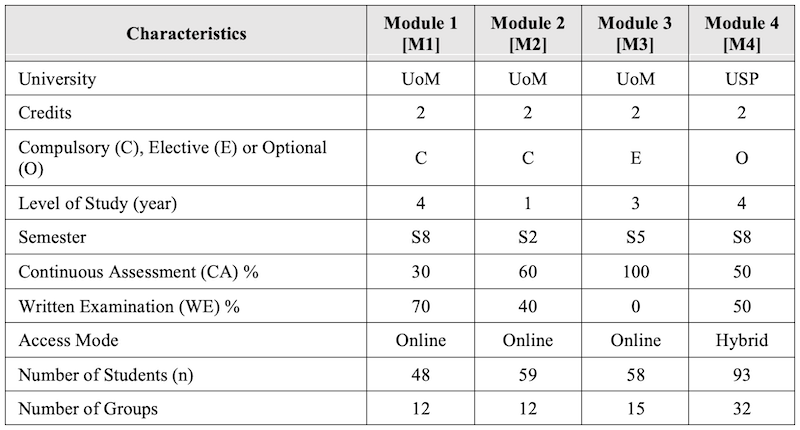
The participants selected for the implementation of the study were final-year (Semester 8), first-year (Semester 2) and third-year (Semester 5) Engineering undergraduates enrolled for the modules indicated as M1-S8, M2-S2 and M3-S5 during 2020-2022, in which the student numbers were 48, 59 and 58, respectively, at a state university in Sri Lanka. The participant population included a mix of male and female students in the age range of 18-22 and were divided into groups of 4-5 members to conduct the activities. The M1, M2, and M3 modules underwent three rounds of iterative testing and refinements. Following this, the M4-S8 module was applied to evaluate the final intervention in a distinct context, involving 93 Computer Science undergraduates from Brazil. Course details are listed in Table 1. Moodle log records were used to collect data in terms of student interactions and participation in activities.
Table 1: Main Characteristics of the Modules Involved in the Research
Enhancing students' interactions can be achieved through the implementation of a diverse range of collaborative learning activities. These activities encompass various approaches, including: (i) engaging students in pair or group discussions; (ii) fostering cooperation through activities such as matching, sorting, or rating; (iii) incorporating competitive games like bingo, drama, and role-playing; (iv) promoting information exchange through activities like jigsaw puzzles and barrier games, as well as (v) assigning small group tasks (Gehringer, 2007; Jabbar & Hasmy, 2020; Swid et al., 2018).
To optimise collaborative activities in hybrid or online learning settings, Deris et al. (2012) and Paschalis (2017) suggested leveraging popular Moodle applications like assignments, quizzes, forums, and content creation to facilitate collaboration and communication between students and instructors, enabling effective engagement in hybrid or online learning environments. In this research, several Moodle-based learning activities were provided to monitor students’ four types of interactions as listed in Table 2.
Table 2: Number of Activities Conducted for each Course
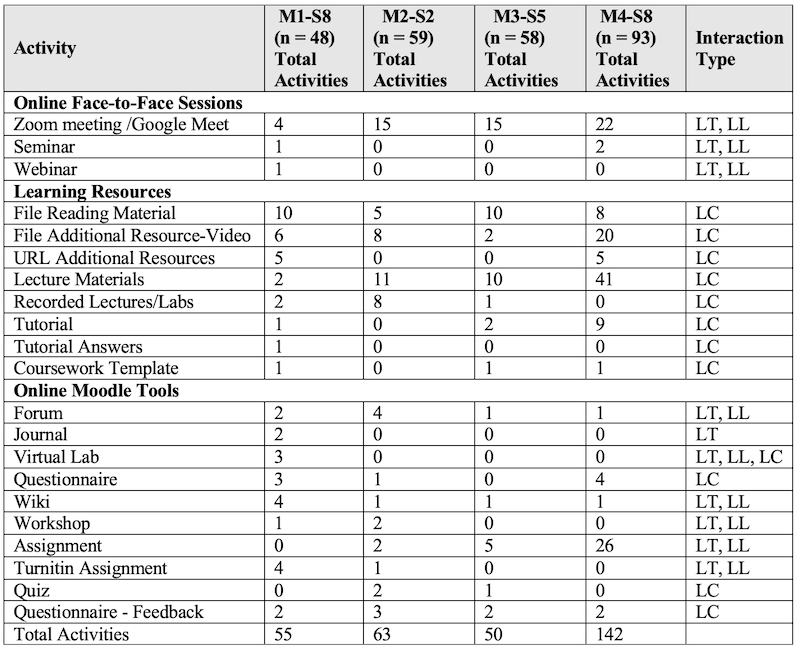
LL - learner-learner interaction; LT - learner-teacher interaction; LC - learner-content interaction; LI - learner-interface interaction
Lesson-by-lesson interactions together with the students’ feedback were evaluated and incorporated for continuous improvements of the lesson plans. This process was conducted iteratively for the refinement of interventions and the collected data was analysed with quantitative measurements. Descriptive analysis was conducted to obtain an overview of the collaborative interactions. To explore how students' interactive behaviour correlated with their course grades, regression analysis was performed using the total marks students obtained in their final examinations against their Moodle access logs for each module. Additionally, to gain a deeper understanding of students' collaborative interactions, Vector Space Model (VSM) analysis was carried out. Further details are discussed in the results and discussion section.
Moodle has built-in features that produce useful statistics through log records that can be used to monitor student activities. These ‘action logs’ were used to obtain feedback on resources and activities that were accessed by each learner including, when, by which student, for how long, etc. For this study, logs of students’ actions for the entire semester for each of the modules were collected and cleaned up. Each event record in the raw action log has nine attributes: time, user full name, affected user, event context, component, event name, description, origin, and IP address. This study focused on the user’s full name, component, and event name. The event name attribute captured the actions initiated by students on different items accessible through Moodle, including assignments, quizzes or assessments, course content, forum discussions, Wikis, workshops, resources, and URLs. To monitor and analyse students' collaborative interactions, the research focused on events related to Wikis, comments, discussions, and posts in M1, M2 and M3 as outlined in Table 3. These specific types of events were considered essential for examining and understanding the collaborative dynamics among students in the study.
Table 3: Moodle Event Identifiers Related to the Collaborative Interactions
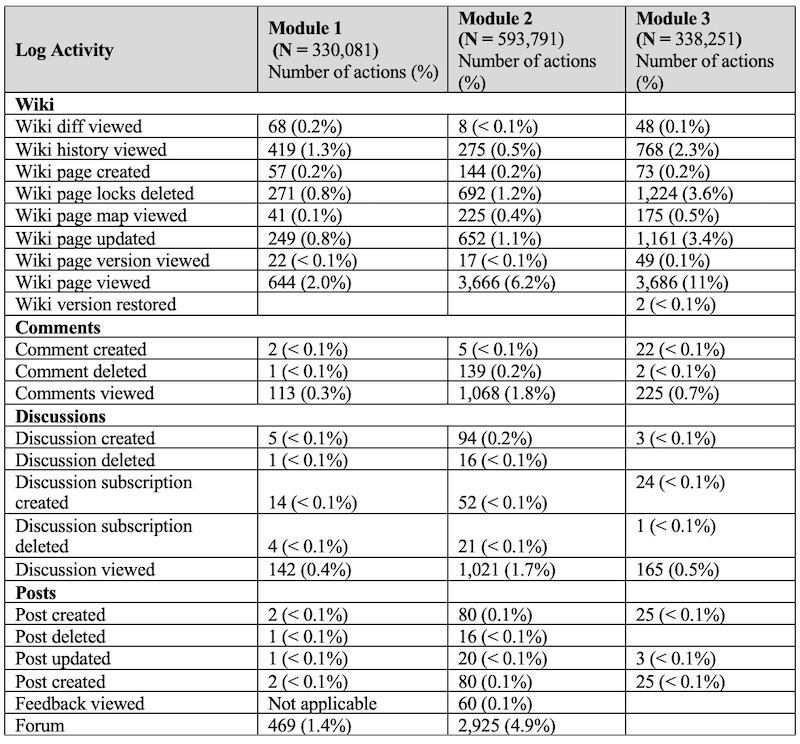
N = Total action logs
Ethical approval for this study was granted by the Ethics Review Committee of The Open University of Sri Lanka (OUSL). Throughout the research process, stringent ethical standards were adhered to, ensuring that all participants and stakeholders were fully informed, and their consent obtained. The study involved multiple stages, including content development and the collection of log records. At each stage, appropriate permissions were sought and granted by the relevant authorities. This process included informing both students and teachers about the nature of the research, their roles, and the potential impact on their participation. Consent was explicitly obtained for each research activity, ensuring that all participants were aware of the objectives and methodologies involved.
A two-phase approach was utilised to follow the data mining process outlined by Romero et al. (2008). The initial preparation of data was followed by the use of data mining algorithms that transformed them into an acceptable form for interpretation and analysis. After normalising the data obtained for the four modules, the total counts for each action type for all courses were retrieved. For example, students in M1 often logged onto Moodle only to do assessment activities, with minimal access to instructional materials or participation. On the other hand, students in M2 seemed to connect via Zoom sessions, material access, and interaction with assessment activities more frequently. These visualisations might assist course administrators in determining the type of strategic interventions required for each activity to ensure that student engagements remain within the scope of the planned learning objectives. Additionally, Table 3 compares student participation in Moodle's collaborative activity, which showed a substantial difference in the amount of group work. Their access to collaborative work significantly improved, as can be seen from the examples of Wiki page views improving from M1-644 (2.0%) to M2-3,666 (6.2%) to M3-3,686 (11%), and Wiki pages updated from M1-249 (0.8%) to M2-652 (1.1%) and M3-1,161 (3.4%).
Moodle was developed to promote student-content interaction and, in addition to that, it enables learner-teacher and learner-learner interactions through its user-friendly interfaces (Alammary et al., 2014; Porter & Graham, 2016). Thus, by increasing student contact in a technology-mediated setting, we can foster information transfer, comment threads, involvement, inspiration, group work, group cohesiveness, and discussion. This encourages peer assessment and feedback will enhance the learning experience, allowing students to learn from each other and reflect on their own work.
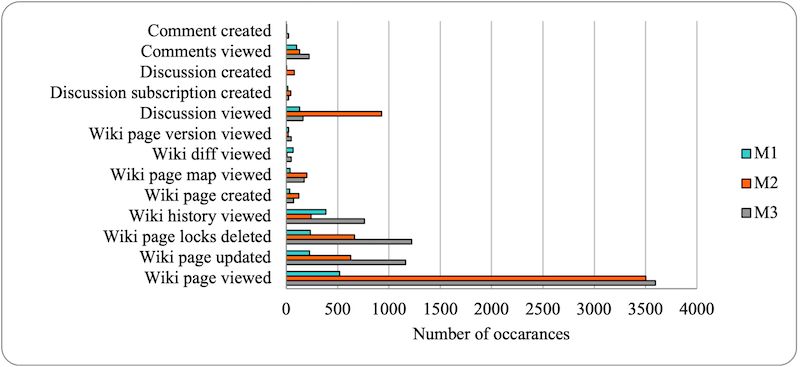
Figure 1 is a graphical representation illustrating the students' participation in collaborative activities for modules M1, M2, and M3. The bar chart displays the number of events that occurred for each specific collaborative activity. Each module is represented by a different colour or bar in the graph, allowing for a visual comparison of student participation across the different modules. The X-axis represents the number of events, while the Y-axis indicates the different collaborative activities such as Wiki, comments, discussions, or other relevant activities. The height or length of each bar represents the frequency or number of events recorded for that particular activity in each module, providing insights into the level of student engagement and participation within the collaborative activities throughout the three modules.
To provide a comprehensive understanding of individual students' collaborative participation, Figures 2, 3, and 4 illustrate the student interactions within each module (M1, M2 and M3) based on different activities. These figures present a visual representation of how students engage and contribute to various collaborative activities throughout the modules. By examining these figures, researchers and educators can gain valuable insights into the level and nature of student participation, allowing them to assess the effectiveness of the collaborative learning approach and identify areas for improvement.
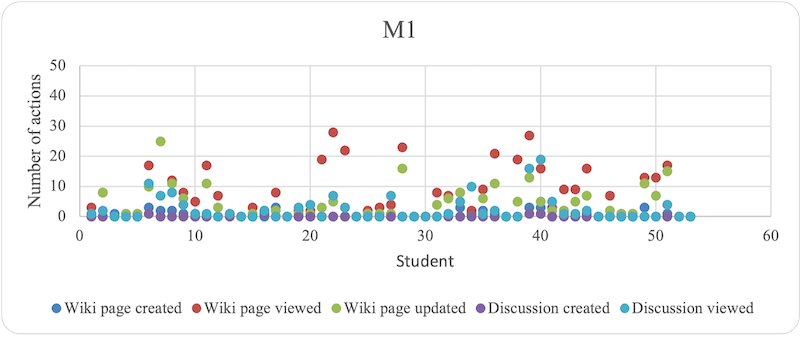
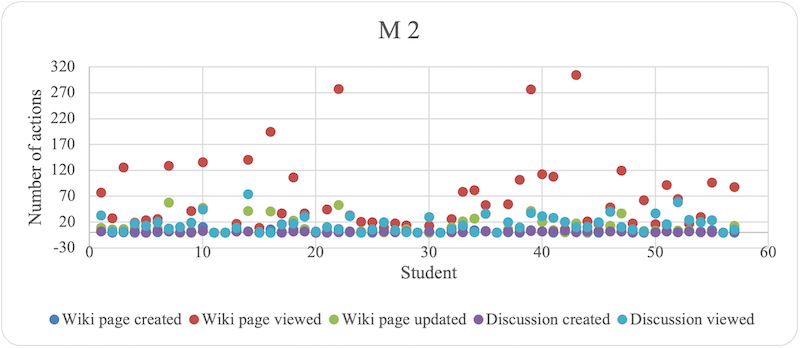
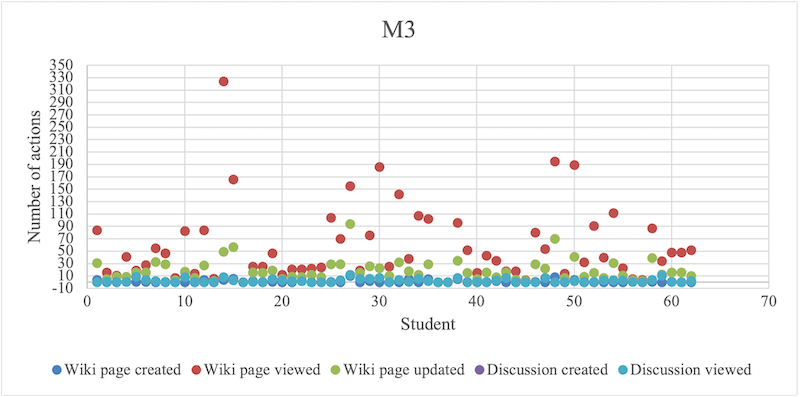
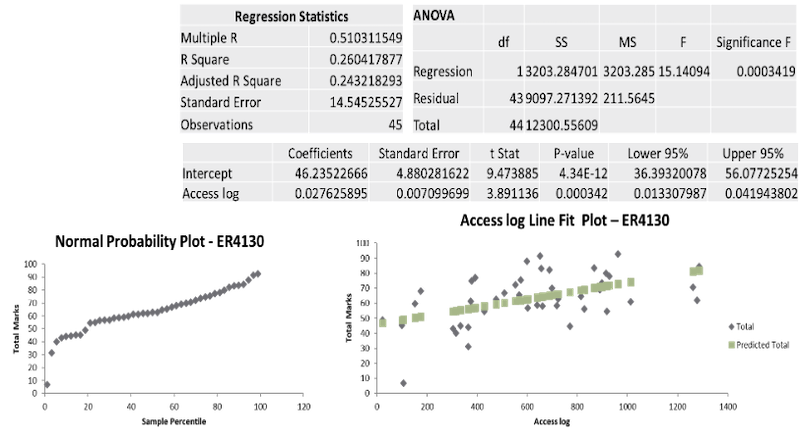
Before delving into detailed activity log analysis, it was crucial to examine if a connection existed between module access and students' course performance. The purpose was to get insight into how students' interactive behaviour correlated with their course grades, which evaluate both individual and group performance, providing a more comprehensive evaluation of student learning. To assess the importance, Pearson coefficient correlation (r) was employed. Regression Analysis performed with the M1 Total Marks that students obtained at their final examination vs the Moodle access logs for M1 were analysed to investigate whether a relationship existed between students' participation in online activities and their final grades.
As depicted in Figure 5, the R2 value of 0.2604 indicates that the model explains 26% of the data. The significance F value of 0.0000003 suggests that the null hypothesis is rejected, supporting the presence of a positive relationship between student participation and final grades. However, since 74% of the data remains unexplained by the model, further analysis was conducted using data mining algorithms in subsequent sections of the study. These subsequent analyses aimed to uncover additional patterns or insights that may not have been captured by the initial regression analysis, with the goal of better understanding the factors influencing student performance in M1.
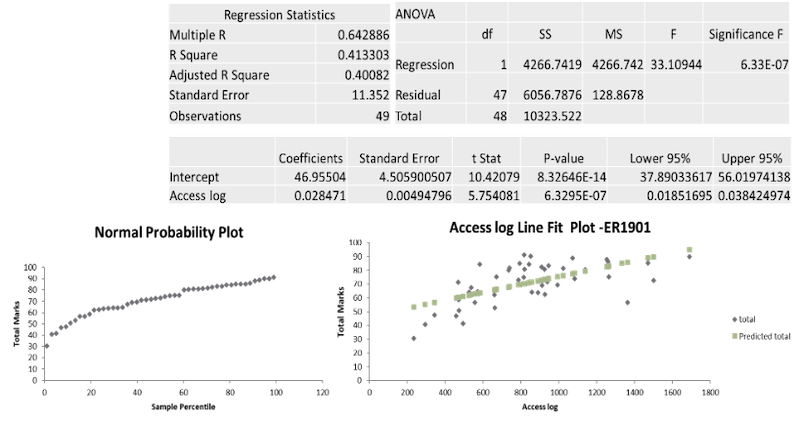
Figures 6 and 7 display regression analysis results for M2 and M3, respectively. In M2, the model explains 41.3% of the data with an F value of 6.333E-07, indicating a positive relationship between Moodle activity access and final grades. Similarly, for M3, the model explains 3.2% of the data, also suggesting a positive relationship between Moodle activity access and final grades. These figures offer insights into how well the selected variables in the regression models explain grade variations in each module.
Based on the preceding analysis, it was observed that the implementation of a Wiki improved student interaction. Consequently, the same procedure was applied to M4, which pertained to a distinct context. As indicated in Table 2, M4's activities were confined to M1, M2, and M3 because this course was chosen as a pilot run to investigate Moodle interactions in a different setting.
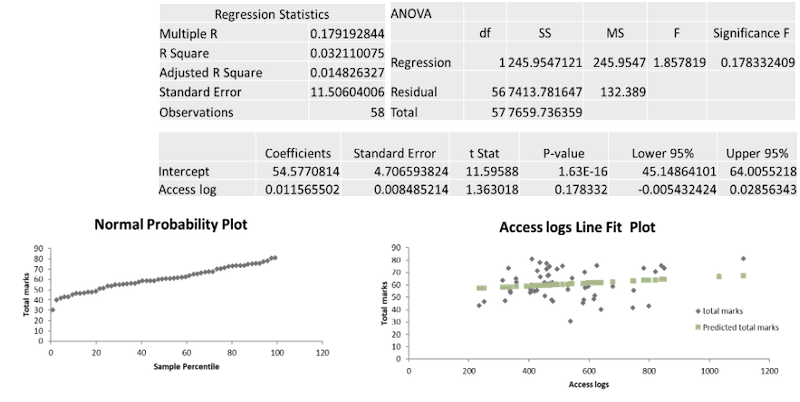
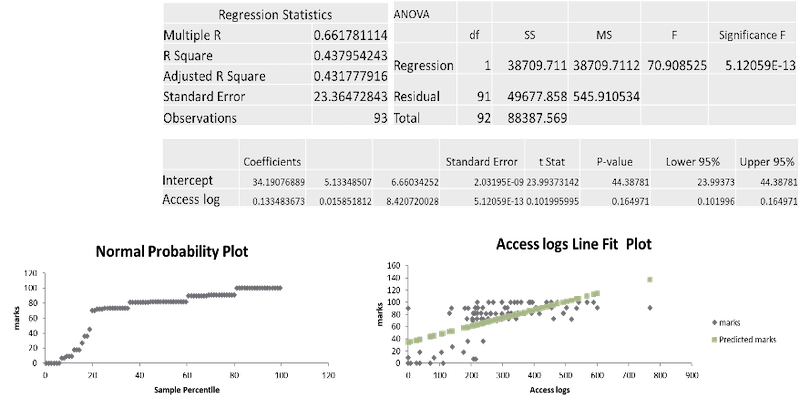
Figure 8 displays regression analysis results for Module 4 (M4). The analysis indicates that the model explains 43.8% of the data, with an F value of 5.12E-13, revealing a positive relationship between Moodle activity access logs and final grades in M4. The selected variables in the model explain a significant portion of grade variations, emphasising Moodle activities' positive impact on academic performance.
Data mining technologies allow for the extraction and display of activity patterns that may be used to predict student behaviour. Vector Space Modeling (VSM) (Jensen & Snodgrass, 2018) is a statistical model representation that is frequently utilised in the processing of documents in information retrieval. VSM's basic concept is to create vector representations for documents and then use these vectors to evaluate and compare the contents of each document. A vector is a labelled collection of data organised in a specific order.
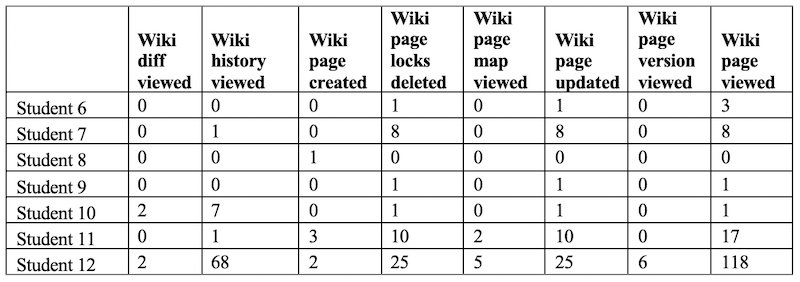
VSM requires the construction of activity vectors for each student (D1). An activity vector can be defined as a list of action types (w1 to wn) with their corresponding values depicting how many times each action was initiated by the student (Figure 9).
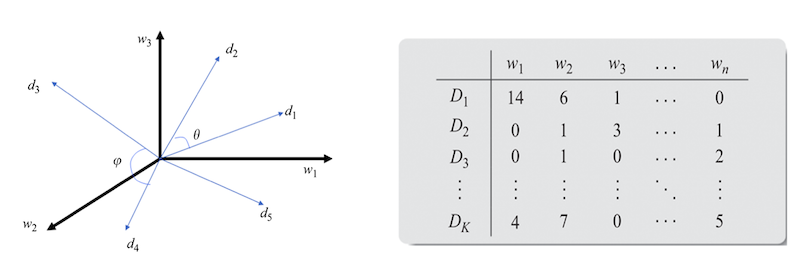
Table 4 shows a sample of activity vectors produced for each student to depict the student's collaborative activity using VSM. An activity vector is a collection of action types with values indicating how many times each action was started by the student. A value of 0 indicates that the action type was never begun. To compare the contents of action log documents, VSM determines how far their vector representations are located inside the semantic space. To assess how closely connected the topic of document D1 is to the topic of document D2, for example, VSM calculates the distance of D2 relative to the location of D1.
Table 4: Pre-processed Moodle Collaborative Activity Sample Vector
The cosine of the angle created between the two places is the most often used technique for determining this distance. The cosine angle is calculated using the following formula:
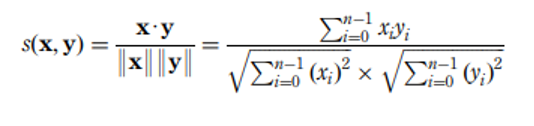
Basically, for two vectors (x and y) with n values, this formula simply computes the scalar product of the two vectors for the numerator, and computes the product of the length or norm of the two vectors for the denominator.
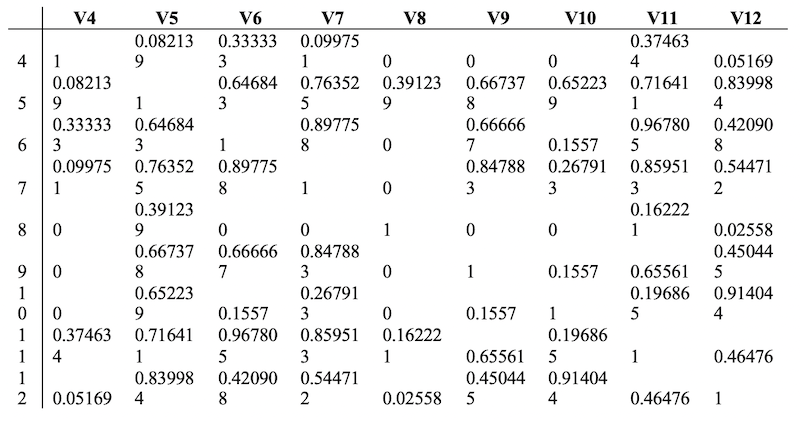
The sample estimated cosine values for collaborative activities are shown in Table 5. The cosine formula gives a value between 0 and 1. The rule of VSM is that the higher the cosine value of two documents, the more similar their contents are. A cosine value of 1 indicates that two documents are identical, whereas a value of 0 indicates that they are completely disconnected. Any value in between represents the degree of similarity between documents; the greater the value, the more closely connected the documents. Cosine values compare students’ collaborative activities to each other in order to group them based on how similar their level of activity is.
Table 5: Sample Cosine Calculation
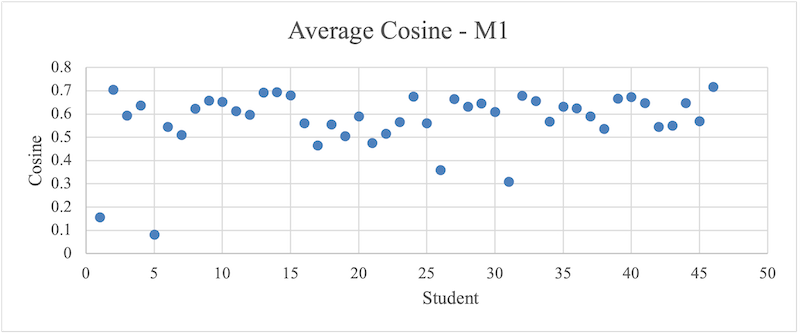
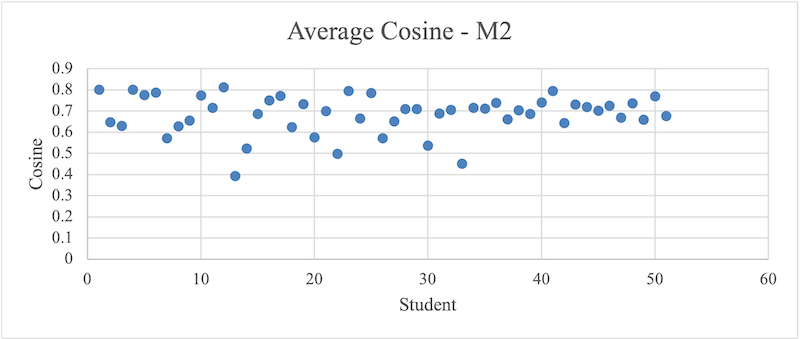
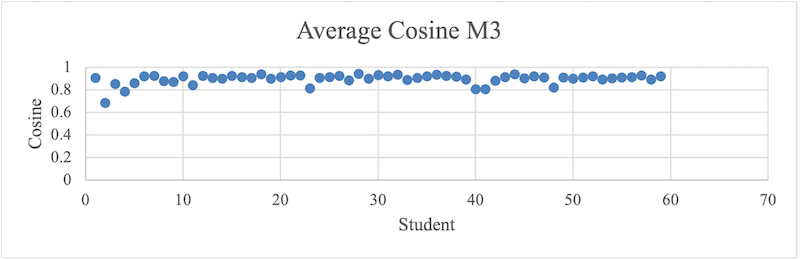
To enhance our understanding of VSM applied to students' collaborative interactions in M1, M2, and M3, scatter plot diagrams were utilised. Figures 10, 11, and 12 present these scatter plots, illustrating the average cosine values generated by each student during their collaborative activities within their respective modules.
From the visualisations, M3 shows higher student interaction compared to M2 and M1. The average cosine values, closer to 1 in M3, suggest stronger alignment in collaborative interactions. Conversely, M2 and M1 exhibit lower average cosine values, indicating less interaction and alignment among students during collaboration. The scatter plot diagrams offer insights into collaborative interaction patterns and quality within each module. They aid in identifying variations in student engagement and collaboration levels across different modules.
Analysing Moodle logs provided valuable insights into students' participation, engagement, and collaboration in the online learning environment. Practitioners can make maximum use of Moodle’s features to facilitate collaboration, such as setting up discussion forums, creating group assignments, and using Wikis for collective content creation. Systematically designed collaborative activities encourage student engagement and deepen understanding. Combining face-to-face instruction with online collaborative activities can create a more flexible and effective learning environment. Tasks requiring teamwork on complex problems have proven especially effective in enhancing interactions and improving learning outcomes.
Regression analysis and VSM indicated positive relationships between student participation in Moodle activities and their final grades and highlighted the importance of promoting active engagement and interaction among students through collaborative activities on the Moodle platform. This study demonstrated the utility of learning analytics in identifying which students engage most in collaborative activities, effective student groups, and engaging task types, allowing practitioners to continuously evaluate the effectiveness of collaborative learning activities and make data-driven improvements. Real-time feedback provided to students and teachers can identify areas for support, which is especially important in online collaborative environments where students may feel isolated.
This study demonstrated how active participation in collaborative learning activities can boost student motivation and retention rates by creating a strong learning community and enhancing the learning experience for students. Systematically designing collaborative activities and leveraging Moodle tools like assignments and forums can enhance collaboration, communication, and knowledge sharing. Such instructional design approaches, combined with learning analytics, create more engaging and effective online learning environments, improving student interactions and outcomes. By promoting collaborative learning, practitioners can empower students to take ownership of their learning, fostering independence and self-regulation. Moreover, by leveraging Moodle tools such as assignments, quizzes, forums, and content creation, instructors can foster collaboration, communication, and knowledge exchange among students. Overall, the use of learning analytics in online collaborative learning environments can help to enhance student interactions, improve learning outcomes, making courses more interactive and dynamic.
It is important to note that user behaviour in LMS can vary over time. Therefore, future studies should incorporate a temporal model that tracks changes in user behaviour over time, providing real-time data to system analysts about the current state of the system rather than just an overall summary of system usage. Testing the stability of user behaviour is crucial, as behaviours may change throughout the course.
Integrating Artificial Intelligence (AI) into Moodle could enhance this analysis by offering predictive insights and personalised recommendations. AI could analyse student interactions with course materials in Moodle, offering deeper insights for optimising course design. Additionally, AI-powered analytics could track assessment effectiveness in real-time, enabling instructors to make data-driven decisions to better evaluate student understanding. The future of Moodle data analytics lies in harnessing the power of AI to create a more personalised and effective learning experience for students. AI can continuously adapt to user behaviour changes, providing educators with valuable insights to improve teaching and course design dynamically.
Acknowledgement: We acknowledge the financial support received from the Organisation for Women in Science for the Developing World (OWSD) and the Swedish International Development Cooperation Agency (SIDA) to conduct the research.
Abuhassna, H., & Alnawajha, S. (2023a). Instructional design made easy! Instructional design models, categories, frameworks, educational context, and recommendations for future work. European Journal of Investigation in Health, Psychology and Education, 13(4), 715-735. https://doi.org/10.3390/ejihpe13040054
Abuhassna, H., & Alnawajha, S. (2023b). The transactional distance theory and distance learning contexts: Theory integration, research gaps, and future agenda. Education Sciences, 13(2). https://doi.org/10.3390/educsci13020112
Al-Ajlan, A., & Zedan, H. (2008). Why moodle. Proceedings of the IEEE Computer Society Workshop on Future Trends of Distributed Computing Systems, 58-64. https://doi.org/10.1109/FTDCS.2008.22
Alammary, A., Sheard, J., & Carbone, A. (2014). Blended learning in higher education: Three different design approaches. Australasian Journal of Educational Technology (4).
Aljawarneh, S.A. (2020). Reviewing and exploring innovative ubiquitous learning tools in higher education. Journal of Computing in Higher Education, 32(1), 57-73. https://doi.org/10.1007/s12528-019-09207-0
Altinpulluk, H., & Kesim, M. (2021). A systematic review of the tendencies in the use of learning management systems. Turkish Online Journal of Distance Education, 22(3), 1-14. https://doi.org/10.17718/tojde.961812
Amiel, T., & Reeves, T.C. (2008). Design-based research and educational technology: Rethinking technology and the research agenda. Educational Technology & Society, 11,
Anderson, T.D., & Garrison, D.R. (1995). Critical thinking in distance education: Developing critical communities in an audio teleconference context. Higher Education, 29(2), 183-199. https://doi.org/10.1007/BF01383838
ArchMiller, A., Fieberg, J., Walker, J.D., & Holm, N. (2017). Group peer assessment for summative evaluation in a graduate-level statistics course for ecologists. Assessment and Evaluation in Higher Education, 42(8), 1208-1220. https://doi.org/10.1080/02602938.2016.1243219
Awofeso, N., Hassan, M., & Hamidi, S. (2016). Individual and collaborative technology-mediated learning using question & answer online discussion forums – perceptions of Public Health learners in Dubai, UAE. Open Learning, 31(1), 54-63. https://doi.org/10.1080/02680513.2015.1120662
Bulca, Y., & Demirhan, G. (2020). The effect of online educational social learning platform Edmodo on the achievement and permanence of learning the physical activity concepts. Educational Technology Theory and Practice, 10(2), 577-589. https://doi.org/10.17943/etku.721876
Byrnes, K.G., Kiely, P.A., Dunne, C.P., McDermott, K.W., & Coffey, J.C.C. (2020). Communication collaboration and contagion: “Virtualisation” of anatomy during COVID‐19. Clinical Anatomy, 2021, 34, 82-89. https://doi.org/https://doi.org/10.1002/ca.23649
Cheung, S.K.S., Kwok, L.F., Phusavat, K., & Yang, H.H. (2021). Shaping the future learning environments with smart elements: Challenges and opportunities. International Journal of Educational Technology in Higher Education, 18(16). https://doi.org/10.1186/s41239-021-00254-1
Corfman, T., & Beck, D. (2019). Case study of creativity in asynchronous online discussions. International Journal of Educational Technology in Higher Education, 16(1). https://doi.org/10.1186/S41239-019-0150-5
Dai, H., Nguyen, P.L., & Kutay, C. (2022). Offline collaborative learning approach for remote Northern territory students. Interactive Technology and Smart Education. https://doi.org/10.1108/ITSE-05-2022-0063
Deris, F.D., Zakaria, M.H., & Mansor, W.F.A.W. (2012). Teaching presence in online course for part-time undergraduates. Procedia - Social and Behavioral Sciences, 66, 255–266. https://doi.org/10.1016/J.SBSPRO.2012.11.268
Dias, S.B., Hadjileontiadou, S.J., Diniz, J., & Hadjileontiadis, L.J. (2020). DeepLMS: A deep learning predictive model for supporting online learning in the Covid-19 era. Scientific Reports, 10(1), 1-17. https://doi.org/10.1038/s41598-020-76740-9
Dillenbourg, P. (1999). What do you mean by “collaborative learning”? Collaborative-Learning: Cognitive and Computational Approaches, 1, 1-19. https://doi.org/10.4018/978-1-60566-786-7.ch012
Gamage, S.H.P.W., Ayres, J.R., & Behrend, M.B. (2022). A systematic review on trends in using Moodle for teaching and learning. International Journal of STEM Education, 9(1). https://doi.org/10.1186/s40594-021-00323-x
Garrison, D.R. (2019). Online collaboration principles. Online Learning, 10(1). https://doi.org/10.24059/olj.v10i1.1768
Gehringer, E. (2007). Active and collaborative learning strategies for teaching computing. ASEE Annual Conference & Exposition, 1-13.
Herrington, J., McKenney, S., Reeves, T., & Oliver, R. (2007). Design-based research and doctoral students: Guidelines for preparing a dissertation proposal. Proceedings of World Conference on Educational Multimedia, Hypermedia and Telecommunications, 2007, 4089-4097. http://ro.ecu.edu.au/ecuworks/1612
Jabbar, A., & Hasmy, M. (2020). Effective use of collaboration tools in Moodle LMS by lecturers and students at South Eastern University of Sri Lanka. Journal of Information Systems & Information Technology (JISIT), 5(1).
Jensen, C.S., & Snodgrass, R.T. (2018). Vector-space model. Encyclopedia of Database Systems, 4366-4372. https://doi.org/10.1007/978-1-4614-8265-9_918
Johar, N.A., Kew, S.N., Tasir, Z., & Koh, E. (2023). Learning analytics on student engagement to enhance students’ learning performance: A systematic review. Sustainability (Switzerland), 15(10), 1-25. https://doi.org/10.3390/su15107849
Karaoglan, F.G.Y., & Yilmaz, R. (2020). Student opinions about personalized recommendation and feedback based on learning analytics. Technology, Knowledge and Learning, 25(4), 753-768. https://doi.org/10.1007/s10758-020-09460-8
Kew, S.N., & Tasir, Z. (2022). Developing a learning analytics intervention in e-learning to enhance students’ learning performance: A case study. Education and Information Technologies, 27(5). Springer US. https://doi.org/10.1007/s10639-022-10904-0
Kim, D., Lee, I.H., & Park, J.H. (2019). Latent class analysis of non-formal learners’ self-directed learning patterns in open educational resource repositories. British Journal of Educational Technology, 50(6), 3420-3436. https://doi.org/10.1111/BJET.12746
Long, S.L., & McLaren, M-R. (2024). Belonging in remote higher education classrooms: The dynamic interaction of intensive modes of learning and arts-based pedagogies of intensive modes of learning and arts-based pedagogies. Journal of University Teaching & Learning Practice, 21(2), 3. https://doi.org/10.53761/1.21.2.03
Moodle. (2022). Moodle home page. https://stats.moodle.org/
Parker, S.T. (1979). Mind in society: The development of higher psychological processes. L.S. Vygotsky. American Anthropologist, 81(4). https://doi.org/10.1525/aa.1979.81.4.02a00580
Paschalis, G. (2017). A compound LAMS-Moodle environment to support collaborative project-based learning: A case study with the Group Investigation method. Turkish Online Journal of Distance Education, 18(2), 134-150. https://doi.org/10.17718/tojde.306565
Pekrun, R., Goetz, T., Frenzel, A.C., & Barchfeld, P. (2011). Measuring emotions in students’ learning and performance. Contemporary Educational Psychology, 36(1), 36-48.
Peramunugamage, A., Ratnayake, U.W., Karunanayaka, S. P., & Jayawardena, C.L. (2024). Design of Moodle-based collaborative learning activities to enhance student interactions. Asian Association of Open Universities Journal, 19(1), 37-54. https://doi.org/10.1108/AAOUJ-06-2023-0079
Porter, W.W., & Graham, C.R. (2016). Institutional drivers and barriers to faculty adoption of blended learning in higher education. British Journal of Educational Technology, 47(4), 748-762. https://doi.org/10.1111/bjet.12269
Rambe, P., & Bere, A. (2013). Using mobile instant messaging to leverage learner participation and transform pedagogy at a South African university of technology. British Journal of Educational Technology, 44(4), 544-561. https://doi.org/10.1111/BJET.12057
Raza, S.A., Qazi, W., Khan, K.A., & Salam, J. (2021). Social isolation and acceptance of the Learning Management System (LMS) in the time of COVID-19 pandemic: An expansion of the UTAUT Model. Journal of Educational Computing Research, 59(2), 183-208. https://doi.org/10.1177/0735633120960421
Romero, C., Ventura, S., & García, E. (2008). Data mining in course management systems: Moodle case study and tutorial. Computers & Education, 51(1), 368-384. https://doi.org/10.1016/J.COMPEDU.2007.05.016
Ruzmetova, M. (2018). Applying Gilly Salmon’s Five Stage Model for Designing Blended Courses. Dil ve Edebiyat Araştırmaları/Journal of Language and Literature Studies, 17, 271-290. https://doi.org/10.30767/diledeara.418085
Salmon, G., Nie, M., & Edirisingha, P. (2010). Developing a five-stage model of learning in second life. Educational Research, 52(2), 169-182. https://doi.org/10.1080/00131881.2010.482744
Saqr, M., Fors, U., & Tedre, M. (2017). How learning analytics can early predict under-achieving students in a blended medical education course. Medical Teacher, 39(7), 757-767. https://doi.org/10.1080/0142159X.2017.1309376
Sergis, S., Vlachopoulos, P., Sampson, D.G., & Pelliccione, L. (2017). Implementing teaching model templates for supporting flipped classroom-enhanced STEM education in Moodle. In A. Marcus-Quinn, & T. Hourigan (Eds.), Handbook on Digital Learning for K-12 Schools. https://doi.org/10.1007/978-3-319-33808-8
Setiadi, P.M., Alia, D., Sumardi, S., Respati, R., & Nur, L. (2021). Synchronous or asynchronous? Various online learning platforms studied in Indonesia 2015-2020. Journal of Physics: Conference Series, 1987(1), 1-7. https://doi.org/10.1088/1742-6596/1987/1/012016
Singh, J. (2015). Moodle Statistics – Moodle now has more than 78 million users all over the world #MoodleWorld #Moodle. https://www.elearnmagazine.com/marketplace/moodle-statistics-moodle-now-has-more-than-78-million-users-all-over-the-world-moodleworld-moodle/#
Slee, N.J.D., & Jacobs, M.H. (2017). Trialling the use of Google Apps together with online marking to enhance collaborative learning and provide effective feedback. F1000Research, 4, 1-30. https://doi.org/10.12688/f1000research.6520.1
Strang, K.D. (2015, January). Effectiveness of peer assessment in a professionalism course using an online workshop. Journal of Information Technology Education: Innovations in Practice, 14, 001-016. https://doi.org/10.28945/2100
Sung, Y.T., Yang, J.M., & Lee, H.Y. (2017). The effects of mobile-computer-supported collaborative learning: Meta-analysis and critical synthesis. Review of Educational Research, 87(4), 768-805. https://doi.org/10.3102/0034654317704307
Swid, A., Hsu, H-Y., & Wang, S-K. (2018). Mobile learning application to facilitate ubiquitous collaborative learning: An organizational behavior course. Journal of Higher Education Theory and Practice, 18(4). https://doi.org/10.33423/jhetp.v18i4.570
Tekin, A., & Oztekin, Z. (2018). A survey of the studies about educational data mining between 2006-2016. Educational Technology Theory And Practice, 8(2). http://dergipark.gov.tr/etku
Tlili, A., Essalmi, F., Jemni, M., Chang, M., & Kinshuk. (2018). iMoodle: An intelligent Moodle based on learning analytics. In R. Nkambou, R. Azevedo, & J. Vassileva (Eds.), Intelligent Tutoring Systems: Proceedings of the 14th International Conference on Intelligent Tutoring Systems, ITS 2018, Montreal, QC, Canada, June 11-15, 2018. Springer International Publishing. https://doi.org/10.1007/978-3-319-91464-0
Tong, Y., & Zhan, Z. (2023). An evaluation model based on procedural behaviors for predicting MOOC learning performance: students’ online learning behavior analytics and algorithms construction. Interactive Technology and Smart Education, 20(3), 291-312. https://doi.org/10.1108/ITSE-10-2022-0133/FULL/XML
van den Akker, J., Gravemeijer, K., McKenney, S., & Nieveen, N. (2006). Educational design research. Educational Design Research, 1-164. https://doi.org/10.4324/9780203088364
Wang, F., & Hannafin, M.J. (2011). Design-based research and technology-enhanced learning environments. Instructional and Cognitive Impacts of Web-Based Education, 53(4), 241-261. https://doi.org/10.4018/978-1-878289-59-9.ch016
Wei, X., Saab, N., & Admiraal, W. (2024). What rationale would work? Unfolding the role of learners’ attitudes and motivation in predicting learning engagement and perceived learning outcomes in MOOCs. International Journal of Educational Technology in Higher Education, 21(5). https://doi.org/10.1186/s41239-023-00433-2
Xiao, L.L., & Rahman, S.S.B.A. (2017). Predicting learning styles based on students’ learning behaviour using correlation analysis. Current Science, 113.
Xie, J., & Correia, A.P. (2024). The effects of instructor participation in asynchronous online discussions on student performance: A systematic review. British Journal of Educational Technology, 55(1), 71-89. https://doi.org/10.1111/BJET.13350
Author Notes
Anuradha Peramunugamage is an OWSD fellowship 2020 recipient and a PhD student at The Open University in Sri Lanka. She has over fifteen years of professional experience in information systems, learning management systems, and educational technologies. She earned a BSc (Hons) in Information Technology from the Sri Lanka Institute of Information Technology in 2004 and an MSc in Information Management from the same institution (2007). She obtained her MPhil in Educational Technologies at the University of Colombo School of Computing, Sri Lanka (2020). Her research interests include educational technology, blended learning, e-learning, mobile learning, Open Educational Resources (OER) and engineering education. Email: anuradhaperamunugamage@gmail.com (https://orcid.org/0000-0003-4769-6503)
Uditha W. Ratnayake is a Professor at the Department of Electrical and Computer Engineering, Faculty of Engineering Technology, The Open University of Sri Lanka. She graduated from the University of Moratuwa, Sri Lanka (1994) specialising in Computer Science and Engineering. She obtained her PhD in IT from Murdoch University, Australia in 2004. Her research interests are data mining, artificial intelligence techniques (Neural networks, Agent technology), and OER based e-learning. Email: udithaw@ou.ac.lk (https://orcid.org/0000-0002-2178-9261)
Shironica P. Karunanayaka is a Senior Professor in Educational Technology Department of Secondary and Tertiary Education, Faculty of Education, The Open University of Sri Lanka, Nawala, Nugegoda, Sri Lanka. She is a former Dean of the Faculty of Education and a former Head of the Department of Secondary and Tertiary Education at OUSL. Her key research focus is in the areas of Information and Communication Technologies in Education, Learning Experience Design, Open Educational Resources and Open Educational Practices. Email: spkar@ou.ac.lk (https://orcid.org/0000-0003-1995-8828)
Ellen Francine Barbosa is an Associate Professor at the Institute of Mathematics and Computer Sciences, University of São Paulo (ICMC-USP), Brazil. She received her PhD in Computer Science from ICMC-USP. During her PhD, she was also a visiting scholar at the Georgia Institute of Technology and at the University of Florida, USA. Her main research interests are related to CS education and training, Open Education Resources, mobile learning, educational data mining, and augmented and virtual reality. A list of her main publications can be found on Lattes Platform: http://lattes.cnpq. br/7913302545613108. Email: francine@icmc.usp.br (https://orcid.org/0000-0003-3275-2293)
William Simão de Deus received his Technologist and MSc degrees from the Federal Technological University of Paraná, Cornélio Procópio, Brazil, in 2015 and 2018, respectively. He is a professor at the Federal Institute of Paraná (IFPR) and received his PhD from the Institute of Mathematics and Computer Sciences (ICMC) at the University of São Paulo (USP). He has been a visiting researcher at the University of Virginia (UVA) and his experience and research interests lie at the intersection of Education and Software Engineering, with a focus on teaching and learning computer programming and software development, including Open Educational Resources and Computer Science Education. Email: williamsimao@usp.br (https://orcid.org/0000-0001-7540-3742)
Chulantha L. Jayawardena is a Professor at the Department of Earth Resources Engineering, Faculty of Engineering, University of Moratuwa, Sri Lanka. He has a Bachelor’s in Earth Resources Engineering and a PhD in Earth Sciences and is involved in teaching, research and academic administration in engineering while experimenting with technology enabled distance learning strategies in challenging environments. Email: chulanthaj@uom.lk (https://orcid.org/0000-0001-5589-349X)
R.K.J. de Silva is a Senior Lecturer and an academic researcher at the Department of Textile and Apparel Engineering, Faculty of Engineering, University of Moratuwa, Sri Lanka. She obtained her BSc in Engineering in Textile and Clothing from the University of Moratuwa. She received her PhD in Industrial Management in a split-site program at the University of Kelaniya, Sri Lanka, and the Manchester Metropolitan University, UK. She has taught pattern technology, garment technology, and 2D CAD in apparel for twelve years. She had industry experience in the same field before joining academia and is passionate about innovative teaching, learning, and assessment methods. Email: Jayamalide@uom.lk (https://orcid.org/0000-0001-9941-8711)
Cite as: Peramunugamage, A., Ratnayake, U.W., Karunanayaka, S.P., Barbosa, E.F., de Deus, W.S., Jayawardena, C.L., de Silva, R.K.J. (2025). Monitoring collaborative interactions in online learning: Insights from Moodle log records. Journal of Learning for Development, 12(2), 290-312.