Muhammad Hanif, Mustaji Mustaji and Fajar Arianto
2025 VOL. 12, No. 2
Abstract: Flipped learning is an innovative instructional approach where students engage in typical learning tasks before class, while class time is focused on collaborative discussions, problem-solving, and student involvement. It utilises technology to facilitate reverse teaching approaches, transform traditional practices in higher education by allowing students to engage in learning, and foster both personal and professional growth. To assess the possibility of improving access to higher education using flipped learning methods, this systematic review employed the Preferred Reporting Item for Systematic Reviews and Meta-Analytics (PRISMA) procedure to examine how the emotional aspects were affected by the flipped learning methodology. The researchers conducted a literature search on items published between 2014 to 2023 using Publish or Perish (POP) and analysed by identifying, screening and focusing on the top 200 relevant results. Prior studies have demonstrated the notable influence of the flipped learning method on the emotional state of college students, specifically in terms of their level of engagement, motivation, and self-efficacy. Nevertheless, this study proposes that flipped learning, a form of blended learning, holds significant promise as a substitute for a humanistic and student-centred approach in higher education, benefiting students, lecturers or instructors, and parents.
Keywords: college students, emotional attributes, flipped learning, systematic literature review
In recent times, the higher education sector in Indonesia has been confronted with distressing phenomena characterised by multiple instances of suicide among college students throughout various cities in the country (Utomo & Rahmasari, 2024). It is hypothesised that some of these occurrences of student suicide and attempted suicide were caused by mental stress resulting from the rigorous learning process in college, which contributes to societal pressure on students (Fitri et al., 2024; Kustiani et al., 2023; Setiyawati et al., 2024). Several colleges responded to this by expanding the scope of the educational process and providing humanistic counselling. The selection of forms and the process of humanistic learning are intricately connected to the mindset of college students (Kwon & Woo, 2018). An enjoyable educational experience could be optimised to ensure that students achieve their learning goals at their own pace. This approach also ensures that students and lecturers have a fair balance of rights and responsibilities while maximising the outcomes of the learning process.
College educators must use technological advances to create a more effective learning environment where learning is not limited to the classroom, and teachers can act as tutors while students engage more actively in the learning process (Tan et al., 2017). Flipped learning is one of the educational approaches that adhere to this technology-driven approach. Flipped learning limits teachers' direct instruction and maximises students' cooperative and collaborative involvement in the teaching process (Sams & Bergmann, 2013). Flipped learning is believed to have the capacity to enhance the humanistic aspect of learning, drawing from the principles of constructivism and modern information technology (Zhou, 2023).
Flipped learning is a teaching approach that shifts traditional classroom teaching into a more interactive and participatory setting. Students study at home and apply their knowledge in the classroom, under the guidance of an instructor. This approach allows students to actively engage with the subject matter and complete homework during class time (MacKinnon, 2015; Teo et al., 2022). The primary goal of flipped learning is to optimise direct interaction between students and educational materials, thereby enhancing students' knowledge (Bull et al., 2012). In higher education, this approach enhances learning by providing a proportionate, progressive, and non-overwhelming composition. It allows students to develop skills for effective study and real-life application (McCallum et al., 2015), while lecturers can allocate more time for face-to-face interaction, emphasising scenario-oriented work (Persky & McLaughlin, 2017).
Higher education is crucial for equipping students with skills and knowledge for the labour market (Pambudi & Harjanto, 2020). As a self-directed approach, flipped learning offers a more flexible and personalised learning experience, reducing face-to-face interactions (Hwang et al., 2015). This approach also benefits lecturers by relocating theoretical knowledge from the classroom and allowing students to engage in hands-on activities or logical thinking, enhancing their learning experience (Marshall & Kotska, 2020).
Students at college should have a relatively high learning load, both in theory and practice. Therefore, the learning methodology often imposes itself on independent learning (Divjak et al., 2022). This requires students have strong psychological abilities and good self-regulation. In addition to learning methods, strong psychological, mental, or emotional attitudes are often also decisive predictors for college students. Mental and emotional attitudes have a significant impact on success in higher education. Although adult learners tend to have stable mental and emotional attitudes, social pressure and high learning loads can be a serious challenge (Gilar-Corbí et al., 2018). Moreover, the potential for stress and anxiety in other studies is also thought to be related to the learning load and the choice of learning methodology.
While research has extensively investigated the relationship between learning pedagogy choice and emotional mental attitude (Liu et al., 2019), the conceptual tendencies of each method choice are few (Yılmaz et al., 2018). Particularly in higher education, the most recent methodological choices, like flipped learning, prioritise the potential to achieve learning outcomes (Jia et al., 2022). However, there is a significant lack of consideration for mental and emotional attitudes when making pedagogical decisions (Burr & Dallaghan, 2019). Therefore, it is important to remind both lecturers and researchers to prioritise the concept of the potential, and psychological needs of students in higher education when selecting flipped learning models. This study contributes to the strengthening of this field as it examines the specific relationship between flipped learning and emotional attribution in the context of higher education.
This study investigated the implementation of flipped learning in higher education and examined its potential correlations with students' emotional characteristics. This systematic literature review explored the potential impact of flipped learning on emotional attribution in university students, based on previous research, as an alternative solution to their mental and emotional issues. Some basic concepts explored were: (a) the flipped learning concept benefits higher education; (b) the flipped learning concept related to constructivism as a higher education philosophy; and (c) the flipped learning concept related to higher education students’ emotional attributes. This investigation could assist educators in discovering novel, efficient, and pragmatic pedagogical methodologies that consider the emotional situations of students.
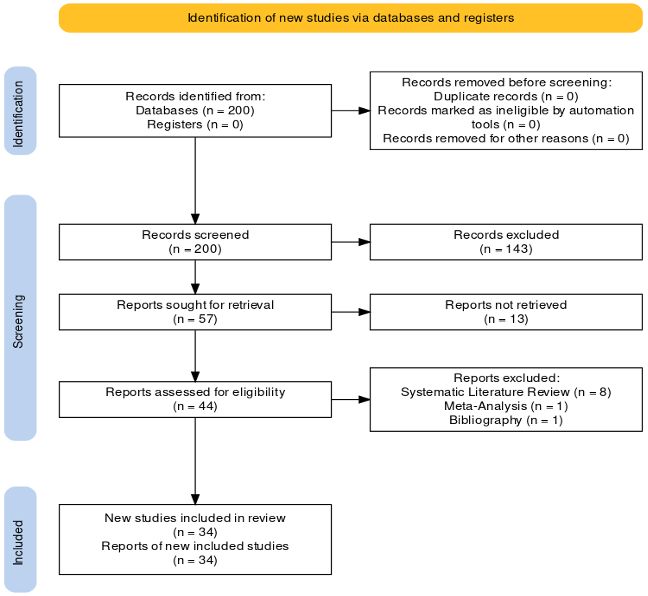
This study presents a scientific analysis of the fundamental literature on the potential efficacy of flipped learning in improving and/or preserving college students' emotional characteristics. The researchers cited prominent scientific references from prior research on flipped learning, constructivism, and students' emotional attributions found in scientific publications. The approach used was a systematic literature review (SLR) by employing the procedure of the Preferred Reporting Item for Systematic Reviews and Meta-Analytics (PRISMA) as shown in Figure 1. The PRISMA procedure was used to improve the transparency and quality of the systematic review and meta-analysis report (Page et al., 2021). The procedure systematically discovers, evaluates, and interprets all relevant findings on a certain research issue to address predetermined research inquiries. Following the selection procedure, researchers evaluated and condensed all publications based on their objectives, authorship, publication year, number of participants, research instruments used, study findings, and recommendations for future studies.
The researchers used the PRISMA 2020 flow diagram for new systematic reviews, which included searches of databases and registers only templates, so they could conduct identification, screening and inclusion from selected literature databases.
The researchers restricted the literature search to items published between 2014 and 2023. The publications were searched for online by using Publish or Perish (POP), using the terms "flipped learning and emotional attributes" in the title and keywords in Google Scholar research databases and limited to the top 200 relevant results chronologically based on citation number. A search of 200 research publications yielded all the publications containing flipped learning and emotional attributes from several publishers, such as Elsevier (49), Tylor & Francis (28), Springer (26), Sagepub (9), Wiley Online Library (7), Frontiers (7), MDPI (6), Proquest Dissertation (4), Emerald (2), and other independent publishers. The authors ensured that all 200 contained no duplicates.
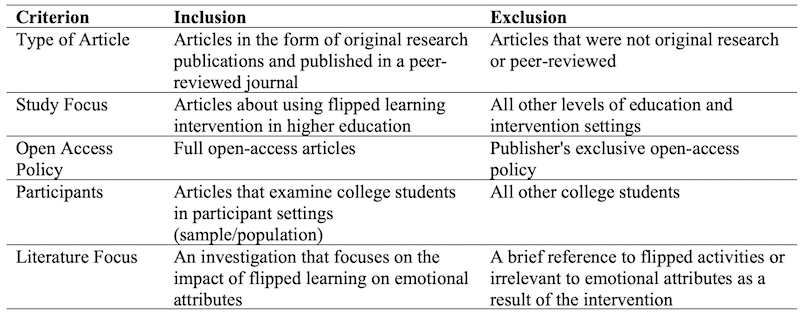
The inclusion criteria consisted of several elements. Table 1 presents the details of the listed research.
Table 1: Inclusion and Exclusion Criteria
One hundred and forty-three articles were removed due to their unsuitable content criteria of flipped learning and emotional attributes (emotions, anxiety, attitudes, self-direction, readiness, affective, mindset, engagement, involvement, motivation, self-regulation, self-initiation, perception, openness, and etiquette). Thirteen articles failed to meet the criteria for open access policy, and 10 articles failed to meet the criteria for research types (systematic literature review, meta-analysis, and bibliography). The literature review had 34 articles. Figure 1 provides a more comprehensive description of the literature search following the steps of Haddaway et al. (2022).
A summary was created for each article related to author, year, study location, study design, research methods, and sample size, as well as brief comments regarding the limitations and recommendations of each selected study. Relevant trends and patterns, as well as themes, were summarised and presented diagramatically and the findings reported.
This systematic review evaluated several patterns across dimensions before identifying the findings of the studies related to the specific question. Some patterns were identified and are presented below in the diagrammatic representations.
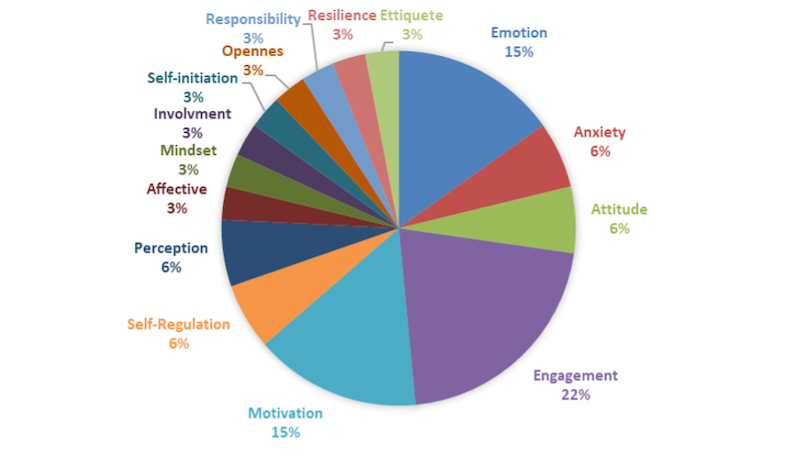
The findings in Figure 2 show that the distribution of themes in research related to flipped learning and emotional attributes in higher education was very diverse but predominantly led to students’ engagement, emotion and motivation (more than 10%). Other affective attribute topics such as anxiety, self-regulation, attitude and perception also received considerable attention. The extensive distribution of topics reinforces the finding that there is a connection between flipped learning and higher education students' emotional attributions in various dimensions.
The quantitative experimental method was predominantly employed among the selected original research, as it was more suitable for assessing the flipped learning effectiveness on changes in attribution conditions. Several qualitative exploratory and sequential mixed-method studies were also identified to examine behaviour change in detail compared to surveys, case studies, factorials and embedded design. This indicated that the examination of flipped learning's impact on students' emotional attributions can be approached through various research methodologies (see Fig. 3).
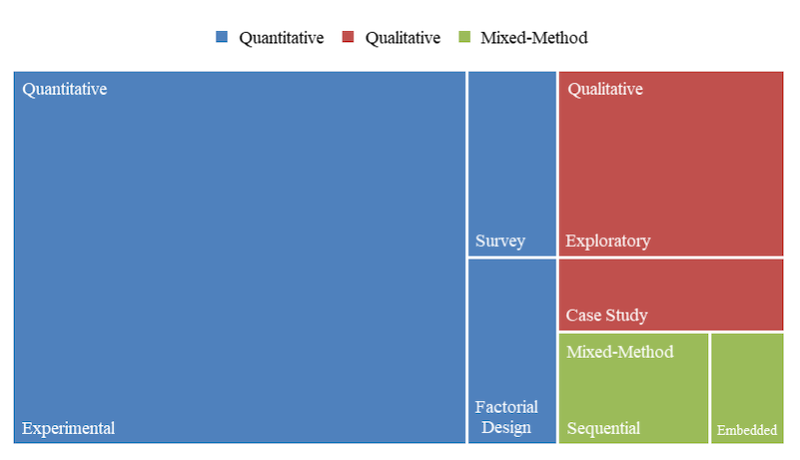
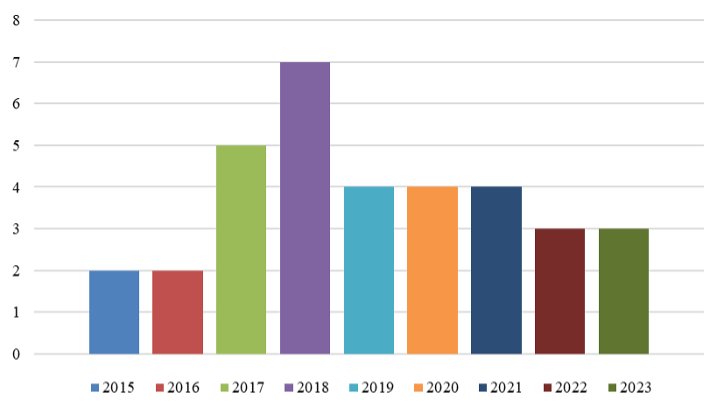
Figure 4 illustrates the distribution per year among the selected research, indicating that each year was represented by a minimum of two studies pertaining to flipped learning’s effectiveness to students' emotional attribution. Although there were fluctuations in some years, the overall trend demonstrated stability, reflecting the sustained interest and urgency of study in this area.
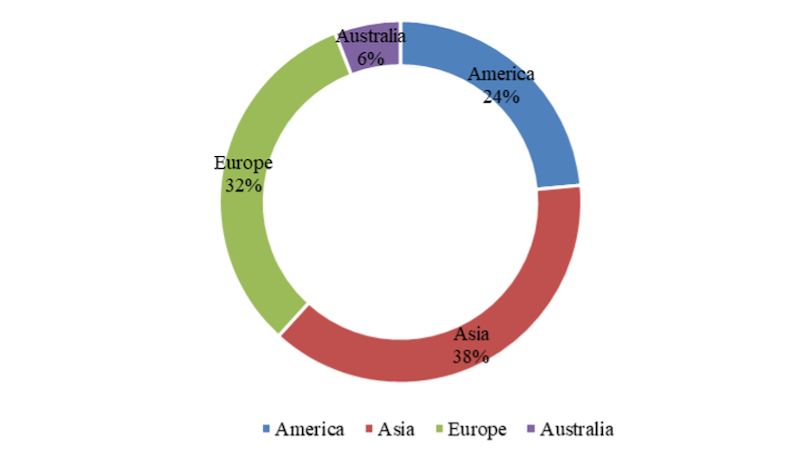
Figures 5 and Figure 6 sequentially illustrate the study research site settings by nation and continent. The fairly even distribution among the three continents (Asia, Europe, and America) indicates that this topic holds worldwide interest. The preeminence of nations with a high student population correlates with the volume of relevant research, with China and the USA leading, followed by Turkey, Taiwan, and Spain.
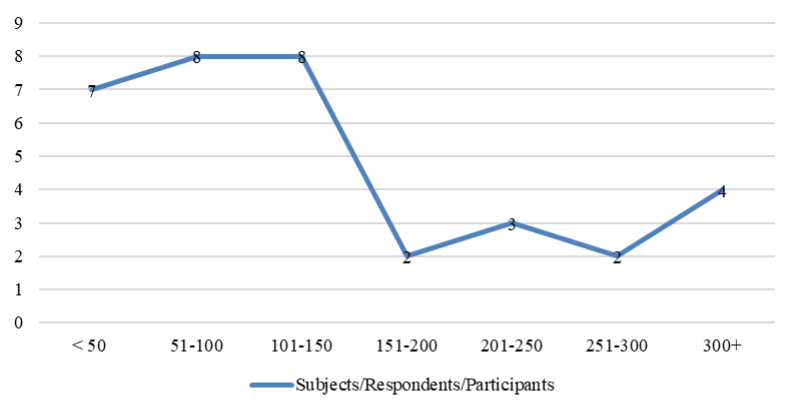
The quantity of sample sizes incorporated in this analysis was also an inclusion criterion. In this result, all selected studies involved more than 50 participants or respondents, and most were in the range of 100-150 students as subjects. This indicates the reliability of the sample used to generalise the results of flipped learning’s effectiveness on students' emotional attributions. Figure 7 illustrates a tendency to engage over 200 students in certain categories, such as surveys and experiments.
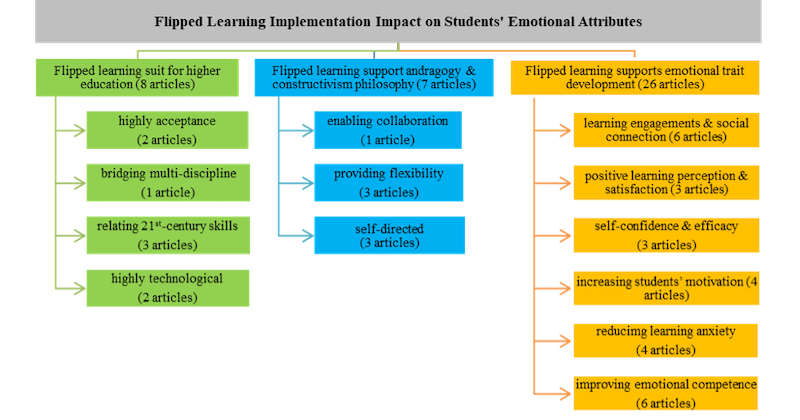
Following the examination of the research trends and patterns, the authors performed a thematic analysis to assess the influence of flipped learning implementation on students' emotional attributions, resulting in the identification of three principal themes from the research. The results are illustrated in Figure 7, with each category of data being discussed thematically.
Flipped learning, as demonstrated in several studies such as Jang and Kim (2020), Tsai and Wu (2020), and Yulian (2021), seeks to enhance learning outcomes in higher education. Sajid et al. (2016) defined flipped learning as a mixed learning method that integrates teaching, e-learning, and face-to-face didactic instruction. However, proponents claim that mixed learning adheres to traditional methods, whereas flipped learning incorporates digital elements by integrating collaborative and cooperative learning (Erbil, 2020).
The four primary components of flipped learning, as identified by Sailsman (2021), are flexible environments, learning cultures, intentionally crafted content, and skilled instructors. Flipped learning emphasises the diversity of learning methods. In each unit, instructors have the flexibility to modify the learning environment by including multiple modes such as group work, self-learning, research, performance, and evaluation. Students experience reduced tension and anxiety due to the adaptable learning environment, which does not compel them to hastily grasp every topic within a single learning module (Polat et al., 2022). Due to the inherent flexibility, students have the freedom to seek assistance from their peers or consult with their instructors at their convenience (Demirel, 2016). Flipped learning engages students as active participants in the learning process, allowing them to actively participate in all learning activities. Consequently, the student culture experienced a transformation with the advent of flipped learning (Chivata & Oviedo, 2018). Flipped learning's learning content intentionally combines a variety of instructional approaches, including active learning tactics, peer teaching, problem-based learning, and others tailored to the class level and subject characteristics. Professional educators play a crucial role in flipped learning by developing content, modifying materials, selecting tactics, and optimising classroom interaction time (Bauer-Ramazani et al., 2016).
According to Agustini et al. (2021), flipped learning is an educational method that involves students engaging in self-directed study of pre-class materials, followed by participation in various learning activities such as discussions, problem-solving, and practice during in-class sessions (Jung et al., 2018). Belmonte et al. (2019) reported that students independently learned pre-class material from the pre-produced content by lecturers. Additionally, with the assistance of video, students were able to use social media and technology outside of the classroom. The pre-class phase of flipped learning allows for the flexibility of accessing content at any time and from any location, while the in-class stage focuses on engaging in group activities during scheduled class time (Rahman et al., 2020). To acquire knowledge in the classroom, students must proactively strategise their learning process and engage in dialogue with peers and instructors.
The flipped learning technique empowers learners to become independent agents capable of effectively carrying out observational, cognitive, and advanced thinking activities. Researchers have extensively studied the effects of the flipped learning technique on students, educators, and parents. Several studies provide evidence supporting the use of flipped learning practices related to emotional traits (Jeong et al., 2021). Doo's (2021) study yielded positive outcomes, as evidenced by the survey findings. Specifically, students reported a heightened level of engagement in the learning process. Students' perspectives and intentions can experience a significant and heightened sensitivity. Bezzazi (2019) conducted trials in Taiwan to assess student self-confidence when speaking a foreign language. It found that flipped learning lowered students’ anxiety levels and encouraged communication and social skills. Additionally, another study demonstrated that the implementation of flipped learning not only enhanced students' enjoyment of the learning process but also led to improvements in their perceptions, learning outcomes, and level of participation (Haghighi et al., 2019). Shraideh et al. (2020) conducted a study that suggested an increase in positive parental perception, thereby contributing to the effectiveness of this learning paradigm. Bond (2019) also confirmed that parental participation was evident in flipped learning.
The fundamental tenets of constructivism in flipped learning include (1) a focus on student autonomy and self-directed learning; (2) engagement in active learning; and (3) the instructor's role in promoting critical thinking and facilitating the practical application and profound comprehension of novel ideas (Aljohani, 2017). Constructivism asserts that students actively create knowledge instead of passively acquiring it from external sources. This strategy necessitates that students actively construct knowledge and engage in cooperative and collaborative learning in order to reflect on and acquire meaningful learning experiences that will boost their abilities (Erbil, 2020). De Boer et al. (2018) elucidated that technology mediation in learning, such as flipped learning, serves to underscore the interrelation between the emotional state of humans, technology, and the surrounding world. Higher education frequently employs flipped learning and a constructivist approach method (Fleischmann, 2021). Moving theoretical material outside the classroom benefits both lecturers and students, freeing up class time for collaborative activities. Flipped learning, an innovative approach, has the potential to enhance the quality of higher education and inspire students by reducing the demands of study (Gilar-Corbí et al., 2018).
This conceptual study reviewed recent research on the possible influence of flipped learning on students' cognitive and emotional qualities. Several studies have investigated the impact of flipped learning on students' emotional characteristics. For example, according to Jdaitawi's (2022) study, students in a flipped learning environment had higher learning emotional engagement compared to students in a traditional learning setting. He found students had better positive emotions towards science learning compared to their traditional counterparts.
Furthermore, these students demonstrated improvement throughout their learning. Nevertheless, additional investigation is required to authenticate the study in an alternative setting, and to ascertain how the flipped learning environment might enhance student relationships and emotions more effectively, since the comparison with traditional approaches has not seemed directly relevant to the emotional needs of students. Another study that looked directly at the emotional controls that were successfully implemented in the learning context was by Ranellucci et al. (2021), who saw that flipped video had a relationship with the process of students observing patiently.
Xin-Yue (2016) conducted a study on the motivation of Chinese students in flipped classrooms. His research revealed that this flipped learning methodology encouraged students to allocate additional time and effort before instruction and throughout the class. As a result, pupils engaged in language exercises with greater enthusiasm and in a communicative manner. To improve learning and teaching outcomes using the flipped learning technique, the researchers recommended implementing regular rotation in the classroom, introducing explicit guidance from teachers, and conducting informal assessments with group members.
Another study by Lai et al. (2020) examined the impact of team-based flipped learning on the academic achievement and learning motivation of students majoring in business management. They utilised a team-based group in the flipped classroom. Just before the class session, they instructed students to view their 30-minute video. The face-to-face class gave students 20 minutes to apply the knowledge they had learned from the video lectures. On the other hand, the control group employed didactic techniques that involved small group discussions. Both classes assessed their motivational tactics using the Motivating Tactics Learning Questionnaire (MSLQ). The researchers' findings indicated that the implementation of flipped learning had significant impacts on both student learning outcomes and motivation. The flipped class displayed superior discussion quality compared to the control class.
Yorganci's (2020) study examined the impact of flipped learning, e-learning, and blended learning methods on the academic performance, self-regulation, and self-efficacy of mathematics majors. The results demonstrated a considerable enhancement in student self-regulation, performance, and self-effectiveness as a result of implementing the flipped learning technique. The researchers found that flipped learning had a positive impact on self-efficacy, as students demonstrated improved cognitive methods for effective learning. The flipped learning approach had a significant impact on student self-regulation. This approach regulated the experiences students acquire in different ways and facilitated learning. It also provided students with the opportunity to develop a strong learning mechanism that integrated real-life information and monitored their thinking processes.
Table 2 summarises the specific research themes identified in studies on the impact of flipped learning on students’ emotional attributes, which are visually outlined in Figure 7. Together, they provide a comprehensive understanding of the principal findings from the previous literature.
Table 2: Research Theme of Flipped Learning Implementation Impact on Students' Emotional Attributes
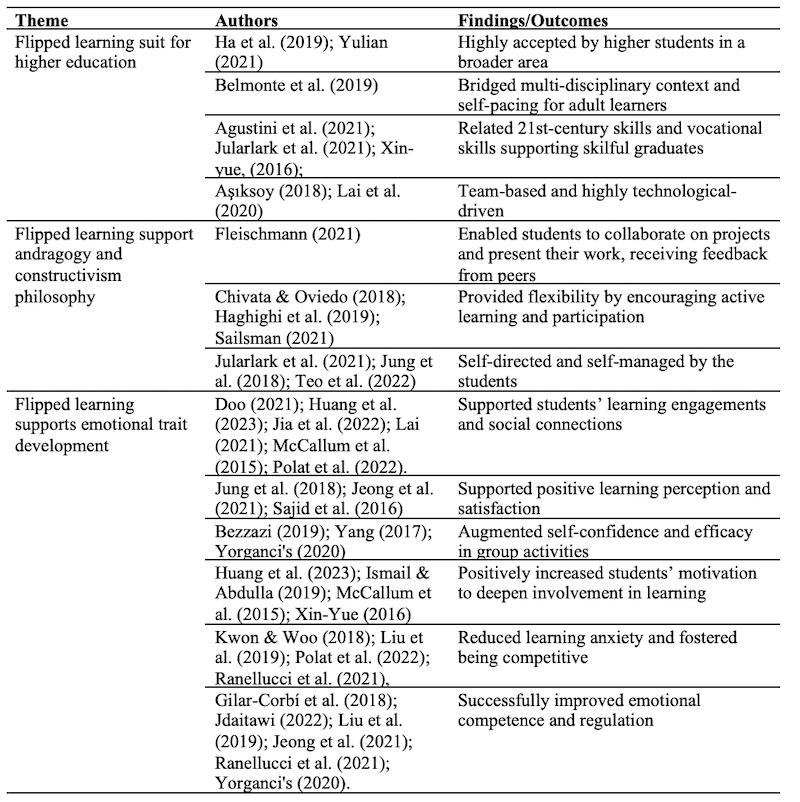
Prior studies have demonstrated that the flipped learning strategy has the potential to augment favourable emotional characteristics of learners, such as motivation (Yu et al., 2019; Lai et al., 2020) and attitudes (Al-Rahmi et al., 2021; Wittmann & Wulf, 2023). Studies indicate that students are inclined to engage in discussions in the flipped classroom. Students' heightened motivation stems directly from their satisfaction with their flipped learning experience. Moreover, prior research has demonstrated the substantial and favourable impact of flipping learning on students' self-efficacy and emotional regulation (Yorganci, 2020; Fan & Wang, 2022).
Research on self-efficacy and flipped learning has shown positive impacts due to the achievement of fundamental cognitive demands, including a sense of competence, autonomy, and social connection among students (Ha et al., 2019). This can lead to enhanced self-efficacy in educational settings that expect students to be independent, manage their own pace of learning, and build confidence through active engagement and interaction in a technology-driven learning environment (Yang, 2017; Namaziandost et al., 2018; Han & Wang, 2021). Moreover, flipped learning has the potential to promote student engagement (Yu et al., 2019; Jularlark et al., 2021; Lai, 2021), foster constructive collaboration, facilitate peer teaching and learning, and improve student satisfaction, involvement, and teacher-student connection (Xie & Derakhshan, 2021). Those mentioned attributes are critical predictors of educational success during the dynamic situation, where most learning is conducted online.
These reviews have pedagogical significance for students and lecturers in college learning activities. Students can use these reviews in a variety of ways to discover their learning strategies and implement them accordingly, particularly in relation to the flipped classroom model. The flipped learning technique can serve as a humanistic method that not only enhances learning accessibility but also engages students' emotional characteristics. This study could help teachers and students find the right flipped model for their emotional and objective learning needs (Liu et al., 2019). This review suggests that students and lecturers in higher education should be more aware of the use of flipped learning in their learning and teaching. Lecturers need to consider flipped learning to promote positive emotional and cognitive attributions in various courses taught according to context. We also need to consider the potential and advantages of involving students in other forms of blended learning.
The flipped learning concept emphasises student readiness before class and concentrates on active student-oriented learning, therefore, it is useful for students and allows them to reduce their stress and anxiety in the classroom. This review indicates that learners found the classroom environment enjoyable due to its quiet, calm, and positive learning setting, which stimulated enthusiasm, stimulated cooperation, and mitigated anxiety, indicating the effectiveness of flipped learning as a teaching model. The constructivism philosophy in flipped learning, which emphasises the construction of knowledge and skills independently and through meaningful and active learning activities, has been shown to optimise time allocated to participative class activities, increasing students' eagerness and confidence. It allows for more opportunities before class, empowering the teacher to become a facilitator and observer. This approach can elevate motivational attributes and increase self-assurance and acceptance in classes. The flipped classroom philosophically allows for more collaborative learning environments, leading to less anxiety. The flipped classroom is more attractive, motivating, inspiring, and competitive due to its calm, enjoyable, and encouraging learning environment. These positive outcomes can be attributed to the consistency between flipped learning features and the collaborative nature of active learning concepts, which lead to less anxiety. Students' emotional adjustments were found to be highly correlated with the application of an effective flipped learning approach, encouraging learners to engage more actively in learning activities, which can also increase their motivation and achievement. This literature review suggests that emotional attributes like confidence, satisfaction, openness, and perception are effectively managed in flipped learning due to emotional competence and regulation improvement. These attributes help students persevere amidst difficulties and challenges.
The implication of this literature review is to re-emphasise the importance of finding the gap between the suitability of flipped learning pedagogy options and the need for learning that supports students' emotional health. This research also encourages universities to use flipped and similar learning environments more to accommodate different emotional attribution needs. Future research on flipped learning in higher education should focus on how factors affect learners' emotions, especially positive ones like pleasure and negative ones like boredom, as both are areas of interest for positive psychology and are susceptible to value control.
Agustini, K., Pratiwi, N.W.E., Mertayasa, I.N.E., Wahyuni, D.S., & Wedanthi, N.K. (2021). Flipped learning for 21st-century competence development. Advances in Social Science, Education and Humanities Research, 566, 534-540. https://doi.org/10.2991/assehr.k.210715.109
Aljohani, M. (2017). Principles of “Constructivism” in foreign language teaching. Journal of Literature and Art Studies, 32, 261-293. https://doi.org/10.1080/09588221.2018.1504083
Al-Rahmi, W.M., Yahaya, N., Alamri, M.M., Alyoussef, I.Y., Al-Rahmi, A.M., & Kamin, Y.B. (2021). Integrating innovation diffusion theory with Technology Acceptance Model: Supporting students’ attitude towards using a Massive Open Online Courses (MOOCs) systems. Interactive Learning. Environments, 29(8), 1380-1392. https://doi.org/10.1080/10494820.2019.1629599
Aşıksoy, G. (2018). The effects of the Gamified Flipped Classroom Environment (GFCE) on students’ motivation, learning achievements and perception in a physics course. Quality & Quantity, 52(Suppl 1), 129-145. https://doi.org/10.1007/s11135-017-0597-1
Bauer-Ramazani, C., Graney, J.M., Marshall, H.W., & Sabieh, C. (2016). Flipped learning in TESOL: Definitions, approaches, and implementation. TESOL Journal, 7(2), 429-437. https://doi.org/10.1002/tesj.250
Belmonte, J.L., Sánchez, S.P., & del Pino Espejo, M. (2019). Projection of the flipped learning methodology in the teaching staff of cross-border contexts. Journal of New Approach in Educational Research, 8(2), 184-200. https://doi.org/10.7821/naer.2019.7.431
Bezzazi, R. (2019). The effect of flipped learning on EFL learners’ public speaking in Taiwan. Journal on English as a Foreign Language, 9(1), 1-19. https://doi.org/10.23971/jefl.v9i1.1035
de Boer, B., Hoek, J., & Kudina, O. (2018). Can the technological mediation approach improve technology assessment? A critical view from ‘Within’. Journal of Responsible Innovation, 5(3), 299-315. https://doi.org/10.1080/23299460.2018.1495029
Bond, M. (2019). Flipped learning and parent engagement in secondary schools: A south Australian case study. British Journal of Educational Technology, 50(3), 1294-1319. https://doi.org/10.1111/bjet.12765
Bull, G., Fester, B., & Kjellstrom, W. (2012). Inventing the flipped classroom. Learning and Leading with Technology, 40, 10-11.
Burr, J., & Dallaghan, G.L.B. (2019). The relationship of emotions and burnout to medical students’ academic performance. Teaching and Learning in Medicine, 31(5), 479-486. https://doi.org/10.1080/10401334.2019.1613237
Chivata, Y.P., & Oviedo, R.C. (2018). EFL students’ perceptions of activeness during the implementation of flipped learning approach at a Colombian university. GIST: Education and Learning Research Journal, 17, 81-105. https://doi.org/10.26817/16925777.436
Demirel, E.E. (2016). Basics and key principles of flipped learning: Classes upside down. International Journal of Language, Literature & Linguistics, 2(3), 429-437. https://doi.org/10.18178/IJLLL.2016.2.3.77
Divjak, B., Rienties, B., Iniesto, F., Vondra, P., & Žižaket, M. (2022). Flipped Classrooms in higher education during the COVID-19 pandemic: Findings and future research recommendations. International Journal of Educational Technology in Higher Education, 19, 9. https://doi.org/10.1186/s41239-021-00316-4
Doo, M.Y. (2021). Understanding flipped learners’ perceptions, perceived usefulness, registration intention, and learning engagement. Contemporary Educational Technology, 14(1), 1–15. https://doi.org/10.30935/cedtech/11368
Erbil, D.G. (2020). A review of flipped classroom and cooperative learning method within the context of Vygotsky Theory. Frontiers Psychology, 11, 1157. https://doi.org/10.3389/fpsyg.2020.01157
Fan, J., & Wang, Y. (2022). English as a foreign language teachers’ professional success in the Chinese context: The effects of well-being and emotion regulation. Frontiers Psychology, 13, 952503. https://doi.org/10.3389/fpsyg.2022.952503
Fitri, R.J., Nasution, R. A., Kamariyah, K., Yuliana, Y., & Mekeama, L. (2024). Depression and suicide ideas in final level students: A cross sectional study. Jurnal Ilmu Keperawatan Jiwa, 7(2), 889-901. https://journal.ppnijateng.org/index.php/jikj/article/view/2643
Fleischmann, K. (2021). Hands-on versus virtual: Reshaping the design classroom with blended learning. Arts Humanities in Higher Education, 20(1), 87-112. https://doi.org/10.1177/1474022220906393
Gilar-Corbí. R., Pozo-Rico, T., Sánchez, B., & Castejón, J.L. (2018). Can emotional competence be taught in higher education? A randomized experimental study of an emotional intelligence training program using a multimethodological approach. Frontiers in Psychology, 9, 1039. https://doi.org/10.3389/fpsyg.2018.01039
Ha, A.S., O’Reilly, J., Ng, J.Y.Y., & Zhang, J.H. (2019). Evaluating the flipped classroom approach in Asian higher education: Perspectives from students and teachers. Cogent Education, 6(1), 215-235. https://doi.org/10.1080/2331186X.2019.1638147
Haddaway, N.R., Page, M.J., Pritchard, C.C., & McGuinness, L.A. (2022). PRISMA2020: An R Package and Shiny App for producing PRISMA 2020-compliant flow diagrams, with interactivity for optimised digital transparency and open synthesis. Campbell Systematic Reviews, 18, e1230. https://doi.org/10.1002/cl2.1230
Haghighi, H., Jafarigohar, M., Khoshsima, H., & Vahdany, F. (2019). Impact of flipped classroom on EFL learners' appropriate use of refusal: Achievement, participation, perception. Computer Assisted Language Learning, 32(9), 261-293. https://doi.org/10.1080/09588221.2018.1504083
Han, Y., & Wang, Y. (2021). Investigating the correlation among Chinese EFL teachers’ self-efficacy, reflection, and work engagement. Frontiers Psychology, 12, 763234. https://doi.org/10.3389/fpsyg.2021.763234
Huang, A.Y.Q., Lu, O.H.T., & Yang, S.J.H. (2023). Effects of Artificial Intelligence–Enabled Personalized recommendations on learners’ learning engagement, motivation, and outcomes in a flipped classroom. Computers & Education, 194, 104684. https://doi.org/10.1016/j.compedu.2022.104684
Hwang, G.J., Lai, C.L., & Wang, S.Y. (2015). Seamless flipped learning: A mobile technology-enhanced flipped classroom with effective learning strategies. Journal of Computer Education, 2(4), 449-473. https://doi.org/10.1007/s40692-015-0043-0
Ismail, S.S., & Abdulla, S.A. (2019). Virtual flipped classroom: New teaching model to grant the learners knowledge and motivation. Journal of Technology and Science Education, 9(2), 168-183. https://doi.org/10.3926/jotse.478
Jang, H.Y., & Kim, H.J. (2020). A meta-analysis of the cognitive, affective, and interpersonal outcomes of flipped classrooms in higher education. Education Science, 10, 16. https://doi.org/10.3390/educsci10040115
Jdaitawi, M., (2020). Does flipped learning promote positive emotions in science education? A comparison between traditional and flipped classroom approaches. The Electronic Journal of e-Learning, 18(6), 516-524. https://doi.org/10.34190/JEL.18.6.004
Jeong, J.S., González-Gómez, & Cañada, F.C. (2021). How does a flipped classroom course affect the affective domain toward science course? Interactive Learning Environment, 29(5), 707-719. https://doi.org/10.1080/10494820.2019.1636079
Jia, C., Hew, K.F., Bai, S., & Huang, W. (2022). Adaptation of a conventional flipped course to an online flipped format during the Covid-19 pandemic: Student learning performance and engagement. Journal of Research on Technology in Education, 54(2), 281-301. https://doi.org/10.1080/15391523.2020.1847220
Jularlark, S., Songsangyos, P., & Soutthaboualy, T. (2021). Learning management of imagineering in flipped classroom for Lao PDR vocational students. International Journal of Educational Communication and Technology, 1(1), 29-39. https://ph01.tci-thaijo.org/index.php/IJECT/article/view/247757
Jung, H., An, J., & Park, K.H. (2018). Analysis of satisfaction and academic achievement of medical students in a flipped class. Korean Journal of Medical Education, 30(2), 101-107. https://doi.org/10.3946/kjme.2018.85
Kustiani, A.R., Fayed, M.S.A., Cahyani, S.N., Purwanto, F.H., & Mahmud, F. (2023). Fenomena Bunuh Diri pada Mahasiswa dalam Tekanan Akademik Dipandang dari Perspektif Teori Bunuh Diri (Suicide) menurut Emile Durkheim [The phenomenon of suicide in college students under academic pressure viewed from the perspective of Emile Durkheim's Suicide Theory]. Nusantara: Jurnal Pendidikan, Seni, Sains dan Sosial Humanioral, 1(2), 1-25. https://journal.forikami.com/index.php/nusantara/article/view/580
Kwon, J.E., & Woo, H.R. (2018). The impact of flipped learning on cooperative and competitive mindsets. Sustainability, 10, 79. https://doi.org/10.3390/su10010079
Lai, H.M. (2021). Understanding what determines university students’ behavioral engagement in a group-based flipped learning context. Computers & Education, 173, 104290. https://doi.org/10.1016/j.compedu.2021.104290
Lai, T.L., Lin, F.T., & Yueh, H.P. (2020). The effectiveness of team-based flipped learning on a vocational high school economics classroom. Interactive Learning Environments, 28(1), 130-141. https://doi.org/10.1080/10494820.2018.1528284
Liu, Z., Yang, C., Rüdian, S., Liu, S., Zhao, L., & Wang, T. (2019). Temporal emotion-aspect modeling for discovering what students are concerned about in online course forums. Interactive Learning Environments, 27(5), 598-627. https://doi.org/10.1080/10494820.2019.161044
MacKinnon, G. (2015). Determining useful tools for the flipped science education classroom. Contemporary Issues in Technology and Teacher Education, 15(1), 44-55. https://www.learntechlib.org/primary/p/147409/
Marshall, H.W., & Kostka, I. (2020). Fostering teaching presence through the synchronous online flipped learning approach. TESL-EJ, 24(2), 1-15. https://tesl-ej.org/wordpress/issues/volume24/ej94/ej94int/
McCallum, S., Schultz, J., Sellke, K., & Spartz, J. (2015). An examination of the flipped classroom approach on college student academic involvement. International Journal of Teaching and Learning in Higher Education, 27(1), 42-55. https://www.isetl.org/ijtlhe/pdf/IJTLHE1880.pdf
Namaziandost, E., Sabzevari, A., & Hashemifardnia, A. (2018). The effect of cultural materials on listening comprehension among Iranian upper-intermediate EFL learners: In reference to gender. Cogent Education, 5, 1-27. https://doi.org/10.1080/2331186X.2018.1560601
Page, M.J., McKenzie, J.E., Bossuyt, P.M., Boutron, I., Hoffmann, T.C., Mulrow, C.D., ... & Moher, D. (2021). The PRISMA 2020 Statement: An updated guideline for reporting systematic reviews. BMJ, 372, 71. https://doi.org/10.1136/bmj.n71
Pambudi, N.A., & Harjanto, B. (2020). Vocational education in Indonesia: History, development, opportunities, and challenges. Children and Youth Services Review, 115(1), 105092–105120. https://doi.org/10.1016/j.childyouth.2020.105092
Persky, A.M., & McLaughlin, J.E. (2017). The flipped classroom—From theory to practice in health professional education. American Journal of Pharmaceutical Education, 81(6), 118. https://doi.org/10.5688/ajpe816118
Polat, E., Hopcan, S., & Arslantaş, T.K. (2022). The association between flipped learning readiness, engagement, social anxiety, and achievement in online flipped classrooms: A structural equational modeling. Education and Information Technologies, 27, 11781–11806. https://doi.org/10.1007/s10639-022-11083-8
Rahman, S.F.A., Yunus, M.M., & Hashim, H. (2020). The uniqueness of flipped learning approach. International Journal of Education and Practice, 8(3), 394-404. https://doi.org/10.18488/journal.61.2020.83.394.404
Ranellucci, J., Roseth, C.J., Robinson, K.A., Rosenberg, J.M., & Linnenbrink-Garcia, L. (2021). Comparing the roles and correlates of emotions in class and during online video lectures in a flipped anatomy classroom. Contemporary Educational Psychology, 65, 101966. https://doi.org/10.1016/j.cedpsych.2021.101966
Sailsman, S. (2021). Using the four pillars of FLIP to implement flipped learning in an undergraduate nursing research and evidence-based practice course. Nursing Education Perspective, 42(6), E165-E167. https://doi.org/10.1097/01.nep.0000000000000766
Sajid, M.R., Laheji, A.F., Abothenain, F., Salam, Y., AlJayar, D., & Obeidat, A. (2016). Can blended learning and the flipped classroom improve student learning and satisfaction in Saudi Arabia? International Journal of Medical Education, 7, 281. https://doi.org/10.5116/ijme.57a7.83d4
Sams, A., & Bergmann, J. (2013). Flip your students' learning. Education Leadership, 70(6), 16-20. https://www.ascd.org/el/articles/flip-your-students-learning
Setiyawati, D., Puspakesuma, N., Jatmika, W.N., & Colucci, E. (2024). Indonesian stakeholders’ perspectives on warning signs and beliefs about suicide. Behavioral Sciences, 14(4), 295. https://doi.org/10.3390/bs14040295
Shraideh, T., Abdelrahman, B., & Ahmad, A. (2020). Parents’ perceptions of their children’s achievement in the reading class using a flipped classroom model: A case study of tenth grade female students in Zarqa. Directorate of Education Jordanian Educational Journal, 5(2), 1-12. https://jaesjo.com/index.php/jaes/article/view/182
Tan, C., Yue, W.G., & Fu, Y. (2017). Effectiveness of flipped classrooms in nursing education: Systematic review and meta-analysis. Chinese Nursing Research, 4(4), 192–200. https://doi.org/10.1016/j.cnre.2017.10.006
Teo, T., Khazaei, S., & Derakhshan, A. (2022). Exploring teacher immediacy-(non)dependency in the tutored augmented reality game-assisted flipped classrooms of English for medical purposes comprehension among the Asian students. Computer Education, 179(3), 104406. https://doi.org/10.1016/j.compedu.2021.104406
Tsai, H-L., & Wu, J-F. (2020). Bibliometric analysis of flipped classroom publications from the web of science core collection published from 2000 to 2019. Science Editing, 7(2), 163–168. https://doi.org/10.6087/kcse.212
Utomo, A.A., & Rahmasari, D. (2024). Description of hopelessness in college students who have a suicidal ideation. Character: Jurnal Penelitian Psikologi, 11(2), 865-879. https://doi.org/10.26740/cjpp.v11n2.p865-879
Wittmann, S., & Wulf, T. (2023). Effects of flipped classes on student learning: The role of positively perceived instructor attitude towards students. The International Journal of Management Education, 21, 100735. https://doi.org/10.1016/j.ijme.2022.100735
Xie, F., & Derakhshan, A. (2021). A conceptual review of positive teacher interpersonal communication behaviors in the instructional context. Frontiers Psychology, 12, 708490. https://doi.org/10.3389/fpsyg.2021.708490
Xin-yue, Z.U.O. (2016). Motivation in a flipped classroom, a case study of teaching oral English in a vocational college in mainland China. Sino-US English Teaching, 13(6), 460-467. https://doi.org/10.17265/1539-8072/2016.06.004
Yang, P-L. (2017). English journal writing on Moodle for EFL college learners: An investigation of English self-efficacy and writing performance. In D. Tafazoli & M. Romero (Eds.), Multiculturalism and technology-enhanced language learning (pp.13-32). IGI Global. https://doi.org/10.4018/978-1-5225-9618-9.ch010
Yılmaz, F.G.K., Olpak, Y.Z., & Yılmaz, R. (2018). The effect of the metacognitive support via pedagogical agent on self-regulation skills. Journal of Educational Computing Research, 56(2), 159-180. https://doi.org/10.1177/0735633117707696
Yorganci, S. (2020). Implementing flipped learning approach based on ‘first principles of instruction’ in mathematics courses. Journal of Computer Assisted Learning, 36(5), 763-779. https://doi.org/10.1111/jcal.12448
Yu, S., Zhou, N., Zheng, Y., Zhang, L., Cao, H., & Li, X. (2019). Evaluating student motivation and engagement in the Chinese EFL writing context. Studies in Educational Evaluation, 62, 129-141. https://doi.org/10.1016/j.stueduc.2019.06.002
Yulian, R. (2021). The flipped classroom: Improving critical thinking for critical reading of EFL learners in higher education. Studies in English Language and Education, 8(2), 508-522. https://doi.org/10.24815/siele.v8i2.18366
Zhou, X. (2023). A conceptual review of the effectiveness of flipped learning in vocational learners’ cognitive skills and emotional states. Frontiers in Psychology, 13, 1039025. https://doi.org/10.3389/fpsyg.2022.1039025
Author Notes
Muhammad Hanif is a doctoral student of Educational Technology, Faculty of Education, Universitas Negeri Surabaya and a junior lecturer in Elementary School Teacher Education, Universitas Pendidikan Indonesia. He has an interest in ICT literacy and digital learning media for teaching English to young learners. He is currently researching the flipped learning model for teacher education for his PhD. Email: muhammadhanif.22041@mhs.unesa.ac.ida (https://orcid.org/0000-0003-4132-9788)
Mustaji Mustaji is a full professor of Educational Technology with expertise in Design, Instructional and Learning Models. He has been a lecturer in Educational Technology, Faculty of Education, Universitas Negeri Surabaya since 1988. With more than 30 years of experience, he has research interests in Problem, Project, and Case-based Learning for Facilitating Learning and is coordinator of the Educational Technology Program of Universitas Negeri Surabaya. Email: mustaji@unesa.ac.id (https://orcid.org/0000-0003-1748-2707)
Fajar Arianto is an associate professor of Educational Technology with expertise in Learning Models and Educational Psychology. He has been a lecturer in Educational Technology, Faculty of Education, Universitas Negeri Surabaya since 2014. He has research interests in metacognitive strategy for facilitating learning and is coordinator of the Distance Learning Program of Universitas Negeri Surabaya. Email: fajararianto@unesa.ac.id (https://orcid.org/0000-0002-5026-0092)
Cite as: Hanif, M., Mustaji, M., & Arianto, F. (2025). A systematic review of the impact of flipped learning on the emotional attributes of college students. Journal of Learning for Development, 12(2), 386-402.