Sireesha Prathigadapa and Salwani Daud
2025 VOL. 12, No. 1
Abstract: In contemporary education, accurately predicting student performance and delivering prompt feedback is paramount for fostering a comprehensive grasp of academic progress and adopting strategies for enhancing the quality of student learning. This review examines the studies on virtual tutoring systems utilising Generative Pre-trained Transformer 3 (GPT-3) to enhance student performance and feedback. It explored machine learning integration in Virtual Learning Environments (VLE), analysing datasets and associated challenges. A systematic review was conducted using a keyword-based search strategy, with terms such as "virtual learning environment," "e-learning," "virtual tutor," "online exams," and "feedback systems." Articles from IEEE, Science Direct, Springer, Wiley, Google Scholar, and SCOPUS, published between 2017 and 2024, were considered. Of the identified studies, 130 were excluded for focusing solely on student performance evaluation outside the e-learning context, leaving six relevant articles for data extraction. This study reviews the effectiveness of GPT-3-based virtual tutoring's effectiveness compared to traditional methods, highlighting their advantages and limitations. The findings underscore GPT-3's potential for personalising learning experiences, improving student outcomes, and advancing educational technology. This research provides insights that support the development of data-driven virtual tutoring systems and empower educators with actionable feedback to promote student success.
Keywords: deep learning, learning outcomes, machine learning, student performance, GPT-3, virtual tutor, virtual learning environment
Virtual tutoring has gained significant traction as an innovative solution in education, offering personalised learning experiences that go beyond the constraints of traditional classrooms. By leveraging advanced technologies like Generative Pre-trained Transformer 3 (GPT-3), virtual tutoring systems can provide tailored support to students, addressing their individual learning needs and improving performance outcomes. However, while virtual tutoring holds great promise, accurately assessing student performance and providing timely, meaningful feedback remain critical challenges to achieving optimal learning outcomes.
The importance of personalised learning has never been more pronounced, as the limitations of traditional education models become increasingly apparent. Virtual learning environments (VLEs), which utilise advanced learning analytics, offer rich datasets for analysing student learning processes and performance. These datasets provide valuable insights that can help identify students who may need additional support and tailor instructional strategies accordingly. However, despite the potential benefits of online education, the widespread adoption of VLEs faces challenges, including concerns over quality assurance standards, which are seen as barriers by academic officials. (Muhamad Ali et al., 2024).
The effectiveness of virtual tutoring, particularly through platforms like GPT-3, hinges on the ability to analyse and act upon these datasets. Albreiki et al. (2021) identified four key approaches to analysing student performance on e-learning platforms: (i) identifying students with lower scores, (ii) predicting academic performance, (iii) identifying difficulties within the e-learning platform, and (iv) evaluating the overall effectiveness of learning platforms. While these methods can be used to monitor and improve learning outcomes, the adoption of these technologies is not without challenges.
Moreover, VLEs not only provide academic support but also offer emotional and intellectual encouragement, which enhances student engagement. Online educators using VLEs are described as being innovative, motivated, and self-driven, qualities that contribute to a more dynamic and effective learning environment. However, challenges persist, particularly in the realm of online assessments. Online exams, which lack the traditional face-to-face interaction, raise concerns about integrity and security, as verifying examinees and preventing cheating becomes more difficult (Muzaffar et al., 2021). Despite these challenges, online assessments offer significant advantages, such as providing immediate feedback and promoting reflective learning, which can enhance student motivation and performance.
Advancements in educational technology, particularly through the use of large language models like GPT-3, offer promising solutions to these challenges. GPT-3's ability to process natural language enables it to facilitate real-time, interactive learning experiences, providing personalised instruction that adapts to each student's needs. Unlike human tutors who may have limited availability, virtual tutors powered by GPT-3 can offer continuous support, adjusting the learning content based on a student's progress and understanding. These adaptive learning systems are poised to revolutionise personalised learning by providing instant, individualised feedback that enhances student engagement and learning outcomes.
However, the integration of AI-driven technologies like GPT-3 into virtual tutoring and online learning environments is not without its limitations. Concerns regarding data privacy, algorithmic biases, and the role of human oversight in AI-driven education should be addressed to ensure that these technologies are used ethically and effectively.
This review paper aims to explore the current landscape of virtual tutoring, focusing on both high school and university-level students. Specifically, it seeks to answer the following research questions:
Virtual tutoring has emerged as a powerful tool in the educational landscape, driven by technological advancements and the growing demand for flexible learning options. This review explores the current state of virtual tutoring, the advantages, and disadvantages of VLE, the benefits of GPT-3 in education, virtual tutoring capabilities, automated assessments, future direction, challenges, and concerns.
The demand for virtual tutoring is demonstrably on the rise, particularly for on-demand services that cater to students beyond traditional school hours (Martin et al., 2021). This flexibility is particularly valuable for students in remote locations or those requiring additional support beyond the capacity of in-person tutors (Bouchey et al., 2021). Virtual tutoring offers several advantages over traditional methods. Students can connect with qualified tutors from anywhere with an internet connection, removing geographical barriers to quality education (Gortazar et al., 2024). Sessions can be scheduled at convenient times, catering to busy student schedules and fostering improved engagement (Van Mechelen et al., 2022). Virtual tutoring platforms can be more affordable than traditional in-person tutoring, increasing access to educational support for a wider range of students (Gortazar et al., 2024). Online platforms enable tutoring programmes to reach a broader student population compared to traditional methods, promoting educational equity (Lambert, 2020). Virtual tutoring platforms can generate valuable data on student progress, allowing for more targeted interventions and personalised learning pathways (Bhutoria, 2022).
VLEs have transformed the educational landscape, offering a unique blend of accessibility, flexibility, and scalability. This review explores the current discourse on VLEs, highlighting both their advantages and the challenges that require ongoing attention.
VLEs transcend geographical limitations, allowing students from remote areas or those with mobility restrictions to access quality education (Yanney, 2024). This promotes educational equity by breaking down barriers to participation. VLEs empower students to learn at their own pace and convenience. Asynchronous learning materials and recordings of lectures enable students to revisit concepts and adjust their learning schedules to accommodate personal commitments (Hands & Limniou, 2023). Online platforms have the potential to reach a wider student population compared to traditional classroom settings. This can be particularly beneficial for large introductory courses or niche subjects where in-person resources might be limited (Rajan et al., 2024). VLEs can incorporate interactive elements like gamification, simulations, and collaborative activities, fostering deeper student engagement compared to passive learning methods (Hetmanenko, 2024).
Research on the relative effectiveness of online learning compared to traditional classroom instruction remains inconclusive. While VLEs can be beneficial, certain subjects or skill development might necessitate the in-person interaction and personalised feedback offered by traditional classrooms (Caprara & Caprara, 2022). Unequal access to reliable internet connectivity and devices could exacerbate educational disparities and hinder student participation in online learning environments (Rahiem, 2020). The lack of face-to-face interaction in VLEs can lead to feelings of isolation and hinder opportunities for social learning and peer collaboration (Caprara & Caprara, 2022).
The emergence of large language models (LLMs) like GPT-3 has sparked excitement in the educational landscape. GPT-3's capabilities in natural language processing (NLP) hold significant promise for revolutionising the way we teach and learn (Hadi et al., 2023). This review explores the potential benefits of GPT-3 in education, focusing on its applications in virtual tutoring, personalised learning, and fostering deeper student engagement. GPT-3's ability to generate human-quality text and engage in conversational dialogue opens doors for innovative virtual tutoring experiences (Othman, 2023). These AI-powered tutors could provide students with on-demand support, answer questions naturally and engagingly, and adapt their explanations based on individual needs (Zhao, 2023). Furthermore, GPT-3 can be leveraged to create interactive learning simulations and scenarios, fostering a more active and dynamic learning environment compared to traditional passive instruction (Rasul et al., 2023). A key strength of GPT-3 lies in its potential to personalise the learning experience. By analysing student data and performance, GPT-3 can recommend targeted learning materials, identify knowledge gaps, and generate personalised practice exercises Kikalishvili (2023). This fosters a data-driven approach to education, allowing educators to tailor instruction to individual student needs and learning styles (Alqahtani et al., 2023). The ability to process vast amounts of information allows GPT-3 to provide students with immediate and personalised feedback on their work. This could be particularly beneficial for writing assignments, where GPT-3 can identify grammatical errors, suggest improvements in sentence structure, and offer guidance on clarity and conciseness (Loem et al., 2023).
Virtual tutoring systems have emerged as a powerful tool in the educational landscape, leveraging artificial intelligence (AI) to personalise instruction and enhance online learning experiences. This review explores the capabilities of virtual tutoring systems, focusing on their use of AI for personalised learning and adaptive learning pathways. Virtual tutoring systems utilise machine learning algorithms to analyse a wealth of student data, including performance on assessments, response times, and interaction patterns (Lee & Chung, 2019). This data analysis allows the system to create a personalised learning profile for each student, identifying strengths, weaknesses, and preferred learning styles (Rajper, 2016). Based on this profile, virtual tutors can tailor their instructional approaches. Virtual tutors can personalise learning by adjusting difficulty, offering targeted feedback, and recommending resources based on individual student needs. Virtual tutoring systems leverage AI not only to personalise instruction but also to create dynamic learning pathways. These systems can analyse student performance in real time, making adjustments to the learning process based on the student's progress (Gligorea et al., 2023). For example, if a student struggles with a particular concept, the virtual tutor might present alternative explanations, offer additional practice opportunities, or suggest different learning resources. Conversely, if a student demonstrates mastery, the system can advance them to more challenging material, reducing boredom and fostering a sense of accomplishment. By providing personalised instruction and adaptive learning pathways, virtual tutoring systems empower educators to optimise online learning environments. By automating repetitive tasks and providing basic feedback, virtual tutoring systems not only reduce teacher workload but also free up educator time for personalised interventions, deeper student engagement, and offering continuous, on-demand support for learners.
AI-powered automated assessment tools are revolutionising grading and offering scalable solutions for educators. These tools leverage machine learning to analyse student responses, identify patterns, and generate personalised feedback aligned with learning objectives (Chen, 2023). This streamlines grading processes, facilitates timely feedback, and pinpoints areas for improvement, ultimately enhancing student learning outcomes (Chen, 2023).
Despite the potential benefits of AI-based analysis in education, challenges and concerns remain (Vincent-Lancrin & Vlies, 2020). Ethical considerations regarding data privacy, algorithmic bias, and equity in access to technology should be addressed (Hanna et al., 2024). Additionally, educators may face challenges in integrating AI technologies into existing pedagogical practices and navigating the complexities of automated assessment systems.
The future of AI-based analysis in education holds promising opportunities for innovation and improvement (Guan et al., 2023). Continued research and development efforts are needed to refine predictive models, enhance algorithmic transparency, and address ethical considerations Taheri et al., 2021). Professional development initiatives should be instituted to equip educators with the necessary skills and competencies to effectively harness AI technologies in support of student learning and achievement.
The methodology of this study outlines the systematic approach used to review existing literature on virtual tutoring, student performance analysis, and the application of GPT-3 in educational settings. This approach adheres to a structured process for selecting, screening, and analysing research papers, ensuring a comprehensive understanding of the current landscape. The methodology is organised into several key stages: selection of research papers, screening process, framework for review, and data extraction and synthesis. The results and discussion are organised based on the three primary research questions (RQs) outlined in this study.
To ensure the inclusion of high-quality and relevant studies, a comprehensive search was conducted across multiple academic databases, including Google Scholar, PubMed, Wiley, SCOPUS, Springer, and IEEE Xplore. The search focused on peer-reviewed articles, conference papers, and other scholarly sources published between 2017 and 2024. Keywords such as "virtual tutoring," "GPT-3," "student performance analysis," and "e-learning" were used in various combinations, along with Boolean operators, to maximise the breadth and relevance of the search results.
The inclusion and exclusion criteria for selecting relevant studies were as follows:
Inclusion Criteria
InclusionExclusion Criteria
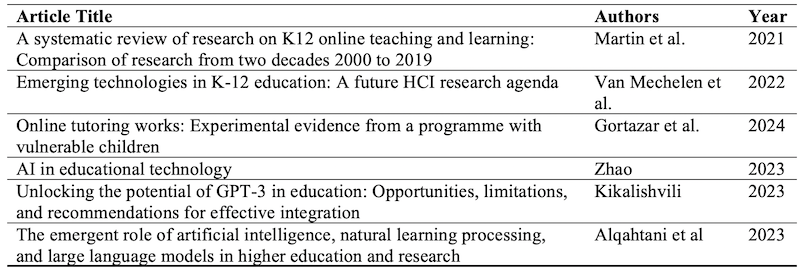
These criteria ensured that the studies included in the review were relevant, of high quality, and aligned with the research objectives. Table 1 shows the summary of selected articles.
Table 1: Summary of the Selected Articles
The framework used to guide the review process and subsequent analysis was based on key indicators related to virtual tutoring effectiveness, student performance analysis, and GPT-3 integration in educational contexts. The Preferred Reporting Items for Systematic Reviews and Meta-Analyses (PRISMA) guidelines were adapted to ensure a structured and transparent review process. The following key indicators were identified for data extraction and synthesis:
These indicators were used to guide the synthesis of the findings and organise the results into three sub-sections based on the three research questions.
Upon identifying the relevant studies, data were extracted systematically to capture key study characteristics, such as study design, sample size, methodology, and findings. This process involved detailed documentation of the main themes, trends, and insights related to virtual tutoring systems, GPT-3 integration, and student performance analysis. The studies were then synthesised to identify commonalities, variations, and gaps in the existing literature.
To ensure the reliability and rigor of the synthesised findings, each study was critically appraised based on predefined quality assessment criteria. These criteria included methodological rigour, sample size, data collection methods, and statistical analysis techniques. High-quality studies with robust methodologies and larger sample sizes were given greater weight in the synthesis process. Any limitations or biases in the studies were also acknowledged and discussed transparently.
The findings section of this research paper encapsulates the outcomes and insights derived from an in-depth exploration of virtual tutoring and student performance analysis. Martin et al. (2021) conducted a systematic review of research on K12 online teaching and learning, comparing studies spanning two decades from 2000 to 2019. The review synthesised findings from a diverse range of studies to identify trends, changes, and areas of continuity in the field. Their analysis revealed significant growth in research activity over the years, highlighting the evolution and maturation of the field. Van Mechelen et al. (2022) proposed a future research agenda focusing on Human-Computer Interaction (HCI) in K-12 education. Their work explores the potential of emerging technologies to enhance teaching and learning experiences, emphasising the importance of user-centred design and pedagogical innovation in the integration of technology in educational settings. Gortazar et al. (2024) presented experimental evidence on the effectiveness of online tutoring programmes with vulnerable children. Their study provides valuable insights into the impact of online tutoring interventions on academic outcomes and student well-being, highlighting the potential of technology-enabled educational interventions to support underserved populations. Zhao (2023) examined the role of artificial intelligence (AI) in educational technology, discussing its potential to transform teaching and learning processes. Their work explores various applications of AI in educational settings, including personalised learning, adaptive assessment, and intelligent tutoring systems, highlighting the opportunities and challenges associated with AI integration in education. Kikalishvili (2023) explored the opportunities, limitations, and recommendations for the effective integration of GPT-3 in education. Their study discussed the potential of large language models like GPT-3 to support various educational tasks, including content generation, language translation, and natural language understanding, while also addressing concerns related to bias, ethics, and data privacy. Alqahtani et al. (2023) investigated the emergent role of artificial intelligence, natural language processing, and large language models in higher education and research. Their work explores the transformative potential of AI technologies in knowledge discovery, academic research, and scholarly communication, highlighting implications for teaching, learning, and scholarly productivity in higher education institutions.
Table 2 illustrates a summary of the methods employed by six selected articles in their respective studies on virtual tutoring and student performance analysis.
Table 2: Summary of the Methods by the Selected Articles
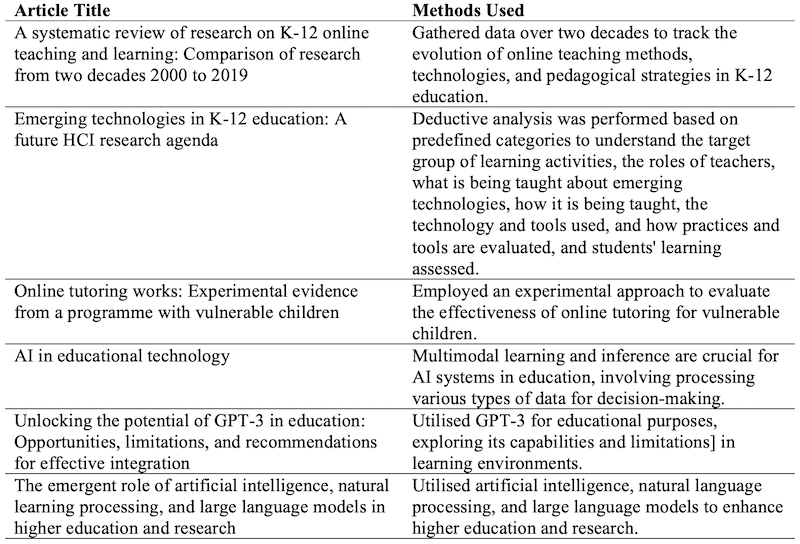
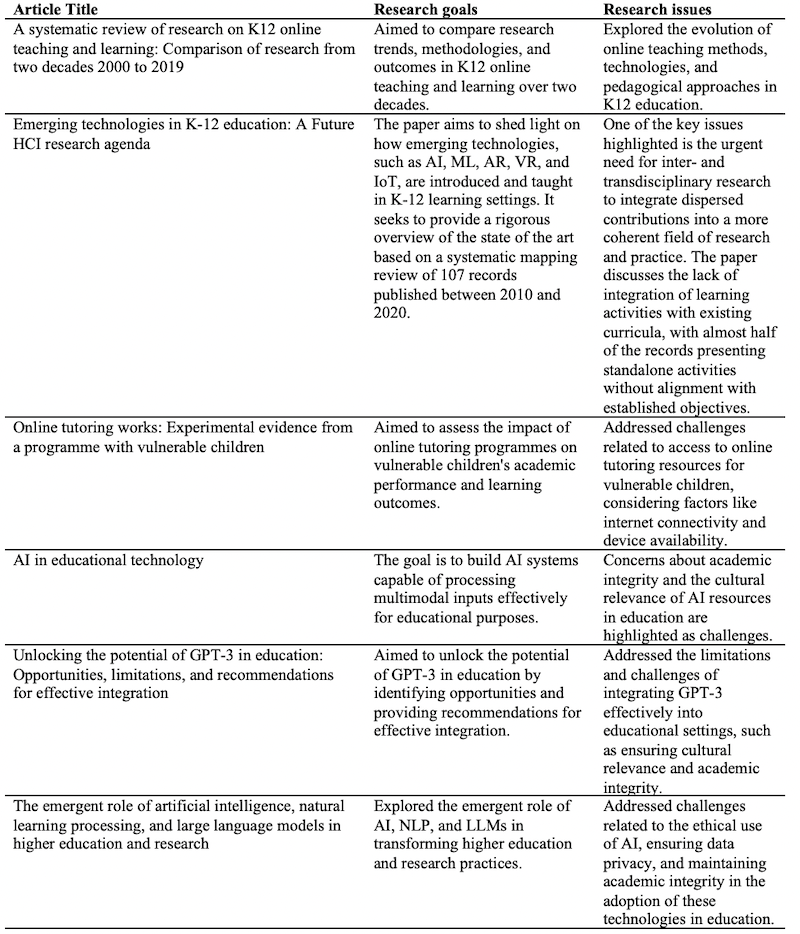
Table 3 illustrates a summary of the research goals and issues employed by six selected articles in their respective studies on virtual tutoring and student performance analysis.
Table 3: Summary of the Research Goals and Issues by the Selected Articles
Virtual tutoring has emerged as a valuable tool in modern education, offering personalised instruction and support to students in online learning environments. Leveraging digital platforms and communication technologies, virtual tutoring enables educators to connect with students remotely, providing tailored guidance and assistance tailored to individual learning needs. Student performance prediction can be used to improve student retention rates, enrolment management, alumni relations, targeted marketing, and overall educational effectiveness. By accurately predicting which students are at risk of failing, educators can provide early intervention and support, helping those students to succeed.
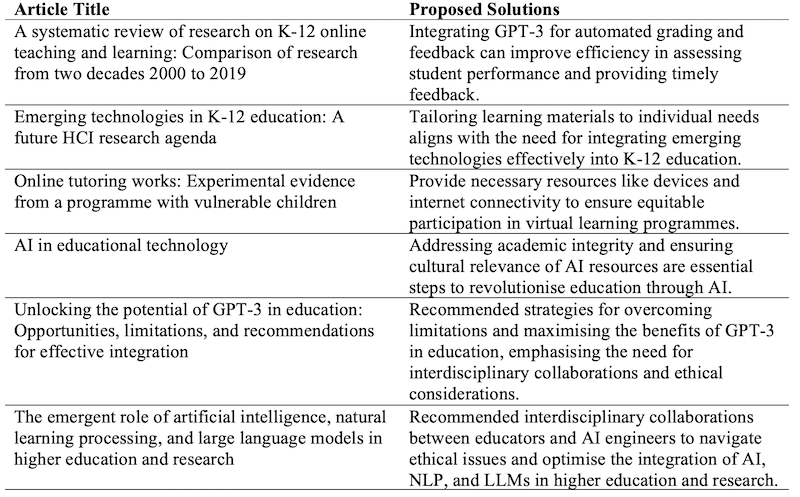
Table 4 illustrates a summary of the proposed solutions for virtual tutoring and student performance analysis.
Table 4: Summary of the Proposed Solutions
Virtual tutoring platforms offer a dynamic and interactive learning environment, fostering student engagement and motivation. Through one-on-one or small group sessions, tutors could provide targeted instruction, address specific learning challenges, and reinforce key concepts. By tailoring instruction to individual learning styles and preferences, virtual tutoring promotes deeper understanding and retention of course material, leading to improved academic performance.
Virtual tutoring platforms also facilitate data-driven performance analysis, enabling educators to assess student progress and identify areas for improvement. By collecting and analysing student performance data, tutors can gain insights into learning patterns, trends, and challenges. This data can inform instructional decision-making, allowing tutors to tailor interventions and support strategies to address specific learning needs. Additionally, performance analytics could help educators track student engagement, participation, and outcomes, providing valuable feedback for programme evaluation and improvement.
While virtual tutoring offers numerous benefits for student performance analysis, there are also challenges and considerations to be addressed. Ensuring equitable access to virtual tutoring services, maintaining student privacy and data security, and mitigating technological barriers are important considerations for educators and administrators. Additionally, integrating virtual tutoring into existing educational practices and workflows requires careful planning and coordination to maximise effectiveness and impact.
As virtual tutoring continues to evolve, there will be opportunities for further research and innovation in student performance analysis. Exploring the integration of emerging technologies such as artificial intelligence and natural language processing, enhancing data analytics capabilities, and refining personalised learning algorithms are areas for future exploration. By leveraging the potential of virtual tutoring and student performance analysis, educators can empower students to achieve their academic goals and thrive in online learning environments.
The integration of GPT-3 in virtual tutoring and student performance analysis represents a transformative step in the evolution of education. By leveraging GPT-3's advanced language processing capabilities, virtual tutors can adapt to individual learning styles, provide real-time assistance, and generate personalised feedback. These features offer an unparalleled opportunity to address the challenges of traditional virtual learning environments (VLEs) by creating a more dynamic, interactive, and effective educational experience.
However, this research also underscores the complexity of implementing GPT-3-powered systems in practice. While existing studies demonstrate the theoretical benefits of GPT-3 in enhancing student engagement and performance, they often overlook critical factors such as scalability, accessibility, and ethical considerations. For example, the reliance of GPT-3 on extensive training data raises concerns about bias, cultural relevance, and inclusivity in educational content. Without deliberate efforts to mitigate these risks, the use of such systems could unintentionally perpetuate stereotypes or exclude underrepresented perspectives.
Additionally, GPT-3’s capabilities are not without limitations. The model's dependence on pre-existing data and algorithms necessitates continuous oversight and refinement to ensure accuracy, fairness, and alignment with pedagogical objectives. These challenges highlight the need for a balanced approach where GPT-3 serves as an assistive tool, working alongside human educators to complement traditional teaching methods rather than replacing them entirely.
This study identified six key methods and solutions for addressing challenges in the implementation of GPT-3-based virtual tutors, providing a foundation for future research and practical applications. Moreover, the research findings underscore the importance of interdisciplinary collaboration among educators, technologists, and ethicists to refine GPT-3's application in education. Such collaborations could help address existing limitations, reduce bias, and ensure the creation of equitable, inclusive, and culturally sensitive educational tools.
In conclusion, GPT-3 holds immense potential to revolutionise education through personalised learning experiences and advanced performance analysis. However, its adoption requires careful planning, ethical vigilance, and collaborative innovation to ensure it addresses the diverse needs of students and educators. By combining the insights of researchers, practitioners, and policymakers, the education sector can harness the transformative capabilities of GPT-3 to create a more equitable, inclusive, and effective virtual learning environment.
Albreiki, B., Zaki, N., & Alashwal, H. (2021). A systematic literature review of student’ performance prediction using machine learning techniques. Education Sciences, 11(9), 552. https://doi.org/10.3390/educsci11090552
Alqahtani, T., Badreldin, H.A., Alrashed, M., Alshaya, A.I., Alghamdi, S.S., Bin Saleh, K., ... & Albekairy, A.M. (2023). The emergent role of artificial intelligence, natural learning processing, and large language models in higher education and research. Research in Social and Administrative Pharmacy, 19(8), 1236-1242.
Bhutoria, A. (2022). Personalized education and artificial intelligence in the United States, China, and India: A systematic review using a human-in-the-loop model. Computers and Education: Artificial Intelligence, 3, 100068.
Bouchey, B., Gratz, E., & Kurland, S. (2021). Remote student support during COVID-19: Perspectives of chief online officers in higher education. Online Learning, 25(1), 28-40.
Caprara, L., & Caprara, C. (2022). Effects of virtual learning environments: A scoping review of literature. Education and Information Technologies, 27(3), 3683-3722.
Chen, J. (2023). Effects of learning analytics-based feedback on students’ self-regulated learning and academic achievement in an undergraduate EFL course. https://papers.ssrn.com/sol3/papers.cfm?abstract_id=4589867
Gligorea, I., Cioca, M., Oancea, R., Gorski, A.T., Gorski, H., & Tudorache, P. (2023). Adaptive learning using artificial intelligence in e-learning: A literature review. Education Sciences, 13(12), 1216.
Gortazar, L., Hupkau, C., & Roldán-Monés, A. (2024). Online tutoring works: Experimental evidence from a program with vulnerable children. Journal of Public Economics, 232, 105082
Guan, Z., Li, H., Liu, R., Cai, C., Liu, Y., Li, J., ... & Sheng, B. (2023). Artificial intelligence in diabetes management: Advancements, opportunities, and challenges. Cell Reports Medicine, 4(10).
Hadi, M.U., Qureshi, R., Shah, A., Irfan, M., Zafar, A., Shaikh, M.B., & Mirjalili, S. (2023). Large language models: A comprehensive survey of its applications, challenges, limitations, and future prospects. Authorea Preprints, 1, 1-26.
Hands, C., & Limniou, M. (2023). A longitudinal examination of student approaches to learning and metacognition. Journal of Higher Education Theory and Practice, 23(19). https://doi.org/10.33423/jhetp.v23i19.6677
Hanna, M., Pantanowitz, L., Jackson, B., Palmer, O., Visweswaran, S., Pantanowitz, J., ... & Rashidi, H. (2024). Ethical and bias considerations in artificial intelligence (AI)/machine learning. Modern Pathology, 100686.
Hetmanenko, L. (2024). The role of interactive learning in mathematics education: Fostering student engagement and interest. Multidisciplinary Science Journal, 6, 2024ss0733. https://doi.org/10.31893/multiscience.2024ss0733
https://doi.org/10.1016/j.chb.2018.10.005
https://papers.ssrn.com/sol3/papers.cfm?abstract_id=4589867
Kikalishvili, S. (2023). Unlocking the potential of GPT-3 in education: Opportunities, limitations, and recommendations for effective integration. Interactive Learning Environments, 32(9), 5587-5599.
Lambert, S.R. (2020). Do MOOCs contribute to student equity and social inclusion? A systematic review 2014–18. Computers & Education, 145, 103693.
Lee, S., & Chung, J.Y. (2019). The Machine Learning-Based Dropout Early Warning System for improving the performance of dropout prediction. Applied Sciences, 9(15), 3093. https://doi.org/10.3390/app9153093
Loem, M., Kaneko, M., Takase, S., & Okazaki, N. (2023). Exploring effectiveness of GPT-3 in grammatical error correction: A study on performance and controllability in prompt-based methods. arXiv preprint arXiv:2305.18156.
Martín, C.T., Acal, C., Homrani, M.E., & Estrada, Á.M. (2021). Impact on the virtual learning environment due to COVID-19. Sustainability, 13(2), 582. https://doi.org/10.3390/su13020582
Muhamad Ali, M.N., Wan Zainodin, W.H., Tengku Mahamad, T.E., (2024). The challenges of digital inequalities in online and remote learning on b40 students during the covid-19 pandemic and beyond. Journal of Media and Information Warfare, 17(1), 1-17). https://jmiw.uitm.edu.my/images/Journal/Vol17No1/Article_1.1.pdf
Muzaffar, A.W., Tahir, M., Anwar, M.W., Chaudry, Q., Mir, S.R., & Rasheed, Y. (2021). A systematic review of online exams solutions in e-learning: techniques, tools, and global adoption. IEEE Access, 9, 32689-32712. https://doi.org/10.1109/access.2021.3060192
Othman, A. (2023). Demystifying GPT and GPT-3: How they can support innovators to develop new digital accessibility solutions and assistive technologies? Nafath, 7(22). https://doi.org/10.54455/mcn2204
Rahiem, M.D.H. (2020). Technological barriers and challenges in the use of ICT during the COVID-19 emergency remote learning. Universal Journal of Educational Research, 8(11B): 6124-6133.
Rajan, M.H., Herbert, C., & Polly, P. (2024). Disrupted student engagement and motivation: Observations from online and face-to-face university learning environments. Frontiers in Education. https://doi.org/10.3389/feduc.2023.1320822
Rajper, S., Shaikh, N.A., Shaikh, Z.A., & Mallah, G.A. (2016). Automatic detection of learning styles on learning management systems using data mining technique. Indian Journal of Science and Technology, 9(15), 1-5.
Taheri, A., Rahimi Zadeh, K., & Rao, R. V. (2021). An efficient balanced teaching-learning-based optimization algorithm with individual restarting strategy for solving global optimization problems. Information Sciences, 576, 68–104. https://doi.org/10.1016/j.ins.2021.06.064
Van Mechelen, M., Smith, R.C., Schaper, M., Tamashiro, M., Bilstrup, K., Lunding, M., Petersen, M.G., & Iversen, O.S. (2022). Emerging Technologies in K-12 Education: A future HCI research agenda. ACM Transactions on Computer-Human Interaction, 30(3), 1–40. https://doi.org/10.1145/3569897
Vincent-Lancrin, S., & Van der Vlies, R. (2020). Trustworthy artificial intelligence (AI) in education: Promises and challenges. OECD Education Working Papers, (218), 0_1-17.
Yanney, I. (2024). Developing a virtual classroom mobile app for Koforidua Technical University's computer science department. http://ir.ktu.edu.gh:8080/xmlui/handle/123456789/204
Zhao, L., Chen, K., Song, J., Zhu, X., Sun, J., Caulfield, B., & MacNamee, B. (2023). Academic performance prediction based on multisource, multifeature behavioral data. IEEE Access, 9, 5453–5465. https://doi.org/10.1109/access.2020.3002791
Author Notes
Sireesha Prathigadapa is a senior lecturer at Asia Pacific University in Kuala Lumpur, Malaysia, with eight years of teaching experience. She is currently pursuing her PhD in Computer Science and Engineering. Sireesha holds a master’s degree in computer science and engineering from Jawaharlal Nehru Technological University and a Master of Science in Mathematics from Acharya Nagarjuna University in India. Her career in education spans 18 years across various colleges and universities, and her contributions have been recognised through the prestigious Microsoft Innovative Education Expert accolade, consecutively awarded by Microsoft Education for the years 2021-2022 and 2022-2023. Sireesha's research interests include Information and Communication Technologies (ICT), Business, Human Resource Management, Tutoring Strategies, and Computer Science. She has published 10 research papers in international journals and has authored a comprehensive textbook on Linear Algebra. Email: geethikasree@gmail.com (https://orcid.org/0009-0006-1162-8700)
Salwani Daud specialises in several areas, including Artificial Intelligence (AI), Blockchain, IoT and Cryptography. She has held various academic positions throughout her career, including being a Professor at Universiti Teknologi Malaysia (UTM). She was attached to UTM from 1985 to 2021. Currently, she serves as the Vice-Chancellor of the University Malaysia of Computer Science and Engineering (UNIMY) since 2023. Previously, she was the Deputy Vice-Chancellor (Research & Innovation) at UNIMY from 2022 to 2023. Currently, she supervises 10 PhD.candidates specialising in diverse aspects of AI. Prof. Salwani has been actively involved in shaping the future of AI in Malaysia. She has been a team member of the Task Force for National Artificial Intelligence Roadmap for Malaysia's Ministry of Science, Technology, and Innovation from July 2022 to December 2025. She was also a core team member of the National Artificial Intelligence Roadmap for the same ministry from December 2020 to August 2021. In addition, she served as the Malaysia Focal Point for the UNESCO Intergovernmental Special Committee Meeting Related to the Recommendation on the Ethics of AI, appointed by MOSTI, from April to June 2021. She has co-authored Malaysia's National Artificial Intelligence Roadmap in 2021. Prof. Salwani has been a keynote speaker at various national and international conferences and symposia. Email: salwani.daud@unimy.edu.my (https://orcid.org/0000-0002-4329-1202)
Cite as: Prathigadapa, S., & Daud, S. (2025). A review of virtual tutoring systems and student performance analysis using GPT-3. Journal of Learning for Development, 12(1), 167-180.