María José Ibáñez Ayuso
2025 VOL. 12, No. 1
Abstract: Micro-credentials have gained significant interest due to their potential to create flexible learning pathways and offer real-time, up-to-date training for the rapidly evolving labour market. Additionally, international organisations have highlighted their capacity to elevate the value of non-formal education and foster inclusive higher education ecosystems involving diverse stakeholders. This research critically examined the initial conceptualisation of micro-credentials, as presented in foundational OECD and European Commission documents, emphasising their objectives, their role in formal and non-formal education, and the inclusion of diverse actors. A systematic review of completed Erasmus+ projects integrating micro-credentials was conducted using the PRISMA protocol to explore their practical application, including the types of competencies developed, delivery frameworks, and actors involved. Findings reveal a disconnect between the initial intentions and real-world implementations, with a predominant focus on professional competencies, limited engagement with non-formal education, and insufficient involvement of diverse stakeholders. The study concludes with recommendations to harness the full potential of micro-credentials to revitalise higher education by embracing a holistic, inclusive, and equity-driven approach.
Keywords: micro-credentials, non-formal education, soft-skills, university
The fourth industrial revolution is bringing about rapid and significant changes in different spheres of life, both public and private (Sánchez-Rojo et al., 2024; Van Dijck et al., 2018). From medicine to communication, psychology, architecture, and economics, emerging and converging technologies are transforming the world into an increasingly onlife space, where human-machine interaction is a regular part of everyday life (Floridi, 2015).
In this context, new educational needs are emerging, linked, on the one hand, to the demands of the labour market and, on the other, to competencies that are becoming more relevant given the threats posed by these emerging technologies to aspects such as democracy. Regarding the first needs category, the traditional employment landscape has experienced significant transformations. These changes emerge from the automation of numerous jobs, the appearance of novel fields of work, the extension of life expectancy (which can lead to a delay in retirement age) and the migration of various tasks from offline to online environments (Howcroft & Taylor, 2023). Consequently, new educational needs for both initial and lifelong learning are arising, especially for age groups and social groups considered particularly vulnerable to these changes. It is in this educational panorama that the ability of universities to adapt quickly to these new labour demands, given their extensive bureaucratisation, is at stake (Frank & Meyer, 2020).
On the other hand, new needs appear beyond professional competencies, addressing ethical, political, and social consciousness that need to be reinforced due to the risks of these technologies. These include: the possible manipulation of people given their potential for causing disinformation and political polarisation; the abuse of the planet's resources as a consequence of a consumer society where individual welfare tends to replace the common good; and the ethical dilemmas posed by transhumanism (Coeckelbergh, 2023). Together with the alarming wave of mental health disorders among new generations, these risks highlight the fundamental importance of ethical training, character education and the development of critical thinking in this digital era (Ibáñez Ayuso et al., 2023). Finally, the impetus to distance learning generated by the Covid-19 pandemic has resulted in overcoming prejudices and reticence towards online learning. At the same time, it has also highlighted teachers' lack of preparation in digital competencies and, in particular, the lack of teleological reflection on educational technologies (Pattier & Reyero, 2022), which demands the reformulation of teacher training to cope with these needs. In this scenario, micro-credentials have become one of the most significant educational promises for creating 4.0 learning ecosystems that can tackle these pressing challenges (Brown et al., 2021).
To guarantee that the micro-credential policies currently under development embrace an equitable, reflective, and fair approach, it is crucial to conduct research that analyses both the theoretical and practical aspects of the regulations, as well as the initial applications of these credentials. This study aims to generate feedback that can rectify deviations from the very inception of these legislations, preventing potential erosion of their benefits and, more specifically, of their democratising potential. Therefore, this study pursues avoiding micro-credentials to continue the path of certain libertarian pedagogies that might seem to democratise the roles of different actors and pathways in tertiary education but may, in fact, do the opposite. (Pérez Rueda, 2023).
More specifically, the study focused on the following research objectives:
Micro-credentials, defined by the European Commission as blockchain certifications that validate learning outcomes achieved in short-term learning experiences such as a course or short training, have, despite their youth, experienced exponential growth and led to prolific scientific literature in just a few years (Alsobhi et al., 2023; Tamoliune et al., 2023). However, this accelerated growth has led to several problems related to the need for uniformity in definition, quality standards, or criteria for recognition and transferability between national education systems. This lack of uniformity is even reflected in the term's spelling, with both “micro-credentials” and “microcredentials” being found in the literature (Brown & Nic-Giolla-Mhichil, 2022; Oliver, 2021). In this regard, the absence of national policies has given great importance to the recommendations of various international organisations, such as the European Commission, UNESCO, and the OECD. Although these organisations do not have competence in the field of education in their member states, they have strongly influenced the development of national recommendations in this matter, given the lack of national frameworks and the considerable funding these bodies have invested in fostering micro-credentials (Pirkkalainen et al., 2023). The impulse given to the creation of learning systems based on them is explained by the capacity these credentials seem to have for the achievement of pre-eminent international agendas, such as SDG-4 of the 2030 Agenda (especially 4.3 and 4.4.) or the European Pillars of Social Rights, thus becoming a path to achieving inclusion and equality.
Among the advantages these credentials offer is their ability to adapt quickly to the needs of a fast-changing labour market in contrast to the bureaucratic structure of university curricula. They also allow for the personalisation of learning, giving students a remarkable ability to shape the content of their education (Hunt et al., 2019) and facilitating transitions from secondary to tertiary education, especially for older people (OECD, 2021). Moreover, unlike a classical paradigm where formal training plays a predominant role, these credentials enhance the value of non-formal educational experiences and allow the recognition of learning acquired in informal situations (European Commission et al., 2020). Their implementation contributes to democratising both the actors and the higher education students, given the lower cost associated with these credentials (Alsobhi et al., 2023). However, despite their advantages, several critiques have also been made. Thus, the infiltration of neo-liberal logic has been denounced, as these credentials can enhance the decision-making power of companies in higher education, and great importance is given to professional competencies to the detriment of holistic training (Salmon, 2023). Similarly, a reduction of the concept of education to that of learning, following Biesta’s critique of learnification, has also been pointed out (Biesta, 2024; Wheelahan & Moodie, 2022). Furthermore, the fact that small actors might not be able to afford the management costs associated with these credentials raises concerns about their democratising nature, which could be a mask under which is hidden the dangerous privatisation of educational goods (McGreal & Olcott, 2022). This aspect should be further examined considering emerging evidence, indicating that, in the same way that Massive Open Online Courses (MOOC) do, these credentials seem to benefit individuals with already outstanding academic backgrounds more than it does vulnerable groups (OECD, 2023).
As Brown et al. (2021) pointed out: “realising the potential contribution of micro-credentials to help reimagine existing qualification frameworks is not trivial work. It requires educators, policy-makers, and other key stakeholders to clearly understand the problem that micro-credentials seek to address” (p. 250). This temptation to apply technical means without addressing the essential questions, such as the problem a new method or technology aims to solve, is commonplace in the world of education (Pattier & Reyero, 2022). Therefore, the first questions to be asked by those designing policies or projects related to micro-credentials in the university environment are those posed by of Ortega (2007), namely: What is the university for? What is it there for? and What must it be there for? Only by adopting a teleological approach to university education will we be able to conceptualise micro-credentials “in the service of these big ideas, not as a big idea in itself” (Brown et al., 2021, p. 250).
To address inquiries about the university's mission, delving into the insights of renowned philosophers globally (Newman, Guardini, Jaspers, Ortega y Gasset, Oakeshott, and Gusdorf) provides key considerations for situating micro-credentials in service to the university's mission. By looking at their writings, it stands out that university education should transcend mere professional training as its most deep essence is students’ self-cultivation. Therefore, in a world where, due to hyper-specialisation, knowledge has been fragmented, these philosophers advocate for an education that unifies knowledge and empowers individuals to construct an imago mundi, fostering critical engagement with reality and highlighting how university education, far from being a lonely activity, has a strong communal element. Therefore, university becomes more than just acquiring “marketable skills” and becomes what Llano (2003) defines as an adventure of the spirit. Therefore, as Esteban Bara and Román (2016) state, universities have a dual function: qualification and orientation. It is enough to observe the frequency with which terms such as employability appear in university discourses to demonstrate that the university fulfils its first function. However, if we confront today's university education with these words of Oakeshott (2009): “Out there in the street is chaos, please help me to distinguish the good from the bad" (p. 128), the second function does not seem so latent as it used to be in today's university institutions. In fact, in recent years, many are the voices denouncing this exclusive focus of universities on technical and professional education at the expense of a broad cultural education linked to this orientation function (Barkas & Armstrong, 2022; Esteban Bara, 2022), leading to the graduation of perfect technocrats proficient in various labour market functions but who lack the necessary critical thinking, active citizenship, and commitment to the common good to flourish both individually and as a society (Deresiewicz, 2019; Fulford, 2022). However, at the same time as these criticisms arise, attempts to recover this orientation function are slowly being observed, as shown by the renewed interest in Great Books Seminars in various parts of Europe or the proposals of Oxford University for character development in university settings (Brant et al., 2022). Therefore, given the challenges that future generations will confront, extending beyond the realm of employment and encompassing anthropological, ethical, social, and political aspects, the role of micro-credentials goes beyond their qualifying function, thus presenting an opportunity for the university to reclaim its orientation function.
In this regard, micro-credentials offer a unique chance to foster non-formal education experiences that take place on university campuses, such as in debates, student associations, entrepreneurship and innovation institutes, seminars not directly linked to the degree, and residential facilities. These experiences have demonstrated their value in fostering critical thinking, social responsibility, active citizenship, enhanced academic performance, a sense of belonging, reduced dropout rates, and acting as a preventive measure against certain mental health problems (Boyle, 2019; Cheng & Chan, 2020). However, one of the problems faced by these non-formal educational experiences in university settings is their need for recognition and integration into educational curricula. In many cases, neither teachers nor students give this experience the value it deserves. For this reason, micro-credentials offer a unique opportunity to better visualise, recognise, and systematise this type of experience. This will result in more comprehensive education for students and enhance the quality of these non-formal experiences. To meet the stringent criteria for issuing micro-credentials, providers will need to work more systematically, reflectively, and in an organised way, which may not occur consistently due to the more casual nature of these non-formal experiences. However, despite the valuable aspects of these non-formal experiences, “a risk exists of failing to encapsulate more open lifelong pathways if non-formal and informal learning experiences are excluded from micro-credentialing frameworks” (Brown et al., 2021, p. 249). This emphasises the significance of researching and advocating for the inclusion of non-formal educational experiences within this emerging learning ecosystem.
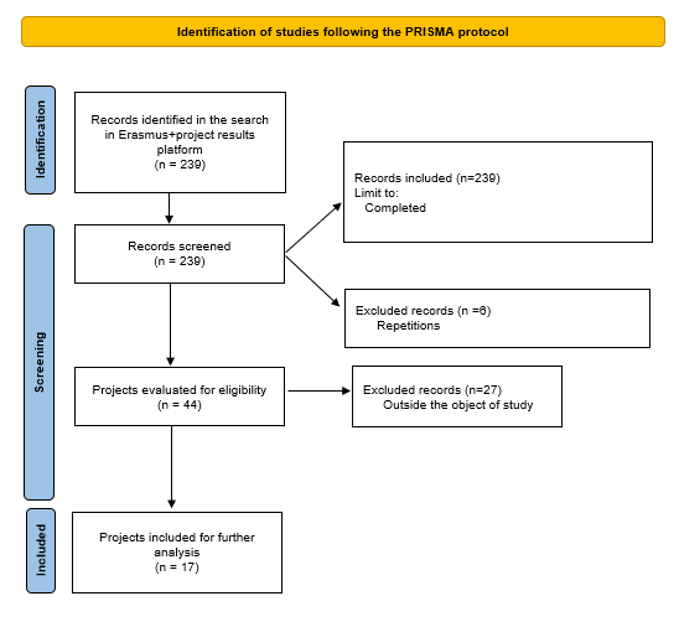
This research aimed to assess the alignment between the micro-credential projects carried out at the university level under the Erasmus+ call and the principles of holistic education and recognition of non-formal education delineated in the initial documents of international organisations in this matter. To this end, a mixed-methods research using documentary analysis based on grounded theory was designed. To begin with, the OECD and European Commission publications on the subject were studied to identify their conception of micro-credentials along three main lines: the type of competencies to be developed through them; the actors involved in their delivery; and the attitudes towards non-formal educational experiences. A second documentary analysis of the projects funded and already finished in this field was then carried out by creating coding categories based on previous literature and similar studies. A systematic review methodology based on the Preferred Reporting Items for Systematic Reviews and Meta-Analyses (PRISMA) (Figure 1) protocol was used to select the projects to be studied.
The first documents on micro-credentials from the OECD and the European Commission were selected to analyse their initial conceptualisation of these credentials. Therefore, the documents analysed were “Micro-credential innovations in Higher Education: Who, What and Why?” (OECD, 2021) and “A European approach to micro-credentials. Output of the Micro-credentials Higher Education Consultation Group” (European Commission, 2020).
Secondly, the PRISMA method was used to select the projects that made up the final study sample. Figure 1 shows the different steps in the process. First, a search was conducted on the European Commission's Erasmus+ results platform. Given the ambiguity in the spelling of the term micro-credential, the keywords used were “micro-credential”, “micro-credentials”, “microcredential” and “microcredentials”. The exclusion criteria were subsequently applied. Projects included in the study had to be completed, at the latest, by December 31, 2023. Furthermore, repetitive projects were identified and removed. The cards of the remaining projects were meticulously reviewed, excluding those outside the study's scope—either because they did not centre on higher education or because, although classified as micro-credential projects in the system, these credentials did not contribute to the project's objectives. These criteria resulted in a final sample comprising 17 projects implemented between 2014 and 2023, led by ten different countries.
For data analysis, several coding categories were created based on previous literature, especially the documents of international organisations mentioned above and the research questions. The coding was carried out manually using the Excel programme. Then, the software was used to treat the data and perform a quantitative analysis statistically.
Firstly, the two analysed documents demonstrated a similar conception of the nature, scope, and future possibilities of micro-credentials. Initially, both documents begin by acknowledging the urgency of education beyond mere technical training due to the significant challenges a technological society faces. In this regard, the two international organisations conceived that these challenges were not limited solely to professional training. The European Commission stated that:
The usage of micro-credentials is important not only from an economic point of view, as there is a clear urgency to better fulfil labour market needs, but also for the societal mission of education. It can complement the more traditional ways of learning and teaching to best prepare learners for active citizenship and support higher education institutions to fulfil their public responsibility (European Commission et al., 2020, p. 6).
In this vein, the OECD indicated that micro-credentials are not only intended for developing professional competencies but also “for academic advancement and personal development” (2021, p. 3). Both documents also underscore the possibility that these credentials offer to integrate new actors into higher education, moving away from the historical dominance of universities. Possible providers include schools, private institutions, learning platforms, international organisations, and charitable entities. The European Commission references non-formal education ten times, highlighting the challenge of incorporating this type of training into national frameworks that often do not recognise it. An identified avenue for integration is the acknowledgement of “prior learning and experience” (European Commission et al., 2020, p. 19), though it is acknowledged that this is a subject requiring further discussion and reflection. In contrast, the OECD frequently employed the concept of non-formal education/experiences (mentioned 28 times) and identified micro-credentials as an opportunity to enhance their quality:
The development of coherent micro-credential frameworks could therefore provide a means of organising and orienting existing non-formal education programmes across higher education systems by providing a basis for their classification and comparison (OECD, 2021, p. 7).
Therefore, it is evident that in the initial conceptualisation of these micro-credentials, both organisations agreed on the importance of their use for developing competencies that are more than just professional. Additionally, they recognised the need to democratise the actors involved in higher education. Furthermore, they both acknowledged the importance of non-formal education. Nevertheless, the European Commission expressed more uncertainties about how this recognition of non-formal education can be achieved, indicating the necessity for more work and development in this regard.
Actors
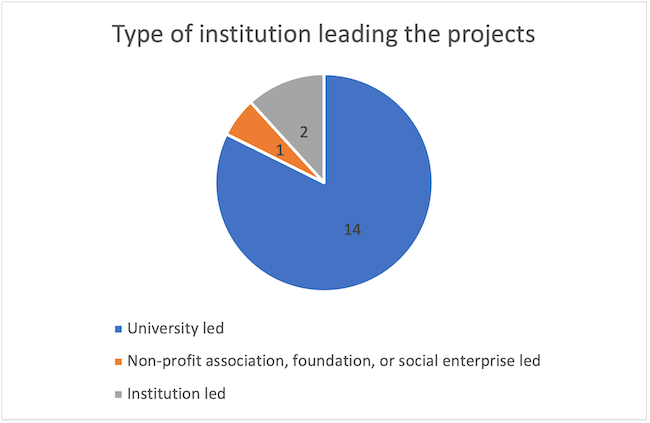
Firstly, in terms of project leadership, it is worth highlighting the dominant role of tertiary institutions, comprising universities and research centres, which spearheaded 14 out of the 17 analysed projects (Figure 2). Within these 14 projects, six, equivalent to 35% of the total, were exclusively led by tertiary education institutions, demonstrating a lack of a diverse range of actors. Companies were involved in eight projects, with three of them having sole company involvement accompanying the universities. Hence, nine out of the total number of projects were executed either by universities alone or in collaboration exclusively with companies. Only one project saw collaboration between the university and a non-formal organisation, such as a non-profit association, foundation, or social enterprise.
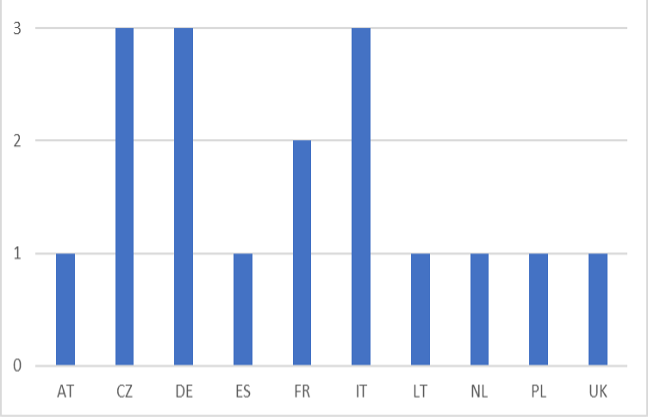
Among the eight projects where, in addition to the university and the enterprise, a non-profit association, foundation, social enterprise, or public institution was involved, seven witnessed a cumulative presence of university-business actors, surpassing that of the non-profit associations, foundations, social enterprises, or public institutions. The only exception to this pattern was observed in a project led by a foundation. Notably, only four projects featured the participation of public institutions at the local, national, or international levels, and these were the sole instances where various actors were collectively represented. In terms of project leadership, Germany, Italy, and the Czech Republic emerged prominently, with each country leading three projects (Figure 3).
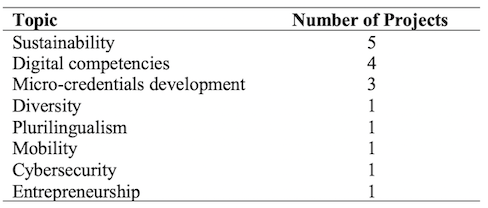
The 17 projects undertaken shared the goal of fostering professional skills, with frequent mention of employability in the project files. The analysis of non-professional competencies was categorised into personal growth and active citizenship competencies, a distinction that emerged through grounded theory while coding the OECD and European Commission documents. This classification included skills related to personal knowledge (first type) and skills related to civic and ethical aspects (second type). Notably, only competencies falling into the second type were identified. In addition to emphasising professional competencies, nine of the 17 projects also integrated ethical-civic learning. Among these, the majority (five out of nine projects) were explicitly tied to sustainability, often found on the project card to justify the professional demands for ethical learning. The remaining four projects addressed broader aspects of European values, diversity, and social awareness. Regarding the topics of the projects (Table 1), there was a strong focus on sustainability (five projects) and the improvement of teachers’ digital competence (four projects). Likewise, it is noteworthy that the three projects focusing on developing micro-credentials themselves were centred on recognising non-formal educational experiences, particularly in areas like mobility or language learning.
Table 1: Main Topics of the Projects
Likewise, it should be noted that the actions leading to micro-credentials in the projects were mostly exclusively online—the majority of projects culminated in the creation of courses in MOOC or webinar format. Except for one of the projects that sought to use micro-credentials to accredit in-person mobility experiences, the activities leading to micro-credentials were developed eminently in the online space. However, some projects included some in-person events for disseminating their results, coordinating the participating entities or generating blended-learning experiences for a small group of the total of online participants.
Before discussing the results of this analysis, it is essential to bear in mind that this research did not analyse all the projects implemented at the European level in the field of micro-credentials. As this research aimed to be an exploratory analysis in this emerging field, it was decided to choose projects linked to the Erasmus+ programme, given the familiarity of diverse actors with its calls for proposals. For this reason, this exploratory study opens a necessary research horizon to carry out an exhaustive mapping of the projects financed in this area to obtain a panoramic vision that amplifies the results of this investigation.
Firstly, the results suggest that micro-credentials continued to replicate the traditional approach to higher education, where the hegemony of universities as the leading actor is evident. It is also worth noting that, as suspected by previous research (Salmon, 2023), these first projects have strengthened the role of companies in education by forming strong alliances with universities to organise these projects. In this regard, it is also corroborated that the role of other actors, such as non-governmental associations, social enterprises, or foundations in this new learning ecosystem, did not seem to live up to the expectations generated by international organisations' documents that spoke of creating plural ecosystems (OECD, 2021). Likewise, it was observed that despite the intention of the documents of the international organisations to use these micro-credentials to provide training that went beyond professional competencies and to train people for active citizenship and to be able to flourish in such a changing world, the projects also demonstrated a primacy of professional competencies and a justification for including ethical competencies for marketable reasons (Salmon, 2023). Therefore, the use of micro-credentials to revitalise university education in terms of liberal education, character education, and especially the cultivation of practical reasoning (Aristotelian phronesis) is an area that has hardly been developed in these projects.
Moreover, the primacy of online training should also be acknowledged, as indicated in the previous literature (Wheelahan & Moodie, 2022), which makes it necessary, given the phenomena related to growing individualism and the significant increase in so-called addictions without substance, to encourage the creation of micro-credential projects from blended approaches or to promote certification with micro-credentials of traditional non-formal education experiences that promote in-person contact among students. It is also important to note that the initial documents highlighted micro-credentials' importance in helping vulnerable groups. Although we understand that, given that the search is focused on the university stage and, therefore, it may not be the educational level that presents the most vulnerable groups, it was surprising not to see in any of the projects an allusion to university groups that present particular difficulties in their adaptation or success in university life, such as first-generation students, which is why this is an area in which micro-credentials could help to enhance equity in the university environment. In this regard, this lack of attention paid to vulnerable groups, as well as the fact that several projects targeted engineers (a profession with both good salaries and placement rates), makes it necessary to continue investigating whether, far from contributing to democratising education, micro-credentials may be following in the wake of MOOCs by benefiting more those who already have an outstanding academic education.
Alejandro Llano (2003) pointed out that the crucial issue for the university institution is the ability to manage and integrate the new. In this context, micro-credentials present significant possibilities for reclaiming the university's orientation role. However, as indicated by this study, these possibilities are not fully utilised. Therefore, some considerations to guide universities in effectively integrating the "new" represented by micro-credentials are now offered.
Firstly, micro-credential projects must start with a profound reflection on the university's mission, thus avoiding the confusion between means and ends that occur in various educational technologies (Ibáñez Ayuso & Damião, 2024). Therefore, revisiting the thinking of prominent philosophers of this institution becomes essential (Esteban Bara & Román, 2016), as it allows us to distil some aspects that should be encouraged, both in calls for micro-credentials project funding from national and international organisations as well as by the actors presenting these projects. In this regard, we highlight three aspects based on the university's mission, which should occupy a pre-eminent place in these projects to avoid training students exclusively professionally. These aspects are interdisciplinarity and unity of knowledge, the university community, and the cultivation of practical reason.
Addressing the first element, interdisciplinarity and unity of knowledge becomes imperative given the fragmentation of knowledge inherent in hyper-specialised and scientistic mentalities because, as Gusdorf (2019) pointed out, when a discipline is cornered in its technicality and is unable to place itself in the totality of knowledge, it ends up becoming a factor of alienation rather than of flourishing. Therefore, micro-credentials offer an excellent opportunity to recover liberal education and especially to re-integrate the humanities into university. However, to correctly address this recovery of liberal education, following Hadjadj (2020), we must reclaim an approach to culture that goes beyond equipping students with lots of information on “cultural productions”, and that approaches culture from the agricultural paradigm, thus, thinking of culture in terms of cultivating oneself. In this regard, it is also essential to avoid commodification while justifying the relevance of micro-credential projects by focusing on market needs. Instead, project leaders should delve into and emphasise what Ordine (2013) calls the “utility of the useless” and understand that education, as Biesta (2024) says, goes beyond national and international agendas, that it is something in itself, and that it is valued in itself.
The second crucial element in micro-credential projects revolves around fostering a profound university aspect: the university community (Esteban Bara & Román, 2016). Upon reviewing various projects, a prevalent trend emerged where individual activities, such as MOOC courses or webinars, dominated. Considering the increasing individualism among new generations, it is imperative to establish opportunities for interpersonal connections that allow us to discover the communal nature of human beings. This discovery is essential to cultivate active citizens committed to the common good because promoting the common good remains unattainable without a prior encounter with the “common” Gil Cantero (2023). Today, extreme political polarisation, youth violence and cancel culture push students to discover the richness of plurality and diversity. We believe that this cannot just be developed through theoretical courses but instead needs to be promoted through experiences whereby students can relate with the difference. Establishing diverse learning communities encompassing variations in studies, geographical origin, or thinking facilitates the cultivation of fruitful dialogues, encounters with otherness, critical thinking, and, ultimately, the fortification of democracies. Therefore, it is essential to emphasise this communal aspect in calls for proposals, concurrently promoting in-person experiences in a world where the effects of over-exposure to screens among new generations are dramatic. The third aspect related to the mission of the university is to pursue an education that enables the formation of a practical reasoning, for which the Oxford University studies on character development and, more specifically, Aristotelian phronesis in the university sphere, offer an excellent ground for micro-credential projects to develop students holistically (Brant et al., 2022).
In this regard, we consider that micro-credentials offer numerous opportunities for non-formal educational experiences on university campuses, such as students’ associations, debate clubs and competitions and, particularly in Europe, to certain types of residential institutions that have a strong commitment to training university students holistically but which lack formal recognition of the training they give, such as the Spanish Colegios Mayores. We believe integrating micro-credentials into these experiences will improve their quality for two reasons. Firstly, it will give coherence to many of these activities that students undertake but cannot always identify the objectives they are pursuing or the common thread that runs through them. Accrediting these experiences through micro-credentials will make them more systematic so that both providers and learners will be able to see the educational objectives being pursued and how seemingly disparate experiences contribute to a common goal. We expect that this systematicity will encourage greater self-regulation of learning. Secondly, the need to provide evidence of learning will have an impact on improving these educational activities since many of them, which have no formal recognition, certify the student's attendance, so that students are rarely asked to do any work or exercise in metacognition in which they reflect on and integrate what they have experienced there. At the same time, the organisers of these experiences will have to make a greater effort not only to organise the activities but also to reflect on their educational objectives and expected learning outcomes, which will improve the training offered.
Finally, to guarantee an approach to micro-credentials that is genuinely based on social justice, it is necessary to think of groups that are particularly vulnerable at the university stage to ensure that micro-credentials, far from contributing to the “tyranny of merit” (Sandel, 2020), contribute to educational equity. Thus, groups such as first-generation students can benefit significantly from educational initiatives made with these credentials. In conclusion, micro-credentials offer excellent educational opportunities that, in order to reach their full potential in higher education, must be based on the consideration of the profound meaning of the university institution.
Alsobhi, H.A., Alakhtar, R.A., Ubaid, A., Hussain, O.K., & Hussain, F.K. (2023). Blockchain-based micro-credentialing system in higher education institutions: Systematic literature review. Knowledge-Based Systems, 265, 110238. https://doi.org/10.1016/j.knosys.2022.110238
Barkas, L.A., & Armstrong, P.-A. (2022). The price of knowledge and the wisdom of innocence: A difficult journey through the employability discourse in higher education. Industry and Higher Education, 36(1), 51-62. https://doi.org/10.1177/09504222211016293
Biesta, G. (2024). Desinstrumentalizando la educación. Teoría de la Educación. Revista Interuniversitaria, 36(1), 1-12. https://doi.org/10.14201/teri.31487
Boyle, M.-E. (2019). Global liberal education: Theorizing emergence and variability. Research in Comparative and International Education, 14(2), 231-248. https://doi.org/10.1177/1745499919846010
Brant, J., Brooks, E., & Lamb, M. (2022). Cultivating virtue in the university. Oxford University Press.
Brown, M., & Nic-Giolla-Mhichil, M. (2022). Unboxing micro-credentials: An inside, upside and downside view (Descifrando las microcredenciales: En qué consisten, ventajas e inconvenientes). Culture and Education, 34(4), 938-973. https://doi.org/10.1080/11356405.2022.2102293
Brown, M., Nic Giolla Mhichíl, M., Beirne, E., & Mac Lochlainn, C. (2021). The global micro-credential landscape: Charting a new credential ecology for lifelong learning. Journal of Learning for Development, 8(2), 228-254. https://doi.org/10.56059/jl4d.v8i2.525
Cheng, M.W.T., & Chan, C.K.Y. (2020). Do university residential experiences contribute to holistic education? Journal of Higher Education Policy and Management, 42(1), 31-48. https://doi.org/10.1080/1360080X.2019.1659211
Coeckelbergh, M. (2023). Democracy, epistemic agency, and AI: Political epistemology in times of artificial intelligence. AI and Ethics, 3(4), 1341-1350. https://doi.org/10.1007/s43681-022-00239-4
Deresiewicz, W. (2019). El rebaño excelente. Rialp.
Esteban Bara, F. (2022). Extravío de la educación universitaria contemporánea. Teoría de La Educación. Revista Interuniversitaria, 34(2), 23-41. https://doi.org/10.14201/teri.27739
Esteban Bara, F., & Román, B. (2016). ¿Quo Vadis, Universidad? Editorial UOC.
European Commission, Directorate-General for Education, Youth, Sport and Culture, Shapiro Futures, H., Andersen, T., & Nedergaard Larsen, K. (2020). A European approach to micro-credentials — Output of the micro-credentials higher education consultation group — Final report. Publications Office of the European Union. https://data.europa.eu/doi/10.2766/30863
Floridi, L. (2015). The onlife manifesto: Being human in a hyperconnected era. Springer International Publishing. https://doi.org/10.1007/978-3-319-04093-6
Frank, D.J., & Meyer, J.W. (2020). The university and the global knowledge society. Princeton University Press.
Fulford, A. (2022). The university as troublemaker. Teoría de La Educación. Revista Interuniversitaria, 34(2), 1-22. https://doi.org/10.14201/teri.27819
Gil Cantero, F. (2023). Enfoque pedagógico de lo político vs. enfoque político de lo pedagógico. In B. Thoilliez & B. Manso Ayuso (Eds.), La educación, ¿bien común, derecho individual o servicio público? (pp. 33-45). Editorial Síntesis.
Gusdorf, G. (2019). ¿Para qué profesores? Miño y Dávila.
Hadjadj, F. (2020). Perché dare la vita a un mortale & altre lezioni italiane. Ares.
Howcroft, D., & Taylor, P. (2023). Automation and the future of work: A social shaping of technology approach. New Technology, Work and Employment, 38(2), 351-370. https://doi.org/10.1111/ntwe.12240
Hunt, T., Carter, R., Zhang, L., & Yang, S. (2019). Micro-credentials: The potential of personalized professional development. Development and Learning in Organizations: An International Journal, 34(2), 33-35. https://doi.org/10.1108/DLO-09-2019-0215
Ibáñez Ayuso, M.J., & Damiao, M.H. (2024). Language as a hermeneutic approach to emerging methodologies and technologies in higher education. Journal of Technology and Science Education, 14(1), 16-30. https://doi.org/10.3926/jotse.2529
Ibáñez Ayuso, M.J., Limón Mendizabal, M.a R., & Ruíz-Alberdí, C.M. (2023). La escuela: Lugar de significado y compromiso. Teoría de La Educación. Revista Interuniversitaria, 35(1), 47-64. https://doi.org/10.14201/teri.27858
Llano, A. (2003). Repensar la universidad: La universidad ante lo nuevo. Ediciones Internacionales Universitarias.
McGreal, R., & Olcott, D. (2022). A strategic reset: Micro-credentials for higher education leaders. Smart Learning Environments, 9(1), 9. https://doi.org/10.1186/s40561-022-00190-1
Oakeshott, M. (2009). La voz del aprendizaje liberal. Katz Editores.
OECD (2021). Micro-credential innovations in higher education: Who, What and Why? OECD Education Policy Perspectives, No. 39, OECD Publishing. https://doi.org/10.1787/f14ef041-en
Oliver, B. (2021). Micro-credentials: A learner value framework. Journal of Teaching and Learning for Graduate Employability, 12(1), 48-51. https://doi.org/10.21153/jtlge2021vol12no1art1456
Ordine, N. (2013). La utilidad de lo inútil: Manifiesto. Acantilado.
Ortega y Gasset, J. (2007). Misión de la universidad (1st ed.). Biblioteca Nueva.
Pattier, D., & Reyero, D. (2022). Aportaciones desde la teoría de la educación a la investigación de las relaciones entre cognición y tecnología digital. Educación XX1, 25(2), 223-241. https://doi.org/10.5944/educxx1.31950
Pérez Rueda, A. (2023). La educación alternativa es una falsa alternativa. Teoría de La Educación. Revista Interuniversitaria, 35(2), 21-35. https://doi.org/10.14201/teri.31288
Pirkkalainen, H., Sood, I., Padron Napoles, C., Kukkonen, A., & Camilleri, A. (2023). How might micro-credentials influence institutions and empower learners in higher education? Educational Research, 65(1), 40-63. https://doi.org/10.1080/00131881.2022.2157302
Salmon, M. (2023). Drivers of the global push for microcredentials in higher education: Flexibility and employability in contemporary university systems. Perspectives: Policy and Practice in Higher Education, 27(4), 179-187. https://doi.org/10.1080/13603108.2023.2229767
Sánchez-Rojo, A., Alonso-Sainz, T., & Martín-Lucas, J. (2024). La pedagogía ante el desafío digital: nuevas materialidades. Teoría De La Educación. Revista Interuniversitaria, 36(2), 25-42. https://doi.org/10.14201/teri.31752
Sandel, M. (2020). The tyranny of merit: What’s become of the common good? Farrar, Straus and Giroux.
Tamoliune, G., Greenspon, R., Tereseviciene, M., Volungeviciene, A., Trepule, E., & Dauksiene, E. (2023). Exploring the potential of micro-credentials: A systematic literature review. Frontiers in Education, 7. https://doi.org/10.3389/feduc.2022.1006811
Van Dijck, J., Poell, T., & De Waal, M. (2018). The platform society: Public values in a connective world. Oxford University Press.
Wheelahan, L., & Moodie, G. (2022). Gig qualifications for the gig economy: Micro-credentials and the ‘hungry mile.’ Higher Education, 83(6), 1279-1295. https://doi.org/10.1007/s10734-021-00742-3
Author Notes
María José Ibáñez Ayuso has a PhD in Education (Universidad Complutense de Madrid). She is currently professor and Vicedean of Internationalisation at the Faculty of Education and Psychology at the Universidad Francisco de Vitoria. She is a member of the research group GIAFE (Research Group in Anthropology and Philosophy of Education-Universidad Complutense de Madrid), the research Group Políticas e Organizaçoes Educativas e Dinamicas educacionais of CEIS-20 from the Universidade de Coimbra and the research group in Values and Virtues at the Universidad Francisco de Vitoria. Email: mj.ibanez@ufv.es (https://orcid.org/0000-0001-9055-5525)
Cite as: Ibáñez Ayuso, M.J. (2025). Decoding micro-credentials: Analysis of initial intentions and early implementations in the Erasmus+ Framework. Journal of Learning for Development, 12(1), 33-46.