Mochamad Kamil Budiarto, Asrowi, Gunarhadi, Sunardi and Abdul Rahman
2025 VOL. 12, No. 2
Abstract: The lack of innovative implementation of digital learning media presents obstacles to accessing course materials, leading to unequal learning opportunities among students and, subsequently, lower graduate competencies. This study aimed to review the research studies on the effects of implementing digital learning media in various formats and its contribution to students’ learning outcomes. This study employed a scoping review by analysing articles from reputable databases, including Scopus and Google Scholar, and using relevant keywords. The selected studies were examined through descriptive mapping and narrative synthesis to identify patterns in digital media usage and their impact on learning outcomes. The analysis recognised 29 pertinent investigations, revealing the prevailing pattern in research on digital learning media centres and on Mobile Applications and their influence on students’ educational achievements. Nevertheless, there is also a demand for other forms of digital learning media to be utilised in educational endeavours. Additionally, the findings of the research illustrate that the utilisation of digital learning media substantially improves students’ proficiency in both technical and interpersonal abilities. Consequently, this study serves as a valuable asset for educators, and urges them to adopt the incorporation of digital learning media.
Keywords: learning media, mobile learning, learning outcomes, digital, learning, scaffolding
We are in the midst of Industrial Revolution 4.0, where science is a key element in developments of the 21st century (Sudana et al., 2019). Thriving in the Fourth Industrial Revolution requires a balanced integration of knowledge and practical skills. These skills, developed through experiential learning, are essential for fostering high-quality human capital in an increasingly dynamic world (Rahiem, 2020).
The significance of 21st century skills and literacy in preparing learners cannot be disregarded when confronting the ever-changing nature of our contemporary era (Tajuddien & Faroh, 2021). In the dynamic realm of work, 21st century skills, encompassing critical thinking, creativity, communication, collaboration, and digital literacy, are increasingly indispensable prerequisites for achieving success (Pamungkas et al., 2020). Learners need a strong understanding of and skill set in these competencies, as this not only prepares them for future challenges but also equips them to face change with adaptability and proactivity. In the 21st century, learning will be expected to generate more job opportunities in Indonesia and increase employment rates for Indonesians. Therefore, emphasising 21st century learning while integrating digital learning media will be crucial for producing high-quality human resources (Miskiah et al., 2019; Rizaldi et al., 2020). This learning focus allows students to develop all six 21st century skills, and a range of literacies as highlighted by many research studies (Alismail & McGuire, 201; Cosby et al., 2023).
The integration of technology in learning has grown alongside its rapid development. It enhances learning quality and fosters creativity and problem-solving by providing richer, more stimulating experiences for students (Simanjuntak et al., 2021; Amin et al., 2021). Although many previous studies have examined the use of digital learning media, there is a need to comprehensively address the application of digital learning media at different educational levels and the effect of digital learning media on learners' learning outcomes (Lim et al., 2020). Through a review approach, this study offers a comprehensive, in-depth insight into the effectiveness and benefits of implementing digital learning media across various educational contexts. It also provides a more efficient and detailed method to enhance learners' outcomes while potentially developing effective strategies to equip them with 21st century skills.
A 2022 survey by the Ministry of Education, Culture, Research, and Technology in Indonesia found that the adoption of innovative digital learning media remained limited across educational levels in Indonesia. The research revealed that a mere 15% of schools actively utilised digital learning media in an innovative manner (Jufriadi et al., 2022). Several elements have contributed to the limited application of innovative digital learning media in Indonesia. Insufficient infrastructure and digital devices have been among the primary factors. Moreover, the skills of educators in employing digital learning media are inadequate. Many teachers lack the skills to effectively use innovative digital tools, and existing national policies do not fully support or promote their integration into education (Sariyatun et al., 2018). The use of new media in digital education could improve the quality of education in schools. New digital education media could help students learn more, and be more creative and happier (Aidarbekova et al., 2021). Efforts should be directed towards the expansion of innovative digital learning tools in Indonesia.
Another study conducted by Sabiri (2019) examined diverse research trends on ICT use in language learning. Consequently, with technological advancements, countries are adopting ICT-based learning media and integrating ICT into educational activities, which has been shown to enhance learners' language proficiency. Thus, technological interventions seem essential to address challenges and empower learners.
This reluctance to integrate technology in Indonesian education may stem from concerns about classroom management (Mahdum et al., 2019; Prestridge, 2012). Certainly, tackling this issue presents a daunting challenge for educators, who must consistently acquire knowledge and adjust to continuously advancing technology. Smartphones have become an essential device owned by a vast number of individuals in today's society and smartphones can also be used as tools for learning activities. Various studies (Rejekiningsih et al., 2023; Nisiotis, 2021; Firdawati et al., 2021) corroborated this idea. They demonstrated that smartphones, which incorporate diverse types or formats of educational media, are both effective at delivering them, and endorsed by authoritative professionals, thereby receiving approval for their integration into educational endeavours.
Effective integration of digital learning media requires strong educator commitment and adequate infrastructure. Ongoing evaluation is essential to maximise impact and improve educational quality. This study addresses the limited research on diverse IT-based media across educational levels and highlights their potential to enhance student skills and learning outcomes.
Hence, the objective of this study was to examine the prevailing research patterns concerning the utilisation of digital learning media and their impact on enhancing student learning results. These findings encompass a wide range of facets, such as cognitive knowledge, psychomotor abilities, affective skills, and 21st century proficiencies. This scoping review aimed at providing a comprehensive overview of the influence of digital learning media on student academic performance. The findings are expected to inform the development of educational policies and support the effective integration of digital media into teaching and learning practices.
In the contemporary era, it is imperative for individuals to possess 21st century skills. These skills encompass a range of abilities including critical thinking, problem solving, creativity, innovation, communication, collaboration, and digital literacy (Yusof, 2019). These skills are needed to compete in an increasingly competitive and dynamic workplace (Afandi et al., 2019). There are numerous methods to enhance the skills required in the 21st century, such as utilising appropriate educational resources (Qohar et al., 2021; Shoraevna et al., 2021). The utilisation of suitable learning media could greatly facilitate the successful cultivation of 21st century skills among students. A wealth of research has provided empirical evidence that digital learning media, in particular, offer a multitude of beneficial impacts on the overall outcomes of learning.
The study by Al-Amri et al. (2020) demonstrated that the utilisation of virtual reality (VR) as a learning tool could enhance the academic performance and learning motivation of elementary school students in Oman. The findings indicated that students who engaged with VR-based learning media achieved higher scores in their learning outcomes compared to those who did not utilise such technology. Research conducted by Liu et al. (2020) presented evidence that the incorporation of game-based learning tools could effectively improve students' creative capacities. The results revealed that students who actively participated in game-based learning activities achieved superior scores in terms of their creative skills, in contrast to those who did not make use of such educational tools. While games serve as an engaging and captivating form of digital media for learning purposes, it is important to acknowledge that other types of media also contribute significantly to enhancing students' educational achievements. This is evidenced by research conducted by Rukayah et al. (2022), which suggested that augmented reality media has provided substantial advancements and has been recognised as a feasible medium based on validation outcomes from experts in media, materials, and learning. These professionals, who are considered as experts in elementary school education, have affirmed the potential of augmented reality formats in educational environments.
Based on a multitude of successful research studies, it has been noted that students who made use of educational resources based on mobile learning attained superior scores in collaboration skills when compared to their counterparts who did not utilise such resources (Zhampeissova et al., 2020). Furthermore, research conducted by Djannah et al. (2020) suggested that educational materials presented in an audio-visual format have the potential to enhance students' comprehension of reproductive health education. According to the results obtained from these inquiries, it can be deduced that the utilisation of appropriate educational resources has the potential to greatly improve students' competence in 21st century skills. The optimal instructional medium is one that nurtures critical thinking, problem-solving skills, creativity, collaboration, and digital literacy among students (Anggraini et al., 2023; Yılmaz, 2021).
This research explores ICT-based educational resources, which are commonly employed across various educational levels. These resources encompass online platforms, instructional applications, and interactive software, providing benefits such as expanded accessibility, adaptable teaching strategies, and increased student engagement. The article emphasises the importance of learning outcomes that extend beyond cognitive areas, encompassing affective, psychomotor, and soft skills, and education that involves fostering students' personal growth and interpersonal competencies. Consequently, it is anticipated that ICT-based learning resources will significantly contribute to attaining holistic learning objectives. This scoping review was based on the theoretical framework of the Cognitive Theory of Multimedia Learning (Mayer & Moreno, 2007), which suggests that learning is enhanced when visual and verbal information are presented simultaneously. This theory supports the use of digital media that combine text, images, audio, and video to strengthen cognitive processing. It guides this study in analysing how media design influences academic performance and 21st century skill development.
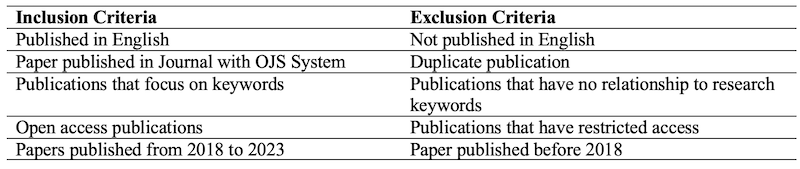
This research used the method of scoping review (Cooper et al., 2019) to consolidate diverse research findings on the effect Digital Learning Media could have on students' academic achievements in the 21st century. It included scientific articles from reputable journals and Scopus, accessed via www.google.com and www.scopus.com. Keywords used were "M-Learning," "Smartphone," "Achievement," "Performance," and "21st Century Skills." The search was randomly conducted across various scientific journal databases such as Scopus, ERIC and DOAJ, covering the research years from 2018 to 2023 (Santhanasamy & Yunus, 2022). In short, we created several inclusion and exclusion criteria to make it easier for researchers to select papers that were truly relevant to the research topic. Table 1 explains these criteria.
Table 1: Inclusion and Exclusion Criteria
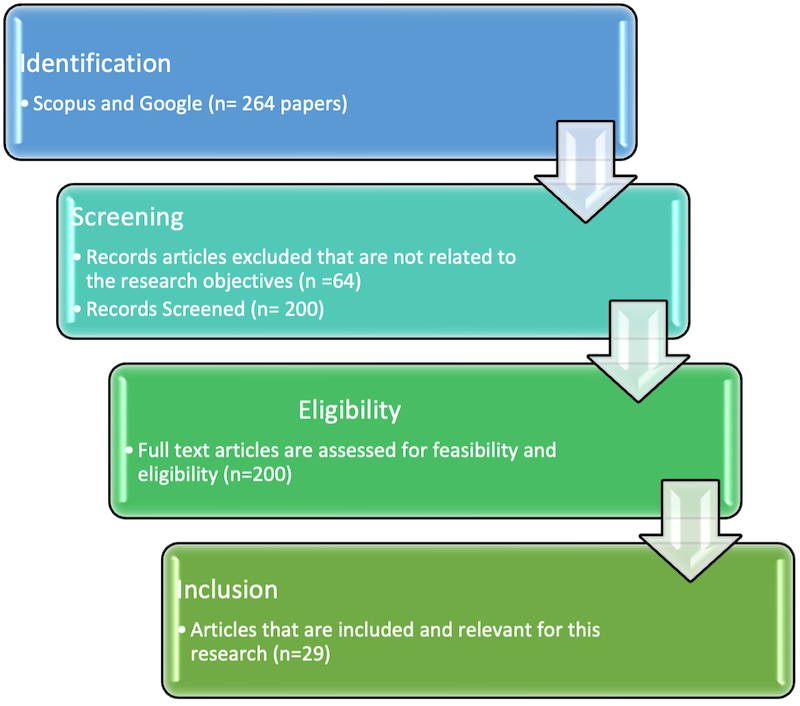
An extensive search yielded 264 articles, which underwent a stringent screening process based on predefined inclusion and exclusion criteria. These criteria were based on the relevance of the study to the research questions, the quality of the methodology, and the focus on specific educational outcomes. The analysis process involved categorising and coding the selected articles according to the established framework, enabling the identification of significant trends and variations. Moreover, the articles were ranked by relevance and further filtered to include only those within the top 200 for each keyword.
Following an extensive screening, 200 articles were reviewed in full, resulting in 29 studies that aligned with the research objectives. These were analysed using content analysis to identify key themes and patterns. The overall process is illustrated in the PRISMA flowchart in Figure 1.
Once the pertinent articles were identified and selected, the selected articles were analysed using descriptive mapping presented in percentages, and a narrative synthesis was applied to interpret key themes across the studies (Saputra et al., 2023; Bhangu et al., 2023).
In this study, a comprehensive review was conducted to identify relevant studies that met the eligibility criteria for examining the use of digital educational media in supporting learning. A total of 29 articles were identified and analysed to provide insights into this topic. The subsequent analysis of these articles yielded the following findings displayed in Table 2.
Table 2: Comprehensive Overview of the Findings from Relevant Articles
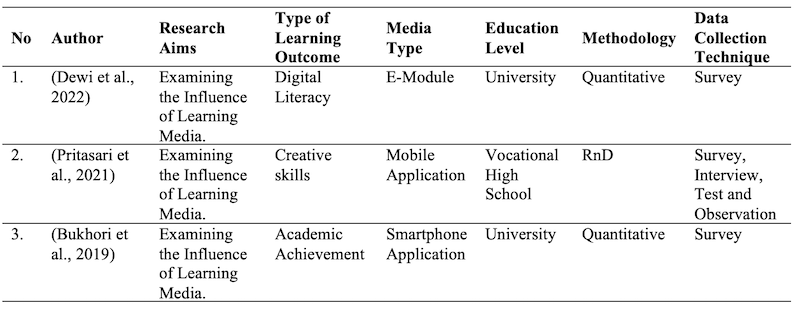
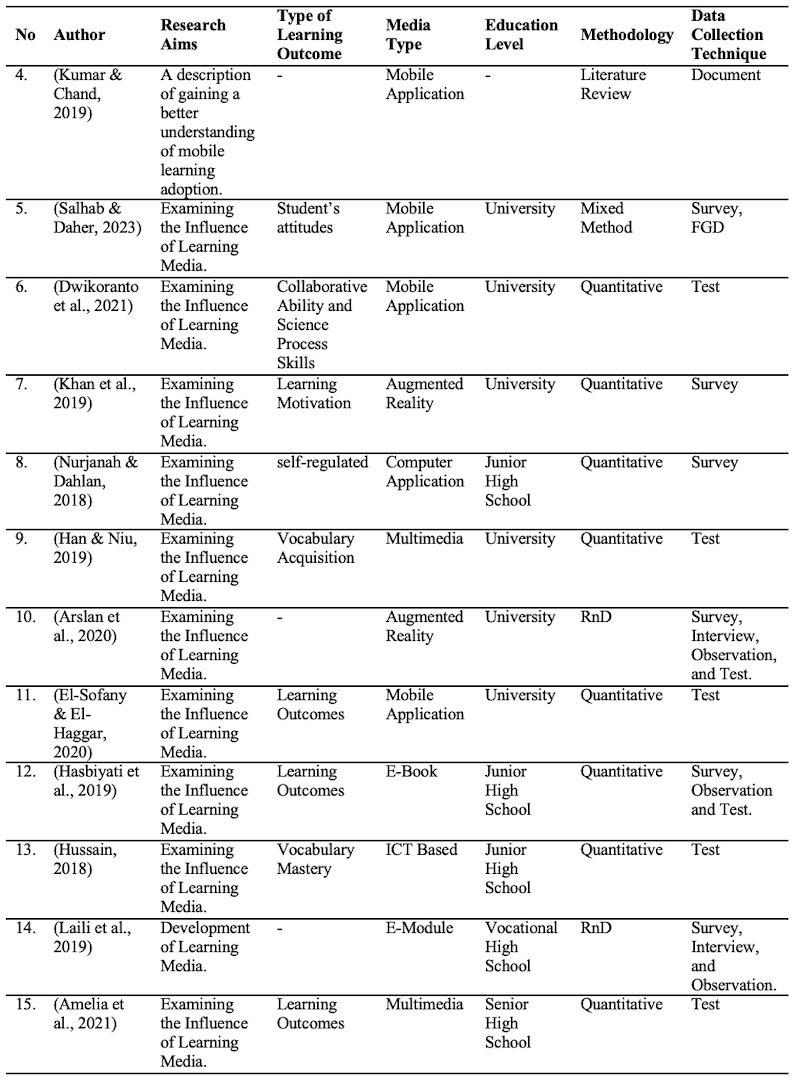
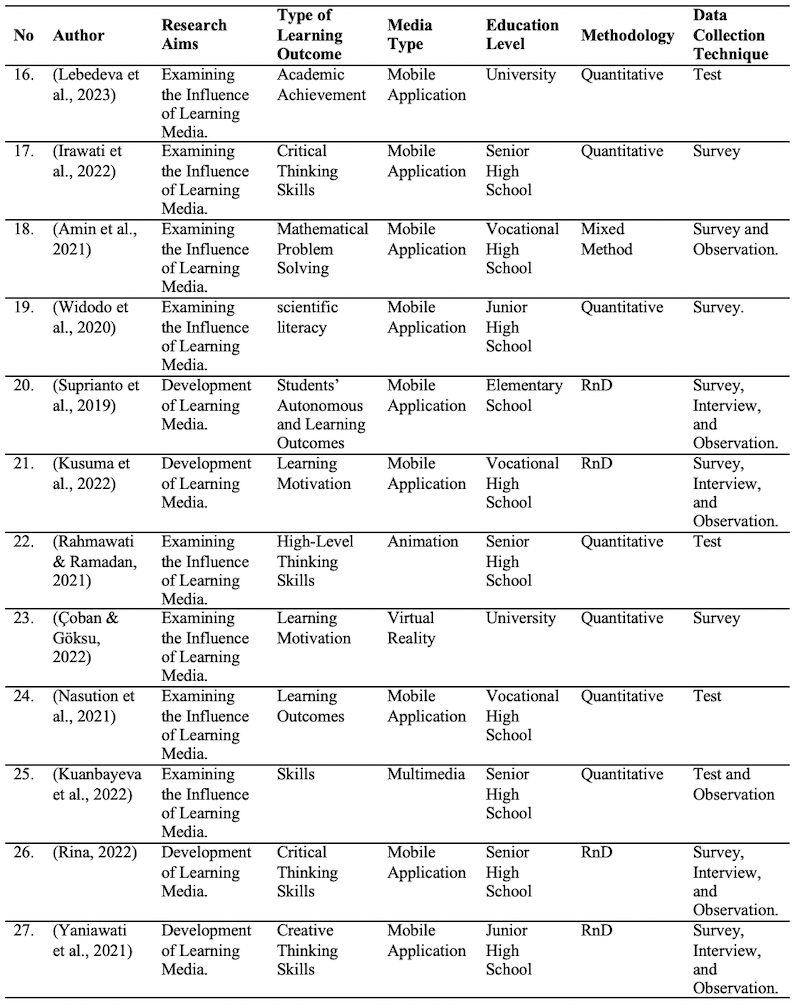
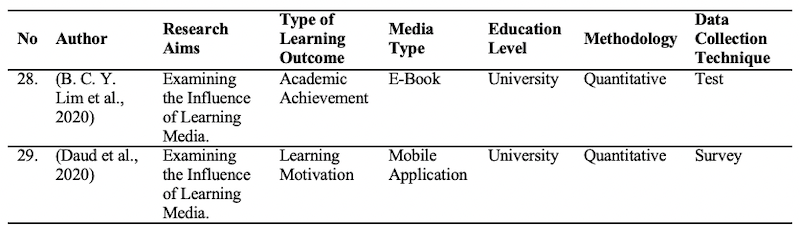
Source: search results from www.google.com and www.scopus.com for 2018-2023, after selection
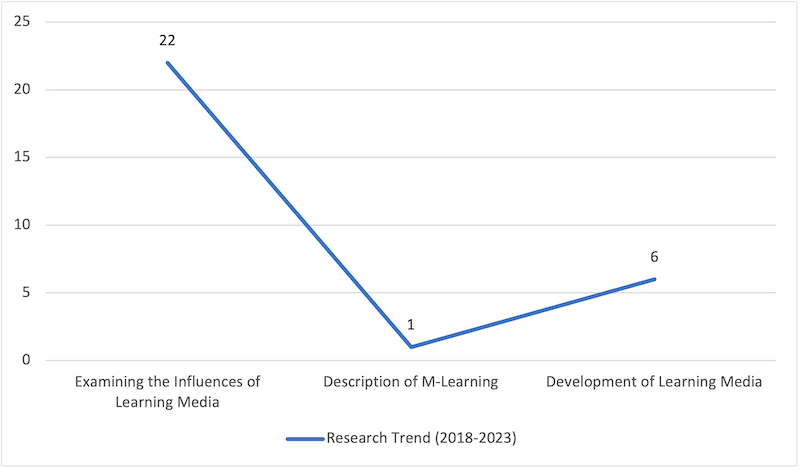
The purpose of the study was to conduct a review analysis in order to ascertain the effects or influence of digital learning materials on student performance or educational outcomes. By examining 29 pertinent research articles, the subsequent findings were derived, as summarised in Figure 2.
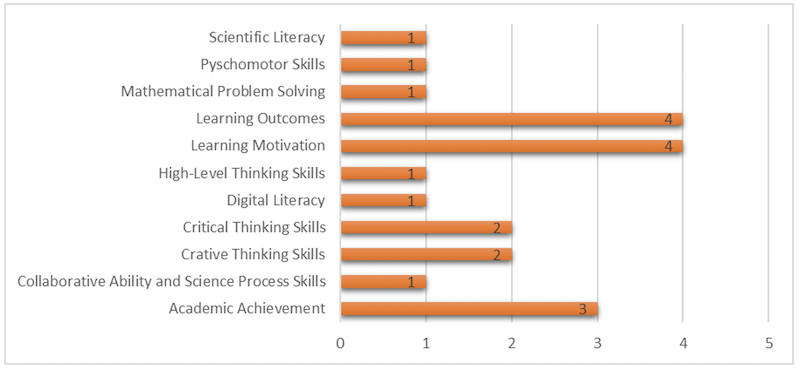
The incorporation of educational materials in the learning journey greatly influences the predetermined learning goals. Through an extensive analysis of various relevant publications, it becomes apparent that the effect or influence of digital learning tools on student achievement or learning outcomes can be discerned. The subsequent discoveries are a result of a thorough investigation into pertinent research articles as indicated in Figure 3.
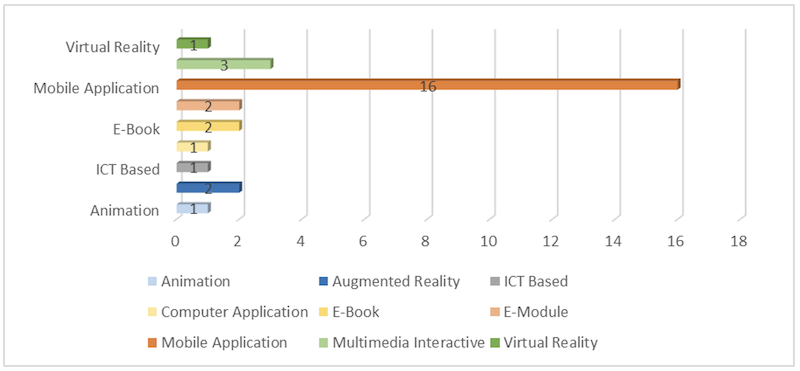
A review of 29 studies highlighted the diverse formats of digital learning media used across educational levels, including animation, interactive multimedia, mobile applications, e-modules, e-books, computer-based tools, ICT platforms, augmented reality, and virtual reality. These formats support varied learning activities, as illustrated in Figure 4.
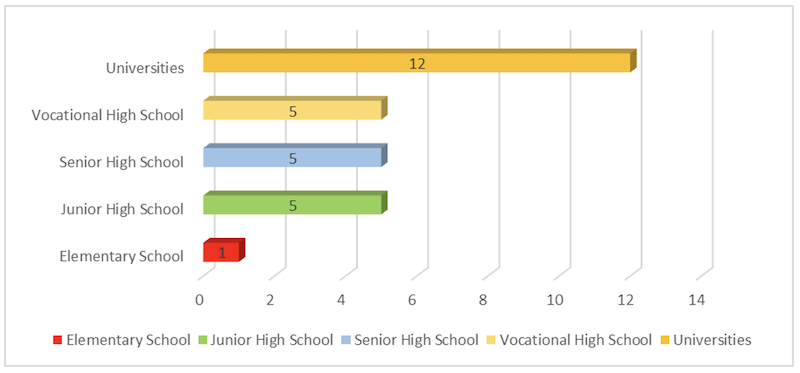
In relation to the utilisation of digital media based on educational levels, the examination of the literature findings reveals a prevailing trend. It is widely recognised that research of considerable importance encompasses different educational levels as research settings, with the learners involved as research participants. Within this particular study, the sample population utilised to explore the usage of digital educational media consisted of students from various educational backgrounds. Through an extensive review of multiple articles, the analysis presents a comprehensive portrayal of the research findings categorised by population type and educational level (see Figure 5).
Exploring Diverse Research Methodologies and Evaluating Learning Media
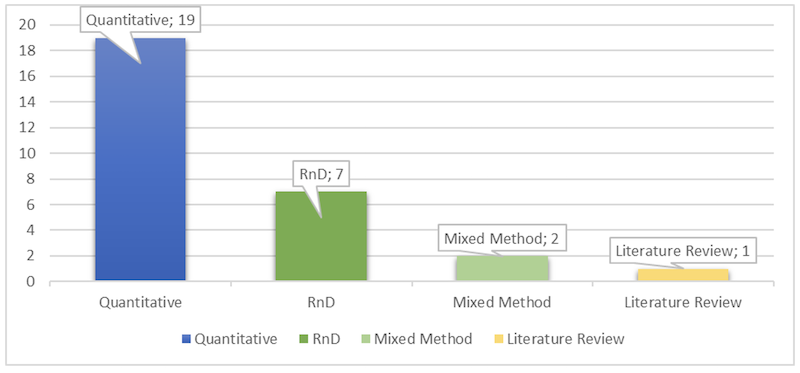
Various research methods were employed to investigate the efficacy of digital learning media in enhancing skills and student learning outcomes within classroom settings. These methods included quantitative analysis, research and development (R&D), literature review, and mixed methods. By conducting a comprehensive review of 29 studies, the findings portrayed in Figure 6 provide an insightful illustration of the outcomes derived from the chosen research design.
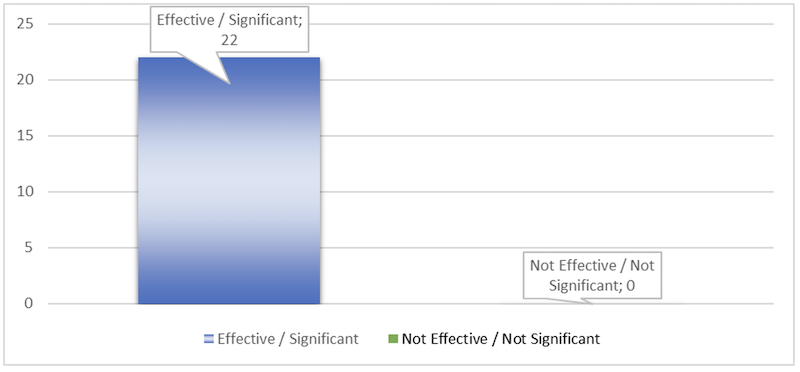
Numerous studies have examined the impact of digital learning media on learning outcomes across educational settings, consistently showing positive and significant effects. Of the 22 studies analysed, all reported effectiveness, with none indicating insignificant results. These findings, presented in Figure 7, also provide a comprehensive overview of media effectiveness in supporting the learning process.
Rapid technological advancement has transformed various sectors, including education. In response, schools and universities have been increasingly integrating technology to enhance efficiency and support the development of students’ technological knowledge and skills (Shatri, 2020; Downie et al., 2021). The 29 studies that were examined encompassed a diverse range of topics and were sourced from multiple scientific journal databases. Through careful review and analysis of these studies, it became apparent that information and communication technology (ICT) applications, including computers, smartphones, and the internet, were extensively utilised and were shown to have a beneficial impact on educational achievements (Amin et al., 2021; Han & Niu, 2019).
The utilisation of learning media has become a prominent research focus, and it is widely acknowledged that integrating ICT into education can greatly benefit students by enhancing their access to information. This leads to a more engaging and diverse learning experience (Martines, 2021; Hoesni et al., 2020). Hence, it is logical to assume that if research trends indicate that ICT-based learning, particularly through mobile applications (m-learning), is implemented with careful planning, it will enhance learning performance.
Research trends show that digital learning media not only improve knowledge acquisition but also enhance essential 21st century skills, including scientific and digital literacy, critical and creative thinking, collaboration, and problem-solving. These findings underscore the importance of integrating digital media to support comprehensive learning outcomes (Ilgaz, 2021; Yılmaz, 2021).
The utilisation of digital media in learning, as indicated by the identified research trends, enhances the flexibility of the learning process and greatly facilitates the contextualisation of various subjects. Moreover, it is even possible to virtualise certain materials to further enhance the learning experience (Çoban & Göksu, 2022). In other subjects, technology can provide real-life examples, and can provide practical guidance or tutorials to make it easier for students to understand the content (Amin et al., 2021; Salhab & Daher, 2023). Based on this analysis, a paradigm is presented that highlights one of the benefits of utilising digital learning media, which lies in its capacity to present educational material in diverse information formats such as audio, video, and audio-video. This adaptability caters to the needs of learners, ensuring effective comprehension and engagement with the content (Bukhori et al., 2019; Hapsari et al., 2019).
This study confirms the positive effect of digital learning resources across educational levels. However, limitations include potential selection bias due to limited database scope, methodological variability among studies, and possible publication bias favouring positive outcomes, which may have overstated the effectiveness of digital media.
The effect of digital learning tools can be significantly influenced by contextual factors such as subject matter, student demographics, and technological infrastructure, which this study might not have fully captured. The success of these media could also be linked to the growing adoption and convenience of technology in daily life, rather than solely to the quality of the media. Furthermore, pedagogical approaches such as constructivism might have enhanced benefits. Therefore, while these results highlighted the potential of digital learning media, it is crucial to consider their limitations and alternative interpretations for a comprehensive understanding. This study found that individuals with various educational backgrounds showed significant improvements in academic and soft skills when using digital learning tools. However, in creating these resources we should consider factors such as student characteristics, material attributes, and school facilities, as these vary across educational levels from elementary school to university. Consequently, this research provides a foundation for educators to integrate digital media to improve their learning outcomes.
In this study, individuals with different educational backgrounds demonstrated a noteworthy improvement in both academic and soft skills when utilising digital learning tools. However, it is important to acknowledge that the development of digital learning resources should consider several factors, such as student characteristics, material attributes, and school facilities, as these aspects vary across different levels of education ranging from elementary school to university. Consequently, this research serves as an innovative foundation for educators to initiate the integration of digital media in order to enhance learning achievements.
The findings provide a foundation for integrating digital learning media into instructional practice. Regardless of format, such media positively impact academic performance. Aligning media with students’ characteristics could enhance their engagement, reduce their boredom, and improve their comprehension.
Afandi, Sajidan, Akhyar, M., & Suryani, N. (2019). Development frameworks of the Indonesian partnership 21st-century skills standards for prospective science teachers: A Delphi Study. Jurnal Pendidikan IPA Indonesia, 8(1), 89-100. https://doi.org/10.15294/jpii.v8i1.11647
Aidarbekova, K.A., Abildina, S.K., Odintsova, S.A., Mukhametzhanova, A.O., & Toibazarova, N.A. (2021). Preparing future teachers to use digital educational resources in primary school. World Journal on Educational Technology: Current Issues, 13(2), 188-200. https://doi.org/10.18844/wjet.v13i2.5653
Al-Amri, A., Osman, M., & Musawi, A.S.A. (2020). The effectiveness of a 3D-virtual reality learning environment (3D-VRLE) on the Omani eighth grade students’ achievement and motivation towards physics learning. International Journal of Emerging Technologies in Learning, 15(5), 4-16. https://doi.org/10.3991/IJET.V15I05.11890
Alismail, H.A., & McGuire, P. (2015). 21st century standards and curriculum: Current research and practice. Journal of Education and Practice, 6(6), 150-155. http://files.eric.ed.gov/fulltext/EJ1083656.pdf
Amelia, R., Salamah, U., Abrar, M., Desnita, D., & Usmeldi, U. (2021). Improving student learning outcomes through physics learning media using Macromedia Flash. Journal of Education Technology, 5(3), 491-500. https://doi.org/10.23887/jet.v5i3.36203
Amin, A.K., Degeng, N.S., Setyosari, P., & Djatmika, E.T. (2021). The effectiveness of mobile blended problem based learning on mathematical problem solving. International Journal of Interactive Mobile Technologies, 15(1), 119-141. https://doi.org/10.3991/IJIM.V15I01.17437
Anggraini, E., Zubaidah, S., & Susanto, H. (2023). TPACK-based active learning to promote digital and scientific literacy in genetics. PEGEGOG, 13(2), 50-61. https://doi.org/10.47750/pegegog.13.02.07
Arslan, R., Kofoğlu, M., & Dargut, C. (2020). Development of augmented reality application for biology education. Journal of Turkish Science Education, 17(1), 62-72. https://doi.org/10.36681/tused.2020.13
Bhangu, S., Provost, F., & Caduff, C. (2023). Introduction to qualitative research methods. Perspectives in Clinical Research, 14(1), 1-19. https://doi.org/10.4103/picr.picr_253_22
Bukhori, B., Said, H., Wijaya, T., & Nor, F.M. (2019). The effect of smartphone addiction, achievement motivation, and textbook reading intensity on students’ academic achievement. International Journal of Interactive Mobile Technologies, 13(9), 66-80. https://doi.org/10.3991/ijim.v13i09.9566
Çoban, M., & Göksu, İ. (2022). Using virtual reality learning environments to motivate and socialize undergraduates in distance learning. Participatory Educational Research, 9(2), 199-218. https://doi.org/10.17275/per.22.36.9.2
Cooper, H., Hedges, L.V., & Valente, J.C. (2019). The handbook of research synthesis and meta-analysis (3rd ed.). Sage.
Cosby, A., Fogarty, E.S., & Manning, J. (2023). Digital literacy and digital self-efficacy of Australian technology teachers. Education Sciences, 13(5). https://doi.org/10.3390/educsci13050530
Daud, W.A.A.W., Teck, W.K., Ghani, M.T.A., & Ramli, S. (2020). M-learning boost students’ motivation in learning Arabic language proficiency for elementary level. Universal Journal of Educational Research, 8(10), 4384-4392. https://doi.org/10.13189/ujer.2020.081004
Dewi, C.A., Awaliyah, N., Fitriana, N., Darmayani, S., Nasrullah, Setiawan, J., & Irwanto, I. (2022). Using Android-based e-module to improve students’ digital literacy on chemical bonding. International Journal of Interactive Mobile Technologies, 16(22), 191-208. https://doi.org/10.3991/ijim.v16i22.34151
Djannah, S.N., Sulistyawati, S., Sukesi, T.W., Mulasari, S.A., & Tentama, F. (2020). Audio-visual media to improve sexual-reproduction health knowledge among adolescent. International Journal of Evaluation and Research in Education, 9(1), 138-143. https://doi.org/10.11591/ijere.v9i1.20410
Downie, S., Gao, X., Bedford, S., Bell, K., & Kuit, T. (2021). Technology enhanced learning environments in higher education: A cross-discipline study on teacher and student perceptions. Journal of University Teaching and Learning Practice, 18(4). https://doi.org/10.53761/1.18.4.12
Dwikoranto, D., Setiani, R., & Tresnaningsih, S. (2021). Effectiveness of mobile learning to increase collaborative ability and science process skills of students. International Joint Conference on Science and Engineering (IJCSE), 209, 441-446.
El-Sofany, H.F., & El-Haggar, N. (2020). The effectiveness of using mobile learning techniques to improve learning outcomes in higher education. International Journal of Interactive Mobile Technologies, 14(8), 4-18. https://doi.org/10.3991/IJIM.V14I08.13125
Firdawati, R., Maison, & Nazarudin. (2021). Development of mobile learning media on Newton’s laws using the Appy Pie application. Jurnal Penelitian Pendidikan IPA, 7(2), 202-206. https://doi.org/10.29303/jppipa.v7i2.599
Han, M., & Niu, S. (2019). Effect of computer multimedia assisted word annotation on incidental vocabulary acquisition of English reading. International Journal of Emerging Technologies in Learning (IJET), 14(13), 21. https://doi.org/10.3991/ijet.v14i13.10705
Hapsari, A.S., Hanif, M., Gunarhadi, & Roemintoyo. (2019). Motion graphic animation videos to improve the learning outcomes of elementary school students. European Journal of Educational Research, 8(4), 1245-1255. https://doi.org/10.12973/eu-jer.8.4.1245
Hasbiyati, H., Sudiarti, D., & Hikamah, S.R. (2019). The effectiveness of using smartphone-based e-book in increasing students’ learning outcomes in science learning. IOP Conference Series: Earth and Environmental Science, 243(1). https://doi.org/10.1088/1755-1315/243/1/012071
Hoesni, W.E.W., Hassan, F.N.A., Ajmain, M.T., & Rosli, N.A.M. (2020). The effects of ICT towards students’ attitude. Khazanah Pendidikan Islam, 2(2), 9-99. https://doi.org/10.15575/kp.v2i2.9270
Hussain, Z. (2018). The effects of ICT-based learning on students’ vocabulary mastery in junior high schools in Bandung. International Journal of Education, 10(2), 149-156. https://doi.org/10.17509/ije.v10i2.7592
Ilgaz, H. (2021). Shifting to digital with 21st century skills. Educational Technology Research and Development, 69(1), 199-200). https://doi.org/10.1007/s11423-021-09946-x
Irawati, I., Huda, N., & Adji, S.S. (2022). Effectiveness of PBL-based mobile learning to improve students’ critical thinking skills. Jurnal Pendidikan Matematika (JUPITEK), 5(2), 160-166. https://doi.org/10.30598/jupitekvol5iss2pp160-166
Jufriadi, A., Huda, C., Aji, S.D., Pratiwi, H.Y., & Ayu, H.D. (2022). Analisis Keterampilan Abad 21 Melalui Implementasi Kurikulum Merdeka Belajar Kampus Merdeka. Jurnal Pendidikan Dan Kebudayaan, 7(1). https://doi.org/10.24832/jpnk.v7i1.2482
Khan, T., Johnston, K., & Ophoff, J. (2019). The impact of an augmented reality application on learning motivation of students. Advances in Human-Computer Interaction, 2019, 1-14. https://doi.org/10.1155/2019/7208494
Kuanbayeva, B., Rakhmetov, M., Turkmenbayev, A., Abdykerimova, E., & Tumysheva, A. (2022). The effectiveness of using interactive computer models as methodological tools in science school education. World Transactions on Engineering and Technology Education, 20(4), 306-311.
Kumar, B.A., & Chand, S.S. (2019). Mobile learning adoption: A systematic review. Education and Information Technologies, 24. https://doi.org/10.1007/s10639-018-9783-6
Kusuma, F.I., Suryani, N., & Sumaryati, S. (2022). Mobile application-based media learning and its effect on students’ learning motivation. International Journal of Evaluation and Research in Education, 11(3), 1353-1359. https://doi.org/10.11591/ijere.v11i3.22481
Laili, I., Ganefri, & Usmeldi. (2019). Efektivitas pengembangan e-modul project based learning pada mata pelajaran instalasi motor listrik. Jurnal Imiah Pendidikan Dan Pembelajaran, 3(3), 306-315. https://ejournal.undiksha.ac.id/index.php/JIPP/article/download/21840/13513
Lebedeva, M., Taranova, M., & Beketov, V. (2023). Assessment of academic achievements in m-learning. Education and Information Technologies, 28(5), 5945-5965. https://doi.org/10.1007/s10639-022-11423-8
Lim, B.C.Y., Liu, L.W.L., & Choo, C.H. (2020). Investigating the effects of interactive e-book towards academic achievement. Asian Journal of University Education, 16(3), 78-88. https://doi.org/10.24191/ajue.v16i3.10272
Lim, C.P., Ra, S., Chin, B., & Wang, T. (2020). Information and communication technologies (ICT) for access to quality education in the Global South: A case study of Sri Lanka. Education and Information Technologies, 25(4), 2447-2462. https://doi.org/10.1007/s10639-019-10069-3
Liu, Z.Y., Shaikh, Z.A., & Gazizova, F. (2020). Using the concept of game-based learning in education. International Journal of Emerging Technologies in Learning, 15(14), 53-64. https://doi.org/10.3991/ijet.v15i14.14675
Mahdum, M., Hadriana, H., & Safriyanti, M. (2019). Exploring teacher perceptions and motivations to ICT use in learning activities in Indonesia. Journal of Information Technology Education: Research, 18, 293-317. https://doi.org/10.28945/4366
Martines, M.A. (2021). ICT uses in education. Theoretical framework proposal for its characterization and analysis. Journal of Systems and Educational Management, 16-23. https://doi.org/10.35429/jsem.2021.22.8.16.23
Mayer, R.E., & Moreno, R. (2007). A cognitive theory of multimedia learning: Implications for design principles. University of California.
Miskiah, M., Suryono, Y., & Sudrajat, A. (2019). Integration of information and comunication technology into Islamic religious education teacher training. Jurnal Cakrawala Pendidikan, 38(1), 130-140. https://doi.org/10.21831/cp.v38i1.23439
Nasution, A., Siddik, M., Manurung, N., & Royal, S. (2021). Efektivitas Mobile Learning Dalam Pembelajaran Bahasa Inggris Pada Sekolah Menengah Kejuruan. Journal of Science and Social Research, 4307(1), 1-5. http://jurnal.goretanpena.com/index.php/JSSR
Nisiotis, L. (2021). Utilising mobile game based learning methods effectively to support education. Educational Technology Research and Development, 69(1), 177-180. https://doi.org/10.1007/s11423-020-09887-x
Nurjanah, & Dahlan, J.A. (2018). Improving self-regulated learning junior high school students through computer-based learning. Journal of Physics: Conference Series, 1013(1). https://doi.org/10.1088/1742-6596/1013/1/012126
Pamungkas, S.F., Widiastuti, I., & Suharno. (2020). 21st century learning: Experiential learning to enhance critical thinking in vocational education. Universal Journal of Educational Research, 8(4), 1345-1355. https://doi.org/10.13189/ujer.2020.080427
Prestridge, S. (2012). The beliefs behind the teacher that influences their ICT practices. Computers & Education, 58(1), 449-458. https://doi.org/10.1016/j.compedu.2011.08.028
Pritasari, O.K., Windayani, N.R., & ... (2021). The use of Android smartphone as an effort to increase students’ creativity in learning modern hair bun course at vocational high school in the pandemic era. Journal of Vocational Behaviour, 6(2), 96-103. https://doi.org/doi.org/10.15294/jvce.v6i2.35650
Qohar, A., Susiswo, Nasution, S.H., & Wahyuningsih, S. (2021). Development of Android-based mathematics learning game on the topic of congruence and similarity. International Journal of Interactive Mobile Technologies, 15(9), 52-69. https://doi.org/10.3991/ijim.v15i09.20723
Rahiem, M.D.H. (2020). Technological barriers and challenges in the use of ICT during the COVID-19 emergency remote learning. Universal Journal of Educational Research, 8(11B), 6124-6133. https://doi.org/10.13189/ujer.2020.082248
Rahmawati, F., & Ramadan, Z.H. (2021). Improving high-level thinking skills in students through powtoon-based animation video media. Journal of Education Technology, 5(4), 654. https://doi.org/10.23887/jet.v5i4.41037
Rejekiningsih, T., Maulana, I., Budiarto, M.K., & Qodr, T.S. (2023). Android-based augmented reality in science learning for junior high schools: Preliminary study. International Journal of Evaluation and Research in Education, 12(2). https://doi.org/10.11591/ijere.v12i2.23886
Rina, M.A. (2022). Chemistry mobile learning Dalam Peningkatan Kemampuan Berpikir Kritis Peserta Didik. Jurnal Guru Dikmen Dan Diksus, 5(1), 45-58. https://doi.org/10.47239/jgdd.v5i1.356
Rizaldi, D.R., Nurhayati, E., & Fatimah, Z. (2020). The correlation of digital literation and STEM integration to improve Indonesian students’ skills in 21st century. International Journal of Asian Education, 1(2), 73-80. https://doi.org/10.46966/ijae.v1i2.36
Rukayah, Daryanto, J., Atmojo, I.R.W., Ardiansyah, R., Saputri, D.Y., & Salimi, M. (2022). Augmented reality media development in STEAM learning in elementary schools. Ingenierie Des Systemes d’Information, 27(3), 463-471. https://doi.org/10.18280/isi.270313
Sabiri, K.A. (2019). ICT in EFL teaching and learning: A systematic literature review. Contemporary Educational Technology, 11(2). https://doi.org/10.30935/cet.665350
Salhab, R., & Daher, W. (2023). The impact of mobile learning on students’ attitudes towards learning in an educational technology course. Multimodal Technologies and Interaction, 7(7). https://doi.org/10.3390/mti7070074
Santhanasamy, C., & Yunus, M.M. (2022). A systematic review of flipped learning approach in improving speaking skills. European Journal of Educational Research, 11(1), 127-139). https://doi.org/10.12973/eu-jer.11.1.127
Saputra, B.D., Murdino, M., & Tohani, E. (2023). Nationalism education in elementary school: A systematic literature review. International Journal of Evaluation and Research in Education, 12(2), 739-749. https://doi.org/10.11591/ijere.v12i2.24609
Sariyatun, Joebagio, H., & Akhyar, M. (2018). Teachers’ perception on digital teaching material development in social science education. Journal of Turkish Science Education, 15(Special Issue), 13-21.
Shatri, Z.G. (2020). Advantages and disadvantages of using information technology in learning process of students. Journal of Turkish Science Education, 17(3), 420-428. https://doi.org/10.36681/tused.2020.36
Shoraevna, Z.Z., Eleupanovna, Z.A., Tashkenbaevna, S.N., Zulkarnayeva, Z., Anatolevna, L.L., & Nurlanbekovna, U.A. (2021). Teachers’ views on the use of information and communication technologies (ICT) in education environments. International Journal of Emerging Technologies in Learning, 16(3), 261-273. https://doi.org/10.3991/ijet.v16i03.18801
Simanjuntak, M.P., Hutahaean, J., Marpaung, N., & Ramadhani, D. (2021). Effectiveness of problem-based learning combined with computer simulation on students’ problem-solving and creative thinking skills. International Journal of Instruction, 14(3), 519-534. https://doi.org/10.29333/iji.2021.14330a
Sudana, I.M., Apriyani, D., & Nurmasitah, S. (2019). Revitalization of vocational high school roadmap to encounter the 4.0 industrial revolution. Journal of Social Sciences Research, 5(2), 338-342. https://doi.org/10.32861/jssr.52.338.342
Suprianto, A., Ahmadi, F., & Suminar, T. (2019). The development of mathematics mobile learning media to improve students’ autonomous and learning outcomes. Journal of Primary Education, 8(1), 84-91. https:/journal.unnes.ac.id/sju/index.php/ipe/article/view/19641
Tajuddien, R., & Faroh, W.N. (2021). 21st Century skill grouping in public vocational school students in Indonesia. European Journal of Interactive Multimedia and Education, 2(2), e02110. https://doi.org/10.30935/ejimed/11133
Widodo, W., Sudibyo, E., Suryanti, S., Sari, D.A.P., Inzanah, I., & Setiawan, B. (2020). The effectiveness of gadget-based interactive multimedia in improving Generation Z’s scientific literacy. Jurnal Pendidikan IPA Indonesia, 9(2), 248-256. https://doi.org/10.15294/jpii.v9i2.23208
Yaniawati, P., Supianti, I.I., Fisher, D., & Sa’adah, N. (2021). Development and effectiveness of mobile learning teaching materials to increase students’ creative thinking skills. Journal of Physics: Conference Series, 1918(4). https://doi.org/10.1088/1742-6596/1918/4/042081
Yılmaz, A. (2021). The effect of technology integration in education on prospective teachers’ critical and creative thinking, multidimensional 21st century skills and academic achievements. Participatory Educational Research, 8(2), 163-199. https://doi.org/10.17275/per.21.35.8.2
Yusof, Y.B.M. (2019). 21st century learning is not merely ICT. International Research Journal of Education and Sciences, 3(1), 18-23. https://www.masree.info/wp-content/uploads/2019/11/IRJES-VOL-3-ISSUE-1-ARTICLE-5.pdf
Zhampeissova, K., Gura, A., Vanina, E., & Egorova, Z. (2020). Academic performance and cognitive load in mobile learning. International Journal of Interactive Mobile Technologies, 14(21). https://doi.org/10.3991/ijim.v14i21.18439
Author Notes
Mochamad Kamil Budiarto is a lecturer in the Educational Technology study program, PSDKU Campus 5, Surabaya State University. In addition to teaching, he is also active in research in the field of educational technology. His research focuses on educational technology, interactive learning media, online learning, contextual-based learning, and entrepreneurial learning. Email: mochamadbudiarto@unesa.ac.id (https://orcid.org/0009-0006-9077-8271)
Asrowi is a professor in the Department of Science Education at the Faculty of Teacher Training and Education in Sebelas Maret University. His research interests include inclusive education, special educational needs, and psychological practice. Email: asrowi@staff.uns.ac.id (https://orcid.org/0000-0002-9238-3082)
Gunarhadi is a professor at Sebelas Maret University. His PhD is from Universiti Utara Malaysia, in the Special Education Program. His research interests are inclusive educational policies and their implementation, inclusive educational strategies, treatments for children with special needs, treatments for street children, and development of sustainable training models for special-education supervising teachers. Email: gunarhadiip@staff.uns.ac.id (https://orcid.org/0000-0002-1329-6280)
Sunardi is a professor in the Department of Science Education at the Faculty of Teacher Training and Education in Sebelas Maret University. His research interests include inclusive education, special educational needs, learning design and learning psychology. Email: sunardi.ipuns@gmail.com (https://orcid.org/ 0000-0002-8037-4891)
Abdul Rahman is a senior lecturer at Sebelas Maret University. He completed his PhD at Florida State University, majoring in Social Sciences Education. His research fields include social sciences, philosophy of education, philosophy of science, demography, social stratification, and the field of studies on education. Email: abdulrahman.ip@staff.uns.ac.id (https://orcid.org/ 0000-0003-2089-354X)
Cite as: Budiarto, M.K., Asrowi, Gunarhadi, Sunardi, & Rahman, A. (2025). Effect of ICT-based learning media on student learning outcomes: A scoping review. Journal of Learning for Development, 12(2), 347-363.