
Annisa Ulfa Yana, Supriyono Koes-Handayanto, Sahal Fawaiz and Fauzul Rizal
2025 VOL. 12, No. 1
Abstract: Procedural and conceptual e-scaffolding has been shown to be effective for assisting novice learners in understanding new concepts. Its integration with modelling instructions (E-MI) raises expectations for improving scientific reasoning (SR) in students whose level is still a concern in Indonesia. A quasi-experimental study was conducted to find out if there was a difference between e-scaffolding and a regular modelling instruction (MI) class; how integration affected the shift in students’ SR levels; and the effect size on students’ SR in physics. A total of 70 first-year high school science class students in East Java, Indonesia participated in this study, and were randomly divided into two groups with different treatments. The experimental group with E-MI (n = 35) and the control group with MI (n = 35) received a 15-item scientific reasoning test (α = 0.828), and the data were analysed by t-test. The difference in SR between the E-MI and MI group was found to be statistically significant. As a result, students who learned physics through E-MI exhibited higher levels of SR compared to students who took only an MI course. In the E-MI group, elevating the SR level for students at the transitional level was relatively easier than for students at the concrete level. Integrating procedural and conceptual e-scaffolding in modelling instructions also had a large influence on students’ SR in physics. In conclusion, the findings of this study underscored the importance of technology in education. E-scaffolding facilitated the augmentation of students' SR levels, excluding the operationally concrete SR levels.
Keywords: conceptual e-scaffolding, modelling instruction, procedural e-scaffolding, scientific reasoning
According to the United Nations Educational, Scientific and Cultural Organization (UNESCO, 2021), individuals’ trust in science is contingent on their perception of the world's scientific process. Hence, society needs individuals capable of observing, interpreting, and effectively communicating scientific phenomena. Each citizen requires a culture of scientific reasoning (SR) to nurture such a scientific atmosphere. SR is the foundation of fundamental cognitive abilities (Fischer et al., 2014) in science education for thinking and reasoning (Ding et al., 2016). Whether in science, engineering, or social contexts, Zafitri et al., (2019) contend that SR plays a crucial role in resolving complex, authentic problems. SR requires scientific inquiry skills such as analysis, hypothesis formulation, problem-solving, and deriving appropriate conclusions (Kalinowski & Willoughby, 2019; She & Liao, 2010) from the perspective of higher-level logical reasoning. Additionally, SR influences other cognitive skills such as conceptual understanding (Nieminen, 2012), argumentation (Fischer et al., 2014), and problem-solving (Alshamali, 2016; Hejnová et al., 2018).
The majority of upper secondary students' SR skills are still deemed to be subpar in Indonesia. Ninety four percent of students are still at the concrete reasoning level, 5.7% are at the transitional level, and only 0.3% of students reach the formal reasoning level (Tajudin & Chinnappan, 2015). In addition, Widarti and Winarti (2019) discovered that no students reached the formal reasoning level, while 65.52% of students remained at the operational concrete reasoning level. Hence, it is imperative to implement effective learning strategies to improve students' SR (Illes et al., 2019).
Scientific reasoning (SR) refers to the set of fundamental skills required in scientific activities, such as exploring issues, formulating hypotheses, and evaluating investigation results (Bao et al., 2009; Erlina et al., 2018). Lawson, (2010) identified six SR indicators: Conservation Reasoning (CR), Proportional Reasoning (PPR), Control of Variable (COV), Probabilistic Reasoning (PBR), Correlation Reasoning (COR), and Hypothetic-deductive Reasoning (HDR). Piaget's theory further classifies SR into three developmental stages: concrete operational, transitional, and formal operational reasoning (Aini et al., 2018; Widarti & Winarti, 2019). Higher levels of SR enable students to better adapt to various abstract problems (Brahmia et al., 2021; Zimmerman & Klahr, 2018). Research by Fabby and Koenig (2015) highlights that the levels of SR skills develop cyclically, with early SR skills influencing subsequent levels (Oogarah-Pratap et al., 2020).
Various learning models have been employed to develop SR, including application-oriented SR models (Vaesen & Houkes, 2021), guided inquiry learning (Andersen & Garcia-Mila, 2017), active learning techniques (experiments and debates), scientific animations (Al-Balushi, 2017), and modeling strategies (Göhner & Krell, 2022). Among these, Modelling Instruction (MI) has gained significant attention (Campbell et al., 2015). MI is an active physics learning environment (Commeford et al., 2022) and constructivist-based instruction that enhances students' independent reasoning (Barlow et al., 2014) through modeling and investigative activities, utilising multiple representations to construct knowledge (Jumadin et al., 2017; Lestyaningtyas et al., 2017; Ropika et al., 2019).
MI has primarily been studied for its effect on various aspects of students' knowledge and skills, such as on conceptual understanding (Campbell et al. 2015). Recent research has expanded to include self-efficacy (Dou et al., 2018; Selau et al., 2018), epistemological beliefs (McPadden et al., 2020), problem-solving, and attitudes toward mathematics (Koç & Elçi, 2022). Concerning technology integration, Nguyen and Santagata, (2021) compared paper modeling and computer modeling in a lesson on park ecosystems and mulch experiments. The results showed that computer modeling effectively stimulated students to explain scientific evidence and ideas systematically. Similarly, Vasconcelos and Kim, (2020) created a Scratch integration of coding in MI, demonstrating that block-based coding simulations used as scaffolds improved students’ simulation and scientific design skills.
Despite extensive research on MI, the integration of scaffolding in MI to enhance SR remains underexplored. Handayanto et al. (2024) found no significant differences in SR between inquiry-based classes with or without e-scaffolding, except for students with low prior knowledge. In this study we introduce two scaffolding types: conceptual scaffolding, which provides guidance to help students describe and establish connections between concepts (Wu et al., 2016), and procedural scaffolding, which provides guidance for solving a problem using steps or questioning sentences (Saman et al., 2018).
This study addressed several research gaps. Firstly, integrating scaffolding into MI can support students struggling with physics, particularly through ICT-based e-scaffolding, which has proven effective in guiding students to develop strategies for enhancing their knowledge (Heijnes, 2018; Koes-H et al., 2020; Malone & Schuchardt, 2020; Stammen et al., 2018). Research indicates that providing e-scaffolding in collaborative learning environments helps students actively engage in reasoning and accurately comprehend physics concepts (Wu et al., 2016). As per Balqis et al., (2019), SR encompasses both procedural and conceptual cognitive aspects. Thus, implementing procedural and conceptual e-scaffolding is suitable for supporting students facing difficulties, and offering initial assistance while encouraging critical thinking and problem-solving (Saman & Handayanto, 2017). In particular, conceptual and procedural e-scaffolding can enhance the quality of students' cognitive knowledge (Doo et al., 2020; Liu & Adams, 2017) and potentially foster the development of SR. Consequently, students' argumentation and deductive reasoning skills are expected to improve. Secondly, there is limited literature on secondary school settings, with only one study conducted in a senior high school (Malone & Schuchardt, 2020). Thirdly, we utilise the physical domain to cultivate students' SR (Bao, 2009), since it has been identified as influencing students' SR (Opitz et al., 2022). Fourthly, the study’s context is predominantly dominated by Western countries. We contend that the Asian context offers a unique perspective.
Finally, the results of our synthesis indicate that integrating procedural and conceptual e-scaffolding with MI is an innovative instructional strategy. Developing thinking skills toward science requires teachers and schools to design appropriate learning innovations. Procedural and conceptual e-scaffolding are two types of scaffolding that are suitable for helping novice learners to understand new concepts. When procedural and conceptual e-scaffolding in modeling instruction (E-MI) is implemented, students' learning difficulties in physics can be reduced and managed. In addition, the impediment to students' development of SR presented by inappropriate pedagogical practice can be mitigated. The researchers hypothesise that E-MI significantly improves students' SR, offering a practical approach to fostering scientific reasoning in physics education.
Consequently, the following research questions are addressed in this study:
The participants were first-year students from one high school in East Java, Indonesia during the 2019/2020 academic year. Initially, the study was approved to include all first-year students, comprising six classes with a total of 216 students. However, due to learning conditions, the school restricted participation to only two classes. The final participants consisted of 70 students (aged 15-17 years) enrolled in the science major. This major was selected because the student participants receive more intensive science courses, including physics, compared to other majors. The 70 participants were randomly allocated to the control and experimental group, with 35 participants in each group.
A quasi-experimental design was used in this quantitative study. Two groups were given a pre-test before and a post-test after the intervention and then were compared (Creswell, 2014). This study lasted for 12 weeks, with two weeks devoted to the pre-test, eight weeks (16 sessions) dedicated to the intervention's implementation, and two weeks devoted to the post-test.
Each student in the experimental group learned physics using an MI strategy supported by procedural and conceptual e-scaffolding. The Moodle Learning Management System (LMS) was used as the e-learning platform to integrate that scaffolding into students’ worksheets. The learning design procedure for the experimental group is illustrated in Figure 1. Meanwhile, the control group participants learned physics using MI, but without e-learning and e-scaffolding. Therefore, in this study, the experimental group was labeled E-MI and the control group was labeled MI. The study's design and the measures given to the two groups are presented in Table 1, and the stages are depicted in Figure 1.
Table 1: Design of Study
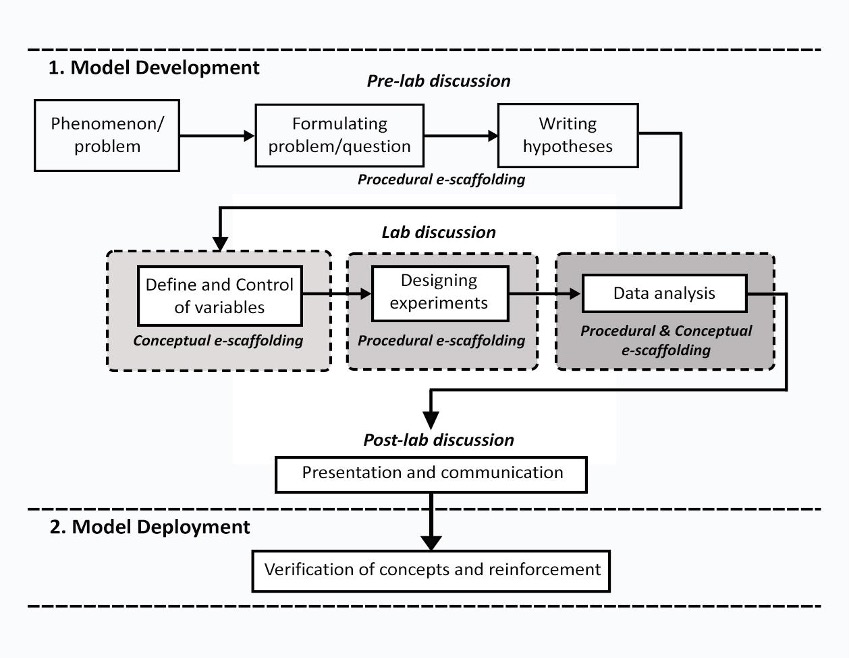
To measure students' scientific reasoning abilities in physics, Lawson's CTSR form (2000) was modified and used as a pre-test and post-test. The modifications to the test questions used were adapted from a combination of Han (2013) and Zhou (2016), and the scientific reasoning indicators were adjusted to suit content requirements. In this study, scientific reasoning test questions on the topic of Newton's laws were modified and adapted.
This test consisted of 15 questions that assessed physics reasoning abilities, such as conservational reasoning, control of variables, proportional reasoning, correlational reasoning, probabilistic reasoning, and deductive hypothesis reasoning. Each question comprised two levels: content questions in the form of multiple-choice items and open-ended questions for reasoning. Each student's answer was assigned points (0-5) for each item based on their reasoning and choice of answers. The estimated Cronbach alpha reliability for this test instrument is 0.828 (n = 207). Furthermore, the method used to classify the total score based on SR level criteria is shown in Table 2.
Table 2: Criteria for Level Scientific Reasoning

All participants and schools approved the entire implementation and the procedures of this study. Data were collected through scientific reasoning tests related to Newton's law. Pre-measurement of scientific reasoning ability (SR pre-test) was conducted before the intervention. Then, post-measurement of scientific reasoning ability (SR post-test) was conducted after the treatment to analyse and compare the improvement of students' scientific reasoning abilities in physics, especially on the topic of Newton's laws.
For general data, such as mean and standard deviation, descriptive statistical data analysis techniques were used. The technique was also employed to determine the distribution of students’ SR levels and the number of students who had level shifts. To examine the difference in students’ SR between the two classes, an independent t-test comparative analysis was conducted. Previously, the assumptions for the t-test were checked and found to be appropriate. A statistically significant difference in SR ability between the E-MI group and the MI group was considered to exist if a sig. p value < 0.05 was obtained from the analysis. Furthermore, Cohen’s d effect size value was used to determine the effect of procedural and conceptual e-scaffolding on each dependent variable.
During implementation, procedural and conceptual e-scaffolding indirectly improved students’ performance and learning outcomes, including scientific reasoning. The results obtained through descriptive statistical analysis in both classes showed that the mean score of the experimental group was higher than that of the control group. Figure 2 illustrates the comparison of the mean pre-test and post-test between the experimental and control groups. The results of the pre-test SR measurement revealed that students in the E-MI group had a mean score of 22.2 (SD = 6.92), while the MI group had a mean score of 22.3 (SD = 5.58). After receiving the intervention, the mean score of students in the E-MI group increased to 43.20 (SD = 6.45), whereas the MI group had a lower mean score of 37.63 (SD = 6.68). The implementation of procedural and conceptual e-scaffolding in modelling instruction for the experimental group demonstrated positive results, with the group’s average increasing by 21 points compared to their initial SR (pre-test SR). In contrast, the control group’s average increased by only 15.4 points from their initial SR.
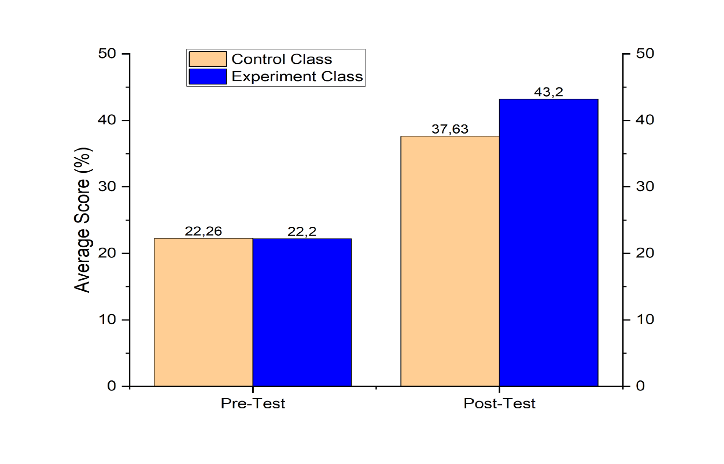
Table 3 shows that there was no difference in the initial SR (pre-test) between students in the two groups (p > 0.05). The negative t-value and mean difference in the pre-test SR results also reinforced the comparison results shown in Figure 2, which means that the mean pre-test SR scores of the E-MI group were lower than those of the MI group. The mean score comparison showed that the initial SR of the control group students was slightly higher (by 0.06 points) compared to the experimental group. The t-test analysis in Table 3 also shows the essential result on the post-test SR, which is a significance value smaller than 0.05. This means that there is a significant difference in SR between the E-MI and MI groups after the intervention. In addition, the mean difference value of 5.571 indicates that the experimental group, that learned physics with procedural and conceptual e-scaffolding in modeling instruction, had a higher mean post-test SR score (5.571) than the control group. Again, this outcome also reinforces the result of the difference in the mean post-test SR in Figure 2.
Table 3: Independent t-Test Results

This research found that the E-MI group, which utilised web-based procedural and conceptual scaffolding, demonstrated a greater increase in the physics SR scores, suggesting that such scaffolding provides a more complex and effective learning experience. This aligns with prior studies on e-scaffolding in physics learning (Deejring, 2015; Kim et al., 2018; Lin & Singh, 2015; Saputri & Wilujeng, 2017). Despite the fact that our study did not investigate scaffolding in the control group, we argue that direct scaffolding by the teacher or peers may occur. However, procedural and conceptual e-scaffolding proved more effective in addressing individual student needs due to its flexibility, enabling precise identification of learning difficulties and enhancing instructional efficiency (Belland, 2017; Kim et al., 2018; Koes-H et al., 2019). Although conceptua1 e-scaffolding had a stronger statistical impact than procedural e-scaffolding (Doo et al., 2020), their combined use significantly improved students' SR. Thus, E-MI learning effectively enhanced students' SR in physics-related subjects.
The control group’s results, which utilised MI without e-scaffolding, were comparable with Sutarno’s (2014) findings, where only a few students reached the formal operational level despite receiving the treatment during the learning process. Similarly, Balqis et al. (2019) and Fawaiz et al. (2020) reported that over 50% of high school students' SR in science subjects, specifically physics, remained at the transitional or even concrete operational level. These findings underscore the complexity of developing SR, which requires a dual competency-based approach—procedural (scientific inquiry) and conceptual (scientific modeling) (Krell et al., 2022). While the control group showed improvement, it was less pronounced than in the technology-enhanced class, indicating that inquiry-based learning models such as MI alone are insufficient for optimal cognitive development.
The comparison of students' physics SR levels in the E-MI and MI groups is shown in Table 4. Analysis of the total post-test score revealed that 63% of the experimental group students reached the formal operational SR level after learning with E-MI. This result was significantly higher than the SR level of the experimental group students at the time of the pre-test and the SR level of the control group students at the time of the post-test, which was only 23%. This significant difference strengthened the results of the previous analysis.
Table 4: Comparison of the Level of Scientific Reasoning in Physics of Students in the Two Groups
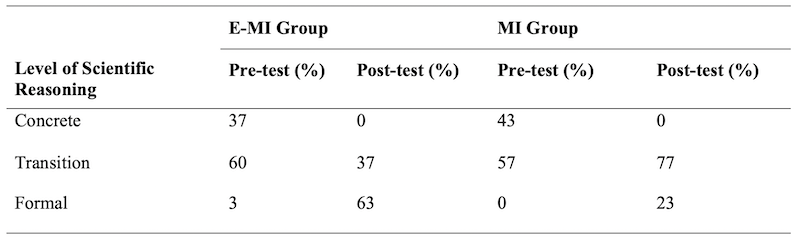
Figure 3 illustrates that a number of students experienced a level shift, while others did not. It can be observed that more students in the control group shifted from the concrete level to the transitional level. In contrast, nearly 3/7 of the students in the experimental group, who received procedural and conceptual e-scaffolding in MI, experienced a shift from the transitional level to the formal leve
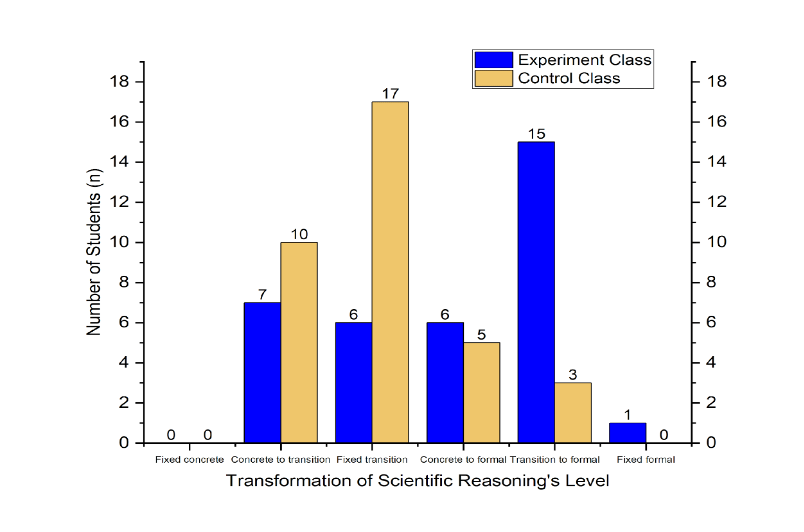
A significant proportion of students experienced a level shift, with those at the transitional level showing greater improvement compared to those at the concrete operational level. We argue that this shift in the E-MI group is linked to students' self-efficacy and their attitude towards e-scaffolding. Although we did not directly collect self-efficacy data, prior research indicates that students with a higher SR tend to have more positive perceptions of their academic abilities (Bandura, 1997; Nyberg et al., 2022) and greater confidence in using technology (Kuo & Belland, 2019). E-scaffolding attempts to gradually transfer responsibility to students, fostering autonomy and supporting optimal development of SR. However, students at the concrete operational level exhibited limited progress, likely due to a lower self-efficacy belief and less favourable attitudes toward technology (Kuo & Belland, 2019). These students often avoided challenging tasks, which hindered their SR development (Nyberg et al., 2022). While this assumption requires further investigation, our finding highlights that the improvement of SR levels was not linear and depended on scaffolding integration (Andersen & Garcia-Mila, 2017). Notably, the integration of procedural and conceptual e-scaffolding with MI strategy significantly shifted SR levels, though students who were formal reasoners in the pre-test remained unchanged in the post-test, consistent with the findings by Marušić and Zorica, (2012).
Conversely, in the control group, shifts from the concrete to the transitional level were more common than from the transitional to the formal operational level. This suggests that MI alone is not yet strong enough to elevate students' SR levels. Without additional support, students struggled to identify theoretical elements, connect cause-and-effect using theory, or model phenomena effectively (Cabello et al., 2021). Thus, while MI contributed to SR development, its impact was limited without targeted scaffolding.
The results of the effect size analysis calculation yielded a Cohen’s d value of 0.84, indicating the large influence of procedural and conceptual e-scaffolding in MI on students' scientific reasoning in physics. This study revealed a considerable difference between the SR skills of students who learned with E-MI and those who learned only with MI. These findings are consistent with Basu et al. (2017) and Mulder et al., (2016) who discovered that e-scaffolding in MI affected students' cognitive development, particularly in constructing conceptual models and enhancing SR. The disparity in SR level improvement between the groups can be attributed to the use of procedural and conceptual e-scaffolding by the experimental class, and is consistent with those of Koes-H et al. (2019) and Kim et al. (2018), who reported superior cognitive abilities among students utilising such scaffolding.
Furthermore, procedural and conceptual e-scaffolding not only helps students in overcoming challenges but also trains their cognitive processes. Procedural and conceptual e-scaffolding effectively assists students to design experiments, understand procedures, and clarify concepts, while conceptual scaffolding supports information processing and simplifies complex ideas (Aslam et al., 2017; Falloon, 2017; Rahmatiah et al., 2015; Susilowati et al., 2018). Procedural e-scaffolding fosters systematic thinking, whereas conceptual e-scaffolding builds on learned concepts (Brown & Wilkinson, 2018; Rahmatiah et al., 2015). These findings are consistent with Liu and Adams, (2017), who demonstrated that e-scaffolding in appropriate instructional strategies enhances task completion, problem-solving, and cognitive skill development. For example, in constructing and interpreting graphs for Newton’s Second Law experiments, students in the E-MI group received structured procedural guidance, unlike the MI group, which relied on teacher prompts. This structured support explains why procedural and conceptual e-scaffolding significantly strengthened students' SR skills in this study.
During the 12-week study period, both MI and E-MI were capable of increasing SR levels. However, the overall results indicate that integrating procedural and conceptual E-MI is more effective at assisting students with their difficulties and training their SR skills in physics. As a result of learning physics with procedural and conceptual E-MI, students' SR improved significantly. Incorporating procedural and conceptual e-scaffolding in MI positively affected students' SR skills, resulting in significantly higher SR skills for students who learned physics with E-MI compared to those who learned physics only with MI. The difference in the level of improvement between the two classes was also highly significant, with students who had attained the formal operational level in the experimental class experiencing greater growth.
In addition, the researchers would like to highlight recommendations that may be useful for teachers and future researchers. There is a need for a more comprehensive assessment of scientific skills (including criteria for SR and self-efficacy) in physics education. Knowledge enhancement and reasoning improvement are two distinct aspects. In addition, it is anticipated that future research will further investigate the influence of the integration of E-MI on other scientific skills (beyond SR), thereby yielding a more comprehensive range of research insights. In addition, future researchers are encouraged to dig deeper and determine the effect of other e-scaffolding incorporated with MI on the level shifting of SR in physics students. Education technology researchers and developers are encouraged to design learning technologies specifically tailored for students with concrete SR levels.
Aini, N., Subiki, & Supriadi, B. (2018, March 11). Identifikasi Kemampuan Penalaran Ilmiah (Scientific Reasoning) Siswa SMA di Kabupaten Jember Pada Pokok Bahasan Dinamika [Paper Presentation]. Seminar Nasional Pendidikan Fisika 2018 (Indonesia). https://jurnal.unej.ac.id/index.php/fkip-epro/article/view/6242/4949
Al-Balushi, S. (2017). The effectiveness of interacting with scientific animations in chemistry using mobile devices on Grade 12 students’ spatial ability and scientific reasoning skills. Journal of Science Education and Technology, 26(1), 70-81. https://doi.org/10.1007/s10956-016-9652-2
Alshamali, M. (2016). Scientific reasoning and its relationship with problem solving: The case of upper primary science teachers. International Journal of Science and Mathematics Education, 14(6), 1003-1019. https://doi.org/10.1007/s10763-015-9646-1
Andersen, C., & Garcia-Mila, M. (2017). Scientific reasoning during inquiry: Teaching for metacognition. In K.S. Taher & B. Akpan (Eds.), Science education. New directions in mathematics and science education (pp. 105-117). SensePublishers. https://doi.org/https://doi.org/10.1007/978-94-6300-749-8_8
Aslam, N., Khanam, A., Fatima, H. G., Akbar, H., & Muhammad, N. (2017). Study of the impact of scaffold instructions on the learning achievements of post-graduate students. Journal of Arts and Social Sciences, 4(1). https://jass.pk/assets/allabs/issue7-05.pdf
Balqis, D., Kusairi, S., & Supriana, E. (2019). Analisis Kemampuan Penalaran Ilmiah pada Pembelajaran Interactive Demonstration disertai Formative Assessment. Jurnal Pendidikan: Teori, Penelitian, Dan Pengembangan, 4(11), 1485-1490. http://dx.doi.org/10.17977/jptpp.v4i11.13010
Bandura, A. (1997). Self-efficacy: The exercise of control (pp. ix, 604). W H Freeman/Times Books/ Henry Holt & Co.
Bao, L. (2009). Physics: Learning and scientific reasoning. Science, 323(5914), 586-587. https://doi.org/10.1126/science.1167740
Bao, L., Cai, T., Koenig, K., Fang, K., Han, J., Wang, J., Liu, Q., Ding, L., Cui, L., Luo, Y., Wang, Y., Li, L., & Wu, N. (2009). Learning and scientific reasoning. Science, 323(5914), 586-587. https://doi.org/10.1126/science.1167740
Barlow, A.T., Frick, T.M., Barker, H.L., & Phelps, A.J. (2014). Modeling instruction: The impact of professional development on instructional practices. Science Educator, 23(1), 14-26. https://files.eric.ed.gov/fulltext/EJ1034755.pdf
Basu, S., Biswas, G., & Kinnebrew, J.S. (2017). Learner modeling for adaptive scaffolding in a computational thinking-based science learning environment. User Modeling and User-Adapted Interaction, 27(1), 5-53. https://doi.org/10.1007/s11257-017-9187-0
Belland, B.R. (2017). Computer-based scaffolding strategy. In International Scaffolding in STEM Education (pp. 107-126). Springer, Cham. https://doi.org/10.1007/978-3-319-02565-0
Brahmia, S.W., Olsho, A., Smith, T.I., Boudreaux, A., Eaton, P., & Zimmerman, C. (2021). Physics inventory of quantitative literacy: A tool for assessing mathematical reasoning in introductory physics. Physical Review Physics Education Research, 17(2), 20129. https://doi.org/10.1103/PhysRevPhysEducRes.17.020129
Brown, K., & Wilkinson, I.A.G. (2018). Examining the impact of scaffolding on literacy learning: A critical examination of research and guidelines to advance inquiry. International Journal of Educational Research, 30(40), 1-14. https://doi.org/10.1016/j.ijer.2018.01.004
Cabello, V.M., Moreira, P.M., & Griñó Morales, P. (2021). Elementary students’ reasoning in drawn explanations based on a scientific theory. Education Sciences, 11(10), Article 10. https://doi.org/10.3390/educsci11100581
Campbell, T., Oh, P.S., Maughn, M., Kiriazis, N., & Zuwallack, R. (2015). A review of modeling pedagogies: Pedagogical functions, discursive acts, and technology in modeling instruction. EURASIA Journal of Mathematics, Science and Technology Education, 11(1). https://doi.org/10.12973/eurasia.2015.1314a
Commeford, K., Brewe, E., & Traxler, A. (2022). Characterizing active learning environments in physics using latent profile analysis. Physical Review Physics Education Research, 18(1), Article 010113. https://doi.org/10.1103/PhysRevPhysEducRes.18.010113
Creswell, J.W. (2014). Research design: Qualitative, quantitative, and mix method approaches (4th ed.). SAGE.
Deejring, K. (2015). The design of web-based learning using collaborative learning techniques and a scaffolding system to enhance learners’ competency in higher education. Procedia — Social and Behavioral Sciences, 174, 34-42. https://doi.org/10.1016/j.sbspro.2015.01.623
Ding, L., Wei, X., & Mollohan, K. (2016). Does higher education improve student scientific reasoning skills? International Journal of Science and Mathematics Education, 14(4). https://doi.org/10.1007/s10763-014-9597-y
Doo, M.Y., Bonk, C.J., & Heo, H. (2020). A meta-analysis of scaffolding effects in online learning in higher education. International Review of in Open and Distributed Learning, 21(3), 60-80. https://doi.org/10.19173/irrodl.v21i3.4638
Dou, R., Brewe, E., Potvin, G., Zwolak, J.P., & Hazari, Z. (2018). Understanding the development of interest and self-efficacy in active-learning undergraduate physics courses. International Journal of Science Education. https://doi/abs/10.1080/09500693.2018.1488088
Erlina, N., Susantini, E., & Wasis. (2018). Common false of student’s scientific reasoning in physics problems. Journal of Physics: Conference Series, 1108(1), 012016. https://doi.org/10.1088/1742-6596/1108/1/012016
Fabby, C., & Koenig, K. (2015). Examining the relationship of scientific reasoning with physics problem solving. Journal of STEM Education, 16(December), 20-26. https://www.jstem.org/jstem/index.php/JSTEM/article/download/1904/1695
Falloon, G. (2017, July 21). Mobile devices and apps as scaffolds to science learning in the primary classroom. Journal of Science Education and Technology 26, 613-628 (2017). https://doi.org/10.1007/s10956-017-9702-4
Fawaiz, S., Handayanto, S.K., & Wahyudi, H.S. (2020). Eksplorasi Keterampilan Penalaran Ilmiah Berdasarkan Jenis Kelamin Siswa SMA. Jurnal Pendidikan: Teori, Penelitian, dan Pengembangan, 5(7), 934-943. https://doi.org/10.17977/jptpp.v5i7.13721
Fischer, F., Kollar, I., Ufer, S., Sodian, B., & Hussmann, H. (2014). Scientific reasoning and argumentation: Advancing an interdisciplinary research agenda in education. Frontline Learning Research, 2(3), 28-45. https://doi.org/10.14786/flr.v2i2.96
Göhner, M., & Krell, M. (2022). Preservice science teachers’ strategies in scientific reasoning: The case of modeling. Research in Science Education, 52(2), 395-414. https://doi.org/10.1007/s11165-020-09945-7
Han, J. (2013). Scientific reasoning: Research, development, and assessment [Doctoral dissertation, Ohio State University]. OhioLINK Electronic Theses and Dissertations Center. http://rave.ohiolink.edu/etdc/view?acc_num=osu1366204433
Handayanto, S.K., Fawaiz, S., & Taufiq, A. (2024). Using e-scaffolding to develop students’ scientific reasoning through inquiry-based learning. The Education and Science Journal, 26(3), Article 3. https://doi.org/10.17853/1994-5639-2024-3082
Heijnes, D. (2018). Stimulating scientific reasoning with drawing-based modeling. Journal of Science Education and Technology, 27(1), 45-56. https://doi.org/10.1007/s10956-017-9707-z
Hejnová, E., Eisenmann, P., Cihlář, J., & Přibyl, J. (2018). Relations between scientific reasoning and culture of problem solving. Journal on Efficiency and Responsibility in Education and Science, 11(2), Article 2. https://doi.org/10.7160/eriesj.2018.110203
Illes, M., Wilson, P., & Bruce, C. (2019). Forensic epistemology: Testing the reasoning skills of crime scene experts. Canadian Society of Forensic Science Journal, 52(4), 151-173. https://doi.org/10.1080/00085030.2019.1664260
Jumadin, L., Hidayat, A., & Sutopo. (2017). Perlunya Pembelajaran Modelling Pada Materi Gelombang. Jurnal Penddiikan: Teori, Penelitian, Dan Pengembangan, 2(3), 325-330. http://dx.doi.org/10.17977/jptpp.v2i3.8585
Kalinowski, S.T., & Willoughby, S. (2019). Development and validation of a scientific (formal) reasoning test for college students. JRST Wiley, 1-16. https://doi.org/10.1002/tea.21555
Kim, N.J., Belland, B.R., & Walker, A.E. (2018). Effectiveness of computer-based scaffolding in the context of problem-based learning for stem education: Bayesian meta-analysis. Educational Psychology Review, 30(2), 397-429. https://doi.org/10.1007/s10648-017-9419-1
Koç, D., & Elçi, A.N. (2022). The effect of mathematical modeling instruction on pre-service primary school teachers problem solving skills and attitudes towards mathematics. Journal of Pedagogical Research, 4. https://doi.org/10.33902/JPR.202217783
Koes-H, S., Pradana, S.D.S., & Suwasono, P. (2020). Integration conceptual scaffolding in the group investigation: Its influence on students’ critical thinking skills [Paper Presentation]. Journal of Physics: Conference Series (The 2nd International Conference on Research and Learning of Physics), 1481(1), Article 012132, 1-8. https://doi.org/10.1088/1742-6596/1481/1/012132
Koes-H, S., Suwasono, P., & Pramono, N.A. (2019). Efforts to improve problem solving abilities in physics through e-scaffolding in hybrid learning. AIP Conference Proceedings, 2081(1), Article 30006. https://doi.org/10.1063/1.5094004
Krell, M., Vorholzer, A., & Nehring, A. (2022). Scientific reasoning in science education: From global measures to fine-grained descriptions of students’ competencies. Education Sciences, 12(97), 1-8. https://doi.org/10.3390/ educsci12020097
Kuo, Y.-C., & Belland, B.R. (2019). Exploring the relationship between African American adult learners’ computer, internet, and academic self-efficacy, and attitude variables in technology-supported environments. Journal of Computing in Higher Education, 31(3), 626-642. https://doi.org/10.1007/s12528-019-09212-3
Lawson, A.E. (2010). Basic inferences of scientific reasoning, argumentation, and discovery. Science Education, 94(2), 336-364. https://doi.org/10.1002/sce.20357
Lestyaningtyas, D.A., Sutopo, & Wisodo, H. (2017, September 30). Potensi Pendekatan Multi Representasi untuk Meningkatkan Kemampuan Penalaran Siswa pada Materi Gelombang Mekanik [Paper Presentation]. Seminar Pendidikan IPA Pascasarjana UM, Article 2, 166-171. https://core.ac.uk/download/267023999.pdf
Lin, S.Y., & Singh, C. (2015). Effect of scaffolding on helping introductory physics students solve quantitative problems involving strong alternative conceptions. Physical Review Special Topics — Physics Education Research, 11(2). https://doi.org/10.1103/PhysRevSTPER.11.020105
Liu, J.C., Adams, A. (2017). Design of online student orientation with conceptual and procedural scaffolding. In F.Q. Lai, & J. Lehman, J. (Eds.), Learning and knowledge analytics in open education. Springer, Cham. https://doi.org/10.1007/978-3-319-38956-1_5
Malone, K.L., & Schuchardt, A. (2020). Population growth modelling simulations: Do they affect the scientific reasoning abilities of students? In H.C. Lane, S. Zvacek, & J. Uhomoibhi (Eds.), Computer supported education (Vol. 1220, pp. 285-307). Springer International Publishing. https://doi.org/10.1007/978-3-030-58459-7_14
Marušić, M., & Zorica, I.M. (2012). Influence of learning physics by reading and learning physics by doing on the shift in level of scientific reasoning. Journal of Turkish Science Education, 9(1), 146-162. https://tused.org/index.php/tused/article/view/425/363
McPadden, D., Brewe, E., Monsalve, C., & Sawtelle, V. (2020). Productive faculty resources activated by curricular materials: An example of epistemological beliefs in university modeling instruction. Physical Review Physics Education Research, 16(2), 020158. https://doi.org/10.1103/PhysRevPhysEducRes.16.020158
Mulder, Y.G., Bollen, L., Jong, T. De, & Lazonder, A.W. (2016). Scaffolding learning by modelling: The effects of partially worked-out models. Journal of Research in Science Teaching, 53(3), 502-523. https://doi.org/10.1002/tea.21260
Nguyen, H., & Santagata, R. (2021). Impact of computer modeling on learning and teaching systems thinking. Journal of Research in Science Teaching, 58(5), 661-688. https://doi.org/10.1002/tea.21674
Nieminen, P. (2012). Relations between representational consistency, conceptual understanding of the force concept, and scientific reasoning. Physical Review Special Topics — Physics Education Research, 8(1). https://doi.org/10.1103/PhysRevSTPER.8.010123
Nyberg, K., Koerber, S., & Osterhaus, C. (2022). Self-effective scientific reasoning? Differences between elementary and secondary school students. Frontline Learning Research, 10(1), Article 1. https://doi.org/10.14786/flr.v10i1.955
Opitz, A., Heene, M., & Fischer, F. (2022). Using differential item functioning to analyze the domain generality of a common scientific reasoning test. European Journal of Psychological Assessment, 38(4), 251-260. https://doi.org/10.1027/1015-5759/a000662
Oogarah-Pratap, B., Bholoa, A., Ramma, Y. (2020). Stage theory of cognitive development—Jean Piaget. In B. Akpan, T.J. Kennedy (Eds.), Science education in theory and practice. Springer Texts in Education. Springer, Cham. https://doi.org/10.1007/978-3-030-43620-9_10
Rahmatiah, R., Koes-H, S., & Kusairi, S. (2015, November 28). Kajian Teoritis: Strategi Scaffolding Konseptual dalam Pembelajaran Group Investigation untuk Meningkatkan Prestasi Belajar Fisika Siswa [Paper Presentation]. Seminar Nasional Jurusan Fisika FMIPA UNESA, 978-979.
Ropika, D., Suhandi, A., & Muslim, M. (2019). Enhancing vocation students physics problem-solving skills through modeling instruction applying on the direct current circuit [Paper presentation]. Journal of Physics: Conference Series (International Conference on Mathematics and Science Education (ICMScE 2018)), 1157(032048), 1-6. https://doi.org/10.1088/1742-6596/1157/3/032048
Saman, M.I., & Handayanto, S.K. (2017, September 30). E-Scaffolding untuk Meningkatkan Kemampuan Pemecahan Masalah Fisika [Paper presentation]. Seminar Pendidikan IPA Pascasarjana UM, Article 2, 219-225.
Saman, M.I., Koes-H, S., & Sunaryono, S. (2018). Procedural e-scaffolding in improving students physics problem solving skills. Unnes Science Education Journal, 7(2), Article 2. https://doi.org/10.15294/usej.v7i2.23290
Saputri, A.A., & Wilujeng, I. (2017). Developing physics e-scaffolding teaching media to increase the eleventh- grade students’ problem solving ability and scientific attitude. International Journal of Environmental & Science Education, 12(4), 729-745. http://www.ijese.net/makale_indir/IJESE_1841_article_592bdc0525ee0.pdf
Selau, F.F., Espinosa, T., Araujo, I.S., & Veit, E.A. (2018). Fontes de autoeficácia e atividades experimentais de física: Um estudo exploratório. Revista Brasileira de Ensino de Física, 41. https://doi.org/10.1590/1806-9126-RBEF-2018-0188
She, H.C., & Liao, Y.W. (2010). Bridging scientific reasoning and conceptual change through adaptive web-based learning. Journal of Research in Science Teaching, 47(1), 91-119. https://doi.org/10.1002/tea.20309
Stammen, A.N., Malone, K.L., & Irving, K.E. (2018). Effects of modeling instruction professional development on biology teachers’ scientific reasoning skills. Education Sciences, 8(3), 1-19. https://doi.org/10.3390/educsci8030119
Susilowati, E., Mayasari, T., Winarno, N., Rusdiana, D., & Kaniawati, I. (2018). Scaffolding learning model to improve habits of mind students [Paper presentation]. MSCEIS 2018, 1280, 1-8. https://doi.org/10.1088/1742-6596/1280/5/052064
Sutarno. (2014, May 9-11). Profil Penalaran Ilmiah (Scientific Reasoning) Mahasiswa Program Studi Pendidikan Fisika Universitas Bengkulu Tahun Akademik 2013/2014 [Paper presentation]. Seminar Nasional Dan Rapat Tahunan Bidang MIPA 2014 (Indonesia), Article 7, 361-371. Fakultas Matematika dan Ilmu Pengetahuan Alam Institut Pertanian Bogor.
Tajudin, N.M., & Chinnappan, M. (2015). Exploring relationship between scientific reasoning skills and mathematics problem solving [Paper presentation]. In A.B.M. Marshman, V. Geiger (Eds.), Mathematics education in the margins (Proceedings of the 38th Annual Conference of The Mathematics Education Research Group of Australasia) (pp. 603-610). MERGA. https://doi.org/10.1109/PES.2007.386033
United Nations Educational, Scientific and Cultural Organization. (2021). UNESCO Science Report 2021: The race against time for smarter development. United Nations. https://doi.org/10.18356/9789210058575
Vaesen, K., & Houkes, W. (2021). A new framework for teaching scientific reasoning to students from application-oriented sciences. European Journal for Philosophy of Science, 11(56), 1-16. https://doi.org/10.1007/s13194-021-00379-0
Vasconcelos, L., & Kim, C. (2020). Coding in scientific modeling lessons (CS-ModeL). Educational Technology Research and Development, 68(3), 1247-1273. https://doi.org/10.1007/s11423-019-09724-w
Widarti, N.F., & Winarti. (2019). Analisis Kemampuan Penalaran (Reasoning Skill) Siswa t entang Usaha dan Energi di MA Mu’allim aat Muhammadiyah Yogyakarta. Jurnal Riset Pendidikan Fisika, 4(2), 79-84. http://dx.doi.org/10.17977/um058v4i2p79-84
Wu, H.-L., Weng, H.-L., & She, H.-C. (2016). Effect of scaffold and scientific reasoning ability on web-based scientific inquiry. International Journal of Contemporary Educational Research, 3(1), 12-24. https://files.eric.ed.gov/fulltext/ED573143.pdf
Zafitri, T.S., Siahaan, P., & Liliawati, W. (2019). Design of scientific reasoning test instruments on simple harmonic motion topics [Paper presentation]. Journal of Physics: Conference Series (International Conference on Mathematics and Science Education (ICMScE 2018)), 1157(64), 1-5. https://doi.org/10.1088/1742-6596/1157/3/032064
Zhou, S. (2016). Assessment of scientific reasoning: The effects of task context, data, and design on student reasoning in control of variables. Thinking Skills and Creativity, 19, 175-187. https://doi.org/10.1016/j.tsc.2015.11.004
Zimmerman, C., & Klahr, D. (2018). Development of Scientific Thinking. In J.T. Wixted (Ed.), Stevens’ handbook of experimental psychology and cognitive neuroscience (4th ed.) (pp. 1-25). John Wiley & Sons, Inc. https://doi.org/10.1002/9781119170174.epcn407
Author Notes
Annisa Ulfa Yana is a Lecturer in Physics Education at the Universitas Sultan Ageng Tirtayasa, Indonesia. With a background in physics education, her research interests include innovation in physics education learning strategies, development of thinking skills and scientific reasoning. Email: nissaul.annisa@gmail.com (https://orcid.org/0000-0001-8455-0947)
Supriyono Koes-Handayanto is a Senior Lecturer of Physics Education at Universitas Negeri Malang, Indonesia. He specialises in research on scaffolding for science learning, innovative learning strategies for physics education, hybrid learning, and the development of higher order thinking skills. Email: supriyono.koeshandayanto.fmipa@um.ac.id (https://orcid.org/0000-0002-5603-7473)
Sahal Fawaiz is an independent researcher in Malang, Indonesia. He earned a Masters in Physics Education from Universitas Negeri Malang. His primary research interests include educational assessment and measurement, e-learning, and scientific reasoning. Email: sahalfawaiz@gmail.com (https://orcid.org/0000-0002-8680-5891)
Fauzul Rizal is a current Doctoral Researcher at ELI Beamlines, and was formerly a research assistant at the Department of Physics, University of Pécs, Hungary at the time when this paper was written. With a background in Applied Physics, he obtained his master degree from the same university. Email: Fauzul.rizal@eli-beams.eu (https://orcid.org/0000-0002-1265-2167)
Cite as: Yana, A.U., Koes-Handayanto, S., Fawaiz, S., & Rizal, F. (2025). Students’ scientific reasoning in physics through procedural and conceptual e-scaffolding in modelling instruction: A quasi-experimental study. Journal of Learning for Development, 12(1), 17-32.